A recent favourable review of Through the Portal: Tales from a Hopeful Dystopia (edited by Lynn Hutchinson Lee and Nina Munteanu, released by Exile Editions) appeared in On Spec Magazine. The review by Lorina Stephens applauded the anthology for its genuine Canadian perspective, excellent writing, and “remarkable voice of many.”
.
Excerpts of the review follow below:
“What unfolds in these 35 stories is a quintessentially Canadian perspective on climate change, the probable dystopia of our own making, and how we as not only humans, but Canadians, may deal with the breakdown of environment and society, of how we construct mythology to interpret our experience.”
The stories, writes Stephens, “are filled with that remarkable pragmatism and resilience, little say a reverence for the land, which seems to be hardwired into a people who deal with constant change, and sometimes extremes, dictated by climate and geography.”
“…the quality of the writing from this enclave of writers is quite remarkable…I am steadfast in my praise of the skill of these writers, and the stories they’ve crafted, collected into this remarkable voice of many.”
“The stories manage that most adroit of transformations from genre fiction meant as escapism and consumable, to that other dimension which is provoking, illuminating, and exactly what good literary fiction should engender.”
Through the Portal has received other favourable reviews:
“Through the Portal offers intriguing and imaginative glimpses into the future.” – The Seaboard Review
“A stunning collection of short stories and poetry that address our most existential concerns through metaphysical, epic, solarpunk, mythological, and contemporary perspectives.” – dragonfly.eco.
Nina Munteanu is a Canadian ecologist / limnologist and novelist. She is co-editor of Europa SF and currently teaches writing courses at George Brown College and the University of Toronto. Visit www.ninamunteanu.ca for the latest on her books. Nina’s bilingual “La natura dell’acqua / The Way of Water” was published by Mincione Edizioni in Rome. Her non-fiction book “Water Is…” by Pixl Press (Vancouver) was selected by Margaret Atwood in the New York Times ‘Year in Reading’ and was chosen as the 2017 Summer Read by Water Canada. Her novel “A Diary in the Age of Water” was released by Inanna Publications (Toronto) in June 2020.
Apex Book Company (publisher of Apex Magazine) has extended their deadline for short stories to appear in their anthology “ECO24, The Year’s Best Speculative Ecofiction” edited by Marissa van Uden. They are looking to purchase non-exclusive world anthology rights for only previously published short stories of eco-fiction published in the last calendar year (Jan 1 to Dec 31 2024) to publish in their imprint Violet Lichen Books.
Here is their description of the eco-fiction anthology:
This anthology “showcases some of the most vivid, thought-provoking, and emotionally affecting ecofiction published in the previous calendar year. Speculative ecofiction is defined as stories that explore our place in the natural world and our relationships to non-human life (e.g. focused on themes related to ecology, nature, the environment, climate, conservation, wildlife and animal rights) and which also fall into speculative genres such as science fiction, fantasy, Weird fiction, New Weird, anthropomorphic fantasy, magical realism.
Ecofiction engages with some of the most urgent issues facing us today and also looks ahead to the possibilities of the future. Even when dealing with dark or tragic themes, ecofiction stories are expressions of our human connection to the most beautiful planet we know, and to all of earthlife.
Nina Munteanu is a Canadian ecologist / limnologist and novelist. She is co-editor of Europa SF and currently teaches writing courses at George Brown College and the University of Toronto. Visit www.ninamunteanu.ca for the latest on her books. Nina’s bilingual “La natura dell’acqua / The Way of Water” was published by Mincione Edizioni in Rome. Her non-fiction book “Water Is…” by Pixl Press (Vancouver) was selected by Margaret Atwood in the New York Times ‘Year in Reading’ and was chosen as the 2017 Summer Read by Water Canada. Her novel “A Diary in the Age of Water” was released by Inanna Publications (Toronto) in June 2020.
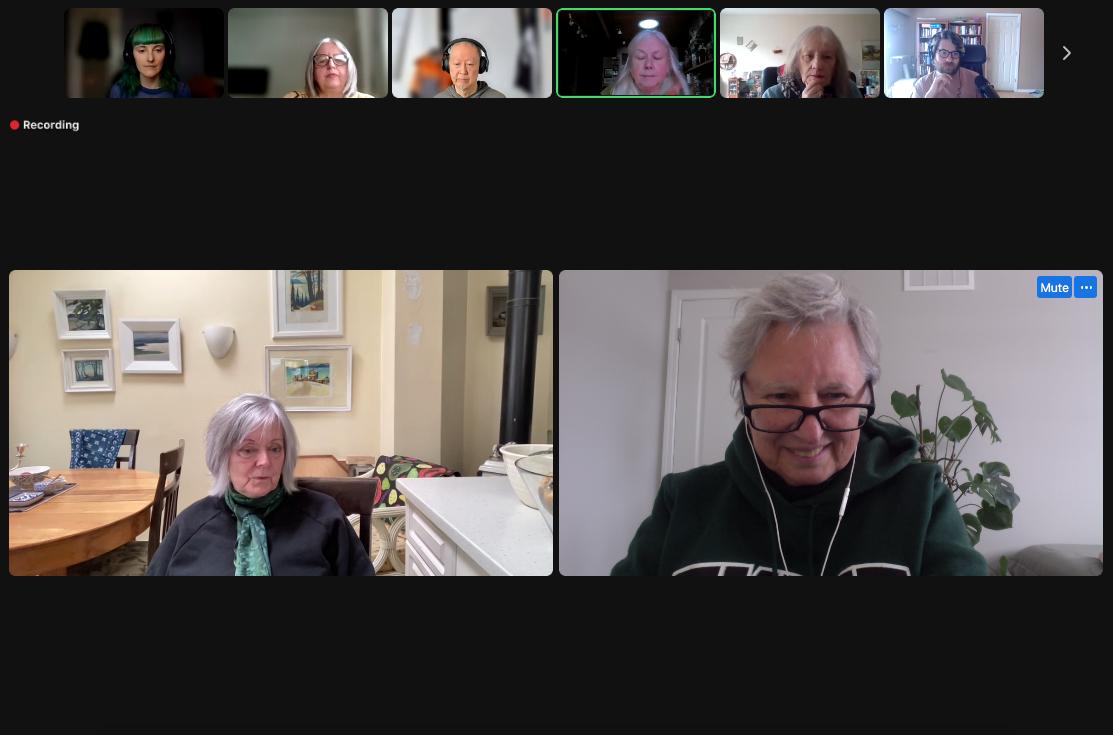
I recently participated in author readings from the eco-fiction anthology “Through the Portal: Tales from a Hopeful Dystopia.” Co-editor Lynn Hutchinson Lee and I opened the session with some introductory remarks, followed by readings by four of the anthology writers: Annaliese Schultz, Jade Wallace, Isabella Mori, and Matt Freeman.
Co-editors Lynn Hutchinson Lee and Nina Munteanu introduce the anthology at the reading; authors and moderator pictured above
.
The readings generated a lot of discussion about the nature and role of eco-fiction and stories in general on how we view the world and how that, in turn, influences the choices we make in life. Below, I include a short story excerpt and audience reaction for each author who read.
Annaliese Schultz read from her story Water & Oil. “Bursting from months, maybe years, of inertia born of dismay (engendered by the unending disasters of the world), Zip is instantly galvanized and greater than himself and gone.” One audience member shared that her story “sounded horrifyingly too possible.”
Jade Wallace read from her story Pluck. “It was only after I started working at the florist a few months ago that I began to think of plants as things that move. I learned that algae may swim towards the light; sundew can catch insects in their stalks; the leaves of touch-me-nots will slouch when they feel rain.” A member of the audience shared that “with what we now know about the way trees/plants communicate with each other, it was a neat story of crossing over to try to tell humans something.”
.
Jade Wallace reads from her story “Pluck”
.
Isabella Mori read from her story Shift. “Red Nelly, that’s what they called my grandmother; always looked a little dishevelled. So did her living room. Four book shelves were squeezed into the small room, sagging with dark tomes, oversized coffee-table books, Greenpeace brochures, and video cassettes that even her questionable looking TV couldn’t play anymore.” Someone in the audience mentioned that the author had woven a very human story. “Stories are sometimes better teachers than all other forms available to us. I felt moments of warmness and reflection.” Another audience member added, “The wisdom of animals and plants—there’s hope for the planet. I’m ordering this book from my local independent as soon as I close his meeting!”
Matt Freeman read from his story Birdseed: “Near the end I began to devote the bulk of my time to what I believed to be a gregarious individual of the species Corvus brachyrhynchos—the American Crow. By then a chemical scythe had begun to carve up the clouds hanging over the lands of ‘Vancouver’ in a psychedelic frenzy, and the shocked blue skyline often bled in shades of lime.” One audience member shared, “I loved he way ‘birdish’ words kept appearing: perch, cage. This may be Matt’s first published story, but I’m sure it won’t be the last.” Another audience member shared, “I loved the connection with the wisdom and personification of your crow.”
.
Nina Munteanu commenting on one of the readings
.
The readings generated a lot of discussion about the nature and role of eco-fiction and stories in general on how we view the world and how that, in turn, influences the choices we make in life.
Audience members shared that they found the readings inspiring. One member shared, “I find stories and poems have a more transcendent or at least deeper connection when read aloud. I wasn’t sure what to expect. So glad to be a part of this reading. The book sounds amazing.” Another member shared, “Keep hope alive!”
For more about how this anthology came about go to my previous post on Through the Portal.
.
.
Hopeful dystopias are so much more than an apparent oxymoron: they are in some fundamental way the spearhead of the future – and ironically often a celebration of human spirit by shining a light through the darkness of disaster. In Through the Portal: Tales from a Hopeful Dystopia, award-winning authors of speculative fiction Lynn Hutchinson Lee and Nina Munteanu present a collection that explores strange new terrains and startling social constructs, quiet morphing landscapes, dark and terrifying warnings, lush newly-told folk and fairy tales.–Exile Editions
“A stunning collection of short stories and poetry that address our most existential concerns.”
“Will ingenuity, love, and respect for the earth help us work through whatever changes might lie ahead? Through the Portal offers hope that these qualities, if not enough in and of themselves, will help us find our way.”
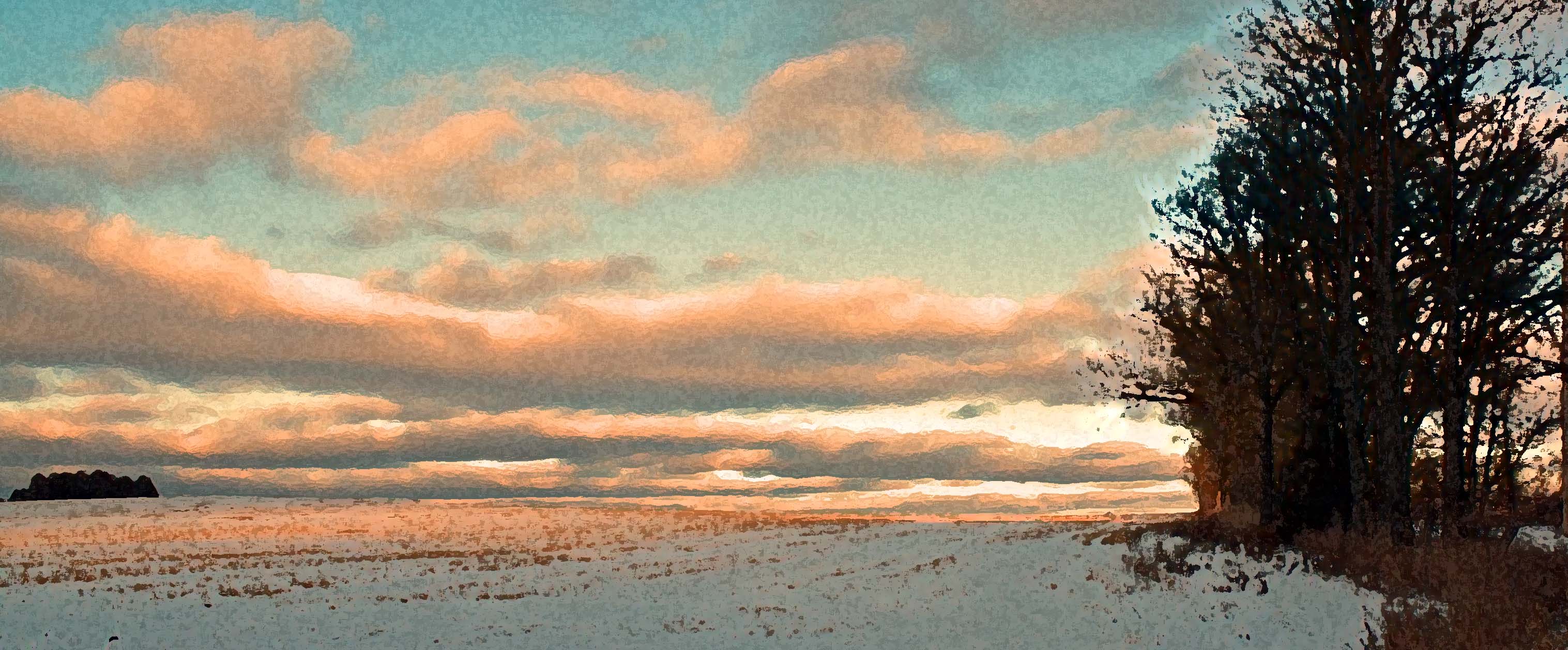
Farmer’s field at sunset, winter in Ontario (photo and rendition by Nina Munteanu)
.
Nina Munteanu is a Canadian ecologist / limnologist and novelist. She is co-editor of Europa SF and currently teaches writing courses at George Brown College and the University of Toronto. Visit www.ninamunteanu.ca for the latest on her books. Nina’s bilingual “La natura dell’acqua / The Way of Water” was published by Mincione Edizioni in Rome. Her non-fiction book “Water Is…” by Pixl Press (Vancouver) was selected by Margaret Atwood in the New York Times ‘Year in Reading’ and was chosen as the 2017 Summer Read by Water Canada. Her novel “A Diary in the Age of Water” was released by Inanna Publications (Toronto) in June 2020.
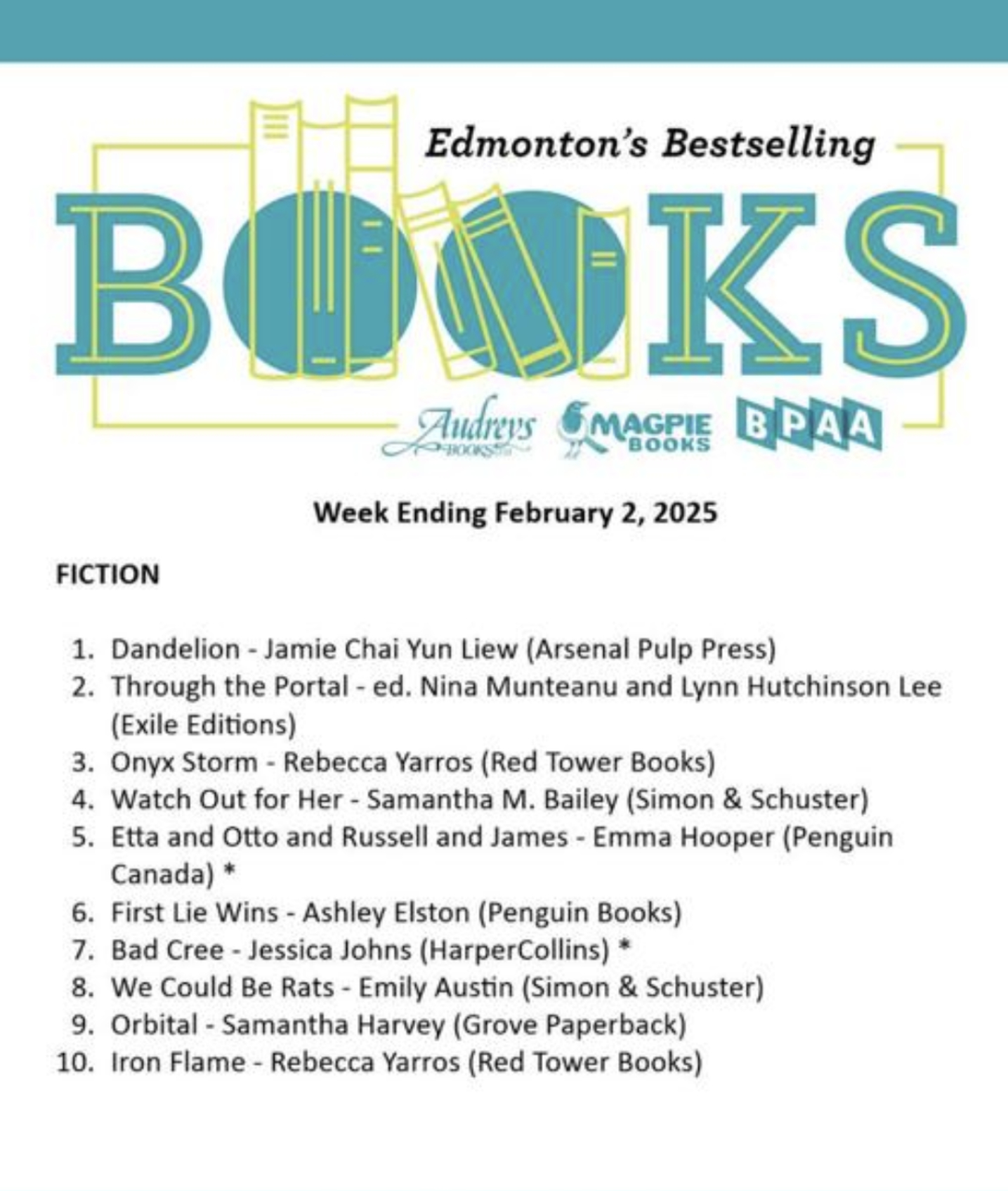
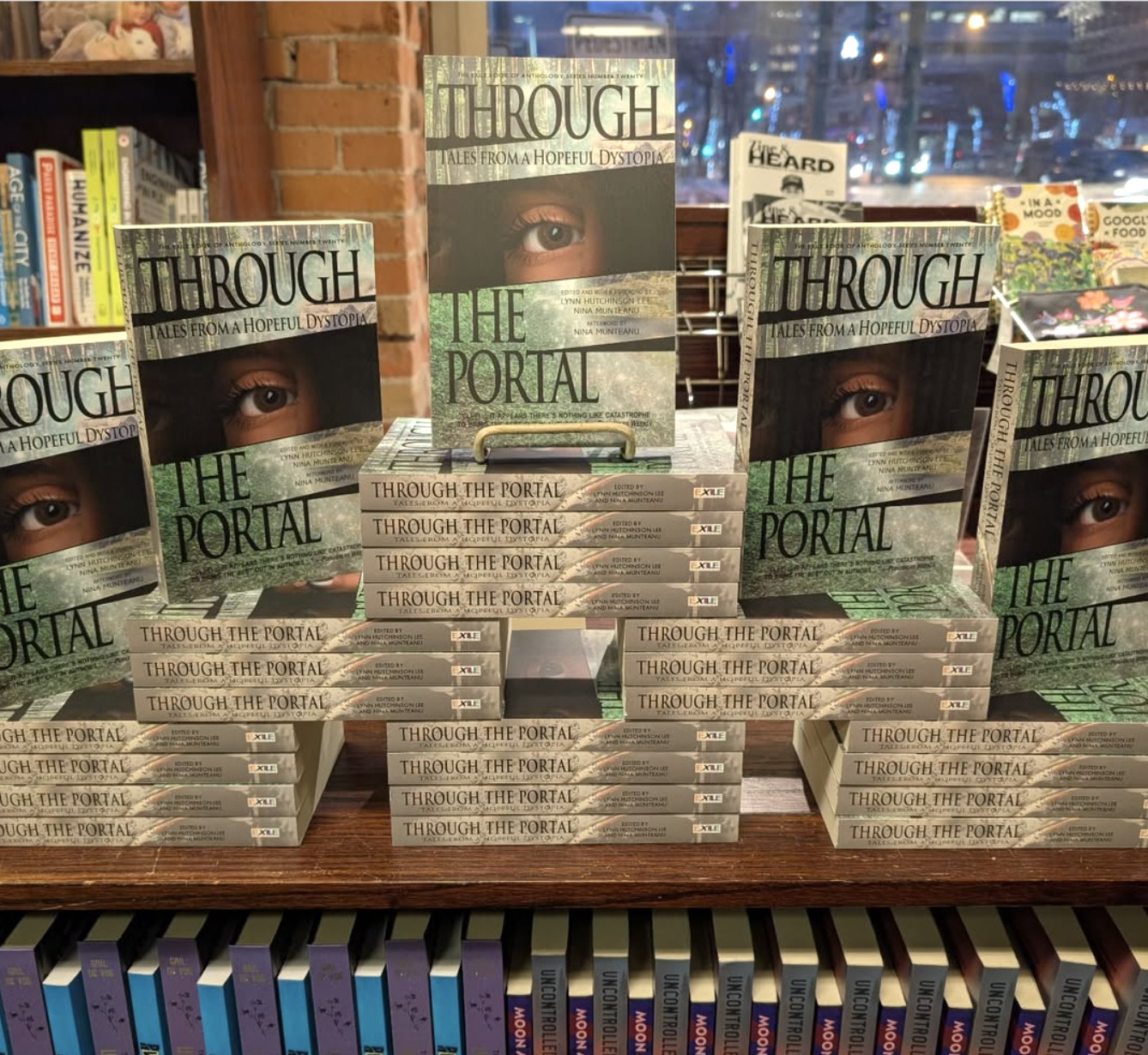
Through the Portal anthology continues to garner attention and accolades by reviewers, booksellers, and readers throughout Canada. Released December 31, 2024 and launched in several locations in Canada, Portal is celebrated for its hopeful lens on an otherwise bleak future with thirty-five unique short stories, flash fiction, and poetry and an afterward.
There are many faces for hope; this anthology has thirty-six of them. Each story in the anthology features a unique hopeful lens that draws from a diversity of authors from around the world and throughout Canada. Stories that touch on nostalgia to respect, enlightenment to endurance. In these tales that range from compassion and healing to cautionary warnings of dark insight, hope may wear a human face or the face of a tree, black crow, or leaf.
Hopeful dystopias are so much more than an apparent oxymoron: they are in some fundamental way the spearhead of the future – and ironically often a celebration of human spirit by shining a light through the darkness of disaster. In Through the Portal: Tales from a Hopeful Dystopia, award-winning authors of speculative fiction Lynn Hutchinson Lee and Nina Munteanu present a collection that explores strange new terrains and startling social constructs, quiet morphing landscapes, dark and terrifying warnings, lush newly-told folk and fairy tales.—Exile Editions
“A stunning collection of short stories and poetry that address our most existential concerns.”
Dragonfly.eco
“Will ingenuity, love, and respect for the earth help us work through whatever changes might lie ahead? Through the Portal offers hope that these qualities, if not enough in and of themselves, will help us find our way.”
The Seaboard Review
.
Nina Munteanu is a Canadian ecologist / limnologist and novelist. She is co-editor of Europa SF and currently teaches writing courses at George Brown College and the University of Toronto. Visit www.ninamunteanu.ca for the latest on her books. Nina’s bilingual “La natura dell’acqua / The Way of Water” was published by Mincione Edizioni in Rome. Her non-fiction book “Water Is…” by Pixl Press (Vancouver) was selected by Margaret Atwood in the New York Times ‘Year in Reading’ and was chosen as the 2017 Summer Read by Water Canada. Her novel “A Diary in the Age of Water” was released by Inanna Publications (Toronto) in June 2020.
Mermaids, arborists, and pollinators are among the characters to be found in Through the Portal: Tales from a Hopeful Dystopia. Edited by Lynn Hutchinson Lee and Nina Munteanu, this eco-fiction collection gathers over thirty stories that fall under the general umbrella of hopeful dystopias…
Through the Portal offers intriguing and imaginative glimpses into the future. As [one of its short stories] “A Fence Made of Names” suggests, we often don’t appreciate what we have until we lose it. By showing us what we stand to lose, these stories offer a reason to increase our actions to preserve the planet…
While many of the tales hint at dark times ahead, it was refreshing to find so many that offered a ray of hope despite that. Whether it’s finding the will to live another day, returning to a better relationship with the land and the Earth, or taking steps to improve the world in even a small way, these stories affirm humanity’s potential for resilience in challenging times.
Will ingenuity, love, and respect for the earth help us work through whatever changes might lie ahead? Through the Portal offers hope that these qualities, if not enough in and of themselves, will help us find our way.
Nina Munteanu is a Canadian ecologist / limnologist and novelist. She is co-editor of Europa SF and currently teaches writing courses at George Brown College and the University of Toronto. Visit www.ninamunteanu.ca for the latest on her books. Nina’s bilingual “La natura dell’acqua / The Way of Water” was published by Mincione Edizioni in Rome. Her non-fiction book “Water Is…” by Pixl Press (Vancouver) was selected by Margaret Atwood in the New York Times ‘Year in Reading’ and was chosen as the 2017 Summer Read by Water Canada. Her novel “A Diary in the Age of Water” was released by Inanna Publications (Toronto) in June 2020.
The third of MetastellarMagazine’s ‘Best of’ anthologies The Best of Metastellar Year Three was recently released and is available at numerous booksellers. Available in print and ebook, the anthology hosts forty-six riveting short stories of science fiction, fantasy and horror. This anthology also features my dark speculative story “Virtually Yours.” Their second ‘Best of’ anthology contained my short story “The Way of Water.”
Virtually Yours in The Best of Metastellar Year Three: In a world of seamless surveillance where virtual and real coalesce in a teasing dance, love is the trickster…
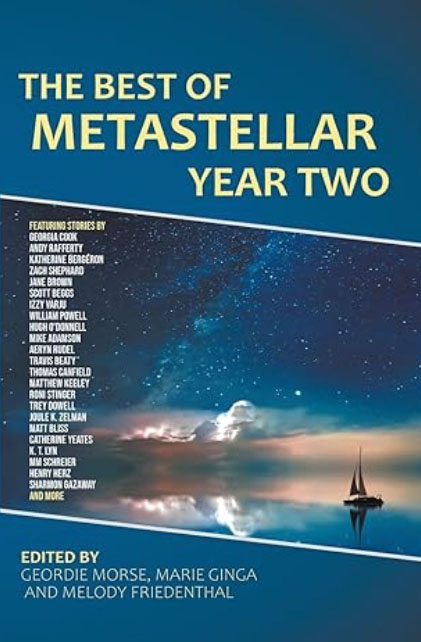
The Way of Water in TheBest of Metastellar Year Two: A woman stands two metres from a public water tap, dying of thirst in a water-scarce world rife with corporate/government corruption…
Nina tickled when her copy of “The Best of Metastellar Anthology Three” arrives in the mail
Nina Munteanu is a Canadian ecologist / limnologist and novelist. She is co-editor of Europa SF and currently teaches writing courses at George Brown College and the University of Toronto. Visit www.ninamunteanu.ca for the latest on her books. Nina’s bilingual “La natura dell’acqua / The Way of Water” was published by Mincione Edizioni in Rome. Her non-fiction book “Water Is…” by Pixl Press (Vancouver) was selected by Margaret Atwood in the New York Times ‘Year in Reading’ and was chosen as the 2017 Summer Read by Water Canada. Her novel “A Diary in the Age of Water” was released by Inanna Publications (Toronto) in June 2020.
A man tries to survive In the ruins of a bloody war between Gaians and Technocrats where Techno-clones rule.
Here’s an excerpt:
The ruins of the city rippled in the heat like a bad movie. Gunther raked his fingers through his hair and paced the exposed second floor of the dilapidated building. His gaze panned the city. Haze the color of rust lingered over phantom pools on the horizon.
“It’s hot as hell,” he complained, shrugging his Computerized Automatic Rifle over his shoulder. His camouflage fatigues clung to his body like something he needed to shed. “I’m dying in this heat.” Several flies buzzed around his head and he flapped his gangly arm madly in the air. “Damn flies.”
Slouched against some rubble, Rick ignored him and ran diagnostics on the CARifle stretched out on his lap, verifying the output data on his eye-com. Rick’s sullen face was barely visible under the V-set strapped to his head. Gunther pulled out a stick of gum, unraveled the wrapper and pushed the wad into his mouth. Smacking his lips, he savored the mint flavor and tossed the wrapper.
“Ass hole!” Rick snapped. “Pick that up.”
Gunther snatched the wrapper. The rifle slipped off his shoulder and clattered to the ground. Forcing on a nervous grin he scrambled to pick up the weapon then stepped on the vee-set he’d yanked off earlier.
“We’re Gaians.” Rick’s finger stabbed the green band on his arm. “Protectors of the Earth, ass hole.” He turned back to his CARifle and muttered, “Just like a filthy Techno. . . no idea why you’re doing anything.”
Gunther replaced the V-set on his head and slung the CARifle over his shoulder. He sagged under its weight and let his gaze stray to where the roof had been blasted away. The air smelled of smoke and burning metal. He blinked away the sweat that ran into his eyes and squinted at the sun, suspended in a yellow dust cloud. “Those lousy Technos caused this heat wave. We’re turning into a desert!”
Rick ignored him and kept tinkering with his weapon.
“Hell, if it weren’t for this revolution,” Gunther continued, “the planet would be toast already . . .” he trailed, lost for a moment in a terrifying place. More flies buzzed furiously around his head. “Get off!” he shouted and shook his head violently. He frowned and muttered, “We better see some action soon.” Gunther poked the rubble with his rifle. “When I took this post I was glad I’d be toasting any coward Technos trying to escape the city.” He raised his rifle, aimed at an imaginary target and made clicking sounds with his tongue. “When I asked the Gaian committee for this post—”
“Ass hole!” Rick spat. “You didn’t ask for it; they assigned you.”
Gunther half-grinned, exposing dirty teeth, and shrugged.
Rick spit on the ground. “I know your story, turd. You hid in some hole during the whole clone siege. Waiting to find out who won so you could take their side.”
Gunther inhaled the gum and coughed.
Rick sneered. “I figure they put you with me to keep an eye on you. Make sure you don’t run away like them other Technos.” He rubbed the graying stubble on his creased face and his eyes narrowed to slits. “Hell, you were probably a Techno before we found you. Come to mind, you look like one of them. . . .”
You can read the complete story of “The Spectator” in the Teoria Omicron ezine. An earlier version of this story was published under the title “Frames” in my short story collection Natural Selectionpublished by Pixl Press.
Nina Munteanu is a Canadian ecologist / limnologist and novelist. She is co-editor of Europa SF and currently teaches writing courses at George Brown College and the University of Toronto. Visit www.ninamunteanu.ca for the latest on her books. Nina’s bilingual “La natura dell’acqua / The Way of Water” was published by Mincione Edizioni in Rome. Her non-fiction book “Water Is…” by Pixl Press (Vancouver) was selected by Margaret Atwood in the New York Times ‘Year in Reading’ and was chosen as the 2017 Summer Read by Water Canada. Her novel “A Diary in the Age of Water” was released by Inanna Publications (Toronto) in June 2020.
My short story Robin’s Last Song was selected by the NYC Climate Writers Collective as part of an exhibition in the Climate Imaginarium on Governors Island in New York. The exhibition, starting May 18, will run throughout the summer of 2024.
Robin’s Last Song
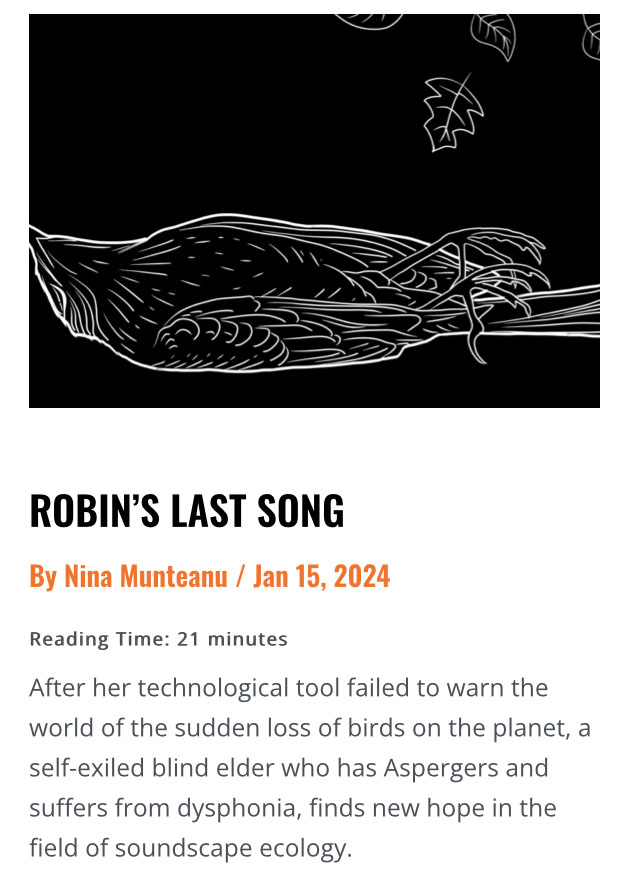
Robin’s Last Song first appeared in the #128 Issue of Apex Magazine in 2021. It tells the story of Robin, a blind elder whose digital app failed to warn the world of the sudden global loss of birds with disastrous ecological consequences. After years of living in self-exile and getting around poorly on sight-enhancing technology, a discovery gives her new hope in rekindling her talents in the field of Soundscape Ecology.
In a recent interview with writer Simon Rose, I described my thoughts in writing Robin’s Last Song:
I wanted to make “Robin’s Last Song” a realizable work of fiction in which science and technology play both instigator of disaster and purveyor of salvation. Our biogenetic technology comes to us as a double-edged sword in the form of gene-editing, proteomics, DNA origami, and CRISPR—just to name a few. These biotechnological innovations promise a cornucopia of enhancements: from increased longevity and health in humans to giant disease-resistant crops. But, for every ‘magic’ in technology, there is often unintended consequence. Unforeseen—or even ignored—casualties and risks. I suppose my ultimate question with this story is: will synthetic biology redesign Nature to suit hubris or serve evolution? Science doesn’t make those decisions. We do.
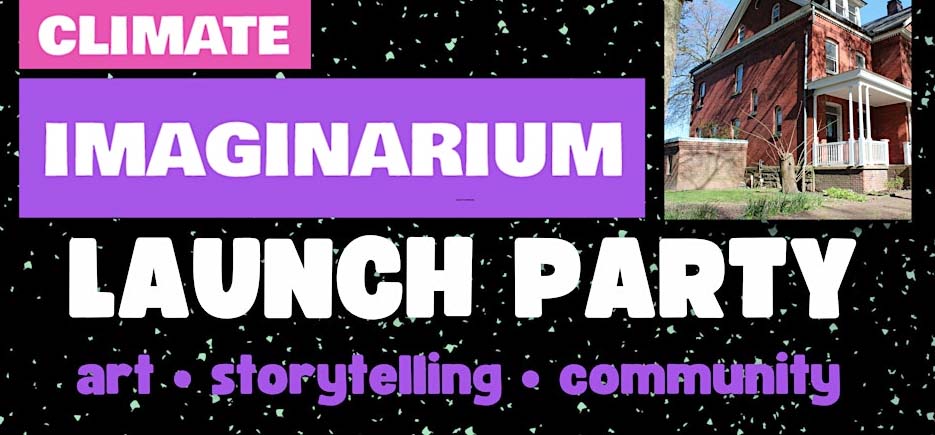
Anyone living in or visiting the NYC area is welcome to the Climate Imaginarium launch on May 18 on Governor’s Island. Check this Eventbrite link for details. The exhibition will continue throughout the summer of 2024 and will include: climate storytelling and poetry by Climate Café, the Sixth Festival, and the Climate Writers Collective; opening exhibition of “What is Environmental Art?” by Forest for Trees; artwork from the Climate Imaginarium community and Climate Writers exhibition; “Eye of Flora” virtual reality exhibition by Synphisica Collective; and more.
Here’s what they say:
Come to Governors Island for the grand opening of our Climate Imaginarium house! The Climate Imaginarium will serve as a community center for climate and culture, with galleries and spaces for exhibitions, performances, film screenings, and events that respond to the climate crisis with solutions and visions for hope and justice. Join us at Building 406A on Colonels Row for a lively celebration of climate art, storytelling, and community.
Exhibitions will be open to the public at noon, and the party will officially start at 2pm. All donations will support programming in our community space.
Nina Munteanu is a Canadian ecologist / limnologist and novelist. She is co-editor of Europa SF and currently teaches writing courses at George Brown College and the University of Toronto. Visit www.ninamunteanu.ca for the latest on her books. Nina’s bilingual “La natura dell’acqua / The Way of Water” was published by Mincione Edizioni in Rome. Her non-fiction book “Water Is…” by Pixl Press (Vancouver) was selected by Margaret Atwood in the New York Times ‘Year in Reading’ and was chosen as the 2017 Summer Read by Water Canada. Her novel “A Diary in the Age of Water” was released by Inanna Publications (Toronto) in June 2020.
Twelve years ago, my speculative short story Virtually Yours was originally published in issue #15 of Hadrosaur Tales, a small but vibrant literary magazine out of Las Cruces, New Mexico. The story explored concepts of cyber-spying, virtual workspace, anonymity, and identity. And like its own characters, who wandered through their impermanent virtual offices, the story has wandered far and wide since…
Some of the publications Virtually Yours appeared in: Hadrosaur Tales in 2002; Neo-opsis Science Fiction Magazine in 2004; Nowa Fantastyka in 2006; Amazing Stories 2014; and Speculative North in 2021
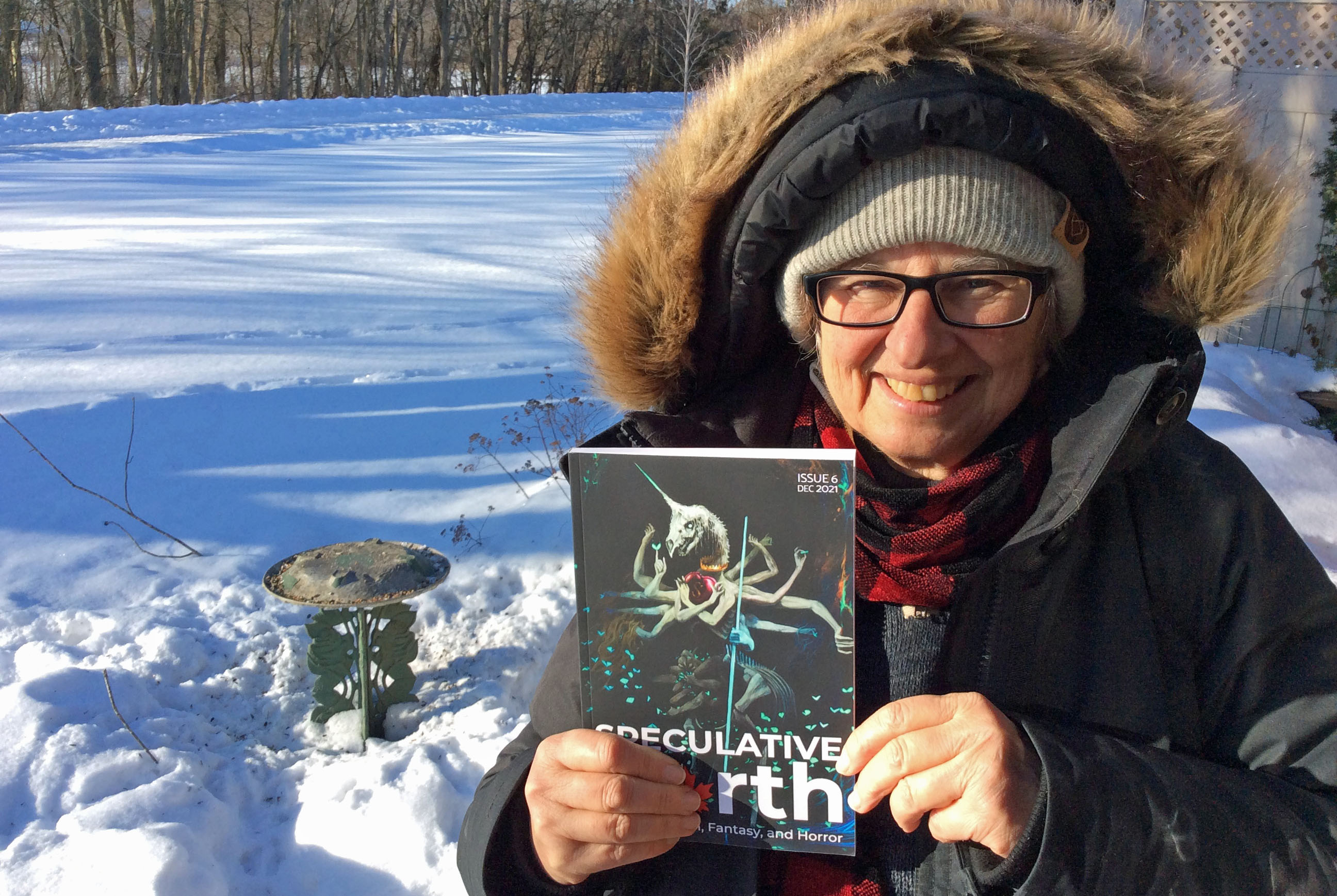
Nina in the North holding December 2021 issue of Speculative North
Shortly after Virtually Yours was published for the eighth time, in the December 2021 issue of Canadian magazine Speculative North, Issue #6, R. Graeme Cameron reviewed all the stories in that issue, including mine. His review appeared in Amazing Stories and here’s what he said about Virtually Yours:
Review of Virtually Yours by R. Graeme Cameron in Amazing Stories
Story Illustration by Duncan Long for Virtually Yours in Amazing Stories
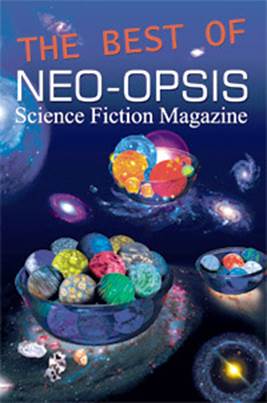
Since its first publication in 2002 in Hadrosaur Tales, Virtually Yours has travelled well. In 2004, it went to British Columbia with Neo-opsis Science Fiction Magazine (Issue #3). In 2006, it moved to Poland and was translated into Polish in Nowa Fantastyka. It then returned to British Columbia in the Best of Neo-opsis Science Fiction Magazine: Anthologyin 2006 and was nominated for the Speculative Literature Foundation Fountain Award. It then moved to Israel and was translated into Hebrew in Bli-Panika in 2006. In 2014, it moved back to America for an appearance in Amazing Stories (Issue 88) then went to Italy in 2016 to appear in Future Fiction. Its eighth appearance saw its return in 2021 to Canada in Ontario’s Speculative North.
Virtually Yours continues to wander the literary landscape, most recently making its ninth appearance in the worldly MetaStellar Speculative Fiction and Beyond, December 2022 (where you can find several of my other short stories).
Virtually Yours story illustration in MetaStellar by Brigitte Werner
I just love it when a story shows ‘legs’ and wanders the world.
Cover art for 2006 “The Best of Neo-opsis Science Fiction Magazine Anthology” by Karl Johanson
p.s. I was just informed that “Virtually Yours” will make its tenth appearance in MetaStellar’s short fiction 3rd annual anthology, with expected release both in print and electronic versions in June 2024.
Nina Munteanu is a Canadian ecologist / limnologist and novelist. She is co-editor of Europa SF and currently teaches writing courses at George Brown College and the University of Toronto. Visit www.ninamunteanu.ca for the latest on her books. Nina’s bilingual “La natura dell’acqua / The Way of Water” was published by Mincione Edizioni in Rome. Her non-fiction book “Water Is…” by Pixl Press (Vancouver) was selected by Margaret Atwood in the New York Times ‘Year in Reading’ and was chosen as the 2017 Summer Read by Water Canada. Her novel “A Diary in the Age of Water” was released by Inanna Publications (Toronto) in June 2020.
I rock on the cedar swing on my veranda and hear the wind rustling through the gaunt forest. An abandoned nest, the forest sighs in low ponderous notes. It sighs of a gentler time. A time when birds filled it with song. A time when large and small creatures — unconcerned with the distant thrum and roar of diggers and logging trucks — roamed the thick second-growth forest. The discord was still too far away to bother the wildlife. But their killer lurked far closer in deadly silence. And it caught the birds in the bliss of ignorance. The human-made scourge came like a thief in the night and quietly strangled all the birds in the name of progress.
excerpt from “Robin’s Last Song” by Nina Munteanu
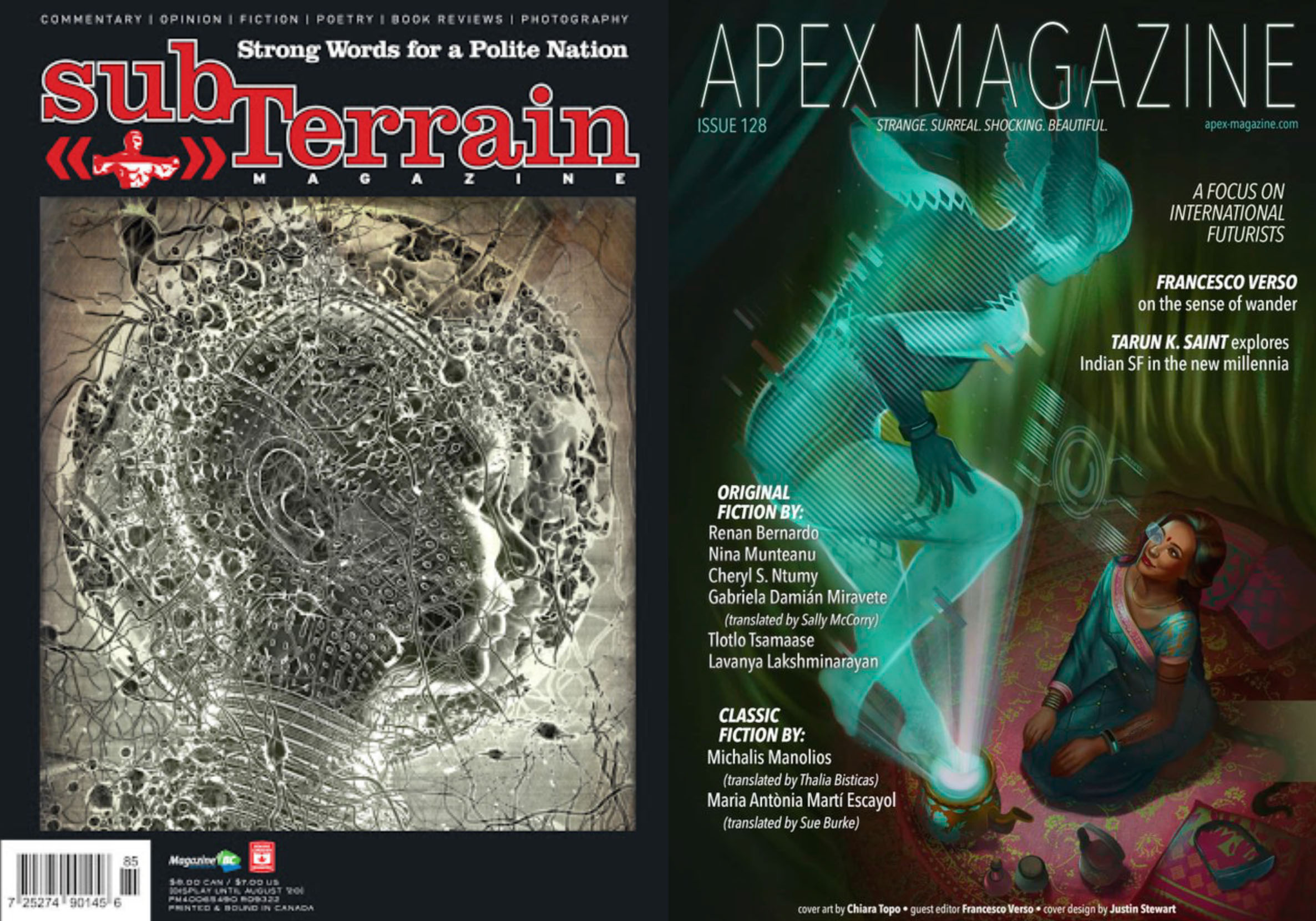
My short story Robin’s Last Song was republished recently in the superlative online magazine Metastellar. The story was first published in 2021 in Issue 128 of Apex Magazine and an earlier version of the story called Out of the Silence appeared in the literary magazine subTerrain Magazine Issue 85 in 2020.
Left, “subTerrain” Issue 85 carries “Out of the Silence”; right, “Apex Magazine” issue 128 carries “Robin’s Last Song”
I raced up the stairs to the auditorium then quieted my breath and listened at the door, heart thumping like a bird trying to escape. Professor Gopnik was ten minutes into his lecture; I could hear his commanding voice: “… estimates that the entire number of birds have been reduced by a third in five decades—I mean common birds like the robins, sparrows, warblers, and even starlings…”
He was talking about Rosenberg’s paper in Science. The study shocked the scientific community; but I had already observed the decline of the house sparrow around my aunt and uncle’s house near the Old Mill. And the robin—my namesake, whose song heralded spring for me—had grown quiet.
I imagined Gopnik waving the journal at the class in his typical showman style. He had a habit of wandering the stage like an evangelist, fixing each student with intense blue eyes as if challenging them to believe. I thought him an over-confident condescending prig. But for someone who looked as young as the students he was teaching, Gopnik was brilliant. And what he was doing was so important. I wanted so badly to work under him as a grad student. But he terrified me.
Excerpt from “Robin’s Last Song” by Nina Munteanu
The Story Behind the Story
It all began with my discovery of an emerging bioacoustic tool, soundscape ecology, that measures biodiversity and ecosystem functionality. I’d just read the disturbing 2019 Science article by Rosenberg and team who determined that our slow violence of habitat degradation and toxic pollution has reduced the world’s bird population by a third in just five decades. I was devastated; I could not imagine a world without the comforting sound of birds. What would it be like if all the birds disappeared?
Map and chart of bird decline since 1970
Already primed with research into genetic engineering for the sequel to my 2020 eco-novel,A Diary in the Age of Water, my muse (often delightfully unruly) played with notions of the potential implication of gene hacking in ecological calamity and how this might touch on our precious birds: when nature “is forced out of her natural state and squeezed and moulded;” her secrets “reveal themselves more readily under the vexations of art than when they go their own way.”
Robin’s Last Song is a realizable work of fiction in which science and technology are both instigators of disaster and purveyors of salvation. Today, gene-editing, proteomics, and DNA origami—to name just a few—promise many things from increased longevity in humans to giant disease-resistant crops. Will synthetic biology control and redesign Nature to suit hubris or serve evolution? What is our moral imperative and who are the casualties? As Francis Bacon expressed in Novum Organum, science does not make that decision. We do.
I also recently sat down with Rebecca E. Treasure of Apex Magazine for a conversation about story, ecology, and the future. Here’s how it begins:
Apex Magazine: The Way of Water in Little Blue Marble is such a powerful piece touching on water scarcity and friendship, a dry future and the potential for technology to overtake natural ecology. Robin’s Last Song explores extinction, human fallibility, friendship, and again, that conflict between technology and nature. Do you think we’re heading toward the kind of dystopia shown in these stories?…
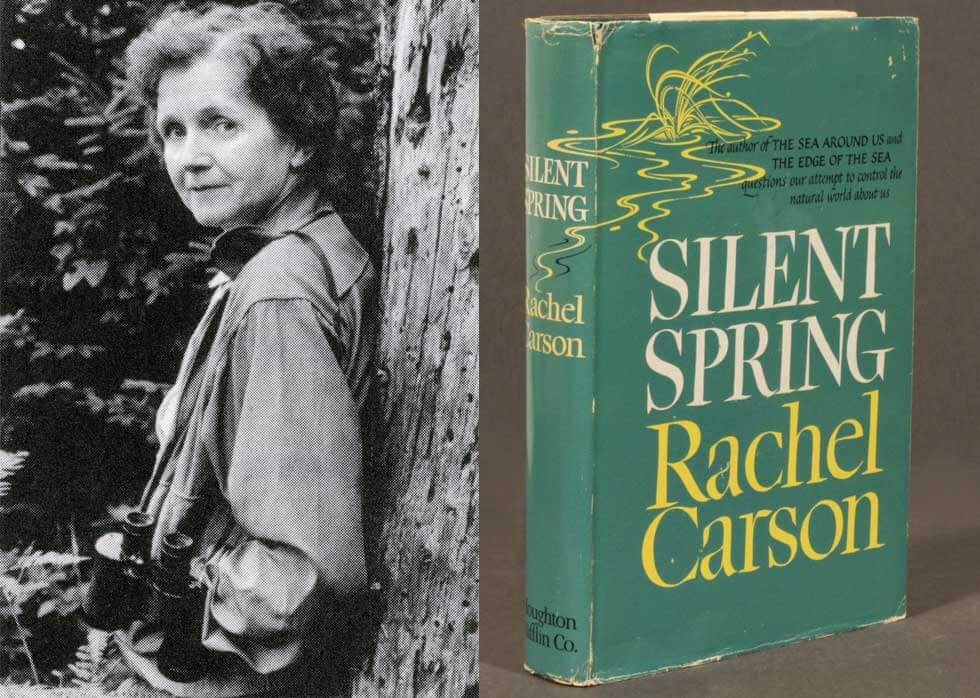
“Over increasingly large areas of the United States, spring now comes unheralded by the return of the birds. The early mornings are strangely silent where once they were filled with the beauty of bird song”
Rachel Carson, Silent Spring
Discarded robin’s egg in the forest in spring, ON (photo by Nina Munteanu)
p.s. May9: I just learned that Robin’s Last Song was selected by the NYC Climate Writers Collective as part of an exhibition in the Climate Imaginarium on Governors island. The exhibition, starting May 18, will run throughout the summer of 2024.
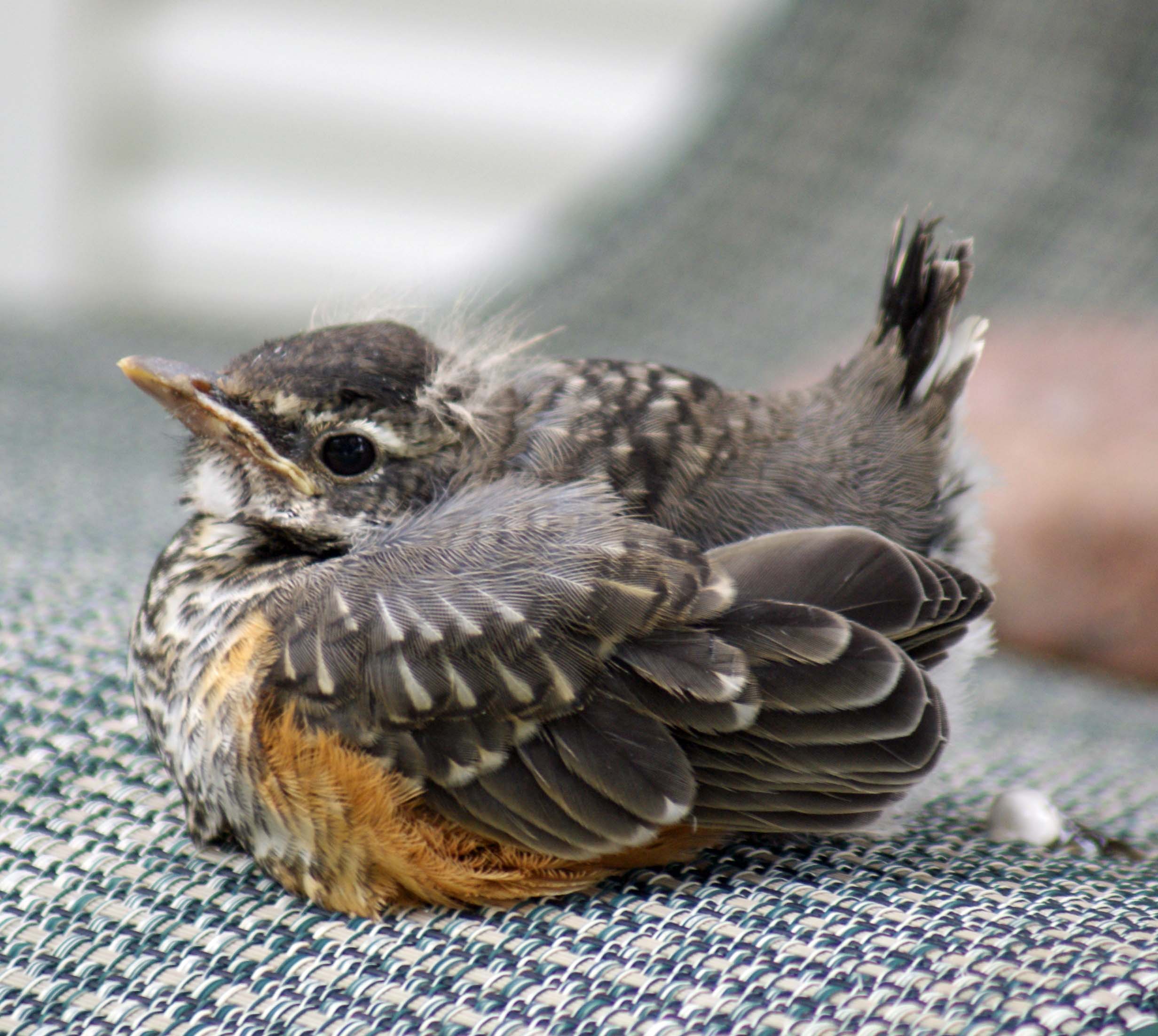
Fledgling robin rests on a patio chair in spring, ON (photo by Merridy Cox)
Nina Munteanu is a Canadian ecologist / limnologist and novelist. She is co-editor of Europa SF and currently teaches writing courses at George Brown College and the University of Toronto. Visit www.ninamunteanu.ca for the latest on her books. Nina’s bilingual “La natura dell’acqua / The Way of Water” was published by Mincione Edizioni in Rome. Her non-fiction book “Water Is…” by Pixl Press (Vancouver) was selected by Margaret Atwood in the New York Times ‘Year in Reading’ and was chosen as the 2017 Summer Read by Water Canada. Her novel “A Diary in the Age of Water” was released by Inanna Publications (Toronto) in June 2020.



















 Nina Munteanu Writing Coach