“I am Planta: On the Line, in Vancouver, British Columbia, at TheCommentary.ca.
Nina Munteanu joins me again. She has just published a new novel, A Diary in the Age of Water. The noted writer and limnologist, a freshwater scientist, has written a book that could be considered science fiction. I suppose ‘cli-fi’ is the better term, climate-based science fiction. In the book, far away in a post-climate change world, Kyo finds a diary that gives her insight into the world before water scarcity. I’ll get Nina to tell us about Kyo, about the themes in this book, especially the world ahead if we continue as we do. Nina Munteanu is an author and ecologist. She has published many books of science fiction and fantasy, and was first on the program in 2016 when her book Water Is… The Meaning of Water was published. The website for more is at www.ninamunteanu.ca. This new book is from Inanna Publications. Please welcome back to the Planta: On the Line program, Nina Munteanu; Ms. Munteanu, good morning…”
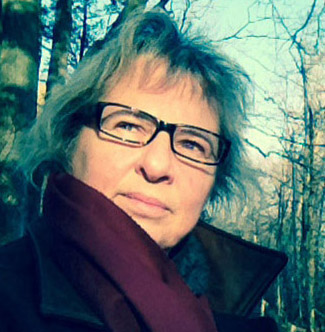
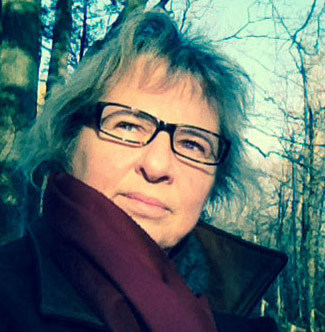
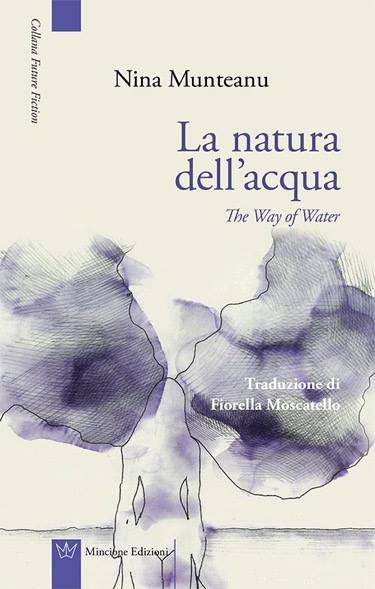
NINA MUNTEANU is a Canadian ecologist / limnologist and novelist. She is co-editor of Europa SF and currently teaches writing courses at George Brown College and the University of Toronto. Visit www.ninamunteanu.ca for the latest on her books. Nina’s bilingual “La natura dell’acqua / The Way of Water” was published by Mincione Edizioni in Rome. Her non-fiction book “Water Is…” by Pixl Press(Vancouver) was selected by Margaret Atwood in the New York Times ‘Year in Reading’ and was chosen as the 2017 Summer Read by Water Canada. Her novel “A Diary in the Age of Water” was released by Inanna Publications (Toronto) in June 2020.
I recently gave a talk at Orchard Park Secondary School during their “Eco Crawl” week. “Eco crawl is a cross curricular initiative promoting environmental awareness, natural conservation, and well-being,” says Teresa Grainger, Library Learning Commons Technician at the school. The “week long initiative will include animal visitors, presentations, displays, and outdoor activities. We like to involve as many departments as possible.”
The school invited me to participate with a presentation. I spoke about my work as a writer and as a scientist, how I was inspired to write eco-fiction and a little about the process of how I started. I shared the challenges I faced and my victories. I also spoke about the importance of eco-fiction as narrative and the importance of storytelling generally to incite interest, bring awareness and ultimately action.
The word is a powerful tool. And the stories that carry them are vehicles of change.
Here is some of that talk:
My story begins with the magic of water, Quebec water … I was born in a small town in the Eastern Townships of Quebec, a gently rolling and verdant farming community, where water bubbles and gurgles in at least two languages.
Pastoral Eastern Townships and Granby, Quebec; Nina Munteanu as a child
.
I spent a lot of my childhood days close to the ground, observing, poking, catching, destroying and creating. Perhaps it was this early induction to the organic fragrances of soil, rotting leaves and moss that set my path in later life as a limnologist, environmental consultant and writer of eco-fiction.
My mother kept a garden in our back yard that she watered mostly with rain she collected in a large barrel out back. I remember rows of bright dahlias with their button-faces and elegant gladiolas of all colours, tall like sentinels. And, her gorgeous irises.
In the winter, my mother flooded the garden to create an ice rink for the neighbourhood to use for hockey. Somehow, I always ended up being the goalie, dodging my brother’s swift pucks to the net. I got good at dodging—probably a useful life skill in later life…
Our dad frequently took us to the local spring just outside town. We walked a few miles up Mountain Road to an unassuming seepage from a rock outcrop with a pipe attached to it by the local farmer. I remember that the water was very cold. Even the air around the spring was cooler than the surrounding air. I remember that the spring water tasted fresh and that the ice it formed popped and fizzed more than tap water.
I followed my older brother and sister to the nearby forest and local river. We stirred soil, flower petals and other interesting things with water to fuel “magic potions” then told wild stories of mayhem and adventure. I became a storyteller. My passion for storytelling eventually morphed into writing; but, the underlying spark came through environmental activism.
.
In early high school, during the mid-60s, I became an environmental activist, putting up posters and writing in the school paper. I wrote letters to industry and politicians, trying to incite interest in being good corporate citizens and promoting global environmental action. I remember a well-meaning teacher chiding me for my extravagant worldview. “Stick to little things and your community—like recycling,” he suggested patronizingly. I remember the shock of realizing that not everyone felt the planet like I did. Perhaps it was a teenage-thing, or a girl-thing, or a nina-thing. I prayed it wasn’t just a nina-thing…
I started writing stories in high school. Mostly eco-fiction, though I didn’t know that’s what it was at the time. There was no genre called eco-fiction back then. It all went under the umbrella of scifi.
.
I completed my first novel, Caged in World when I was fifteen—in Grade 9—in 1969. Caged in World was a hundred-page speculative story about a world that had moved “inside” to escape the ravages of a post climate-change environment. The eco-novel was about a subway train driver and a data analyst caught in the trap of a huge lie. The story later morphed into Escape from Utopia. Several drafts—and years later—the novel became the eco-medical thriller Angel of Chaos, set in 2095 as humanity struggles with Darwin’s Disease—a mysterious neurological environmental pandemic. Icaria 5 is one of many enclosed cities within the slowly recovering toxic wasteland of North America, and where the protagonist Julie Crane works and lives. The city is run by technocrats, deep ecologists who call themselves Gaians, and consider themselves guardians of the planet. The Gaians’ secret is that they are keeping humanity “inside” not to protect humanity from a toxic wasteland but to protect the environment from a toxic humanity.
Some of the scientific papers, reports and articles I wrote or participated in
.
When I enrolled in college and university, I thought of going into environmental law then decided that I didn’t have the temperament for it and switched to biology. Without realizing it, I put fiction writing on hold while I pursued ecology at university. One professor got me very interested in limnology and it became my focus when I realized that I’d always been fascinated by water. I started out being scared of water—not being a strong swimmer—and the best thing you can do to get over a fear is to study it and understand it. That’s exactly what I did. I did some cool research on stream ecology and published scientific papers, articles and reports. Then I moved to the westcoast to teach limnology at the University of Victoria and do consulting work in aquatic ecology.
So, in a way, I’d gone back to what I loved best as a child—mucking about in nature, spending my days close to the ground, observing, poking, catching, destroying and creating.
Kevin as a toddler
.
In 1991, my son Kevin was born. I felt a miracle pass through me. Kevin became my doorway into wonder. His curiosity was boundless and lured me into a special world of transformation. I took time off work to spend with Kevin when he was young. We went on great trips, from the local mall, where we had a hot chocolate and played with Lego, to the local beach on the Fraser River, where we explored the rocks. When he was no more than three, I took him on endless adventures in the city and its surroundings. We didn’t have to go far. The mud puddles of a new subdivision after a rain were enough to keep our attention for dozens of minutes. We became connoisseurs of mud. The best kind was “chocolate mud,” with a consistency and viscosity that created the best crater when a rock was thrown into it.
Kevin and I often explored the little woodland near our house. We made “magic potions” out of nightshade flowers, fir needles, loam and moss; we fueled our concoctions with the elixir of water from a stagnant pool then told wild stories of mayhem and adventure.
Storytelling kept calling to me. It was the 1990s—twenty years after I finished Angel of Chaos—and I’d published lots of short stories and articles. But no novels.
Some of Nina’s short story publications
I spent several years shopping Angel of Chaos to agents and publishing houses. Although I received many bites, all finally let go. I kept writing short stories, some of which were cannibalized from the book, and several were published; I also wrote Angel’s prequel, The Great Revolution and Angel’s sequel Darwin’s Paradox and shopped them.
Then In 2007, Dragon Moon Press in Calgary made an offer to publish Darwins Paradox; the sequel became my debut novel. Dragon Moon Press later picked up Angel of Choas and published it in 2010 as a prequel. I haven’t stopped publishing books since (with a book pretty much every year), both fiction and non-fiction…including writing guidebooks in my Alien Guidebook Series.
Kevin hiking the mountains of the west coast, BC
My son left the nest to go to university and work and I went on walkabout and eventually left the westcoast, returning to my old home in the east. I did lots of house-sitting in the Maritimes, then ended up teaching at UofT in Toronto.
UofT, west gate to quadrangle of University College, ON (photo by Nina Munteanu)
In 2016, I published Water Is… with Pixl Press in Vancouver. It’s a biography and celebration of water—my attempt to write a lay book on my water science, something that all could appreciate. Turns out that Margaret Atwood really liked it too!
.
On its heels, I got a book deal with Inanna Publications in Toronto for my eco-novel A Diary in the Age of Water. This eco-fiction novel follows the journeys of four generations of women during a time of catastrophic environmental change. The novel explores each woman’s relationship with water, itself an agent of change…
.
Eco-fiction (short for ecological fiction) is a kind of fiction in which the environment—or one aspect of the environment—plays a major role in story, either as premise or as character. For instance, several of my eco-fiction stories give Water a voice as character. In my latest novel,A Diary in the Age of Water, each of the four women characters reflects her relationship with water and, in turn, her view of and journey in a changing world.
In eco-fiction, strong relationships are forged between the major character on a journey and an aspect of their environment and place. Such strong relationship can linger in the minds and hearts of readers, shaping deep and meaningful connections that will often move a reader into action. Our capacity—and need—to share stories is as old as our ancient beginnings. From the Paleolithic cave paintings of Lascaux to our blogs on the Internet, humanity has left a grand legacy of ‘story’ sharing. By providing context to knowledge, story moves us to care, to cherish, and, in turn, to act. What we cherish, we protect. It’s really that simple.
Eco-fiction—whether told as dystopia, post-apocalypse, cautionary tale or hopeful solarpunk—can help us co-create a new narrative, one about how the Earth gifts us with life and how we can give in return. It’s time to start giving.
That starts with story.
NINA MUNTEANU is a Canadian ecologist / limnologist and novelist. She is co-editor of Europa SF and currently teaches writing courses at George Brown College and the University of Toronto. Visit www.ninamunteanu.ca for the latest on her books. Nina’s bilingual “La natura dell’acqua / The Way of Water” was published by Mincione Edizioni in Rome. Her non-fiction book “Water Is…” by Pixl Press(Vancouver) was selected by Margaret Atwood in the New York Times ‘Year in Reading’ and was chosen as the 2017 Summer Read by Water Canada. Her novel “A Diary in the Age of Water” was released by Inanna Publications (Toronto) in June 2020.
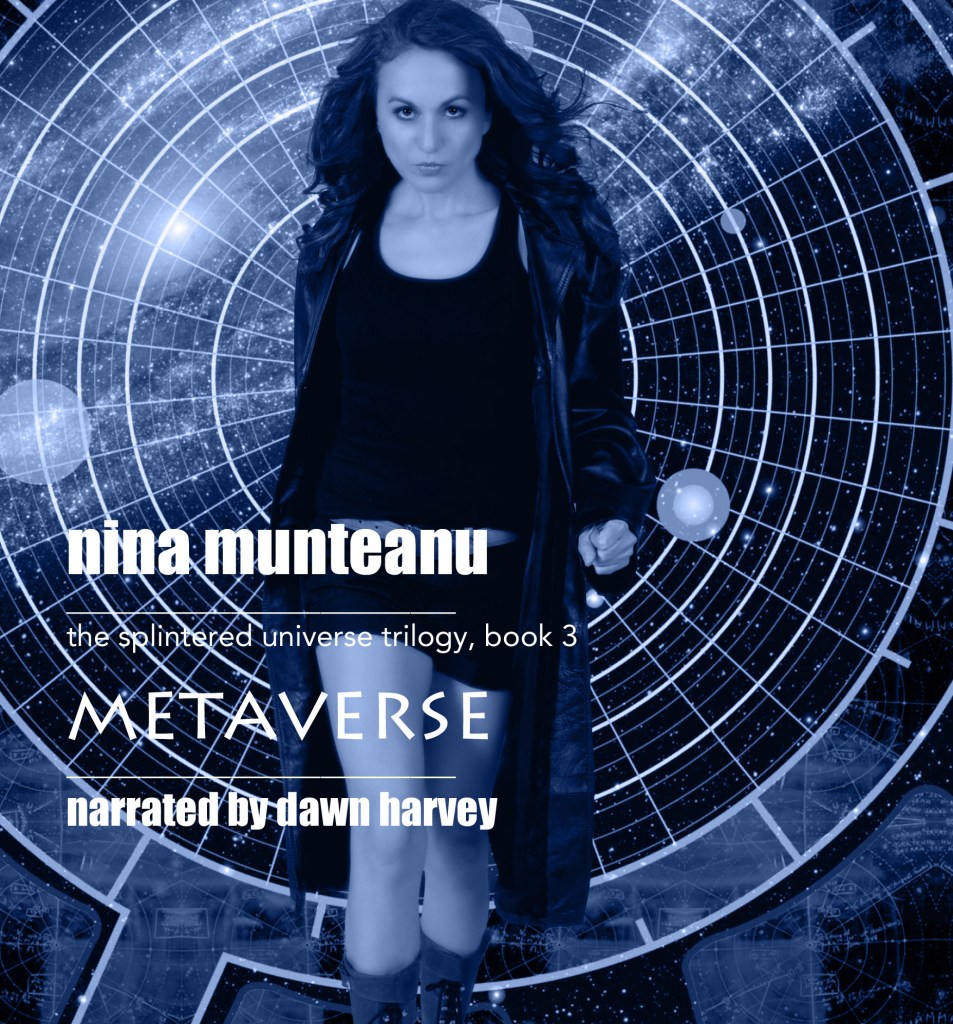
My detective thriller trilogy “The Splintered Universe,” which came out in print and ebook format in 2012-2014 were made into audiobooks by Iambik in 2019 and narrated impeccably by voice artist Dawn Harvey. When Iambik closed its doors, Spoken Realms and Pixl Press picked up the trilogy and reissued them in 2022. They are now remastered and available for purchase. Canadian author Simon Rose recently interviewed me about the re-release of The Splintered Universe Audiobooks. Part of that interview appears below. For the entire interview find the link below.
Interview with Nina Munteanu on New Audiobook Release of “The Splintered Universe” Trilogy
I had the pleasure recently of talking with Canadian author Nina Munteanu about the new release of her audiobook setThe Splintered Universe Trilogy. Nina is a scientist (limnologist) who also writes science fiction and fantasy with a focus on eco-fiction and climate fiction. She has nine novels and five non-fiction books published, including “Water Is…” recommended by Margaret Atwood as her #1 choice in the New York Times ‘Year in Reading’ in 2016.
The Splintered Universe Trilogy follows the thrilling adventures of Galactic Guardian Rhea Hawke, human detective who must save a world she hardly understands. It’s full of exciting planets, space travel, tall secrets, intrigue and even some romance. I interviewed Nina in 2019 about the trilogy when the three formats first became available and we talked about her world building, Rhea Hawke’s cool arsenal of gadgets and weapons, and concepts of metaphysics, existentialism and identity. So, what’s happening with all that now?
Simon:So, tell us about these new releases.
Nina: You’re right, Simon, the audiobooks of the trilogy did all come out in 2019, completing the three formats of print, ebook and audiobook. I was over the moon. What we’ve done recently is remaster the audiobooks and we’re now selling them as a package through the new publishers, Spoken Realms (first two audiobooks) and Pixl Press (third audiobook).
Briefly, the trilogy follows our intrepid (though slightly misguided) detective Rhea Hawke as she tries to solve the genocide of a spiritual sect on some backwater planet. She bungles her mission by killing her only lead and instead discovers a conspiracy to exterminate humanity by an alien race only she thinks exists. It goes downhill for her from there. She gets fired and her sentient ship—her only friend—is impounded. Her whole life comes apart. Her only chance to rebuild it is to prove that her discovery is true. That leads her down a rabbit hole into a dangerous world of intrigue, full of unsavory shape-shifting characters, dust smuggling, giant flying crustaceans, amorous toxic plants, and portals into mirror universes.
Rhea’s inventiveness gets her into even more trouble. She gained some notoriety with her created weapon, the MEC (short for Magnetic-Electro-Concussion) pistol, a versatile wave-weapon that can target DNA signatures and do almost anything you want with a single sweep. Her proprietary MEC design—coveted by shady crime syndicates and her own Guardians alike—becomes the centre piece to a universal war.
“An addictive start to the trilogy”–BOOK ADDICT
Simon:What makes these new audiobooks so special?
Nina: What makes these audiobooks special lies ultimately in their narration. When the original audiobook publisher took on the books as audiobooks, they provided me with three voice artists to audition. I chose Dawn Harvey because I could visualize my main character through her voice. Given that the entire trilogy is told in the first person, the narrator’s voice had to be just right. Dawn’s voice is dark and sultry like coffee. It is sexy and irreverent with a hidden vulnerability and sensitivity that perfectly captured the main character, Detective Rhea Hawke. What I didn’t realize then was how well Harvey would represent the thirty-odd other characters, mostly aliens—one who spoke through several mouths.
“Rhea is a fascinating character from the start and she continues to grow throughout the tale.”–DAB OF DARKNESS
Simon:Tell us about this narration process of the audiobooks.
Nina: Dawn is a dedicated professional. Working with her was an absolute pleasure. She created unique and consistent voices for the books many characters. She ensured that each character had the appropriate vernacular, tone, accent and cadence. She did proofs and confirmed them with me. She also tackled the “alien” vocabulary; many are made-up words. Dawn literally breathed life into Rhea Hawke and all the other characters. When I first listened to the Outer Diverse audiobook in the car on my way to Nova Scotia, I lost myself in her storytelling and forgot that I’d written it.
Here’s what one Amazon review said: “Dawn Harvey breathed incredible life into the lead character, Rhea Hawke—both sarcastic and vulnerable at the same time; a detective with a cynical edge, and sultry voice tinged with wiry sarcasm. The story unfolded through Rhea’s narrative like an old film noir as she unraveled mysteries that led to the greatest one: her own.”
Martha’s Bookshelf wrote: “Ms. Harvey manages to enthuse the personality of the characters into each voice. The wise, gentle Ka has a soft, strong sound that reminds you of a wise old bird. Shlsh She She, a slippery, slimy creature has a slurry, garbled voice like a mouthful of mushy, wet food. Dawn’s reading conveys the loneliness in Rhea, the sexiness of Serge, the frustrated friendliness of Bas, and the faithful coziness of Benny. She is able to bring emphasis to the action or romance, weariness or fear elements of the story. The narration never takes over the story; but rather enhances it.”
“An explosive ending … such a great series!”–LILLY’S BOOK WORLD
Simon:What has been the reception to the audiobooks so far?
Nina: the reception has been wonderful and overwhelming.
Dab of Darkness says: “There’s so much I have enjoyed about this series so far … There’s her AI ship, Benny, her sentient great coat, her special made gun, and her own hidden shapeshifting abilities. Then there’s a cast of interesting characters, good guys and bad guys. I love that I don’t know how things will turn out; the plot keeps me guessing.”
One Goodreads review wrote: “Rhea Hawke is a Galactic Guardian, and I love to say her name. Her name alone lets you know that there is a bad ass super hero of a woman on site. I can picture her boots, her great coat, and her side arms. I want to be her when I grow up.”
Nina: The trilogy can be purchased at most of the usual places in print and ebook formats. These include Amazon all over the world, Kobo, iBooks, Barnes and Noble and other quality retailers.
The audiobooks of the trilogy are available through Audible. The links on Audible for the three audio books are as follows: Outer Diverse, Inner Diverse, Metaverse.
Nina Munteanu is a Canadian ecologist / limnologist and novelist. She is co-editor of Europa SF and currently teaches writing courses at George Brown College and the University of Toronto. Visit www.ninamunteanu.ca for the latest on her books. Nina’s bilingual “La natura dell’acqua / The Way of Water” was published by Mincione Edizioni in Rome. Her non-fiction book “Water Is…” by Pixl Press(Vancouver) was selected by Margaret Atwood in the New York Times ‘Year in Reading’ and was chosen as the 2017 Summer Read by Water Canada. Her novel “A Diary in the Age of Water” was released by Inanna Publications (Toronto) in June 2020.
Sample of eco-fiction publications Nina contributed as author or editor
“What is Eco-Fiction and Why Should We Care?”
In 2019, at the When Words Collide writer’s conference in Alberta, I participated in a panel on eco-fiction. The panel, consisting of Alex Reissen, Merilyn Ruth Liddell, Claudiu Murgan, Nina Munteanu, and moderated by Canadian speculative author Candas Jane Dorsey, discussed what eco-fiction is, what it means to its writers and its readers and why it’s an important genre of literature. How, for instance can eco-fiction writers influence our audience to engage in helping the planet and humanity, in turn? How can we do it without turning to the polemic of non-fiction? We discussed the importance of “storytelling”, bringing in characters to care about, making the global experience (and issue) personal. Essentially dramatizing the premise.
Candas described fiction writers as “sneaky,” exploring the issue (and message) through context and setting with a focus on character journey. This includes use of sub-text and subtleties embodied by individuals. I mentioned treating the environment as a character—a character to care about.
We explored several areas in which writers could elucidate ways to engage readers for edification, connection and participation. We discussed optimism, new perspectives, and envisioning our future.
“Science doesn’t tell us what we should do,” Barbara Kingsolver wrote in Flight Behavior. “It only tells us what is.” Stories can never be a solution in themselves, but they have the capacity to inspire action.
Cedar pine forest during winter snow, Jackson Creek Park, ON (photo and rendition by Nina Munteanu)
“People need such stories, because however dark, a darkness with voices in it is better than a silent void.”
Margaret Atwood, Maddaddam
Nina Munteanu is a Canadian ecologist / limnologist and novelist. She is co-editor of Europa SF and currently teaches writing courses at George Brown College and the University of Toronto. Visit www.ninamunteanu.ca for the latest on her books. Nina’s bilingual “La natura dell’acqua / The Way of Water” was published by Mincione Edizioni in Rome. Her non-fiction book “Water Is…” by Pixl Press(Vancouver) was selected by Margaret Atwood in the New York Times ‘Year in Reading’ and was chosen as the 2017 Summer Read by Water Canada. Her novel “A Diary in the Age of Water” was released by Inanna Publications (Toronto) in June 2020.
Nina, age four, pretending to read, Granby, Quebec (photo by Maria Munteanu)
I started writing and drawing as soon as I could hold a pencil. Even before I could read, I wanted to become a “paperback writer” like in the old Beatles song.
It was an incredible moment of clarity for me and despite being challenged by my stern and unimaginative primary school teacher, who kept trying to corral me into being “normal”, I wasn’t going to let anyone stem my creativity and eccentric — if not wayward — approach to literature, language and writing. I was a little brat and I knew it. She and I didn’t exactly get along. But I did okay and, despite her acidic commentary, Miss House awarded me some A’s and B’s…
.
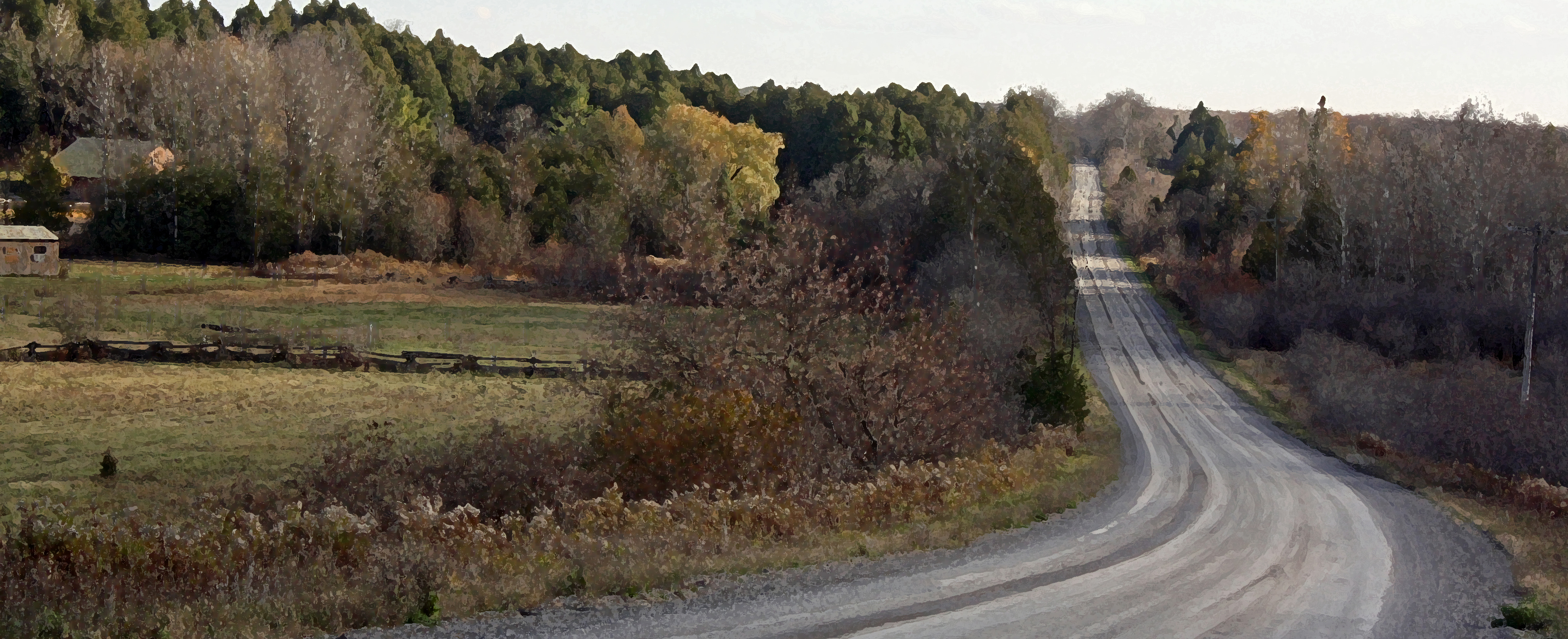
Country road in late fall, ON (photo and rendition by Nina Munteanu)
I wrote some fan fiction but quickly found my own creations far more interesting and less limiting.
As a teenager, I wrote, directed and recorded “radio plays” with my sister. When we weren’t bursting into riotous laughter, it was actually pretty good. She and I shared a bedroom in the back of the house and at bedtime we opened our doors of imagination to a cast of thousands. We fed each other wild stories of space travel, adventure and intrigue, whispering and giggling well into the dark night, long after our parents were snoring in their beds.
Those days scintillated with liberating originality, excitement and joy.
(Photo: Nina Munteanu and sister Doina Maria Munteanu at Grouse Mountain, BC)
.
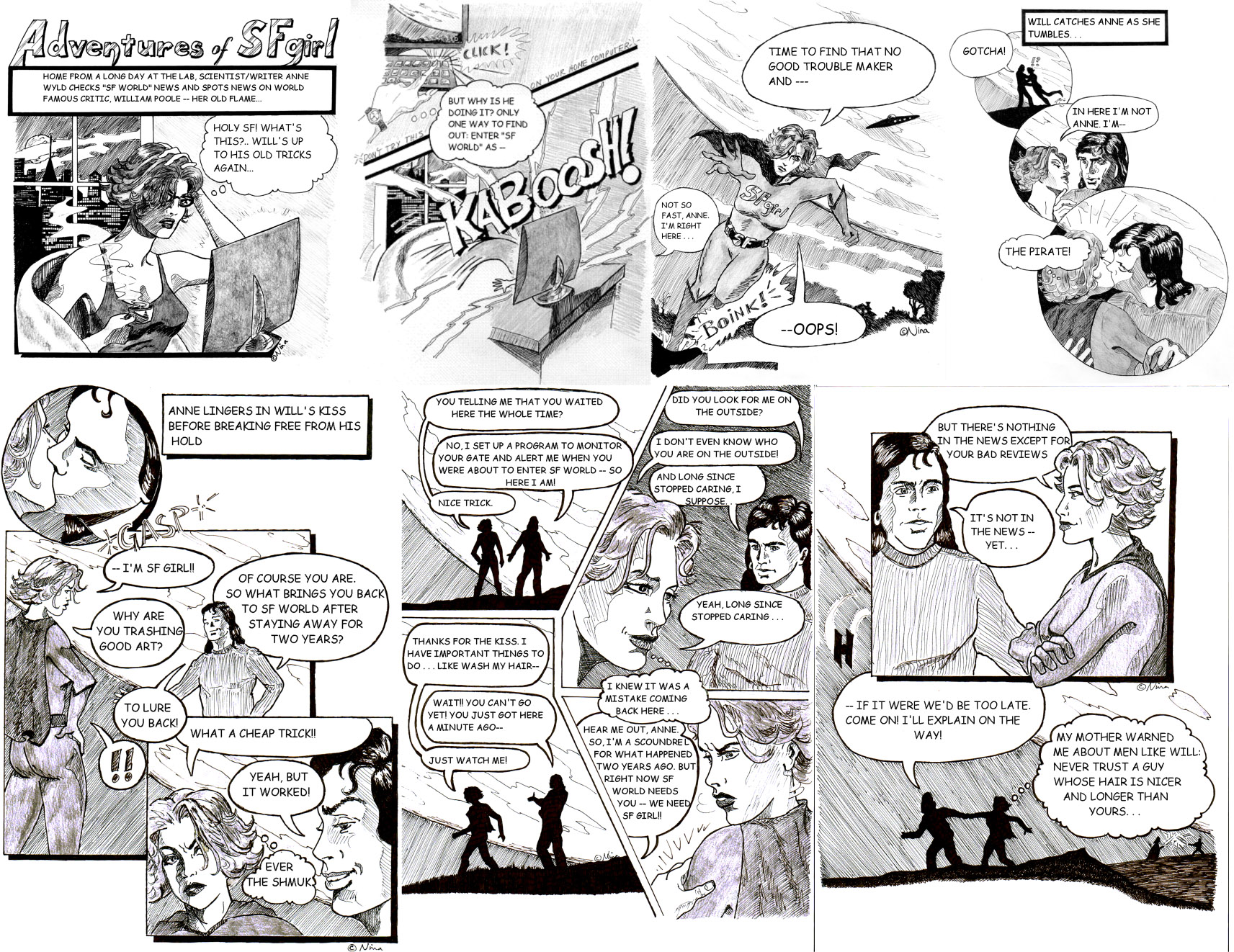
My first attempt at a graphic novel (pencil and ink drawings by a very young Nina)
.
I also enjoyed animation and drew several cartoon strips, peopled with crazy characters. I dreamt of writing graphic novels like Green Lantern and Spiderman. My hero was science fiction author and futurist, Ray Bradbury; I vowed to write profoundly stirring tales like he did.
I had found what excites me — my passion for telling stories—and I’d inadvertently stumbled upon an important piece of the secret formula for success: 1) having discovered my passion, I decided on a goal; 2) I found and wished to emulate a “hero” who’d achieved that goal and therefore had a “case study”; 3) I applied myself to the pursuit of my goal. Oops … the third one, well … it went downhill from there … Life got in the way.
.
The Beeches area of Toronto after a heavy snowstorm, ON (photo and rendition by Nina Munteanu)
.
I grew up.
Well, that, and the environment intervened. In several ways. It started with my parents. Recognizing my talent and interest in the fine arts (I was good in visual arts), they pushed me to get a fine arts degree in university and go into teaching or advertizing. They didn’t see fiction writing as a viable career or a strength of mine (I was lousy at spelling and, despite my ability to tell stories and my love for graphic novels, I didn’t read books much). I can still remember my father’s lecture to me about how perfect the teaching or nursing profession was for me. I wasn’t enamored by either. The second blow to my author-ego came in the form of a school “interest-ability” test, meant to prepare us for our career decisions. I remember the test consisting of an IQ portion (spatial, English and math), and a psychology portion (including problem-solving and scenarios meant to tease out our affinity for a particular career). Secretly harboring my paperback novelist dream, I filled out my forms with great excitement. I still remember the deflating results, which suggested that I was best suited to be a sergeant in the army. “Writing” as a career barely made it on the graph, and scored well below “computer programmer” and “mechanic”; none of which interested me.
.
Country road in a heavy snow, ON (photo and rendition by Nina Munteanu)
.
I got involved in the environmental movement, while quietly holding my dream of being a paperback novelist close to my heart. I got several degrees in ecology and consulted for various companies to help protect the environment. I wrote a lot in those days, although it was more about the ecology of creeks and about industrial pollution. But my passion for writing fiction continued to simmer. Magazines started publishing my articles—my first sale was to Shared Vision Magazine in 1995 on environmental citizenship—and my published articles became my entrance into the world of fiction. Once I began publishing fiction stories—my first short fiction sale was “Arc of Time” to Armchair Aesthete in 2002—I never looked back.
Eventually, I was publishing a novel and several short stories every year. My fiction most often focused on environmental issues, humanity’s relationship with the natural world, and how we reconcile our reliance on technology with our respect for the natural world.
.
Publications of long or short eco-fiction that include my writing or editing
Throughout my writer’s journey, and particularly early in my journey, I weathered the threshold guardians, tricksters and shadows: friends and family who called what I did a hobby, something I did just to pass the time; people who didn’t believe in me, envied my drive or simply thought I was wasting my time; even industry scammers who preyed on my dreams and wanted my money for nothing in return; and ultimately my own fears and frustrations on query after query and rejection after rejection. Throughout it all, I never stopped dreaming.
Nina’s family hiking and boating in British Columbia over the years
I’ve travelled through Europe, Africa, parts of Asia, and Australia. I raised a family and lived all over Canada from the Pacific to the Atlantic coast. I worked as a barista, shopkeeper and science lab instructor, then as environmental consultant, writing instructor and writing coach. During these wonderful life-adventures, I never stopped writing.
Nina Munteanu in the castle at Gruyères, Switzerland (photo by Jane Raptor)
.
To date, I have written and sold over three dozen eco-fiction, science fiction and fantasy novels, non-fiction books, short stories and articles. I have sold short stories to magazines in Canada and the U.S. with translations and reprints in Israel, Poland, Greece, and Romania. My short fiction has appeared in Neo-Opsis Science Fiction Magazine, Chiaroscuro, subTerrain, Apex Magazine, Metastellar, and several anthologies. I’ve seen my short stories nominated for the Aurora Prix Award (Canada’s premier award for writing science fiction and fantasy) and the Foundation of Speculative Fiction Fountain Award. Recognition for my work includes the Midwest Book Review Reader’s Choice Award, finalist for Foreword Magazine’s Book of the Year Award, the SLF Fountain Award, and The Delta Optimist Reviewers Choice Award.
.
Nina celebrates her adventures in Toronto (left) and Paris (right)
.
I’ve published nine novels so far with nominations for the Aurora Prix, Foreword Magazine Book of the Year (several times), and various Reader’s Choice awards. My non-fiction book “Water Is…” (Pixl Press)—a scientific study and personal journey as limnologist, mother, and teacher—was Margaret Atwood’s pick in 2016 in the New York Times ‘The Year in Reading.’ My recent eco-novel released in 2020 by Inanna Publications “A Diary in the Age of Water“—about four generations of women and their relationship to water in a rapidly changing world—was a silver medalist for the Literary Titan Award, the Bronze winner of Foreword Magazine’s Book of the Year in 2020, longlisted for the Miramichi Review’s ‘Very Best Book of the Year Award,’ and a finalist for the 2021 International Book Award. Reviewers have described it as “lyrical…thought-provoking…unique and captivating…insightful…profound and brilliant…unsettling and yet deliciously readable…” One reviewer described it as a “a bit of a hybrid” and the writer “a risk taker”—which I quite liked. Another reviewer acknowledged that this was not a book for everyone and yet she found it “strangely compelling.”—which I found delicious.
.
It’s been twenty-seven years since I seriously started my writing career with my first publication in 1995; my work is now recognized and translated throughout the world and I frequently get writing commissions from reputable magazines and publications. I am also frequently invited for speaking engagements and radio/podcast/TV interviews about my science and my writing. In short, I’ve come home; I’d taken a rather long detour but I’ve acquired some tools along the way. It’s been and continues to be a wonderful and exciting journey; and part of what made it so was that I never stopped dreaming and writing.
“…If you have nothing at all to create, then perhaps you create yourself…”
Carl Jung
A sampling of literary publications up to 2021-end that have included something of mine (short fiction, long fiction, non-fiction)
.
Two people walk through snowy path after a fresh heavy snowfall, ON (photo and rendition by Nina Munteanu)
.
Nina Munteanu is a Canadian ecologist / limnologist and novelist. She is co-editor of Europa SF and currently teaches writing courses at George Brown College and the University of Toronto. Visit www.ninamunteanu.ca for the latest on her books. Nina’s bilingual “La natura dell’acqua / The Way of Water” was published by Mincione Edizioni in Rome. Her non-fiction book “Water Is…” by Pixl Press(Vancouver) was selected by Margaret Atwood in the New York Times ‘Year in Reading’ and was chosen as the 2017 Summer Read by Water Canada. Her novel “A Diary in the Age of Water” was released by Inanna Publications (Toronto) in June 2020.
Nina Munteanu with her copy of Speculative North, Issue #6
My speculative short story “Virtually Yours” was published for the eighth time, most recently in December 2021 in Speculative North, Issue #6. Originally published in Issue #15 of Hadrosaur Tales in 2002, the story explores concepts of cyber-spying, virtual workspace, anonymity, and identity.
A short excerpt follows below.
You can find the short story’s publication history in the Publications page on this site. You can see some of the main publications below. The story was translated into Polish and published by Nowa Fantastyka in 2006.
A selection of publications in which “Virtually Yours” appears from 2002 to 2021
Illustration by Duncan Long for the Amazing Stories publication of “Virtually Yours”
Snow-covered shrub after new snow in mid-winter, ON (photo and rendition by Nina Munteanu)
Nina Munteanu is a Canadian ecologist / limnologist and novelist. She is co-editor of Europa SF and currently teaches writing courses at George Brown College and the University of Toronto. Visit www.ninamunteanu.ca for the latest on her books. Nina’s bilingual “La natura dell’acqua / The Way of Water” was published by Mincione Edizioni in Rome. Her non-fiction book “Water Is…” by Pixl Press(Vancouver) was selected by Margaret Atwood in the New York Times ‘Year in Reading’ and was chosen as the 2017 Summer Read by Water Canada. Her novel “A Diary in the Age of Water” was released by Inanna Publications (Toronto) in June 2020.
Dort, wo man Bücher verbrennt, verbrennt man am Ende auch Menschen
—Heinrich Heine
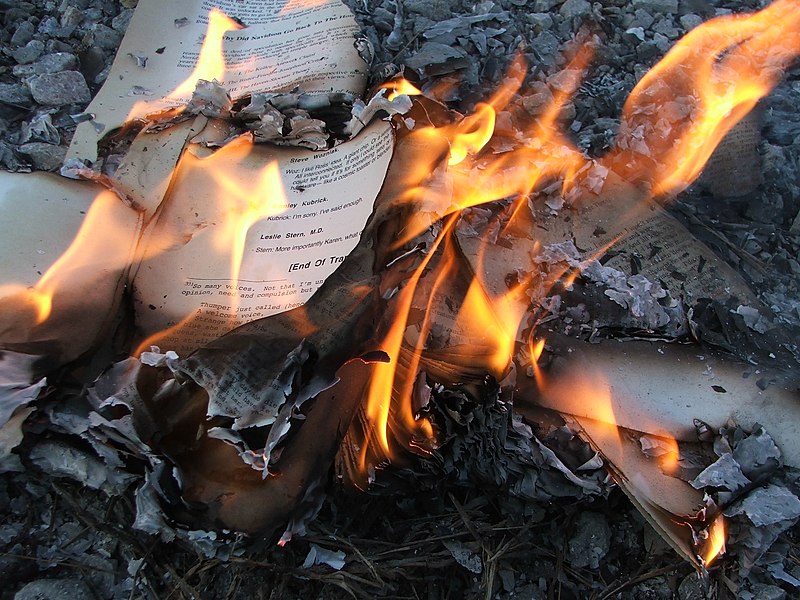
House of Leaves burning (photo by Learning Lark)
.
In her 2017 article A Brief History of Book Burning, from the Printing Press to Internet Archives Lorraine Boissoneault writes, “As long as there have been books, people have burned them.” Books were burned to silence a dissonant, threatening and potentially rousing voice; they were burned to wipe out a cultural presence; They were burned to control and curtail intellectual freedom; they were burned to simply ruin and pillage and destroy.
Books and libraries have been targeted by people of all backgrounds for thousands of years, sometimes intentionally and sometimes as a side-effect of war, Boissoneault tells us. “In 213 B.C., Chinese emperor Qin Shi Huang (more widely remembered for his terracotta army in Xian) ordered a bonfire of books as a way of consolidating power in his new empire.” According to historian Lois Mai Chan, “His basic objective was not so much to wipe out these schools of thought completely as to place them under governmental control.”
Boissoneault adds, “When al-Qaida Islamists invaded Mali, and then Timbuktu in 2012, among their targets were priceless manuscripts—books that needed to be burned.” The damage might have been much worse if not for men like Abdel Kader Haidara, who risked their lives to protect the medieval works. He and others succeeded in smuggling out 350,000 manuscripts.”
“Qin was only one in a long line of ancient rulers who felt threatened enough by the ideas expressed in written form to advocate arson,” says Boissoneault. Qin and religious leaders like him are only a small part of the early book-burning equation. “A lot of ancient book burning was a function of conquest,” writes author Rebecca Knuth. The Library of Alexandria had its contents and structure burned during several periods of political upheaval as a casualty of brutal war and associated despoliation and pillaging.
When Johannes Gutenberg invented the printing press in 1440, there were suddenly far more books—and more accessible knowledge. Book burning continued, unfettered, perhaps taking on a more symbolic and insidious role, and no less violent.
In 1966, when Mao Zedong took power in China and implemented the Cultural Revolution, any book that did not conform to party propaganda, such as those that promoted capitalism or other dangerous ideas, were destroyed. In 1992, the Jaffna Public Library of Sri Lanka—repository of nearly 100,000 rare books of Tamil history and literature—was burned by Sinhalese Buddhists.
.
German writer/poet Heinrich Heine
.
Heinrich Heine’s Prediction
In his 1821 play, Almansor, the German writer/poet Heinrich Heine wrote: Dort, wo man Bücher verbrennt, verbrennt man am Ende auch Menschen, “Where they burn books, they will in the end burn human beings.” He was referring to the burning of the Muslim holy book, the Qoran as part of the eradication of the Moors from the Iberian Peninsula, during the Spanish Inquisition half a century before.
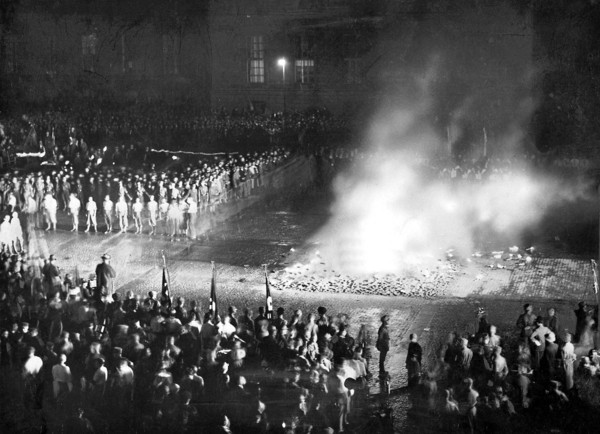
A century later, on May 6-10th, 1933, Heine’s books were among the thousands of volumes publicly hauled out and burned by Nazi brownshirts, SS and Hitler Youth groups in Berlin’s Opernplatz (Bebelplatz). A violent outburst that, in fact, did foreshadow the blazing ovens of the Holocaust. Some twenty thousand books were burned, including those by Heinrich Mann, Karl Marx, Albert Einstein.
.
Nazi book burning in Opernplatz, Berlin, 1933
Brownshirts and Hitlerjugend perform Nazi salut as books burn in Opernplatz, Berlin in 1933
.
Wikipedia defines ‘book burning’ as the “practice of ceremoniously destroying by fire one or more copies of a book or other written material.” The practice, usually carried out in public (like public hangings in Medieval times) is generally motivated by moral, religious or political objections to the material. Some notable and particularly destructive book burnings have included:
the destruction of the Library of Alexandria;
burning books and burying scholars (‘live burying’) under China’s Qin Dynasty (3rd Century);
Cathar texts in the Lanquedoc region of France in the 13th Century;
the Talmud in Paris by the French crown in 1242;
Arabic and Hebrew books at Andalucia, Spain, in 1499;
Servetus’s “heretical” writings along with the writer at Geneva;
Maya sacred books in Yucatan (1562);
Tyndale’s New Testament by the English authorities in 1525 and 1526;
Luthar’s Bible in Germany (1624) as ordered by the Pope;
Robespierre’s destruction of religious libraries in 1793;
anti-communist books by the Bolsheviks in 1917;
Jewish, anti-Nazi and “degenerate” books by the Nazis in the 1930s and 1940s;
Communist and “fellow traveller” books by Senator McCarthy in 1953;
The Satanic Verses by Muslims in the UK in 1988; and,
Harry Potter books at various American cities.
.
Hitler youth burning books at Opernplatz, Berlin, in 1933
Book-burning crowd at Opernplatz, Berlin, in 1933
.
“Even when the knowledge itself isn’t prevented from reaching the public, the symbolic weight of burning books is heavy,” writes Boissoneault.
“Books are not absolutely dead things, but do contain a potency of life in them as to be as active as that soul was whose progeny they are,” wrote John Milton, author of Paradise Lost, in his 1644 book Areopagitica. “Who kills a man kills a reasonable creature… but he who destroys a good book, kills reason itself.”
.
Ray Bradbury
.
Ray Bradbury on the Dummying Down of an Obedient Society
In the 1967 introduction of his novel, Fahrenheit 451, Ray Bradbury implied that the Nazi book burnings inspired his story. I found this statement both eloquent and powerful: “It follows then that when Hitler burned a book I felt it as keenly, please forgive me, as his killing a human, for in the long sum of history they are one in the same flesh.”
Addressing currently relevant themes of censorship, conformity and anti-intellectualism, Bradbury’s 1953 cautionary tale explores a fictional future society that has institutionalized book burning in an effort by authorities to maintain order and ‘happiness’. In this world, firemen don’t put out fires; they start them. The book gets its title from the temperature that paper catches fire and burns.
.
The book-burning fireman Guy Montag in Francois Truffaut’s 1966 film Fahrenheit 451
.
The story begins with Montag, an ordinary fireman, after a day’s work of burning:
“It was a pleasure to burn. It was a special pleasure to see things eaten, to see things blackened and changed. With the brass nozzle in his fists, with this great python spitting its venomous kerosene upon the world, the blood pounded in his head, and his hands were the hands of some amazing conductor playing all the symphonies of blazing and burning to bring down the tatters and charcoal ruins of history…Montag grinned the fierce grin of all men singed and driven back by the flame. He knew that when he returned to the firehouse, he might wink at himself, a minstrel man, burnt-corked, in the mirror.”
–Fahrenheit 451
.
Firemen Beatty and Montag on their way to burn books (from Francois Truffaut’s 1966 film)
.
Soon after, Montag encounters an old lady who refuses to leave her house when the firemen come to burn her books. She dies alongside the stories she cherishes. Montag then meets the girl, Clarisse, who knows something of the past, when firemen used to put out fires, during a time when there were no informers and people were not afraid.
“A book is a loaded gun in the house next door,” Montag’s superior warns him, arguing for why they must be burned and their knowledge erased. “Who knows who might be the target of the well-read man?” A foreshadowing of what follows.
Fahrenheit 451 weaves a compelling political and social tale that follows one man’s journey in finding his soul and his ability to judge for himself—through his rediscovery of literature.
.
Book burning in Opernplatz, Berlin, 1933
.
“Books are the carriers of civilization. Without books, history is silent, literature dumb, science crippled, thought and speculation at a standstill. Without books, the development of civilization would have been impossible.”
Barbara Tuchman, 1980 address at Library of Congress
.
Burning German book (photo by Amnesty International)
.
Nina Munteanu is a Canadian ecologist / limnologist and novelist. She is co-editor of Europa SF and currently teaches writing courses at George Brown College and the University of Toronto. Visit www.ninamunteanu.ca for the latest on her books. Nina’s bilingual “La natura dell’acqua / The Way of Water” was published by Mincione Edizioni in Rome. Her non-fiction book “Water Is…” by Pixl Press(Vancouver) was selected by Margaret Atwood in the New York Times ‘Year in Reading’ and was chosen as the 2017 Summer Read by Water Canada. Her novel “A Diary in the Age of Water” was released by Inanna Publications (Toronto) in June 2020.
Dew drops on Hawkweed hairs, ON (photo by Nina Munteanu)
That day may seem like science fiction or the far future, but as William Gibson famously proclaimed, “The future is already here—it’s just not very evenly distributed.”
This is partly why I’ve been recently writing speculative (mundane) science fiction in which components of fiction blur with non-fiction. In a recent interview on the SolarPunk Magazine Podcast, I discussed with hosts Justine and Bria how my recent novel A Diary in the Age of Water blurred fiction with non-fiction. The novel achieved this through the use of a diary to create a gritty realism in a mundane narrative hard to put down. The intention was to achieve personal relevance for the reader to what was going on, particularly with climate change—a water-driven phenomenon. In TheTemz Review, Marcie McCauley postulated that “[Munteanu] does not appear to view fiction and non-fiction as separate territories; or, if she does, then this book is a bridge between them.” I had to laugh when I read this; “she gets me,” I concluded.
In the near-future of A Diary in the Age of Water, Canada has privatized its water utilities after the Conservative Party comes into power, and a giant company called CanadaCorp removes municipal water connections from people’s homes and imposes strict water rations, all while selling off Canada’s precious water to US states like California that would otherwise be uninhabitable.
In her entry for July 13, 2049, Lynna the diarist writes:
“Today CanadaCorp announced that the collection of rainwater was illegal. As of today, I could be arrested for using my rain catcher and cistern. I’ve decided to continue using the cistern, and I’ve warned Hildegard not to breathe a word to anyone at school about what we’re doing with the water. Thankfully, I have time to train her in the art of subterfuge before she starts Grade Two in the fall.”
Nina Munteanu, A Diary in the Age of Water
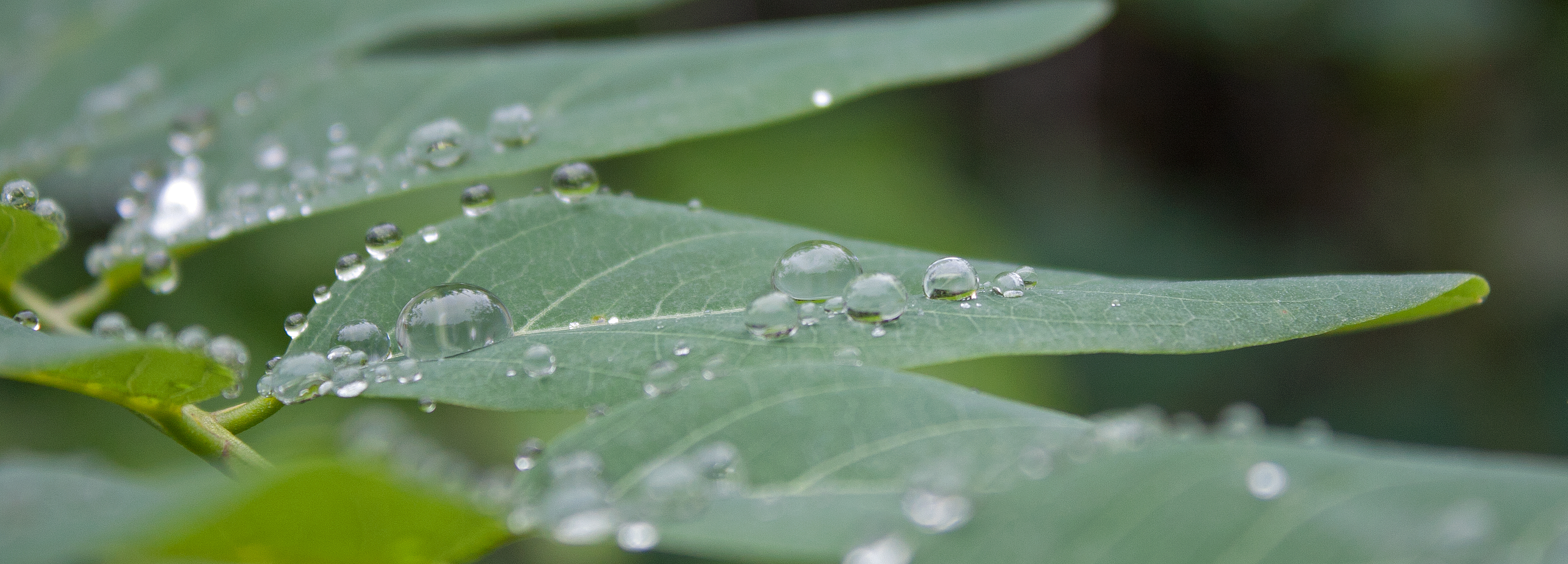
Raindrops on a black locust leaf, ON (photo by Nina Munteanu)
What follows in the novel is complete commodification of water and further restrictions for citizens in the form of house tap closures and daily water quantity quotas from paying public water taps. No form of water is free or available without payment. And if you can’t pay, well…
Dizzy and shivering in the blistering heat, Hilda shuffles forward with the snaking line of people in the dusty square in front of University College where her mother used to teach. The sun beats down, crawling on her skin like an insect. She’s been standing for an hour in the queue for the public water tap… The man behind Hilda pushes her forward. She stumbles toward the tap and glances at the wCard in her blue-grey hand. Her skin resembles a dry riverbed.
Heart throbbing in her throat, Hilda fumbles with the card and finally gets it into the reader. The reader takes it. The light screams red. Her knees almost give out. She dreaded this day…
A tiny water drop hangs, trembling, from the wTap faucet mouth, as if considering which way to go: give in gravity and drop onto the dusty ground or defy it and cling to the inside of the tap. Hilda lunges forward and touches the faucet mouth with her card to capture the drop. Then she laps up the single drop with her tongue. She thinks of Hanna and her throat tightens.
The man behind her grunts. He barrels forward and violently shoves her aside. Hilda stumbles away from the long queue in a daze. The brute gruffly pulls out her useless card and tosses it to her. She misses it and the card flutters like a dead leaf to the ground at her feet. The man shoves his own card into the pay slot. Hilda watches the water gurgle into his plastic container. He is sloppy and some of the water splashes out of his container, raining on the ground. Hilda stares as the water bounces off the parched pavement before finally pooling. The ache in her throat burns like sandpaper and she wavers on her feet. The lineup tightens, as if the people fear she might cut back in. She stares at the water pooling on the ground, glistening into a million stars in the sunlight…and knows she is dying of thirst…
Nina Munteanu, The Way of Water / la natura dell’acqua
This excerpt from my bilingual short story “The Way of Water / la natura dell’acqua” (Mincione Edizioni, 2016) follows the life of Hilda Dresden, daughter of Lynna, the diarist in “A Diary in the Age of Water.”
Science fiction, you think…
Far future, you think…
Think again…
In 2010, Mike Adams of Natural News reported that collecting rainwater was now illegal in several states of the USA. Utah, Washington and Colorado had outlawed individuals from collecting rainwater on their own properties because, according to officials, that rain belonged to someone else.
In 2015, thousands of citizens in two of America’s poorest cities, Detroit and Baltimore, had their water shut off for being behind on their water bills (which had been sharply increased).
Both are inhumane examples of government-imposed oppression over what should be a public and free resource: water.
Dew drops on hawkweed hairs and Mealy Pixie Cup lichens, ON (photo by Nina Munteanu)
Maude Barlow, the Chairperson of the Council of Canadians, writes in Boiling Point of the water crisis in Canada—perhaps our best kept secret, considering that Canada is supposedly so water-rich. Are we giving it all away? And what of our indigenous communities, some of whom have not had potable water for decades?
So, I agree with Gibson about the future not being evenly distributed. This is because the present isn’t evenly distributed. Much of this disparity arises from an extractive and exploitive mentality and practice. One that commodifies what needs to remain free and available for all users. Capitalism ensures an uneven future by focusing on fear and stressing competition, separation, and exclusion.
In his book Designing Regenerative Cultures Daniel Christian Wahl talks about changing our evolutionary narrative from one based on fear defined by a perception of scarcity, competition, and separation to one based on love defined by a perception of abundance, a sense of belonging, collaboration and inclusion.
And moving forward we can take a lesson from Robin Wall Kimmerer, author of Braiding Sweetgrass, who talks about a gift economy—an economy of abundance—whose basis lies in recognizing the value of kindness, sharing, and gratitude in an impermanent world.
This is what she says: “Climate change is a product of this extractive economy and is forcing us to confront the inevitable outcome of our consumptive lifestyle, genuine scarcity for which the market has no remedy. Indigenous story traditions are full of these cautionary teachings. When the gift is dishonored, the outcome is always material as well as spiritual. Disrespect the water and the springs dry up. Waste the corn and the garden grows barren. Regenerative economies which cherish and reciprocate the gift are the only path forward. To replenish the possibility of mutual flourishing, for birds and berries and people, we need an economy that shares the gifts of the Earth, following the lead of our oldest teachers, the plants.”
So, “The Day We’re Not Allowed to Drink Water…”
…Let that day never come.
Make it so…
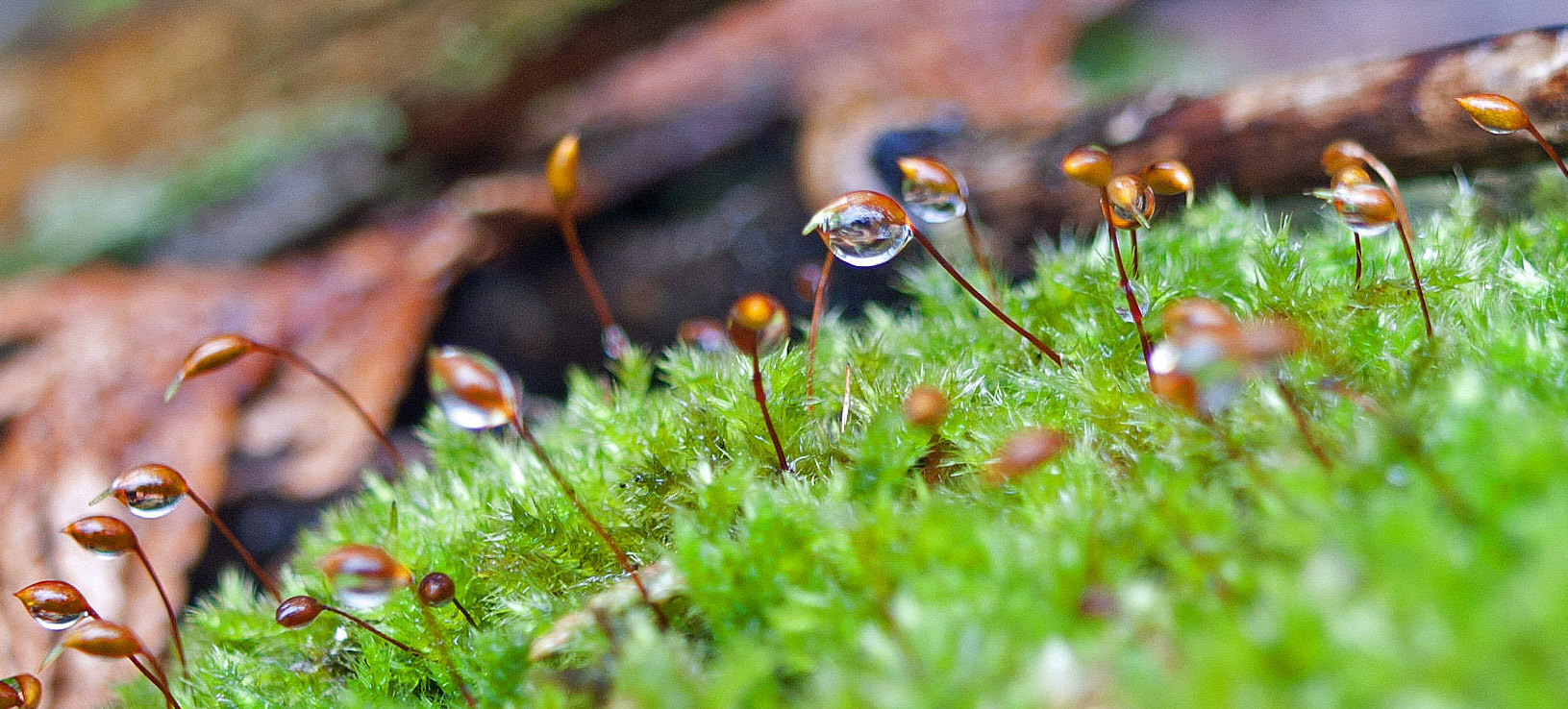
Moss with raindrops on capsules, ON (photo by Nina Munteanu)
References:
Barlow, Maude. 2016. “Boiling Point: Government Neglect, Corporate Abuse, and Canada’s Water Crisis.” ECW Press, Toronto. 312pp.
Kimmerer, Robin Wall. 2020. “The Serviceberry, An Economy of Abundance.” Emergence Magazine, December 10, 2020.
Munteanu, Nina. 2016. “La natura dell’acqua / The Way of Water.” Mincione Edizioni, Roma. 114pp.
Munteanu, Nina. 2020. “A Diary in the Age of Water.” Inanna Publications, Toronto. 300pp.
Raindrops ‘float’ on a black locust leaf in a light rain, ON (photo by Nina Munteanu)
Nina Munteanu is a Canadian ecologist / limnologist and novelist. She is co-editor of Europa SF and currently teaches writing courses at George Brown College and the University of Toronto. Visit www.ninamunteanu.ca for the latest on her books. Nina’s bilingual “La natura dell’acqua / The Way of Water” was published by Mincione Edizioni in Rome. Her non-fiction book “Water Is…” by Pixl Press(Vancouver) was selected by Margaret Atwood in the New York Times ‘Year in Reading’ and was chosen as the 2017 Summer Read by Water Canada. Her novel “A Diary in the Age of Water” was released by Inanna Publications (Toronto) in June 2020.
The Otonabee River glints in the sunlight in the midst of a snow flurry, ON (photo and rendition by Nina Munteanu)
This time last year reviewer Lisa Haselton posted an interview with me on New Year’s Day of 2021 on my latest release “A Diary in the Age of Water.” 2021 saw incredible sales for my clifi eco-novel, along with several appearances on radio shows, podcasts and TV stations. It would seem that water is on everyone’s mind and what better way than a limnologist’s diary to learn more about it.
Lisa and I talked about what inspired me to write this novel and about my writing process. What follows is part of that interview. Check out this link for the complete interview with Lisa Haselton.
*****
Lisa: Please tell us about your current release.
Nina: The book tells the journey of four generations of women who have a unique relationship with water, through a time of extreme climate change and water shortage. The book spans over forty years (from the 2020s to the 2060s) and into the far future, mostly through the diary of a limnologist, which is found by a future water-being. During the diarist’s lifetime, all things to do with water are overseen and controlled by the international giant water utility CanadaCorp—with powers to arrest and detain anyone. This is a world in which China owns America and America, in turn, owns Canada. The limnologist witnesses and suffers through severe water taxes and imposed restrictions, dark intrigue through neighbourhood water betrayals, corporate spying and espionage, and repression of her scientific freedoms. Some people die. Others disappear…
Ultimately, the book carries themes of hope and forgiveness—of ourselves and each other—and compassion for all things, starting with water. Each character carries an aspect of that theme, from the diarist’s activist mother, to the diarist’s own cynical protectionism, her spiritual anarchist daughter, and lastly the innocent storm of the last generation.
Lisa: What inspired you to write ‘A Diary in the Age of Water’?
Nina: It started with a short story I was invited to write in 2015 about water and politics in Canada. I had long been thinking of potential ironies in Canada’s water-rich heritage. The premise I wanted to explore was the irony of people in a water-rich nation experiencing water scarcity: living under a government-imposed daily water quota of 5 litres as water bottling and utility companies took it all. I named the story “The Way of Water.” It was about a young woman (Hilda) in near-future Toronto who has run out of water credits for the public wTap; by this time houses no longer have potable water and their water taps have been cemented shut; the only way to get water is through the public wTaps—at great cost. She’s standing two metres from water—in a line of people waiting to use the tap—and dying of thirst.
The short story and the novel that came from it explore the nuances of corporate and government corruption and deceit together with global resource warfare. In this near-future, Canada is mined of all its water by thirsty Chinese and US multinationals—leaving nothing for the Canadians. Rain has not fallen on Canadian soil in years due to advances in geoengineering and weather manipulation that prevent rain clouds from going anywhere north of the Canada-US border. If you’re wondering if this is possible, it’s already happening in China and surrounding countries.
Lisa: As a child, what did you want to be when you grew up?
Nina: After astronaut, actress and a drummer in a rock and roll band—seriously—it was paperback writer. That’s been my dream since I was ten. I told stories long before I wrote them and long before any of them was published. I told stories in the form of cartoons. Since I was a small child, I wanted to be a cartoonist and write graphic novels (back then I knew them as comics). I created several strips with crazy characters that I drew, blending my love for drawing with my love for storytelling. My sister and I used to make up amazing adventure stories in the universe, peopled with aliens and crazy worlds. I wrote my first complete novel when I was fifteen (“Caged-In World”—which later served as a very rough draft for my first published novel, “Darwin’s Paradox” in 2007). My first published work was a non-fiction article “Environmental Citizenship” which appeared in Shared Vision Magazine in 1995. My first fiction work was a short story entitled “Arc of Time”, which was published in Armchair Aesthete in 2002.
Heavy snowfall in the forest in early winter, ON (photo and rendition by Nina Munteanu)
Lisa: When did you first consider yourself a writer?
Nina: I’ve considered myself a storyteller since I was a child when I wrote and directed plays that my older brother and sister played in and drew cartoon adventure stories. My dream was to be a paperback writer (like the Beatles tune). But I didn’t think of myself seriously as an author until my first short story was published in 2002. It was called “Arc of Time” and appeared in a small magazine with a circulation of about 200. That story went on to be reprinted several times in larger magazines and led to a career of award-winning short stories—the latest appearing in the literary magazine subTerrain in 2020.
Lisa: Do you write full-time? If so, what’s your work day like? If not, what do you do other than write and how do you find time to write?
Nina: While I don’t write full-time, my career is all about writing. Every day I write and research my next novel; I also write commissioned articles and short stories for magazines and for my several writing and science blogs. When I’m not writing, I teach writing at the University of Toronto and George Brown College. I also coach writers online to publication. Finding time to write has not generally been a challenge. I’ve embraced an opportunistic process in my writing and research that allows me to write considerably. The process recognizes that there are many ways to “write” from observations and note-taking, to reading and research, to writing short vs long and fiction vs non-fiction. For instance, I can fill a short break time with meaningful research, editing, or the start of a short article; this saves longer break times for my current novel, which requires a greater stretch of uninterrupted time.
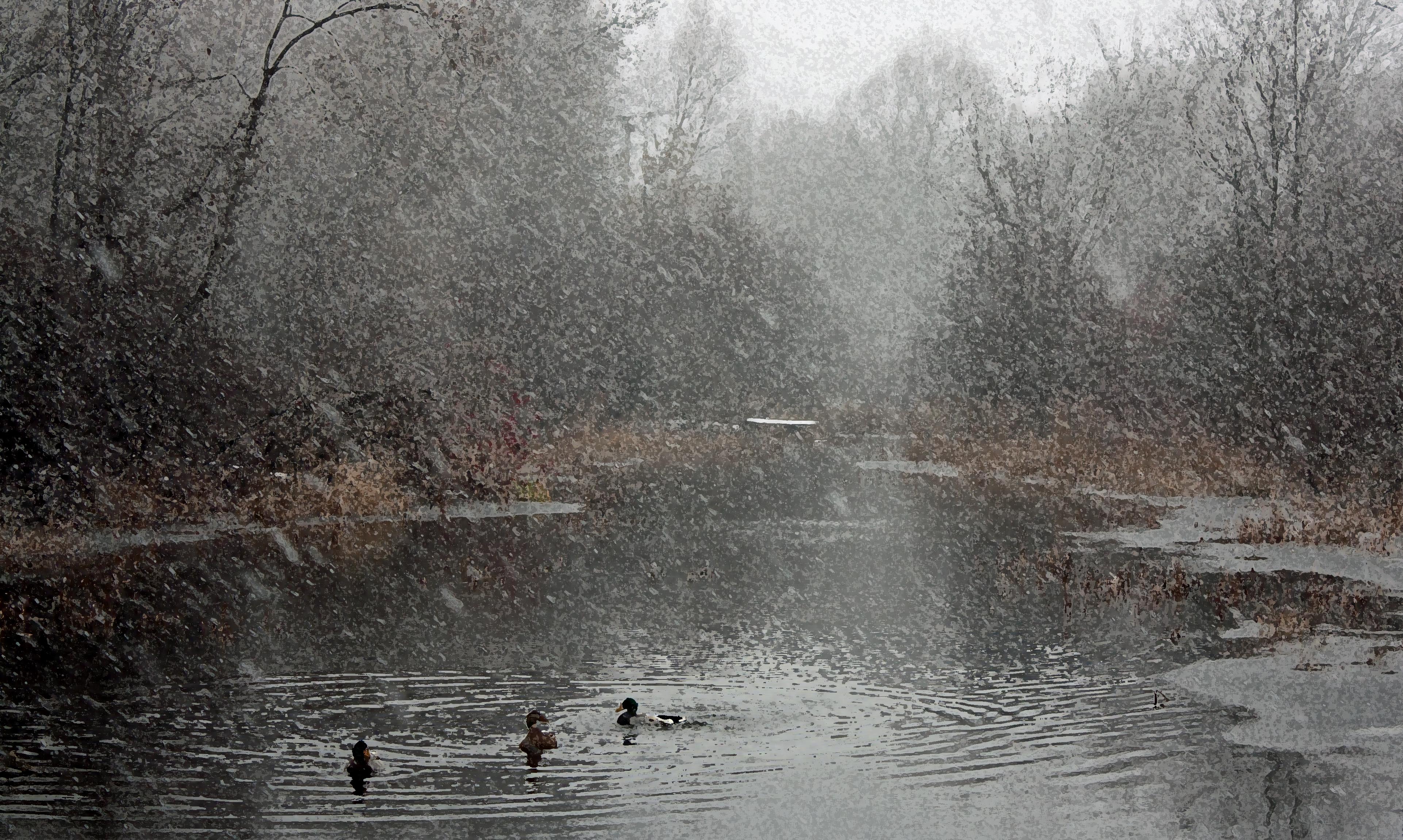
Heavy snowfall in the marsh in early winter, ON (photo and rendition by Nina Munteanu)
Lisa: What would you say is your interesting writing quirk?
Nina: That I am both a pantser and an outliner—with the same book. My writing process has always been a tandem kind of ‘fish and cut bait’ scene / sequel scenario with research following a premise followed by vigorous writing, which in turn engenders more research, which often reveals another plot or sub-theme that needs inclusion. It may seem a haphazard way to write, but I find it very fulfilling, fun and revealing—especially when the Universe provides with serendipitous discoveries (just when I need them).
Lisa: What exciting story are you working on next?
Nina: I’m currently researching and working on the sequel to “A Diary in the Age of Water”—a thriller about how a phenomenon brings together four lost and homeless people through a common goal to free the Earth from the manacles of human greed. The story takes place throughout Canada—from Halifax to Vancouver and the Arctic. It takes place mostly during the 2050s, and features a few ghosts, the Halifax 1917 Explosion, experimentation on humans, espionage, murder, and—of course—a plague. I’m calling it my COVID19 novel…
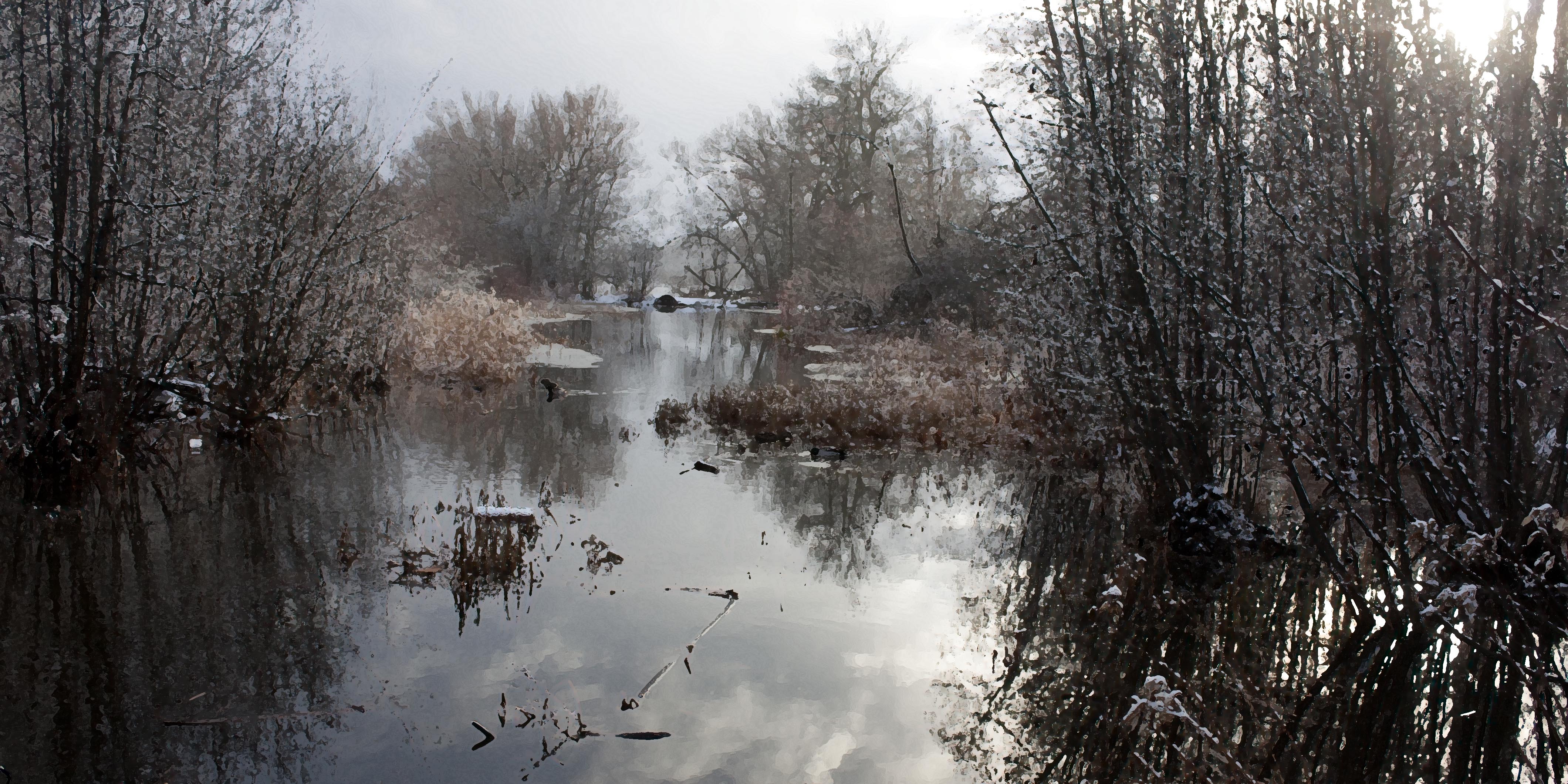
Sun emerges after a heavy snowfall at the marsh, ON (photo and rendition by Nina Munteanu)
Nina Munteanu is a Canadian ecologist / limnologist and novelist. She is co-editor of Europa SF and currently teaches writing courses at George Brown College and the University of Toronto. Visit www.ninamunteanu.ca for the latest on her books. Nina’s bilingual “La natura dell’acqua / The Way of Water” was published by Mincione Edizioni in Rome. Her non-fiction book “Water Is…” by Pixl Press(Vancouver) was selected by Margaret Atwood in the New York Times ‘Year in Reading’ and was chosen as the 2017 Summer Read by Water Canada. Her novel “A Diary in the Age of Water” was released by Inanna Publications (Toronto) in June 2020.
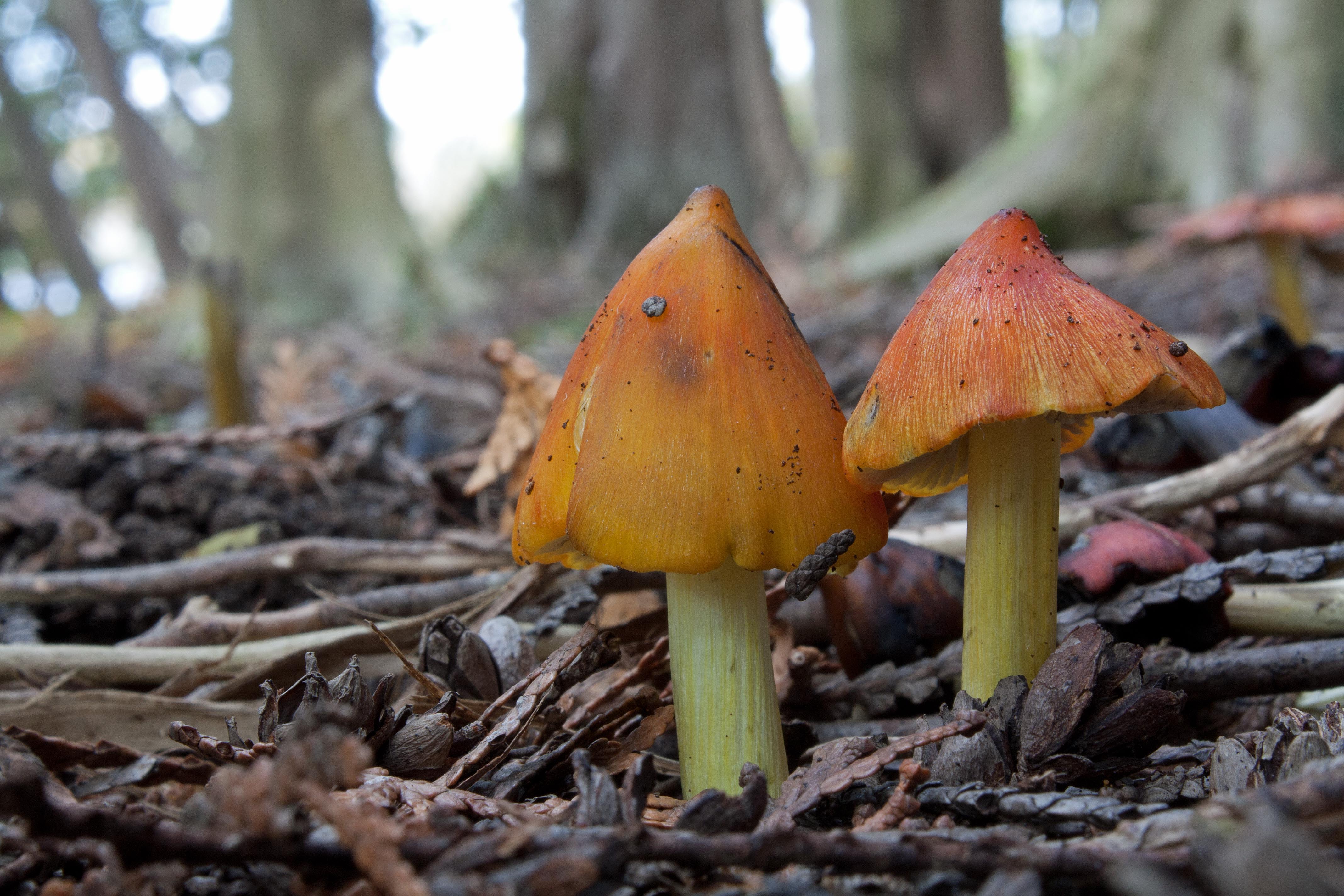
Witch’s Hat (Hygrocybe conica) by cedar tree, ON (photo by Nina Munteanu)
In my recent wanderings in the small cedar forest by the river near my house, I chanced upon a community of emerging reddish-orange fungi. They sat among the cedars in a crowded aggregation. Some pushed their way up through the duff like little buds, barely visible; others rose up with pointed steep caps; and others had opened further into tiny ‘witch’s hats’ and blackened.
Several stages of Witch’s Hat, including blackening stage, cedar forest, ON (photo by Nina Munteanu)
According to Frank Dugan, fungus plays a key role in many folktales and fairy tales. “They appear as foods, poisons, diseases, decorations, dyes or tinder, and even in insults, compliments, graffiti and video games,” says the author of Fungi, Folkways and Fairy Tales: Mushrooms & Mildews in Stories, Remedies & Rituals, from Oberon to the Internet.
Fungi figure in wonderfully with stories of and about witches. “Witches have long used fungi in their potions in Europe,” Fungal Folklore tells us. Even ferry rings are called “Hexen Rings” in Germany; Hexe means witch and this refers to “the dancing of witches on Walpurgis night (the eve of May Day) when the old pagan witches were thought to hold high revelry,” writes Dugan.
Baba Yaga (Wikipedia Commons)
Baba Yaga
In the Slavic folktale, Baba Yaga is an ancient swamp witch; she’s a cruel ogress who steals, cooks and eats her victims, usually children; OR offers them help. It’s complicated; she’s either a maternal helper or a cannibalistic villain; or both. Certainly a trickster. Baba Yaga is guardian of the fountains of the water of life and lives in a forest hut perched on bird’s legs, surrounded by pine trees and glowing skulls. She can manipulate earth and wood, and can mesmerise. Baba Yaga has lately become something of an icon for feminism and the power of the feminine.
Says Marissa Clifford in Vice: “Like other witches, deistic Baba is agent of transformation, who, according to Kitaiskaia, exists ‘kind of outside of the things which constrain human society, like time and morality.’ She may well be so compelling for women today because of her rejection of social standards, and the power that comes from that. She’s an outlier with power that isn’t derived from her beauty, or her relationships with others. Instead, it comes from within her—earth, hut, and firey stove.”
Baba Yaga (illustration by Tatyana Chepkasova)
Witches, Fungi & Potions
“Witches have long used fungi in their potions in Europe,” The Fungus Among Us tells us. According to Dugan, the dung-loving Panaeolus papilionaceus (Petticoat Mottlegill) was used in witch’s concoctions in Portugal. The entheogen Amanita muscaria (Fly Agaric)—the elixir of ancient alchemists—is known as Hexenpils (‘Witches’ mushroom’) in Austria. Among German tribes, it is associated with Woton/Odin, god of ecstasy, war and shamanic knowledge. Puffballs were reportedly used in potions by witches in the Basque country. Witch’s butter (Exidia spp.) also figures in folklore. “Stabbing, burning or otherwise destroying these fungi were believed to harm the witch herself,” writes Owen. The Witch’s Hat (Hygrocybe conica) is aptly named for its blackening witch-style ‘hat’ that starts bright red-orange and turns coal black.
Many country folk through the sixteenth and nineteenth centuries performed rituals to protect their crops from the devastation wrought by witches and spirits. Thiselton-Dyer discusses the malignant Roggenwolf (‘rye wolf’ of Germanic folklore) who stole children and fed on them and the various rituals peasants used to appease these Feldgeister (field spirits), such as leaving a sheaf of rye in the fields over the winter. The Roggenwolf is, of course, the personification of ergot, the fungus Claviceps purpurea, which caused convulsions, burning, “massive-appetite”, and “the sense of becoming an animal.” People who contracted ergot poisoning from the contaminated rye were accused of being witches and brutally killed.
Young Witch’s Hats push up through the cedar forest floor, ON (photo by Nina Munteanu)
Ergot and The Last Summoner
In my historical fantasy “The Last Summoner,” young Vivianne Schoen, Baroness of Grunwald—accused of being a witch—is chased by her father’s guard to be burnt at the stake. Blamed for the sudden stupor of her father and the chaplain who both love their rye bread, it didn’t help that Vivianne possesses unnatural powers in metal manipulation, has weird markings or blemishes on her back or that suspicions of her preternatural mother being a witch precede her. Then odd things start to happen; cattle stop producing milk and other farm animals behave strangely. At a feast to celebrate her own coming nuptial to a foreign stranger and just after she is falsely accused of adultery, people suddenly succumb to fits of convulsions, facial distortions, hallucinations and paralysis. Targeted as the obvious candidate to blame, she must flee her home or be burnt alive at the stake:
…With a final unintelligible gasp that wet her cheek with flying spittle, he convulsed violently and pitched to the floor, shaking and vomiting his dinner.
Vivianne stared at her father, rolling and twitching in a seizure on the floor and crying out gibberish. She turned to the castle community, who were now pointing and shouting at her. Their faces had twisted from transfixed revulsion into fear and anger. Somehow they blamed her for both the stranger’s accident and her father’s sudden paroxysm. Perhaps for losing them a battle in the bargain too. Even Père Daniel’s face looked stricken with confused accusation. Until now Vivianne hadn’t realized how much his opinion of her meant to her. She felt his faltering faith drive like a blade into her heart and would have burst into tears had the crowd not suddenly grown very surly, which demanded her sudden attention.
Gertrude, the new dairymaid she’d assisted earlier, flung the first accusation: “She’s a witch!”
“Witch!” another echoed. “You heard her father call her one!”
Another servant swiftly followed with, “Just like her mother! She’s bewitched the baron! Put a spell on him with her wicked look!”
The crowd ignited to a raucous mob and a spate of accusations gushed out like a dam breaking: “My butter failed to churn because of her!”
“Look at the witchling’s eyes! They blaze with the devil’s own fire!”
“She appeared in Weikhard’s dream and now he’s ill!”
“She touched my cow and afterwards it couldn’t stand!”
“I saw the nursemaid bringing her a daily potion of nettle, mustard and mint with wine to make her lustful!”
Oh, no! They were implicating Uta along with her!
“I smelled basil and cloves in her bed chamber!”
Vivianne had used both to mask the rank odor of Uta’s anti-plague potions, completely innocent of their aphrodisiac properties. Vivianne stared in anguished despair as Père Daniel stood by, mutely sanctioning their actions. She’d thought him her champion once. But obviously this was too much for him to bear. He’d lost his trust in her. As their eyes met briefly, he suddenly gasped out strange words of gibberish. A violent shudder convulsed through him. It threw him forward, as if the devil itself were animating him, then felled him to the ground where he vomited alongside her retching father.
“She’s taken the priest!” someone shouted. “He’s doing the Viper’s dance!” Another screamed in a panic, “Watch out for her eyes!”
Vivianne turned back to the crowd. Whomever her gaze alighted upon shrank back and averted their face in terrified alarm. They were convinced that she could strike them down with a glance. To her horror a few of the castle servants jerked out of their seats with startled cries of gibberish then fell writhing to the ground; some began to vomit. Vivianne recognized the true onslaught of an epidemic. The same illness that had inflicted her father and the chaplain was attacking the staff. And again, the timing was impeccable, thought Vivianne with wry cynicism. As though God was plotting against her.
Gertrude pointed to her. “Seize her! Burn the witch! Before she kills us all!”
“Someone find her demon cat too!” Vivianne heard the doctor shout.
Several of the baron’s knights surged forward, swords drawn. As if suddenly awoken from a stupor, the Teutonic Knights at the high table leapt into action and drew their swords.
NO! Vivianne backed away in alarm. She envisioned their swords suddenly pointing back toward themselves. To her amazement, their swords flung back and the knights dropped them in shocked fright.
In that surreal moment, as the world staggered into slow motion, Vivianne saw the entire castle household draw in a long breath. Still on the floor, Père Daniel’s shakes abated long enough for him to fix lucid eyes upon her and silently mouth, “Cours, ma petite! Cours! Sauves toi!”
After a last glance at her convulsing father, Vivianne took the Père’s advice and ducked through one of the curtained archways behind the table to the kitchen stairwell, and pelted down the stairs.
“After her!” she heard the booming voice of Doctor Grien. “The witch is getting away!”
*****
Vivianne later discovers what caused the sudden ‘bewitchment’ of members of her community: all the people who became ill had eaten the rye bread. She learns about ergot poisoning of rye by the fungus Claviceps purpurea. Conditions had been ideal for ergot to thrive: damp and rainy cool weather.
Young Witch’s Hat with peaked cone-shaped pileus, amid cedar duff, ON (photo by Nina Munteanu)
The Witch’s Hat
Witch’s Hats are a small agaric (cap from 1-4 cm across) that start out bright red to orange, sometimes almost yellow as they thrust up through the cedar duff, looking like buds.
The conical pileus is often curved steeply with a fairly sharp top and sometimes with edges that curve slightly inward. The stem (stipe) is often white at the base blending to yellow and will stain black with age.
Witch’s Hat mushroom showing inward curve of cap, with key to show size, cedar tree, ON (photo by Nina Munteanu)
As the waxcap mushroom develops, the cap spreads out with a discernable brim while maintaining the hat peak of a witch’s hat. As it ages, it turns a deeper red-orange that blackens, often from the edges inward.
Three stages of Witch’s Hat, from early conical to spreading and blackening hat, cedar tree, ON (photo by Nina Munteanu)
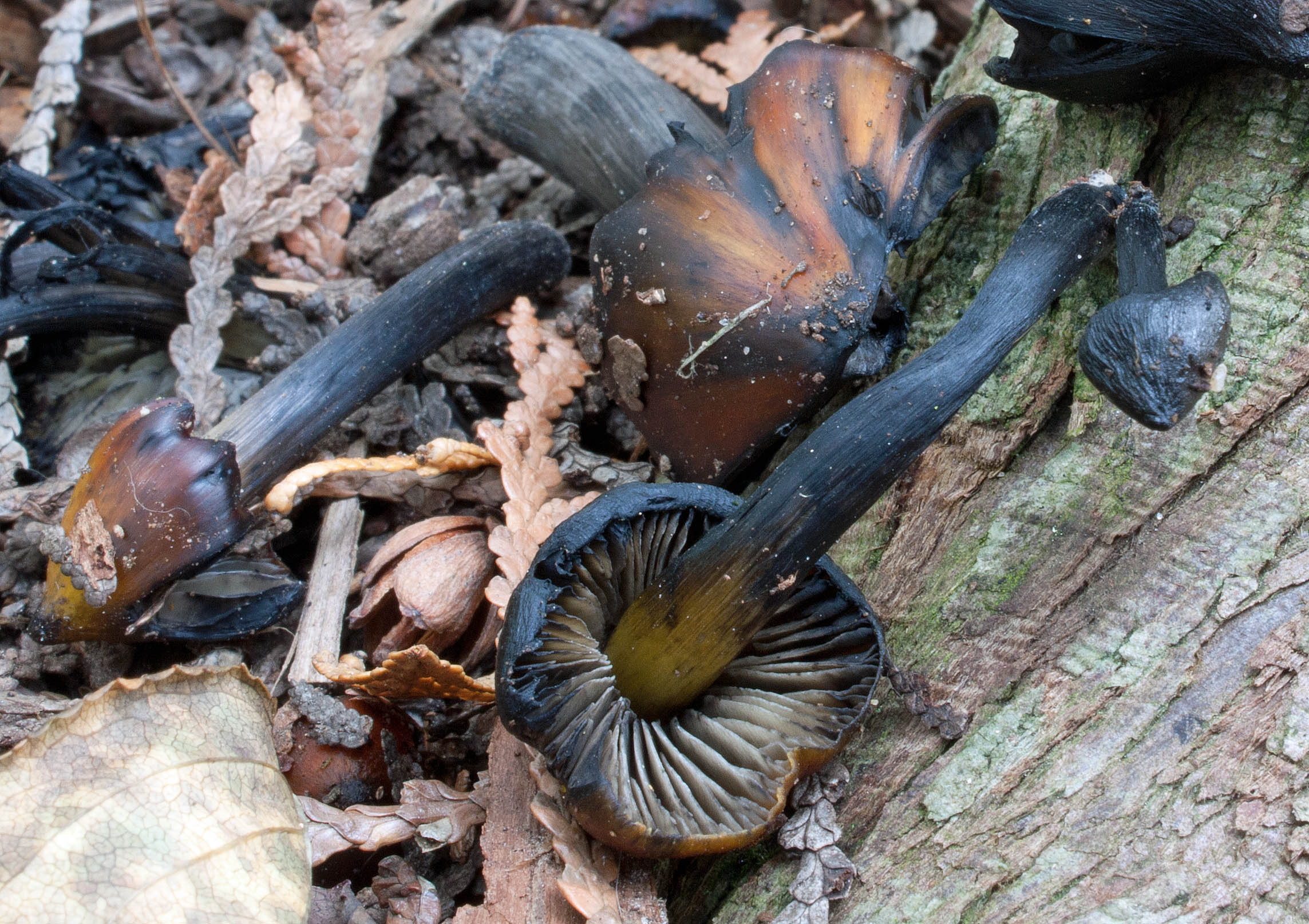
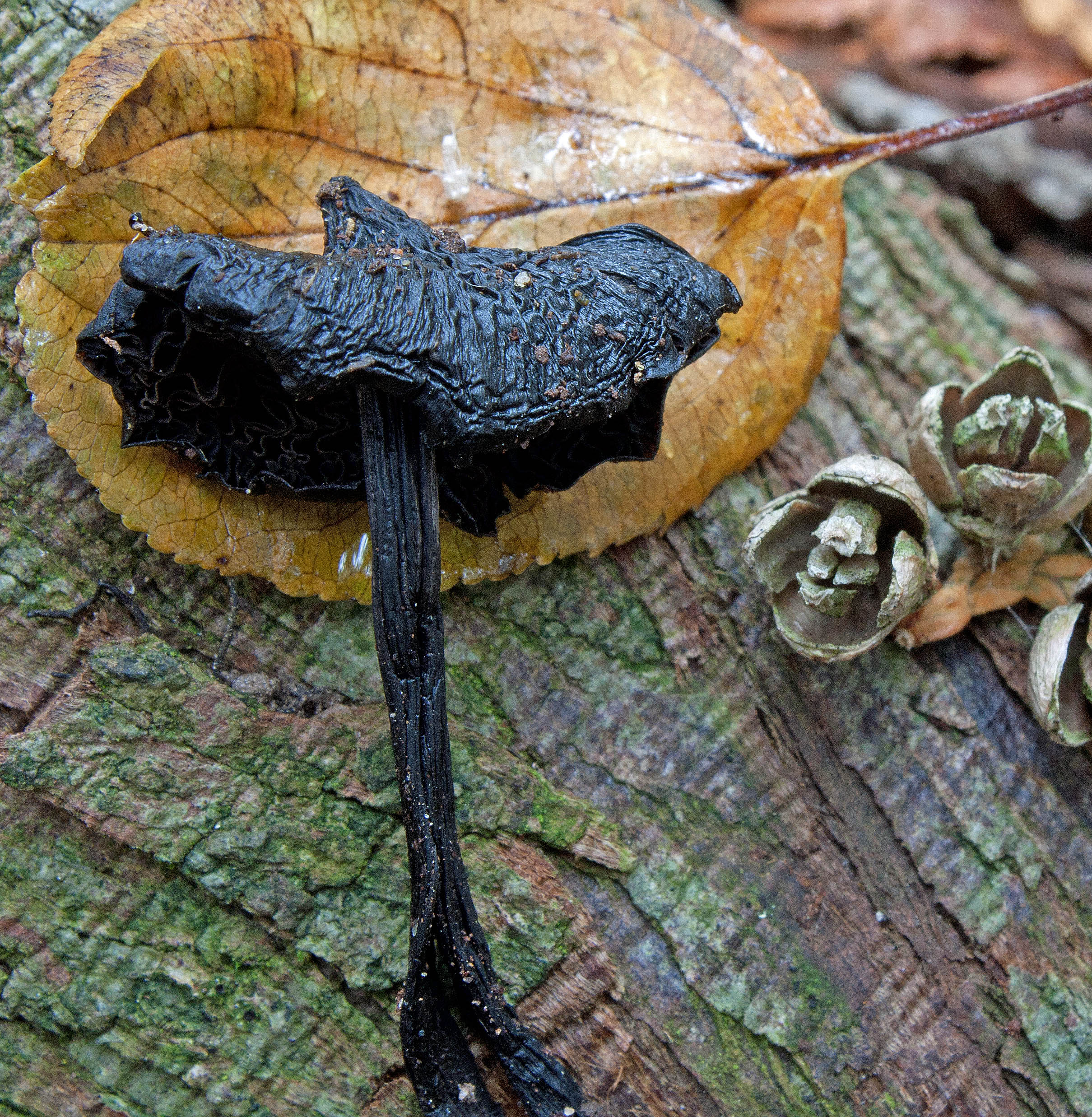
This tendency to blacken from bruising or with age is a good diagnostic for this mushroom. Very few others show this trait. Its gills “have the consistency of soft wax when rubbed between the fingers,” Fungus Fact Friday tells us. The gills start white to yellowish and gradually yellow and stain black.
Stages of Witch’s Hat from budding to opening cap to blackening cap and gills, cedar forest, ON (photo by Nina Munteanu)
Blackened and blackening Witches Hat caps and stems, ON (photo by Nina Munteanu)
Hygrocybe conica well-represents its common name Witch’s Hat as it keeps its peak and turns totally black, cedar in Ontario forest (photo by Nina Munteanu)
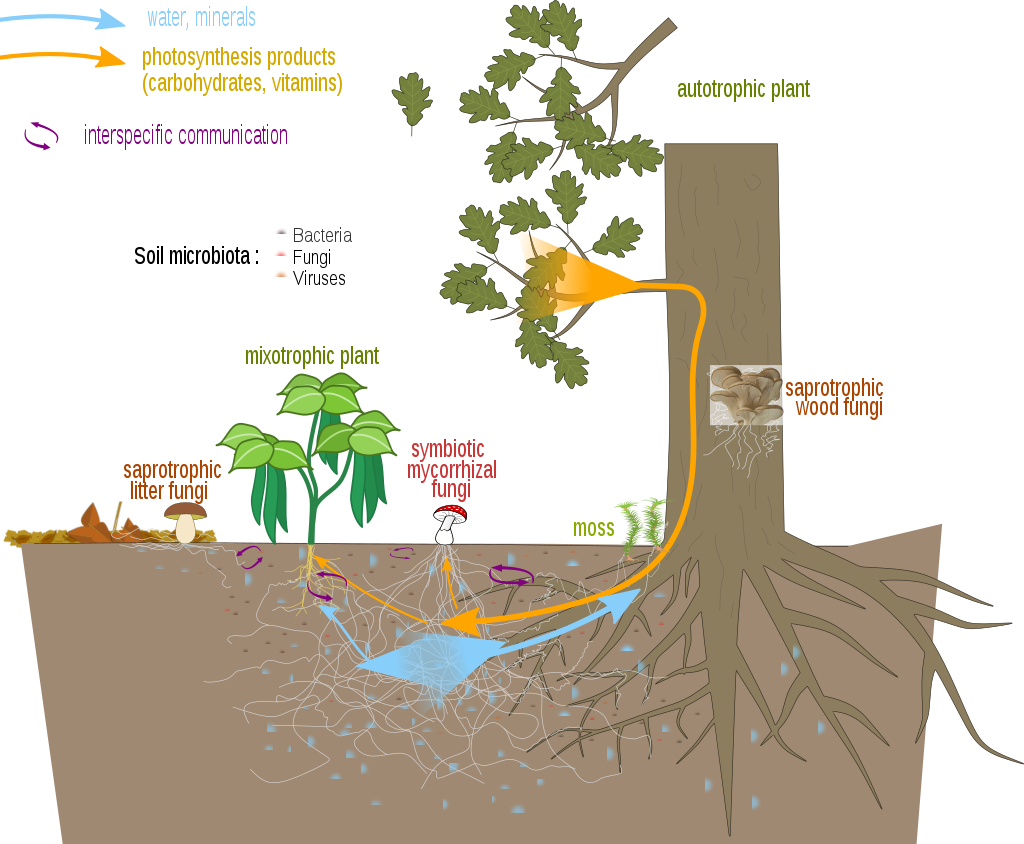
The Witch’s Hat (Hygrocybe conica), also known as Blackening Waxcap (for the obvious reason), shows a diversity of habitat preference and high variability. It tends to grow on the ground under hardwood and conifer trees. The community I stumbled upon fanned out from a few cedar trees in a small mixed cedar forest. The Witch’s Hat also likes mossy areas, where I found several near the river. The saprobic Hygrocybe conica is also a mycorrhizal fungus, sending tendrils from tree to tree.
Mycorrhizae are symbiotic relationships that form between fungi and plants. The fungi colonize the root system of a host plant—in this case some cedar trees—providing increased water and nutrient absorption capabilities while the plant provides the fungus with carbohydrates through photosynthesis.
Mycorrhizal network (illustration by Charlotte Roy, Wikipedia)
References:
Dugan. 2008. “Fungi, folkways & fairy tales.” North American Fungi 3(7): 23-72.
Morgan, A. 1995. “Toads and Toadstools: The Natural History, Folklore, and Cultural Oddities of a Strange Association.” Celestial Arts. Berkeley, California.
Munteanu, Nina. 2012. “The Last Summoner.” Starfire World Syndicate. Louisville, KY.
Owen, E. 2003. “Welsh Folk-Lore: A Collection of the Folk-Tales and Legends of North Wales. Kessinger Publishing. Whitefish, Montana.
Thiselton-Dyer, T.F. 1898. “Folk-Lore of Plants.” D. Appleton and Co., New York.
Young emerging Witch’s Hats through cedar duff, ON (photo by Nina Munteanu)
Witch’s Hat in cedar forest, ON (photo by Nina Munteanu)
Nina Munteanu is a Canadian ecologist / limnologist and novelist. She is co-editor of Europa SF and currently teaches writing courses at George Brown College and the University of Toronto. Visit www.ninamunteanu.ca for the latest on her books. Nina’s bilingual “La natura dell’acqua / The Way of Water” was published by Mincione Edizioni in Rome. Her non-fiction book “Water Is…” by Pixl Press(Vancouver) was selected by Margaret Atwood in the New York Times ‘Year in Reading’ and was chosen as the 2017 Summer Read by Water Canada. Her novel “A Diary in the Age of Water” was released by Inanna Publications (Toronto) in June 2020.