Book Review: A Plea for Nature and ‘Us’—The Novel “We” by Yevgeny Zamyatin

Penguin classics book cover of “We”

“We shall break down all walls—to let the green wind blow free from end to end—across the earth.”

I-330 in ‘We’

Just last week, I read for the first time Yevgeny Zamyatin’s masterpiece We. My first thought upon finishing it was: why have I waited until now to read it? I’m rather embarrassed to say that I’d only heard of its existence recently during some research I’d conducted on another article. The novel, written in 1920, decades before Brave New World and 1984 (two novels it is often compared to and which I read when I was a budding writer, long ago), was suppressed in Russia. It has remained in the shadows of these two works since. Mesmerized by Zamyatin’s fluid metaphoric prose, I read it in a few days.

I usually savour a good novel, but this one compelled me to take it in like an infusion.

The book jacket of the Harper Voyager edition provides the following tagline and description:

“Before Brave New World…before 1984…there was…We. In the One State of the great Benefactor, there are no individuals, only numbers. Life is an ongoing process of mathematical precision, a perfectly balanced equation. Primitive passions and instincts have been subdued. Even nature has been defeated, banished behind the Green Wall…”

Illustration of “We” masses marching during their personal hour

We is told through a series of entries by the main protagonist D-503, mathematician and chief engineer of the Integral (the ship that will take humanity to space). The novel takes place in a glass-enclosed Panopticon-like city of straight lines, and scientifically managed using Taylor’s principles of scientific management. No one knows or cares about the outside environment from which they have been separated. Citizens in the totalitarian society of One State are regulated hourly by the Table of Hours, and ruled by the ‘Benefactor’ who dispenses order through arcane methods such as The Machine (a modern ‘guillotine’ of sorts that literally liquidates its victim, reducing them to a puff of smoke and a pool of water), The Cube, The Gas Bell, and the ruthless precision and vigilance of the Bureau of Guardians. All this is “sublime, magnificent, noble, elevated, crystally pure,” writes D-503, because “it protects our unfreedom—that is, our happiness.” In the foreword to the Penguin edition of We, New Yorker journalist Masha Gessen reminds us that, “Zamyatin imagined [We] twenty years before Nazi Germany began sanitized, industrial mass murder of people who had been reduced to numbers.”

Citizens subsist on synthetic food and march in step in fours to the anthem of the One State played through loudspeakers. There is no marriage, and every week citizens are given a “sex hour” and provided a pink slip to let them draw down the shades of their glass apartment. Every year, on Unanimity Day, the Benefactor is re-elected by the entire population, through an open (not secret) vote that is naturally unanimous—given the singular “we” nature of the population.
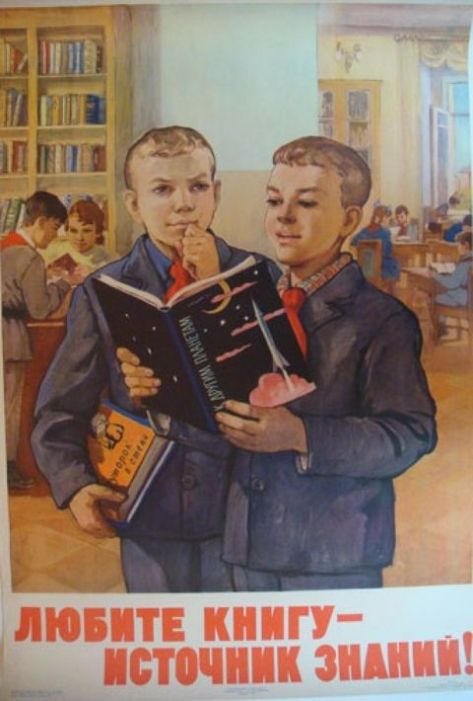
Kids in uniform from Russian poster

On Zamyatin’s novel, Michael Brendan Dougherty writes that, “Equality is enforced, to the point of disfiguring the physically beautiful. Beauty–as well as its companion, art–are a kind of heresy in the One State, because ‘to be original means to distinguish yourself from others. It follows that to be original is to violate the principle of equality.”

According to Mirra Ginsburg, who translated the book into English in 1972, Zamyatin and his book explores the oppression of two principles of human existence: eternal change and the individual’s freedom to choose, to want, to create according to his own need and his own will.

Quiet bay of the Otonabee River, ON (photo and rendition by Nina Munteanu)

In some ways, Zamyatin’s satire is as much about our separation from the chaos, ever-evolving and functional diversity of nature as it is about our separation from the unruly thoughts and emotions of the individual. Both are feared and must be defeated, controlled and commodified (I refer to Foucault’s concept of biopolitics).

D-503 writes in his journal: “we have extracted electricity from the amorous whisper of the waves; we have transformed the savage, foam-spitting beast into a domestic animal; and in the same way we have tamed and harnessed the once wild element of poetry. Today poetry is no longer the idle, impudent whistling of a nightingale; poetry is civic service, poetry is useful.”

D-503’s thirteenth entry takes place on a particularly foggy day. When new friend I-330 ‘innocently’ asks him if he likes the fog, he responds, “I hate the fog. I’m afraid of it.” To this, I-330 says, “That means you love it. You are afraid of it because it is stronger than you; you hate it because you are afraid of it; you love it because you cannot subdue it to your will. Only the unsubduable can be loved.”

Cedar swamp forest, Trent Nature Sanctuary, ON (photo and rendition by Nina Munteanu)

D-503 appears content as a ‘number’ within a larger unity of regimentation and draws comfort from a universe of logic and rationality, represented by the predictive precision of mathematics. For example, he is disturbed by the concept of the square root of -1, the basis for imaginary numbers (imagination being reviled by the One State and which will eventually be lobotomized out of citizens through the mandatory Great Operation). The spaceship’s name Integral represents the integration of the grandiose cosmic equation following the Newtonian hegemony of a machine universe.

The human-machine working the great clock in Metropolis

In the following scene in which D-503 watches men work on the spacecraft Integral—itself likened to a giant slumbering machine-human—I am reminded of an iconic scene from Fritz Lang’s 1927 Metropolis:

“I watched the men below move in regular, rapid rhythm…bending, unbending, turning like the levers of a single huge machine. Tubes glittered in their hands; with fire they sliced the glass walls, angles, ribs, brackets. I saw transparent glass monster cranes rolling slowly along glass rails, turning and bending as obediently as the men, delivering their loads into the bowels of the Integral. And all of this was one: humanized machines, perfect men…Measured movements; firmly round, ruddy cheeks; mirror-smooth brows, untroubled by the madness of thought.”

Machine of Metropolis

All is indeed sublime … Until he meets I-330, Zamyatin’s unruly heroine who is determined to change D-503’s perspective—and his vacuous state of dutiful ‘happiness.’ She is, of course, a member of an underground resistance, Mephi, bent on overthrowing the One State. I-330 is the herald of change and wishes to use D-503’s connection to the Integral to incite a revolution. In a particularly pithy scene, I-330 challenges D-503’s complacent logic with mathematics to make her point:

“Do you realise that what you are suggesting is revolution?” [says D-503]

“Of course, it’s revolution. Why not?”

“Because there can’t be a revolution. Our revolution was the last and there can never be another. Everybody knows that.”

“My dear, you’re a mathematician: tell me, which is the last number?”

“But that’s absurd. Numbers are infinite. There can’t be a last one.”

“Then why do you talk about the last revolution? There is no final revolution. Revolutions are infinite.”

Confident, powerful and heroic, the liberated I-330 is clearly the driving force of change and the philosophical voice of Zamyatin’s central theme. Her competent manipulations within the system successfully orchestrates a revolution which includes interfering with the unanimous vote, breaching the Green Wall, and braving torture to the end–all the kind of feats usually relegated to a male protagonist in novels of that era. It all starts with a tiny crime and escalates from there. Early in the novel, I-330 lures D-503 to the Medical Office, where the Mephi doctor gives them a sick card so they can play hooky from work. D-503 doesn’t even realize how I-330 has so completely caught him. His description of the facility and the officer is telling:

“A glass room filled with golden fog. Glass ceilings, colored bottles, jars. Wires. Bluish sparks in tubes. And a tiny man, the thinnest I had ever seen. All of him seemed cut out of paper, and no matter which way he turned, there was nothing but a profile, sharply honed: the nose a sharp blade, lips like scissors.”

Biblical references appear throughout We, the One State likened to ‘Paradise’, D-503 to the naïve ‘Adam’, I-330 to the herald temptress ‘Eve’, and S-4711 to the clever snake, with his ‘double-curved body,’ who turns out to be a double-agent. The revolutionary organization named Mephi appears to be after Mephistopheles, who rebelled against Heaven and ‘paradise.’ While these similarities suggest a criticism of organized religion, the novel clearly embodies so much more. It is also so much more than a political statement. Journalist and translator Mirra Ginsburg calls We “a complex philosophical novel of endless subtlety and nuance, allusion and reflections. It is also a profoundly moving human tragedy and a study in the variety of human loves … And, though the people are nameless ‘numbers,’ they are never schematic figures; each is an individual, convincingly and movingly alive.”

Zamyatin wrote We years before the word “totalitarianism” appeared in political speech and he predicted its defining condition: the destruction of the individual. In The Origins of Totalitarianism, Hannah Arendt argued that totalitarianism was a novel oppression: previous tyrants demanded obedience; but obedience was not enough for the totalitarian regime, which sought to occupy the entire person and obliterate their very core. As the self disintegrates, humans—like worker bees—fuse into what Arendt called “one man of gigantic dimensions.” Zamyatin’s word for it was: “we.” 

“In a world without personal boundaries, a world without deviation, serendipity, difference, a world without ‘I,’ there can be no ‘us.’ The ‘we’ of We is a mass rather than a community of people. Arendt wrote about loneliness as the defining condition of totalitarianism. She drew a distinction between loneliness—a sense of isolation—and solitude, a condition necessary for thinking. One could be lonely in a crowd. But in Zamyatin’s world of transparent houses and uniform lives, one could not have solitude.”

Masha Gessen on the ‘we’ of We
Winston Smith writing his diary out of the view of the ‘Big Brother’ screen

Comparison of We with Brave New World and 1984

As I was reading We, I could not help comparing it to George Orwell’s 1984, written over twenty-five years later. Similarities in plot and theme abound, right down to the inverted language of the government: the tyrant is the ‘Benefactor’ just as Orwell’s Ministry of Love is where dissidents are tortured or Oceana’s paradoxical ministry slogans–Freedom is Slavery … Ignorance is Strength … War is Peace. Three years before the publication of Nineteen Eighty-Four in 1949, Orwell reviewed We and compared it with Huxley’s Brave New World, published in 1932:

“The first thing anyone would notice about We is the fact—never pointed out, I believe—that Aldous Huxley’s Brave New World must be partly derived from it. Both books deal with the rebellion of the primitive human spirit against a rationalised, mechanised, painless world, and both stories are supposed to take place about six hundred years hence. The atmosphere of the two books is similar, and it is roughly speaking the same kind of society that is being described though Huxley’s book shows less political awareness and is more influenced by recent biological and psychological theories.”

George Orwell, 1946 review of “We”

Montage of images from 2020 film of ‘Brave New World’

While Orwell criticizes Zamyatin’s book as being “less well put together—it has a rather weak and episodic plot which is too complex to summarize,” he praises it for making a political point that according to him Huxley’s book lacks (for the record, I disagree with Orwell on this; Huxley’s political point is just more subtle, just as his characters are). Orwell found Zamyatin’s We more convincing and relevant than Huxley’s Brave New World given that in the technocratic totalitarian state of We “many of the ancient human instincts are still there,” not eradicated by eugenics and medication (such as soma). Citing the many executions in Zamyatin’s Utopia, all taking place publicly in the presence of the Benefactor and accompanied by “triumphal odes recited by the official poets”, Orwell suggested that, “It is this intuitive grasp of the irrational side of totalitarianism—human sacrifice, cruelty as an end in itself, the worship of a Leader who is credited with divine attributes—that makes Zamyatin’s book superior to Huxley’s.”

1976 Penguin cover of ‘Brave New World’ cover; ‘1953 Signet cover of Nineteen Eighty Four’

Noam Chomsky considered We more perceptive than Brave New World or 1984, the latter which he called “wooden and obvious” despite clever and original nuances such as “newspeak,” which provided a medium for the world view and principles of Ingsoc and to make other forms of thought impossible (“it’s a beautiful thing, the destruction of words…” says Syme in 1984). I agree with Chomsky. Next to the bleak and hopeless polemic of Nineteen Eighty-Four, We is less dialectic, more visceral, it is full-bodied, ribald, tender, emotional and immediate. But above all, it is hopeful. Again, Mirra Ginsburg says it best:

“We is more multifaceted, less hopeless than Orwell’s 1984, written more than twenty-five years later and directly influenced by Zamyatin’s novel. Despite its tragic ending, We still carries a note of hope. Despite the rout of the rebellion, ‘there is still fighting in the western parts of the city.’ Many ‘numbers’ have escaped beyond the Wall. Those who died were not destroyed as human beings—they died fighting and unsubmissive. And though the hero is reduced to an obedient automaton, certain that “Reason” and static order will prevail, though the woman he loved briefly and was forced into betraying dies (as do the poets and rebels she led), the woman who loves him, who is gentle and tender, is safe beyond the Wall. She will bear his child in freedom. And the Wall has been proved vulnerable after all. It has been breached—and surely will be breached again.”

Mirra Ginsburg, on ‘We’
Image by Amazon media

It may seem like a tragic end, particularly for the two main protagonists: D-503 is lobotomized into an obedient drone of the sterile system and betrays his lover; I-330 is no doubt liquidated under The Machine, after refusing to submit and betray her comrades. To the end, she is the messenger of hope and resilience and the force for removal of barriers. The wall does come down–even if for just a moment towards the end of the book–and the Green Wind blows furiously through the land, bringing with it birds and other creatures previously unseen along with the scent of change.

Zamyatin’s We is ultimately a cautionary tale on the folly of logic without love and a profound call to connect to our natural world to nurture our souls. Before he is rendered inert by the Great Operation, D-503 gives O-90 a child. It is no mistake that O-90, who tenderly and selflessly loved and refused to surrender her child to the One State, makes it outside (with the help of I-330) into the natural world. Driven by love (not rationality), she represents the future.
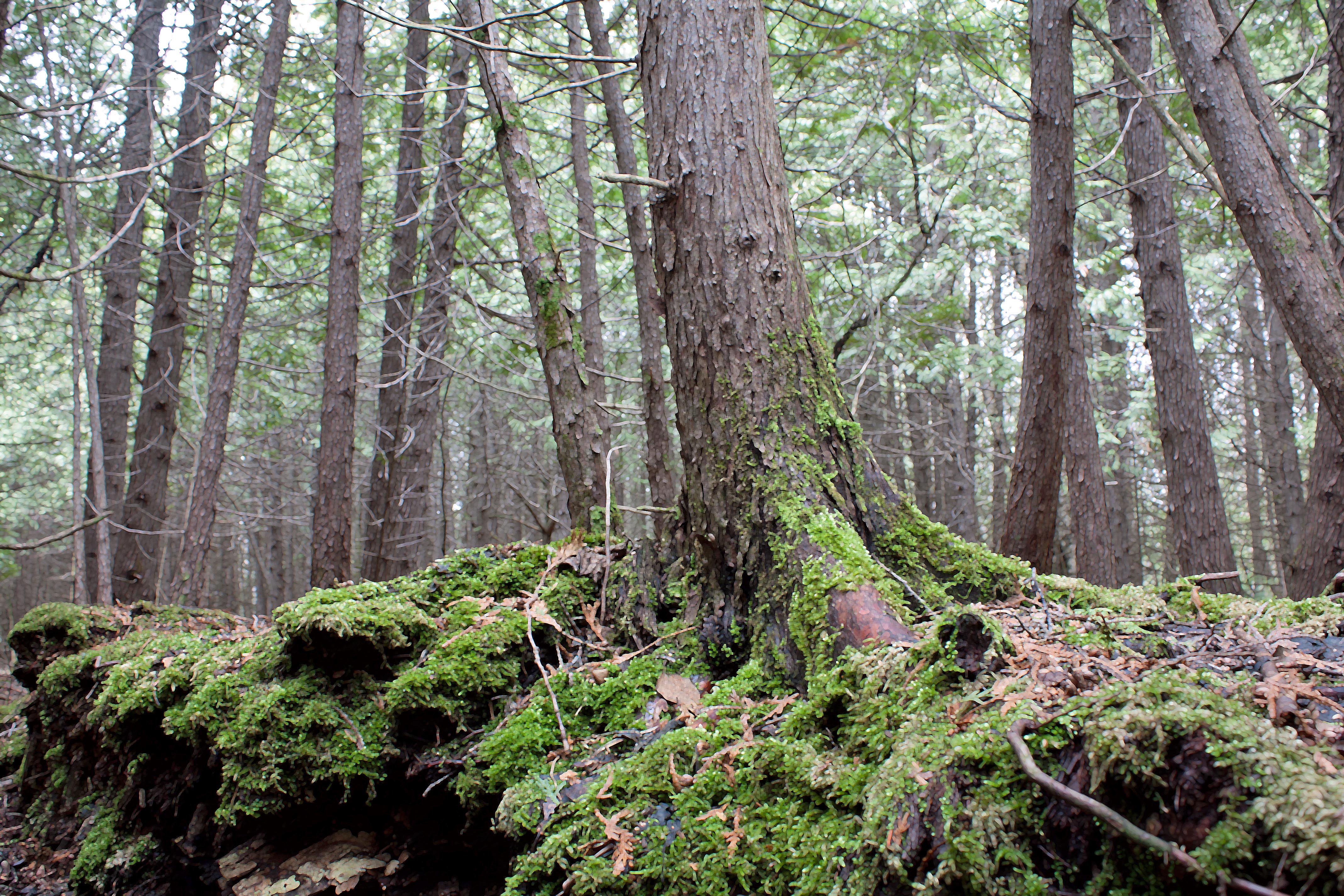
Cedar swamp forest, Trent Nature Sanctuary, ON (photo and rendition by Nina Munteanu)

About the Author and His Work

Yevgeny Zamyatin was born in 1884 in Lebedyan, Russia, which according to Mirra Ginsburg was “one of the most colourful towns in the heart of the Russian black-earth belt, some two hundred miles southeast of Moscow—a region of fertile fields, of ancient churches and monasteries, of country fairs, gypsies and swindlers, nuns and innkeepers, buxom Russian beauties, and merchants who made and lost millions overnight.”

Showing influences by Jerome K. Jerome’s 1891 short story The New Utopia and H.G. Wells’ 1899 novel When the Sleeper Wakes and the Expressionist works of Kandinsky, Yevgeny Zamyatin created We in 1920. His political satire was denied publication in Russia but Zamyatin managed to smuggle the manuscript to New York, where it was published in English in 1924 by Dutton. Mirra Ginsburg writes of Zamyatin’s death in 1937: “[it] went unmentioned in the Soviet press. Like the rebellious poet in We, and like so many of the greatest Russian poets and writers of the twentieth century, he was literally ‘liquidated’—reduced to nonbeing. His name was deleted from literary histories and for decades he has been unknown in his homeland.” The first publication of We in Russia had to wait until 1988—after more than sixty years of suppression—when glasnost resulted in it appearing alongside Orwell’s 1984.

Zamyatin called We “my most jesting and most serious work.” His credo, written in 1921 in I am Afraid, proclaimed that “true literature can exist only where it is created, not by diligent and trustworthy officials, but by madmen, hermits, heretics, dreamers, rebels, and skeptics.”

We directly inspired the following literary works: Brave New World by Aldous Huxley, Invitation to a Beheading by Vladimir Nabokov, Anthem by Ayn Rand, Nineteen Eighty-Four by George Orwell, Player Piano by Kurt Vonnegut, Logan’s Run by William F. Nolan and George Clayton, This Perfect Day by Ira Levin, and The Dispossessed by Ursula K. Le Guin.

The Penguin classics edition describes We as “the archetype of the modern dystopia, or anti-Utopia: a great prose poem detailing the fate that might befall us all if we surrender our individual selves to some collective dream of technology and fail in the vigilance that is the price of freedom.”
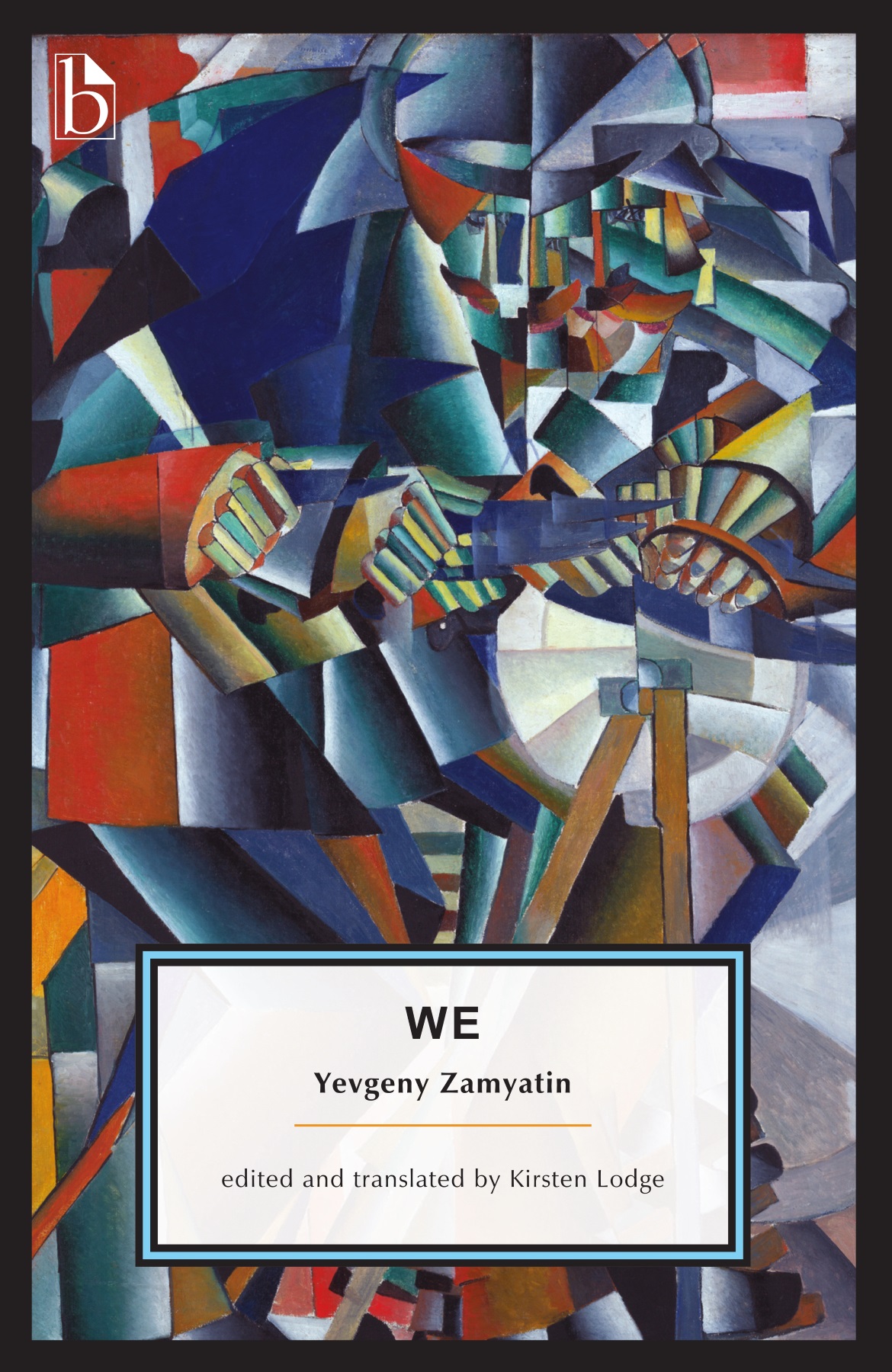
“We,” Broadview Press edition

Nina Munteanu is a Canadian ecologist / limnologist and novelist. She is co-editor of Europa SF and currently teaches writing courses at George Brown College and the University of Toronto. Visit www.ninamunteanu.ca for the latest on her books. Nina’s bilingual “La natura dell’acqua / The Way of Water” was published by Mincione Edizioni in Rome. Her non-fiction book “Water Is…” by Pixl Press (Vancouver) was selected by Margaret Atwood in the New York Times ‘Year in Reading’ and was chosen as the 2017 Summer Read by Water Canada. Her novel “A Diary in the Age of Water” was released by Inanna Publications (Toronto) in June 2020.

Climate Change: How the Moving Treeline Affects Humanity and the Planet

Poplar trees in fall, ON (photo and rendition by Nina Munteanu)


I just finished reading Ben Rawlence’s 2022 book The Treeline. It is a book that made me think. It made me cry. It made me despair. It also gave me hope.  

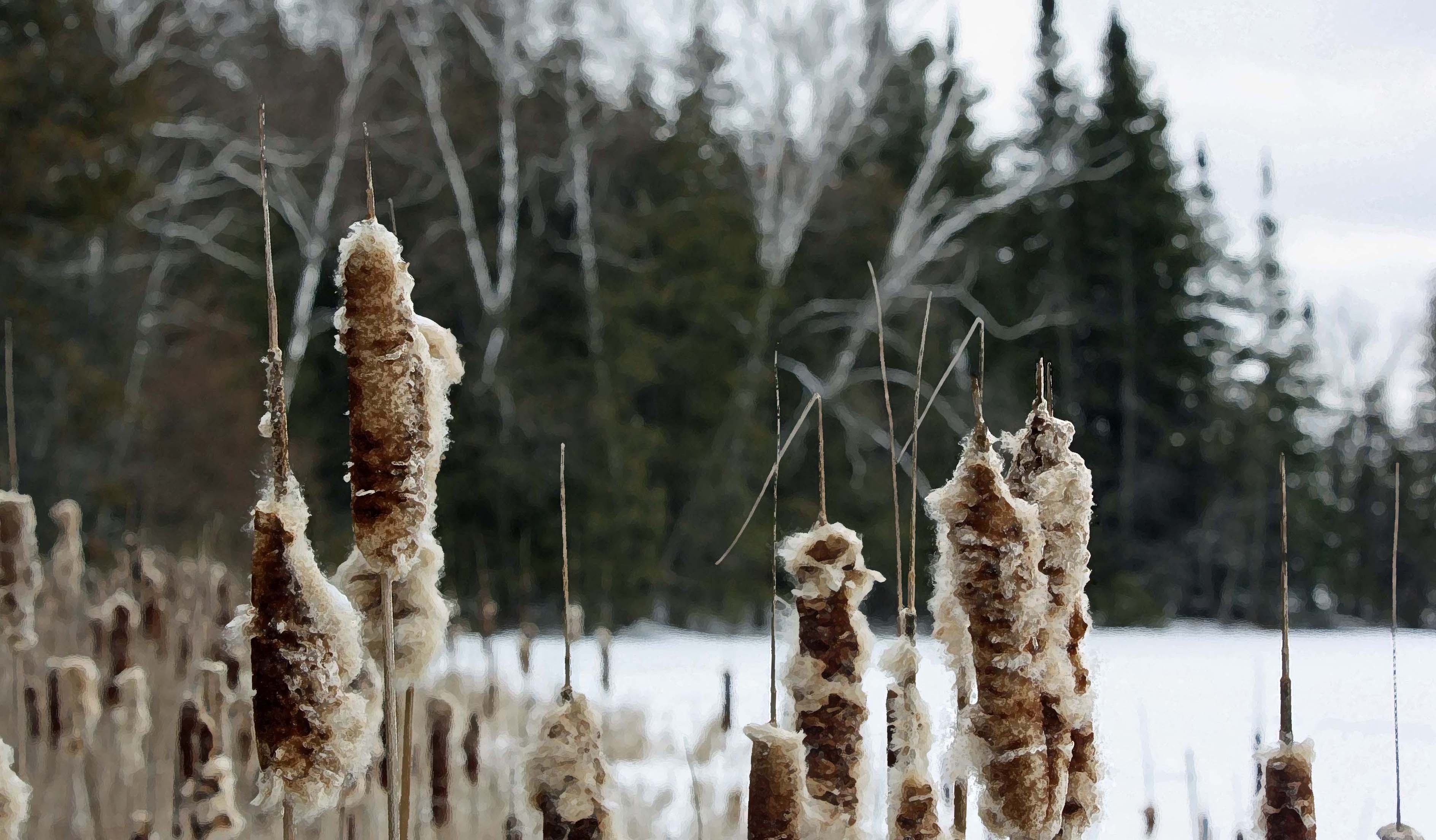
Cattails line a snow-covered marsh with spruce and fir behind, ON (photo and rendition by Nina Munteanu)

I was gripped by this honest and unflinching exploration on the moving treeline with climate change and what it will mean for humanity. Beautifully written and rigorously reported, Rawlence invited me on a journey of all major treelines over the globe from Scotland, Norway and Russia, to Alaska, Canada and Greenland. Throughout his description of a warming world and a vanishing way of life, Rawlence meditates on the many repercussions on how humans live.

Pine-cedar forest in Ontario (photo and rendition by Nina Munteanu)

He aptly describes the forests of the world as the ‘heartbeat of the planet,’ the cycles of breathing and the pulses of life from the spike of oxygen in the spring when trees put out their leaves to the peaks and troughs over day and night that regulate plant photosynthesis and respiration. The peaks and troughs are getting shallower, he writes. With more carbon dioxide in the air the trees work less; they inhale less and exhale less oxygen.

“The planet is a finely tuned system. A few degrees of change in its orbit can usher in an ice age; a few degrees of temperature change can transform the distribution of species, can melt glaciers and create oceans. In the future, when the ice is gone, there may be no such thing as a treeline at all. As the stable currents of air and water associated with the Gulf Stream, the polar front, polar vortex and Beaufort Gyre dissipate or fluctuate, the Arctic Ocean melts completely, and the Rossby waves in the upper atmosphere go haywire, the fine gradations of temperature, altitude and latitude first observed by Alexander von Humboldt will become decoupled and ecological transition zones scrambled. Instead of a majestic sweeping zone of forest around the planet, we might find discontinuous pockets of trees in odd places, refugees from soil and temperatures long gone, and crocodiles once again at the North Pole.”

Ben Rawlence, The Treeline
Snow-covered river shoreline with mixed forest, ON (photo and rendition by Nina Munteanu)

Rawlence brings this all into perspective to our present situation and the role science has played in our hubristic illusion of control:

“An unfortunate side effect of science is the illusion of human mastery: the idea that if we know what is happening then we can control. The irony is that we might have been able to. The tragedy is that it is too late. The chain reaction is under way. The curve only gets steeper from here…five metres of sea level rise is locked in; it’s just a question of how fast the ice melts. Once again, the models seem to underestimate the speed…”

Ben Rawlence, The Treeline
Willow by a river at first snow, ON (photo and rendition by Nina Munteanu)

What is most unfortunate for us, for humanity, is that we have known all this for some time. But we’ve done little. “Industrialist capitalism and its export colonialism” with its exploitive gaze that drives our needs and wants and actions has chosen to ignore the signs. That exploitive gaze ignored that we are not only embedded in but dependent upon the natural world and all the forests to live and flourish.

Tamarack and birch trees in the fall, ON (photo and rendition by Nina Munteanu)

What Rawlence does acknowledge is a way out of our self-created doom and accompanying solastalgia:

“Our present emergency is forcing us to remember what, until recently, we have always known: that there is a web of communication, meaning and significance beyond us, a world of life forms constantly chattering, shouting and flirting and hunting each other, indifferent to human affairs. And there is solace in such a vision. The way out of the depression and grief and guilt of the carbon cul-de-sac we have driven down is to contemplate the world without us. To know the earth, that life, will continue its evolutionary journey in all its mystery and wonder. To widen our idea of time, and of ourselves. If we see ourselves as part of a larger whole, then it is the complete picture that is beautiful, worthy of meaning and respect, worth perhaps dying for, safe in the knowledge that life is not the opposite of death but a circle, as the forest teaches us, a continuum.”

Ben Rawlence, The Treeline
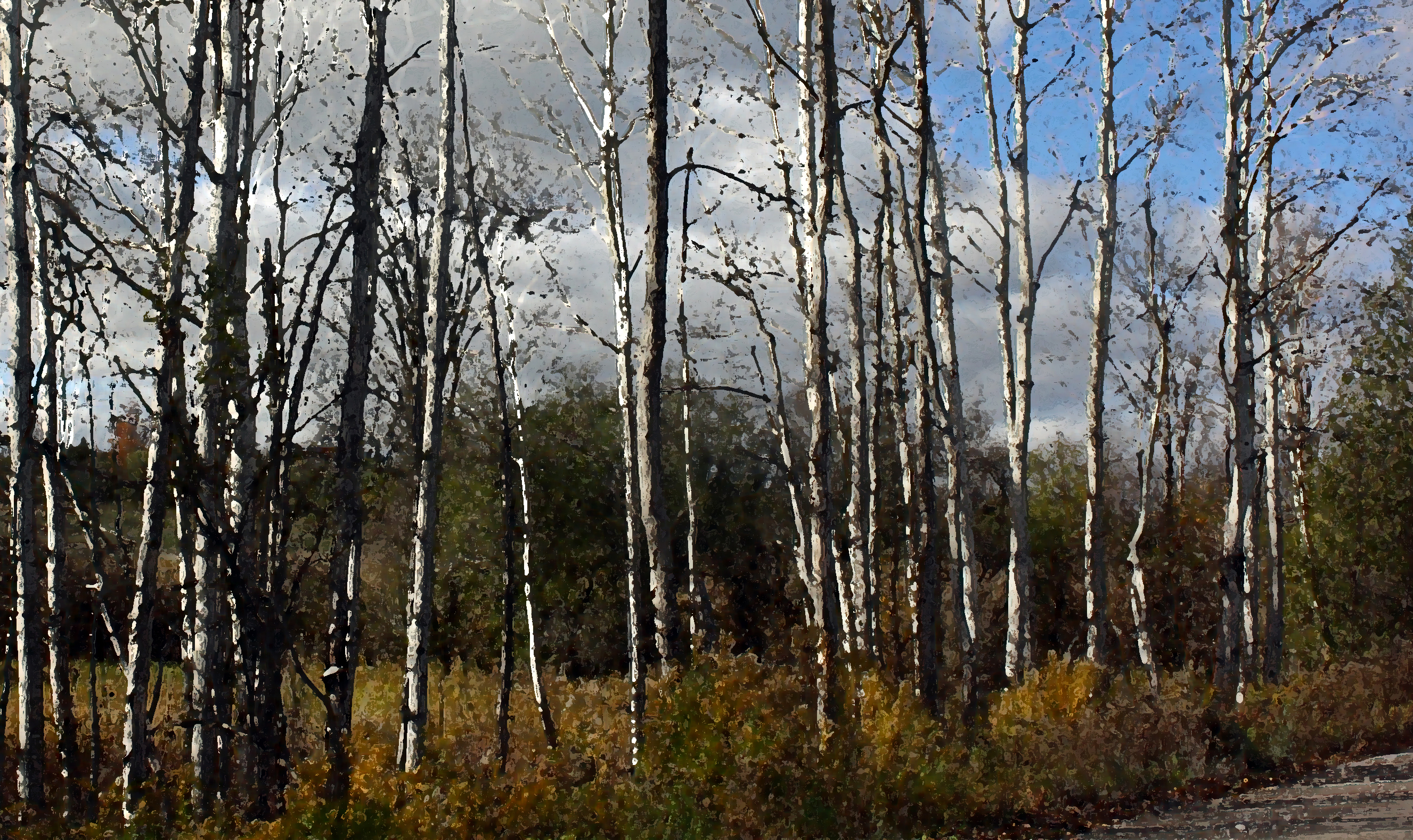
Poplar trees line a road in the Ontario country (photo and rendition by Nina Munteanu)

The planet will be alright. Species will go and others will come. Earth has experienced five extinction events (we are currently experiencing the sixth extinction event now) and after each, life flourished again, albeit different life.

Is there still hope for humanity? Perhaps—if we set our hubris aside and embrace humility and kindness. And, if in that humility, we can adapt our way through the succession we’ve triggered. There might be hope for us still…

Rawlence devotes his epilogue called “Thinking Like a Forest” to the wisdom of the indigenous people who have for millennia co-existed sustainably with the natural ecosystems of the Earth. “The Koyukon, the Sámi, the Nganasan, the Anishinaabe are just a few of the countless indigenous peoples whose world view attests to our foundational reliance on the forest.”

Time to learn from them.

Trees at sunset in winter, ON (photo and rendition by Nina Munteanu)

Nina Munteanu is an ecologist and internationally published author of award-nominated speculative novels, short stories and non-fiction. She is co-editor of Europa SF and currently teaches writing courses at George Brown College and the University of Toronto. Visit www.ninamunteanu.ca for the latest on her books. Nina’s recent book is the bilingual “La natura dell’acqua / The Way of Water” (Mincione Edizioni, Rome). Her latest “Water Is…” is currently an Amazon Bestseller and NY Times ‘year in reading’ choice of Margaret Atwood.

“To Wander the Fields” an Ekphrastic Poem by Bev Gorbet

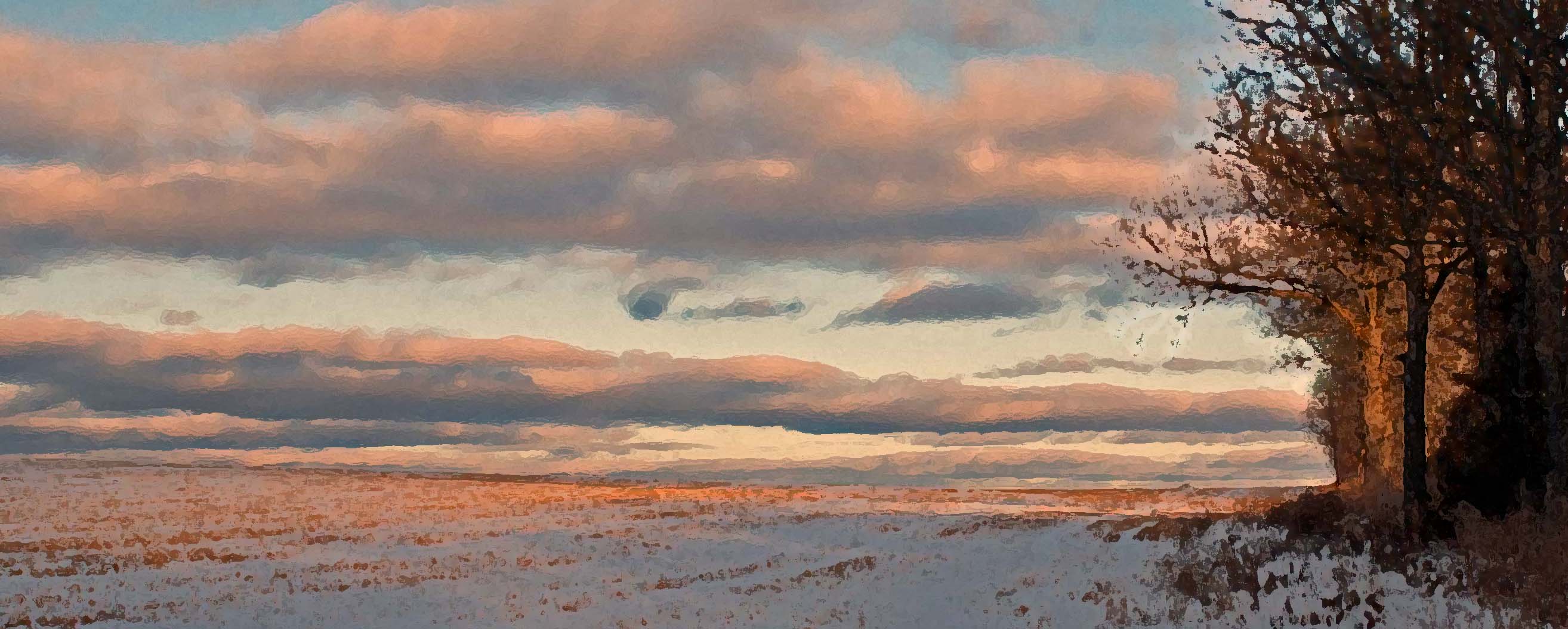
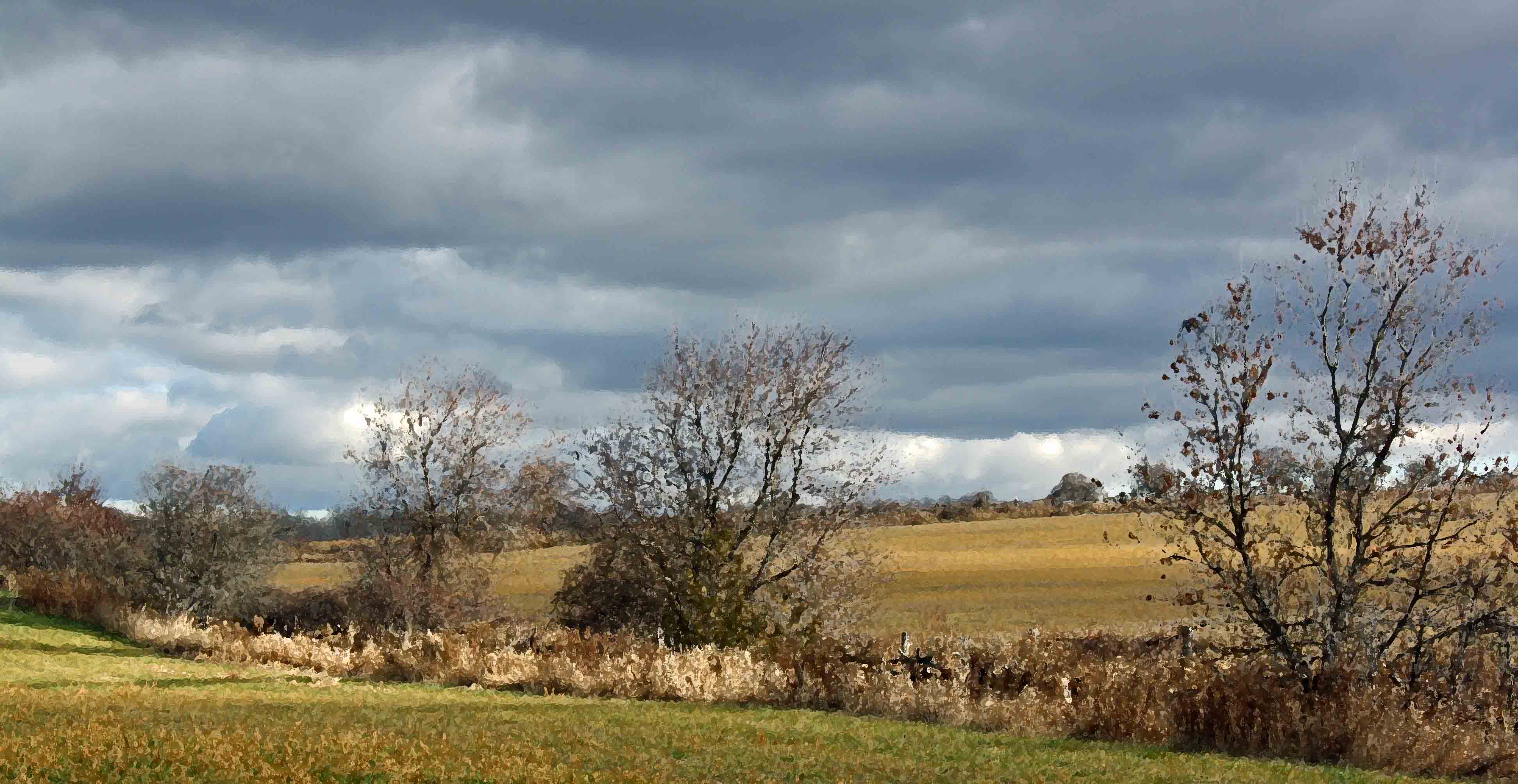
Farmer’s field at sunset in early winter, ON (photo and rendition by Nina Munteanu)

Oh! to wander the fields wild and free,
To commune with wild nature,
Her beauty everywhere extant.

Small country road in Ontario (photo and rendition by Nina Munteanu)
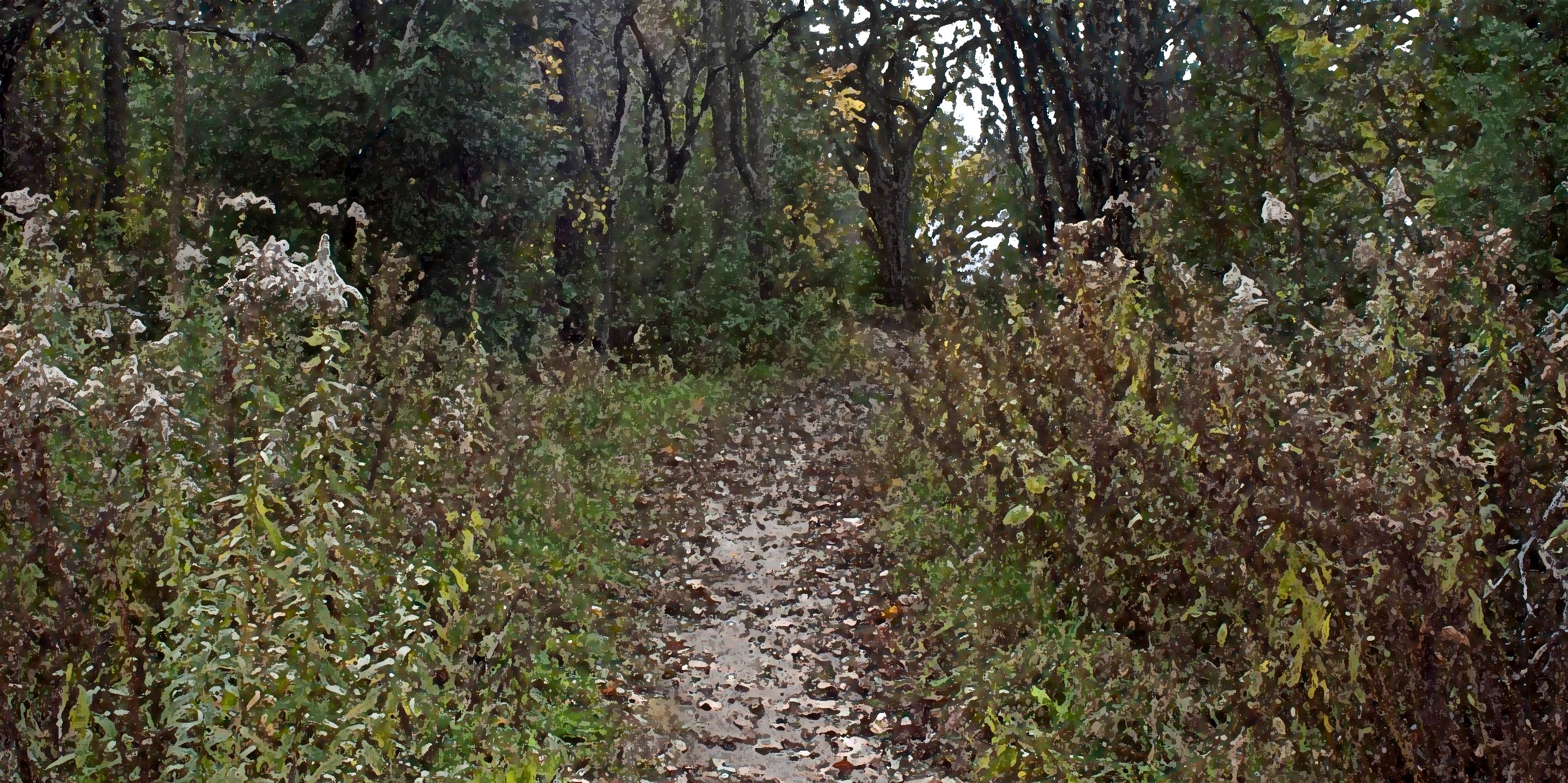
Path through meadow of goldenrod in fall, ON (photo and rendition by Nina Munteanu)

Tender lullabye and song in forested glade,
A still peace this sacred moment:
The profound silence: holy echo of dream, every hope;
Melodies of heart and soul;
Rhythms, memory and wonder in a windrift calm,
Tree and bough, moment of a joyous uplift

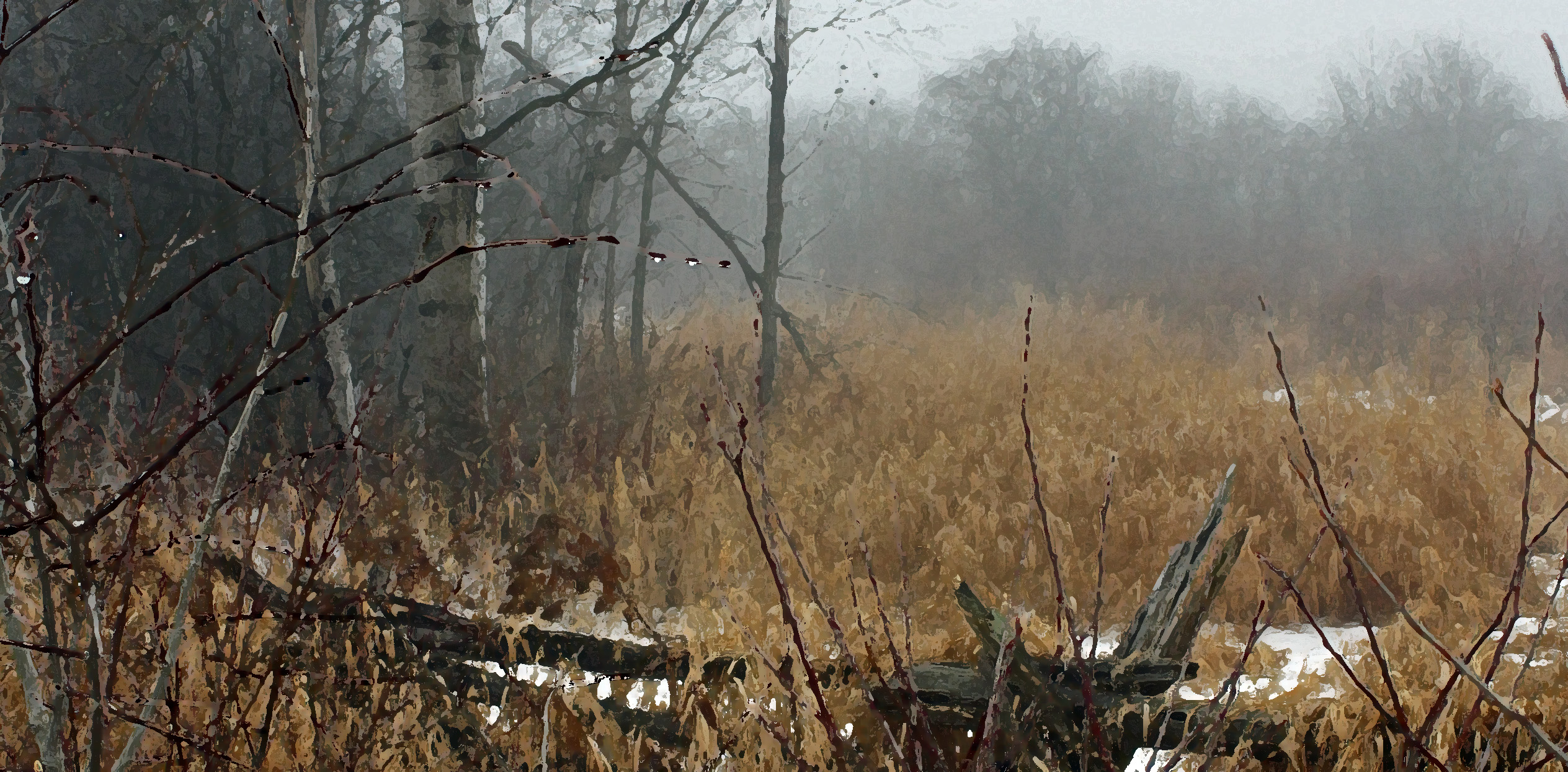
Field in early spring fog in Ontario (photo and rendition by Nina Munteanu)
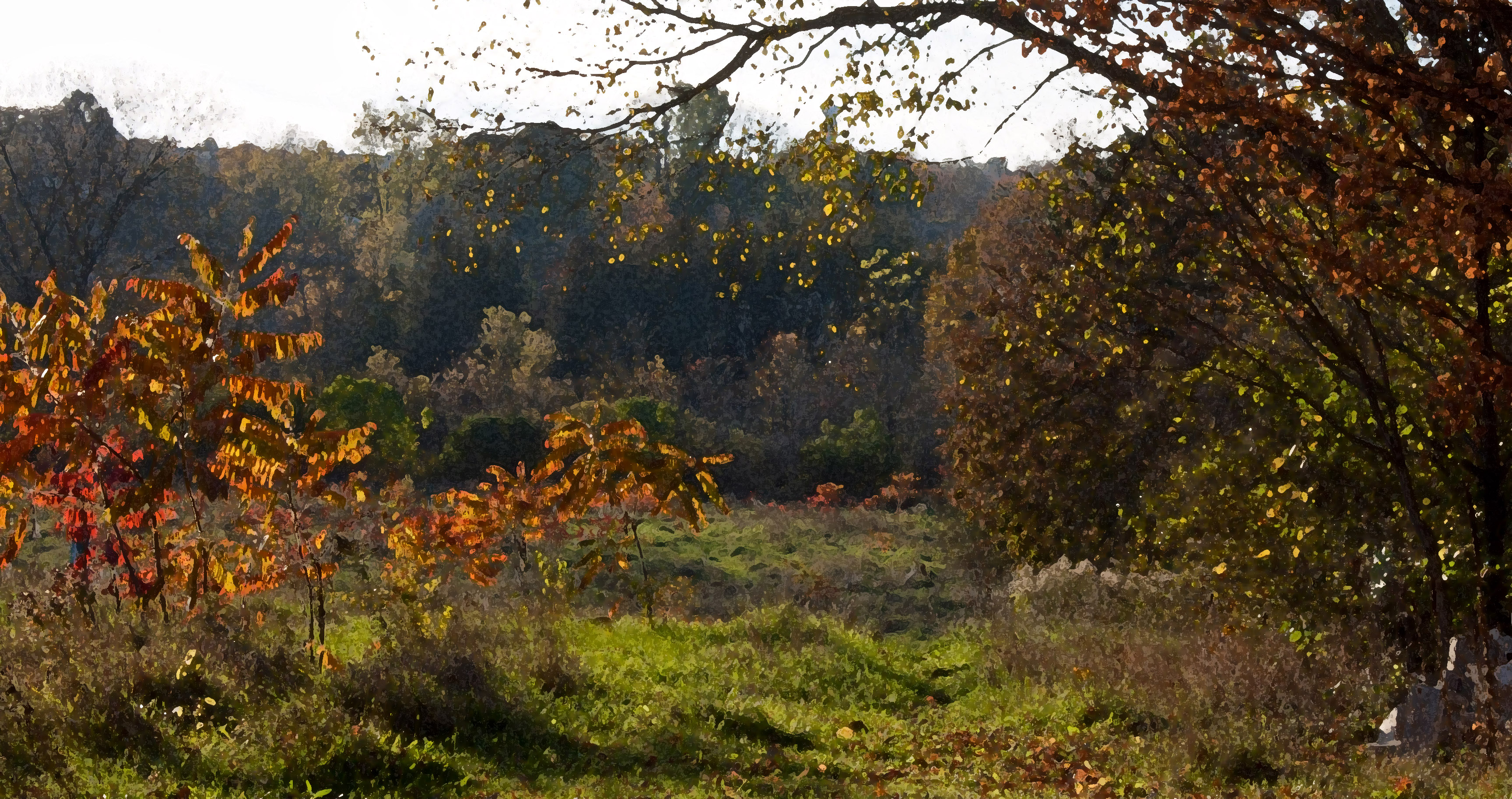
Meadow in fall in Peterborough, ON (photo and rendition by Nina Munteanu)

Forested cathedrals, great songs of heart and mind,
All the majesty: a windstorm day in fierce call and cry
Whisper and sigh midst far tossed leaf and bough…
Promise and a grace filled endurance
All the beauty flame interior universes:
A captive soul set free.

Path through meadow alvar, ON (photo and rendition by Nina Munteanu)
Path through farm country, ON (photo and rendition by Nina Munteanu)
Fields in the Kawarthas, ON (photo and rendition by Nina Munteanu)

NINA MUNTEANU is a Canadian ecologist / limnologist and novelist. She is co-editor of Europa SF and currently teaches writing courses at George Brown College and the University of Toronto. Visit  www.ninamunteanu.ca for the latest on her books. Nina’s bilingual “La natura dell’acqua / The Way of Water” was published by Mincione Edizioni in Rome. Her non-fiction book “Water Is…” by Pixl Press(Vancouver) was selected by Margaret Atwood in the New York Times ‘Year in Reading’ and was chosen as the 2017 Summer Read by Water Canada. Her novel “A Diary in the Age of Water” was released by Inanna Publications (Toronto) in June 2020.

The Paper Hound Bookstore—A Peculiar Stop in a Peculiar Journey

Rod and Kim, owners of The Paper Hound Bookshop, Vancouver

It was a warmish sunny Friday in the deep of summer and I was in Vancouver for the first time in three years since COVID-19 stopped me from travelling.
I found myself wandering Gastown, retracing the steps of the indomitable character in my upcoming thriller Thalweg by Inanna Publications.
My wanderings took me along Water Street, past the Steam Clock, south on Cambie, then east on Blood Alley where my character has a sketchy scene with two enforcers involving Gaoler’s Mews, a solid red brick wall, a scurrying rat, and a 9 mm Glock…

Gastown steam clock about to steam out 6 pm, Vancouver, BC (photo by Nina Munteanu)

But I was in the general area for another reason: to meet my son and his lady for a wonderful meal in the exquisite Italian restaurant Autostrada Osteria; a Christmas present he’d owed me since COVID hit. Located on the corner of Homer and Pender streets, Autostrada Osteria nestles comfortably in an eclectic mix of old and slightly dilapidated next to trendy and posh chic. Something Vancouver seems to do well.

The Paper Hound Bookshop on Pender Street, Vancouver

I was a little early for our reservation at 7:15 pm, so I wandered down the street. Immediately east of the restaurant was a character bookstore selling new and used books, The Paper Hound Bookshop. It’s located in the Victoria Block, a 1908 addition to the old boutique Victorian Hotel.

Always curious about books and wishing to kill some time, I wandered in, blissfully unaware that I was entering another dimension…

I nodded to the young woman at the front desk who exuded friendly intelligence through kind but impish eyes. I ventured deeper, perusing the shelves, high and low. I noted that the books were arranged with lots of front covers on display in tiny category-labeled alcoves that literally covered the walls from floor to ceiling. Several sliding ladders were judiciously placed to provide reach. The categories were odd, bizarre, somewhat arcane, and peculiarly amusing. There was one that proclaimed “Rodent as Hero.” Another read “Indomitable Orphans,” (populated with several Harry Potter books, of course, as well as other lesser known orphans).

Whoever had created these categories—was it the woman at the front?—was either strange or had purposefully flouted the norm to draw attention to a more whimsical, curious way of seeing the world and the books that described it. No mundane alphabetizing within broad normative categories for these people!

Inside the Paper Hound Bookshop, Vancouver (image by On the Grid)

As I wandered the labyrinthine rows of books, the place felt like a roadmap to another world. The narratives from the categories alone were worth studying from “Hot Adventure”, “Cold Adventure,” and “Wet Adventure” to “Books with Bears,” “Detection / Deduction,” and “Wanderlust.” Each category was a ‘book’ and each book ‘a chapter’ of a larger funky narrative that depicted one person’s intriguing interpretation of the world.

Keagan Perlette of Sad Mag describes the store this way: “The Paper Hound stocks both used and new books and features an impressive collection of poetry and philosophy. Space is limited, so there is an evident focus on literature, but there are surprises hidden in the shelves: an excellent selection of beautiful children’s books, art books, drawers full of zines and chapbooks, and even a section for unique vintage cookbooks. The store is full of little wonders.”

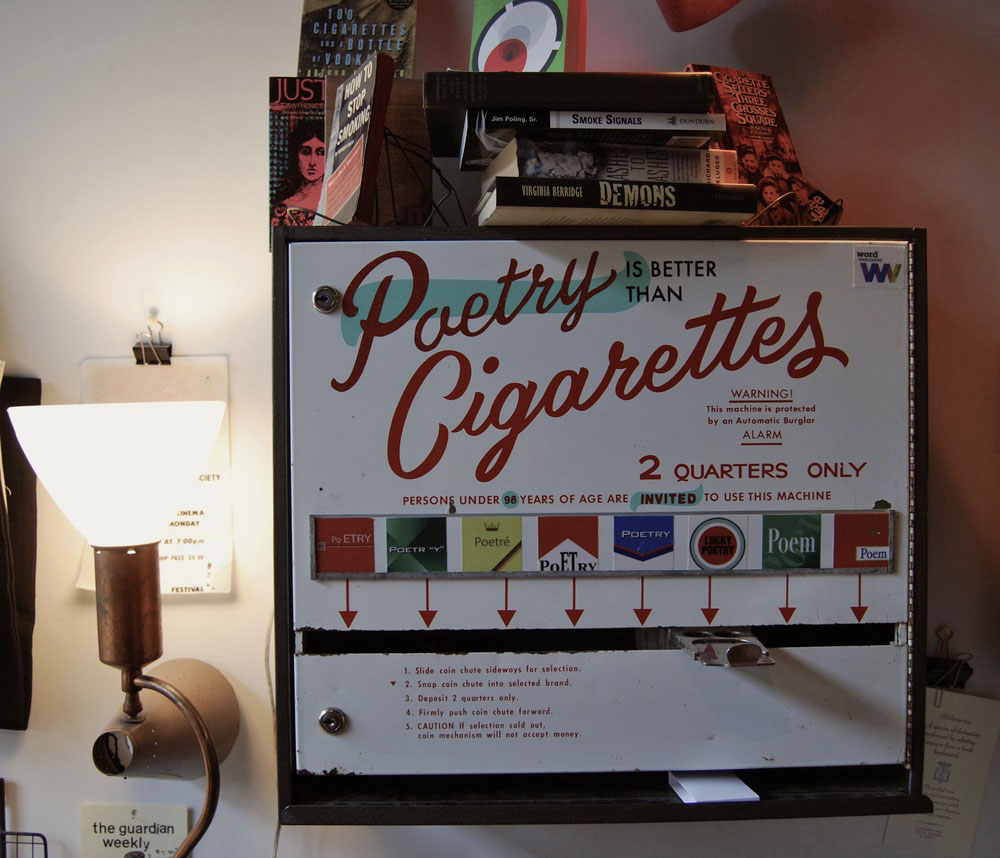
There is even a funky machine that dispenses poetry like cigarettes for two quarters at the front of the store. Even on its surface books were stacked. The owners had stacked books literally everywhere. On chairs, on tables, on each other. Little books on larger books, balanced wonderfully in a kind of fanciful ordered chaos.

Poetry dispenser at The Paper Hound (image by Keagan Perlette)

The Paper Hound website accurately describes the bookstore as “a new, used and rare book store” that doesn’t specialize “in one particular kind of book, but we favour the classic, curious, odd, beautiful, visually arresting, scholarly, bizarre, and whimsical.” In addition to their collection of used books, the Paper Hound carries titles from local small publishers Anvil Press, Arsenal Pulp Press, Talon Books and New Star Books.

Owners Kim Koch and Rod Clarke are veterans of the bookstore world in Vancouver, having worked at several before opening Paper Hound. They set up The Paper Hound in the old boutique hotel in 2013 on what my book collector friend calls ‘book row.’ Located on Pender Street, between Richards and Hamilton, ‘book row’ is apparently expanding according to On the Grid.  According to the Vancouver Sun: “in this digital age many people think bookstores are on the verge of extinction. People are buying fewer paper books, and websites like Amazon offer almost anything ever printed, often for cheap.” While the Internet and digital devices appear to be ravaging large chain bookstores (some like Borders closed and others like Indigo have added household goods to bring people into the store), small niche independent bookstores are flourishing.

“Setting up a bookstore in the post-online and big book retailer age is sort of liberating,” says Kim. “We know we can’t carry everything or nearly as many titles as they do, so that liberates us to instead focus on creating the experience we want the customer to have.” Kim describes the perfect bookstore as: “a place that offers people a space where they can explore, get guidance from the proprietors and, when they want to, be left alone amongst the shelves to daydream.”

That’s exactly what I did.

When I left the store at shortly after 7pm, Kim pulled in the book trolley from outside in preparation to close and I apologized if I’d held her up a few minutes. She then informed me that they usually close at six but she had kept the store open for goodness knows why. I smiled and said rather cheekily with sudden inspiration, “I know; because I needed to experience it.” She laughed and those impish eyes twinkled.

And before you ask, yes, I did walk away with something: “Water Babies” by Charles Kingsley, a moral fable that explores the closed-minded approaches of many scientists of the day in their response to Charles Darwin’s ideas on evolution.

1935 edition of Ward, Lock & Co. publication of “Water Babies” by Charles Kingsley (originally published in 1863 by London Macmillan and Company) with illustrations by Harry G. Theaker

After he is chased from the home of an upper-class young girl, chimney-sweep Tom falls asleep and tumbles into a river. There he is transformed into a ‘water-baby’ and his adventures truly begin. Beneath the surface, he enters a magical world full of strange and wonderful creatures, where he must prove his moral worth in order to earn what he truly desires.

Macmillan describes The Water Babies this way:

“One of the most unusual children’s books ever written, The Water-Babies, subtitled ‘A Fairy Tale for a Land-Baby’, was originally intended as a satire in support of Charles Darwin’s On the Origin of Species, and explores the issues at the forefront of biologists’ minds at the time. First published as a complete novel in 1863 [originally illustrated by Linley Sambourne], Charles Kingsley’s classic tale also explores ideas about religion, the Victorian education system and the working conditions of children and the poor.”

The vintage version I picked up at The Paper Hound was illustrated by Harry G. Theaker and published in 1935 by Ward, Lock & Co. Ltd. with 24 colour plates.

For a great taste of Kim and Rod’s unique vision of the world of literature and their pithy humour and wit, go to their blog The Paper Hound. Here’s a taste:

Vancouver street lined with plane trees (photo by Nina Munteanu)

NINA MUNTEANU is a Canadian ecologist / limnologist and novelist. She is co-editor of Europa SF and currently teaches writing courses at George Brown College and the University of Toronto. Visit  www.ninamunteanu.ca for the latest on her books. Nina’s bilingual “La natura dell’acqua / The Way of Water” was published by Mincione Edizioni in Rome. Her non-fiction book “Water Is…” by Pixl Press(Vancouver) was selected by Margaret Atwood in the New York Times ‘Year in Reading’ and was chosen as the 2017 Summer Read by Water Canada. Her novel “A Diary in the Age of Water” was released by Inanna Publications (Toronto) in June 2020.
Nina Munteanu’s “Water Is…” Discussed in Book Club

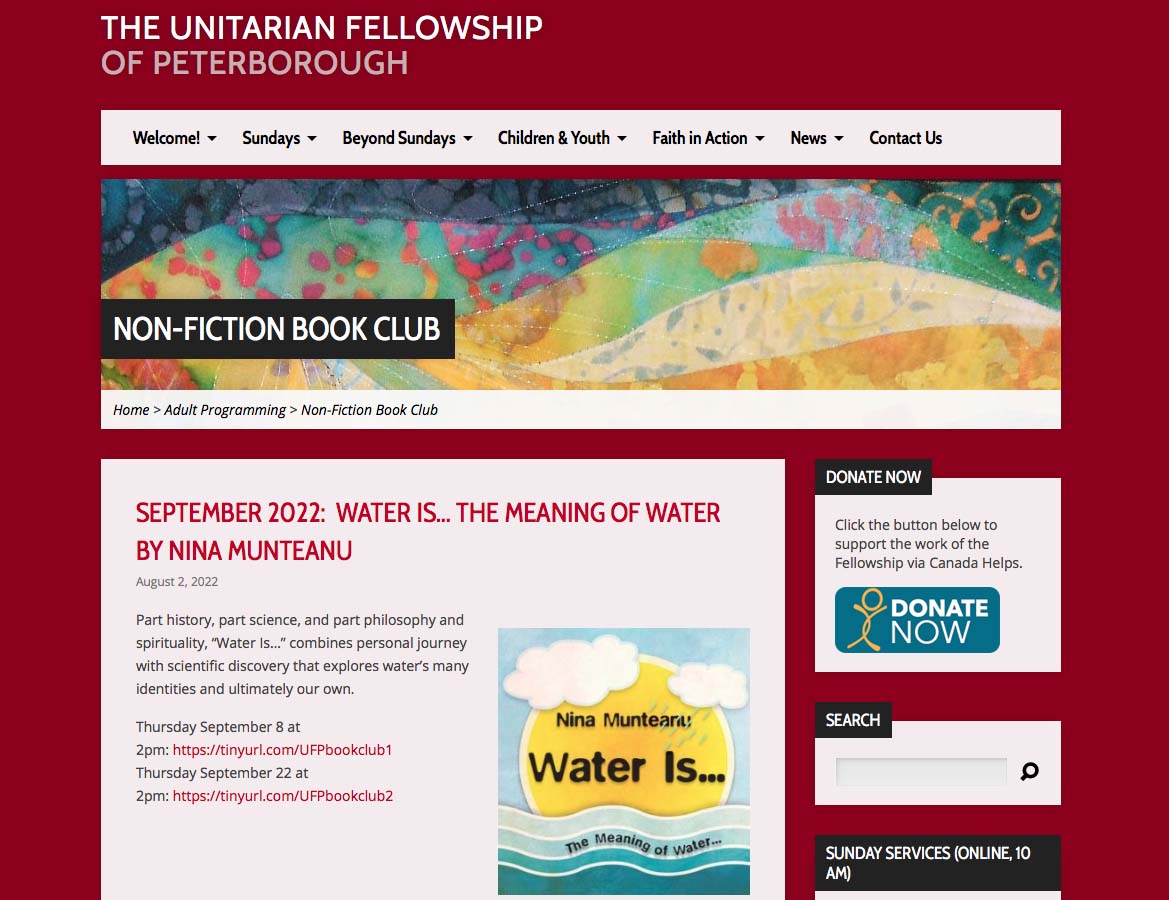
This month of September (September 8 and 22 at 2 pm) the Unitarian Fellowship of Peterborough Non-Fiction Book Club will discuss my book “Water Is…”

NINA MUNTEANU is a Canadian ecologist / limnologist and novelist. She is co-editor of Europa SF and currently teaches writing courses at George Brown College and the University of Toronto. Visit  www.ninamunteanu.ca for the latest on her books. Nina’s bilingual “La natura dell’acqua / The Way of Water” was published by Mincione Edizioni in Rome. Her non-fiction book “Water Is…” by Pixl Press(Vancouver) was selected by Margaret Atwood in the New York Times ‘Year in Reading’ and was chosen as the 2017 Summer Read by Water Canada. Her novel “A Diary in the Age of Water” was released by Inanna Publications (Toronto) in June 2020.
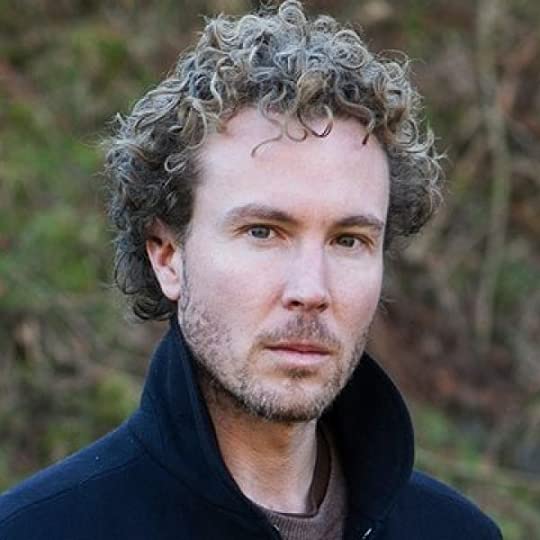
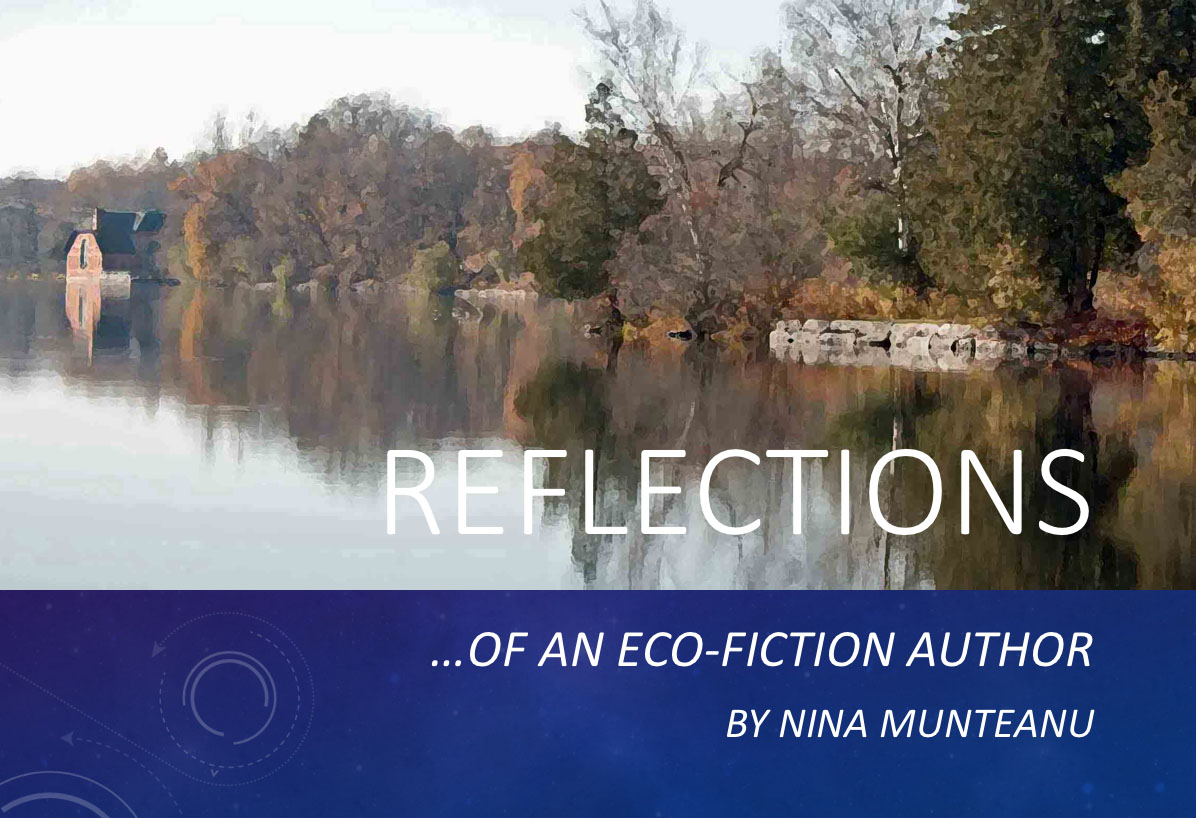
Nina Munteanu Reflects on Her Eco-Fiction Journey at Orchard Park Secondary School

I recently gave a talk at Orchard Park Secondary School during their “Eco Crawl” week. “Eco crawl is a cross curricular initiative promoting environmental awareness, natural conservation, and well-being,” says Teresa Grainger, Library Learning Commons Technician at the school. The “week long initiative will include animal visitors, presentations, displays, and outdoor activities. We like to involve as many departments as possible.”

The school invited me to participate with a presentation. I spoke about my work as a writer and as a scientist, how I was inspired to write eco-fiction and a little about the process of how I started. I shared the challenges I faced and my victories. I also spoke about the importance of eco-fiction as narrative and the importance of storytelling generally to incite interest, bring awareness and ultimately action.

The word is a powerful tool. And the stories that carry them are vehicles of change.

Here is some of that talk:

My story begins with the magic of water, Quebec water … I was born in a small town in the Eastern Townships of Quebec, a gently rolling and verdant farming community, where water bubbles and gurgles in at least two languages.

Pastoral Eastern Townships and Granby, Quebec; Nina Munteanu as a child

I spent a lot of my childhood days close to the ground, observing, poking, catching, destroying and creating. Perhaps it was this early induction to the organic fragrances of soil, rotting leaves and moss that set my path in later life as a limnologist, environmental consultant and writer of eco-fiction.

My mother kept a garden in our back yard that she watered mostly with rain she collected in a large barrel out back. I remember rows of bright dahlias with their button-faces and elegant gladiolas of all colours, tall like sentinels. And, her gorgeous irises.

In the winter, my mother flooded the garden to create an ice rink for the neighbourhood to use for hockey. Somehow, I always ended up being the goalie, dodging my brother’s swift pucks to the net. I got good at dodging—probably a useful life skill in later life…

Our dad frequently took us to the local spring just outside town. We walked a few miles up Mountain Road to an unassuming seepage from a rock outcrop with a pipe attached to it by the local farmer. I remember that the water was very cold. Even the air around the spring was cooler than the surrounding air. I remember that the spring water tasted fresh and that the ice it formed popped and fizzed more than tap water.

I followed my older brother and sister to the nearby forest and local river. We stirred soil, flower petals and other interesting things with water to fuel “magic potions” then told wild stories of mayhem and adventure. I became a storyteller. My passion for storytelling eventually morphed into writing; but, the underlying spark came through environmental activism.

In early high school, during the mid-60s, I became an environmental activist, putting up posters and writing in the school paper. I wrote letters to industry and politicians, trying to incite interest in being good corporate citizens and promoting global environmental action. I remember a well-meaning teacher chiding me for my extravagant worldview. “Stick to little things and your community—like recycling,” he suggested patronizingly. I remember the shock of realizing that not everyone felt the planet like I did. Perhaps it was a teenage-thing, or a girl-thing, or a nina-thing. I prayed it wasn’t just a nina-thing…

I started writing stories in high school. Mostly eco-fiction, though I didn’t know that’s what it was at the time. There was no genre called eco-fiction back then. It all went under the umbrella of scifi.

I completed my first novel, Caged in World when I was fifteen—in Grade 9—in 1969.  Caged in World was a hundred-page speculative story about a world that had moved “inside” to escape the ravages of a post climate-change environment. The eco-novel was about a subway train driver and a data analyst caught in the trap of a huge lie. The story later morphed into Escape from Utopia. Several drafts—and years later—the novel became the eco-medical thriller Angel of Chaos, set in 2095 as humanity struggles with Darwin’s Disease—a mysterious neurological environmental pandemic. Icaria 5 is one of many enclosed cities within the slowly recovering toxic wasteland of North America, and where the protagonist Julie Crane works and lives. The city is run by technocrats, deep ecologists who call themselves Gaians, and consider themselves guardians of the planet. The Gaians’ secret is that they are keeping humanity “inside” not to protect humanity from a toxic wasteland but to protect the environment from a toxic humanity.

Some of the scientific papers, reports and articles I wrote or participated in

When I enrolled in college and university, I thought of going into environmental law then decided that I didn’t have the temperament for it and switched to biology. Without realizing it, I put fiction writing on hold while I pursued ecology at university. One professor got me very interested in limnology and it became my focus when I realized that I’d always been fascinated by water. I started out being scared of water—not being a strong swimmer—and the best thing you can do to get over a fear is to study it and understand it. That’s exactly what I did. I did some cool research on stream ecology and published scientific papers, articles and reports. Then I moved to the westcoast to teach limnology at the University of Victoria and do consulting work in aquatic ecology.

So, in a way, I’d gone back to what I loved best as a child—mucking about in nature, spending my days close to the ground, observing, poking, catching, destroying and creating.

Kevin as a toddler

In 1991, my son Kevin was born. I felt a miracle pass through me. Kevin became my doorway into wonder. His curiosity was boundless and lured me into a special world of transformation. I took time off work to spend with Kevin when he was young. We went on great trips, from the local mall, where we had a hot chocolate and played with Lego, to the local beach on the Fraser River, where we explored the rocks. When he was no more than three, I took him on endless adventures in the city and its surroundings. We didn’t have to go far. The mud puddles of a new subdivision after a rain were enough to keep our attention for dozens of minutes. We became connoisseurs of mud. The best kind was “chocolate mud,” with a consistency and viscosity that created the best crater when a rock was thrown into it.

Kevin and I often explored the little woodland near our house. We made “magic potions” out of nightshade flowers, fir needles, loam and moss; we fueled our concoctions with the elixir of water from a stagnant pool then told wild stories of mayhem and adventure.

Storytelling kept calling to me. It was the 1990s—twenty years after I finished Angel of Chaos—and I’d published lots of short stories and articles. But no novels.

Some of Nina’s short story publications

I spent several years shopping Angel of Chaos to agents and publishing houses. Although I received many bites, all finally let go. I kept writing short stories, some of which were cannibalized from the book, and several were published; I also wrote Angel’s prequel, The Great Revolution and Angel’s sequel Darwin’s Paradox and shopped them.

Then In 2007, Dragon Moon Press in Calgary made an offer to publish Darwins Paradox; the sequel became my debut novel. Dragon Moon Press later picked up Angel of Choas and published it in 2010 as a prequel. I haven’t stopped publishing books since (with a book pretty much every year), both fiction and non-fiction…including writing guidebooks in my Alien Guidebook Series.

Kevin hiking the mountains of the west coast, BC

My son left the nest to go to university and work and I went on walkabout and eventually left the westcoast, returning to my old home in the east. I did lots of house-sitting in the Maritimes, then ended up teaching at UofT in Toronto.

UofT, west gate to quadrangle of University College, ON (photo by Nina Munteanu)

In 2016, I published Water Is… with Pixl Press in Vancouver.  It’s a biography and celebration of water—my attempt to write a lay book on my water science, something that all could appreciate. Turns out that Margaret Atwood really liked it too!

On its heels, I got a book deal with Inanna Publications in Toronto for my eco-novel A Diary in the Age of Water. This eco-fiction novel follows the journeys of four generations of women during a time of catastrophic environmental change. The novel explores each woman’s relationship with water, itself an agent of change…

Eco-fiction (short for ecological fiction) is a kind of fiction in which the environment—or one aspect of the environment—plays a major role in story, either as premise or as character. For instance, several of my eco-fiction stories give Water a voice as character. In my latest novel, A Diary in the Age of Water, each of the four women characters reflects her relationship with water and, in turn, her view of and journey in a changing world.

In eco-fiction, strong relationships are forged between the major character on a journey and an aspect of their environment and place. Such strong relationship can linger in the minds and hearts of readers, shaping deep and meaningful connections that will often move a reader into action. Our capacity—and need—to share stories is as old as our ancient beginnings. From the Paleolithic cave paintings of Lascaux to our blogs on the Internet, humanity has left a grand legacy of ‘story’ sharing. By providing context to knowledge, story moves us to care, to cherish, and, in turn, to act. What we cherish, we protect.  It’s really that simple.

Eco-fiction—whether told as dystopia, post-apocalypse, cautionary tale or hopeful solarpunk—can help us co-create a new narrative, one about how the Earth gifts us with life and how we can give in return. It’s time to start giving.

That starts with story.

NINA MUNTEANU is a Canadian ecologist / limnologist and novelist. She is co-editor of Europa SF and currently teaches writing courses at George Brown College and the University of Toronto. Visit  www.ninamunteanu.ca for the latest on her books. Nina’s bilingual “La natura dell’acqua / The Way of Water” was published by Mincione Edizioni in Rome. Her non-fiction book “Water Is…” by Pixl Press(Vancouver) was selected by Margaret Atwood in the New York Times ‘Year in Reading’ and was chosen as the 2017 Summer Read by Water Canada. Her novel “A Diary in the Age of Water” was released by Inanna Publications (Toronto) in June 2020.

What is Eco-Fiction and Why Should We Care?

Sample of eco-fiction publications Nina contributed as author or editor
“What is Eco-Fiction and Why Should We Care?”

In 2019, at the When Words Collide writer’s conference in Alberta, I participated in a panel on eco-fiction. The panel, consisting of Alex Reissen, Merilyn Ruth Liddell, Claudiu Murgan, Nina Munteanu, and moderated by Canadian speculative author Candas Jane Dorsey, discussed what eco-fiction is, what it means to its writers and its readers and why it’s an important genre of literature. How, for instance can eco-fiction writers influence our audience to engage in helping the planet and humanity, in turn? How can we do it without turning to the polemic of non-fiction? We discussed the importance of “storytelling”, bringing in characters to care about, making the global experience (and issue) personal. Essentially dramatizing the premise.

Candas described fiction writers as “sneaky,” exploring the issue (and message) through context and setting with a focus on character journey. This includes use of sub-text and subtleties embodied by individuals. I mentioned treating the environment as a character—a character to care about.

We explored several areas in which writers could elucidate ways to engage readers for edification, connection and participation. We discussed optimism, new perspectives, and envisioning our future.

“Science doesn’t tell us what we should do,” Barbara Kingsolver wrote in Flight Behavior. “It only tells us what is.” Stories can never be a solution in themselves, but they have the capacity to inspire action.

Cedar pine forest during winter snow, Jackson Creek Park, ON (photo and rendition by Nina Munteanu)

“People need such stories, because however dark, a darkness with voices in it is better than a silent void.”

Margaret Atwood, Maddaddam

Nina Munteanu is a Canadian ecologist / limnologist and novelist. She is co-editor of Europa SF and currently teaches writing courses at George Brown College and the University of Toronto. Visit www.ninamunteanu.ca for the latest on her books. Nina’s bilingual “La natura dell’acqua / The Way of Water” was published by Mincione Edizioni in Rome. Her non-fiction book “Water Is…” by Pixl Press(Vancouver) was selected by Margaret Atwood in the New York Times ‘Year in Reading’ and was chosen as the 2017 Summer Read by Water Canada. Her novel “A Diary in the Age of Water” was released by Inanna Publications (Toronto) in June 2020.
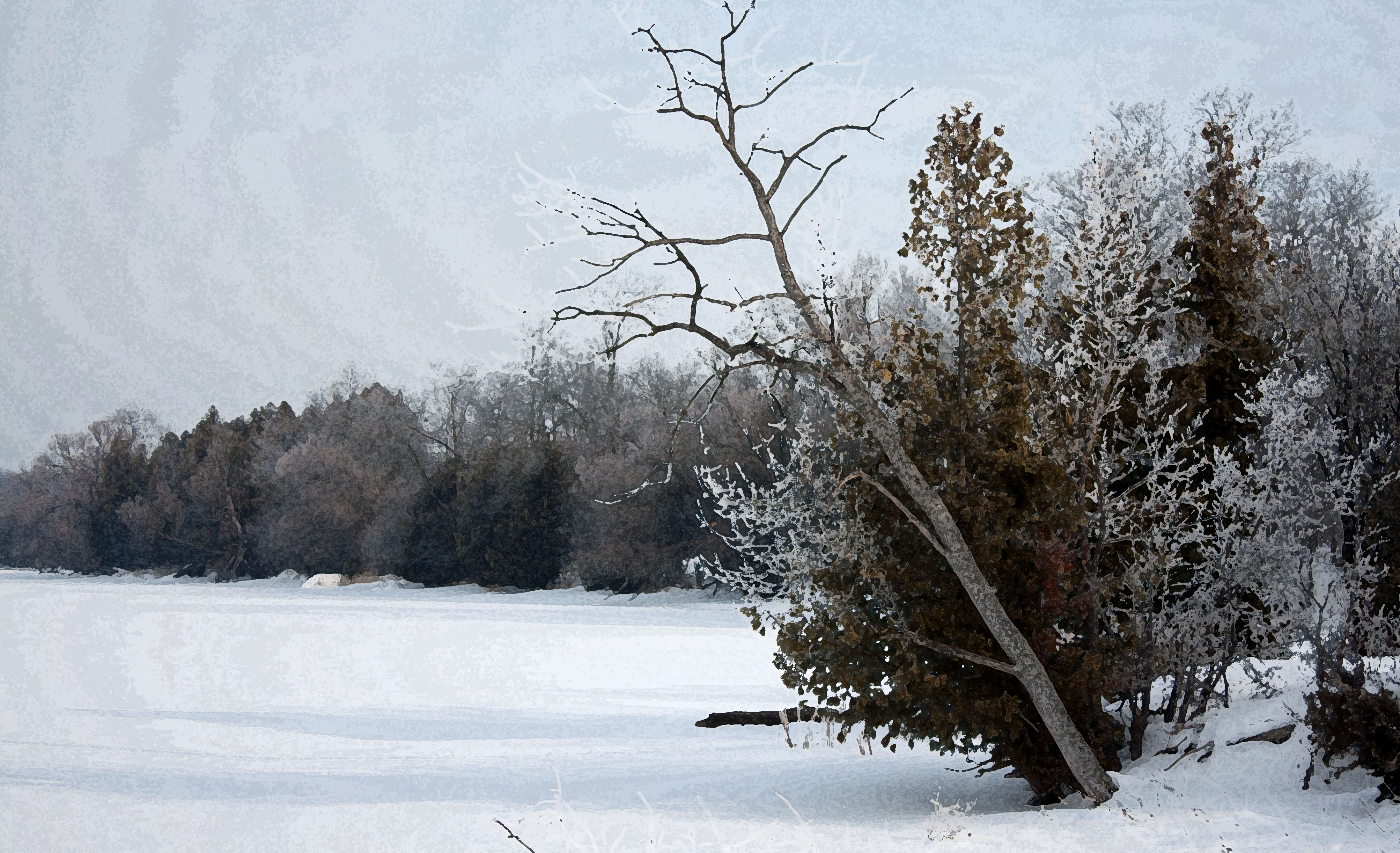
“Virtually Yours” Reprinted in Speculative North Issue #6

Nina Munteanu with her copy of Speculative North, Issue #6

My speculative short story “Virtually Yours” was published for the eighth time, most recently in December 2021 in Speculative North, Issue #6. Originally published in Issue #15 of Hadrosaur Tales in 2002, the story explores concepts of cyber-spying, virtual workspace, anonymity, and identity.

A short excerpt follows below.

You can find the short story’s publication history in the Publications page on this site. You can see some of the main publications below. The story was translated into Polish and published by Nowa Fantastyka in 2006.

A selection of publications in which “Virtually Yours” appears from 2002 to 2021
Illustration by Duncan Long for the Amazing Stories publication of “Virtually Yours”
Snow-covered shrub after new snow in mid-winter, ON (photo and rendition by Nina Munteanu)

Nina Munteanu is a Canadian ecologist / limnologist and novelist. She is co-editor of Europa SF and currently teaches writing courses at George Brown College and the University of Toronto. Visit www.ninamunteanu.ca for the latest on her books. Nina’s bilingual “La natura dell’acqua / The Way of Water” was published by Mincione Edizioni in Rome. Her non-fiction book “Water Is…” by Pixl Press(Vancouver) was selected by Margaret Atwood in the New York Times ‘Year in Reading’ and was chosen as the 2017 Summer Read by Water Canada. Her novel “A Diary in the Age of Water” was released by Inanna Publications (Toronto) in June 2020.
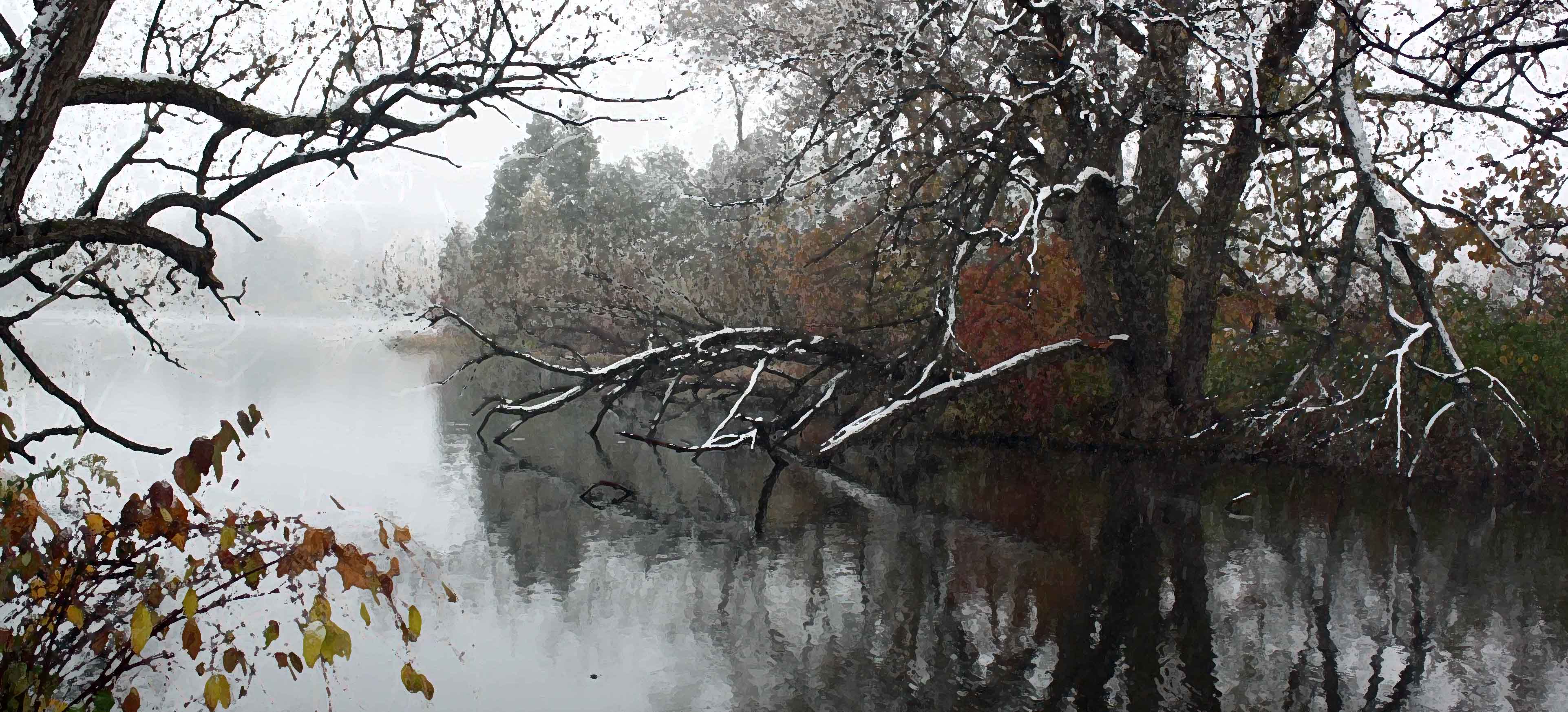
When We Burn Books…

Dort, wo man Bücher verbrennt, verbrennt man am Ende auch Menschen


—Heinrich Heine
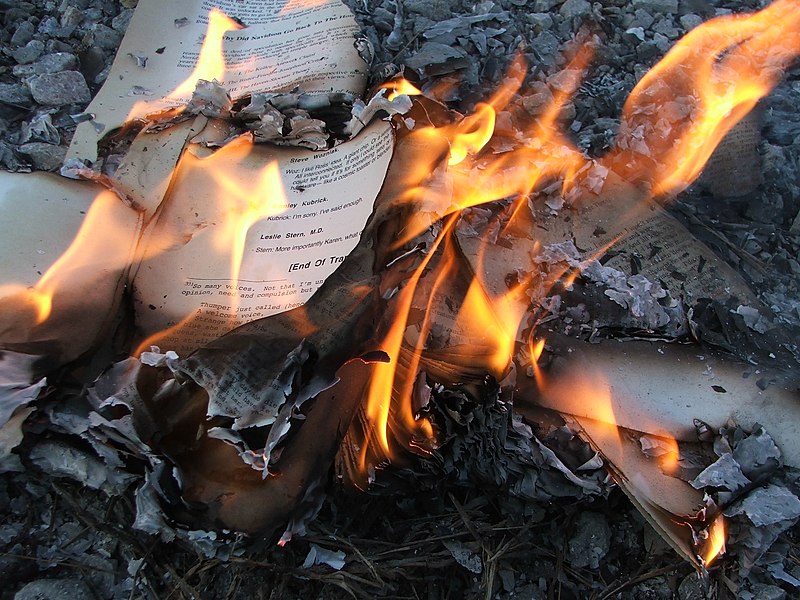
House of Leaves burning (photo by Learning Lark)

In her 2017 article A Brief History of Book Burning, from the Printing Press to Internet Archives Lorraine Boissoneault writes, “As long as there have been books, people have burned them.” Books were burned to silence a dissonant, threatening and potentially rousing voice; they were burned to wipe out a cultural presence; They were burned to control and curtail intellectual freedom; they were burned to simply ruin and pillage and destroy.

Books and libraries have been targeted by people of all backgrounds for thousands of years, sometimes intentionally and sometimes as a side-effect of war, Boissoneault tells us. “In 213 B.C., Chinese emperor Qin Shi Huang (more widely remembered for his terracotta army in Xian) ordered a bonfire of books as a way of consolidating power in his new empire.” According to historian Lois Mai Chan, “His basic objective was not so much to wipe out these schools of thought completely as to place them under governmental control.” 

Boissoneault adds, “When al-Qaida Islamists invaded Mali, and then Timbuktu in 2012, among their targets were priceless manuscripts—books that needed to be burned.” The damage might have been much worse if not for men like Abdel Kader Haidara, who risked their lives to protect the medieval works. He and others succeeded in smuggling out 350,000 manuscripts.”

“Qin was only one in a long line of ancient rulers who felt threatened enough by the ideas expressed in written form to advocate arson,” says Boissoneault. Qin and religious leaders like him are only a small part of the early book-burning equation. “A lot of ancient book burning was a function of conquest,” writes author Rebecca Knuth. The Library of Alexandria had its contents and structure burned during several periods of political upheaval as a casualty of brutal war and associated despoliation and pillaging.

When Johannes Gutenberg invented the printing press in 1440, there were suddenly far more books—and more accessible knowledge. Book burning continued, unfettered, perhaps taking on a more symbolic and insidious role, and no less violent.

In 1966, when Mao Zedong took power in China and implemented the Cultural Revolution, any book that did not conform to party propaganda, such as those that promoted capitalism or other dangerous ideas, were destroyed. In 1992, the Jaffna Public Library of Sri Lanka—repository of nearly 100,000 rare books of Tamil history and literature—was burned by Sinhalese Buddhists.

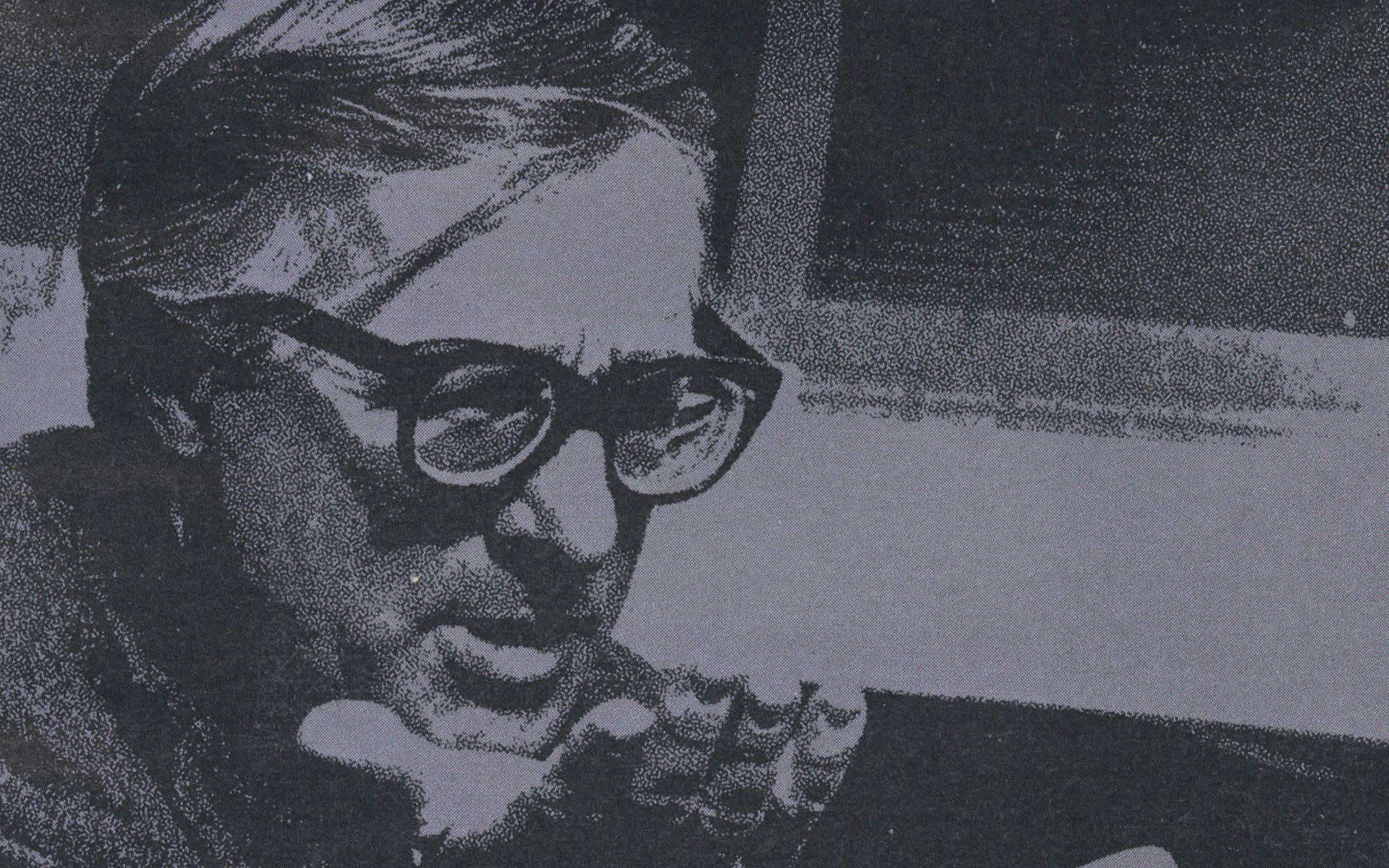
German writer/poet Heinrich Heine

Heinrich Heine’s Prediction

In his 1821 play, Almansor, the German writer/poet Heinrich Heine wrote: Dort, wo man Bücher verbrennt, verbrennt man am Ende auch Menschen, “Where they burn books, they will in the end burn human beings.” He was referring to the burning of the Muslim holy book, the Qoran as part of the eradication of the Moors from the Iberian Peninsula, during the Spanish Inquisition half a century before.

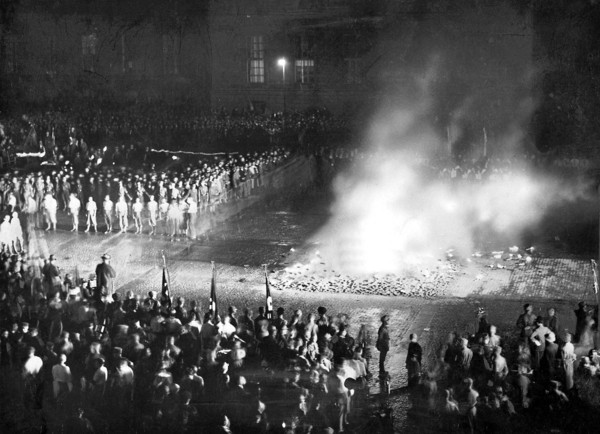
A century later, on May 6-10th, 1933, Heine’s books were among the thousands of volumes publicly hauled out and burned by Nazi brownshirts, SS and Hitler Youth groups in Berlin’s Opernplatz (Bebelplatz). A violent outburst that, in fact, did foreshadow the blazing ovens of the Holocaust. Some twenty thousand books were burned, including those by Heinrich Mann, Karl Marx, Albert Einstein.

Nazi book burning in Opernplatz, Berlin, 1933
Brownshirts and Hitlerjugend perform Nazi salut as books burn in Opernplatz, Berlin in 1933

Wikipedia defines ‘book burning’ as the “practice of ceremoniously destroying by fire one or more copies of a book or other written material.” The practice, usually carried out in public (like public hangings in Medieval times) is generally motivated by moral, religious or political objections to the material. Some notable and particularly destructive book burnings have included:

  • the destruction of the Library of Alexandria;
  • burning books and burying scholars (‘live burying’) under China’s Qin Dynasty (3rd Century);
  • Cathar texts in the Lanquedoc region of France in the 13th Century;
  • the Talmud in Paris by the French crown in 1242;
  • Arabic and Hebrew books at Andalucia, Spain, in 1499;
  • Servetus’s “heretical” writings along with the writer at Geneva;
  • Maya sacred books in Yucatan (1562);
  • Tyndale’s New Testament by the English authorities in 1525 and 1526;
  • Luthar’s Bible in Germany (1624) as ordered by the Pope;
  • Robespierre’s destruction of religious libraries in 1793;
  • anti-communist books by the Bolsheviks in 1917;
  • Jewish, anti-Nazi and “degenerate” books by the Nazis in the 1930s and 1940s;
  • Communist and “fellow traveller” books by Senator McCarthy in 1953;
  • The Satanic Verses by Muslims in the UK in 1988; and,
  • Harry Potter books at various American cities.
Hitler youth burning books at Opernplatz, Berlin, in 1933
Book-burning crowd at Opernplatz, Berlin, in 1933

“Even when the knowledge itself isn’t prevented from reaching the public, the symbolic weight of burning books is heavy,” writes Boissoneault.

“Books are not absolutely dead things, but do contain a potency of life in them as to be as active as that soul was whose progeny they are,” wrote John Milton, author of Paradise Lost, in his 1644 book Areopagitica. “Who kills a man kills a reasonable creature… but he who destroys a good book, kills reason itself.”

Ray Bradbury

Ray Bradbury on the Dummying Down of an Obedient Society

In the 1967 introduction of his novel, Fahrenheit 451, Ray Bradbury implied that the Nazi book burnings inspired his story. I found this statement both eloquent and powerful: “It follows then that when Hitler burned a book I felt it as keenly, please forgive me, as his killing a human, for in the long sum of history they are one in the same flesh.”

Addressing currently relevant themes of censorship, conformity and anti-intellectualism, Bradbury’s 1953 cautionary tale explores a fictional future society that has institutionalized book burning in an effort by authorities to maintain order and ‘happiness’. In this world, firemen don’t put out fires; they start them. The book gets its title from the temperature that paper catches fire and burns.

The book-burning fireman Guy Montag in Francois Truffaut’s 1966 film Fahrenheit 451

The story begins with Montag, an ordinary fireman, after a day’s work of burning:

“It was a pleasure to burn. It was a special pleasure to see things eaten, to see things blackened and changed. With the brass nozzle in his fists, with this great python spitting its venomous kerosene upon the world, the blood pounded in his head, and his hands were the hands of some amazing conductor playing all the symphonies of blazing and burning to bring down the tatters and charcoal ruins of history…Montag grinned the fierce grin of all men singed and driven back by the flame. He knew that when he returned to the firehouse, he might wink at himself, a minstrel man, burnt-corked, in the mirror.”

–Fahrenheit 451
Firemen Beatty and Montag on their way to burn books (from Francois Truffaut’s 1966 film)

Soon after, Montag encounters an old lady who refuses to leave her house when the firemen come to burn her books. She dies alongside the stories she cherishes. Montag then meets the girl, Clarisse, who knows something of the past, when firemen used to put out fires, during a time when there were no informers and people were not afraid.

“A book is a loaded gun in the house next door,” Montag’s superior warns him, arguing for why they must be burned and their knowledge erased. “Who knows who might be the target of the well-read man?” A foreshadowing of what follows.

Fahrenheit 451 weaves a compelling political and social tale that follows one man’s journey in finding his soul and his ability to judge for himself—through his rediscovery of literature.

Book burning in Opernplatz, Berlin, 1933

“Books are the carriers of civilization. Without books, history is silent, literature dumb, science crippled, thought and speculation at a standstill. Without books, the development of civilization would have been impossible.”

Barbara Tuchman, 1980 address at Library of Congress
Burning German book (photo by Amnesty International)

Nina Munteanu is a Canadian ecologist / limnologist and novelist. She is co-editor of Europa SF and currently teaches writing courses at George Brown College and the University of Toronto. Visit www.ninamunteanu.ca for the latest on her books. Nina’s bilingual “La natura dell’acqua / The Way of Water” was published by Mincione Edizioni in Rome. Her non-fiction book “Water Is…” by Pixl Press(Vancouver) was selected by Margaret Atwood in the New York Times ‘Year in Reading’ and was chosen as the 2017 Summer Read by Water Canada. Her novel “A Diary in the Age of Water” was released by Inanna Publications (Toronto) in June 2020.

The Future of Books…

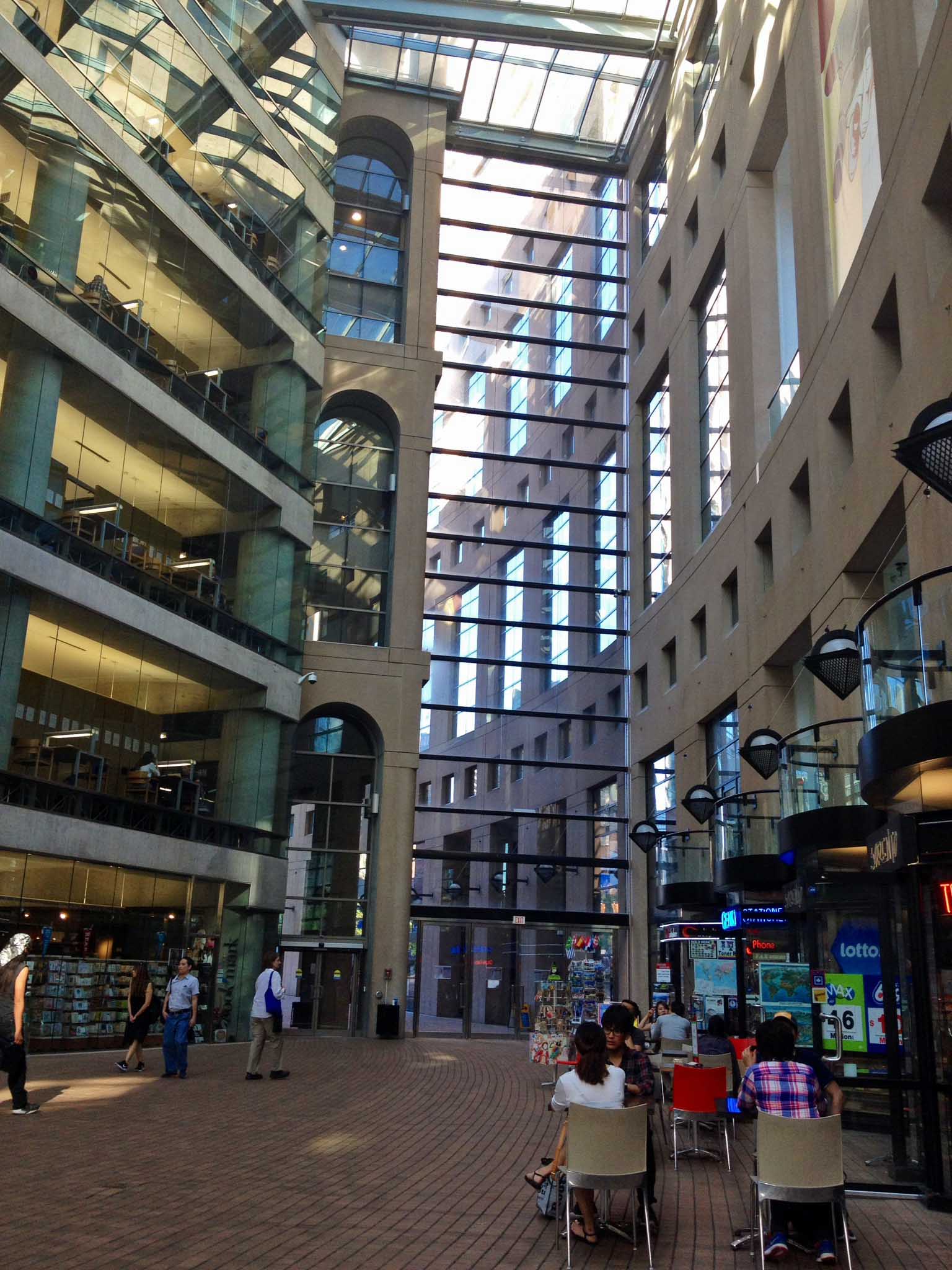
Vancouver Central Library, BC (photo by Nina Munteanu)

Just over five years ago I read a survey by bestselling author Marie Force who revealed some interesting trends about what American readers like, what format they prefer and where they find their writers. While the survey was fairly small and restricted to Americans (just under 3,000 people responded to 44 questions), I think it provided a good microcosm of what the trend is out there in North America generally. Here are the main points I took away, of which I think remain relevant today:

  1. Increased sales of Digital Books: the increasing sales of digital books (ebooks) and the rising sales of audiobooks is a wonderful and uplifting icon of rising literacy. More people are reading—and listening—to books now than ever. And we have the digital book, Kindles, Kobos and iPads to thank for it. The “book” has become more accessible and readable. People swarm the public transit, clutching their iPhones and reading devices. 
  2. Readers still choose Print Books: Obviously, print books are cherished by readers for their intrinsic value. Books—their tangible tactile presence—will always remain with us; in collector’s showcase libraries, in trendy artistic venues, and funky local neighbourhood venues.
  3. My Crazy Prediction: print books will become the epitome of publishing value and worth. Already coveted by collectors whose libraries will represent the best of the best in the literary world, print books will come to represent the highest status in literature. Only the best stories will endure as print books; perhaps only the “best book” will even be published in print form. Its existence in print form will define its literary value.
  4. Take Home Message to Authors: ensure that your book appears in print form and get it into the hands of classy libraries and classy people. So, even if you don’t survive the apocalypse, your book will…
Vancouver Central Library, BC (photo by Nina Munteanu)

Nina Munteanu is a Canadian ecologist / limnologist and novelist. She is co-editor of Europa SF and currently teaches writing courses at George Brown College and the University of Toronto. Visit www.ninamunteanu.ca for the latest on her books. Nina’s bilingual “La natura dell’acqua / The Way of Water” was published by Mincione Edizioni in Rome. Her non-fiction book “Water Is…” by Pixl Press(Vancouver) was selected by Margaret Atwood in the New York Times‘Year in Reading’ and was chosen as the 2017 Summer Read by Water Canada. Her novel “A Diary in the Age of Water” was released by Inanna Publications (Toronto) in June 2020.