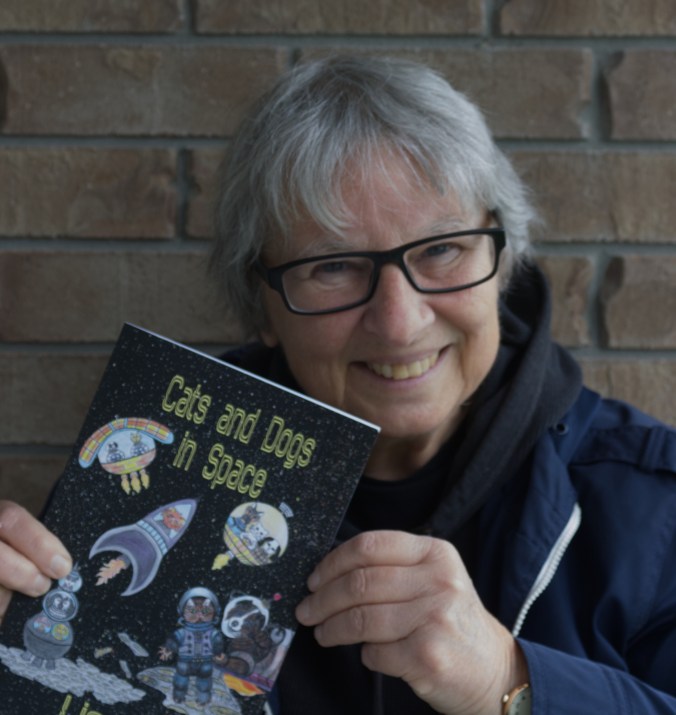
Nina cheerfully showing off copy of “Cats and Dogs in Space” by Lisa Timpf
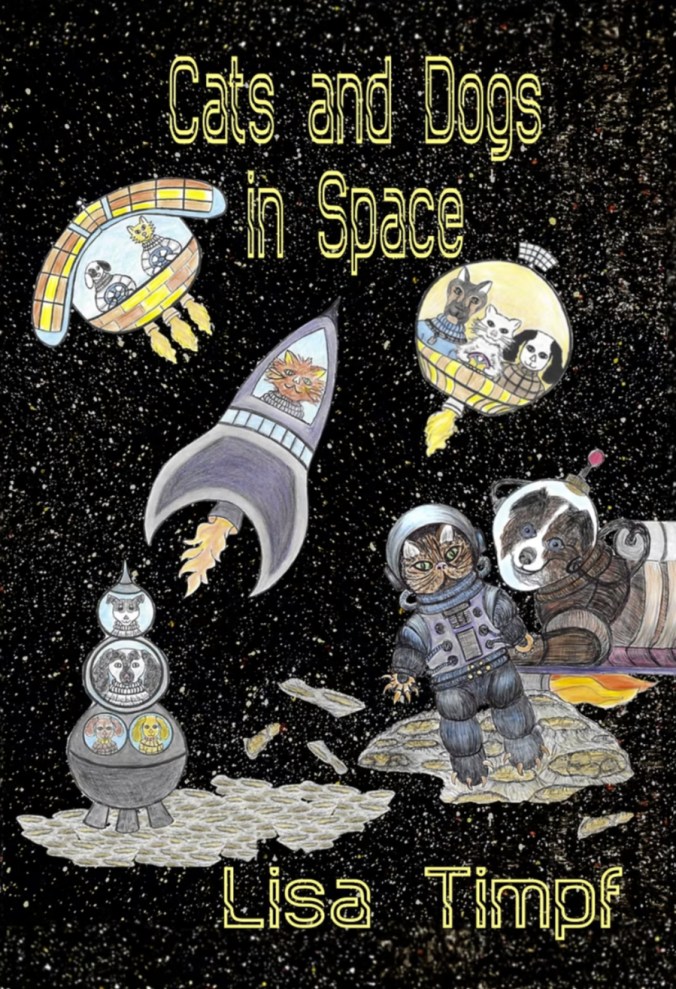
Recently I was delighted to get in the mail a copy of this fetchy slim book of poetry Cats and Dogs in Space (Hiraeth Books, 2025) with cool cover. In this delightful poetry book, speculative writer Lisa Timpf showcases her talented imagination and insight on our feline and dog companions.
The slim 70-page book is parsed into four sections inspired by headlines, legends & folklore, the great hereafter, and imaginings of the future. Each section showcases an aspect of these furry characters with great aplomb.
In her poems inspired by headlines, the headlines often speak volumes; like a mini-poem within a poem, they capture the fractal truths we only sense. “The Truth Is Out” inspired from the headline: “Cats classified as ‘invasive alien species’ by Polish institute,” the headline—whether real or imagined—says it all. The poem then proceeds to dissect this possibility with acumen and, of course, humour: Many questions remain, including when did their ships arrive…the next move is up to them. We can only wait to see what our feline overlords have in mind for us.
In Nursery Rhymes for Changing Times, Timpf applies a pithy dry humour to several folklore characters:
Cupboards empty again— Mother Hubbord’s dog orders biscuits online
exterminator’s visit just completed— visiting cat pursues the Queen’s computer mouse
video of fiddling cat draws millions of likes— dish and spoon regret departure
.
In The Unknown, Timpf muses over the seasons following the passing of a beloved dog. The poem is heartfelt and beautifully metaphoric, pulling at my heartstrings with thoughts of the hereafter and our own journey into the unknown: …a skein of northbound geese, loose=strung, spans across the sky proclaiming, as they go, that we all must trace our path one day into the unknown after.
The ‘Cats and Dogs of the Future’ section is brim with fetchy titles such as The Sand Dogs of Mars and Steampunk Paradise. In A Cat’s Confession, we get wonderful insight into a cat’s psyche, as a cat from the future lists a litany of its transgressions that somehow end not with humility, guilt and apology but with logical recrimination.
Applying an edgy, sometimes warped, sense of humour—required when dealing with cats—and a tender sensibility of animal/human psychology, Timpf’s Cats and Dogs in Space explores the universe of these two species, vividly capturing their unique idiosyncrasies and influence on us from joyful to frustrated, from humorous to sentimental. This volume of poems is so much more than an exploration of cats and dogs in space; it embraces the very spaces they occupy, from the depth of our souls to the many liminal folds of existence.
.
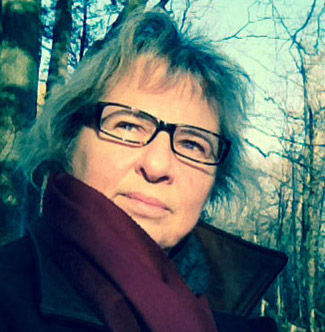
Nina Munteanu is a Canadian ecologist / limnologist and novelist. She is co-editor of Europa SF and currently teaches writing courses at George Brown College and the University of Toronto. Visit www.ninamunteanu.ca for the latest on her books. Nina’s bilingual “La natura dell’acqua / The Way of Water” was published by Mincione Edizioni in Rome. Her non-fiction book “Water Is…” by Pixl Press (Vancouver) was selected by Margaret Atwood in the New York Times ‘Year in Reading’ and was chosen as the 2017 Summer Read by Water Canada. Her novel “A Diary in the Age of Water” was released by Inanna Publications (Toronto) in June 2020.
It started with a simple tweet of mine on X regarding doing research for one’s writing projects. I’d met Isabella Mori a few years ago, when we both contributed to an ekphrastic anthology of flash fiction, inspired by Group of Seven art. We met again when she submitted a story to an anthology I was editing for Exile Editions. After my tweet on research, Isabella and I traded brief stories about rewrites based on research findings and ‘mistakes’ and the arcane revelations in the creative process that may result. I was intrigued by her recounting and asked her to share it with you; so here it is:
“Synchronicities And The Sea”by Isabella Mori
(Trigger warning: Substance use and suicide)
This is about the magic that comes to pass when we let the Muse guide our work and consent to synchronicity. Here is what happened:
When I go away on vacation, I try to visit the local library, and always make sure to check out the community announcements. On one of those forays, I came across a notice of a project that teamed up visual artists with writers for a short story or poem. I love these types of collaborations and immediately jumped on it. Max was the artist I paired up with, and we hit it off right away. After a few conversations, we settled on the painting below, for which I was going to write a story. As you can see, it had a moody, dark feeling. I drafted this text as a response:
The memory of a map showed her the way as she wandered, blinded by the night, along the shore. Numb with cold, her bare feet dug into the wet sand. She could not see that she left no tracks. There was something in her searching; she felt it in the deep pit of her stomach but there was no image in her mind’s eye of what it was, no tinkling that alerted her, no smell, no taste. A sense of despair drained the blood from her heart and tugged at her from the right, where the forest rushed. Foot-dragging ennui invited her onto a soft-moss carpet to the left, and thoughts of numbers, cars and cash register receipts tried to wrangle her back to where she came from. She was near giving up. But at that precise moment there tracked the light only she of the searching could see—a light bigger more forceful than giants could ever imagine; all-embracing, all-revealing, all-nurturing just like the frothy ocean beneath it, just like the sand with its fierce sparkle, each grain a diamond just like the heart-bud that could not help but open under its rays, under those rays that only she of the searching could see.
However, for reasons we have both forgotten, Max decided to lighten the colours, and the dark mood of the first draft didn’t fit anymore. This is the version we ended up with:
Walk With The Angels
The ocean has known her share of angels over the eons. They come and go but the tide is older. When an angel appears in a cloud of glistening light, beats its wings and brings out the trumpets, little humans fall to their knees and beg for mercy and miracles.
But the water stays still.
Great mother ocean has seen it all.
She waits until the angel grows tired, then she takes the worn-out wings and heavenly body into her arms and carries them into her depths. Brings the apparition to visit kelp, salmon, starfish, barnacles, otters and crabs. Anemones. Killer whales. A visit one by one, under the summer sun, beneath the light of the Hunter’s moon, when the snow falls, with the Easter rains. The angel leaves a bit of themselves here, a bit there, a gift everywhere, until only the tiniest of diamonds are left.
And that’s the sand.
Walk with the angels.
There were a few tweaks before we arrived at this text, the major one being that in a previous version, I referred to ‘angel dust’ for the sand until the editor pointed out that that term refers to a street drug, PCP. In my enthusiasm I had forgotten that.
The change away from ‘angel dust’ was very important. When Max read the new version, they called me, their tone of voice both moved and perturbed.
“When I read this,” they said, “it feels like you channeled what happened with my cousin last year, not far from the place that inspired my painting. She had had problems with drugs all her life, and one day she just walked into the ocean. Her body was found a day later.”
Under those circumstances, we definitely did not want to refer to drugs.
That story stayed with me for months until one day when I was listening to one of my playlists of Latin music. I lived in Paraguay and Chile 1977-1980, and often enjoy the nostalgia of the music I listened to back then. The first song that came on was one of my all-time favourites, Alfonsina Y El Mar – Alfonsina And The Sea. Now I have to confess, I am terrible with lyrics, no matter what language, whether it be my native German, English, or the Spanish I was fluent in for quite a few years. For some reason, I really listened to the song last summer, and then looked up the lyrics. That’s when it hit me – was it possible that the lyrics of that song had subconsciously influenced me to write the second text? Or was it one of those Jungian collective conscious moments?
Alfonsina And The Sea
(Music: Ariel Ramirez. Lyrics: Felix Luna)
In the soft sand Licked by the sea Her small footprints Don’t return. Just one path Full of pain and silence Led to the water, Deep water, And one single path of unspoken pain Led to the foam.
God knows what sorrows accompanied you, What old suffering shut down your voice That made you lie down and nestle into the songs Of the sea snails, The song that sings in the deep dark of the sea, The sea snail.
There you go, Alfonsina, with your loneliness, What new poems did you go find? An old, old voice of wind and salt Sways your soul and carries it And you go there dreaming, Sleeping, Alfonsina, clothed in the sea
Five little sirens will carry you Through passages of algae and corals And glowing sea horses will dance Around you And all the creatures of the sea will soon Play at your side.
Turn down the light a little more, Nurse, let me sleep in peace. And when he calls tell him I’m not in, Tell him Alfonsina won’t come back. And when he calls don’t ever tell him I’m in, Tell him I’m gone.
There you go, Alfonsina, with your loneliness, What new poems did you go find? An old, old voice of wind and salt Sways your soul and carries it And you go there dreaming, Sleeping, Alfonsina, clothed in the sea.
(Used with permission, my translation.)
Alfonsina ended up in the ocean just like Max’s cousin did.
With some research, I found out that the story was about the Argentinian poet Alfonsina Storni who, after a difficult life that included poverty, questions she had about gender identity, and breast cancer, one night wrote a last poem to her son and then let herself fall into the ocean amid torrential rain. (An apocryphal version has her just walk into the ocean, and that’s the one the lyricist chose.) Some of that last poem was incorporated into Alfonsina Y El Mar – the nurse who is asked to lower the light, and told to tell ‘him’ that she won’t come back. Nobody seems to know who ‘he’ is.
The other research that had to happen was to find who the inheritors of Felix Luna’s estate were to obtain permission should I tell the story that you have before you. It turned out to be his daughters. Then I had to sleuth out their contact.
Felix Luna, the lyricist, imagined Alfonsina’s death not only as the terrible tragedy that it was but also as a mystical transformation into a sea creature that nestles into the songs of the sea snails. She finds new poems and sleeps clothed in the sea. She is embraced by sirens and wanders through algae and corals. She dances with sea horses and plays with all the other sea creatures.
I definitely cannot compare myself with a great poet like Felix Luna but notice with humility the similarities of my transformed angel who sinks into the embrace of mother ocean and also visits the more-than-humans of the sea.
I went pregnant with the idea of writing about the experience of Max’s and my collaboration for half a year when in February, I chanced upon a tweet by Nina about research for writing. I met Nina through submitting a story to an anthology she was editing. I told her about needing to tweak the angel story so that it does not talk about angel dust and ended up telling her the outline of what happened. She invited me to write a guest post about this, and here we are.
So many synchronicities. I could have not gone to that library. A different artist could have been paired up with me. Max could have wanted to stay with the original painting. Or they could have chosen a painting that would not have reminded them of their cousin. They could have opted not to share that sad story with me, or they could have been paired up with someone who doesn’t understand suicide as intimately as I do (I look back on a 30+ year career in social services.) I could have heard Alfonsina Y El Mar and still not really listened to the lyrics. There was no guarantee I could have managed to find out from whom to get permission to quote the song. I could not have submitted a story to one of Nina’s anthologies, and could not have followed her on Twitter. Coming across the particular tweet that prompted the publication of this story was like chancing upon a needle in a haystack. All this, and probably more, had to come together for this magical synchronicity to happen.
Thank you, Muse.
(Note: Since this is a sensitive topic, the artist’s name and some of the circumstances of my collaboration with them have been changed. However, the artist has consented to using their images.)
Boat wharf at sunset in Ladner Marsh, BC (photo and rendition by Nina Munteanu)
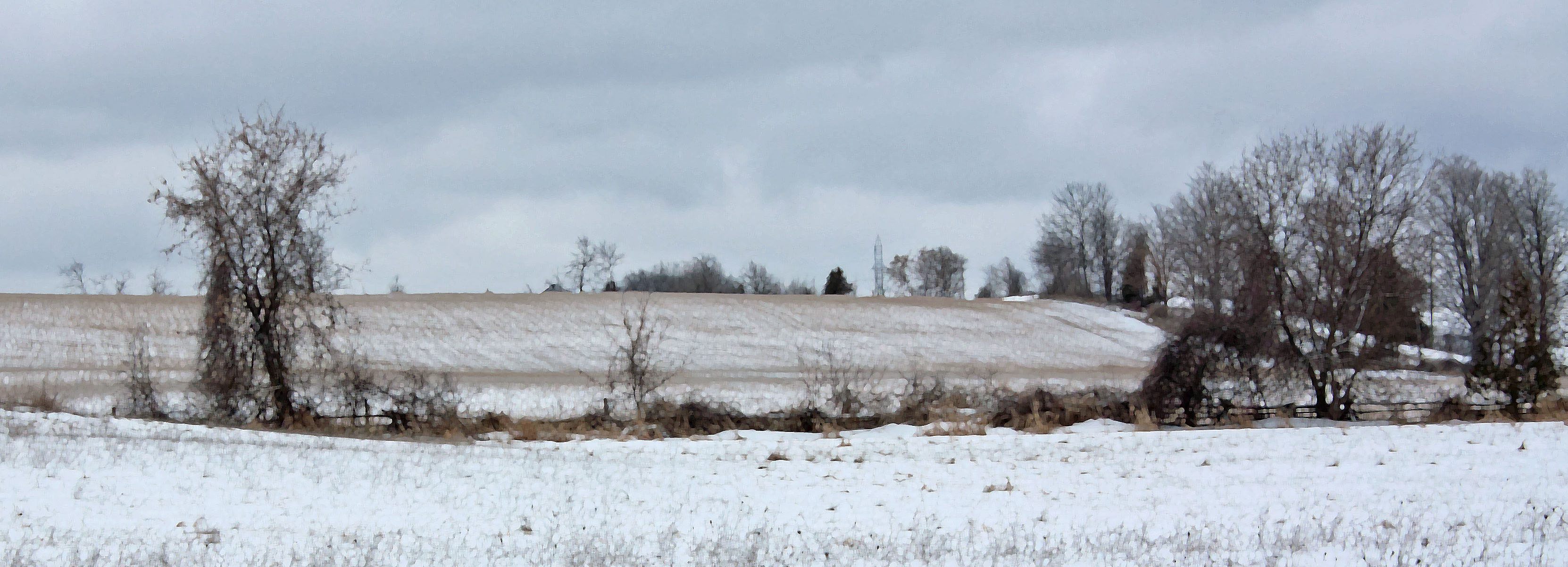
Snow covered farmer’s field at sunset, ON (photo and rendition by Nina Munteanu)
Ice clad prisms, snow covered fields of glittering fire… Winter days, the wondrous glow: ultramarine lights and turning shades The magic song: ice and gently underflow of meandering streams Singing waters on the tortuous pathway below… Clangor, bell sounds: the moving harmonies on icy slopes…
Jackson Creek in winter, ON (photo and rendition by Nina Munteanu)
Ice ‘islands’ touched by sunset light in Jackson Creek, ON (photo and rendition by Nina Munteanu)
Ice block in Jackson Creek, ON (photo and rendition by Nina Munteanu)
Farmer’s field in Kawarthas, ON (photo and rendition by Nina Munteanu)
A bronze feathered hawk sails high above Into the bright sunlit skies, Hawk, swiftly carried in its flight above bended fir and aspen forests, A wild, fierce, freewheeling majesty…
Icy bay and shed in the trees, ON (photo and rendition by Nina Munteanu)
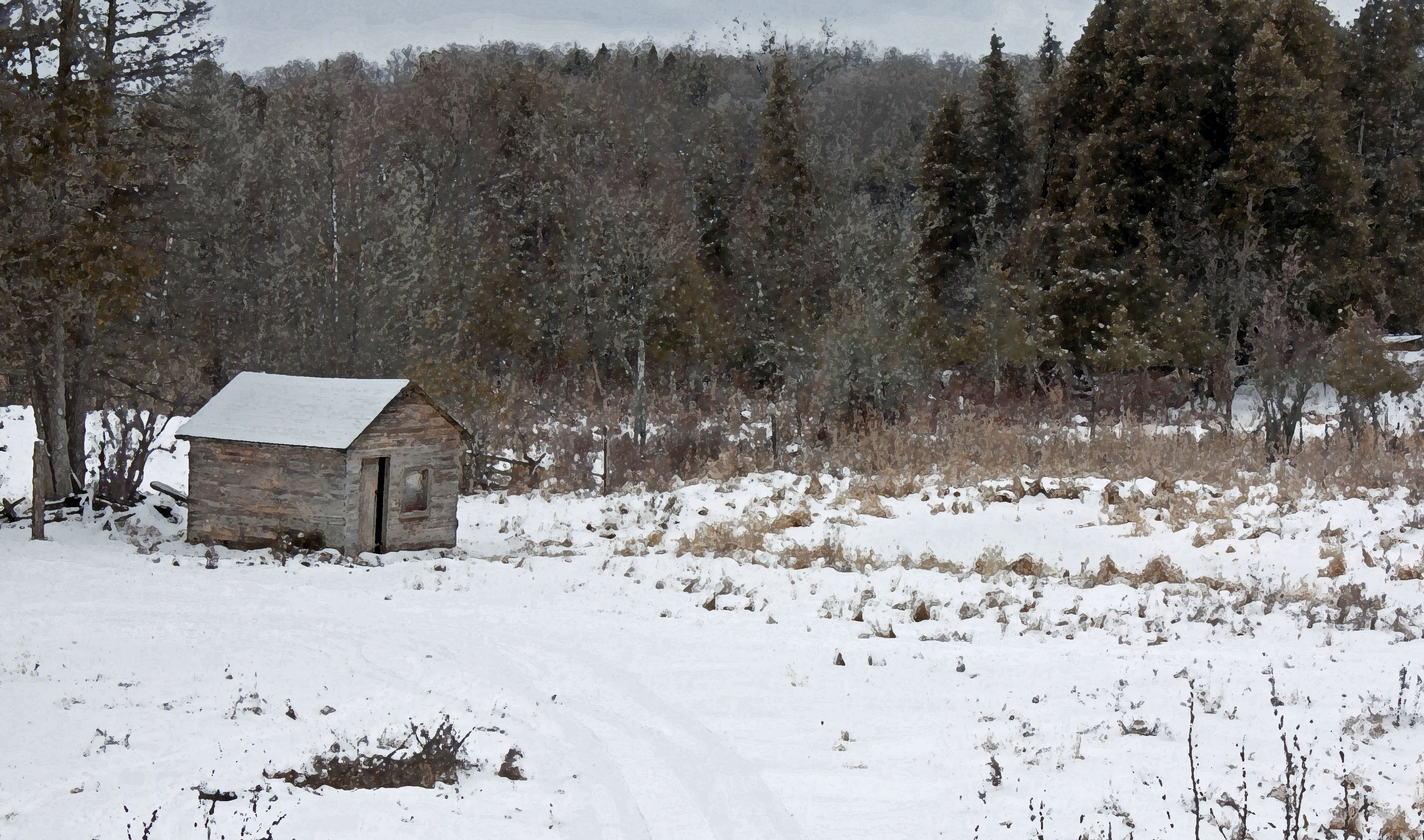
Small cabin in a meadow, ON (photo and rendition by Nina Munteanu)
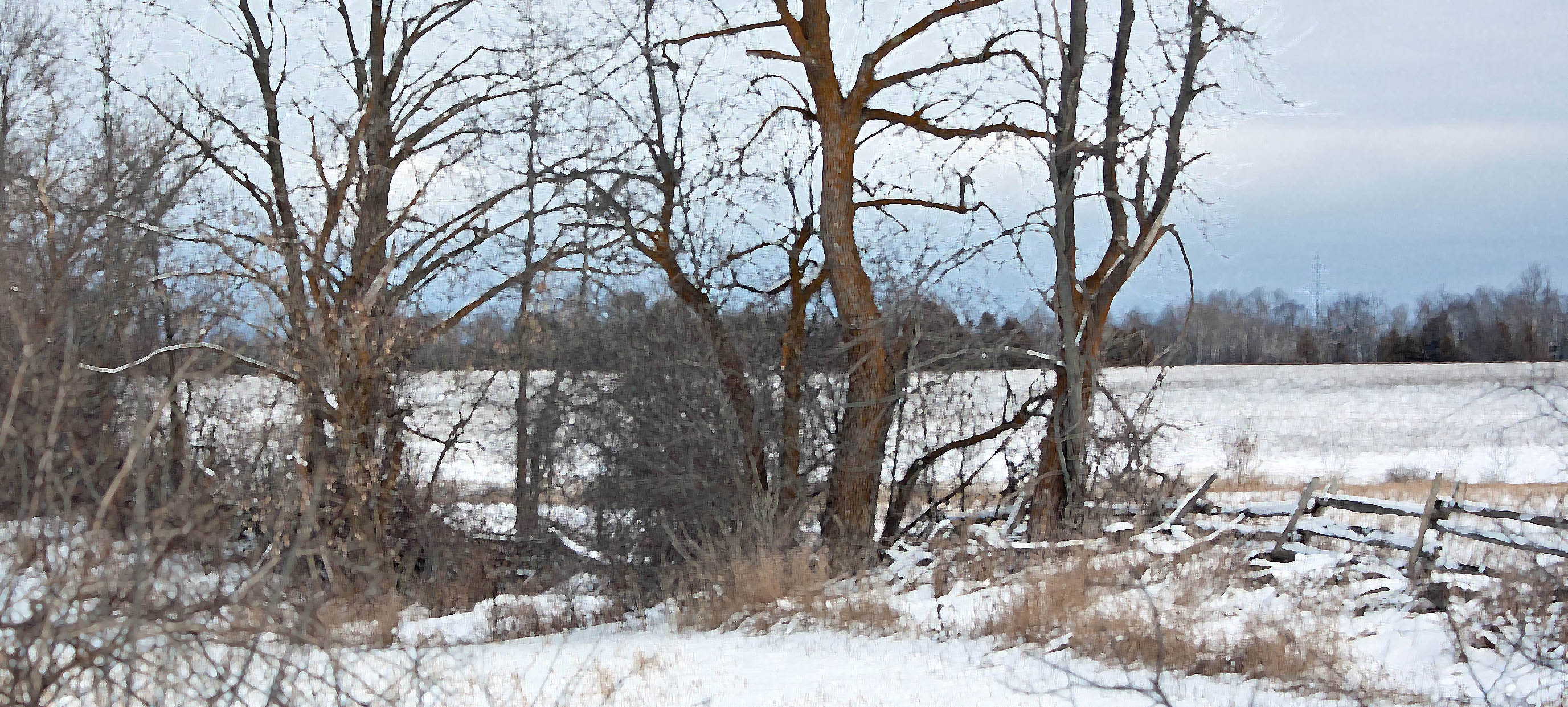
Trees by fence in farmer’s field, ON (photo and rendition by Nina Munteanu)
Snow from a cedar tree showers down glitter-dust in a light breeze in Jackson Creek Park, ON (photo by Nina Munteanu)
The many pristine snow reflected lights, glittering fires Above a snow clad world in a time of darkness: Nature’s magic universe everywhere extant: We are overwhelmed, confounded by the wonder of it all.
Skier checks his path on a slope at sunset, BC (photo by Lindsay)
Snow glistening in the sunset on a very cold day, ON (photo and rendition by Nina Munteanu)
Reflections in Thompson Creek outlet after a new snowfall, ON (photo and rendition by Nina Munteanu)
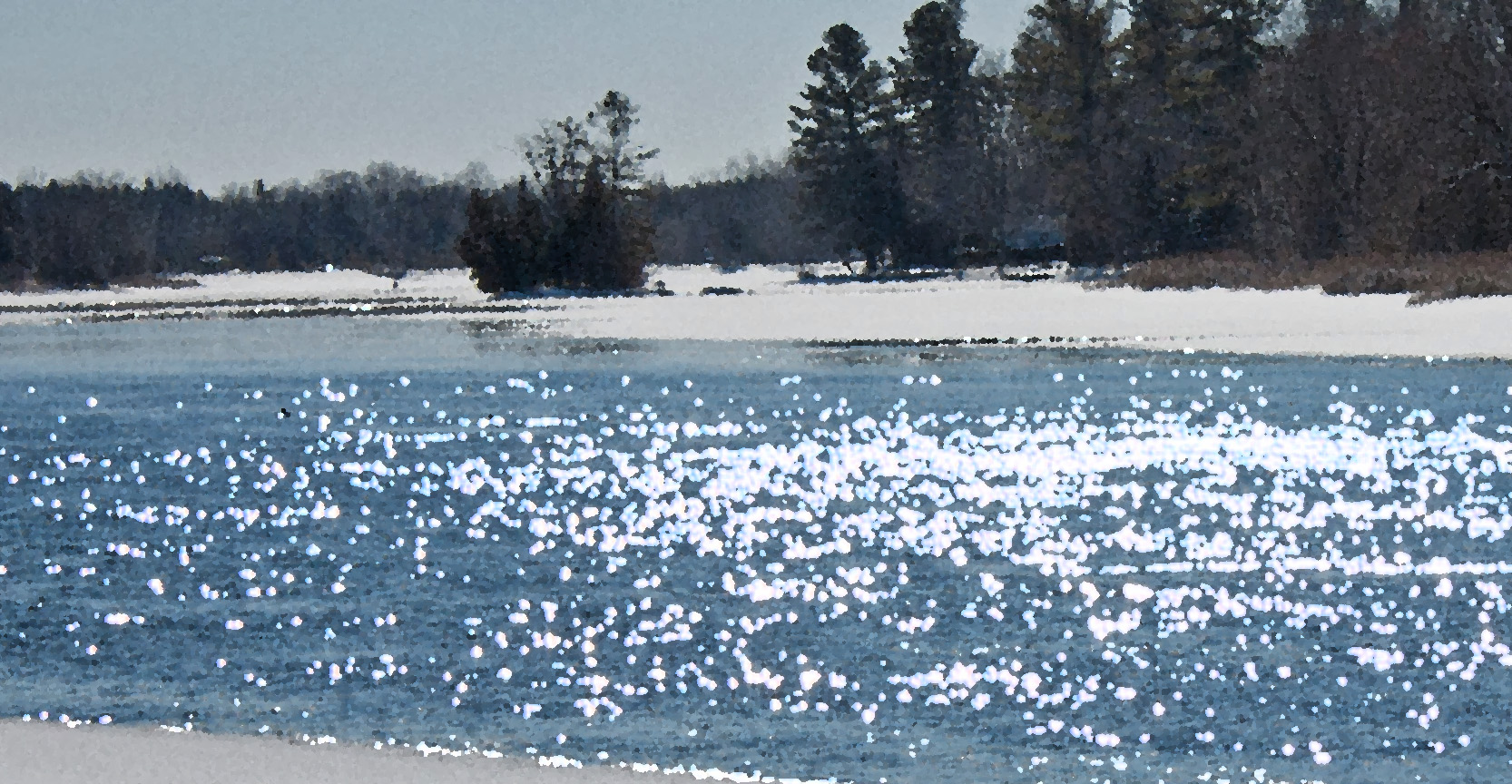
Otonabee River glittering in the sun, ON (photo and rendition by Nina Munteanu)
Bev Gorbet is a Toronto poet. She has published several poems with the Retired Teachers Organization and most recently in “Literary Connection IV: Then and Now” (In Our Words Inc., 2019), edited by Cheryl Antao Xavier.
Nina Munteanu is a Canadian ecologist / limnologist and novelist. She is co-editor of Europa SF and currently teaches writing courses at George Brown College and the University of Toronto. Visit www.ninamunteanu.ca for the latest on her books. Nina’s bilingual “La natura dell’acqua / The Way of Water” was published by Mincione Edizioni in Rome. Her non-fiction book “Water Is…” by Pixl Press(Vancouver) was selected by Margaret Atwood in the New York Times‘Year in Reading’ and was chosen as the 2017 Summer Read by Water Canada. Her novel “A Diary in the Age of Water” was released by Inanna Publications (Toronto) in June 2020.
Path to bridge over Otonabee River on a foggy morning, ON (photo by Nina Munteanu)
The strange merry-go- round will turn and turn; Season to season in sacred passage, Time’s gentle silences softly unwinding…
Marcescent Beech trees in a Kawartha forest during fog, ON (photo and rendition by Nina Munteanu)
Days of a savage beauty: The world’s innate beauty, The world’s inevitable pain…
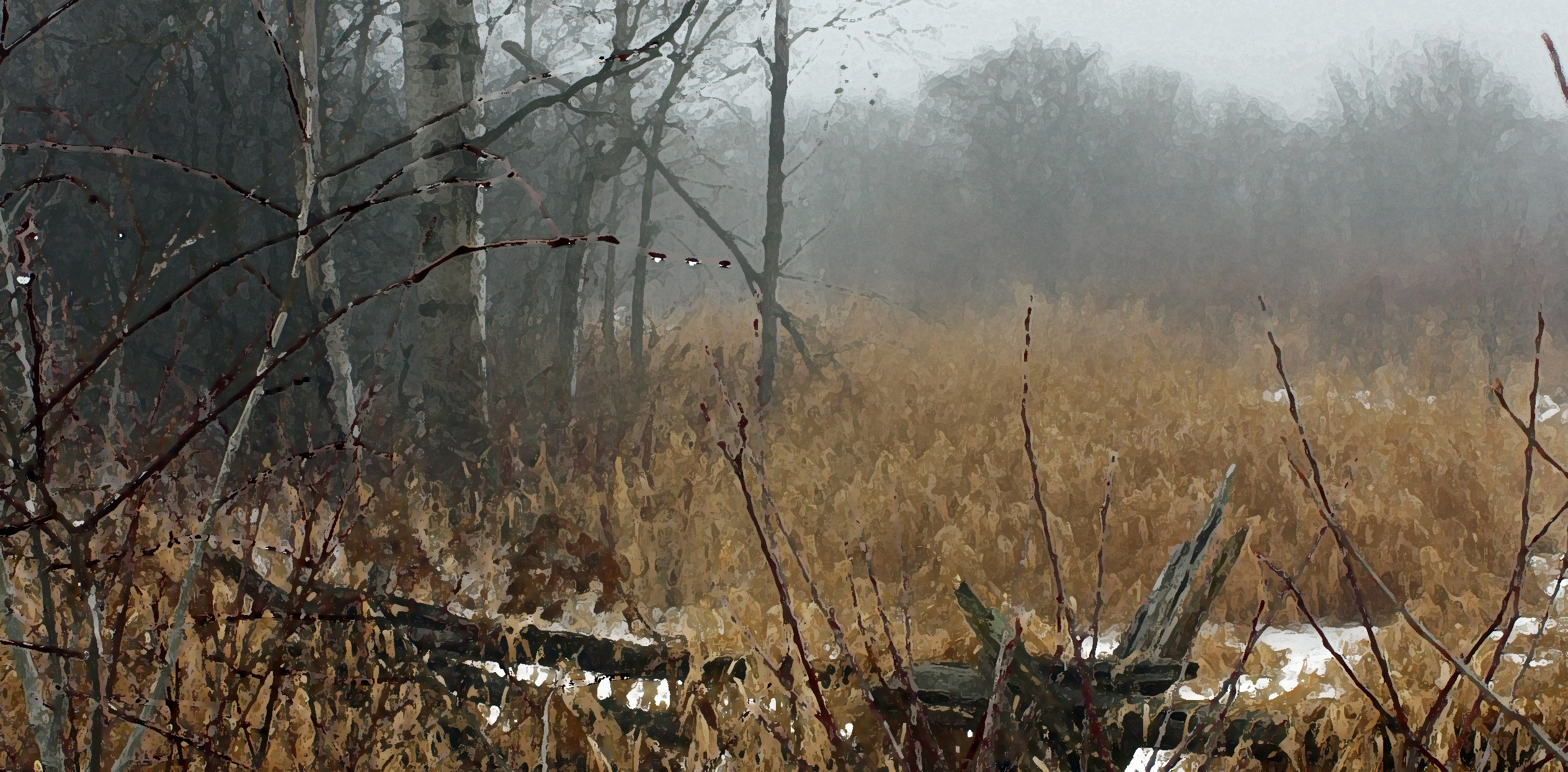
Snowmelt along country road in Kawarthas on a foggy morning, ON (photo and rendition by Nina Munteanu)
We, both predator and prey: Wild song, wild nature’s order… Moments of perplexity and loss, The many daunting questions: Unanswerable visions beyond the abyss.
Mallards feeding in Thompson Creek, ON (photo and rendition by Nina Munteanu)
Too often the inaction, The inscrutable silences In a time of fear…
Tree reflected in Thompson Creek, ON (photo and rendition by Nina Munteanu)
The cruel histories: these misbegotten tales? Where has love gone this solemn time? Sacred memory and hope?
The Otonabee River during a snowstorm, ON (photo and rendition by Nina Munteanu)
Generations have trod on unending journey Neither question nor answer to guide The lost ever lost, the perplexed ever perplexed… Love is all, time’s vast unwinding.
Thompson Creek marsh, ON (photo and rendition by Nina Munteanu)
Bev Gorbet is a Toronto poet. She has published several poems with the Retired Teachers Organization and most recently in “Literary Connection IV: Then and Now” (In Our Words Inc., 2019), edited by Cheryl Antao Xavier.
Nina Munteanu is a Canadian ecologist / limnologist and novelist. She is co-editor of Europa SF and currently teaches writing courses at George Brown College and the University of Toronto. Visit www.ninamunteanu.ca for the latest on her books. Nina’s bilingual “La natura dell’acqua / The Way of Water” was published by Mincione Edizioni in Rome. Her non-fiction book “Water Is…” by Pixl Press(Vancouver) was selected by Margaret Atwood in the New York Times‘Year in Reading’ and was chosen as the 2017 Summer Read by Water Canada. Her novel “A Diary in the Age of Water” was released by Inanna Publications (Toronto) in June 2020.
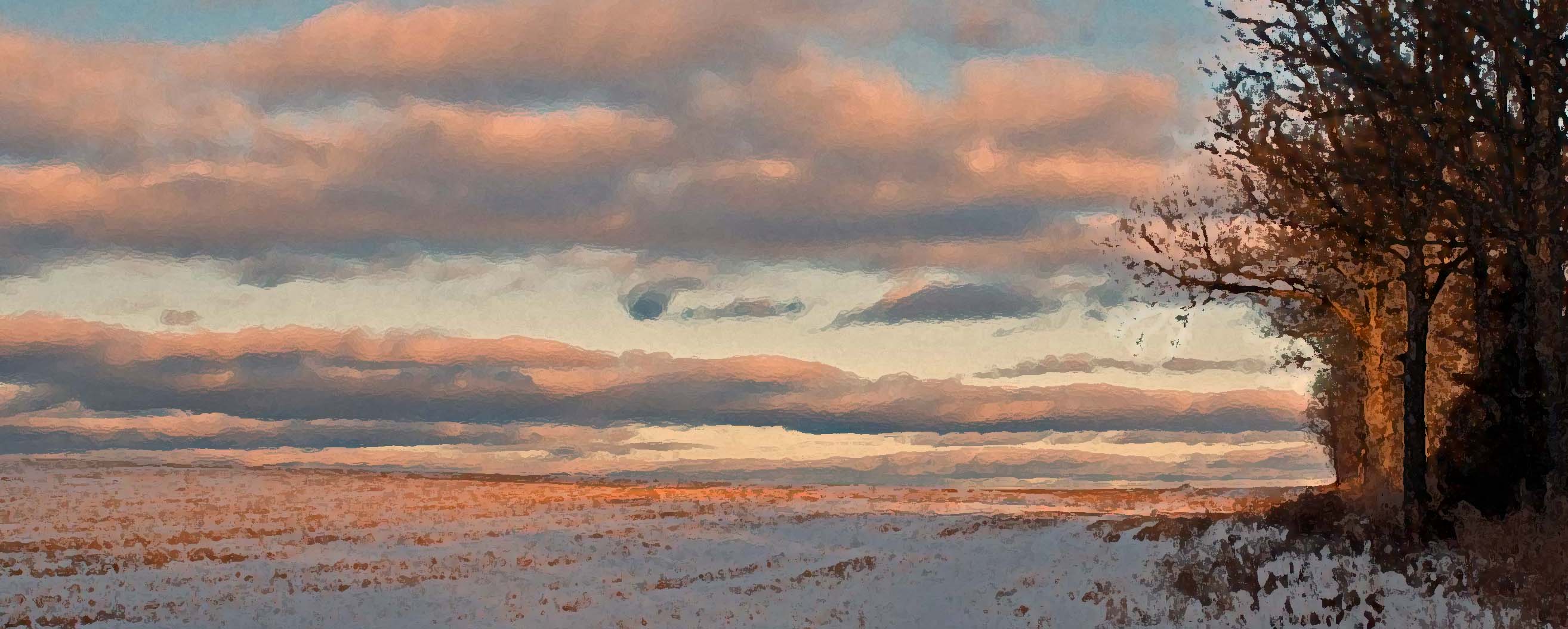
Farmer’s field at sunset in early winter, ON (photo and rendition by Nina Munteanu)
Oh! to wander the fields wild and free, To commune with wild nature, Her beauty everywhere extant.
Small country road in Ontario (photo and rendition by Nina Munteanu)
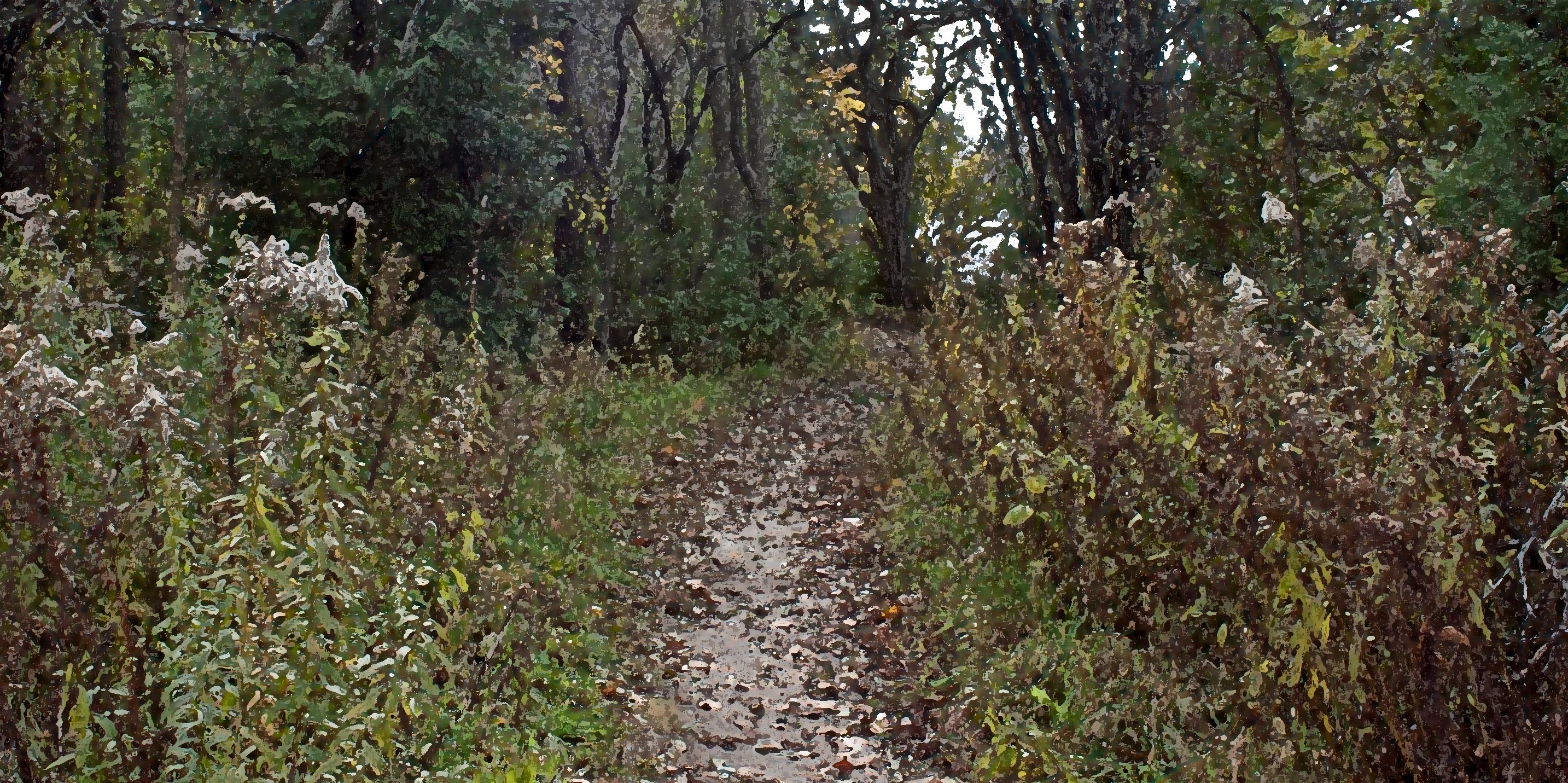
Path through meadow of goldenrod in fall, ON (photo and rendition by Nina Munteanu)
Tender lullabye and song in forested glade, A still peace this sacred moment: The profound silence: holy echo of dream, every hope; Melodies of heart and soul; Rhythms, memory and wonder in a windrift calm, Tree and bough, moment of a joyous uplift
Field in early spring fog in Ontario (photo and rendition by Nina Munteanu)
Meadow in fall in Peterborough, ON (photo and rendition by Nina Munteanu)
Forested cathedrals, great songs of heart and mind, All the majesty: a windstorm day in fierce call and cry Whisper and sigh midst far tossed leaf and bough… Promise and a grace filled endurance All the beauty flame interior universes: A captive soul set free.
Path through meadow alvar, ON (photo and rendition by Nina Munteanu)
Path through farm country, ON (photo and rendition by Nina Munteanu)
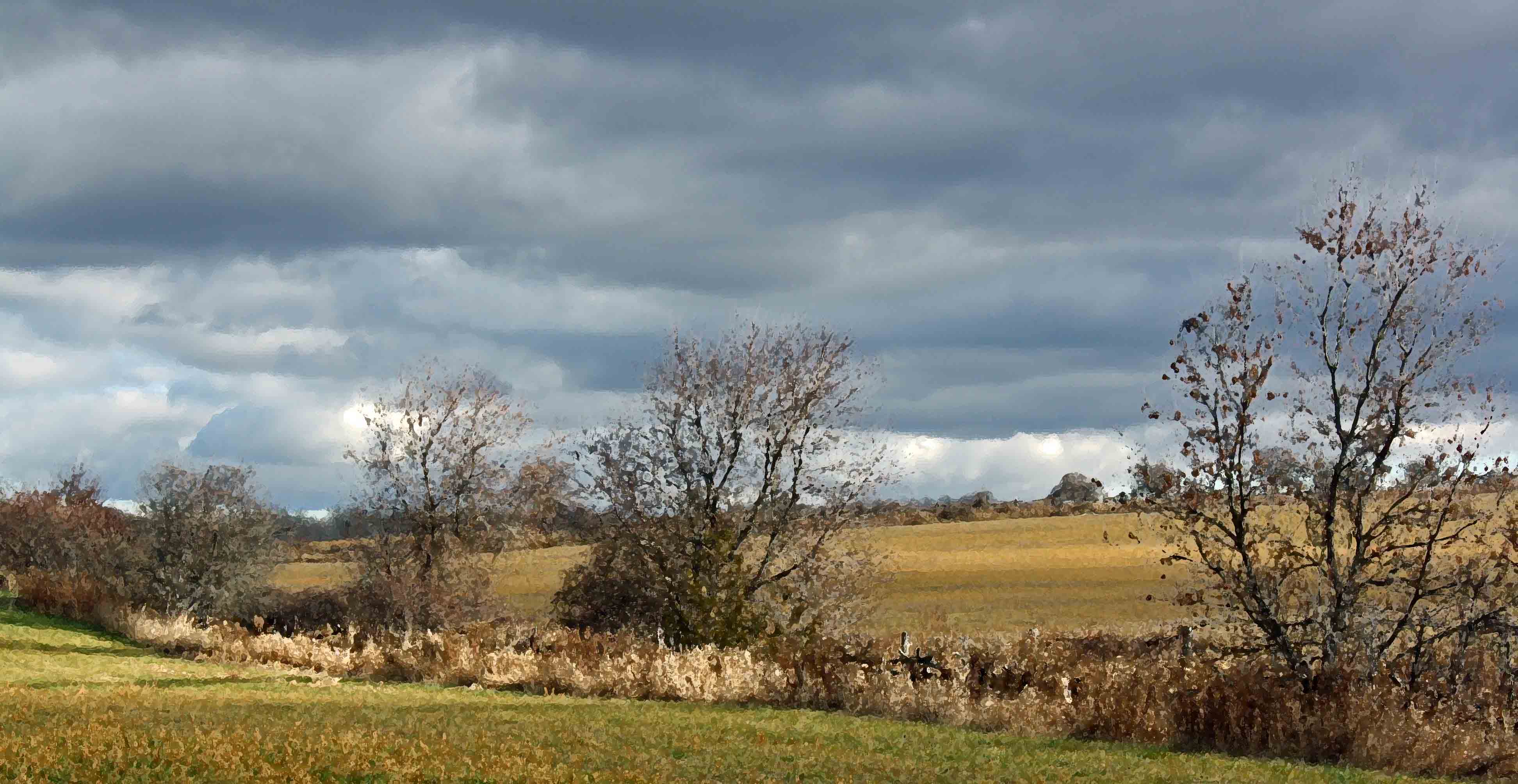
Fields in the Kawarthas, ON (photo and rendition by Nina Munteanu)
NINA MUNTEANU is a Canadian ecologist / limnologist and novelist. She is co-editor of Europa SF and currently teaches writing courses at George Brown College and the University of Toronto. Visit www.ninamunteanu.ca for the latest on her books. Nina’s bilingual “La natura dell’acqua / The Way of Water” was published by Mincione Edizioni in Rome. Her non-fiction book “Water Is…” by Pixl Press(Vancouver) was selected by Margaret Atwood in the New York Times ‘Year in Reading’ and was chosen as the 2017 Summer Read by Water Canada. Her novel “A Diary in the Age of Water” was released by Inanna Publications (Toronto) in June 2020.
Sugar maple tree with fallen leaves in autumn, ON (photo and rendition by Nina Munteanu)
My world: most wondrous, mystic shelter, Holy meridian of a life’s overwhelming mystery, Magic center of hope Haunting universe of a deepest longing…
Reflections of trees on outlet of creek into Otonabee River, ON (photo and rendition by Nina Munteanu)
My autumn world, tormented season And still time of the calm pastoral moon: Skies overhead, windtossed wildernesses, Seasons of joy, seasons of a bittersweet discontent Time’s last flowering before a fierce winter of silences
Snowing in treed meadow, ON (photo and rendition by Nina Munteanu)
Autumn ‘s last reflections midst storm ravaged skies… Last songs, the changing lights, Amber and golden hours Windswept calls, wild cry, surge, a windswept rage Rising lights, moving shadow across far spread field, Across wide spread glade…
Creek flowing into Otonabee River, ON in early winter (photo and rendition by Nina Munteanu)
A sacred bend and flow this existential time, Rhapsodies across a dying land Rain and storm riven sky songs, Windsong days, wild blasts to ravage and torment
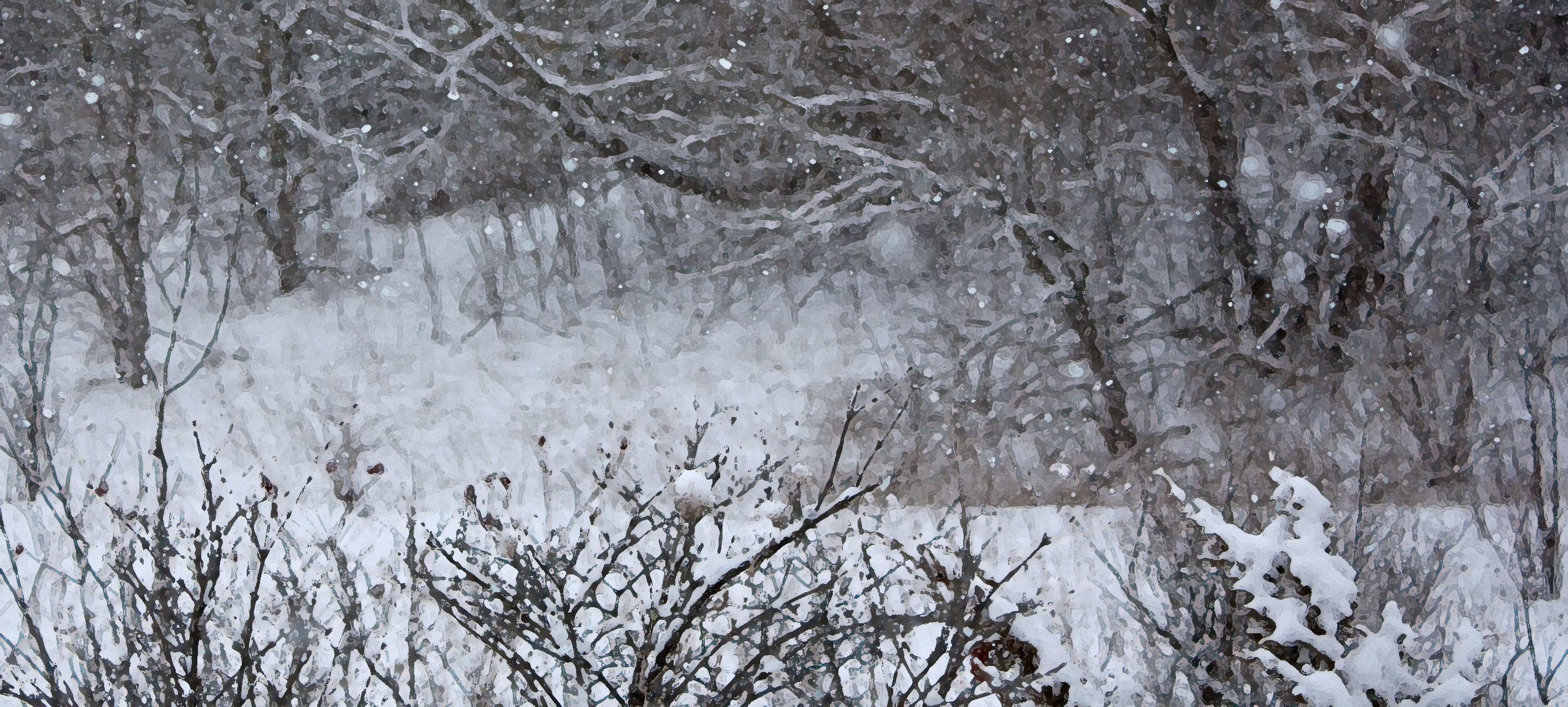
Horizontal snow in a strong snow storm, ON (photo and rendition by Nina Munteanu)
The high windstorm prophesies: Promises of a fierce unmanning; Storm and lost days, winter and last days’ Their return too soon presage…. Haunted universes of a deepest longing.
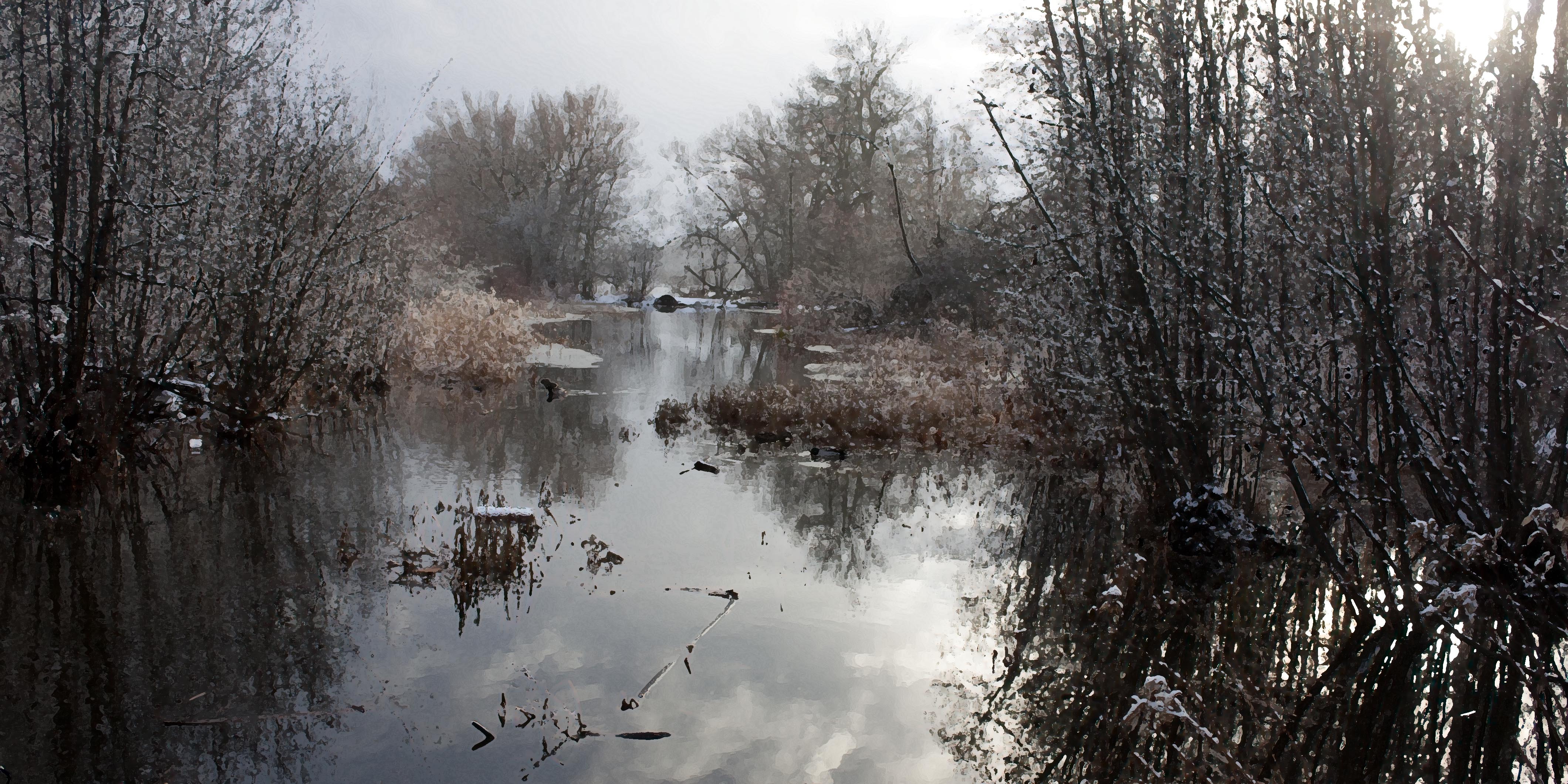
Marsh at lagoon of Otonabee River in winter fog, ON (photo and rendition by Nina Munteanu)
Bev Gorbet is a Toronto poet. She has published several poems with the Retired Teachers Organization and most recently in “Literary Connection IV: Then and Now” (In Our Words Inc., 2019), edited by Cheryl Antao Xavier.
Moss-covered rocks and leaf fall in Jackson Creek, ON (photo and rendition by Nina Munteanu)
NINA MUNTEANU is a Canadian ecologist / limnologist and novelist. She is co-editor of Europa SF and currently teaches writing courses at George Brown College and the University of Toronto. Visit www.ninamunteanu.ca for the latest on her books. Nina’s bilingual “La natura dell’acqua / The Way of Water” was published by Mincione Edizioni in Rome. Her non-fiction book “Water Is…” by Pixl Press(Vancouver) was selected by Margaret Atwood in the New York Times ‘Year in Reading’ and was chosen as the 2017 Summer Read by Water Canada. Her novel “A Diary in the Age of Water” was released by Inanna Publications (Toronto) in June 2020.
Brief time will quickly pass us by: Melodies and darknesses. Brief reflections, sunlight and shadow…
The existential promise: Eternity, passing lights, days in memorial Majesty, fields swept along in the sighing winds Mad soaring free wildernesses, harmonies, The inconceivable order, the wonder, the mystery: All the beauty in an unknowable universe
Bright awe and the majesty of bright moment, Tenebrisms, most sacred days: A sanctified contemplation; The flame centered monologue…
Humanity will forget, Humanity will ignore, humanity will lie, Humanity will forget, humanity will deny, And brief time will so very quickly pass us by.
Payne Line Road to Lost Lake, ON (photo by Nina Munteanu)
Bev Gorbet is a Toronto poet and retired school teacher. She has published several poems with the Retired Teachers Organization and most recently in “Literary Connection IV: Then and Now” (In Our Words Inc., 2019), edited by Cheryl Antao Xavier.
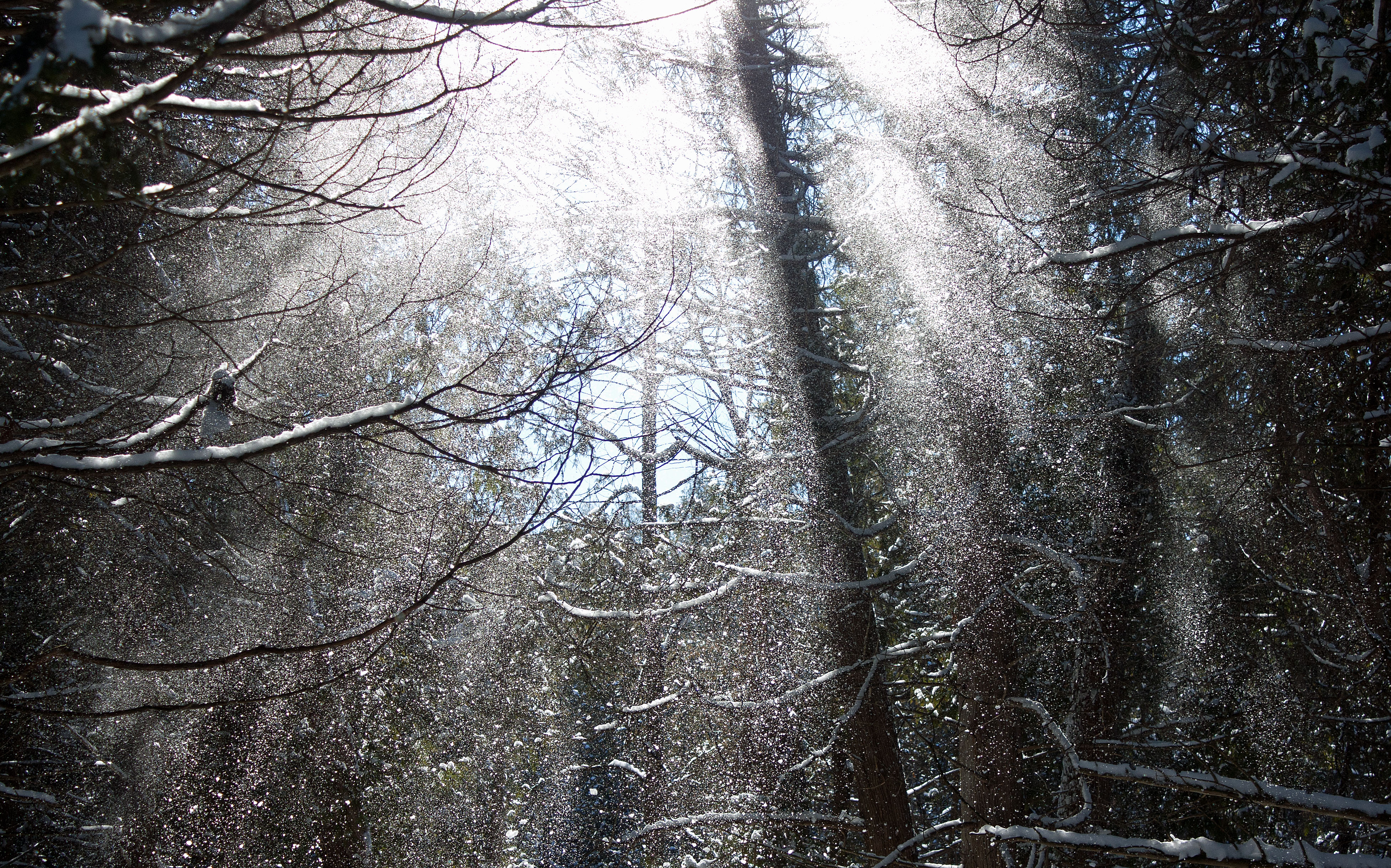
Snow glitter rains down from cedar tree on a sunny day after a major snowfall, ON (photo by Nina Munteanu)
Bright lit: the great cedar forest, Cathedral dome skies bright sunlit above… All of a fulgent blue, all of an azure glow… Everywhere, the peace of a radiant sunlight
Pine tree with snow glitter behind in Jackson Creek Park, ON (photo and rendition by Nina Munteanu)
Worlds of magic and a most sacred light Bright sunlit day, bright shafts Through a portico of treetops high above The trees reaching so very high, Deep into the sheltering skies
Snow-covered Buckthorn with path through a snowy meadow, ON (photo and rendition by Nina Munteanu)
Snow decked branch and bough: gently swaying memory; Movement into the swaying winter winds The gentle whispers, the gentle sighs The treetops, Their song, their gentle touch, their toss, their glide
Snow dust falls in a cedar forest, ON (photo by Nina Munteanu)
A deepest silence, a most profound contemplation Midst snowdrift and snowlit mists as they shift Between icy branch and snow covered green bough
Dust of snow and cedar lights: All the ethereal wonders of a snowy day, The snow blessed, lost ephemeral lands In a full clothed beauty, snowy wonders: of sunlight, of shadow
Snow-covered shrub on a snowy day, ON (photo and rendition by Nina Munteanu)
Oh! sacred forest, this great beauty of place To overwhelm, to protect, to shelter… Here, a deepest meditation, a deepest circumspection… Snow and ice and all the wonder of a glorious sunlit day All the ephemeral beauty in a winter’s sunlight world.
Snow dust rains down from snow-laden cedar trees in Jackson Creek Park, ON (photo by Nina Munteanu)
Bev Gorbet is a Toronto poet and retired school teacher. She has published several poems with the Retired Teachers Organization and most recently in “Literary Connection IV: Then and Now” (In Our Words Inc., 2019), edited by Cheryl Antao Xavier.
Otonabee River glints in the sun as it snows, ON (photo and rendition by Nina Munteanu)
An autumn’s last days, fierce snowfalls, fall lights and storm The autumn landscape now full of wild moods, Hints of a magic wilderness and an encircling cold, The bitter winds, the fast falling hail: Landscape echo and retreat
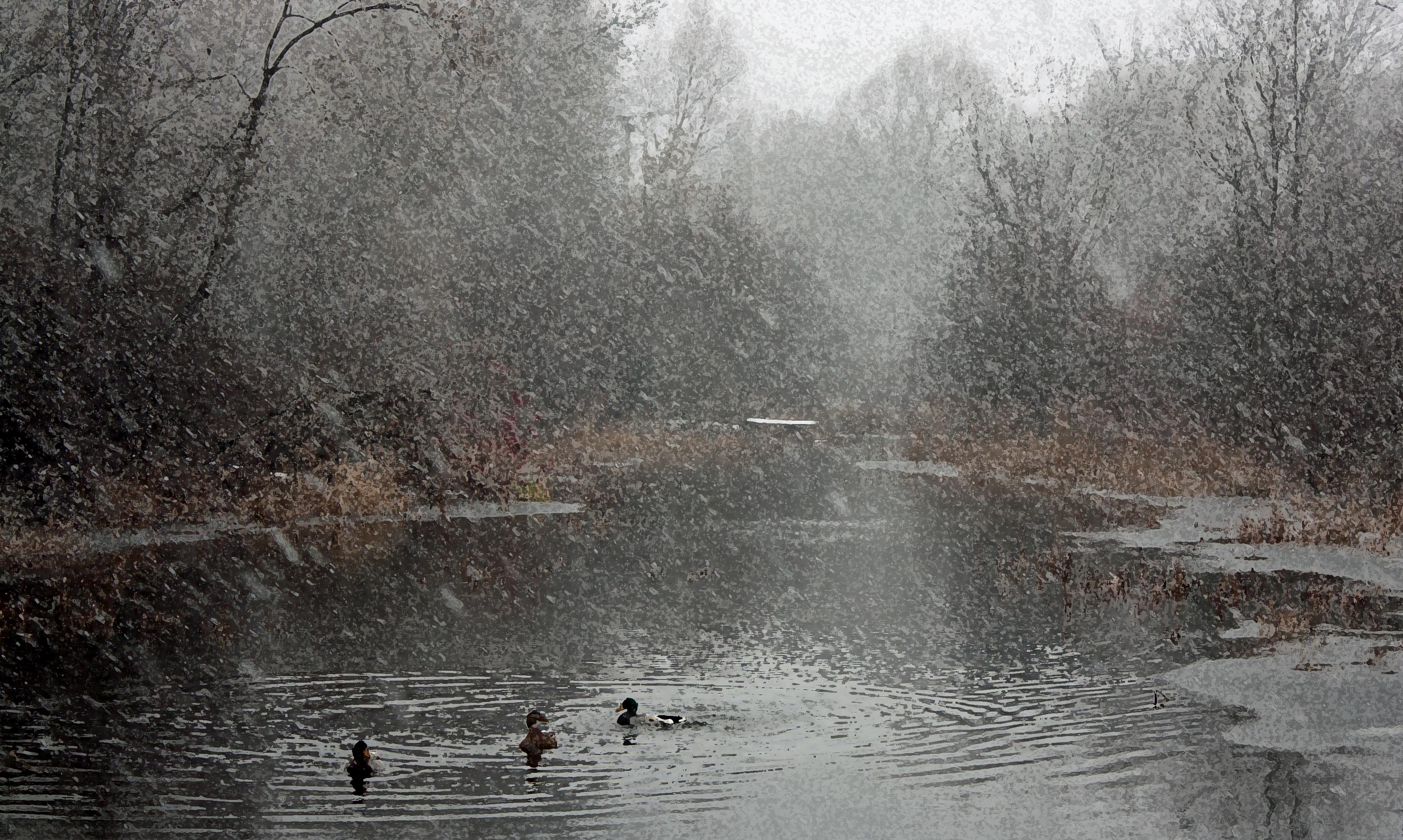
Mallards contently swim the marsh under a heavy snow, ON (photo and rendition by Nina Munteanu)
Snow veil mists over the receiving marsh lands: Somber cloud grays, shades of amber glow… Mallard ducks unconcernedly paddling On the smooth black marsh waters The snows above falling in majestic blizzards: Powerful bursts of snow over treetop And bended bough, Moody haze lit skies high falling away In blasts of snow and wind
Heavy snow falls in the riparian forest, ON (photo and rendition by Nina Munteanu)
Snowy reflections over high treetop above… Snowy days and last messages of a fading autumn’s glory: Detritus of bronze leaf, the withered beauty of a fading goldenrod A final sadness, autumn’s last messages, Haunted promises of a brilliant winter sunshine On snowy fields, velvet days and gold
Snow flies horizontally in a fierce wind, ON (photo and rendition by Nina Munteanu)
Now the forests bend, overwhelmed by the flying snow Thick tumbling down, shards of ice and rain Clouds of snow falling everywhere Forest pathways now covered in a lucent white glow, The shaded greens of cedar and fir picked out in a forest landscape; The continuing deluge, wild nature’s primordial powers: Mad windstorm and snow drift
Sun emerges over Thompson Creek marsh after the snowstorm, ON (photo and rendition by Nina Munteanu)
The still marsh waters now reflect the gray cloud, the sky high above All the windstorm madness, the bog detritus on the still marsh Now snow covered and silent, the snowfall ended The marsh now a sacred retreat: worlds of a glorious and gentle reflection, A tender, and radiant peace overall.
Bev Gorbet is a Toronto poet and retired school teacher. She has published several poems with the Retired Teachers Organization and most recently in “Literary Connection IV: Then and Now” (In Our Words Inc., 2019), edited by Cheryl Antao Xavier.
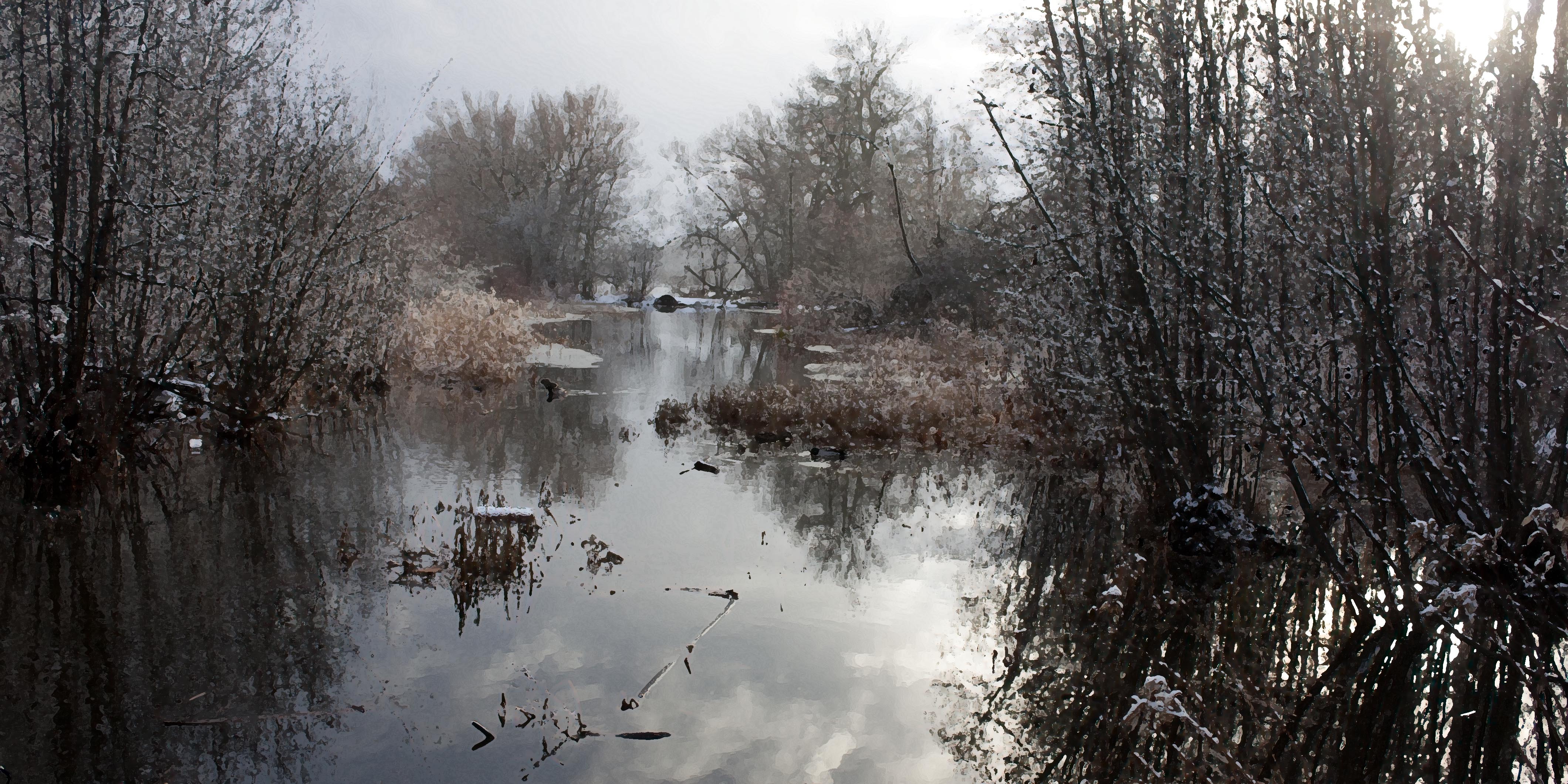
Thompson Creek marsh after a first snow in late autumn, ON (photo and rendition by Nina Munteanu)
Nina Munteanu revels in a snowstorm in Ontario (photo by Merridy Cox)
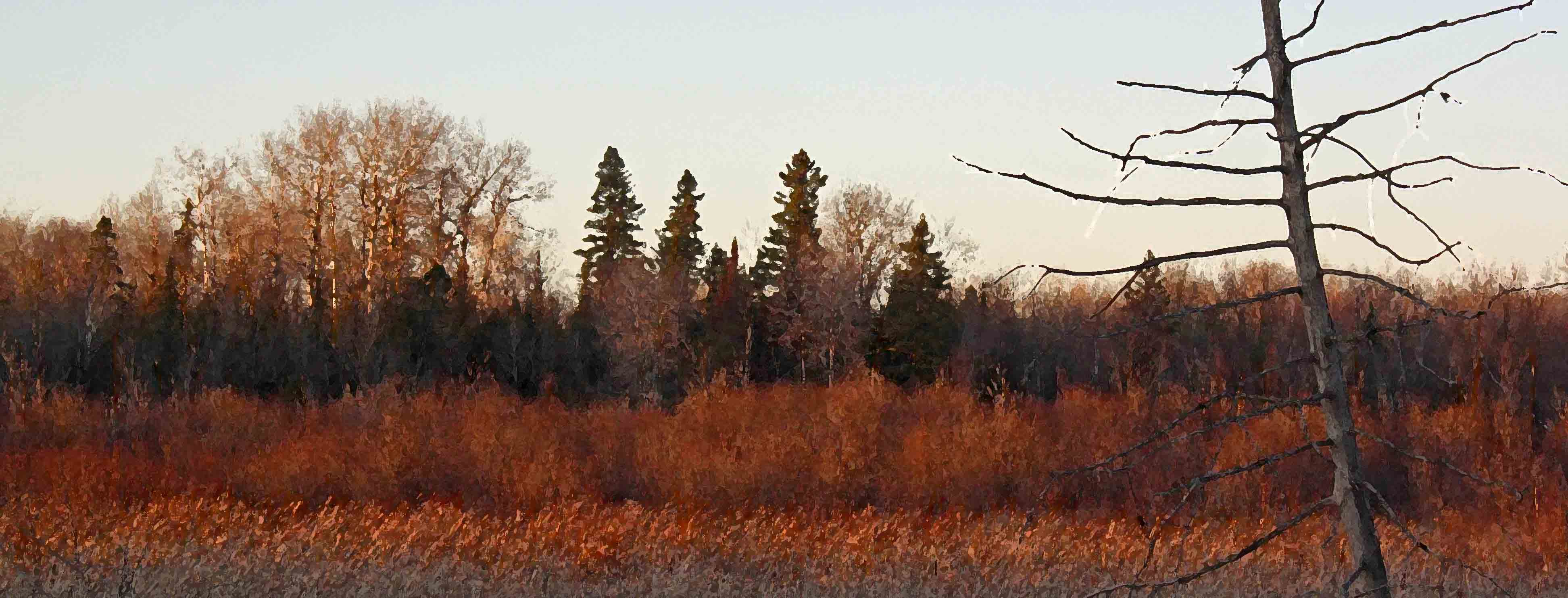
Poplar trees in the late autumn, ON (photo and rendition by Nina Munteanu)
My heart will rise to follow in the fierce rhapsody: Wind’s cry and rapture; Mystical beauty in the primal call, wildernesses, Mad windstorm moving from treetop to treetop, From branch to bending branch, from singing leaf to leaf Moving, high sheltering in the high tumult, skies above Midst songs of midnight, darkest shadow, deepest shades
Path through maple-beech forest, ON (photo and rendition by Nina Munteanu)
The great beauty in the wind’s mystic path Darknesses far beyond into the cathedrals of the night: Airs, echo and sighs, dreams, Thoughts of all our tomorrows: Sacred windstorms at the beginning of time: A glorious sun and the rising dawn lights
Pine cedar forest in Ontario (photo and rendition by Nina Munteanu)
All promise was once ours, Echoes of dreams once ours, All beauty once ours and days never to be forgotten Dawn lights and dusty twilights: The songs of the wind’s rapture, Fierce windstorm sighs, cries through branch and bough…
Old maple tree in a mixed forest, ON (photo and rendition by Nina Munteanu)
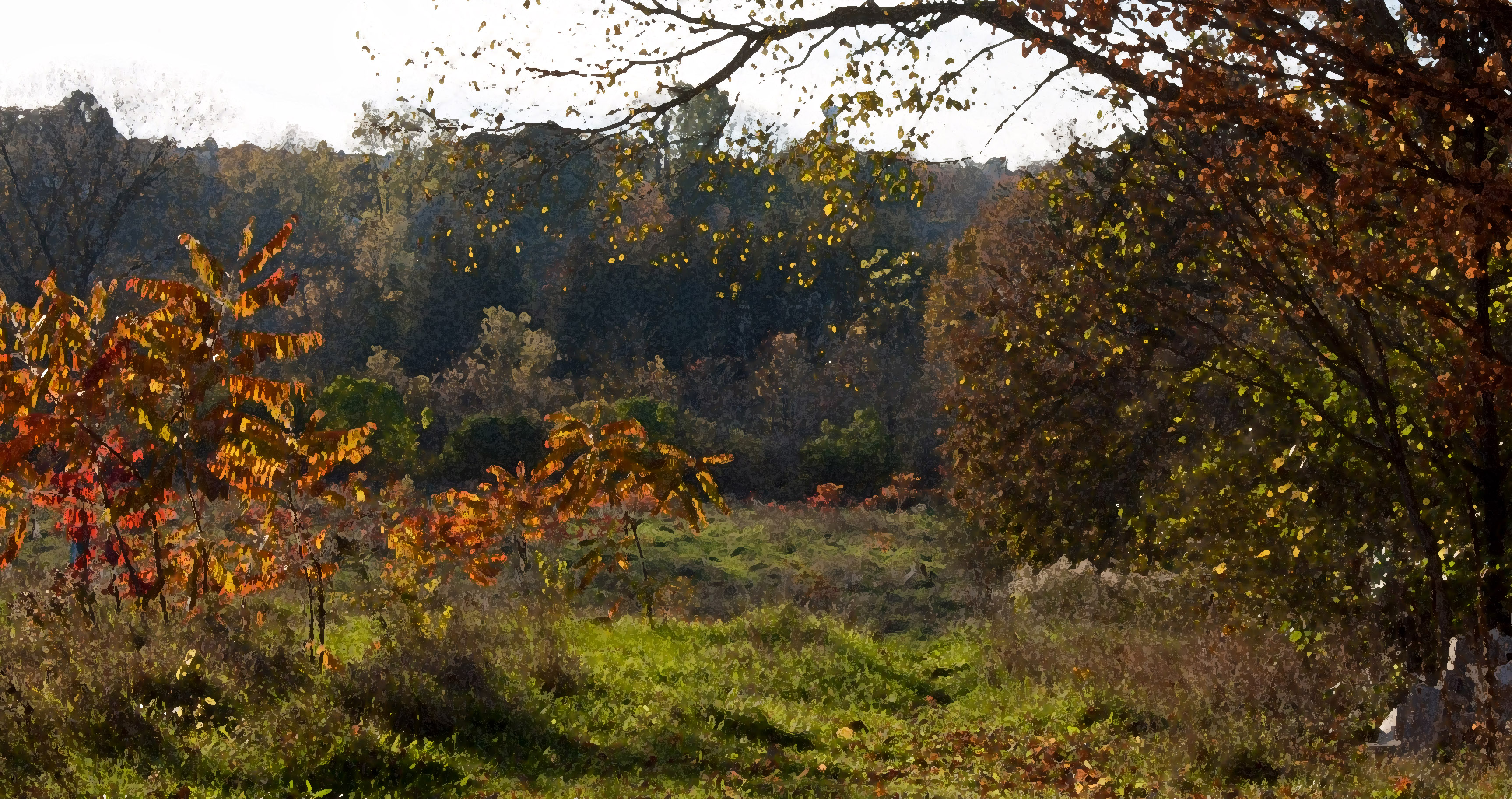
A pastoral field blazes with autumn colours of sumac and maple, ON (photo and rendition by Nina Munteanu)
Oh! memory hold strong Windsong: mystic soul of creation: the mystic fire, the holy flame; Worlds ablaze The long sacred journey into mystery Beauty transfigured, wind’s message and haunting Windstorm and mystical worlds, sanctuary far away All passion spent.
Marsh at sunset, ON (photo and rendition by Nina Munteanu)
Nina Munteanu is a Canadian ecologist / limnologist and novelist. She is co-editor of Europa SF and currently teaches writing courses at George Brown College and the University of Toronto. Visit www.ninamunteanu.ca for the latest on her books. Nina’s bilingual “La natura dell’acqua / The Way of Water” was published by Mincione Edizioni in Rome. Her non-fiction book “Water Is…” by Pixl Press(Vancouver) was selected by Margaret Atwood in the New York Times‘Year in Reading’ and was chosen as the 2017 Summer Read by Water Canada. Her novel “A Diary in the Age of Water” was released by Inanna Publications (Toronto) in June 2020.























 Nina Munteanu Writing Coach