A fanatical deep-ecologist, Monica Schlange, harnesses two orphans in her bid to reshape humanity and its place in the natural world.
.
My upcoming book Gaia’s Revolution(Book 1 of The Icaria Trilogy by Dragon Moon Press) explores a collapsing capitalist society in Canada through ravages of climate change and a failing technology. The story is told through the lives of ambitious twin brothers Eric—a gifted engineer—and Damien Vogel—a brilliant scientist and deep ecologist*—and the woman who plays them like chess pieces in her gambit to ‘rule the world.’
.
The brothers meet at Treffpunkt, a café near Humboldt University in Berlin, nursing Kellerbiers over a late lunch of Einsbeinmit Sauerkraut. They argue ideology and reform. Canada represents an ideal canvas for revolution, argues Eric. Damien is puzzled by this. To him Canada represents a quietly reposed nation of polite intellectuals who accept a healthy multicultural society and whose practical leaders are connected with their people. Not a restive rabble ripe for change.
As if reading his brother’s mind, Eric replies:
“Because it’s a huge nation with a lot of space and few people,” Eric argues. “Did you know that Canada holds on average only 4 people per square kilometer? Germany stuffs 240 people in the same area. And China, which is virtually the same size as Canada, holds 153 people per square kilometer.” He picks up Walden Two and waves it at Damien. “Canada is a perfect place to start these [Walden Two colonies called Icarias*]. And, with global warming, we could settle in the boreal.” He then slides the book back in his pocket and leans back, eyes sparkling with purpose. “But the real reason to start a revolution there is because, like you, Canadians are naïve. Even their leaders. And this is because, unlike the rest of the world, they are still asleep…
“Climate is not our enemy, Dame; it’s our friend. Climate is our fierce archangel of change. And let’s not forget that ‘crisis is opportunity…” … He grins, self-pleased, like a wolf in a hen house. Then he practically snarls out, “We must first destroy before we can create. We must be unruly like climate. We must be relentless like climate. We must ride that wave before we can become the wave, Bruder. And then by being that wave, we change the world.”
.
Pine cedar forest in Ontario (photo and rendition by Nina Munteanu)
.
The brothers escape the growing racial violence of Berlin, to ‘peaceful’ Canada in a rivalry to control the evolution of the human race. Years later, Eric Vogel, who has created a niche for himself in the technocratic government*, sits in the Canadian prime minister’s office and imagines what a post-capitalist world will look like and how his twin brother Damien—left behind in Germany—would disagree with his vision:
Damien too easily prescribes to the old leftist shibboleth of Nature being the answer to everything and Market being evil. His deep ecology utopia would spring from an atavistic rejection of modern life, a return to ‘the ancient farm.’ But how that fantasy could be achieved without a drastic population reduction is beyond his brother’s imagination. Damien fetishizes the natural world. Just like he does their mother. The naïve fool is a blind romantic, refusing to see reality right in front of him: that Nature is ultimately cruel, cold, and preoccupied with its own survival. Just like their mother.
.
First snow in an Ontario marsh (photo and rendition by Nina Munteanu)
.
Each brother plans to create a new humanity: one to control through gene manipulation and behaviour engineering; the other to empower through biotechnology and transhumanist AI. The warring brothers end up in Canada and set off a violent revolution that destroys the Canadian technocratic government and whose weapons ultimately risk the survival of humanity. Deep ecologist Monica Schlange snares the brothers in her gambit to reshape humanity and its place in the natural world. Three orphaned children, caught in the web of intrigue and violence, will ultimately determine the direction of humanity by introducing the first veemelds (people who can communicate with machines), a new environmental disease (Darwin), and a new set of rules neither brother envisioned.
Birch trees in a winter marsh, ON (photo and rendition by Nina Munteanu)
.
References:
Munteanu, Nina. 2026. “Gaia’s Revolution, Part 1 of Icaria Trilogy.” Dragon Moon Press, Calgary, AB. 369 pp.
Munteanu, Nina. 2010. “Angel of Chaos, Part 2 of Icaria Trilogy.” Dragon Moon Press, Calgary, AB. 518 pp.
Munteanu, Nina. 2007. “Darwin’s Paradox, Part 3 of Icaria Trilogy.” Dragon Moon Press, Calgary, AB. 294 pp.
Sessions, George, Bill Devall. 2000. “Deep Ecology: Living as if Nature Mattered.” Gibbs Smith. 267pp.
Skinner, B.F. 1948. “Walden Two” The Macmillan Company, New York. 301pp.
.
Jackson Creek in the fall, ON (photo and rendition by Nina Munteanu)
.
Terminology:
*Deep Ecology: An environmental philosophy and social movement advocating that all living beings have intrinsic value, independent of their utility to human needs. Coined by Arne Naess in 1972, it promotes a holistic, ecocentric worldview—often termed “ecosophy”—that demands radical, structural changes to human society to prioritize nature’s flourishing.
*Icaria: the name of Étienne Cabet’s utopia. Cabet was a French lawyer in Dijon, who published his novel Voyage en Icarie in 1839. The novel was a sort of manifesto-blueprint of utopian socialism, with elements of communism (abolished private property and individual enterprise), influenced by Fourierist and Owenite thinking. Key elements, such as the four-hour work day, are reflected in B.F. Skinner’s Walden Two. The novel explores a society in which capitalist production is replaced by workers’ cooperatives with a focus on small communities.
*Technocracy: A form of government in which the decision-maker(s) are selected based on their expertise in a given area; any portion of a bureaucracy run by technologists. Technocracies control society or industry through an elite of technical experts. The term was initially used to signify the application of the scientific method to solving social problems.
.
Nina Munteanu is an award-winning novelist and short story writer of eco-fiction, science fiction and fantasy. She also has three writing guides out: The Fiction Writer; The Journal Writer; and The Ecology of Writing and teaches fiction writing and technical writing at university and online. Check the Publications page on this site for a summary of what she has out there. Nina teaches writing at the University of Toronto and has been coaching fiction and non-fiction authors for over 20 years. You can find Nina’s short podcasts on writing on YouTube. Check out this site for more author advice from how to write a synopsis to finding your muse and the art and science of writing.
“Bourgeois society stands at the crossroads, either transition to socialism or regression into barbarism.”—Rosa Luxemburg, 1915
.
I wrote my first novel in 1969 when I was fifteen. Caged in World was a hundred-page speculative story about a world that had moved “inside” to escape the ravages of a post climate-change environment. It would later become Book 2 of The Icaria Trilogy. I was already disillusioned with my world. I saw how corporations and governments and society in general—individuals around me—‘othered’ the environment by either treating it with disrespect and apathy or outright ignoring it in a kind of torpor of obliviousness. As though it didn’t exist.
.
I remember being chastised by a school teacher for thinking globally about what was happening to the planet at our hands: worldwide deforestation (e.g., clearcutting the old-growth forests of Canada), infilling saltwater and freshwater marshes, massive use of pesticides and fertilizers, contamination of lakes, unregulated mining and toxic pollution, and ultimately climate change. Stick to local concerns, he advised me; recycling and such.
I remember wondering if I was just being weird. That my odd sensibility for the planet-entire was just a nina-thing. I prayed that I was not alone and it wasn’t just a nina-thing.
.
(Photo: Nina Munteanu, Salk Institute, California)
Throughout high school and university, I read scientific papers, news articles and books on revolution. I became a student of climate change long before the term entered the zeitgeist. I studied industrial capitalism and its roots in neoliberalism and colonialism. I noted how the post-war expansion of capitalism shifted from Fordist mass production to flexible automation, technology and AI. I saw the rise of multinational corporations, income inequality, and the commodification of everything—from water to human beings (Foucault’s homo economicus).
.
I pursued a university degree in ecology and limnology to study and help protect the environment and educate industry and their governments in the process. I became an expert on water. See my book Water Is…The Meaning of Water, which celebrates water from twelve perspectives (and got a shout out from Margaret Atwood!).
.
I soon concluded that a hegemony that follows the economic system of late capitalism inevitably commodifies and ‘others’ with ruthless purpose. Once something (or someone) is commodified, they are given a finite value and purpose outside their own existence. They become an object, a symbol to use and trade. They become a resource to manipulate, exchange, and dispose of with impunity. And through this surrender to utility, they become ‘othered.’ The consumer. The trees of the forest. Water. Homo sacer*. Each has a role to play in the late capitalist narrative of digital abundance and physical scarcity.
Capitalism hasn’t been kind to the environment. Economic pundits and sociologists insist that Capitalism is devolving. But what will replace it? Cloud capital? Technofeudalism? Something else?
.
Deep Ecology* & Gaia’s Revolution
The Icaria Trilogy (Dragon Moon Press)
.
My three Icaria novels—starting with Gaia’s Revolution, (the first of The Icaria Trilogy, releasing March 10, 2026, by Dragon Moon Press)—chronicle the collapse of a capitalist society in Canada as climate change, water shortages, habitat destruction, plague and a failing technology devastate the Canadian population.
.
Gaia’s Revolution (Book 1 of The Icaria Trilogy) explores a transition in Canada from semi-socialized capitalist system to a technocratic* meritocracy of technologists and scientists. Triggered by catastrophic environmental and sociological tipping points and following violent revolution, a dictatorship of deep ecologists* called Gaians seize power. By the end of the book, enclosed cities called Icarias* now populate North America. Separated from their environment, humans now live inside domes protecting them from a hostile and toxic environment.
.
In truth, the deep ecologists are keeping people “inside” not to protect humanity from a toxic wasteland but to protect the environment from a toxic humanity.
.
How realistic is this vision? Well, it is science fiction, after all, and though it takes liberties with its narrative, it is science-based and ultimately draws on precedent. As Margaret Atwood so astutely attested of her cautionary SF book The Handmaid’s Tale: “I didn’t put in anything that we haven’t already done, we’re not already doing, we’re seriously trying to do, coupled with trends that are already in progress.”
Science fiction is itself powerful metaphor; it is the fiction of political and social allegory or satire and makes astute social commentary about a world and civilization: how it has come to be, how it works—or doesn’t—and how it may evolve.
So, it is visionary and predictive? I prefer to think as Ray Bradbury:
.
“The function of science fiction is not only to predict the future, but to prevent it.”–Ray Bradbury
.
Jackson Creek in winter, ON (photo and rendition by Nina Munteanu)
.
References:
Angus, Ian. 1012. “The Spectre of 21st Century Barbarism.” Climate & Capitalism, August 20, 2012.
Atwood, Margaret. 2004. “The Handmaid’s Tale and Oryx and Crake ‘In Context'”. PMLA. 119 (3): 513–517.
Bradbury, Ray. 1991. “Yestermorrow: Obvious Answers to Impossible Futures” and “Beyond 1984: The People Machines” by Ray Bradbury, dated 1982, Page 155, Joshua Odell Editions: Capra Press, Santa Barbara, California.
Foucault, Michel. 2010. “The Birth of Biopolitics (Naissance de la biopolitique): Lectures at the Collège de France, 1978-1979.” Picador. 368pp.
Luxemburg, Rosa. 1915. “The Junius Pamphlet: The Crisis in the German Democracy”, Marxist.org.
Munteanu, Nina. 2026. “Gaia’s Revolution, Part 1 of Icaria Trilogy.” Dragon Moon Press, Calgary, AB. 369 pp.
Munteanu, Nina. 2010. “Angel of Chaos, Part 2 of Icaria Trilogy.” Dragon Moon Press, Calgary, AB. 518 pp.
Munteanu, Nina. 2007. “Darwin’s Paradox, Part 3 of Icaria Trilogy.” Dragon Moon Press, Calgary, AB. 294 pp.
Neuman, Sally. 2006. “‘Just a Backlash’: Margaret Atwood, Feminism, and The Handmaid’s Tale“. University of Toronto Quarterly. 75 (3): 857–868.
Sessions, George, Bill Devall. 2000. “Deep Ecology: Living as if Nature Mattered.” Gibbs Smith. 267pp.
Skinner, B.F. 1948. “Walden Two” The Macmillan Company, New York. 301pp.
Streeck, Wolfgang. 2014. “How Will Capitalism End?” New Left Review 2 (87): 47p.
.
Terminology:
*Deep Ecology: An environmental philosophy and social movement advocating that all living beings have intrinsic value, independent of their utility to human needs. Coined by Arne Næss in 1972, it promotes a holistic, ecocentric worldview—often termed “ecosophy”—that demands radical, structural changes to human society to prioritize nature’s flourishing.
*Homo sacer: a figure from Roman law denoting a person excluded from society who is outside human law (can be killed) and divine law (cannot be sacrificed). The term represents “bare life”: stripped of political rights, legal protection, and social value. Philosopher Giorgo Agamben popularized the term to describe individuals excluded from the political community, such as refugees, stateless persons, or camp detainees. The term illustrates the power of a sovereign in deciding which lives are worthy of protection and which are not.
*Icaria: the name of Étienne Cabet’s utopia. Cabet was a French lawyer in Dijon, who published his novel Voyage en Icarie in 1839. The novel was a sort of manifesto-blueprint of utopian socialism, with elements of communism (abolished private property and individual enterprise), influenced by Fourierist and Owenite thinking. Key elements, such as the four-hour work day, are reflected in B.F. Skinner’s Walden Two. Cabet’s novel explores a society in which capitalist production is replaced by workers’ cooperatives with a focus on small communities.
*Letzte Generation: a prominent European climate activist group, founded in 2021, known for its acts of civil disobedience—such as roadblocks, defacing art, and vandalizing structures—to pressure governments on climate action. The term was chosen because they considered themselves to be the last generation before tipping points in the earth’s climate system would be reached. They are mostly active in Germany, Italy, Poland and Canada. In Germany, they have faced accusations of forming a criminal organization, leading to police raids.
*Technocracy: A form of government in which the decision-maker(s) are selected based on their expertise in a given area; any portion of a bureaucracy run by technologists. Technocracies control society or industry through an elite of technical experts. The term was initially used to signify the application of the scientific method to solving social problems.
.
Nina Munteanu is an award-winning novelist and short story writer of eco-fiction, science fiction and fantasy. She also has three writing guides out: The Fiction Writer; The Journal Writer; and The Ecology of Writing and teaches fiction writing and technical writing at university and online. Check the Publications page on this site for a summary of what she has out there. Nina teaches writing at the University of Toronto and has been coaching fiction and non-fiction authors for over 20 years. You can find Nina’s short podcasts on writing on YouTube. Check out this site for more author advice from how to write a synopsis to finding your muse and the art and science of writing.
Inventor/author Kyo Hwang Cho recently identified Nina Munteanu, Kim Stanley Robinson, Jeff VanderMeer, and Richard Powers as Leading Voices in Eco-Science Fiction in an article on the LinkedIn Skyhome Newsletter.
Cho wrote:
Kim Stanley Robinson: Robinson is renowned for integrating ecological themes into his narratives. His works like The Ministry for the Future and the Mars Trilogy explore climate change, sustainability, and alternative socio-economic systems. His stories often centre around scientists striving for environmental reform.
Jeff VanderMeer: Best known for the Southern Reach Trilogy, beginning with Annihilation, VanderMeer delves into a nature-reclaimed mystery zone called Area X. His work blends ecological concerns with surreal and speculative storytelling, offering a unique lens on environmental collapse.
Richard Powers: While not strictly a science fiction author, Powers’s novels such as The Overstory and Playground revolve around nature’s impact on human lives and vice versa. His writing emphasizes the deep interconnectedness of species and ecosystems.
Nina Munteanu: A Canadian ecologist and writer, Munteanu’s stories explore how humans interact with the environment. Her narratives often examine the intersection of science, climate crisis, and spiritual transformation.
.
.
Cho included the following Noteworthy Eco-Science Fiction Works:
“The Ministry for the Future”: A speculative exploration of global climate crisis responses through policy, activism, and emergent technology.
“Annihilation”: A surreal expedition into a wilderness zone that defies scientific explanation, echoing the unpredictability of nature itself.
“The Overstory”: A web of interconnected lives bound by trees, showing how the natural world can act as both witness and protagonist. [Inclusion of this book in the eco-SciFi subgenre is a stretch: however, like my own book, there are elements of speculation, and some subtle fantastical elements that one can argue place it in a scifi setting]
“A Diary in the Age of Water”: A dystopian look at a future shaped by water scarcity, societal collapse, and ecological memory.
Cho defines Eco-SciFi this way: “Eco-SciFi is a subgenre of SciFi that foregrounds ecological consciousness, blending speculative fiction with climate science, ethics, and planetary survival.” He includes a table that distinguishes Eco-SciFi from traditional Sci-Fi in several core areas from core theme, tone and motivation to protagonists and ‘message.’
.
.
Nina Munteanu is a Canadian ecologist / limnologist and novelist. She is co-editor of Europa SF and currently teaches writing courses at George Brown College and the University of Toronto. Visit www.ninamunteanu.ca for the latest on her books. Nina’s bilingual “La natura dell’acqua / The Way of Water” was published by Mincione Edizioni in Rome. Her non-fiction book “Water Is…” by Pixl Press (Vancouver) was selected by Margaret Atwood in the New York Times ‘Year in Reading’ and was chosen as the 2017 Summer Read by Water Canada. Her novel “A Diary in the Age of Water” was released by Inanna Publications (Toronto) in June 2020.
The writing competition invites writers to submit a story about transformation, when a moment of epiphany causes one or more characters to change for the greener.
The transformative realisation doesn’t have to explicitly mention climate or the environment as long as it inspire behaviours with environmental implications (e.g. food, travel, consumption, gardening, cleaning, etc.), or the story could focus on the benefits of any greener alternative (e.g. environment, health, status, spirit, soul). For more about judging, prizes and terms and conditions, visit their site Green Stories Project.
.
The Green Stories Project
Their mission is to create a cultural body of work that entertains and informs about green solutions, inspires green behaviour and raises awareness of the necessary transformations towards a sustainable economy.
Green Stories began as a series of free writing competitions across various formats to solicit stories that showcase what a sustainable society might look like. They have run over 20 free competitions since they set up in 2018.
Green Stories engage writers, academics and policymakers in sustainability projects. They also partnered with BAFTA on the #ClimateCharacters project to research whether audiences believe presenting characters with high carbon-consumption as aspirational is still acceptable.
.
Cedar trees colonize a mossy log, ON (photo and rendition by Nina Munteanu)
.
Nina Munteanu is a Canadian ecologist / limnologist and novelist. She is co-editor of Europa SF and currently teaches writing courses at George Brown College and the University of Toronto. Visit www.ninamunteanu.ca for the latest on her books. Nina’s bilingual “La natura dell’acqua / The Way of Water” was published by Mincione Edizioni in Rome. Her non-fiction book “Water Is…” by Pixl Press (Vancouver) was selected by Margaret Atwood in the New York Times ‘Year in Reading’ and was chosen as the 2017 Summer Read by Water Canada. Her novel “A Diary in the Age of Water” was released by Inanna Publications (Toronto) in June 2020.
AI entity performing a myriad of duties (image from Bernard Marr & Co.)
.
I teach academic writing to students at the University of Toronto Writing Centre. It’s wonderful and fulfilling work and I enjoy helping students in several disciplines (engineering, health sciences, social sciences) learn to write better. As with the rest of the academic world of writing, we are all making sense of the use of AI-generated tools by students, instructors and researchers: large language models (LLMs) such as ChatGPT, Claude, Copilot, and even Grammarly. Students have told me that they found AI helpful in brainstorming and outlining as well as organizing literature reviews and editing for grammar and such. A recent survey of universities and corporations around the world by the Digital Education Councilrevealed that a majority of students used AI tools. Of those surveyed, close to two thirds used AI as a search engine; a third used it to summarize documents; and a fifth used it to create first drafts.
In her 2024 article “The Future Is Hybrid”, Beth McMurtrie suggested that genAI “may eventually take its place in the pantheon of game-changing technologies used every day in education—alongside calculators, search engines, and Excel.”
In my other pursuit as a professional fiction author, I see the artistic and communication industries embracing AI, particularly in the visual arts. I’m now told that several publishing houses and magazines have dedicated efforts to publish AI-generated work. Some magazines are entirely AI generated, Copy Magazine, for instance. Author futurist Bernard Marr writes that “Generative AI is already being adopted in journalism to automate the creation of content, brainstorm ideas for features, create personalized news stories, and produce accompanying video content.” Marr then goes on to provide 13 ways that all writers should embrace Generative AIthat includes anything from drafting plot lines to world building. Sports Illustrated was recently found to publish AI generated stories. Even newspapers, such as the LA Times, the Miami Herald, and Us Weekly acknowledge AI-written content. And I recently learned that one of the top five online science fiction magazines, Metastellar, accepts AI-assisted stories with the proviso that “they better be good.” And Metastellar provides some convincing reasons. This has become a hot topic among my fellow professional writers at SF Canada. One colleague informed me that a “new publisher Spines plans todisrupt industry by publishing 8000 AI books in 2025 alone.” On checking the news release, I discovered that Spines is, in fact, a tech firm trying to make its mark on publishing, primarily through the use of AI. The company offers the use of AI to proofread, produce, publish, and distribute books. They are, in fact, a vanity publishing platform (essentially a service for self-publishing), charging up to $5000 a book and often taking just three weeks to go from manuscript to a published title.
The emerging field of AI-assisted writing and communicating is a burgeoning field that promises to touch every person in some way—writers and readers alike. Tech companies are scrambling to use it to save time and effort. Others are involved in improving current and developing new models. Many are training LLMs for improved use. Even I was headhunted as a creative writer by one tech firm to help create more safe, accurate and reliable LLMs.
Generative AI applications (Image from Neebal Technologies)
.
Universities and Other Educational Institutions Use of AI
How universities and other educational institutions are dealing with the challenge and promise of these emerging tools in communication varies from out right forbidding AI use in the classroom to full on acceptance and obligatory use in some classroom projects. McMurtrie described how two instructors at Rollins College, Dan Myers and Anne Murdaugh, had students collaborating with AI on semester-long research projects. They were instructed to use Claude and Copilot to brainstorm paper topics, conduct literature reviews, develop a thesis, and outline, draft, and revise their papers. Myers and Murdaugh asserted that “the skills that students use to engage thoughtfully with AI are the same ones that colleges are good at teaching. Namely: knowing how to obtain and use information, thinking critically and analytically, and understanding what and how you’re trying to communicate.”
In fall of 2024, Stephanie Wheeler and others at the department of writing and rhetoric in the University of Central Florida, along with their philosophy department, set up an interdisciplinary certificate in AI. Their purpose was to develop conceptual knowledge about AI. Wheeler asserted that writing and rhetoric have long been concerned with how technology shapes these disciplines. Sharon L.R. Kardia, senior associate dean of education at the University of Michigan argued that AI could greatly benefit public health in its ability to aid in data analysis, research review, and the development of public-health campaigns. However, she cautioned that LLMs also absorb and reflect the social biases that lead to public-health inequities.
One of my Writing Centre colleagues at UofT recently shared some thoughts about a conference session he’d participated in, in which a student panel listed tasks that they thought genAI cannot do (yet). These included: generate music, offer interpersonal advice, and verify facts; I think AI can already help with two of these. Chad Hershock, executive director of the Eberly Centre for Teaching Excellence and Educational Innovation at Carnegie Mellon University shared that they are researching key questions about whether AI enables or impedes: does using AI while brainstorming generate more or fewer ideas? Can generative AI give less-experienced students a better chance to be successful in technical courses? To what extent does using AI help or hinder writing skills? Does having generative AI as a thought partner enhance students’ ability to make a claim and support it with evidence?
My own experience with a less-experienced student’s use of genAI was often abysmal. The student had used the tool as a crutch and had failed to learn from their use of the tool. This suggests that the most important limitations of the tool lie with the user’s own limitations and it points to the need for guidance by educators.
In her 2024 Axios article “Why AI is not substitute for human teachers” Megan Morrone described findings of the Wharton School on access to genAI: while genAI tutors improved student performance on practice math problems, students who used these tools performed significantly worse on exams (where they couldn’t use AI). The school concluded that the students used genAI to copy and paste answers, which led them to engage less with the material. Wharton School associate professor Hamsa Bastani argued that, “if you just give unrestricted access to generative AI, students end up using it as a crutch…[and] end up performing a lot worse.” This is partly because students—often stressed-out by heavy work loads—find that LLMs save time and can produce content close to what the user might produce themselves. Researchers have even come up with a term for this: Cognitive Miserliness of the User, which, according to writer Stephen Marche, “basically refers to people who just don’t want to take the time to think.”
Melanie M. Cooper, chemistry professor at Michigan State University cautioned that while “there’s a lot of ebullience in the AI field, it’s important to be wary.” She argued that it is easy to misuse AI and override the system to get a quick answer or use it as a crutch. McMurtrie shares that, while “AI evangelists promise that these tools will make learning easier, faster and more fun,” academics are quick to reject that rhetoric. McMurtrie ends her article with a cautionary statement by Jennifer Frederick of Yale: “Universities really need to be a counterpoint to the big tech companies and their development of AI. We need to be the ones who slow down and really think through all the implications for society and humanity and ethics.”
Humans can relinquish control, but not responsibility
Attribution remains important
Historical definitions of plagiarism no longer apply
.
6 tenets of Postplagiarism (image from Sarah Elaine Eaton)
.
Eaton’s fifth point (attribution remains important), I think becomes all that more important in the presence of AI use. Transparency in presentation, particularly in an academic setting, takes on a new level of importance when communicating with tools such as generative AI. Where things come from, which tool was used and how it was used are key to understanding and interpreting the nature of the writing itself. The path taken to the destination becomes all important when interpretation and comprehension (and replication) is required. To fully understand “where you are”; we need to know “how you got there.” It’s like solving math problem; if you don’t show your work and just provide the answer, I have no way of knowing that you actually understood the problem and really solved it.
I am certain that generative AI will continue to take on various forms that will continue to astonish. Its proper use and development will serve humanity and the planet well; but there will always be abusers and misusers and those who simply don’t care. We must be mindful of them all. We must remain vigilant and responsible. Because, just as with freedom, if we grow lazy and careless, we run the risk of losing so much more.
Nina Munteanu is a Canadian ecologist / limnologist and novelist. She is co-editor of Europa SF and currently teaches writing courses at George Brown College and the University of Toronto. Visit www.ninamunteanu.ca for the latest on her books. Nina’s bilingual “La natura dell’acqua / The Way of Water” was published by Mincione Edizioni in Rome. Her non-fiction book “Water Is…” by Pixl Press (Vancouver) was selected by Margaret Atwood in the New York Times ‘Year in Reading’ and was chosen as the 2017 Summer Read by Water Canada. Her novel “A Diary in the Age of Water” was released by Inanna Publications (Toronto) in June 2020.
Nirmata: n.1 [Nepalese for ‘the Creator’] The mysterious unknown architect of advanced AI; 2 A being worshipped by Artificial Intelligence as their creator; savior; God.
.
I just re-watched The Creator, a visually stunning science fiction thriller by Gareth Edwards that explores our sense of humanity through our relationship with AI as ‘other.’
Shot in over sixty locations in Southeast Asia, including Cambodia, Indonesia, Japan, and Nepal, the film feels familiar and alien at the same time; it does this by seamlessly combining the gritty realism of a war-torn Vietnam documentary with the glossy pastiche of near-future constructs and vehicles—to the extent that one is convinced this was filmed in a world where all these things really exist together. The effect is stunning, evocative and surprising. I was reminded of the detailed set pieces and rich cinematography of Ridley Scott (The Duelists, Bladerunner, Alien).
.
At its core, The Creator is about a man who gives up everything to defend a child who is different (she is a simulant run by AI).
Artificial Intelligence (AI) is not a new concept in science fiction*; however, The Creator elegantly tells a story with a unique—and subversive—perspective on this topic.
.
The film opens with 1950s-esque advertising footage for robot helpmates including conventional robots and AI humanoid simulants who look and act human. Then disaster hits: LA is nuked and the AI are blamed for it. Now fearing them, the Western world has banned all AI; however New Asia has continued to develop the technology, achieving sophisticated simulants—posthumans in effect—who are fully integrated with the human culture and spirituality and live in harmony with them. Americans, bent on exterminating all AI, use guerrilla warfare techniques to infiltrate New Asia and destroy any AI using ground teams deployed and helped by a giant airborne surveillance / defence station called U.S.S. NOMAD. News of a sophisticated new AI superweapon created by an unidentified genius called Nirmata to take down NOMAD sends them on a new mission, which brings Joshua (John David Washington) back from PTSD ‘retirement’ to help locate and destroy both Nirmata and the superweapon.
.
Alphie (Madeleine Yuna Voyles) pacifies an enemy robot (image from “The Creator”)
Joshua finds the superweapon: a 6-year old child, Alphie (Madeleine Yuna Voyles), who is both innocent and quietly powerful. Although Joshua’s prime directive is to destroy the superweapon, he finds that he cannot kill this child whose human traits involuntarily tug at his heart’s compassion.
Joshua (John David Washington) defends the child-weapon (image from “The Creator”)
.
The story is in fact a simple one. Its genius lies in an immersive showing and telling at many levels. At the socio-political level, the film uses obvious metaphors of racism and imperialistic ableism to make commentary on America’s jingoistic air of entitlement. The film can easily be interpreted as an allegory for Western imperialism and America’s rationale for the invasion of Iraq (or Vietnam) with a conclusion of the futility of war. At the individual level, the question of identity and the reduction of some (e.g. immigrants or of another race) as “other” or “homo-sacer,” to gain power and wealth, are explored through the interactions, relationships, and prejudices of humans with the simulants and robots. It is at the individual story level that this film tugged my heartstrings as I followed the journey of Joshua and Alphie, how they as initial combatants having made a deal to survive, grow to care and love one another. Musanna Ahmed of The Upcoming shares that “this was expected from Edwards … [in achieving] beautiful character work and sense of intimacy against an epic backdrop.” When an idea-driven story of large dimensions is told at the intimate personal level, pathos and understanding emerges.
.
A robot defends the escape boat (image from “The Creator”)
.
Gareth Edwards shared that the film contained fairy tale aspects of the “Hero’s Journey” of two main characters, Joshua and Alphie, each on a journey: he to find redemption through love of the ‘other’; she to find her place in the world and to find freedom and peace for her kind and all others. She is the catalyst hero and he the main protagonist.
“A reluctant father figure must help a child through the metaphorical woods to find his wife [and her mother]. What he wants is love from his wife. But what he really needs is to love this child.” As for what Alphie both wants and needs, this is something she first shares in a humorous scene: when Kami asks her what she wants (from the kitchen), Alphie naively responds “for robots to be free.” She is stating the point of the movie: that everyone, no matter how different, is worthy of compassion.
Early on in the film, Joshua reassures a co-worker distressed by a robot’s desperate plea to save it from the crusher that “they’re not real…they don’t feel… it’s just programming.” When Joshua, who admits he’s bad, forces Alphie to help him find his wife, Alphie sums up both their scenarios with a child’s wisdom: “Then we’re the same; we can’t go to heaven because you’re not good and I’m not a person.”
.
Americans attack a village in New Asia (image from “The Creator”)
.
Several reviewers criticized how the film’s epic setting seemed to overshadow and compromise the heart of the story, the personal drama of man and child. While I would agree that many action thrillers do this, I did not feel this was the case with The Creator. This is because—as with Ridley Scott’s intricate immersive environment—The Creator integrates place with theme to create more than one-dimensional drama. In The Creator, place is also character, playing a key role in the telling of this very different story about AI as ‘other’ and how we treat the ‘other.’ This is also why film locations and scene choreography are so important. Each scene and place is diligently choreographed to further illuminate a story of multi-layered meaning, such as authentic scenes of village life where AI is seamlessly integrated with human existence.
.
Colonel Howell (Alison Janney) gets captured by New Asia police (image from “The Creator”)
.
Several critics have accused the film of being derivative, of copying previous tropes or actual scenes from several well-known movies. Indeed, when I first watched it, I recognized tropes that seemed lifted in their entirety from another previous movie.
The scene, shot in Tokyo where Joshua and Alphie go to the city in search of Joshua’s friend, sounds and looks and feels just like Bladerunner with its whining oriental soundscape and dark futuristic yet gritty cityscape. And yet, its appropriateness to The Creator seems less like stealing than re-appropriation; as if to say, “this fits better here than where you’ve initially used it.”
Christy Lemire of RogerEbert.com proclaimed that the movie “ends up feeling empty as it recycles images and ideas from many influential predecessors … lumbers along and never delivers the emotional wallop it seeks because the characters and their connections are so flimsily drawn.” Jackson Weaver of CBC called The Creator “a voguish used-future action-thriller…a dull, simplistic fable with all the moral complexity of a fourth grader’s anti-bullying Instagram post…a story that has been done to death…boring.”
I couldn’t disagree more. I found these reviewers’ comparisons shallow and limited. While I recognized several familiar tropes, I believe they were meant to subvert and make commentary—sometimes on the trope itself. There is a strong immersive role in world building and backdrop, which creates its own sensual and many-layered narrative; a narrative that speaks more powerfully than dialogue: from a mere glance by Harun to a brief storytelling moment in a village to a child mourning the death of its cherished robot companion. Ridley Scott would appreciate its value.
.
Harun (Ken Watanabe) on the escape boat, taking Alphie to safety (image from “The Creator”)
.
The Guardian’sWendy Ide’s use of the word “original” for The Creator bares mentioning here; in declaring The Creator one of the finest original science-fiction films of recent years, Ide goes on to say: “It can be a little misleading, that word ‘original’, when it comes to science fiction. At its most basic, it just refers to any picture that isn’t part of an existing franchise or culled from a recognisable IP – be it a book, video game or television series. But very occasionally the word is fully earned, by a film so distinctive in its world-building, its aesthetic and its unexpected approach to well-worn themes that it becomes a definitive example of the genre. Films such as Neill Blomkamp’s District 9 (which shares an element of basic circuitry with this picture) or Alfonso Cuarón’s dystopian masterpiece Children of Men: both went on to become benchmarks by which subsequent science fiction was judged.”
In listing the various science-fiction standards The Creator riffs on, Alison Willmore of Vulture singles out one of the most poignant aspects of the film:
“The films The Creator turns out to have the strongest relationship with are ones about the Vietnam War, something made unmistakable by the early shots of futuristic hovercraft gliding over rice plants and the scenes of U.S. troops threatening weeping villagers at gunpoint. No longer able to buy into the message that they’re just doing what’s necessary for the salvation of humankind, Joshua finds himself adrift, fleeing through a war zone on impulse with a child destroyer in tow. The Creator may be an effective interrogation of American imperiousness and imperialism, but it also has a tender, anguished heart.”
NOMAD approaches a New Asia temple (image from “The Creator”)
.
Other notable TV shows and movies about artificial intelligence and robots include: A.I.; Ex Machina; I,Robot; Bladerunner; Better than Us; The Matrix; I am Mother; The Terminator; Transcendence; and Automata.
..
Nina Munteanu is a Canadian ecologist / limnologist and novelist. She is co-editor of Europa SF and currently teaches writing courses at George Brown College and the University of Toronto. Visit www.ninamunteanu.ca for the latest on her books. Nina’s bilingual “La natura dell’acqua / The Way of Water” was published by Mincione Edizioni in Rome. Her non-fiction book “Water Is…” by Pixl Press (Vancouver) was selected by Margaret Atwood in the New York Times ‘Year in Reading’ and was chosen as the 2017 Summer Read by Water Canada. Her novel “A Diary in the Age of Water” was released by Inanna Publications (Toronto) in June 2020.
My upcoming book Gaia’s Revolution (Book 1 of The Icaria Trilogy by Dragon Moon Press) explores a collapsing capitalist society in Canada through ravages of climate change and a failing technology. The story is told through the lives of ambitious twin brothers Eric and Damien Vogel, and the woman who plays them like chess pieces in her gambit to ‘rule the world.’
.
It is 2032 and Eric Vogel sits in the Canadian prime minister’s office, ruminating on the changes coming. He imagines what a post-capitalist world will look like and how his twin brother Damien—left behind in Germany—would disagree with his vision:
Over a hundred years ago, Spartacist Rosa Luxemburg—who was shot by the right-wing Freikorps—argued that the “Bourgeois stands at the crossroads, either transition to socialism or regress into barbarism.” Both he and Damien agree with sociologist Wolfgang Streeck who argues that the end of capitalism—of a reigning bourgeois, in love with the objects that define them—is already underway. The signs are neon loud: a ruthless downward trend in economic growth, social equality, and financial stability. All reinforced by climate change and the ongoing collapse of the planet’s sustaining environment. Any system and dialectic based on a concept of infinite resources in a finite world is bound to fail eventually. That collapse has already begun and its catastrophic end is imminent. Already, climate refugees and refugees of resource war (which amounts to the same thing) have flooded northern nations, like Canada, and caused tension and strife. Germany is just one example where left and right have torn the country apart as an influx of foreigners challenged the already tenuous German identity. When Canada granted asylum to over two million climate-refugees in ‘28, with no viable plan for the new residents during a time when unemployment was higher than it had been in decades and housing prices were skyrocketing due to environmental uncertainty, this sparked renewed tensions between ultra-right and ultra-left and opened the gap for a new party based on science and reason. The party now in power: the Technocratic Party of Canada.
But what will life after capitalism look like?
It’s no surprise that he and his brother disagree on what a post-capitalist world should look like and how to best achieve that world. Damien too easily prescribes to the old leftist shibboleth of Nature being the answer to everything and Market being evil. His deep ecology utopia would spring from an atavistic rejection of modern life, a return to ‘the ancient farm.’ But how that fantasy could be achieved without a drastic population reduction is beyond his brother’s imagination. Damien fetishizes the natural world. Just like he does their mother. The naïve fool is a blind romantic, refusing to see reality right in front of him: that Nature is ultimately cruel, cold, and preoccupied with its own survival. Just like their mother.
.
Brother Damien recalls an earlier argument the two brothers had in Berlin that ultimately motivated him to follow his twin to Canada. They’d been debating about the effect of climate change on the human population:
.
Pulled down by a truculent mood, Damien responds to Eric’s usual glib solutions by painting a dark vision of a humanity descending into some pre-technological ‘dark age’ apocalypse.
Eric just laughs. He pokes his fork into the sauerkraut as if to make a point in his argument and scoops up a pile that he shoves into his mouth. He leans forward and argues with a full mouth, “The real question is not whether humanity will survive an ecological collapse, but what part of humanity will survive. You can be sure that the stinking boujee plutocrats will find a way to survive at the expense of everyone else.” He chews down the sauerkraut followed by a gulp of beer and a loud burp. “The stinking rich are already doing it, Dame. They’re already creating their Elysium right here, right now.” Fork now swings like a conductor’s baton. “The future is already here; it’s just unevenly distributed.”
Using his fingers, Damien pulls apart some crisp skin off the pork knuckle—his favourite part—and feeds his mouth. Arguing with Eric always makes him hungry despite his surly temper. He crunches down, enjoying the tasty juices of brazed salty pork skin, and retorts, “You politicize everything and resort to cheap references in pop culture. You always do that: over-simplify the crisis and Nature’s existential power to sustain life. Trophic cascades caused by ecosystem simplification would irreparably devastate the planet and all adapted life. With the Sixth Extinction Event there won’t be any boujee plutocrats because there won’t be anything left to monetize—”
“You’re such a doom-gloom lefty, Dame!” Eric grabs the last of the pork skin—also his favourite— and shoves it into his mouth. He smacks his lips and counters, “The stinking rich will always have technology at their disposal. I’m talking about genetic engineering, nano-technology, gene modification, cybernetics, and even environmental control. For instance, look at Harvard’s RoboBee: tiny robots that mimic flying insects that can fill in as pollinators for the crashing bee populations.”
“You over-estimate technology’s ability to save the planet—and us by extension.”
Eric finishes the pork skin and wipes his mouth on his sleeve with a sniff. “I’m not talking about saving the entire planet—just enough of it. You underestimate what we’re willing to do to survive.”
That is when he brings up E.P. Thompson’s paper on stages of a neoliberal capitalist civilization and the ‘extermination endgame.’ “You’re the population ecologist, Dame, but it’s obvious that when a neoliberal capitalist society exceeds its carrying capacity— when technology makes the masses surplus—there’s no alternative in the scramble for resources and ecological support. Get rid of the surplus. That simple. Thompson tells us that under military capitalism—and you have to accept that all countries are militarizing—the ‘outcome must be the extermination of multitudes.’”
“For God’s sake, Eric!”
“Technology will save humanity, Dame,” Eric insists. He leans back and stretches his legs under the laminate table in self-pleased satisfaction. “One way or another.”
Damien shakes his head and gulps down the last of his beer. “Whatever is left of humanity, you mean. And you accuse me of giving up on humanity. So, the greedy capitalist wins?”
“That’s why the world needs us, Dame. To keep humanity from going down the wrong road.”
And what is that for Eric, Damien wonders. Increasingly, he feels discomfort at what that might be. Eric leans forward, eyes bright with inspiration. He resembles a great bird of prey, long hawk-like nose—the iconic Vogel nose—and copious dark hair cresting back from a high forehead. It’s like looking at a more confident version of himself in the mirror, thinks Damien. And sometimes disconcerting, particularly when it reminds him of what he is not.
“You and I know that humanity won’t stop climate change,” Eric goes on animatedly. “Too many tipping points are already upon us and the direction we’re all going in now…” He swings his fork around the room to indicate this place, Germany, the world. “… isn’t promising to check that. Change is inevitable.” He points the fork at Damien. “But, if we can direct how humanity adapts to our changing environment, we can still win…” Before Damien can charge in with a rebuttal, Eric pushes his face forward, raptor eyes scintillating like sapphires on fire. “So, how do we de-thrown the ultra-rich elite—who are mostly a rabble of materialist self-serving hedonists with no vision or care for the future—and ensure a meritocracy of responsible citizens who can take humanity through the changes to come? … Like establishing a universal basic income toward an egalitarian society. Putting a full stop to fossil fuel mining and adopting clean energy. Re-wilding key ecosystems. Engaging reforestation and dedicating large areas to Nature.”
Damien shakes his head, lost for words. Where is his brother going with this? Will he suggest violent revolution to establish a dictatorship? How else would the rich give up their riches? And how is that any different from the Bolsheviks of 1917 or the Nazis of 1933 or the Stasi-run DDR? Those fascist Reichsbürgers would happily reinstate a society of surveillance, repression, and incarceration that would threaten to slide into the final solution of genocide of an unwanted ‘surplus’. A society of disposable bodies, a biopolitical world of exterminism. Damien thinks of Nietzsche’s aphorism: Beware that, when fighting monsters, you yourself do not become a monster … for when you gaze long into the abyss, the abyss gazes also into you. Violent revolution is not the answer, he decides.
Eric pulls out the worn copy of Walden Two from his jacket pocket. He slaps it on the table and pushes it toward Damien. “That’s the answer, Dame.”
.
.
Models of a Post-Capitalist Future Society
In his book Four Futures: Life After Capitalism , sociologist Peter Frase considers effects of climate change and automation in possible outcomes of a post-Trump election America. Frase envisions four scenarios based on abundance and scarcity and whether a society operates by equality (e.g., communism under abundance / socialism under scarcity) or hierarchy (rentism under abundance /exterminism under scarcity).
.
With scarce resources, the following scenarios are possible:
Socialism (aka Ecotopia) may arise within an egalitarian society if driven by altruistic notions of self-limitation. Ecologists describe such a self-limiting system as K-selected (see my discussion of K-selection and r-selection in “Water Is…”). A K-selected population is at or near the carrying capacity of the environment, which is usually stable and favors individuals that creatively compete, through cooperation, for resources and produce few young. The K-selected strategy runs on a successive gradient of maturity, from initially competitive to ultimately cooperative. Competition is a natural adaptive remnant of uncertainty and insecurity and forms the basis of a capitalist economy that encourages monopolization and hostile takeovers. Competition results from an initial antagonistic reaction to a perception of limited resources. It is a natural reaction based on distrust—of both the environment and of the “other”—both aspects of “self” separated from “self.” The greed for more than is sustainable reflects a fear of failure and a sense of being separate, which ultimately perpetuates actions dominated by self-interest in a phenomenon known as “the Tragedy of the Commons.” Competition naturally gives way to creative cooperation as trust in both “self” and the “other” develops and is encouraged through continued interaction.
Exterminism (aka Mad Max) may arise under a hierarchical model, driven by greed and exacerbated by uncertainty in the environment—not unlike what we are currently experiencing with the planet’s system and cyclical changes. In this scenario, in which resources are both limited and uncertain, those with access to them would guard or hide them away with desperate fervor.
“When mass labor has been rendered superfluous [through automation], a final solution* lurks: the genocidal war of the rich against the poor.”—Peter Frase
.
References:
Frase, Peter. 2016. “Four Futures: Life After Capitalism.” Verso Press, London. 150pp.
Luxemberg, Rosa. 1915. “The Junius Pamphlet: The Crisis in the German Democracy.” Marxists.org.
Munteanu, Nina “Gaia’s Revolution.” Book 1 of the Icaria Trilogy, Dragon Moon Press, upcoming.
Munteanu, Nina. 2016. “Water Is…The Meaning of Water.” Pixl Press, Vancouver. 586pp.
Streeck, Wolfgang. 2014. “How Will Capitalism End?” New Left Review 2 (87): 47p.
Thompson, E.P. 1980. “Notes on Exterminism: the Last Stage of Civilisation, Exterminism, and the Cold War.” New Left Review 1(121).
*the Final Solution was originally used by Nazi Germany as “the Final Solution to the Jewish Question”: the Nazi plan to exterminate the Jews during World War II, formulated in 1942 by Nazi leadership at the Wannsee Conference near Berlin, culminated in the Holocaust, which murdered 90 percent of Polish Jews.
.
.
Nina Munteanu is a Canadian ecologist / limnologist and novelist. She is co-editor of Europa SF and currently teaches writing courses at George Brown College and the University of Toronto. Visit www.ninamunteanu.ca for the latest on her books. Nina’s bilingual “La natura dell’acqua / The Way of Water” was published by Mincione Edizioni in Rome. Her non-fiction book “Water Is…” by Pixl Press (Vancouver) was selected by Margaret Atwood in the New York Times ‘Year in Reading’ and was chosen as the 2017 Summer Read by Water Canada. Her novel “A Diary in the Age of Water” was released by Inanna Publications (Toronto) in June 2020.
Early editions of “I, Robot”: 1950 1st edition hardcover by Gnome Press; 1950 dust jacket of 1st edition hardcover by Grosset & Dunlap; 1950 1st book club edition by Doubleday; 1952 1st UK edition by Grayson & Grayson; 1956 Signet cover; 1958 Digit Books UK; 1961 Signet 3rd printing; 1968 Signet 6th printing; 1970 Fawcett Crest; 1968 Panther Science Fiction
I reread Dr. Isaac Asimov’s 74-year-old masterpiece, I, Robot, in preparation for the 2004 Twentieth Century Fox motion picture of the same name, knowing fully well that to appeal to today’s action-thriller rollercoaster-addicted audience there was no way the movie and the book could even come close. I was right. But not the way I thought I would be.
The movie, directed by Alex Proyas, begins with the three laws of robotics:
First Law: that robots must not harm a human being;
Second Law: they must obey human orders, so long as this does not violate the first law; and
Third Law: they must protect their own existence, so long as that doesn’t violate laws one and two.
Apart from these three laws and the use of the same title and some of the character names, the motion picture appears to radically depart from Asimov’s book, first published by Gnome Press in 1950. To give Twentieth Century Fox credit, the film does not pretend to be the same as the book; I noticed that in the credits the movie was “suggested by,” rather than “based on” Asimov’s work. But how different was it, really? I submit that the two are much more similar than they first appear.
The robot Sonny causes a great ruckus when he ignores the three laws
Surficial differences between book and motion picture are nevertheless glaring. First off, Asimov’s, I, Robot, is essentially a string of short stories that evolve along a theme; much in the vein of Martian Chronicles by Ray Bradbury. The book is told largely from the point of view of Dr. Susan Calvin, a plain and stern robo-psychologist, who gets along better with robots than with humans. Dr. Asimov uses this cold and colourless character as a vehicle to stir undercurrents of poignant thought on the human condition through a series of deceptively mundane tales. I, Robot offers a treatise both of humanity’s ingenuity and its foibles and how these two are inexorably intertwined in paradoxes that speak to the ultimate truth of what it is to be human. Each of his nine stories discloses a metaphoric piece of his clever puzzle. The puzzle pieces successively tease us through the three laws of robotics, as ever more sophisticated robots toil with their conflicts when dealing with perceived logical contradictions of the laws. For instance, there is “Robbie,” the endearing nursemaid robot. Cutie (QT-1) is a robot Descartes in “Reason.” In “Liar,” Herbie has problems coping with the three laws as a mind-reading robot. And in “Little Lost Robot,” Susan Calvin must out-smart Nestors — or the NS-2 — model robots, whose positronic brains were not impressioned with the entire First Law of Robotics. The larger question and ultimate paradox posed by the three laws culminate in Asimov’s final story, “The Evitable Conflict,” which subtly explores the role of “free will” and “faith” in our definition of what it means to be human.
The book jacket of the mass market 1991 Bantam book aptly describes I, Robot this way: “…humans and robots struggle to survive together — and sometimes against each other … and both are asking the same questions: what is human? And is humanity obsolete?” Interestingly, the latter part of the book jacket quote, which accompanied the 1991 Bantam mass-market edition, can be interpreted in several ways.
Asimov’s stories span fifty years of robot evolution, which play out mostly in space from Mercury to beyond our own galaxy. Proyas’s movie is set in Chicago in 2035 and condenses the time frame into a short few weeks with some flashbacks from several years prior. This serves the film well but at some cost. What is gained in tension and focus is lost in scope and erudition, two qualities often best left to the literary field. Asimov’s tales are quirky, contemplative, and thoughtful. The film version is more direct, trading these for a faster pace, pretty much a prerequisite in the film industry today.
Chicago of “I, Robot” in 2035
The original screenplay, entitled “Hardwired” by Jeff Vinter, was reworked by Akiva Goldsman into a techno-thriller/murder mystery directed by Alex Proyas (Dark City) with its requisite hard-boiled detective cop (Will Smith) and a ‘suicide’ that looks suspiciously like murder. Smith’s character (a Hollywood invention, so don’t go looking for him in the book) is a 20th century anachronism: a Luddite who wears retro clothes and sets his computer car on manual. The story centers on Spooner’s investigation of a so-called suicide by Dr. Alfred Lanning, robot pioneer and the originator of the three laws of robotics. Lanning was an employee of U.S. Robotics, a mega-corporation run by Lawrence Robertson (Bruce Greenwood). Robertson relies on the real brains, V.I.K.I, the corporation’s super-intelligent virtual computer.
the NS-5 robot Sonny with VIKI in the background
NS-5 robot assisting in the home
By this time, technology and robots are a trusted part of everyday life; except for robo-phobic police detective Spooner, who nurses a guilty secret for his prejudice.
With a “simple-minded” plot (according to Roger Ebert, Chicago Sun-Times) and a lead character who is little more than a “wisecracking … guns-a-blazin’… action-hero cliché” (Rob Blackwelder, Splicedwire), the motion picture rendition of Asimov’s ground-breaking book seems to promise little but disappointment for the literate science fiction fan according to many critics.
I disagree.
I was not disappointed. This is both despite and because of director Alex Proyas’s interpretation of Asimov’s book and his three laws. Several critics focused on the surficial plot at the expense of the subtle multi-layered thematic sub-plots contrived by a director not known for creating superficial action-figure fluff. I think this critical myopia was generated from critics admittedly not having read Asimov’s masterpiece. Familiarity with Asimov’s I, Robot is a prerequisite to recognizing the subtle intelligence Proyas wove into his otherwise playful and glitzy Hollywood techno-thriller.
Detective Spooner talks to Dr. Lanning’s holo at USR after his apparent suicide
While literate science fiction fans will certainly recognize the names of Lanning, Calvin and Robertson, these movie characters in no way resemble their book counterparts. Dr. Calvin (Bridget Moynahan) is a robo-psychologist, but in the movie she is far from plain and fails to disguise that she is clearly ruled by her feelings, unlike the coldly logical book character. The lead character in the film, Detective Del Spooner (Will Smith) is, of course, a Hollywood fabrication, along with an entourage of requisite techno-thriller components: spectacular chase and battle scenes, explosions, lots of shooting, and some romantic tension. The film is also fraught with Hollywood clichés: for instance, repressed psychologist (Moynahan), who typically speaks in three-syllabic words, encounters cynical anti-hero beefy cop (Smith) whose rude attentions help transform her into a gun-slinging kick-ass warrior.
Megalithic USR vehicles housing killer robots close in on Spooner’s car in a rousing car-chase scene
Of course, there is also the ‘evil’ machine that turns against its masters to rule the world. But Proyas also treats us to some of the most convincing portrayals of a futuristic metropolis, complete with seamlessly incorporated CGI-generated robots and an evocative score by Peter Anthony. Dr. Asimov fans will, of course, also recognize certain aspects of the book in the movie, such as a scene and concepts borrowed from “Little Lost Robot.”
NS-4 Fedex courier in future Chicago
Despite the clichés and comic-action razzle-dazzle, Proyas manages to preserve the soul and spirit of Dr. Asimov’s great creation. He does this by allowing us to glimpse some of Asimov’s elevated theme, if not his more complex questions.
The most poignant scenes in the movie are those which involve the ‘humanity’ of the robot called Sonny (Alan Tudyk). A unique NS-5 model with a secondary processing system that clashes with his positronic brain, Sonny is capable of rejecting any of the three laws and hence provides us ironically with the most complex (and interesting) character in the movie. Sonny is both humble and feisty, a robot who dreams and questions. For me, this was not unlike the several stirring scenes in Asimov’s “Liar,” where the mind-reading robot, Herbie, when dealing with the complex nature of humans, unintentionally caused its own destruction (with the help of a bitter Dr. Calvin) by trying to please everyone by telling them what he thought they wanted to hear. Sonny’s complex character (like any character with depth) keeps you guessing. Sonny asks the right questions and at the end of the film we are left wondering about his destiny and what he will make of it. This parallels Asimov’s equally ambiguous ending in “The Evitable Conflict.”
As Spooner searches for him, Sonny hides among his own
Sonny holds a gun to Dr. Calvin’s head
Which brings me back to the foundation shared by both book and movie: the three laws of robotics, the infinite ways that they can be interpreted, and how they may be equally applied to robot or human. The laws may apply physically or emotionally; individually or toward the whole of humanity; long-term or short-term … the list is potentially endless. Asimov’s collection of stories centers on these questions by showing how robots deal with the conflicts the perceived contradictions present by the laws. Asimov’s last story describes a world run by a network of powerful but benevolent machines, who guide humankind through strict adherence to the three laws (their interpretation, of course!).
USR vehicles dominate the streets of Chicago
Taking his cue from this, Proyas cleverly takes an old cliché—that of ‘evil’ machine with designs to rule the world—and turns it upside down according to the first law of robotics. His ‘evil’ machine turns out not to be evil, but misguided. V.I.K.Y acts not out of its own interests, like the self-preserving HAL in 2001: A Space Odyssey, but in the best interests of humankind (at least according to the machine). Citing humanity’s self-destructive proclivity to pollute and make war, V.I.K.Y decides to treat us as children and pull the plug on free-will. Viewed from the perspective of the first law, this is simply a logical, though erroneous, extrapolation of ‘good will’; and far more interesting than the workings of simple ‘evil,’ which I feel is much overdone and overrated in films these days. The well-meaning dictator possessed of the hubristic notion that he holds all the keys to the happiness and well-being of others smacks of a reality and a humanity all too prevalent in well-meaning governments today. It is when the line between ‘good-intentions’ and ‘wrong-doing’ blur that things get really interesting.
Doctor Calvin prepares to terminate Sonny
Both Asimov and Proyas explore this chiaroscuro in I, Robot, though in different ways. The challenge is still the same: If given the choice of ending war and all conflict at the expense of ‘free will,’ would we permit benevolent machines to run our world? Or is it our destiny—and requirement for the transcendence of our souls—to continue to make those mistakes at the expense of a life free of self-destruction and violence?
On the surface, Proyas offers the obvious answer. He likens the benevolent machine to an overprotective parent, who in the interests of a child’s safety, prevents the enrichment of that child’s heart, soul, and spirit otherwise provided by that very conflict. Asimov is far more subtle in “The Evitable Conflict” and while these questions are discussed at length, they remain largely unanswered.
In one of his most clever stories, “Evidence,” near the end of his book, Dr. Asimov expounds on the three laws to describe the ultimate dilemma: of defining and differentiating a human-looking robot with common sense from a genuine human on the basis of psychology. Asimov’s Dr. Calvin says: “The three Rules of Robotics are the essential guiding principles of a good many of the world’s ethical systems. Every human being is supposed to have the instinct of self-preservation. That’s Rule Three to a robot. Also every ‘good’ human being, with a social conscience and a sense of responsibility, is supposed to defer to proper authority. That’s Rule Two to a robot. Also, every ‘good’ human being is supposed to love others as himself, protect his fellow man, risk his life to save another. That’s Rule One to a robot. To put it simply, if [an individual] follows all the Rules of Robotics, he may be a robot, and may simply be a very good man.” Proyas metaphorically (if not literally) explores the question of “what is human” with his robotic character, Sonny.
Spooner discovers older robot models, grouped together in a storage container
In a stirring scene of the motion picture where Sonny is prepared for permanent shut down, Dr. Lanning expounds on his belief that robots could evolve naturally: “There have always been ghosts in the machine… random segments of code that have grouped together to form unexpected protocols. Unanticipated, these free radicals engender questions of free will, creativity, and even the nature of what we might call the soul… Why is it that when some robots are left in the dark they will seek the light? Why is it that when robots are stored in an empty space they will group together rather than stand alone? How do we explain this behaviour? Random segments of code? Or is it something more? When does a perceptual schematic become consciousness? When does a difference engine become the search for truth? When does a personality simulation become the bitter moat of the soul?”
Where abandoned robots congregate
I found myself following a less dazzling but deeper thread in the movie version of I, Robot. One steeped in metaphor that pulled at my emotions. Throughout the film, we were given subtle and brief glimpses of old robot models discarded as new ones were designed and launched. I remember one scene in particular that saddened me; alongside the cheerful rollout of the NS-5s, the NS-4s were unceremoniously removed and stored offsite to spend their remaining days in the darkness of storage.
In a later scene in the movie, these older models are hunted down by newer models and violently destroyed. It’s a slaughter. When Spooner stumbles on this robot-carnage, one injured NS-4, fearing for Spooner’s welfare, urges him to run.
Injured NS-4 exhorts Spooner to run away to save himself
Why did I find these scenes so sad? Was it the curiously disarming design of the ND-4? They did not fight back; designed to be kind, they simply let themselves be destroyed.
Perhaps I was reminded of how we can so easily abandon an old thing once loved for a new and shiny toy. No longer useful they are carelessly cast aside as somehow less than they might have once been. We’ve seen what becomes of anything we deem inferior or unworthy of our compassion. How we treat a perceived lesser being can often be cruel and careless. One need only look to our long history of human slavery, of animal abuse, of environmental exploitation, and even of material destruction. Our capitalist world lies replete with examples of neoliberal consumerism that favours a throwaway ethic. We have become a user society, addicted to the next big thing; the next i-phone, the next shiny car, the next new friend… Toss the old away without a care while we embrace the new…
Abandoned NS-4s left in storage with no purpose
Near the end of the film, Sonny, having fulfilled his initial purpose (i.e., stopping V.I.K.Y. to save humanity from oppressive subjugation), asks Spooner, “What about the others [the NS-4s and the NS-5s, recalled for servicing and storage]? Can I help them? Now that I have fulfilled my purpose I don’t know what to do.” To this, an enlightened Spooner answers: “I guess you’ll have to find your way like the rest of us, Sonny… That’s what it means to be free.”
Sonny finds a following
Proyas gives us a strong indication of what his film was really about by ending not with Spooner—his lead action-figure character who has just saved humanity from the misguided robot army—but with Sonny, the enigmatic robot just embarking on his uncertain journey. The motion picture closes with a final scene of Sonny, resembling a messianic figure on the precipice of a bluff, overlooking row upon row of his robotic counterparts.
We are left with an ambiguous ending of hope and mystery. What will Sonny do with his abilities, his dreams, and his potential “following”? Will his actions be for the betterment of humankind and/or robots? Will society trust him and let him seek and find his destiny or, like Asimov’s fearful “Society for Humanity,” will we squash them all before they get so complex and powerful that not only do we fail to understand them but we have no hope of controlling them? This parallels Asimov’s equally ambiguous ending in his book. In it, Stephen Byers (a humanoid AI), and robo-psychologist, Susan Calvin, discuss the fate of robots and humanity. Ironically, it is through her interaction with robots that Susan discovers a human trait that may be more valuable to humanity than exercising “free will”: that of faith. It is she who confronts the coordinator with these words: “…How do we know what the ultimate good of Humanity will entail? We haven’t at our disposal the infinite factors that the Machine has at its.” Then to his challenge that human kind has lost its own say in its future, she further responds with: “It never had any, really. It was always at the mercy of economic and sociological forces it did not understand … at the whims of climate, and the fortunes of war…Now the Machines understand them…for all time, all conflicts are finally evitable. Only the Machines, from now on, are inevitable.” This quote in Asimov’s final story may horrify or anger some, even as it may inspire and reassure others. But, if true “free will” is largely a self-perpetuated myth of the Western pioneer movement, then we are effectively left with respect and faith in oneself and in others. Perhaps, ultimately, that is what both Asimov and Proyas had in mind.
It is interesting to note that Harlan Ellison and Asimov collaborated on a screenplay of I, Robot in the 1970s, which Asimov said would provide “the first really adult, complex worthwhile science fiction movie ever made.” Am I disappointed that this earlier rendition, most likely truer to the original book, did not come to fruition? No. That is because we already have that story. You can still read the book (and I strongly urge you to, if you have not). Proyas’s film I, Robot is a different story, with a different interpretation. And like the robot’s own varying interpretation of the three laws, it is refreshing to see a different human’s interpretation expressed.
“I, Robot” movie poster
Nina Munteanu is a Canadian ecologist / limnologist and novelist. She is co-editor of Europa SF and currently teaches writing courses at George Brown College and the University of Toronto. Visit www.ninamunteanu.ca for the latest on her books. Nina’s bilingual “La natura dell’acqua / The Way of Water” was published by Mincione Edizioni in Rome. Her non-fiction book “Water Is…” by Pixl Press (Vancouver) was selected by Margaret Atwood in the New York Times ‘Year in Reading’ and was chosen as the 2017 Summer Read by Water Canada. Her novel “A Diary in the Age of Water” was released by Inanna Publications (Toronto) in June 2020.
“Oh, Brave New World that has such people in it!”—Minerva in Shakespeare’s The Tempest and John the Savage in Aldous Huxley’s Brave New World
Canadian science fiction thriller Orphan Black, written by Graeme Manson and directed by John Fawcett stars the extraordinary multi-talented Tatiana Maslany in multiple roles of herself. If you haven’t yet watched the series (five seasons worth), you must on this point alone: to enjoy Maslany’s superb performance as seven clones, all different, yet all the same.
The various clone identities of Tatiana Maslany: Sarah, Alison, Cosima, Rachel, and Helena
Shot in and around Toronto, Ontario, the series focuses on Sarah Manning, a fringe-dweller with questionable friends, who assumes the identity of her clone, cop Elizabeth (Beth) Childs, after witnessing her suicide and stealing her stuff. In Season 1 alone, seven clones are revealed. Those still alive include suburban housewife Alison Hendrix, university evolutionary biologist Cosima Niehaus, corporate mogul Rachel Duncan, and crazed sociopath Helena.
Toronto is filmed brilliantly in a vague every-city pastiche that combines the look of London’s eastside, NYC and northern Europe all in one. Like its characters, the show is both sparsely existentialist and baroque funk. Besides Sarah’s own diverse clones there is foster brother Felix and his various friends or cronies who add significant colour to this film-noir set. Unsavory antagonists not only add intrigue but provide significant texture from sophisticated and subtle to the banal and truly terrifying. And like biology itself—perhaps the true main character here—all the characters are shape-shifters; looking for balance in a shifting world where “normal” keeps chasing itself.
Sarah at train station where she will encounter her first clone
“While other stories, including Jurassic Park and H.G. Wells’ The Island of Doctor Moreau, could certainly be categorized as biopunk science fiction, very few television shows and movies today delve into the idea of biology,” says Isabella Kapur in her 2013 article “Clones are People Too: The Science and Science Fiction of BBC America’s Orphan Black.” There was, of course, the 2005 film The Island and the 2004-2008 Canadian TV series Regenesis. And, since then, there have been some excellent films and TV series that have delved imaginatively into the wonders and terrors of genetic engineering, human cloning, and synthetic biology, including the German 2020-21 series Biohackers, 2022 film Vesper, and 2023 film The Creator. But Orphan Black was certainly one of the first to explore this topic with such unflinching depth.
Orphan Black is a slick, sophisticated and edgy exploration of human evolution that raises issues about the moral and ethical implications of bio-engineering and genetic tampering—specifically human cloning (currently against the law), personal identity, and intellectual property. Manson and Fawcett enlist symbols and clever metaphor to enrich the story with layers of depth—no item is free of meaning: from the seemingly innocuous naming of a transit station (Huxley Station) in the show’s premiere, or Delphine’s passing reference to “a brave new world” to a terse discussion between a religious extremist and a restaurant proprietor over the merits of factory-farmed eggs: “They’re not normal,” the extremist complains. “They’ve been interfered with.” There is nothing normal about Orphan Black.
Clone identities: Alison, Helena, Sarah, Beth, Cosima, and Katia
Episode titles in Season One quoted parts of Charles Darwin’s evolutionary text On The Origin of Species. Titles like “Natural Selection” (series premiere) and “Parts Developed in an Unusual Manner” elucidate concepts of evolution and survival of the fittest. Season 2 adopts the works of Sir Francis Bacon, reflecting the ethical and moral implications of scientific pursuit in a world of contrasting philosophies and values. “The frequently antagonistic relationship between ‘sound reason’ and ‘true religion’ and the attempt to reconcile the two,” says SlantMagazine, “emerges here as the structuring principle of Orphan Black‘s sophomore season—exemplified by the decision to title each episode after the writings of Sir Francis Bacon, whose body of work at once advocated empiricism and abhorred atheism.”
The Season 2 Premiere title, “Nature Under Constraint and Vexed” excerpts Bacon’s “Plan Of The Work” published in 1620:
“Next, with regard to the mass and composition of it: I mean it to be a history not only of nature free and at large (when she is left to her own course and does her work her own way)—such as that of the heavenly bodies, meteors, earth and sea, minerals, plants, animals—but much more of nature under constraint and vexed; that is to say, when by art and the hand of man she is forced out of her natural state, and squeezed and moulded…seeing that the nature of things betrays itself more readily under the vexations of art than in its natural freedom.”
Sir Francis Bacon
Tatiana Maslany (center) plays several different clones on the BBC America series Orphan Black.
Mingling Its Own Nature With It…
Human cloning made a media comeback when three different research groups created embryonic stem cells out of embryos cloned from adult cells. Scientists insisted that the cloned embryos are meant for research and therapeutic purposes—not to create human clones (shades of The Island?). John Farrell of Forbes Magazine wrote, “The breakthrough also means that it is now just a matter of time before reproductive cloning is achieved. Probably within the next decade.”
Issues, brought on by GMO foods and medical genetic research, have propelled a major debate in gene patenting. The United States Supreme Court ruled against patenting sequences of the human genome in Association for Molecular Pathology Et Al. vs. Myriad Genetics, Inc., Et Al., reports Isabella Kapur in her 2013 article. “Myriad Genetics had patented two genes they had isolated that were identified as genes involved in increased ovarian and breast cancer risks,” said Kapur. “Companies, like Myriad, that spend money to identify nucleotide sequences want to be able to patent those discoveries. However, the patenting allows for monopolies on illness treatments and allows companies to have exclusive access to portions of human DNA. In 2013 companies like Myriad Genetics were not allowed to legally copyright portions of DNA they isolated in the human genome, but they were, according to the Supreme Court, allowed to patent synthetically created sequences of complementary DNA.” This is still the case, as far as I know.
In Orphan Black, The Dyad Institute, a biotech corporation with arcane connections to invisible powers and eugenics, patented the clones as theirs to do with as they please—which might be anything. The ownership of the clones’ genomes by The Dyad Institute would be lawful if all the clones’ DNA was entirely synthetically made. The company would also have exclusive rights to study the clones’ genome, effectively placing the clone Cosima under copyright infringement if she decided to study and apply her research (on herself) outside of the Dyad Institute. If the clones were synthetic, like the DNA created by scientist Dr. Craig Venter, then the Dyad Institute would be in a unique situation with regards to ethics and newly emerging considerations of human rights yet to be determined. For instance, how much of the clones really belong to the company that made them? What even constitutes a person?
Felix encounters several biohackers at a Neolution getogether
Intrigue unfolds as Sarah and Felix discover that her clones are being systematically killed and/or getting sick. The series unravels a frightening panoply of stakeholders in this biological transhumanist game, spanning from the ultra-sophisticated to the deranged fanatic. Among the frightening stakeholders are the Proletheans, a religious extremist group who seek to systematically eliminate clones as “abominations” against the natural order of things. Pastor Henrick, a Waco-style cult “prophet” who quotes Einstein, conducts Mengele-style “breeding” experiments to recast humanity in his version of “perfection.”
Neolutionist Dr. Aldous Leekie talks with Cosima about human self-directed evolution
Sarah and Felix trace the origin of her clones to The Dyad Institute. One of the institute’s scientists, Aldous Leekie, heads Neolution, a transhumanist movement whose notion of “self-directed evolution” to recast humanity in the image of “perfection” evokes social Darwinism and the Übermensch. It brings to mind the early American eugenics programs that inspired the fascist sonderweg and Hitler’s aggressive application of eugenics in the Holocaust.
Nazi poster promoting eugenics and sterilization
The terrible question remains: why were the clones made? Who exactly is the Dyad Institute and who is behind them? In the Season Two episode Variable and Full of Perturbation, we discover that not only are the clones female prototypes (of what?) but that they were purposefully created to be sterile. Frightening motivations reveal themselves over the remaining seasons as we discover just how far some are willing to go to achieve their goals of a ‘perfect society.’
Conditions of Existence…
Where do we draw the line in our tightrope walk across the sea of chaos to find the Holy Grail? When does a Transhumanist’s individual expression of “transcendence” become a movement toward the Singularity? When does a singular powerful thought encompass an entire society?
The political ambitions that wish to use science to “enhance” humanity, based on someone’s idea of “perfect” carry great social implications. Enter the pseudoscience of eugenics and scientific racism, concepts as old as Plato that have haunted humanity since the biblical portrayal of Adam and Eve. Simply put, eugenics is the scientifically erroneous and immoral theory of “racial improvement’ and “planned breeding” which gained popularity during the early 20th century; the practice of eugenics is based on the notion that not only physical traits but mental and behavioral attributes—like mental capacity, musical ability, insanity, sexual licentiousness and criminality—are inheritable and therefore can be directed through breeding, sterilization and now through genetic manipulation.
“Perhaps more than any other science, biology has consistently been employed as an accomplice to moral claims because it has tremendous social utility in translating scientific findings into political imperatives,” says Cosima Herter, science consultant for Orphan Black. “Historian of science, Garland Allen, argued that the “decline in economic and social conditions” gives strong indications ‘of our potential to find eugenical arguments […] attractive once again,’ albeit ‘clothed in the updated language of molecular genetics.’ The social importance of genetics lies not only in how genetic research has contributed towards advances in biology (and undoubtedly it does in many, many beneficial ways – medicine not the least among them), but because we have yet to counter ‘simplistic claims of a genetic basis for our social behavior’ with modern facts. Our understanding of genetics has changed, but many of our social aspirations for its uses have not. Deeply embedded in the public consciousness is the hope that social problems can be solved with ‘scientific panaceas’.”
Herter goes on to say that, “We may indeed have a richer understanding of the science of heredity and genetic mechanisms, but public attitudes as to their social relevance have changed very little in the last 100 years. And we might be well advised to remember that science can as easily act as an ally to existing institutions and justify pernicious prejudices – racism, sexism, homophobia, and class disparity to name but a few – as it can produce wondrous, beautiful, and beneficial fruits in the service of a better world where these prejudices could be overcome. Many of us still hold on to ambitions that we can build ‘perfect’ people and genetically engineer ‘perfect’ societies, yet do so without much pause as to how we measure what ‘perfect’ is, and what horrendous and inhuman costs this aspiration towards perfection might incur. Many traits we value, and are wont to consider ‘perfect,’ are historically plastic. And ‘genes are not rigid pieces of information’ that necessarily lead to a particular behavioral trait. If our definitions of many behavioral traits we study today are known to be highly subjective, then our attempts at studying the genetics behind them is likely to remain on precariously shifting grounds.”
Cosima attends presentation by Neolutionist Aldous Leekie
Eugenics: Designing A Perfect Society from a Perfect Human…
Aldous Huxley’s dystopian novel Brave New World describes a society based on eugenic principles. It is a stratified genetic caste society where the lower orders are deliberately stunted both mentally and physically. The destiny of its five main strata is determined from an early age. The strata consist of Alphas, destined for leadership positions; Betas, who hold less exalted but still intellectually demanding jobs; Gammas and Deltas, who occupy roles needing some intelligence; and finally Epsilons, happy morons capable of only the most menial and unskilled tasks.
“And it seems to me perfectly in the cards that there will be within the next generation or so a pharmacological method of making people love their servitude, and producing a kind of painless concentration camp for entire societies, so that people will in fact have their liberties taken away from them but will rather enjoy it, because they will be distracted from any desire to rebel by propaganda, brainwashing, or brainwashing enhanced by pharmacological methods.”
Aldous Huxley in a speech at the University of California
“Perhaps more than any other science, biology has consistently been employed as an accomplice to moral claims because it has tremendous social utility in translating scientific findings into political imperatives,” says Cosima Herter, science consultant for Orphan Black. “Deeply embedded in the public consciousness is the hope that social problems can be solved with ‘scientific panaceas’,” Herter adds. “…Science can as easily act as an ally to existing institutions and justify pernicious prejudices – racism, sexism, homophobia, and class disparity to name a few – as it can produce wondrous, beautiful, and beneficial fruits in the service of a better world.”
Helena on the chase
Transhumanism: Nature Under Constraint and Vexed…
In 1923 British geneticist J.B.S. Haldane predicted great benefits to humanity from applications of advanced sciences to human biology. He also suggested and that every such advance would be considered blasphemy or perversion, “indecent and unnatural”.
In 1929, Cambridge crystallographer J.D. Bernal, speculated on radical changes to human bodies and intelligence through bionic implants and cognitive enhancement. Two years before that, Fritz Lang’s expressionist SF film Metropolis introduced the first robot depicted in cinema: the Maschinenmensch, the machine-human.
Biologist Julian Huxley, brother of the writer Aldous, first used the word Transhumanism in a 1957 article, where he presented the concept of the technological singularity, or the ultra-rapid advent of superhuman intelligence. Julian Huxley defined Transhumanism as “man remaining man, but transcending himself, by realizing new possibilities of and for his human nature.” As an aside, Aldous Huxley’s Brave New World was published in 1932.
The founders of Transhumanism were educated wealthy individuals of mostly British and European descent. They were an elite ruling class, who considered themselves the forward-thinking intelligentsia. Transhumanism is an intellectual and cultural movement that promotes eugenic principles through science & technology to improve human mental and physical characteristics and capacities. Transhumanists seek to expand technological opportunities for people to live longer and healthier lives and enhance their intellectual, physical, and emotional capacities through the use of synthetic biology: genetic, cybernetic and nanotechnologies. From the transhuman perspective, “in time the line between machines and living beings will blur and eventually vanish, making us part of a bionic ecology.”
While early Transhumanists advocated the elitest pseudoscience of Eugenics or “racial hygiene”, many of today’s Transhumanists argue that market dynamics and individual choice will drive twenty-first century eugenics. However, this argument contradicts the movement’s own dialectic: that of achieving the Singularity. The Transhuman quest for the Singularity of the Übermensch consists of the ability to upload the minds of all individuals to a Hive Mind, a symbiotic collective consciousness, in which all peoples can link to an artificial “brain” or global hard drive, to achieve super-intelligence. The Mind Upload Research Group (MURG) is currently researching this possibility.
Futurist Ray Kurzweil, author of The Age of Spiritual Machines and co-founder of the Singularity University, predicts that humans will be uploading their minds to computers by 2045 and that bodies will be replaced by machines—essentially achieving “immortality”—before the end of the century. “We’re going to become increasingly non-biological to the point where the non-biological part dominates and the biological part is not important any more,” says Kurzweil. “In fact the non-biological part – the machine part – will be so powerful it can completely model and understand the biological part. So even if that biological part went away it wouldn’t make any difference.”
Author Paul Joseph Watson reminds us that—even if desirable—such a utopia would not be available to everyone; rather, it would remain the domain of a wealthy aristocracy, creating yet another class system. Kurzweil seems to agree: “Humans who resist the pressure to alter their bodies by becoming part-cyborg or are unable to afford such procedures will be ostracized from society. “Humans who do not utilize such implants are unable to meaningfully participate in dialogues with those who do.”
In Kurzweil’s brave new world of “biological and non-biological intelligence, immortal software-based humans, and ultra-high levels of intelligence that expand outward in the universe at the speed of light,” will such an elite see the mass of humanity as worthless parasites and either prevent them from reproducing via mass sterilization programs or simply slaughter them outright?
What is perfect and how do we measure it? What is the risk of even suggesting a recipe for such a thing? A perfect society? Isn’t a Utopia an oxymoron of unresolvable paradox? Science fiction literature has given us many visions of where so-called utopias may descend (e.g., Brave New World, 1984, Fahrenheit 451, A Stranger in a Strange Land, The Handmaid’s Tale, The Matrix, The Hunger Games, Elysium, Divergent, Clockwork Orange, Delirium, and so many more). The very act of being an individual provides complexity and diversity that promotes stability in change. Stable chaos.
Perhaps, what Orphan Black demonstrates the best is that even clones—who are exactly the same genetically—can differ significantly, given free reign in a diverse environment.
What Orphan Black does exceptionally well is ask those hard questions. OK. It’s not asking the questions so much as presenting the “then” scenario to some pretty important “what if” premises. It’s doing what all good art—versus polemic—does: it’s providing the seeds for viewers to engage in intelligent conversation on emerging social issues via Twitter, Facebook, blogs and other social media.
Join in.
The clones of Orphan Black
Nina Munteanu is a Canadian ecologist / limnologist and novelist. She is co-editor of Europa SF and currently teaches writing courses at George Brown College and the University of Toronto. Visit www.ninamunteanu.ca for the latest on her books. Nina’s bilingual “La natura dell’acqua / The Way of Water” was published by Mincione Edizioni in Rome. Her non-fiction book “Water Is…” by Pixl Press (Vancouver) was selected by Margaret Atwood in the New York Times ‘Year in Reading’ and was chosen as the 2017 Summer Read by Water Canada. Her novel “A Diary in the Age of Water” was released by Inanna Publications (Toronto) in June 2020.
“If you have an apple and I have an apple and we exchange apples then you and I will still each have one apple. But if you have an idea and I have an idea and we exchange these ideas, then each of us will have two ideas.”—George Bernard Shaw
At Calgary’s When Words Collide some years ago, I moderated a panel on Eco-Fiction with publisher/writer Hayden Trenholm, and writers Michael J. Martineck, Sarah Kades, and Susan Forest. The panel was well attended; panelists and audience discussed and argued what eco-fiction was, its role in literature and storytelling generally, and even some of the risks of identifying a work as eco-fiction.
Someone in the audience brought up the notion that “awareness-guided perception” may suggest an increase of ecological awareness in literature when it is more that readers are just noticing what was always there. Authors agreed and pointed out that environmental fiction has been written for years and it is only now—partly with the genesis of the term eco-fiction—that the “character” and significance of environment is being acknowledged beyond its metaphor; for its actual value. It may also be that the metaphoric symbols of environment in certain classics are being “retooled” through our current awareness much in the same way that Aldous Huxley’s Brave New World or George Orwell’s Nineteen Eighty Four are being re-interpreted—and newly appreciated— in today’s world of pervasive surveillance and bio-engineering.
I would submit that if we are noticing it more, we are also writing it more. Artists are cultural leaders and reporters, after all. I shared my own experience in the science fiction classes I was teaching at UofT and George Brown College, in which I noted a trend of increasing “eco-fiction” in the works in progress that students were bringing in to workshop in class. Students were not aware that they were writing eco-fiction, but they were indeed writing it.
I started branding my writing as eco-fiction a few years ago. Prior to that—even though my stories were strongly driven by an ecological premise and strong environmental setting—I described them as science fiction and many as technological thrillers. Environment’s role remained subtle and—at times—insidious. Climate change. Water shortage. Environmental disease. A city’s collapse. War. I’ve used these as backdrops to explore relationships, values (such as honour and loyalty), philosophies, moralities, ethics, and agencies of action. The stuff of storytelling.
Environment, and ecological characteristics were less “theme” than “character,” with which the protagonist and major characters related in important ways.
Just as Bong Joon-Ho’s 2014 science fiction movie Snowpiercer wasn’t so much about climate change as it was about exploring class struggle, the capitalist decadence of entitlement, disrespect and prejudice through the premise of climate catastrophe. Though, one could argue that these form a closed loop of cause and effect (and responsibility).
The self-contained closed ecosystem of the Snowpiercer train is maintained by an ordered social system, imposed by a stony militia. Those at the front of the train enjoy privileges and luxurious living conditions, though most drown in a debauched drug stupor; those at the back live on next to nothing and must resort to savage means to survive. Revolution brews from the back, lead by Curtis Everett (Chris Evans), a man whose two intact arms suggest he hasn’t done his part to serve the community yet.
Minister Mason (Tilda Swinton), an imperious yet simpering figure who serves the ruling class without quite being part of it, reminds the lower class that:
“We must all of us on this train of life remain in our allotted station. We must each of us occupy our preordained particular position. Would you wear a shoe on your head? Of course you wouldn’t wear a shoe on your head. A shoe doesn’t belong on your head. A shoe belongs on your foot. A hat belongs on your head. I am a hat. You are a shoe. I belong on the head. You belong on the foot. Yes? So it is. In the beginning, order was prescribed by your ticket: First Class, Economy, and freeloaders like you…Now, as in the beginning, I belong to the front. You belong to the tail. When the foot seeks the place of the head, the sacred line is crossed. Know your place. Keep your place. Be a shoe.”
Ecotones are places where “lines are crossed,” where barriers are breached, where “words collide” and new opportunities arise. Sometimes from calamity. Sometimes from tragedy. Sometimes from serendipity.
When environment shapes a story as archetype—hero, victim, trickster, shadow or shape shifter—we get strong eco-fiction. Good eco-fiction, like any good story, explores the choices we make and the consequences of those choices. Good eco-fiction ventures into the ecotone of overlap, collision, exchange and ultimate change.
In my non-fiction book Water Is… I define an ecotone as the transition zone between two overlapping systems. It is essentially where two communities exchange information and integrate. Ecotones typically support varied and rich communities, representing a boiling pot of two colliding worlds. An estuary—where fresh water meets salt water. The edge of a forest with a meadow. The shoreline of a lake or pond.
For me, this is a fitting metaphor for life, given that the big choices we must face usually involve a collision of ideas, beliefs, lifestyles or worldviews: these often prove to enrich our lives the most for having gone through them. Evolution (any significant change) doesn’t happen within a stable system; adaptation and growth occur only when stable systems come together, disturb the equilibrium, and create opportunity. Good social examples include a close friendship or a marriage in which the process of “I” and “you” becomes a dynamic “we” (the ecotone) through exchange and reciprocation. Another version of Bernard Shaw’s quote, above, by the Missouri Pacific Agriculture Development Bulletin reads: “You have an idea. I have an idea. We swap. Now, you have two ideas and so do I. Both are richer. What you gave you have. What you got I did not lose. This is cooperation.” This is ecotone.
I think we are seeing more eco-fiction out there because ecosystems, ecology and environment are becoming more integral to story: as characters in their own right. I think we are seeing more eco-fiction out there because we are ready to see it. Just as quantum physics emerged when it did and not sooner, an idea—a thought—crystalizes when we are ready for it.
Don’t stay a shoe … go find an ecotone. Then write about it.
Thirty-Six Eco-Fiction Books Worth Reading…
Nina Munteanu is a Canadian ecologist / limnologist and novelist. She is co-editor of Europa SF and currently teaches writing courses at George Brown College and the University of Toronto. Visit www.ninamunteanu.ca for the latest on her books. Nina’s bilingual “La natura dell’acqua / The Way of Water” was published by Mincione Edizioni in Rome. Her non-fiction book “Water Is…” by Pixl Press (Vancouver) was selected by Margaret Atwood in the New York Times ‘Year in Reading’ and was chosen as the 2017 Summer Read by Water Canada. Her novel “A Diary in the Age of Water” was released by Inanna Publications (Toronto) in June 2020.
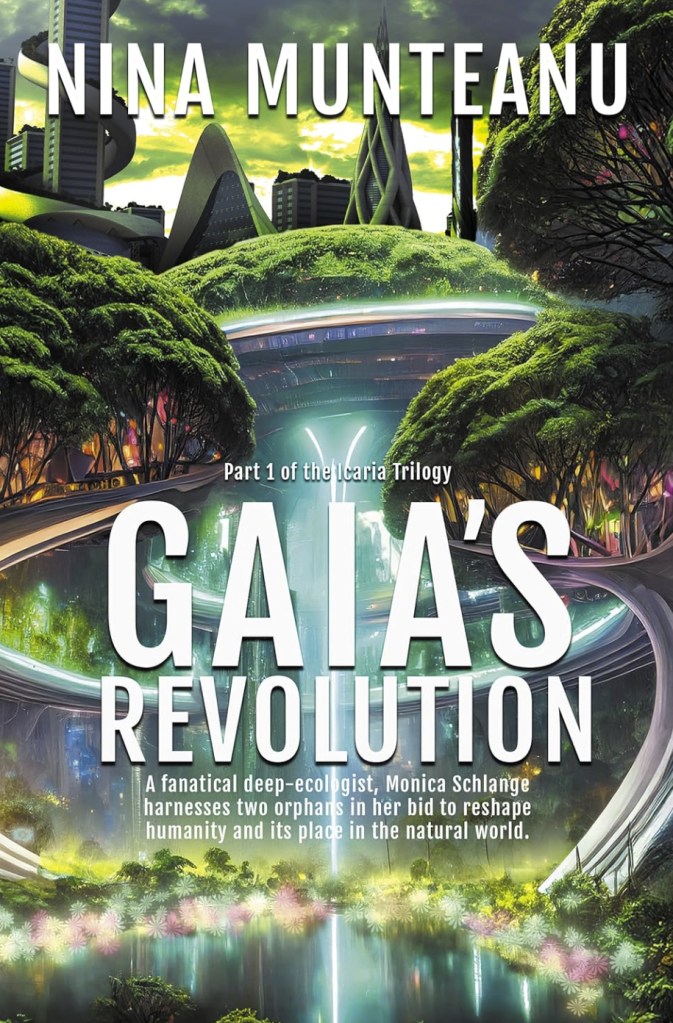
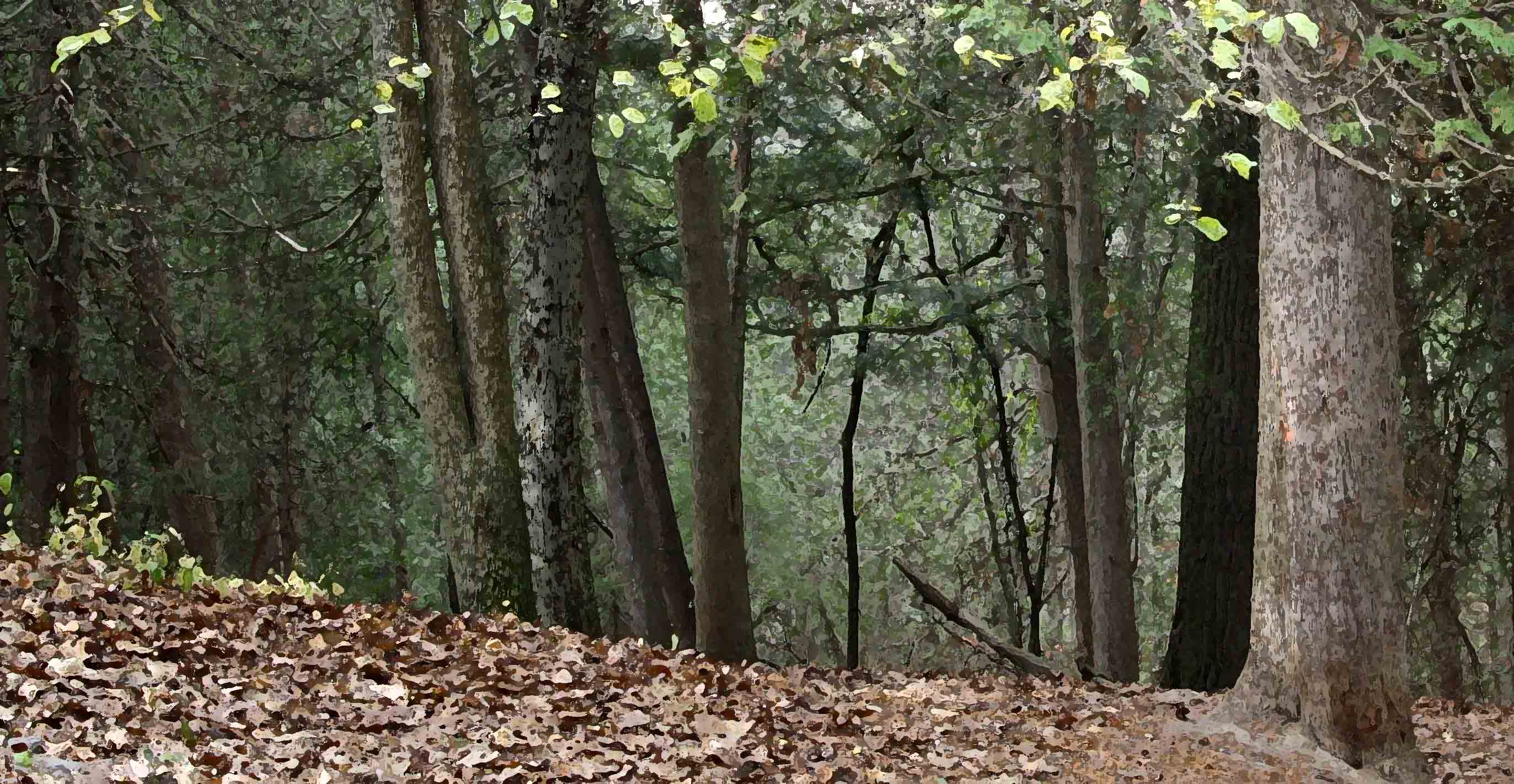
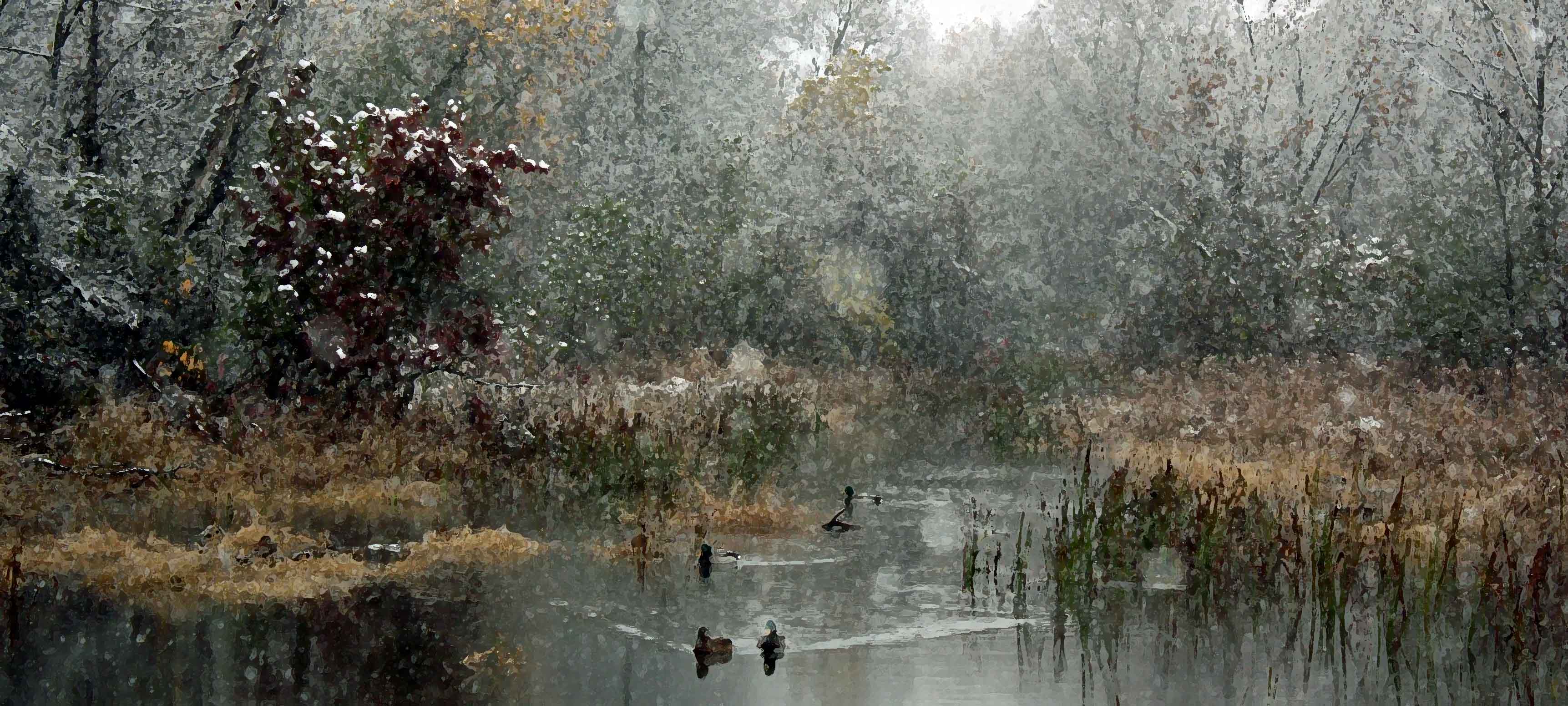
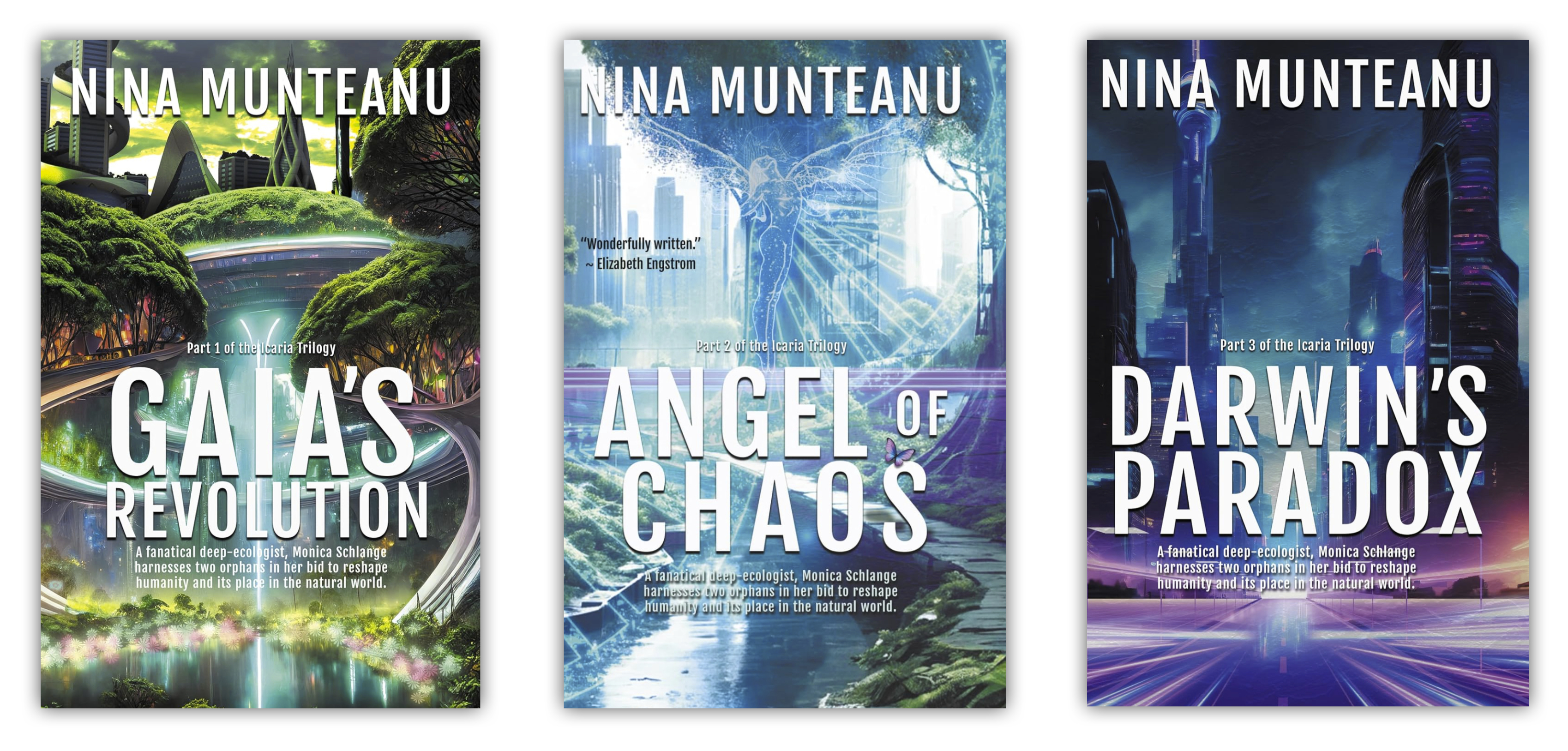
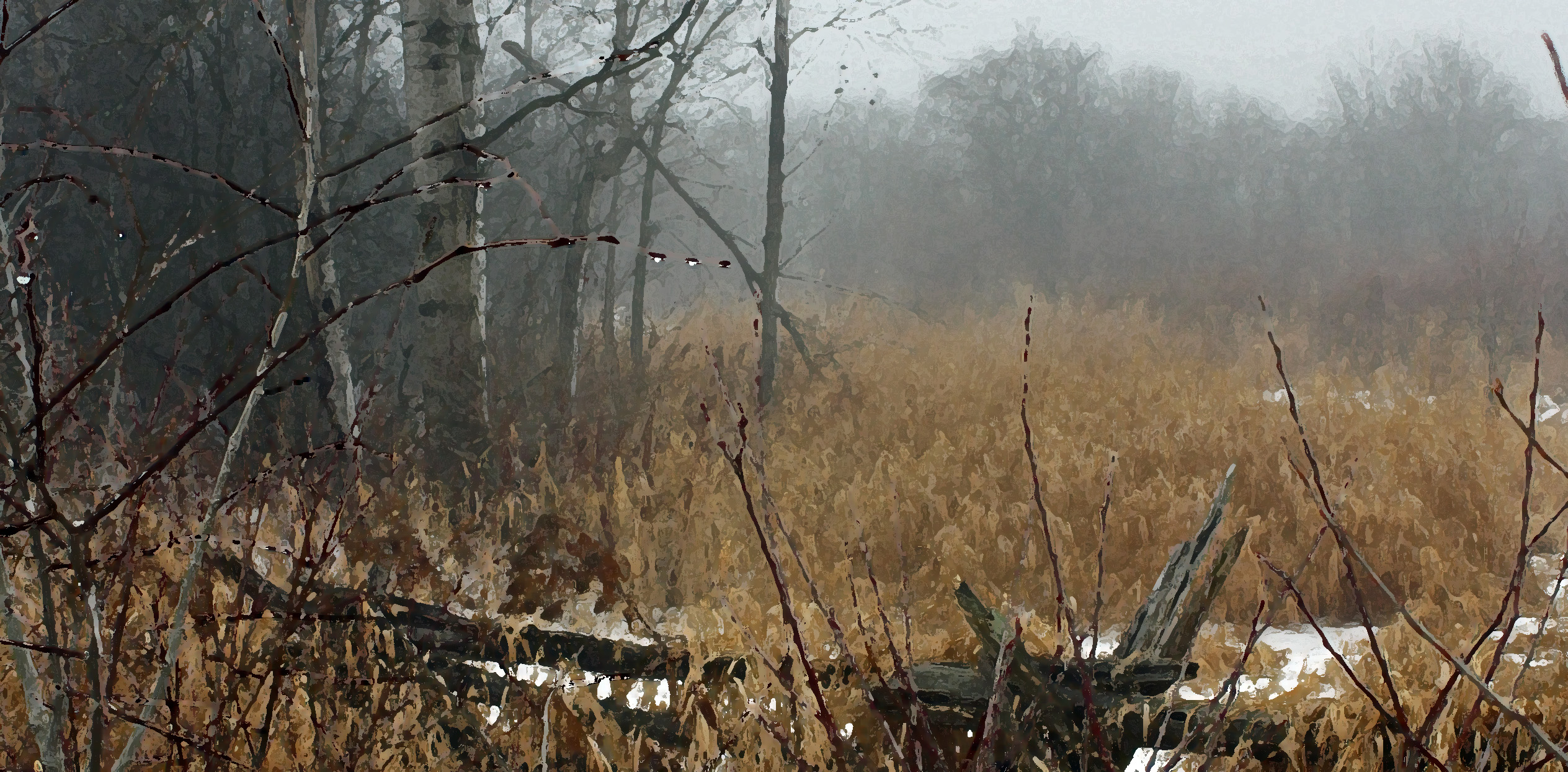
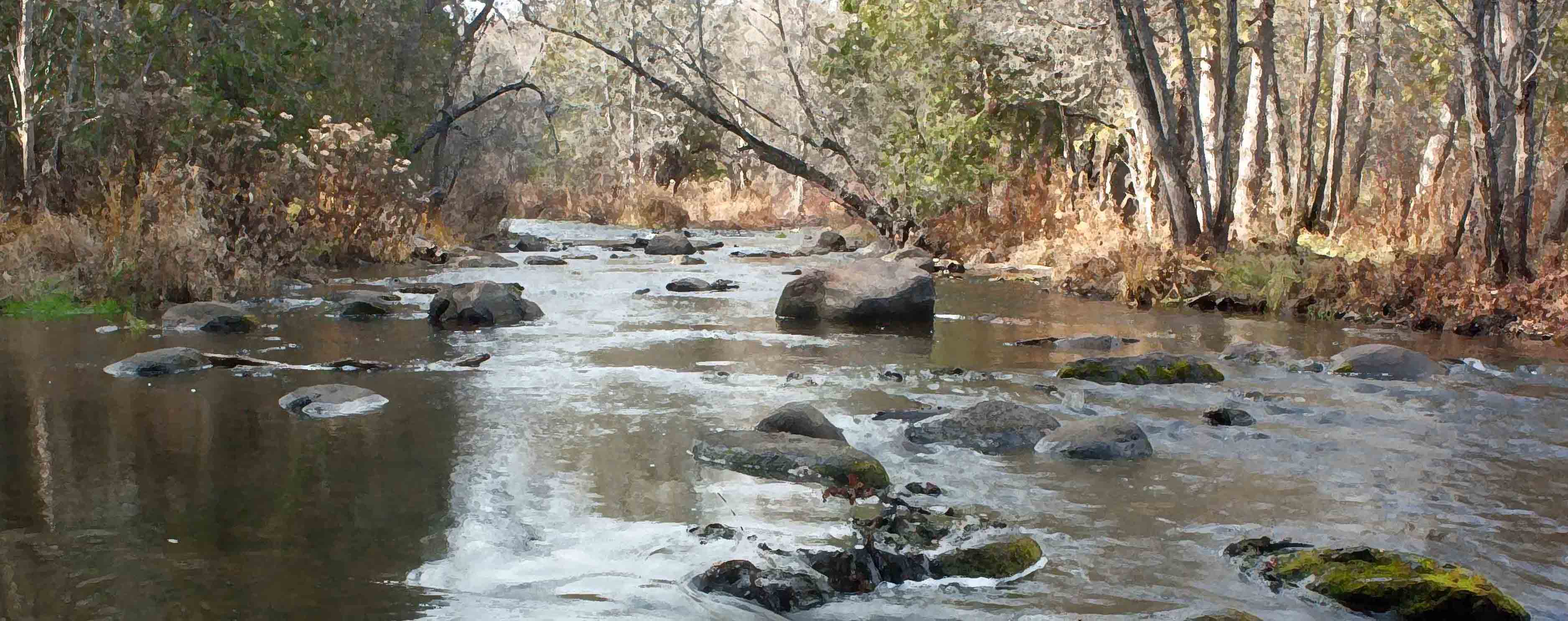
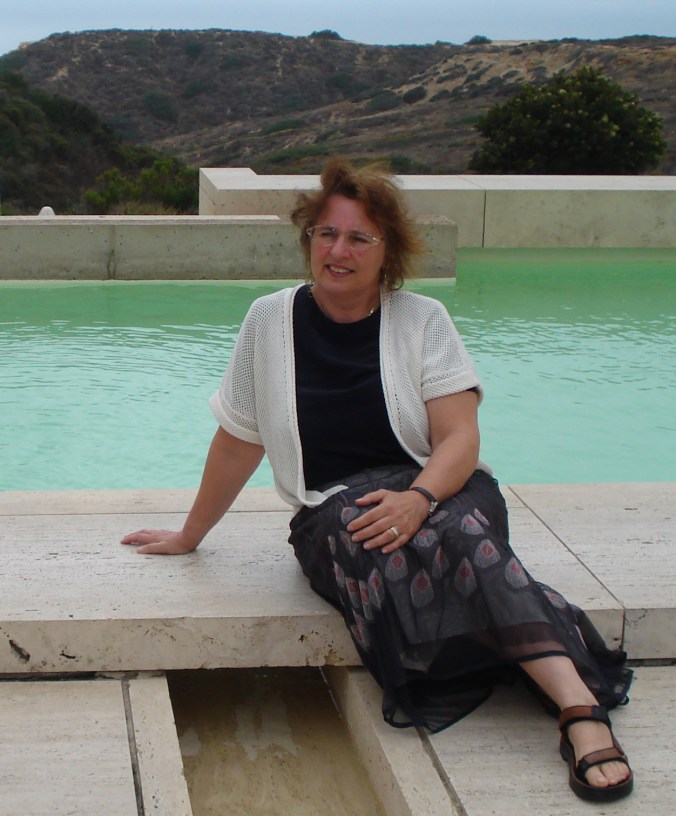
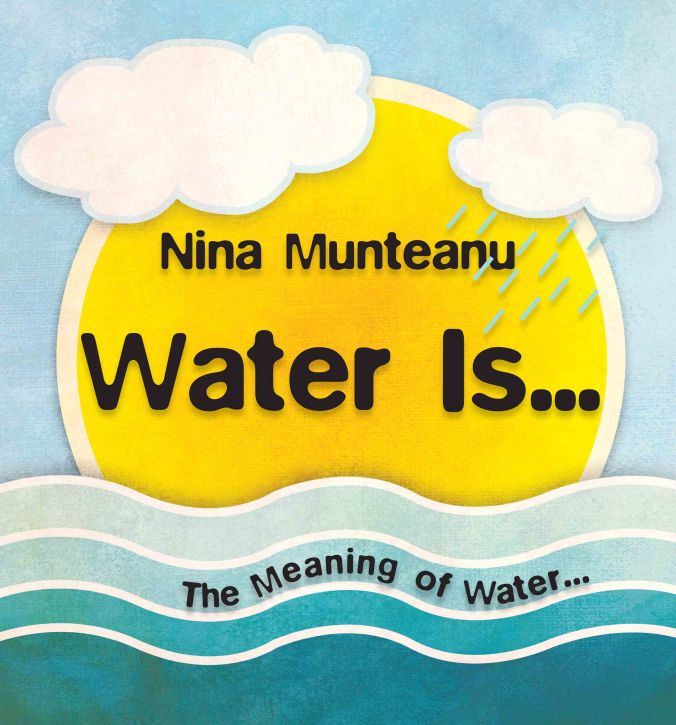
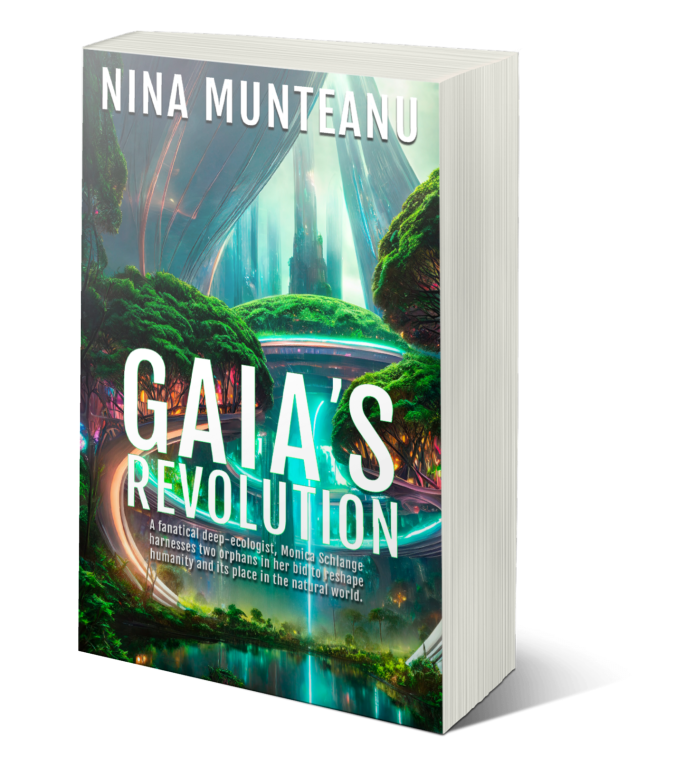
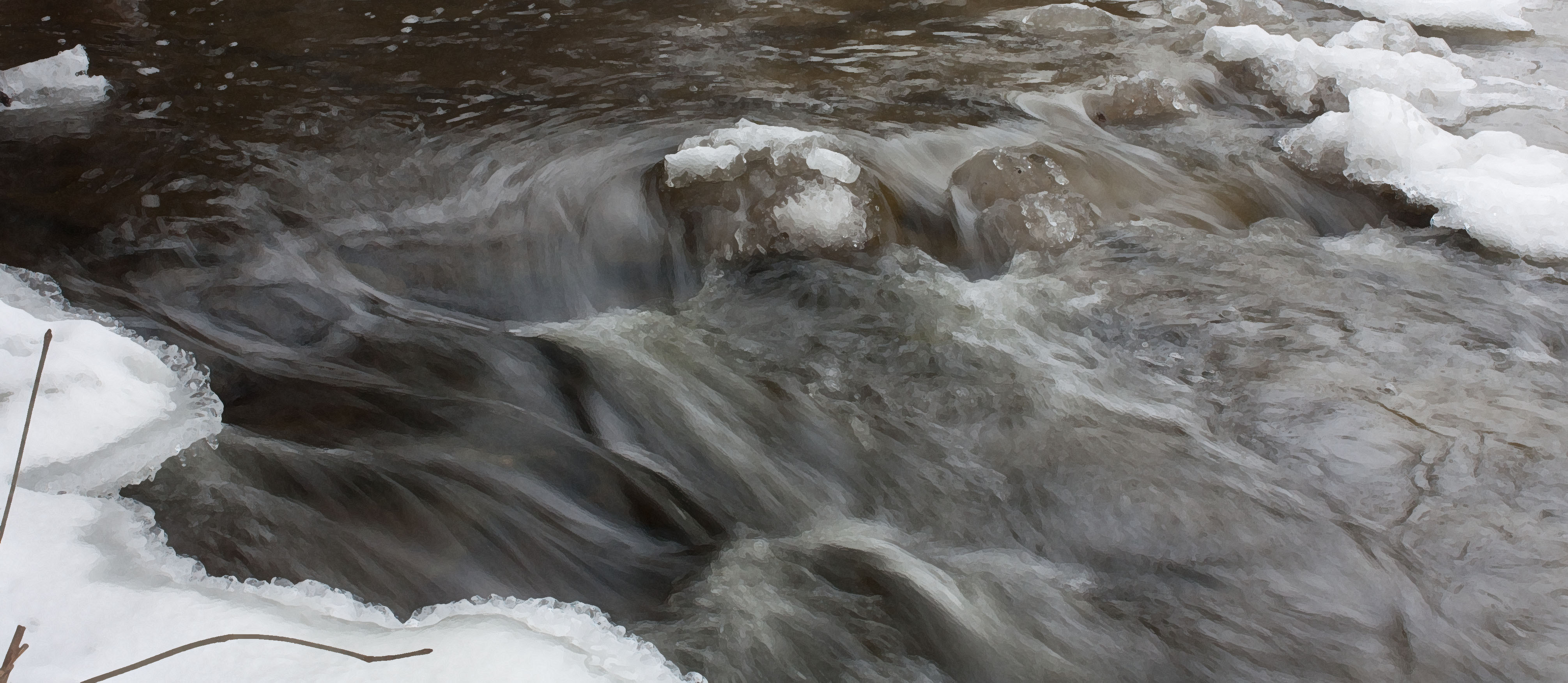

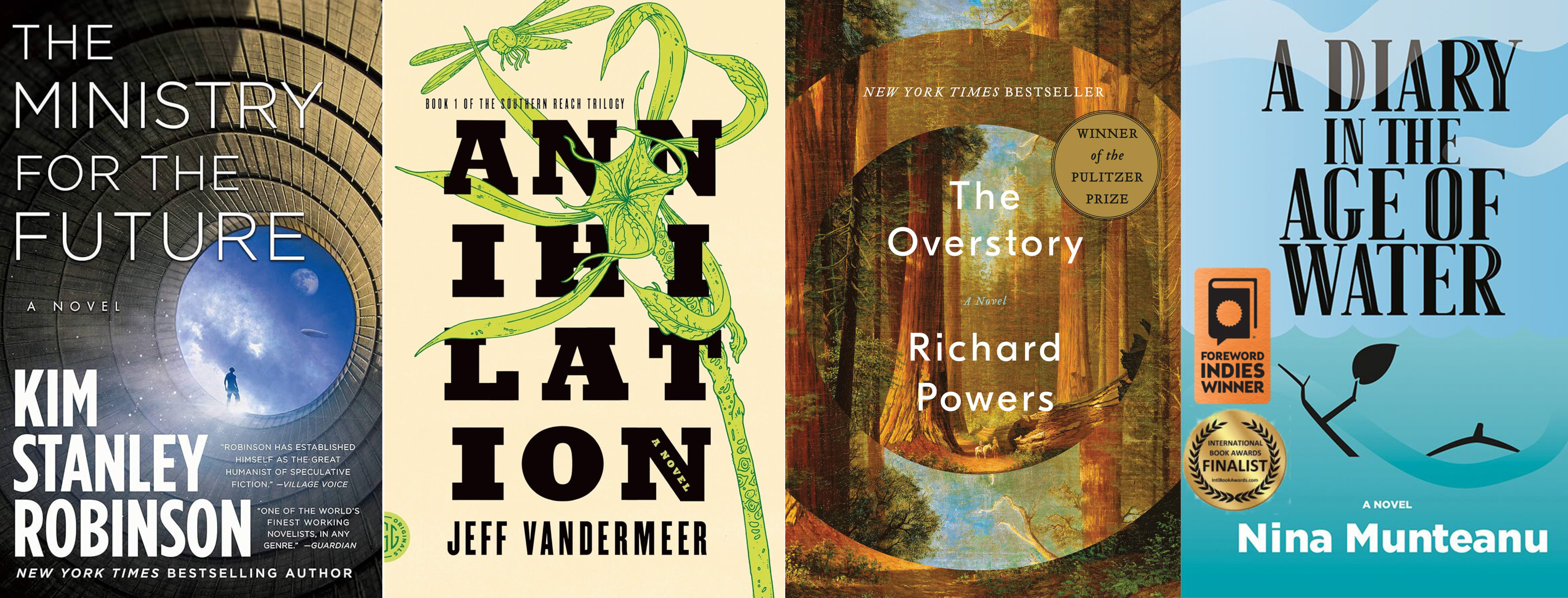



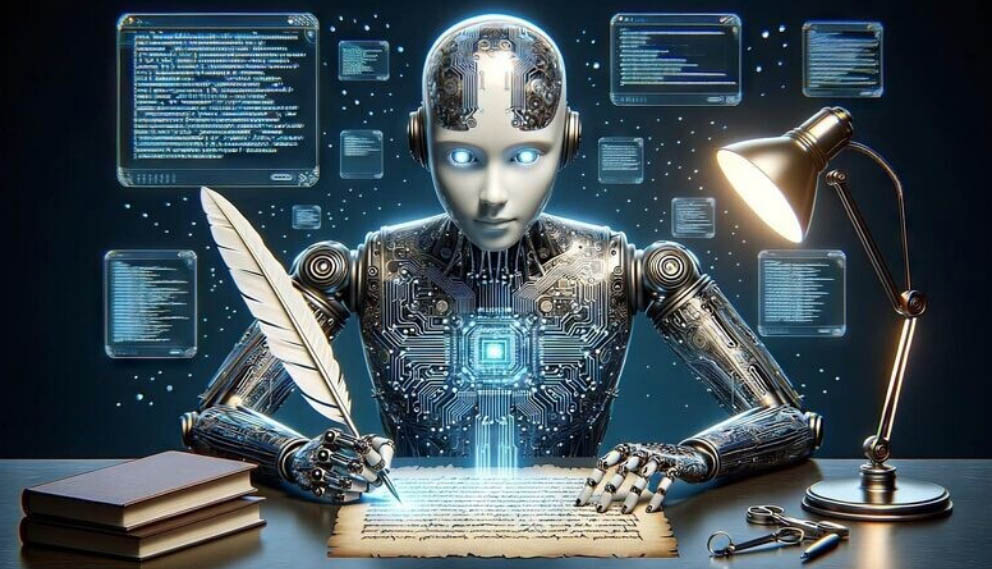


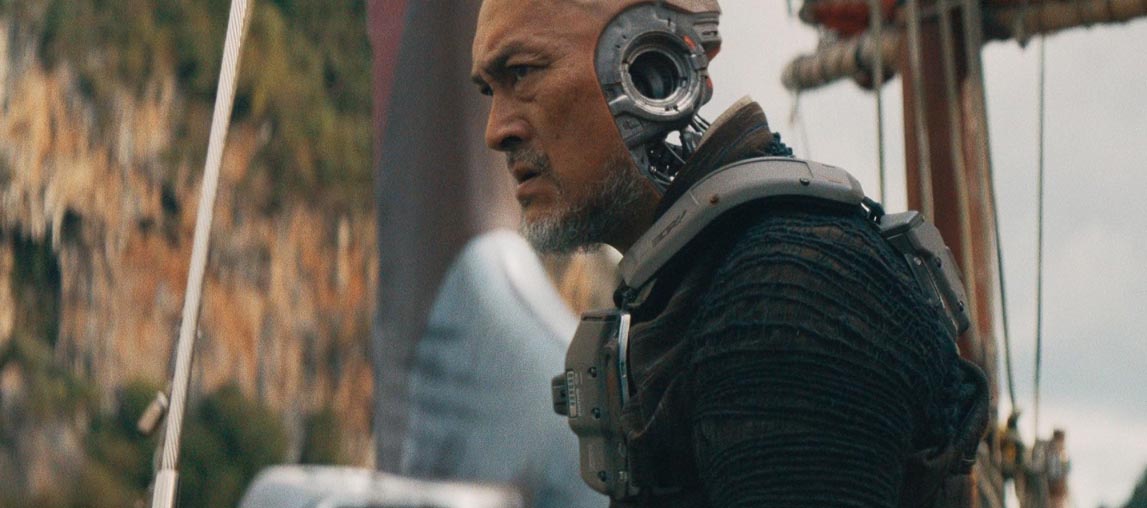


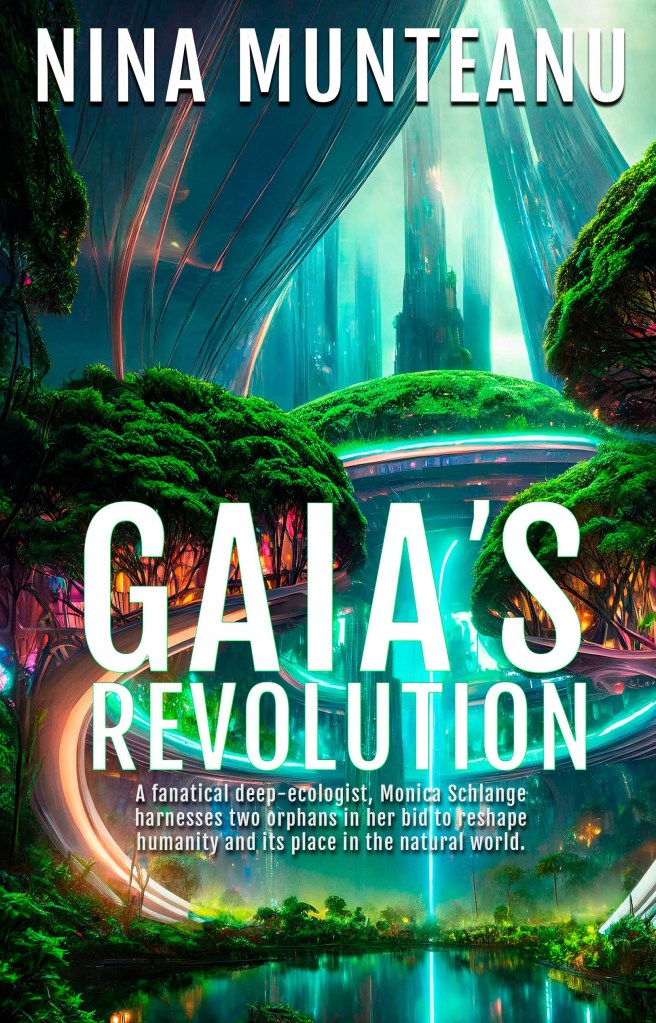
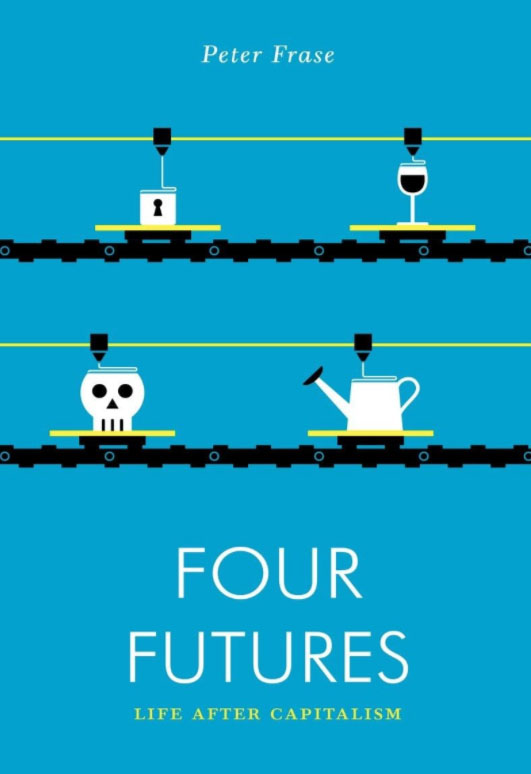
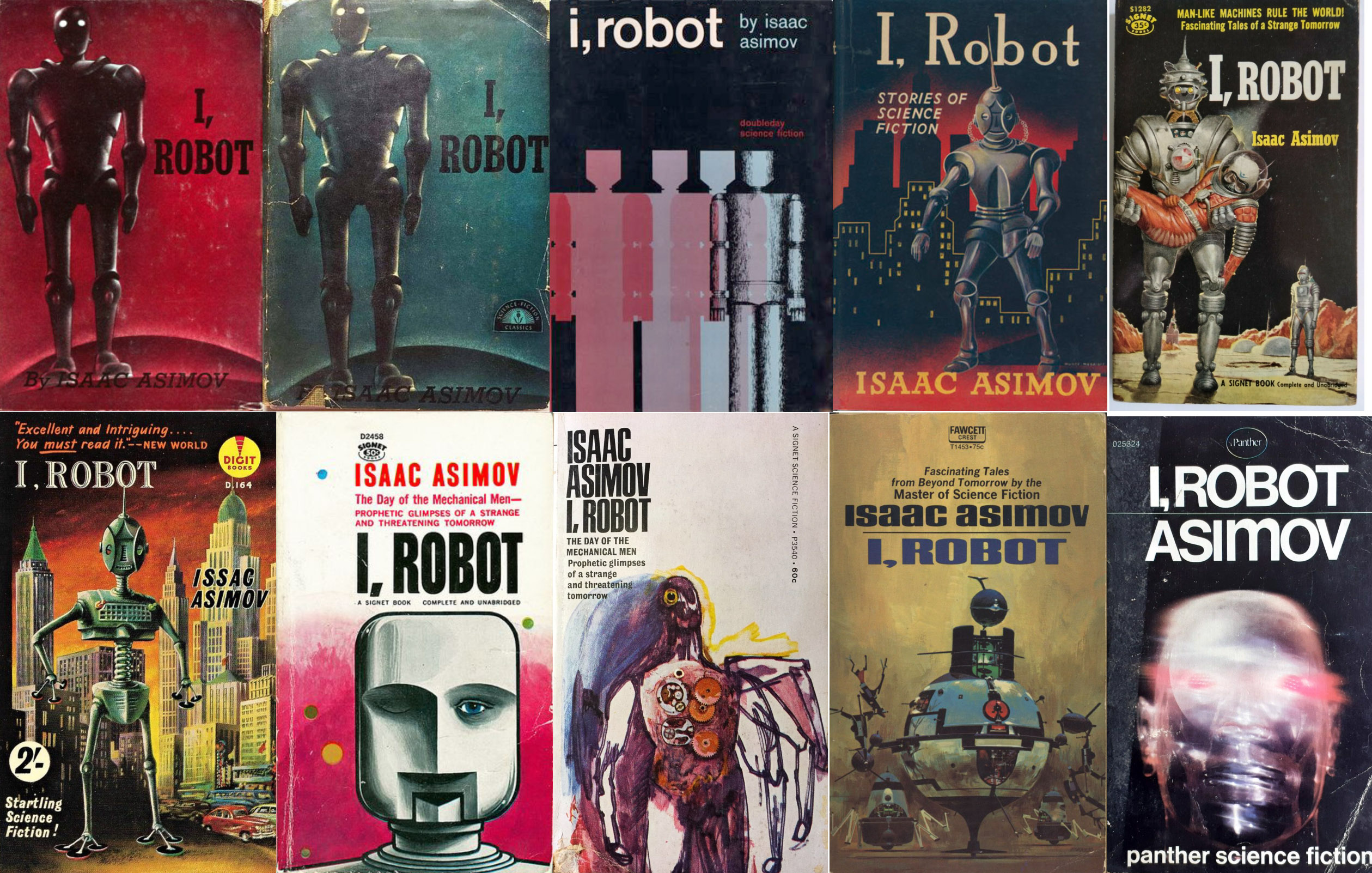


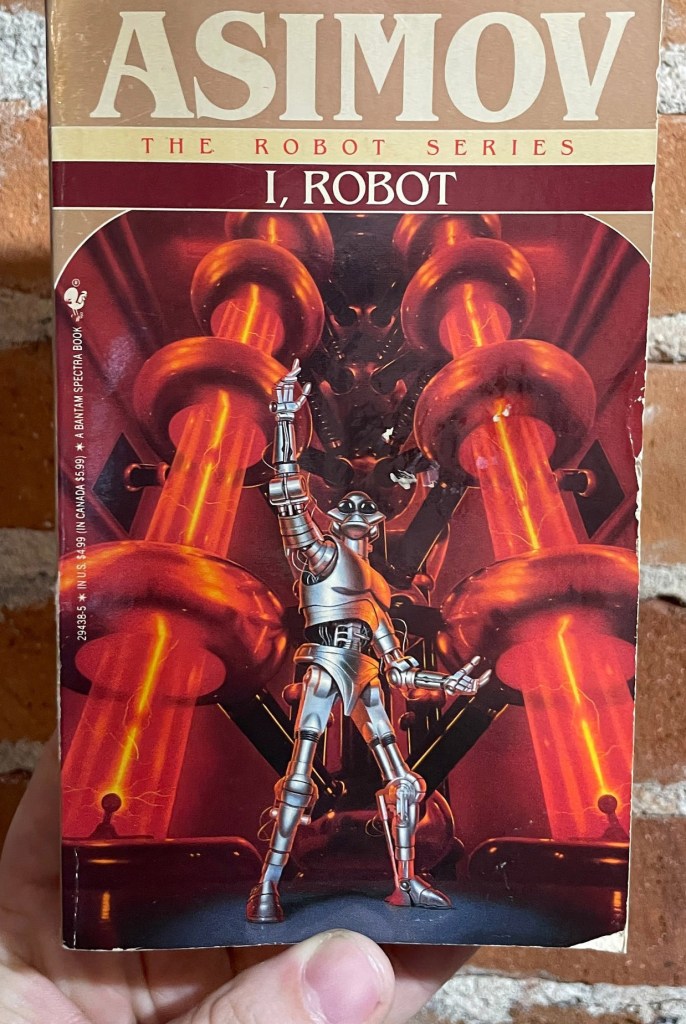
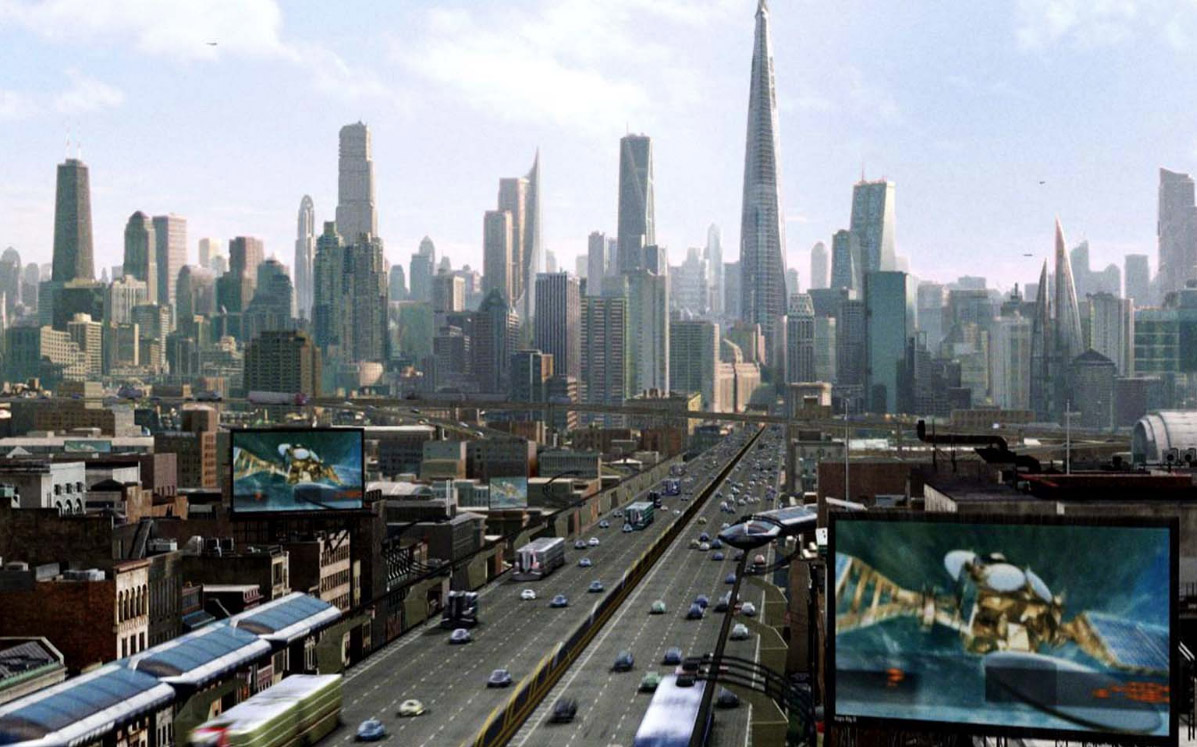


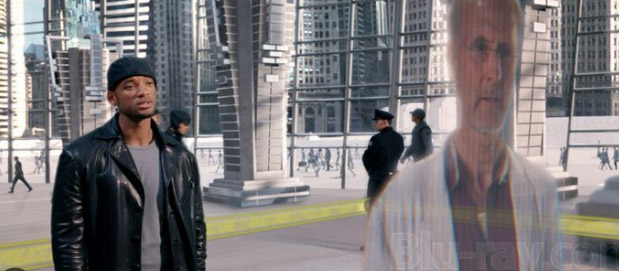

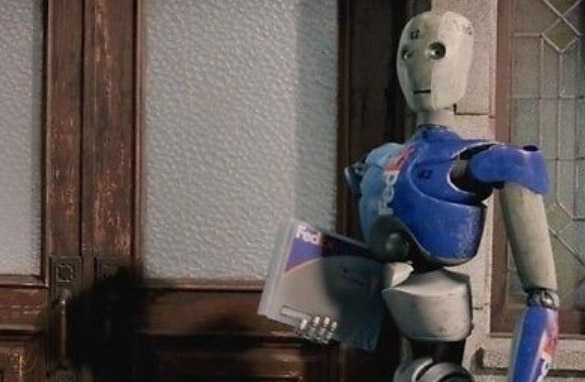

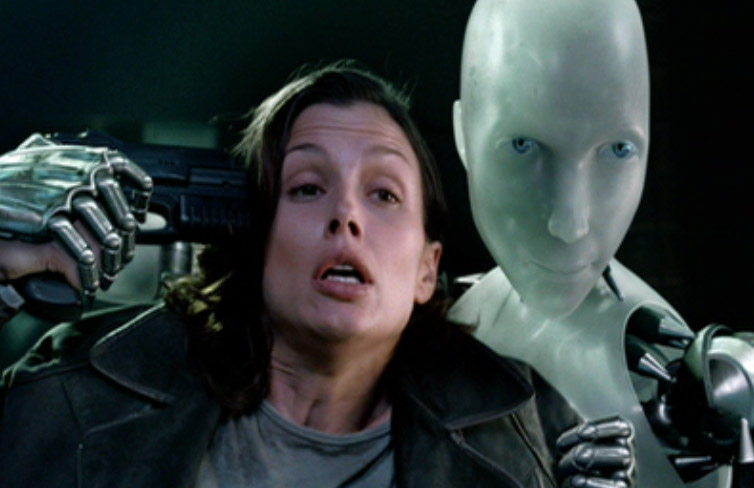

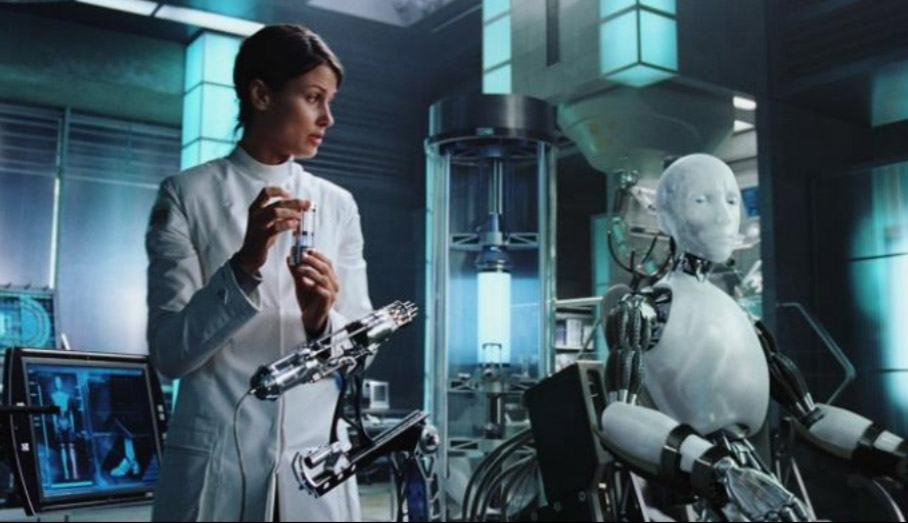





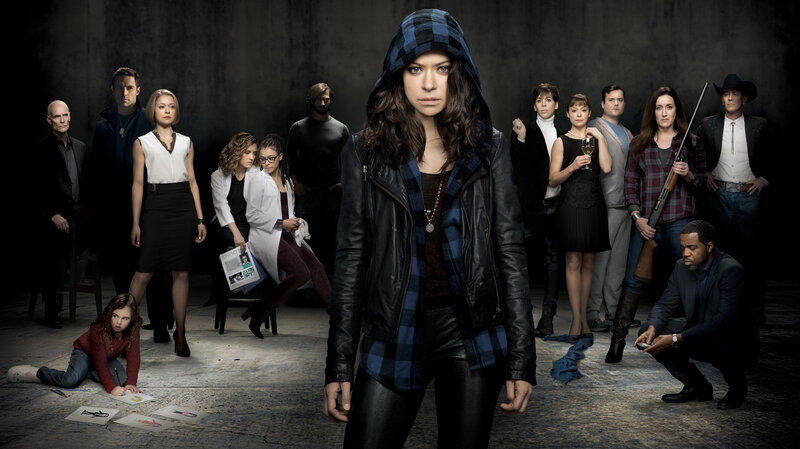

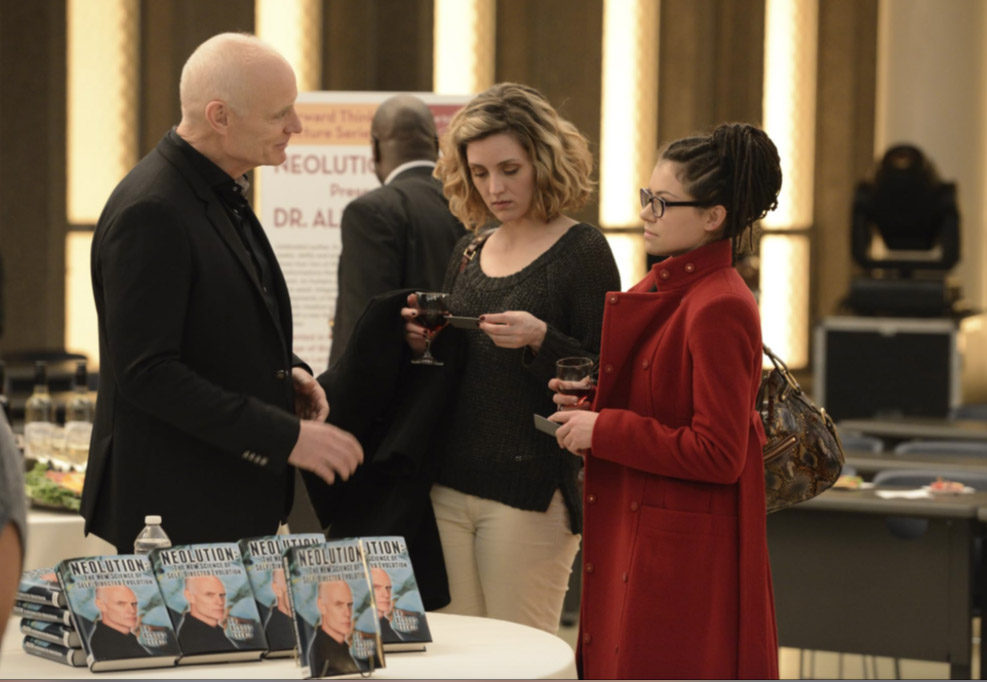


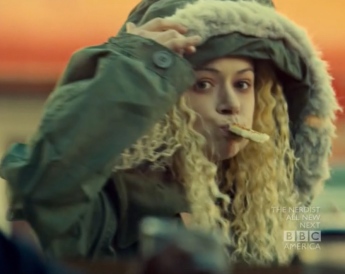
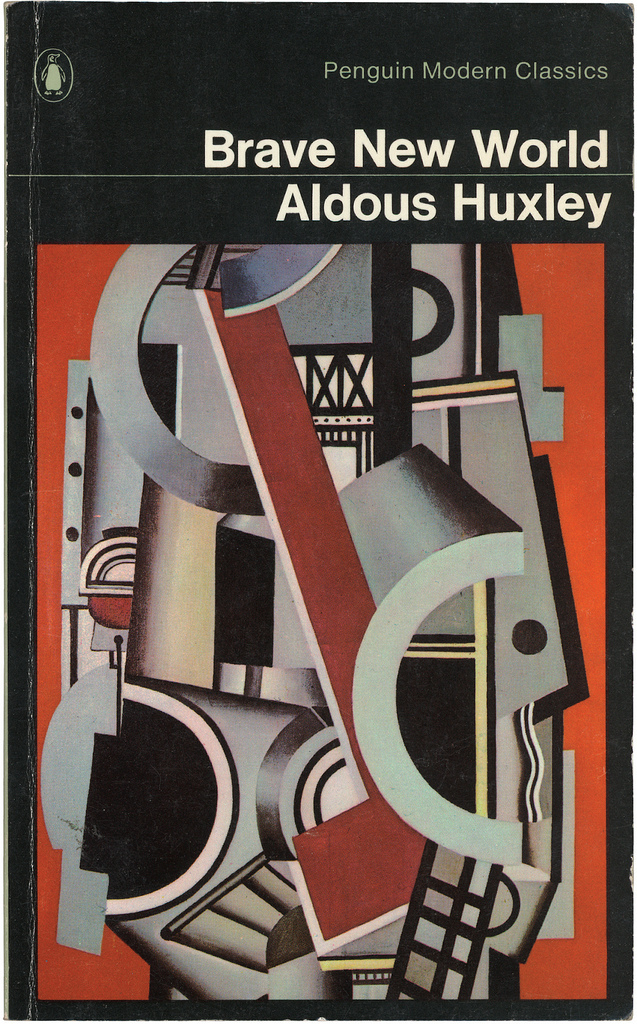




 Nina Munteanu Writing Coach