Returning Home…

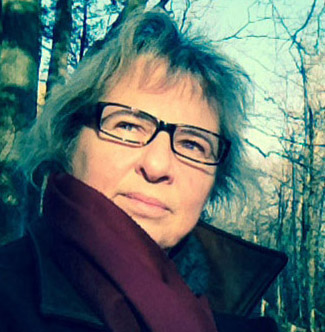
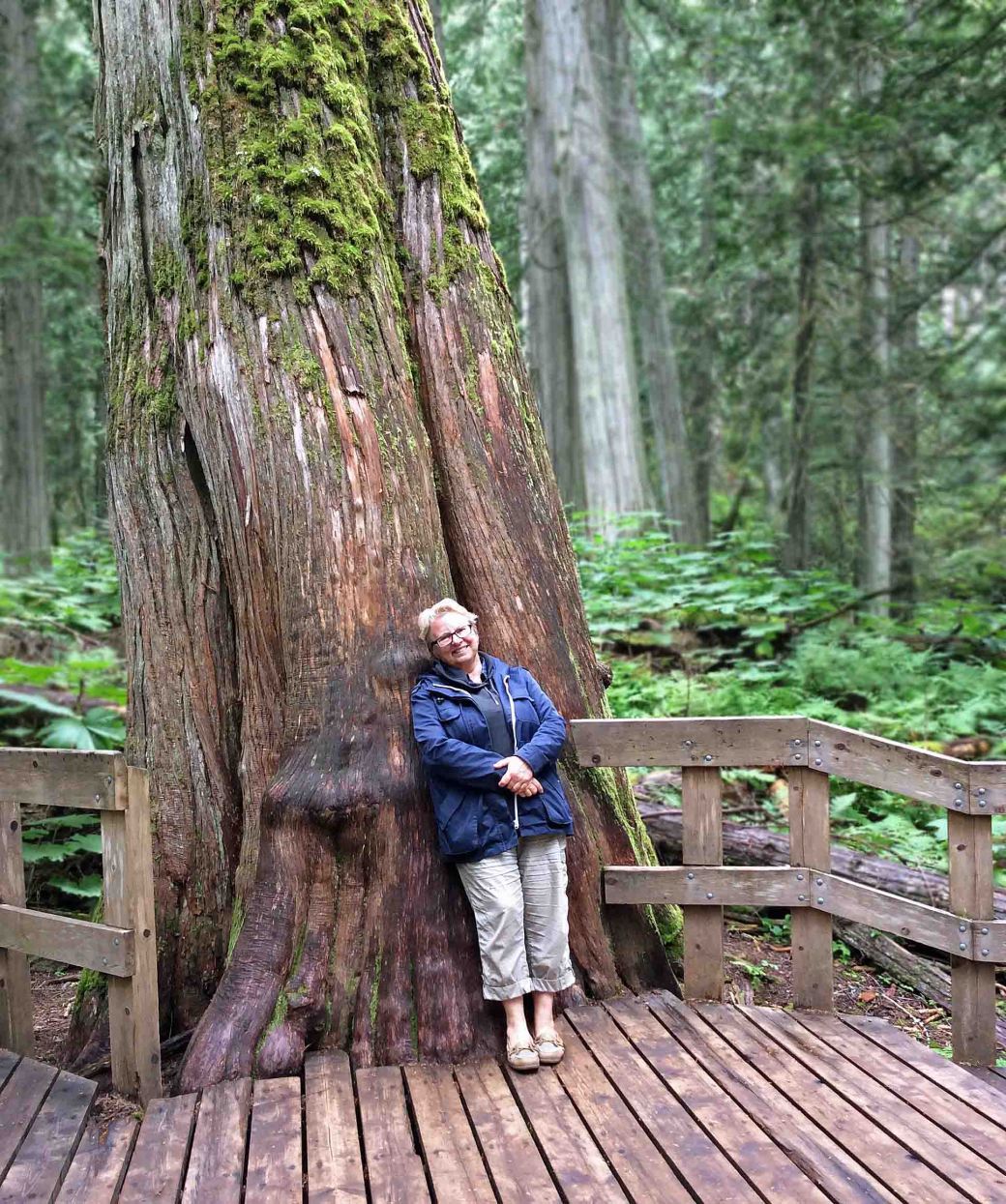
Nina stands next to a giant redcedar, BC (photo by Anne Voute)

It’s been a few months since I moved back to British Columbia from Ontario.
I don’t have a place to live yet (currently crashing at a friend’s place, thanks to her kindness), but it feels right. And, more importantly, it feels like home.

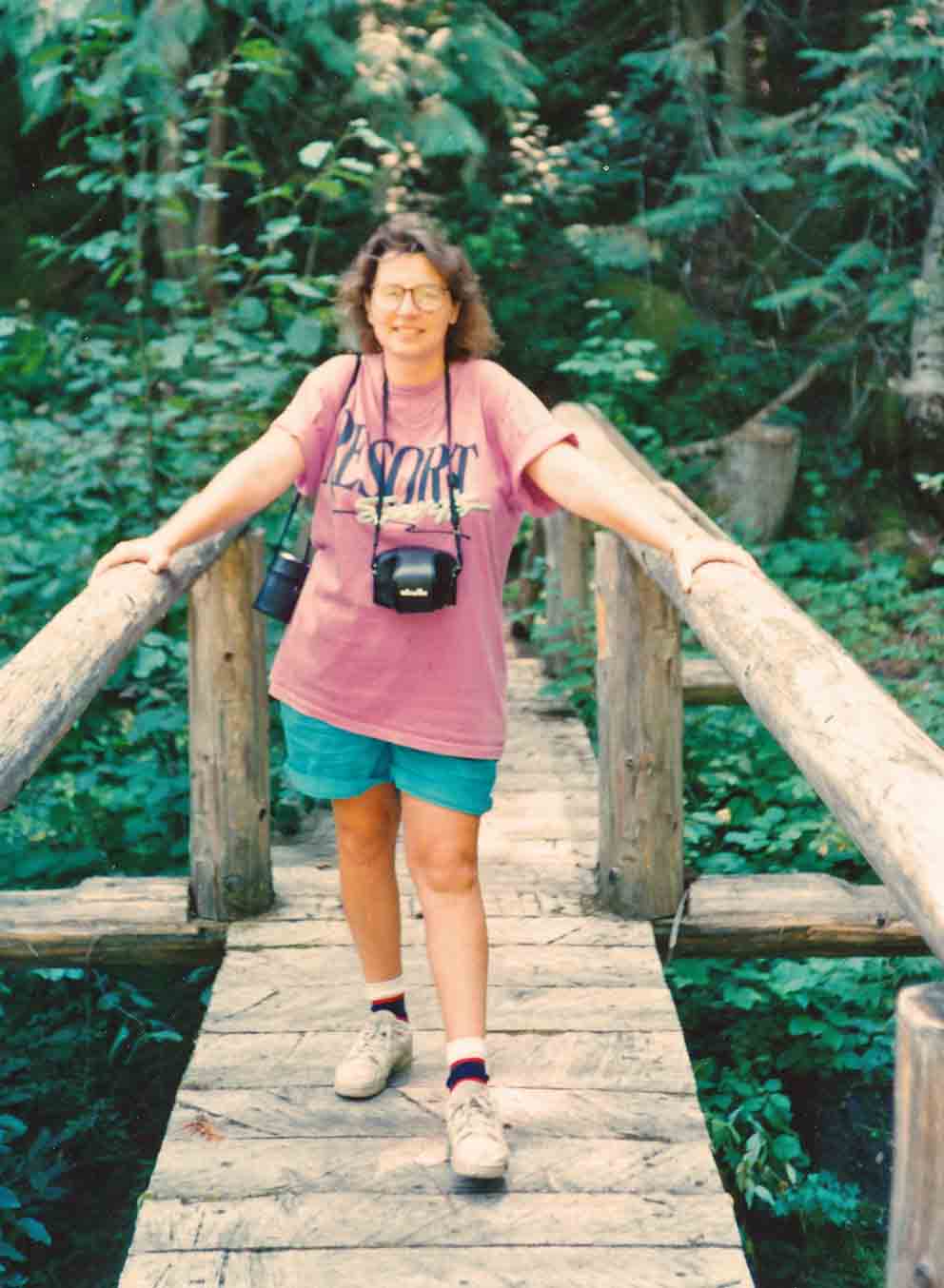
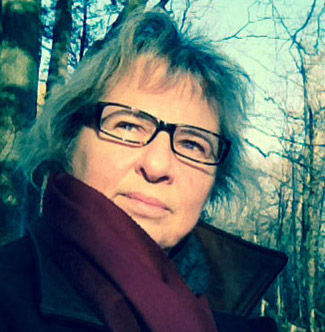
Nina, early days in BC (photo H. Klassen)

I first came to BC over five decades ago, shortly after I graduated from Concordia University in Montreal. I started my first teaching job at the University of Victoria on Vancouver Island, first worked as an environmental consultant in Richmond, met my husband-to-be in Vancouver, wrote and published my first novel in Delta and raised my son in the village of Ladner, overlooking the Fraser River Estuary. I have deep nurturing roots here with family and friends. And wonderful memories.

Various winter scenes in Ontario (photos by Nina Munteanu)
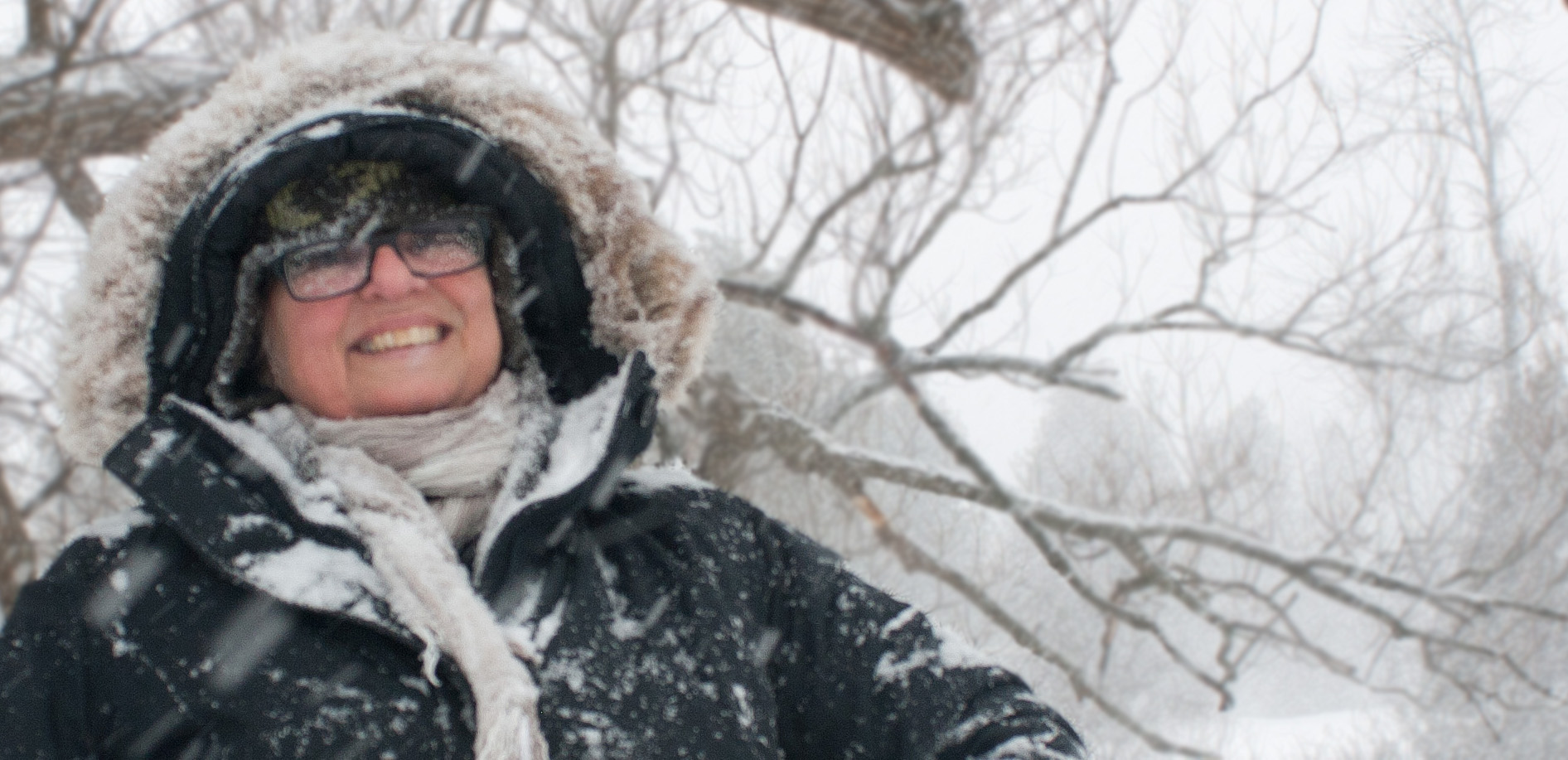
Nina ‘snowbear’ enjoys a winter storm, ON (photo by M. Cox)
Hayes Line Road in the colours of autumn, ON (photo by NIna Munteanu)

As the seasons progress, I find that I do miss aspects of Ontario. I left behind a rich environment that closely reflected where I’d grown up as a kid, in the Eastern Townships of Quebec: the cold crisp snowy winters and colourful windy autumns of maple-beech forests. These feel like home too. I spent many days driving the country roads of the Kawarthas without a map, looking for adventure and a cup of good coffee at the end of it. In winter, I daily walked through knee-deep snow in magical forests, snow glinting under the moonlight. I frequented several favourite forests over the seasons, some old-growth like the Catchacoma old-growth hemlock forest, the Mark S. Burnham Maple-Beech-Hemlock-Cedar forest, the pine-cedar mixed forest of Jackson Creek, the Trent Nature Sanctuary cedar-pine mixed forest and the South Drumlin Maple-Beech forest. These, I will miss. They were a life-line to a sacred and holy part of my existence.

Nina studies a lilac bush, ON (photo by Nina Munteanu)

I am building new memories of this new-old home, with more mature eyes and mind. When I left BC 15 years ago after my divorce, and son studying at university, to seek adventure across Canada (I spent several years on the east coast in Nova Scotia), I finally settled in Ontario, where I found fulfillment teaching at the University of Toronto. It was there, in Ontario, where I honed my ecological knowledge and rekindled my love for lichen and fungi. I immersed myself in their study and rediscovered a fascinating miniature world. I studied trees with more diligence, identifying virtually all the key species in the Carolinian forests I visited—and the fungi and lichens that grew on them and around them. I’ve become something of an expert in lichenology, able to identify many of the species I encounter, and also to understand their complex and fascinating ecology.

Various lichens, from top left: Punctellia reducta, Xanthoria elegans, Rizocarpon geographicum, Cladonia uncialis, and Cladonia pyxidata (photos by Nina Munteanu)

I now bring that new knowledge and appreciation back to coastal BC—my old and new home— with an excitement for more adventure in its magnificent rainforests, its small rural communities and coastal villages—and the cup of coffee at the end of it.

Port Renfrew, BC (photo by Nina Munteanu)

Nina checks her camera, Highland Creek, ON (photo by M. Cox)

p.s. When you know what to look for, you will see it; not before. That’s likely a tautology; but I found that it has applied to me over the years. And nowhere has it been more obvious to me than in my travels across Canada. My first trip across Canada was five decades ago, as a young sprite, heading west to do my PhD. I went by train and, though I saw much beauty, it passed me at speed. When I drove east to the coast, I recall lots and lots of trees, little else. But, my recent trip west from Ontario was landmarked with a new knowledge and appreciation for so many more layers of my environment; it became eye-opening. What I’d only remembered in the past as “so many trees”, became a fractal journey through boreal layers. I saw so much! I discovered so many ‘friends’: lichens, trees, rock formations, environments that I’d identified in my previous adventures. I became excited by it all. I was in a constant state of wonder. This was how I needed to see Canada. With a wide-open mind and the spirit of adventure.

I look forward to re-immersing myself in these coastal BC ecosystems with that same new understanding, and better informed eyes and mind.

Let it be.

Heron oversees activities in Ladner Marsh, BC (photo by NIna Munteanu)
Nina walks Highland Creek, ON (photos by M. Cox)

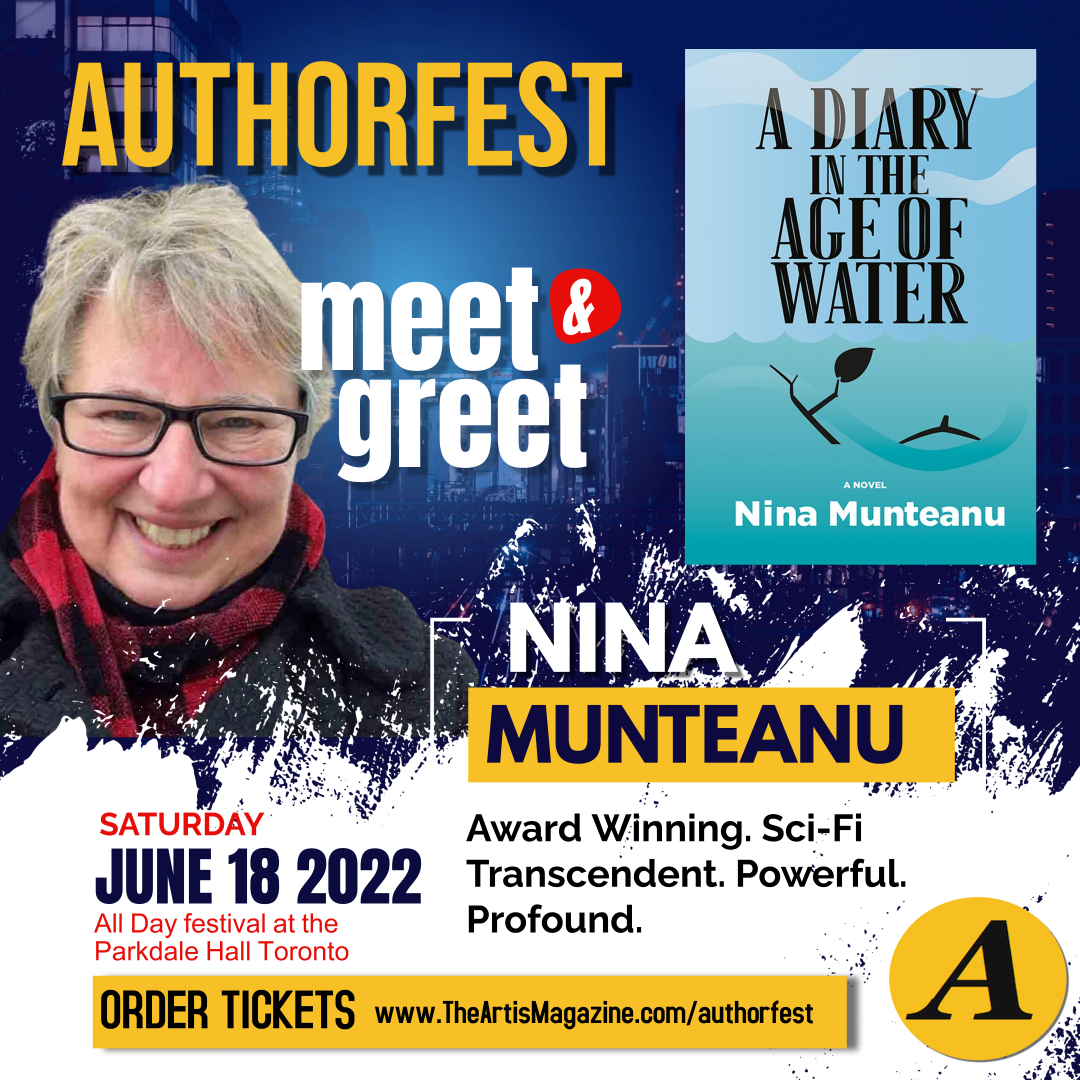
Nina Munteanu is a Canadian ecologist / limnologist and novelist. She is co-editor of Europa SF and currently teaches writing courses at George Brown College and the University of Toronto. Visit  www.ninamunteanu.ca for the latest on her books. Nina’s bilingual “La natura dell’acqua / The Way of Water” was published by Mincione Edizioni in Rome. Her non-fiction book “Water Is…” by Pixl Press(Vancouver) was selected by Margaret Atwood in the New York Times ‘Year in Reading’ and was chosen as the 2017 Summer Read by Water Canada. Her latest novel “A Diary in the Age of Water” was released by Inanna Publications (Toronto) in June 2020.

Authors Read from “Through the Portal: Tales from a Hopeful Dystopia”

I recently participated in author readings from the eco-fiction anthology “Through the Portal: Tales from a Hopeful Dystopia.” Co-editor Lynn Hutchinson Lee and I opened the session with some introductory remarks, followed by readings by four of the anthology writers: Annaliese Schultz, Jade Wallace, Isabella Mori, and Matt Freeman.

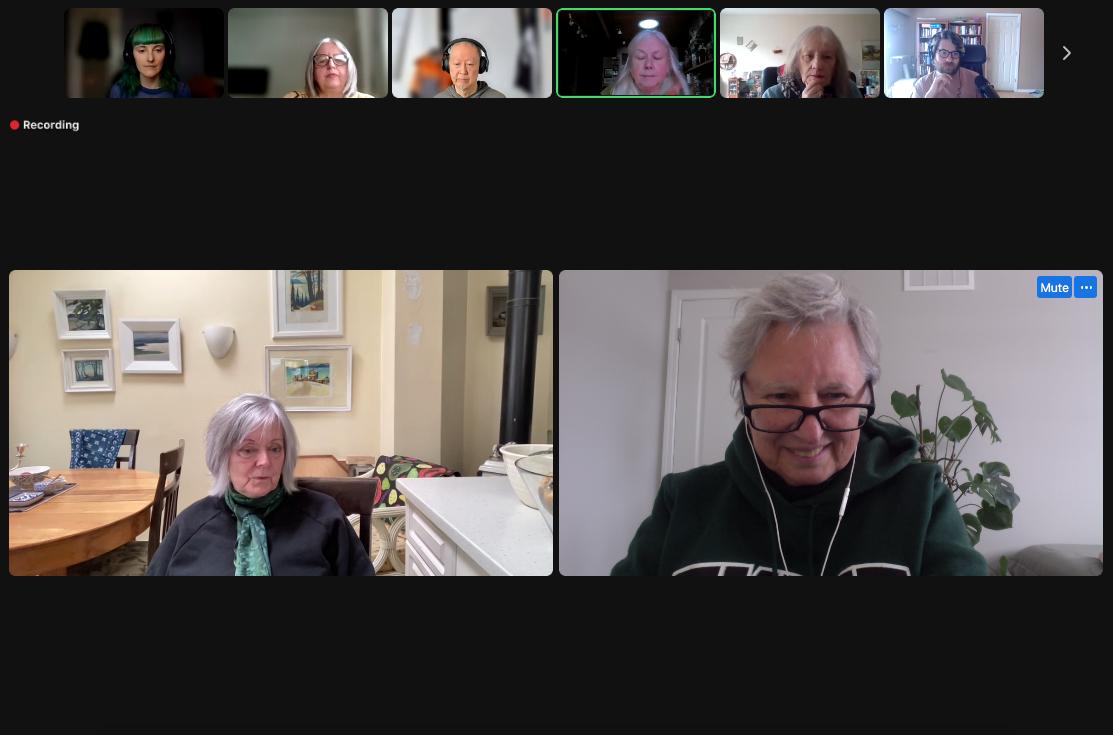
Co-editors Lynn Hutchinson Lee and Nina Munteanu introduce the anthology at the reading; authors and moderator pictured above

The readings generated a lot of discussion about the nature and role of eco-fiction and stories in general on how we view the world and how that, in turn, influences the choices we make in life. Below, I include a short story excerpt and audience reaction for each author who read.

Annaliese Schultz read from her story Water & Oil. “Bursting from months, maybe years, of inertia born of dismay (engendered by the unending disasters of the world), Zip is instantly galvanized and greater than himself and gone.” One audience member shared that her story “sounded horrifyingly too possible.”

Jade Wallace read from her story Pluck. “It was only after I started working at the florist a few months ago that I began to think of plants as things that move. I learned that algae may swim towards the light; sundew can catch insects in their stalks; the leaves of touch-me-nots will slouch when they feel rain.”  A member of the audience shared that “with what we now know about the way trees/plants communicate with each other, it was a neat story of crossing over to try to tell humans something.”

Jade Wallace reads from her story “Pluck”

Isabella Mori read from her story Shift. “Red Nelly, that’s what they called my grandmother; always looked a little dishevelled. So did her living room. Four book shelves were squeezed into the small room, sagging with dark tomes, oversized coffee-table books, Greenpeace brochures, and video cassettes that even her questionable looking TV couldn’t play anymore.” Someone in the audience mentioned that the author had woven a very human story. “Stories are sometimes better teachers than all other forms available to us. I felt moments of warmness and reflection.” Another audience member added, “The wisdom of animals and plants—there’s hope for the planet. I’m ordering this book from my local independent as soon as I close his meeting!”

Matt Freeman read from his story Birdseed: “Near the end I began to devote the bulk of my time to what I believed to be a gregarious individual of the species Corvus brachyrhynchos—the American Crow. By then a chemical scythe had begun to carve up the clouds hanging over the lands of ‘Vancouver’ in a psychedelic frenzy, and the shocked blue skyline often bled in shades of lime.”  One audience member shared, “I loved he way ‘birdish’ words kept appearing: perch, cage. This may be Matt’s first published story, but I’m sure it won’t be the last.” Another audience member shared, “I loved the connection with the wisdom and personification of your crow.”

Nina Munteanu commenting on one of the readings

The readings generated a lot of discussion about the nature and role of eco-fiction and stories in general on how we view the world and how that, in turn, influences the choices we make in life.

Audience members shared that they found the readings inspiring. One member shared, “I find stories and poems have a more transcendent or at least deeper connection when read aloud. I wasn’t sure what to expect. So glad to be a part of this reading. The book sounds amazing.” Another member shared, “Keep hope alive!”

For more about how this anthology came about go to my previous post on Through the Portal.

Hopeful dystopias are so much more than an apparent oxymoron: they are in some fundamental way the spearhead of the future – and ironically often a celebration of human spirit by shining a light through the darkness of disaster. In Through the Portal: Tales from a Hopeful Dystopia, award-winning authors of speculative fiction Lynn Hutchinson Lee and Nina Munteanu present a collection that explores strange new terrains and startling social constructs, quiet morphing landscapes, dark and terrifying warnings, lush newly-told folk and fairy tales.–Exile Editions

  “A stunning collection of short stories and poetry that address our most existential concerns.”

Dragonfly.eco

“Will ingenuity, love, and respect for the earth help us work through whatever changes might lie ahead? Through the Portal offers hope that these qualities, if not enough in and of themselves, will help us find our way.”

The Seaboard Review
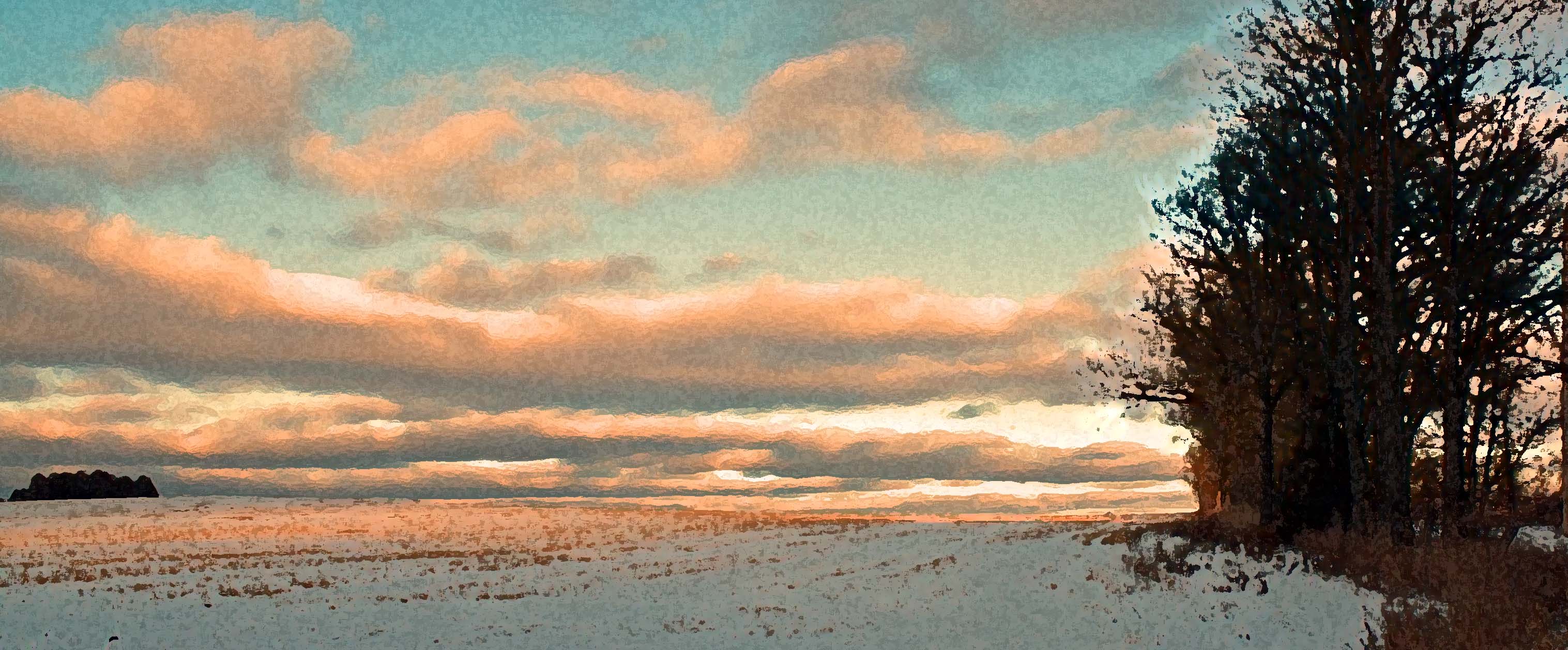
Farmer’s field at sunset, winter in Ontario (photo and rendition by Nina Munteanu)

Nina Munteanu is a Canadian ecologist / limnologist and novelist. She is co-editor of Europa SF and currently teaches writing courses at George Brown College and the University of Toronto. Visit www.ninamunteanu.ca for the latest on her books. Nina’s bilingual “La natura dell’acqua / The Way of Water” was published by Mincione Edizioni in Rome. Her non-fiction book “Water Is…” by Pixl Press (Vancouver) was selected by Margaret Atwood in the New York Times ‘Year in Reading’ and was chosen as the 2017 Summer Read by Water Canada. Her novel “A Diary in the Age of Water” was released by Inanna Publications (Toronto) in June 2020.

Nina Munteanu Workshops “Hero’s Journey” with Writers in Newmarket

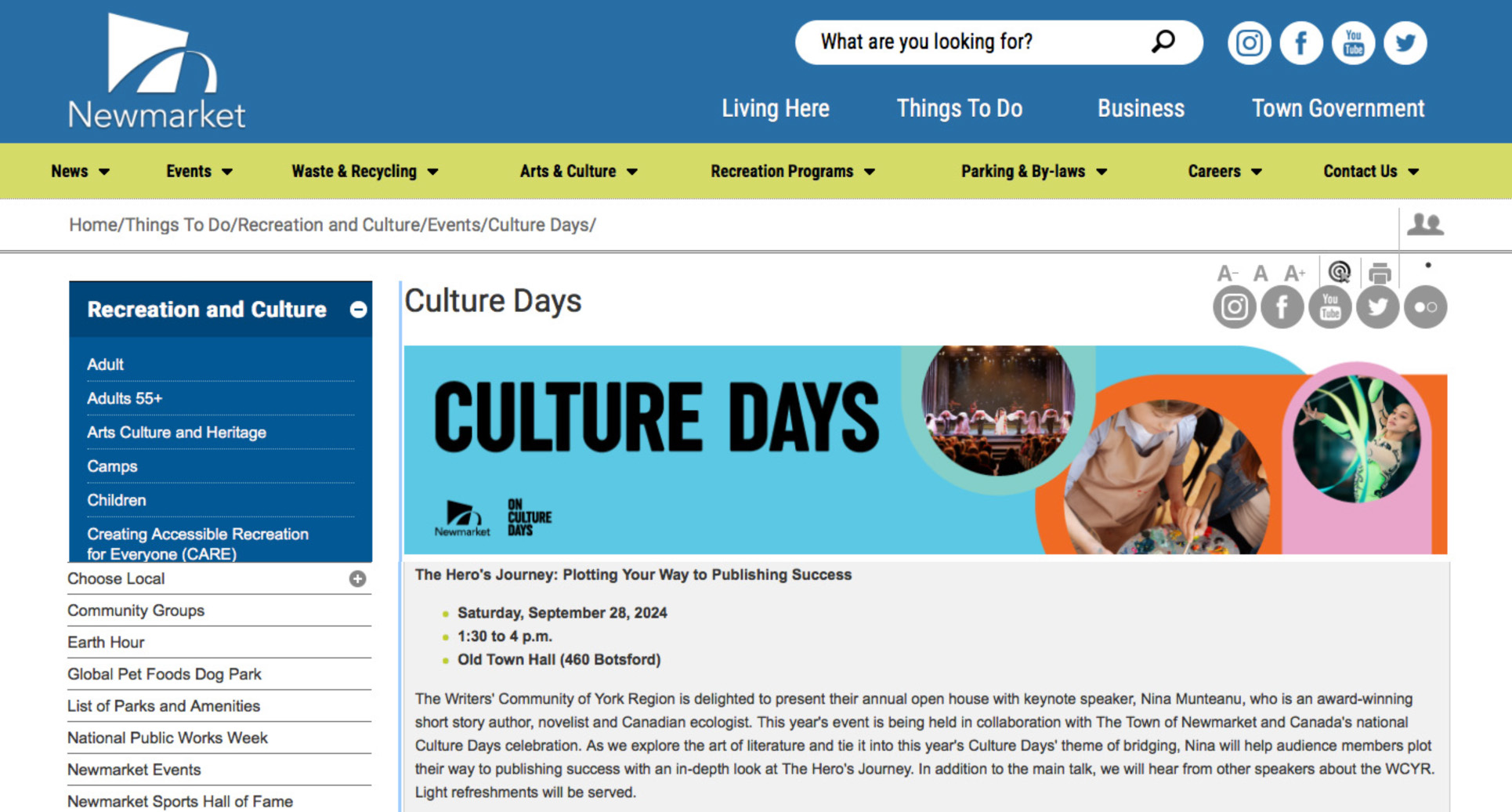
I recently gave my lecture / workshop on the Hero’s Journey plot approach to a group of writers for Culture Days in Newmarket, Ontario.

The event, organized by the WCYR (Writing Community of York Region), took place in the art gallery of the Old Town Hall, located in the old downtown part of the city—an attractive section of streets and lanes with eclectic shops, cafés, bistros and bookstores for curious amblers. 

Bustling Main Street near the Old Town Hall, Newmarket, ON

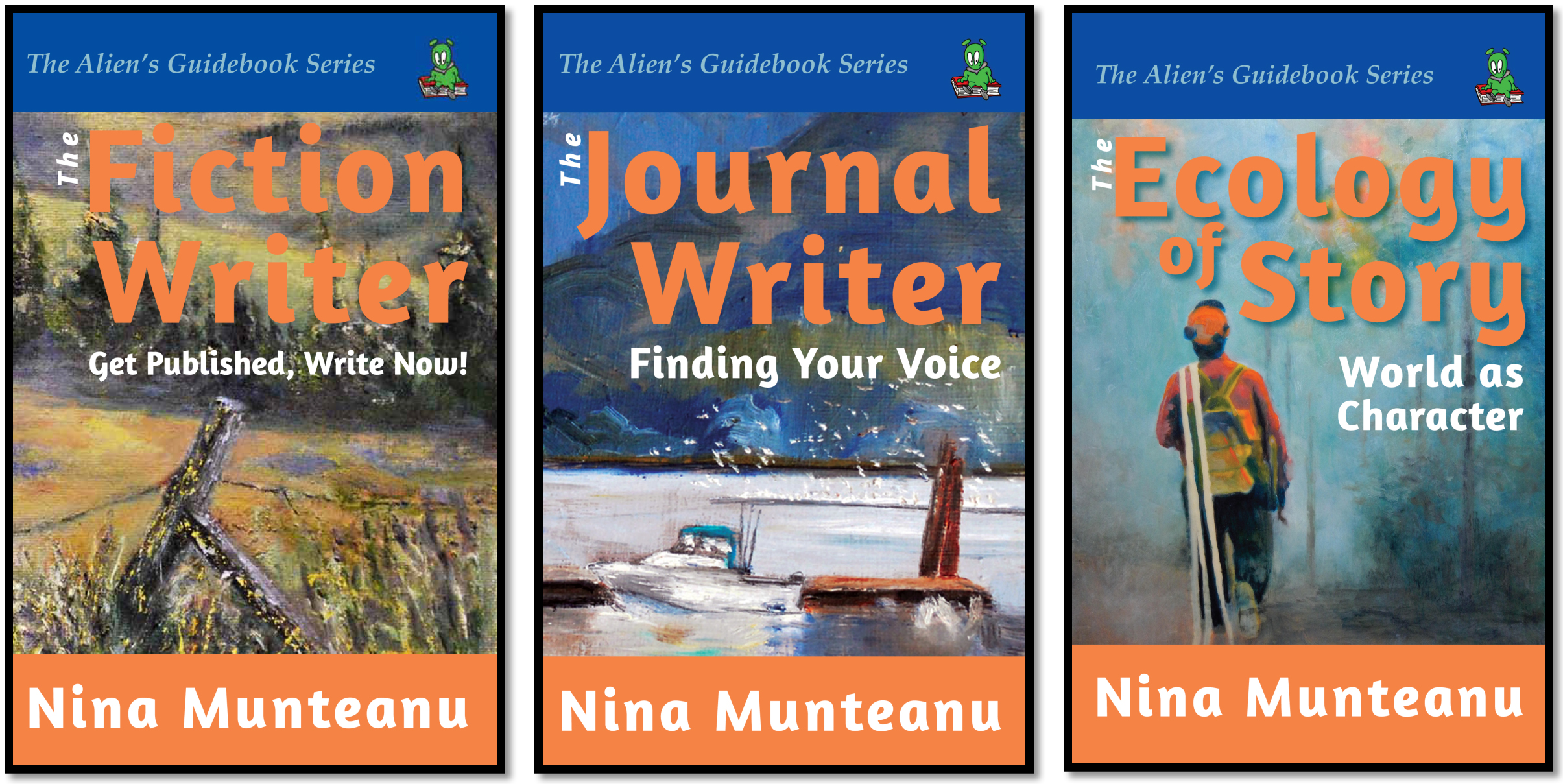
Three guidebooks of the Alien Guidebook series for writers

Cathy Miles, the program coordinator, encouraged me to brings books for sale, so I certainly included the three books of my Alien Guidebook Series on writing: The Fiction Writer, The Journal Writer, and The Ecology of Story, all also available at Amazon, Kobo, Barnes & Noble and other quality bookstores, which I sold for a workshop price. Cathy gave me a wonderful introduction to a room full of eager writers and I also had the pleasure of meeting Janice Luttrell, the Recreation Programmer with the City of Newmarket, who was hosting the event as part of Newmarket’s Culture Days.

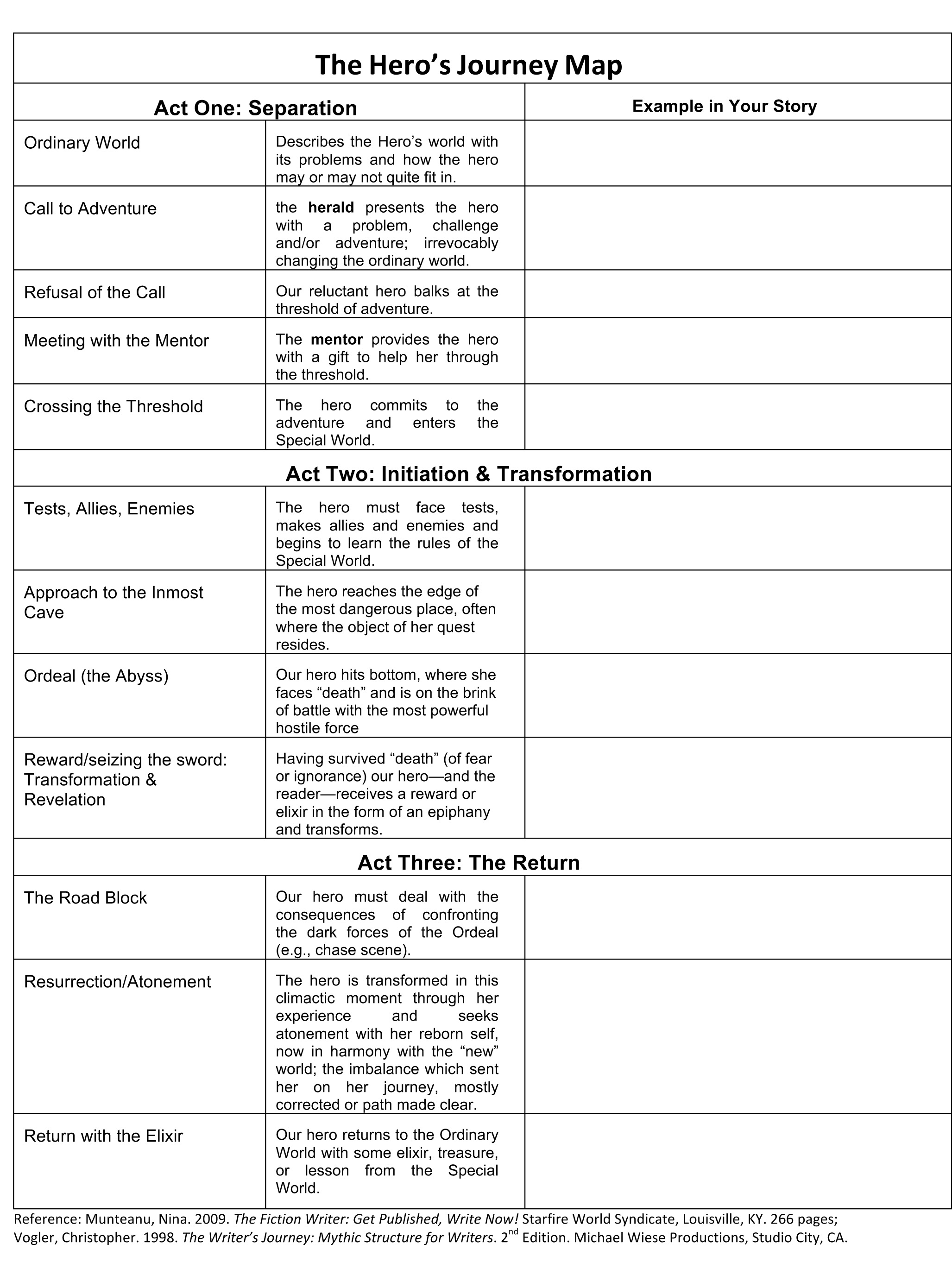
Hero’s Journey Plot Structure (Ingrid Sundberg, 2013)

Drawing from several chapters in The Fiction Writer, I introduced the Hero’s Journey map structure, based on Ingrid Sundberg’s plot structure, and discussed the 12-step hero’s journey according to mythologist Joseph Campbell.

We also discussed the seven chief archetypes associated with the journey steps: hero, mentor, herald, threshold guardian, trickster, shapeshifter, and shadow.

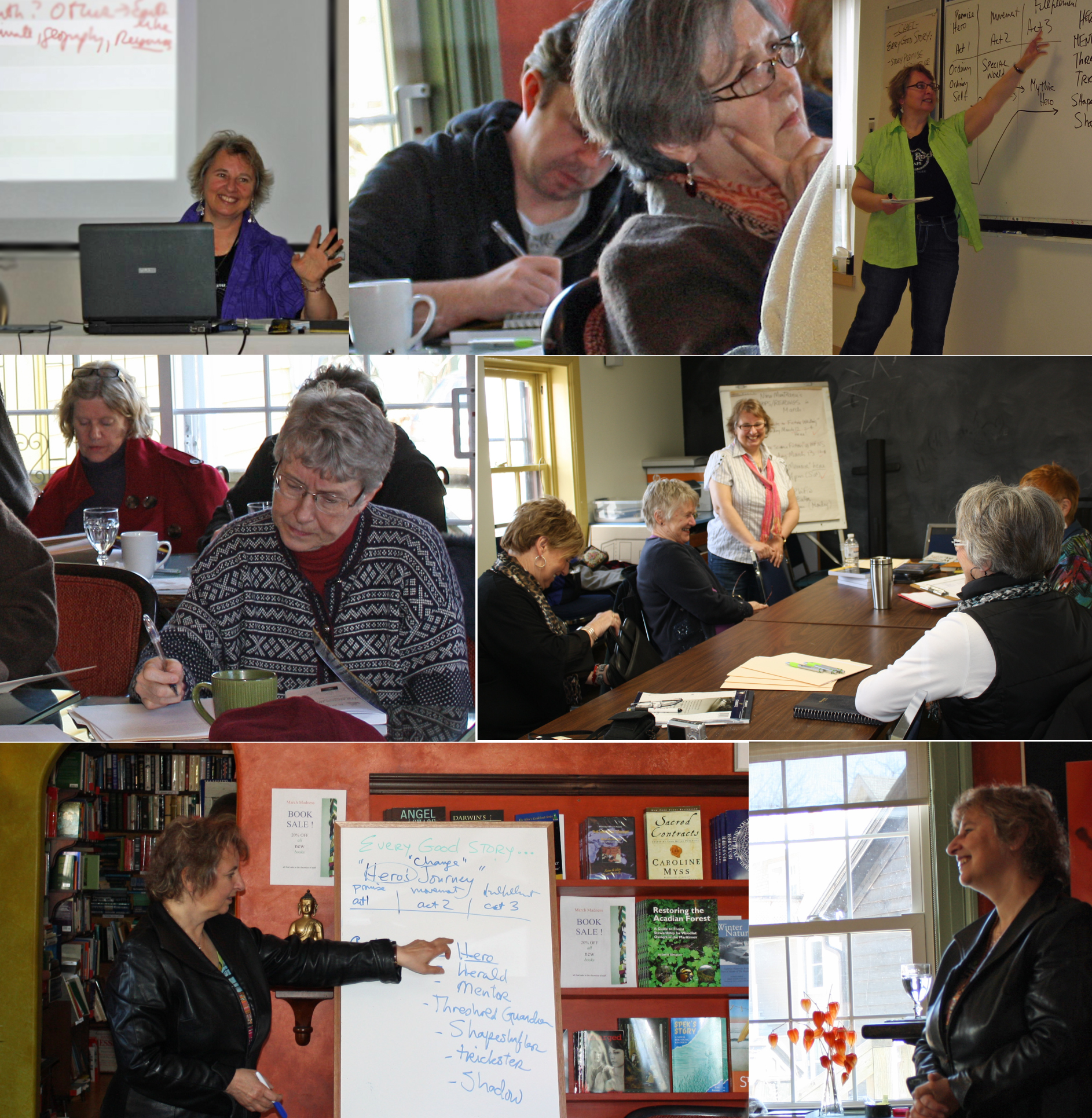
Nina teaching “The Hero’s Journey” plot approach over the years in Nova Scotia, BC and Ontario

I’ve given this workshop many times and always enjoyed the lights that came on in participants; this time was no different. My session was fun and very well received. I saw lots of interest and received many good questions—a sure sign. One participant was quoted as saying:

“What a great event! Your presentation was insightful. I really appreciated being able to follow along in the book while listening to your explanations. That is going to help me remember the concepts as I read the book and then apply them to my writing.” 

The WCYR book table at the event (photo by Nina Munteanu)

People bought every copy of my Fiction Writer, my Journal Writer and most of my Ecology of Story that sat on the book table. I also sold many of my fiction books, including my short story collection Natural Selection (also selling on Kobo) and my latest novel A Diary in the Age of Water. I sold-out of my non-fiction book Water Is…, which had received a wonderful testimonial from Margaret Atwood in the New York Times ‘Year in Reading.’

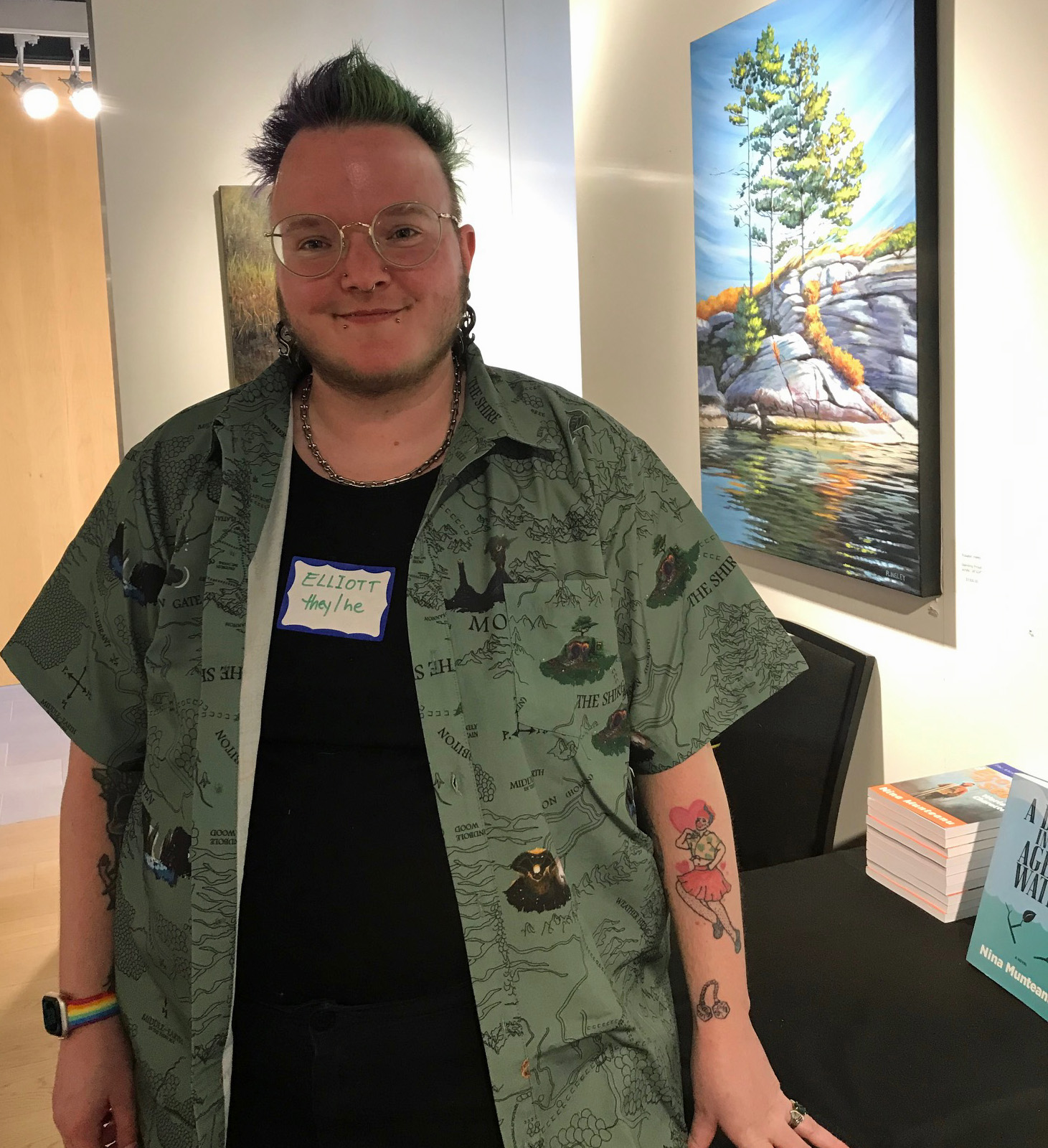
Elliott sells my books at the WCYR book table (photo by Nina Munteanu)

All in all, it was a good day…

Nina Munteanu is a Canadian ecologist / limnologist and novelist. She is co-editor of Europa SF and currently teaches writing courses at George Brown College and the University of Toronto. Visit www.ninamunteanu.ca for the latest on her books. Nina’s bilingual “La natura dell’acqua / The Way of Water” was published by Mincione Edizioni in Rome. Her non-fiction book “Water Is…” by Pixl Press (Vancouver) was selected by Margaret Atwood in the New York Times ‘Year in Reading’ and was chosen as the 2017 Summer Read by Water Canada. Her novel “A Diary in the Age of Water” was released by Inanna Publications (Toronto) in June 2020.

Best of Metastellar Three and Virtually Yours

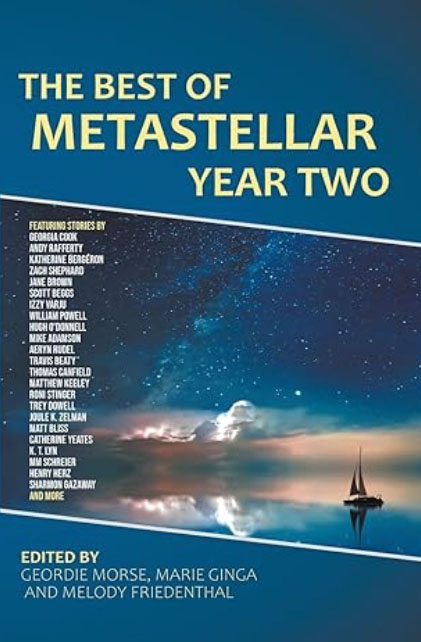
The third of Metastellar Magazines ‘Best of’ anthologies The Best of Metastellar Year Three was recently released and is available at numerous booksellers. Available in print and ebook, the anthology hosts forty-six riveting short stories of science fiction, fantasy and horror. This anthology also features my dark speculative story “Virtually Yours.” Their second ‘Best of’ anthology contained my short story “The Way of Water.”

Virtually Yours in The Best of Metastellar Year Three: In a world of seamless surveillance where virtual and real coalesce in a teasing dance, love is the trickster…

The Way of Water in The Best of Metastellar Year Two: A woman stands two metres from a public water tap, dying of thirst in a water-scarce world rife with corporate/government corruption…

You can purchase the previous anthologies on Amazon here: The Best of Metastellar Year One and The Best of Metastellar Year Two.

Nina tickled when her copy of “The Best of Metastellar Anthology Three” arrives in the mail

Nina Munteanu is a Canadian ecologist / limnologist and novelist. She is co-editor of Europa SF and currently teaches writing courses at George Brown College and the University of Toronto. Visit  www.ninamunteanu.ca for the latest on her books. Nina’s bilingual “La natura dell’acqua / The Way of Water” was published by Mincione Edizioni in Rome. Her non-fiction book “Water Is…” by Pixl Press (Vancouver) was selected by Margaret Atwood in the New York Times ‘Year in Reading’ and was chosen as the 2017 Summer Read by Water Canada. Her novel “A Diary in the Age of Water” was released by Inanna Publications (Toronto) in June 2020.

My Journey with Water: Nina Munteanu Talks to the Toronto Probus Group

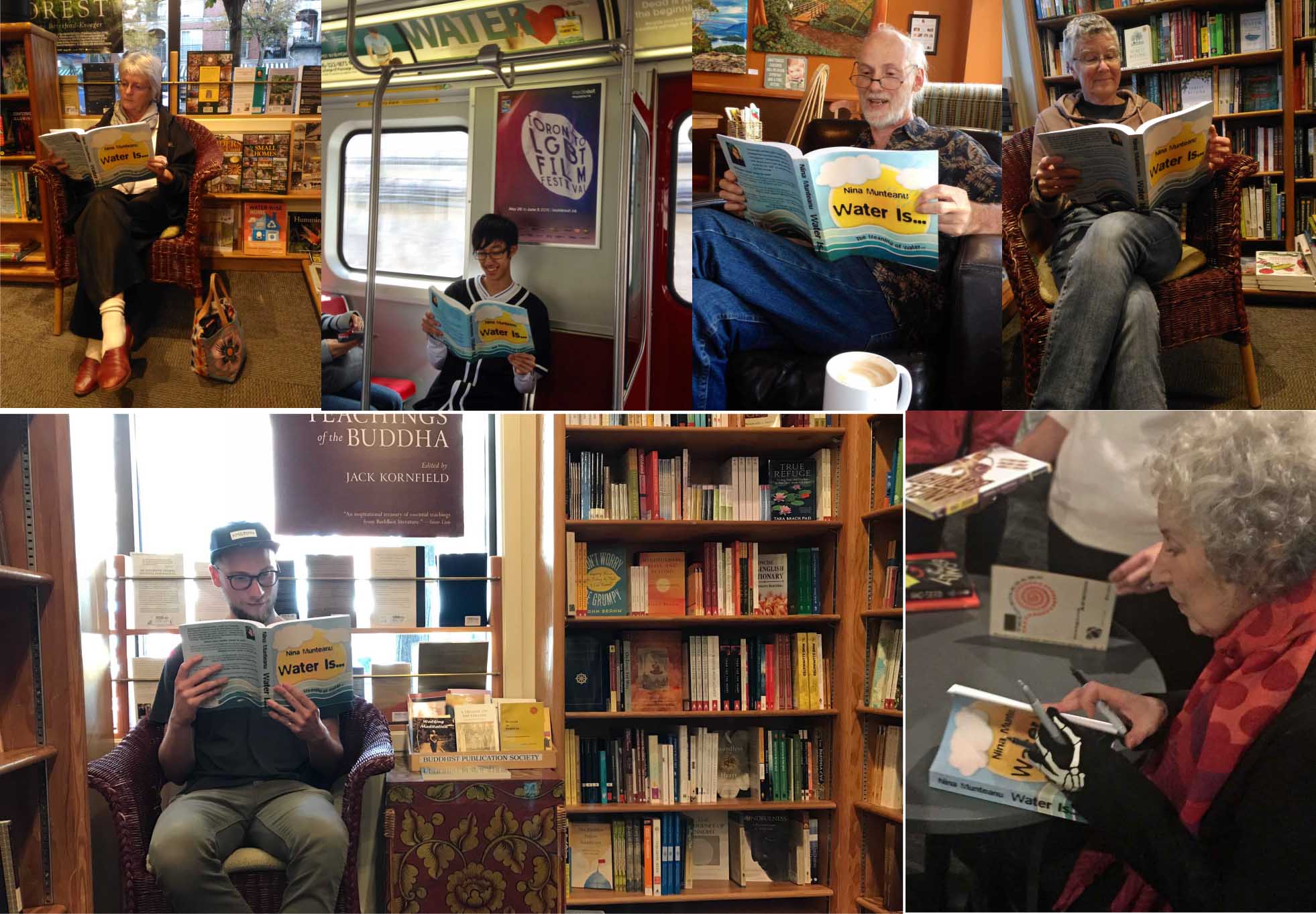
People reading “Water Is…” in Vancouver and Toronto

Margaret McCaffery, chair of the PROBUS Toronto Speakers Committee invited me some time ago to speak to their club in June of 2024 on my experience with water: as scientist, mother, and environmentalist. The audience was mostly retired professional and business people with enquiring minds. I gave my Powerpoint talk in the Holy Rosary Parish Hall on St. Clair West and then enjoyed a vigorous session of challenging and interesting questions to which I responded with equal vigour.

Here is the blurb for the presentation:

Canadian limnologist Nina Munteanu explores the many dimensions of water through her journey with water as mother, educator, and scientist. She describes an emotional connection with nature that compels us to take care of our environment with love versus a sense of duty. 

Nina’s talk draws on her book Water Is… The Meaning of Water, part history, part science and part philosophy and spirituality. The book examines water’s many anomalous properties and what these meant to us. In sharing her personal journey with this mysterious elixir, Nina explores water’s many ‘identities’ and, ultimately, our own. Water Is… was Margaret Atwood’s first choice in the 2016 New York Times ‘Year in Reading.’ Water is… will be available for sale at the talk.

I started with my story as a child, growing up in the Eastern Townships of Canada
I defined “limnology” and talked about my career as a limnologist and environmental consultant
I discussed some of water’s anomalous properties, all life-giving
I brought in some interesting things about water…
I tied my journey with water to family and friends and my watershed
I ended my talk with a discussion of the Watermark Project to catalogue significant stories to water bodies all over the world

I also brought my latest eco-clifi novel A Diary in the Age of Water for sale. It interested quite a few people and generated several wonderful discussions.

Nina Munteanu and her latest eco-novel

Nina Munteanu is a Canadian ecologist / limnologist and novelist. She is co-editor of Europa SF and currently teaches writing courses at George Brown College and the University of Toronto. Visit www.ninamunteanu.ca for the latest on her books. Nina’s bilingual “La natura dell’acqua / The Way of Water” was published by Mincione Edizioni in Rome. Her non-fiction book “Water Is…” by Pixl Press (Vancouver) was selected by Margaret Atwood in the New York Times ‘Year in Reading’ and was chosen as the 2017 Summer Read by Water Canada. Her novel “A Diary in the Age of Water” was released by Inanna Publications (Toronto) in June 2020.

“Robin’s Last Song” at Climate Imaginarium in New York City’s Governor’s Island

Governor’s Island, NYC

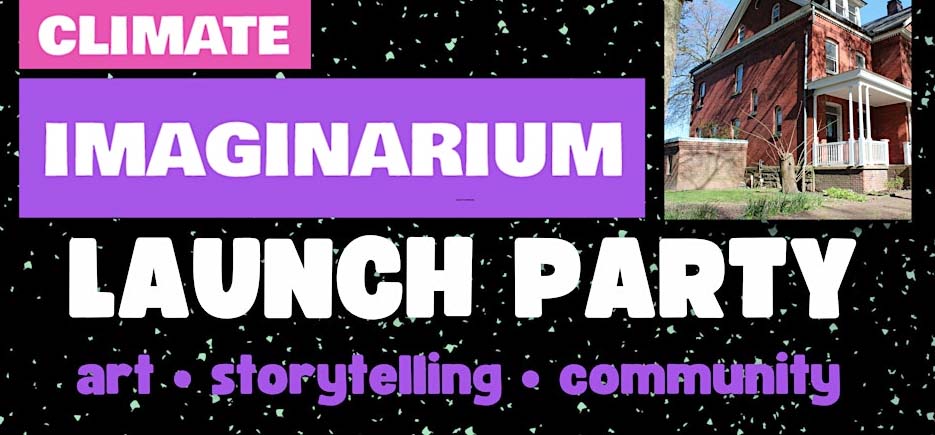
My short story Robin’s Last Song was selected by the NYC Climate Writers Collective as part of an exhibition in the Climate Imaginarium on Governors Island in New York. The exhibition, starting May 18, will run throughout the summer of 2024.

Robin’s Last Song

Robin’s Last Song first appeared in the #128 Issue of Apex Magazine in 2021. It tells the story of Robin, a blind elder whose digital app failed to warn the world of the sudden global loss of birds with disastrous ecological consequences. After years of living in self-exile and getting around poorly on sight-enhancing technology, a discovery gives her new hope in rekindling her talents in the field of Soundscape Ecology.

In a recent interview with writer Simon Rose, I described my thoughts in writing Robin’s Last Song:

I wanted to make “Robin’s Last Song” a realizable work of fiction in which science and technology play both instigator of disaster and purveyor of salvation. Our biogenetic technology comes to us as a double-edged sword in the form of gene-editing, proteomics, DNA origami, and CRISPR—just to name a few. These biotechnological innovations promise a cornucopia of enhancements: from increased longevity and health in humans to giant disease-resistant crops. But, for every ‘magic’ in technology, there is often unintended consequence. Unforeseen—or even ignored—casualties and risks. I suppose my ultimate question with this story is: will synthetic biology redesign Nature to suit hubris or serve evolution? Science doesn’t make those decisions. We do.

You can read my interview with Rebecca E. Treasure at Apex Magazine (where Robin’s Last Song first appeared) about the greater implications of the story and my other eco-fiction. You can also read the story on Metastellar Speculative Fiction and Beyond.

Climate Imaginarium

Anyone living in or visiting the NYC area is welcome to the Climate Imaginarium launch on May 18 on Governor’s Island. Check this Eventbrite link for details. The exhibition will continue throughout the summer of 2024 and will include: climate storytelling and poetry by Climate Café, the Sixth Festival, and the Climate Writers Collective; opening exhibition of “What is Environmental Art?” by Forest for Trees; artwork from the Climate Imaginarium community and Climate Writers exhibition; “Eye of Flora” virtual reality exhibition by Synphisica Collective; and more.

Here’s what they say:

Come to Governors Island for the grand opening of our Climate Imaginarium house! The Climate Imaginarium will serve as a community center for climate and culture, with galleries and spaces for exhibitions, performances, film screenings, and events that respond to the climate crisis with solutions and visions for hope and justice. Join us at Building 406A on Colonels Row for a lively celebration of climate art, storytelling, and community.

Exhibitions will be open to the public at noon, and the party will officially start at 2pm. All donations will support programming in our community space.

Nina Munteanu is a Canadian ecologist / limnologist and novelist. She is co-editor of Europa SF and currently teaches writing courses at George Brown College and the University of Toronto. Visit www.ninamunteanu.ca for the latest on her books. Nina’s bilingual “La natura dell’acqua / The Way of Water” was published by Mincione Edizioni in Rome. Her non-fiction book “Water Is…” by Pixl Press (Vancouver) was selected by Margaret Atwood in the New York Times ‘Year in Reading’ and was chosen as the 2017 Summer Read by Water Canada. Her novel “A Diary in the Age of Water” was released by Inanna Publications (Toronto) in June 2020.

The Ontario Derecho: When a Disaster Brings Out Kindness

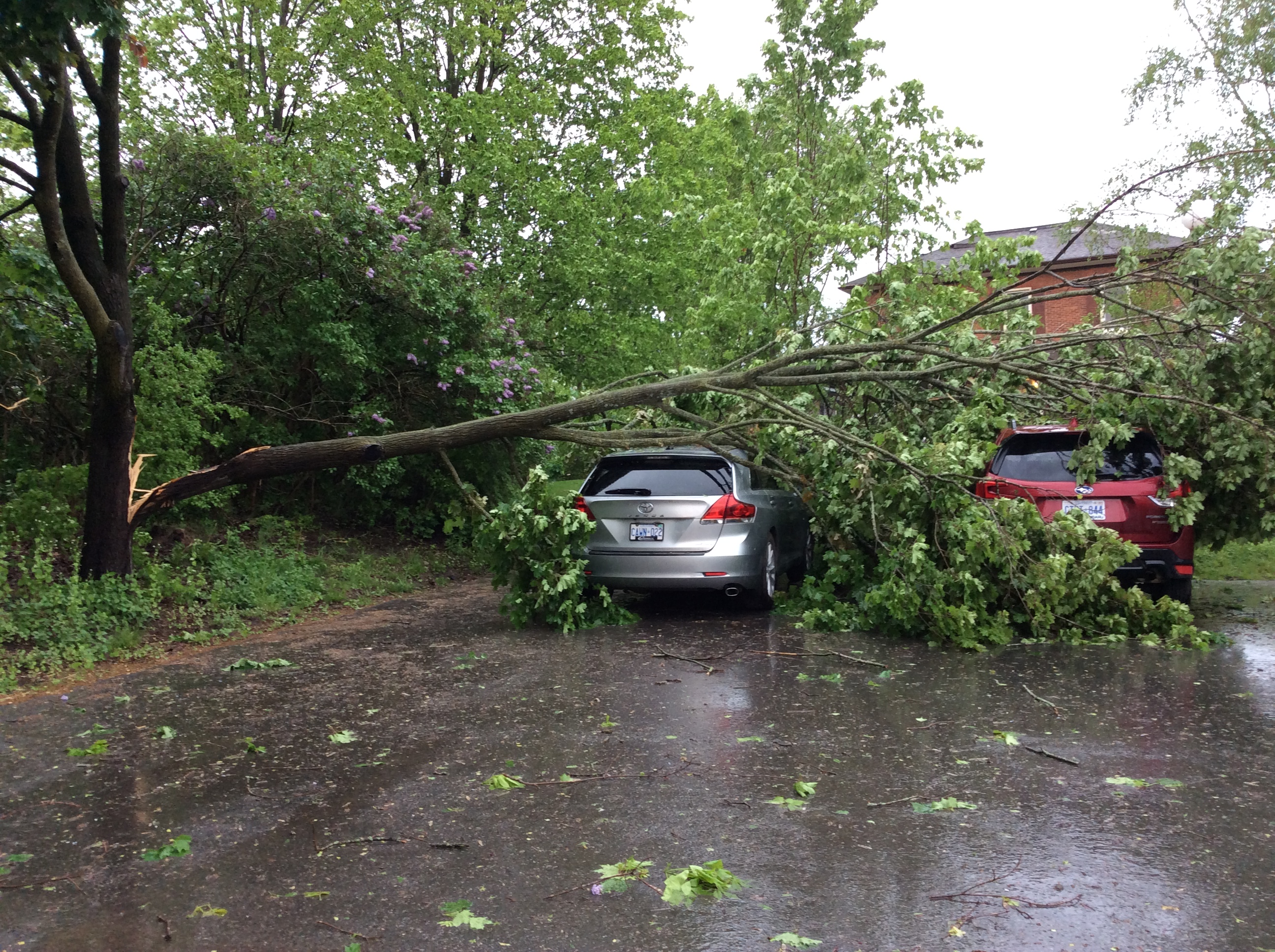
Cars trapped when a sugar maple snaps and falls on them in Saturday’s Derecho, Peterborough, ON (photo by Nina Munteanu)

It’s Wednesday and parts of the city still have no power since Saturday’s storm swept through like a ferocious lion. We got our power yesterday. We’d relied on our kind neighbours, who had a barbecue, to cook up some suppers. The power has come back in stages depending on where lines were brought down by trees or the violent wind microbursts.

A string of power poles and lines downed by the violent winds of the derecho along Highway 29 near Lakefield, ON (photos by Nina Munteanu)

Environment Canada calls Saturday’s storm a derecho: a long line of very active and violent thunderstorms or microbursts that include winds of at least 93 km/h with focused gusts of 121 km/h or greater. According to Environment Canada Senior Climatologist David Phillips, the storm spanned about 1,000 kilometers from Michigan to Maine as it went across Ontario and Quebec. Derechos typically contain numerous downburst clusters (families of downburst clusters) that, in turn, have smaller downbursts, and smaller microbursts. These tight, often cyclic tornado-like bursts within larger linear downbursts are what likely created the random devastation seen in Peterborough, where one tree was entirely uprooted and the tree beside it left untouched.

Birch uprooted on Auburn Street, Peterborough (photo by Nina Munteanu)

A true ‘herald archetype’, environmental disasters incite change, often through disorder. In doing so, they can bring out the best in us. The true mettle of a person is often revealed during such times, through the emergence of compassion and kindness.   

I live just off the Rotary Trail in Peterborough, facing a mixed riparian forest of mostly black walnut and locust trees, with some silver maple, willow, Manitoba maple, oak and ash. The trail is well used every day by cyclists and walkers. The tornado-force winds and deluge rains singled out a few trees on the forest edge and flung them across the trail. A quick inspection shortly after the storm revealed that several trees formed obstacles to those using the trail: a silver maple just in front of my good friend Merridy’s place; an old half-dead elm; and a large Manitoba maple whose upper canopy had gotten tangled in the telephone wires.

Various damaged and uprooted trees in Peterborough, ON (photos by Nina Munteanu)

When Merridy and I decided to attempt clearing the Rotary Trail of strewn maple limbs and branches, we weren’t there more than five minutes when a cyclist stopped and without a word helped us; he grabbed large tree limbs and hoisted them aside like Superman then got on his bike and took off without a word—like Spiderman. After more dragging of tree limbs and my deft hand at the tree clippers and the broom, we cleared the trail for walkers and cyclists. 

Before (left) and after (right) we cleared the Rotary Trail of downed silver maple from the derecho (photos by Nina Munteanu)

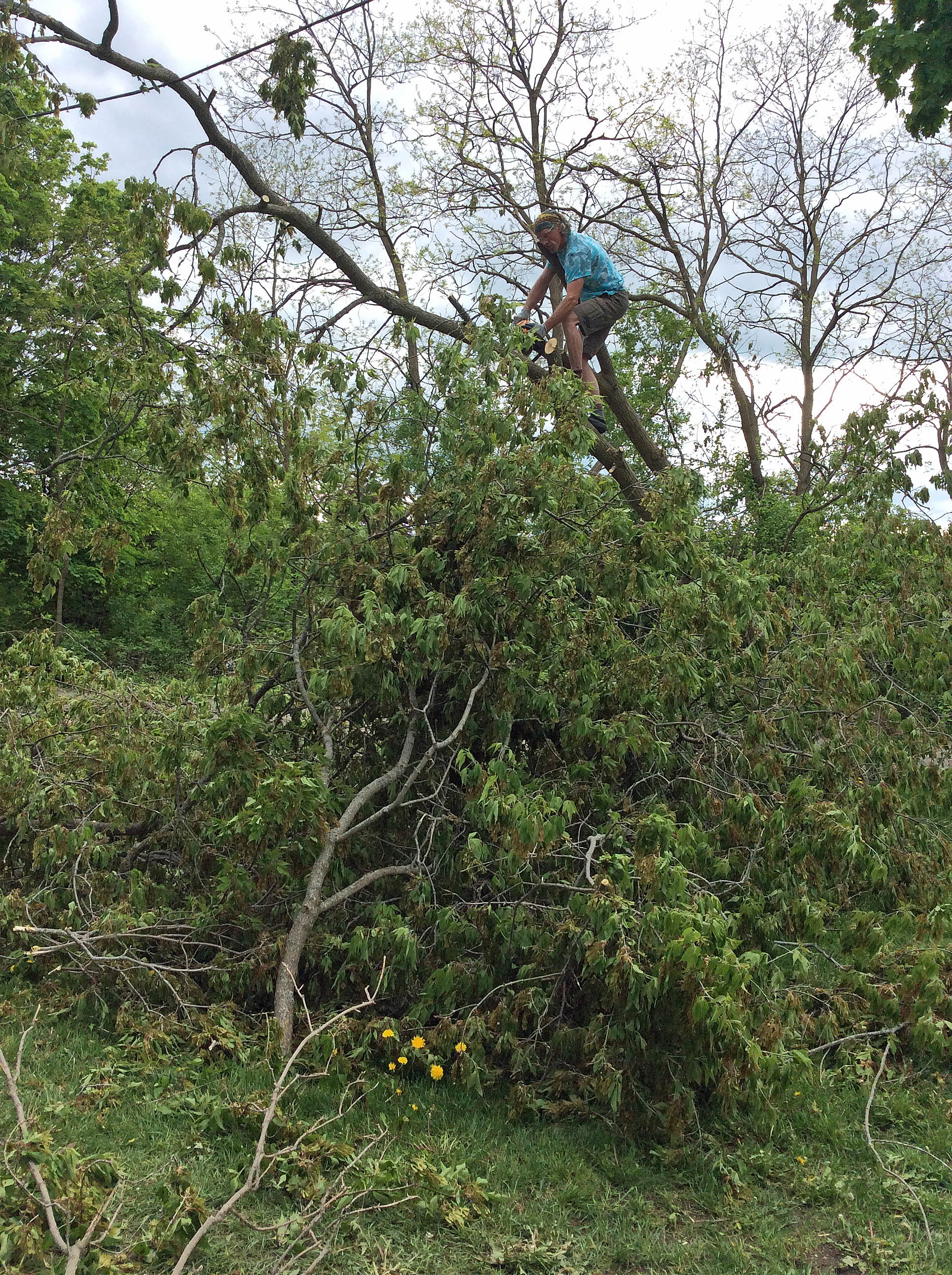
And then there was Charlie … a fashion-savvy quasi hipster-hippy who came cycling in with his chainsaw and hand saw on his back; he’d been all over the trail clearing tree debris just because he could. Charlie set to work on the huge Manitoba maple that had fallen across the trail and was leaning heavily on the telephone wire. Charlie proceeded to climb the tree and saw branches here and there to lighten the limb on the wire before cutting it. Two of us ladies became his cleanup crew, hauling big tree sections off the path as he downed them. By the time he got to the main tree limb on the wire, a group of cheerleaders had formed to watch. We all clapped when the big branch came off the line. One elder lady on two walking canes hobbled out from her home and handed Charlie a Bobcaygeon Petes Lager as thanks.

Charlie sawing off branches from Manitoba maple tangled on telephone wire (photo by Nina Munteanu)
Charlie saws the remaining tree trunk to clear the trail (photo by Nina Munteanu)

At first it was just me and Charlie. Watching him set up, I’d asked him if he was from the city and in the same breath knew he wasn’t—we both knew they were very busy getting the city’s power back on and freeing streets and getting trees off the roofs of houses; it would be a long time before they came to the Rotary Trail and other parks to clear. He responded, “well, that depends… are you a lawyer?” I laughed. We both recognized that Charlie was a rogue Good Samaritan, using less than regular protocol (no safety harness or equipment [except for goggles] and climbing shoes). When I said no, he relaxed and we introduced ourselves and exchanged stories about the storm, then got to work. I was soon joined by Susan, and together we became Charlie’s support team, hauling limbs and branches out of the tangle then rolling large tree bole sections to the side. Eventually several more walkers and nearby residents came to support the work and watch. Within an hour, the entire tree was off the path and off the wire. I felt a wonderful sense of community as people gathered exchanged names and stories about the storm. And it all started with one person’s kindness. Thanks, Charlie!

Before (left) and after (right) Charlie and his gang cleared the way (photo by Nina Munteanu)

I find that we really find our humanity and sense of kindness when a disaster strikes… one of the ‘good’ things about them.

Derecho damage to trees in the forest in Peterborough area, ON (photos by Nina Munteanu)

Nina Munteanu is a Canadian ecologist / limnologist and novelist. She is co-editor of Europa SF and currently teaches writing courses at George Brown College and the University of Toronto. Visit www.ninamunteanu.ca for the latest on her books. Nina’s bilingual “La natura dell’acqua / The Way of Water” was published by Mincione Edizioni in Rome. Her non-fiction book “Water Is…” by Pixl Press(Vancouver) was selected by Margaret Atwood in the New York Times ‘Year in Reading’ and was chosen as the 2017 Summer Read by Water Canada. Her novel “A Diary in the Age of Water” was released by Inanna Publications (Toronto) in June 2020.

Nina Munteanu Talks Books, Water and Climate Change on Warren Lawrence’s Morning Show WKNY am Radio Kingston

I recently appeared on Warren Lawrence’s Morning Show on WKNY am Radio Kingston, New York, where we talked about water as a life-giving substance and a force of climate change. We talked, of course, about my recent eco-fiction novel “A Diary in the Age of Water”, which Warren had totally enjoyed and recommended to his listening audience (to my delight!) 

Warren asked me to share my process of writing this particular book as a diary and a work of “mundane science fiction:”

I was writing about both the far and the near future and much of it was based—like Margaret Atwood and her books—on real events and real people. I wanted personal relevance to what was going on, particularly with climate change. I also wanted to achieve a gritty realism of “the mundane” and a diary felt right. Lynna—the diarist—is a reclusive inexpressive character, so I thought a personal diary would help bring out her thoughts and feelings. There’s nothing like eves-dropping to make the mundane exciting. The diary-aspect of the book characterizes it as “mundane science fiction” by presenting an “ordinary” setting for characters to play out. The tension arises from insidious cumulative events and circumstances that slowly grow into something incendiary. The real events are the fuel that incite a slow-burn fictional drama that blurs the reader’s perception of reality and heightens its relevance.

We talked at length about the blur between real events and the fiction of this book and how the diary conspired in that felt blur for the reader. To Warren’s question of what I expected my audience to get from the book, particularly on the importance of water, I responded: 

While A Diary in the Age of Water is a work of fiction, its premise and much of its story are firmly based on real events, people and phenomena. The dramatization of these through four main characters carry the reader into consequence and accountability. Water’s relationship with each character provides four different perspectives on the value of water to humanity—from the personal and practical to the spiritual and existential. For readers with an evidence-based approach to learning about water’s importance, the diarist provides interesting facts on water in each of her entries in the form of epigraphs (mostly from Robert Wetzel’s Limnology). Things like: watershed, hypolimnion, aquifer, thalweg, clapotis gaufre, and petrichor, to name a few. 

Regarding whether Canadians see water, deforestation, pollution, or climate change differently than Americans, I responded:

My first response to that is no, we’re all North Americans. If there is a noticeable divergence, it is between North Americans and the rest of the world, based on our shared capitalist worldview and mixed settler and indigenous heritage. But Canadians do share some subtle differences from our southern neighbours. We are a northern people; much of our land lies in the unsettled northern boreal forest. Our population is far more sparse at five people/km2vs. close to 40 people/km2in America. With a majority of our population occupying the most southerly ten percent, Canada has large regions of pristine natural environments. I once entertained a ‘romantic’ metaphoric notion of Canadians resembling the settlers of Winterfell in the Westeros of Game of Thrones; a people more attuned to their land. Canadians profess to place environment high on our list of values and concerns. And yet we share a legacy of appalling forest management, rampant clearcutting of old-growth forest in British Columbia, insufficient federal and provincial water legislation, and environmentally-catastrophic mining practices in the oil tar sands of Alberta, the northern boreal forest of Canada and abroad.

Warren and I also talked about New York state and NYC, particularly to do with climate change, and how NYC fared in the novel (not well, I’m afraid). As example, I read a portion of the book from the diarist’s entry called “Climate Change”:

When I was growing up, we were already feeling the effects of a changing climate. The most obvious change was in the hundred-year floods calculated by engineers; they started to occur every other year. When I was five years old, Houston suffered a devastating flood and the city and surrounding area basically crashed under the wind and rain deluge of Hurricane Harvey. They lost power. Then their sewers backed up. But it didn’t get ugly until they lost their drinking water.

Five years later the Category 3 Hurricane Norma stormed though New York City with a twelve-metre-high wall of water. Manhattan drowned. Subways and car tunnels drowned. Kennedy Airport drowned. Homes drowned. People drowned.

The same storm put Providence, Rhode Island, under twenty feet of water.

A few days ago, Daniel told me that New York City water is still unfit to drink. “New York will be the new Pudong District,” he quipped with churlish humour. All of Florida south of Orlando is already there. “Like they weren’t warned,” he scoffed.

–A Diary in the Age of Water
Pond lilies in Thompson Creek marsh, ON (photo and rendition by Nina Munteanu)

Nina Munteanu is a Canadian ecologist / limnologist and novelist. She is co-editor of Europa SF and currently teaches writing courses at George Brown College and the University of Toronto. Visit www.ninamunteanu.ca for the latest on her books. Nina’s bilingual “La natura dell’acqua / The Way of Water” was published by Mincione Edizioni in Rome. Her non-fiction book “Water Is…” by Pixl Press(Vancouver) was selected by Margaret Atwood in the New York Times‘Year in Reading’ and was chosen as the 2017 Summer Read by Water Canada. Her novel “A Diary in the Age of Water” was released by Inanna Publications (Toronto) in June 2020.

Nina Munteanu Talks about Writing—Passion, Process, and Publication—with Mandy Eve-Barnett

Fantasy / SF writer and interviewer Mandy Eve-Barnett recently interviewed me about my recent eco-novel “A Diary in the Age of Water” and on my writing process and evolution. When did it all begin and what choices did I make along the way? she wanted to know. Here are some of her questions and my answers (embellished here) for your reading pleasure. For the full interview go here:

Mandy: When did you first start writing?

Nina: Not until I was a teenager when I wrote my first complete novel (“Caged-In World”—which later served as a very rough draft for my first and second published novels, Angel of Chaos and “Darwin’s Paradox”). My first published work was a non-fiction article “Environmental Citizenship”, which appeared in Shared Vision Magazinein 1995. I was already a young mother then with a family in Ladner, BC, and working for an environmental consulting firm in Richmond. My first fiction work was a short story entitled Arc of Time, published in a small circulation magazine Armchair Aesthete. That story was later reprinted several times throughout the world, including my short story collection Natural Selection.” Before writing stories, though, I told stories—I shared wild stories of galactic adventure with my older sister; we used to share them late into the night when we were supposed to be sleeping and our parents were snoring in their beds. I also told stories in the form of cartoons. Since I was a small child, I wanted to be a cartoonist and write graphic novels when I grew up. I created and drew several strips with crazy characters on wild adventures, blending my love for drawing with my love for storytelling. I haven’t stopped that form of storytelling and still have a yearning for that form. This is one reason why I’m so delighted with my latest book “A Diary in the Age of Water,” which features some of my limnological sketches, which stand in for the diarist’s sketches:

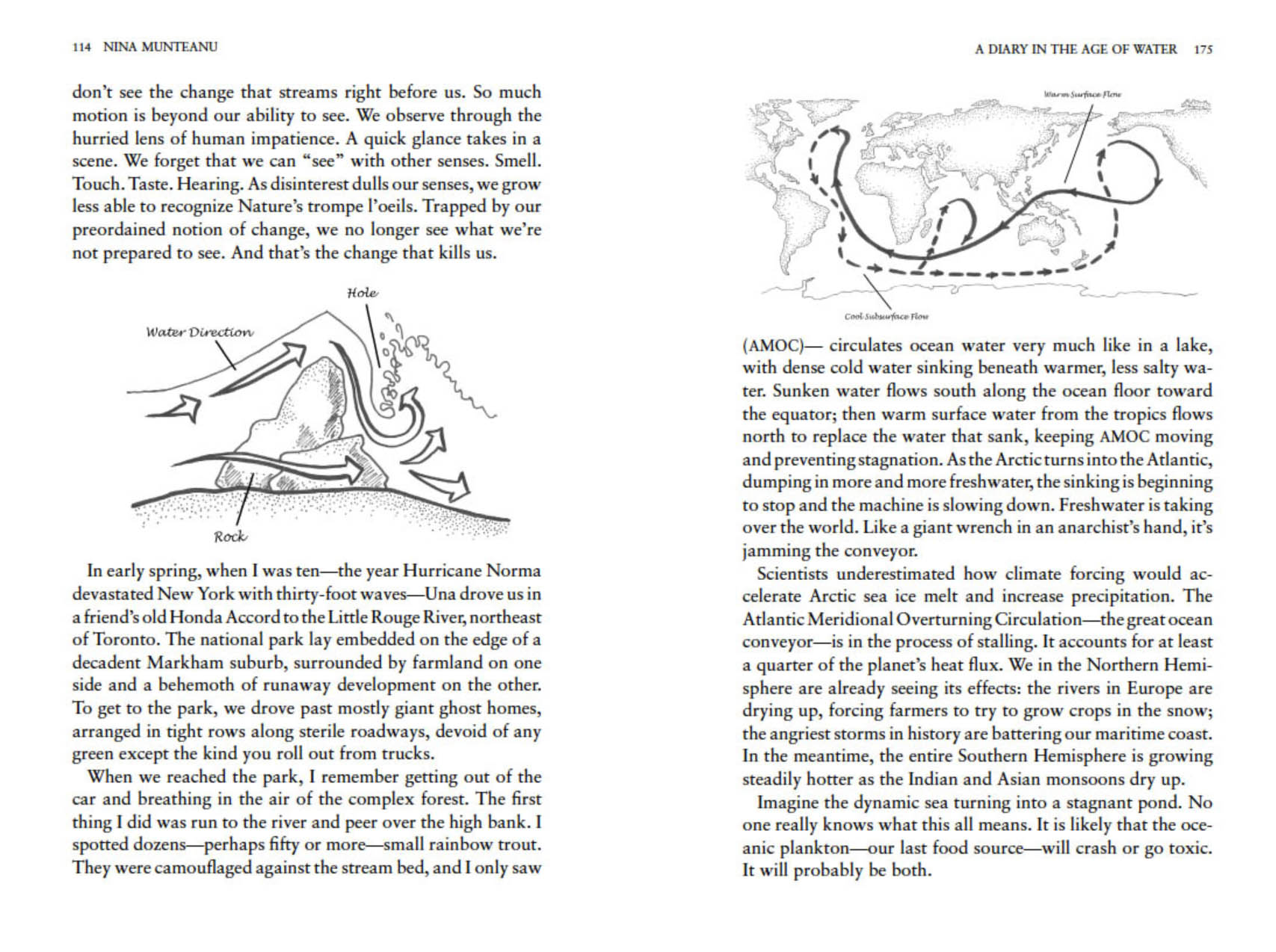
Pages from “A Diary in the Age of Water” by Nina Munteanu

Mandy: What made you decide on science fiction as a genre?

Nina: That goes back to my love for comics. I wasn’t much of a reader as a kid. While my older brother and sister devoured The Hardy Boys and Nancy Drew series, I secreted myself in the back corner of Williams General store and read Supergirl, Superman and Superboy, Batman, Magnus Robot Fighter and Green Lantern, among others. I was obviously enamored with the fantastic. When I earnestly started to read more than comics, I came across the SF classics: Huxley, Orwell, Heinlein, Clarke, Silverberg and Asimov to name a few. Bradbury sent me over the moon and his “Martian Chronicles” made me cry. I wanted to write like him and move readers like he’d done with me with something that mattered. 

The reason I continue to write in this genre is because of its ability to encompass the creative imagination and application of metaphor to story. Given science fiction’s wide range of possibilities in creating a believable reality of the fantastic, science fiction provides a compelling platform for metaphoric storytelling on a grand scale—the story large. Possibilities for powerful archetypes abound. Where else can you make water an actual character?

My environmental themes and eco-fiction lie in the sub-genre of ‘mundane science fiction.’ This is just another form of speculative fiction. Mundane science fiction focuses on existing technology (no ray guns, warp drives, or time travel). Its premise lies in existing circumstances and events to create a near-future realism. My recent dystopian eco-novel “A Diary in the Age of Water” by Inanna Publicationsfits this description perfectly. Examples by other writers include Margaret Atwood’s “MaddAddam” series, Paolo Bacigalupi’s “The Windup Girl” and Kim Stanley Robinson’s “The Ministry for the Future.”  

Mandy: Was the ecological aspect of your stories a gradual realization or your primary objective?

Nina: My primary objective was always to tell a compelling and meaningful story and hopefully to move readers in some way—like Ray Bradbury and other writers had with me. The ecological aspects slid in unannounced like a shadow character. It made sense: the environment and how we treat it (and ourselves by extension) has always been something important to me since I was a child. Both my parents were connected to Nature. My father took us on camping trips and picnics in the country; my mother was an amateur ecologist and botanist. From quite young I’ve been an environmental activist; chasing after people who littered, promoting recycling, participating in environmental protests. So, while I was writing science fiction, it was also eco-fiction. When the brand became more known, I realized that this was the kind of fiction I was writing most of the time. So, in some ways, I’ve come full circle with my quest as a youth: to tell impactful stories about the environment—whether this is here on Earth or on some planet in the outer systems—which make people think and feel and question. 

Mandy: Can you tell us a little about your newest book “A Diary in the Age of Water”, how you came up with the concept, and your writing process for it?

Nina: The book follows the climate-induced journey of humanity through four generations of women, each with a unique relationship with water during a time of calamitous change. The book starts and ends in the far future in the dying boreal forest with a blue water being, Kyo, who finds the diary of a limnologist, Lynna, from our near-future Toronto. The diary spans a forty-year period and contains a series of entries; each entry begins with an epigraph—quote from the textbook “Limnology” by Robert Wetzel. During the diarist’s lifetime, all things to do with water are overseen and controlled by the international giant water utility CanadaCorp—with powers to arrest and detain anyone. This is a world in which China owns America and America, in turn, owns Canada. The limnologist witnesses and suffers through severe water taxes and imposed restrictions, dark intrigue through neighbourhood betrayals, corporate spying and espionage, and repression of her scientific freedoms. Some people die. Others disappear.

Inspiration for the novel started with a short story I was invited to write by my publisher in Rome in 2015 about water and politics in Canada.  I had long been thinking of potential ironies in Canada’s water-rich heritage. The premise I wanted to explore was the irony of people in a water-rich nation experiencing water scarcity: living under a government-imposed daily water quota of 5 litres as water bottling and utility companies took it all. I named the story “The Way of Water” (“La natura dell’acqua), about a young woman (Hilda) in near-future Toronto who has run out of water credits for the public wTap; by this time houses no longer have potable water and their water taps have been cemented shut; the only way to get water is through the public wTaps—at great cost. She’s standing two metres from water—in a line of people waiting to use the tap—and dying of thirst. “The Way of Watercaptures a vision that explores the nuances of corporate and government corruption and deceit together with global resource warfare. In this near-future, Canada is mined of all its water by thirsty Chinese and US multinationals—leaving nothing for the Canadians. Rain has not fallen on Canadian soil in years due to advances in geoengineering and weather manipulation that prevent rain clouds from going anywhere north of the Canada-US border. If you’re wondering if this is possible, it’s already happening in China and surrounding countries.

I chose to use a diary in the near-future part of the story to achieve a sense of gritty realism of ‘the mundane.’ The diary-aspect of the book characterizes it as ‘mundane science fiction’ by presenting an ‘ordinary’ setting for characters to play out. The tension arises more from insidious cumulative events and circumstances that slowly grow into something incendiary.

Many of the events and circumstances that the diarist reports on are real events and based on real people. That they serve as premise for the fiction effectively blurs the fiction with non-fiction. Readers have told me that they often couldn’t distinguish the two in the book and this achieved a real urgency for the reader, who both hated and loved the book for it and couldn’t stop turning the pages as a result. 

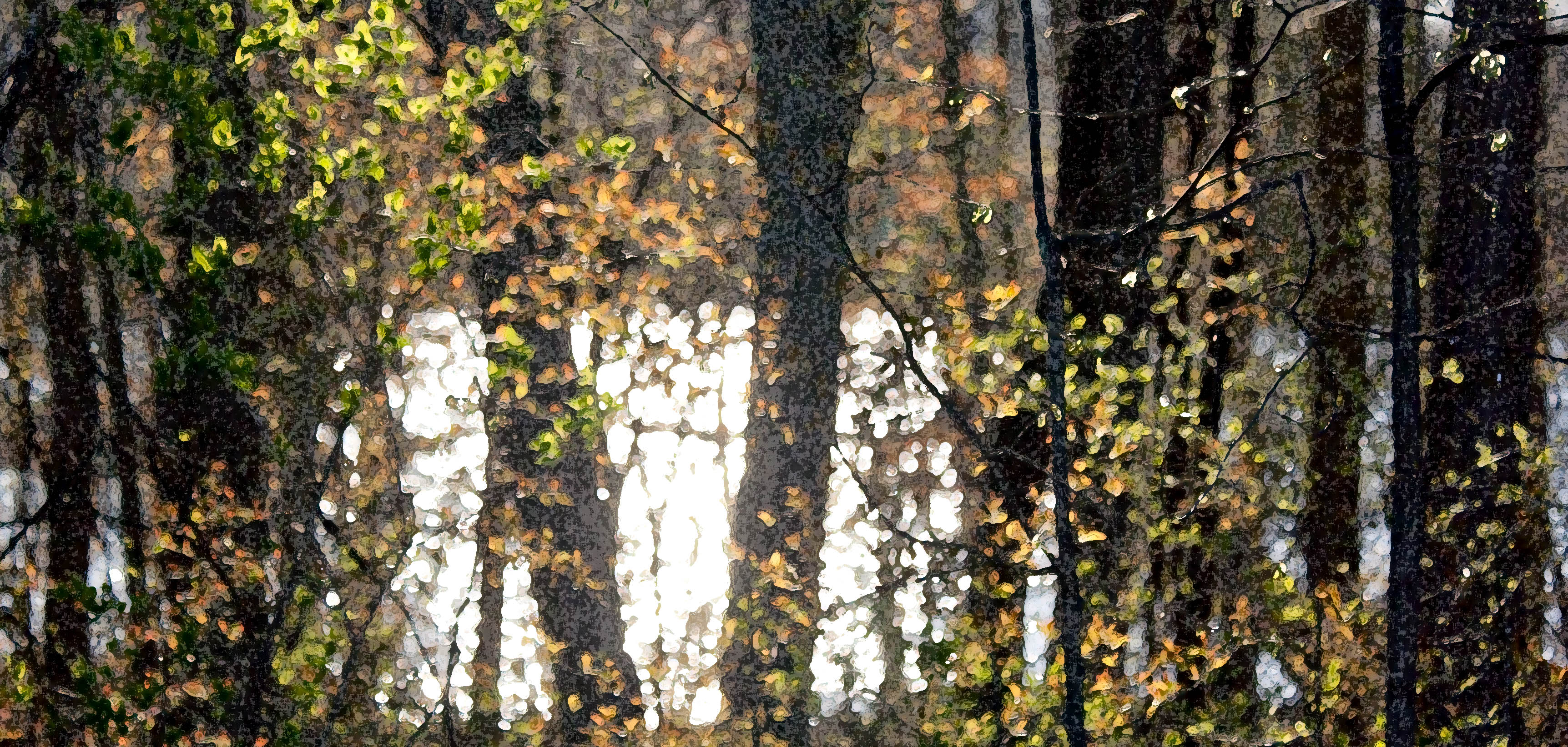
Hardwood forest backlit by sparkling Otonabee River in spring, ON (photo and rendition by Nina Munteanu)

Nina Munteanu is a Canadian ecologist / limnologist and novelist. She is co-editor of Europa SF and currently teaches writing courses at George Brown College and the University of Toronto. Visit www.ninamunteanu.ca for the latest on her books. Nina’s bilingual “La natura dell’acqua / The Way of Water” was published by Mincione Edizioni in Rome. Her non-fiction book “Water Is…” by Pixl Press(Vancouver) was selected by Margaret Atwood in the New York Times‘Year in Reading’ and was chosen as the 2017 Summer Read by Water Canada. Her novel “A Diary in the Age of Water” was released by Inanna Publications (Toronto) in June 2020.