Apex Book Company (publisher of Apex Magazine) has extended their deadline for short stories to appear in their anthology “ECO24, The Year’s Best Speculative Ecofiction” edited by Marissa van Uden. They are looking to purchase non-exclusive world anthology rights for only previously published short stories of eco-fiction published in the last calendar year (Jan 1 to Dec 31 2024) to publish in their imprint Violet Lichen Books.
Here is their description of the eco-fiction anthology:
This anthology “showcases some of the most vivid, thought-provoking, and emotionally affecting ecofiction published in the previous calendar year. Speculative ecofiction is defined as stories that explore our place in the natural world and our relationships to non-human life (e.g. focused on themes related to ecology, nature, the environment, climate, conservation, wildlife and animal rights) and which also fall into speculative genres such as science fiction, fantasy, Weird fiction, New Weird, anthropomorphic fantasy, magical realism.
Ecofiction engages with some of the most urgent issues facing us today and also looks ahead to the possibilities of the future. Even when dealing with dark or tragic themes, ecofiction stories are expressions of our human connection to the most beautiful planet we know, and to all of earthlife.
Nina Munteanu is a Canadian ecologist / limnologist and novelist. She is co-editor of Europa SF and currently teaches writing courses at George Brown College and the University of Toronto. Visit www.ninamunteanu.ca for the latest on her books. Nina’s bilingual “La natura dell’acqua / The Way of Water” was published by Mincione Edizioni in Rome. Her non-fiction book “Water Is…” by Pixl Press (Vancouver) was selected by Margaret Atwood in the New York Times ‘Year in Reading’ and was chosen as the 2017 Summer Read by Water Canada. Her novel “A Diary in the Age of Water” was released by Inanna Publications (Toronto) in June 2020.
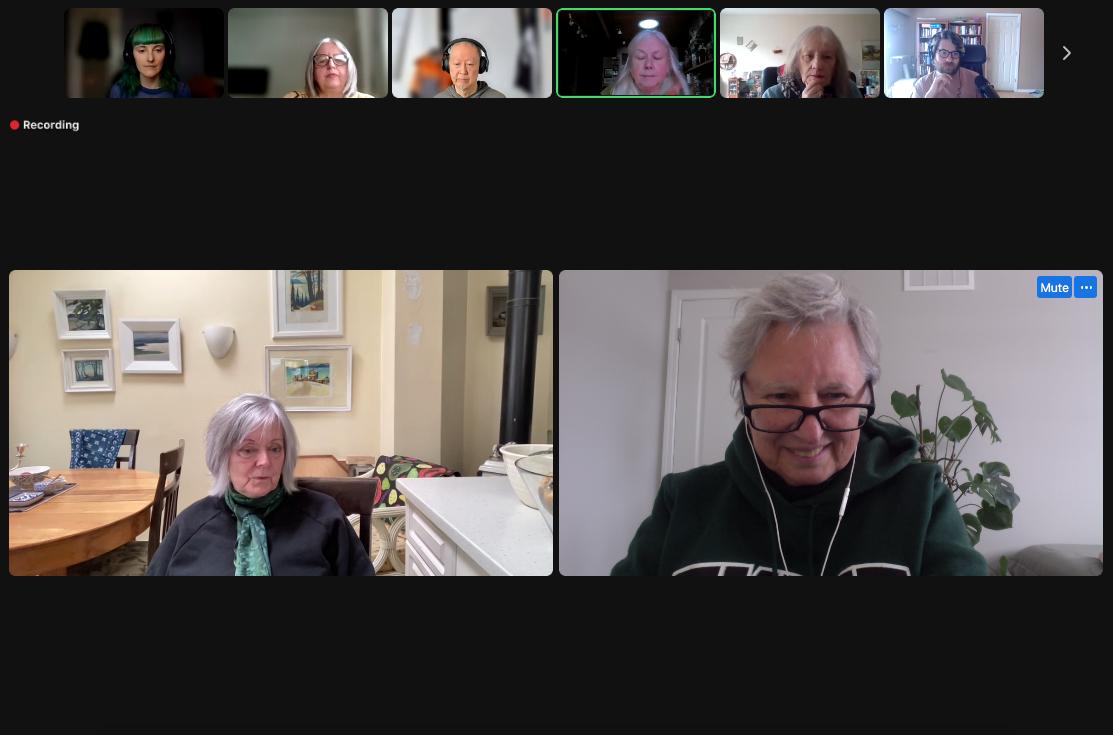
I recently participated in author readings from the eco-fiction anthology “Through the Portal: Tales from a Hopeful Dystopia.” Co-editor Lynn Hutchinson Lee and I opened the session with some introductory remarks, followed by readings by four of the anthology writers: Annaliese Schultz, Jade Wallace, Isabella Mori, and Matt Freeman.
Co-editors Lynn Hutchinson Lee and Nina Munteanu introduce the anthology at the reading; authors and moderator pictured above
.
The readings generated a lot of discussion about the nature and role of eco-fiction and stories in general on how we view the world and how that, in turn, influences the choices we make in life. Below, I include a short story excerpt and audience reaction for each author who read.
Annaliese Schultz read from her story Water & Oil. “Bursting from months, maybe years, of inertia born of dismay (engendered by the unending disasters of the world), Zip is instantly galvanized and greater than himself and gone.” One audience member shared that her story “sounded horrifyingly too possible.”
Jade Wallace read from her story Pluck. “It was only after I started working at the florist a few months ago that I began to think of plants as things that move. I learned that algae may swim towards the light; sundew can catch insects in their stalks; the leaves of touch-me-nots will slouch when they feel rain.” A member of the audience shared that “with what we now know about the way trees/plants communicate with each other, it was a neat story of crossing over to try to tell humans something.”
.
Jade Wallace reads from her story “Pluck”
.
Isabella Mori read from her story Shift. “Red Nelly, that’s what they called my grandmother; always looked a little dishevelled. So did her living room. Four book shelves were squeezed into the small room, sagging with dark tomes, oversized coffee-table books, Greenpeace brochures, and video cassettes that even her questionable looking TV couldn’t play anymore.” Someone in the audience mentioned that the author had woven a very human story. “Stories are sometimes better teachers than all other forms available to us. I felt moments of warmness and reflection.” Another audience member added, “The wisdom of animals and plants—there’s hope for the planet. I’m ordering this book from my local independent as soon as I close his meeting!”
Matt Freeman read from his story Birdseed: “Near the end I began to devote the bulk of my time to what I believed to be a gregarious individual of the species Corvus brachyrhynchos—the American Crow. By then a chemical scythe had begun to carve up the clouds hanging over the lands of ‘Vancouver’ in a psychedelic frenzy, and the shocked blue skyline often bled in shades of lime.” One audience member shared, “I loved he way ‘birdish’ words kept appearing: perch, cage. This may be Matt’s first published story, but I’m sure it won’t be the last.” Another audience member shared, “I loved the connection with the wisdom and personification of your crow.”
.
Nina Munteanu commenting on one of the readings
.
The readings generated a lot of discussion about the nature and role of eco-fiction and stories in general on how we view the world and how that, in turn, influences the choices we make in life.
Audience members shared that they found the readings inspiring. One member shared, “I find stories and poems have a more transcendent or at least deeper connection when read aloud. I wasn’t sure what to expect. So glad to be a part of this reading. The book sounds amazing.” Another member shared, “Keep hope alive!”
For more about how this anthology came about go to my previous post on Through the Portal.
.
.
Hopeful dystopias are so much more than an apparent oxymoron: they are in some fundamental way the spearhead of the future – and ironically often a celebration of human spirit by shining a light through the darkness of disaster. In Through the Portal: Tales from a Hopeful Dystopia, award-winning authors of speculative fiction Lynn Hutchinson Lee and Nina Munteanu present a collection that explores strange new terrains and startling social constructs, quiet morphing landscapes, dark and terrifying warnings, lush newly-told folk and fairy tales.–Exile Editions
“A stunning collection of short stories and poetry that address our most existential concerns.”
“Will ingenuity, love, and respect for the earth help us work through whatever changes might lie ahead? Through the Portal offers hope that these qualities, if not enough in and of themselves, will help us find our way.”
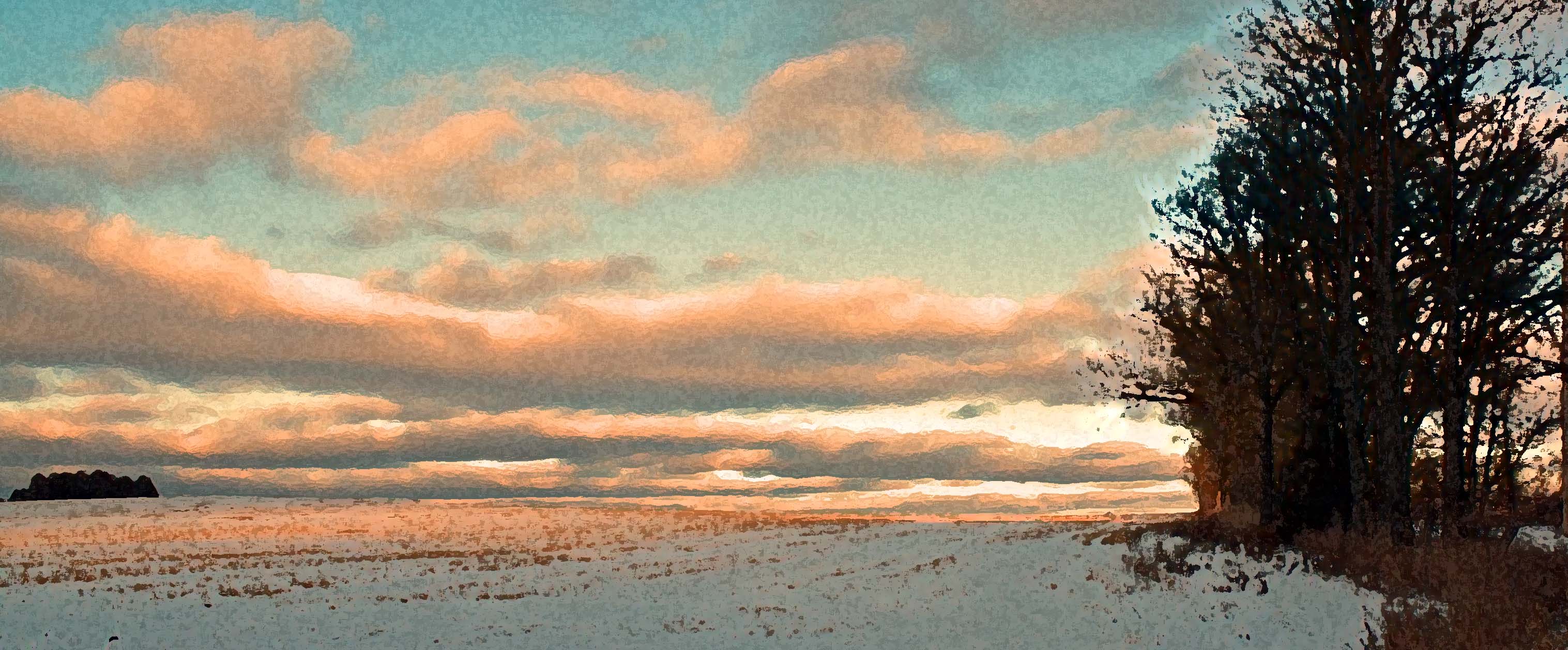
Farmer’s field at sunset, winter in Ontario (photo and rendition by Nina Munteanu)
.
Nina Munteanu is a Canadian ecologist / limnologist and novelist. She is co-editor of Europa SF and currently teaches writing courses at George Brown College and the University of Toronto. Visit www.ninamunteanu.ca for the latest on her books. Nina’s bilingual “La natura dell’acqua / The Way of Water” was published by Mincione Edizioni in Rome. Her non-fiction book “Water Is…” by Pixl Press (Vancouver) was selected by Margaret Atwood in the New York Times ‘Year in Reading’ and was chosen as the 2017 Summer Read by Water Canada. Her novel “A Diary in the Age of Water” was released by Inanna Publications (Toronto) in June 2020.
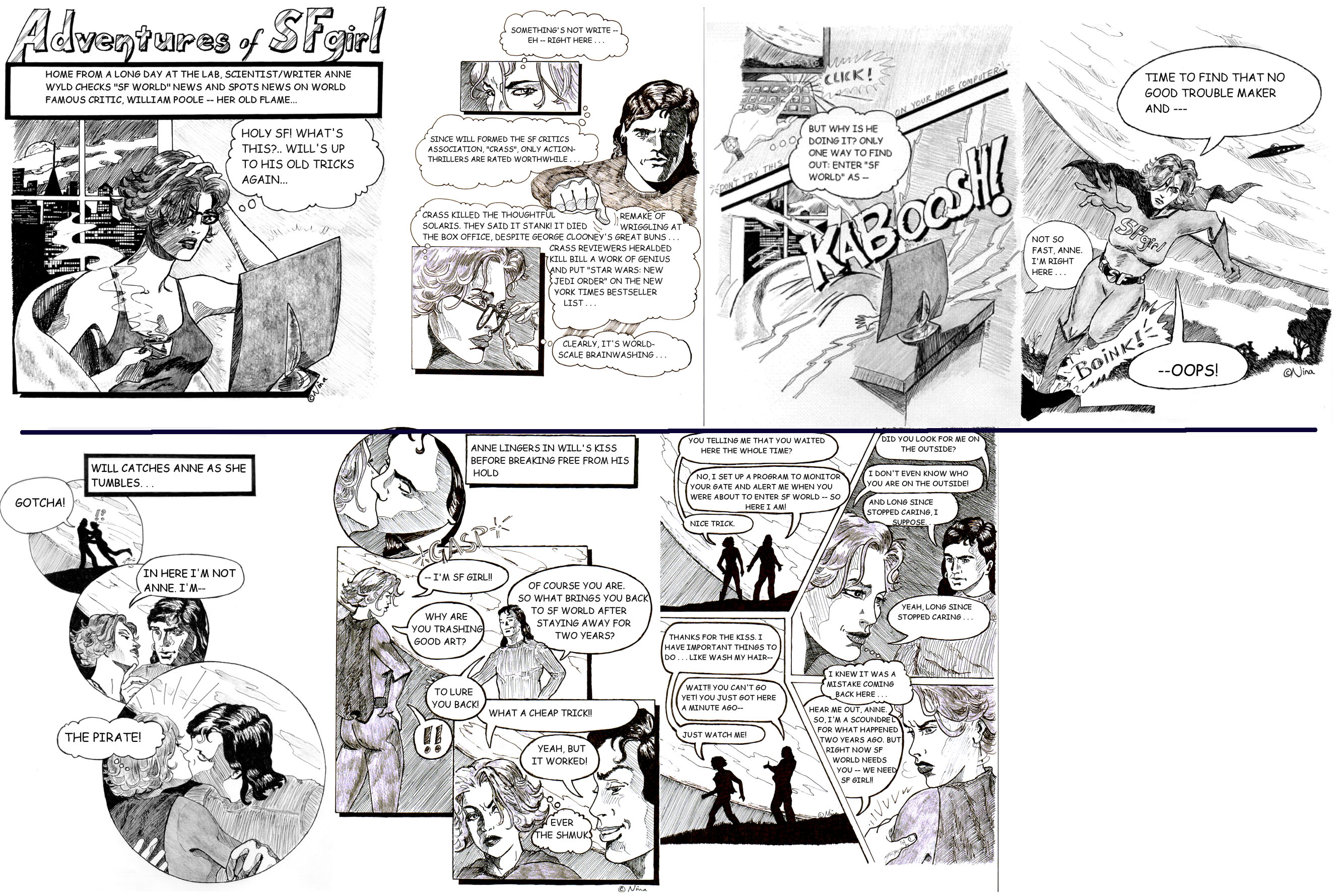
When I was little, I wanted to be a storyteller, a cartoonist specifically. I was reading graphic novels before I could read. That didn’t stop me from understanding what was going on. Being a virtual learner and an artist, I understood context: expressions, body language…
Nina, age three, pretending to read (photo by Martha Munteanu)
.
.
I wrote and drew wild adventure thriller detective stories and stories about exploring other planets. While my first love was telling stories, I was called by the needs of the environment. This percolated through me as I grew up and wouldn’t let go. When I could read and write, I still read graphic novels; I wrote and illustrated short stories about the environment, dystopian tales that focussed on how we were destroying our planet.
.
At school, I loitered in the hallways, pasting subversive posters on the walls. They were a call to action: Restrain … Reuse … Repurpose … Recycle … Remain true to the environment. I wrote in the school paper. I quoted global statistics, mentioned global warming (yes, people knew about it back in the ‘60s and ‘70s), and submitted cheesy emotional drawings of pollution and toxic waste.
By the time I was ready to go to university (I’d been accepted early into the fine arts program at Concordia University in Montreal), I switched my major on registration day. Like a horse bolting from a fire, I charged out of the arts and into the sciences. I’d heard environment’s call for help and had notions of becoming an environmental lawyer. I kept a few arts courses as electives but focused on a biology degree in the environmental sciences. I understood that the tools I needed to wield as an eco-warrior in law were rooted in science.
.
A twenty-some old Nina exploring the forest
.
I learned something about ecology, botany, animal, plant, and cell physiology, genetics and biochemistry, and limnology (the study of water systems). The sciences fascinated me and I became entranced in the study of how the natural world worked. I was particularly attracted by lichens, plant-like organisms called cryptogams that grow like miniature forests on substrates—trees,fence posts, rock, cement. My attraction was partly because these often overlooked organisms were actually more of a symbiotic community or mini-ecosystem: an intriguing community of fungi, algae, cyanobacteria, bacteria and yeast growing together. I felt that on some level, lichen had much to teach us on lifestyle and approach to living on this planet. They’d been around for millennia, a lot longer than we’ve been.
Having long abandoned law (I convinced myself that I wasn’t cut out for it; maybe I was but that’s another universe), I decided to pursue lichen ecology for my masters degree. But fate had another path in mind for me. The botany professor who I wished to study under was retiring and no one was taking her place. She referred me to the limnology professor and he got me interested in another microscopic community: periphyton (the algae and associated organisms that colonize plants, rock and cement in water).
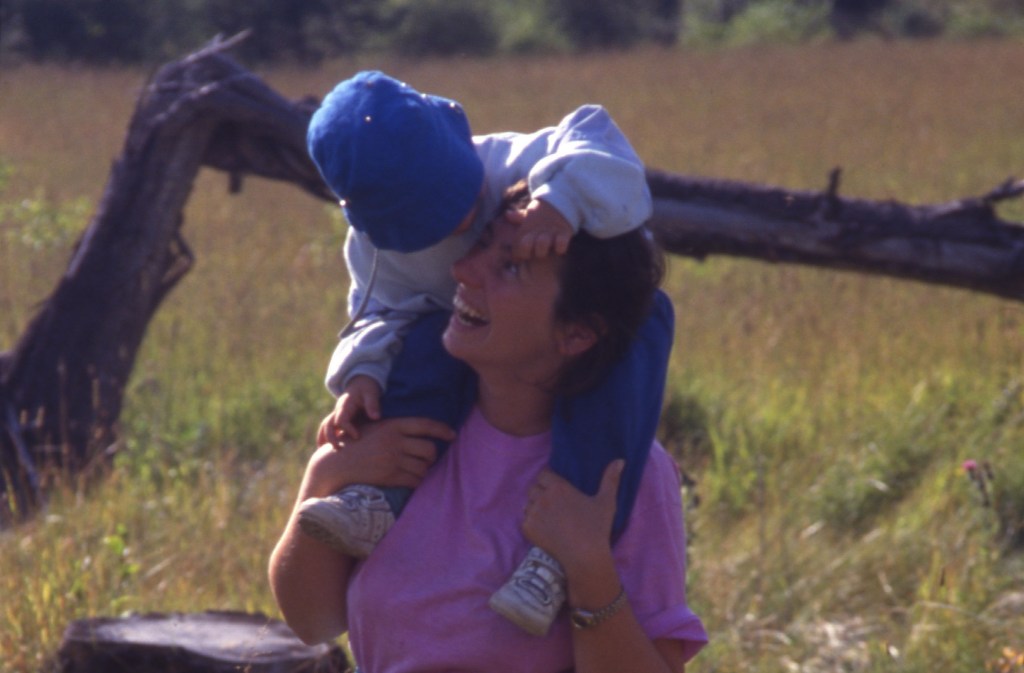
Nina and son Kevin explore nature (photo by Herb Klassen)
.
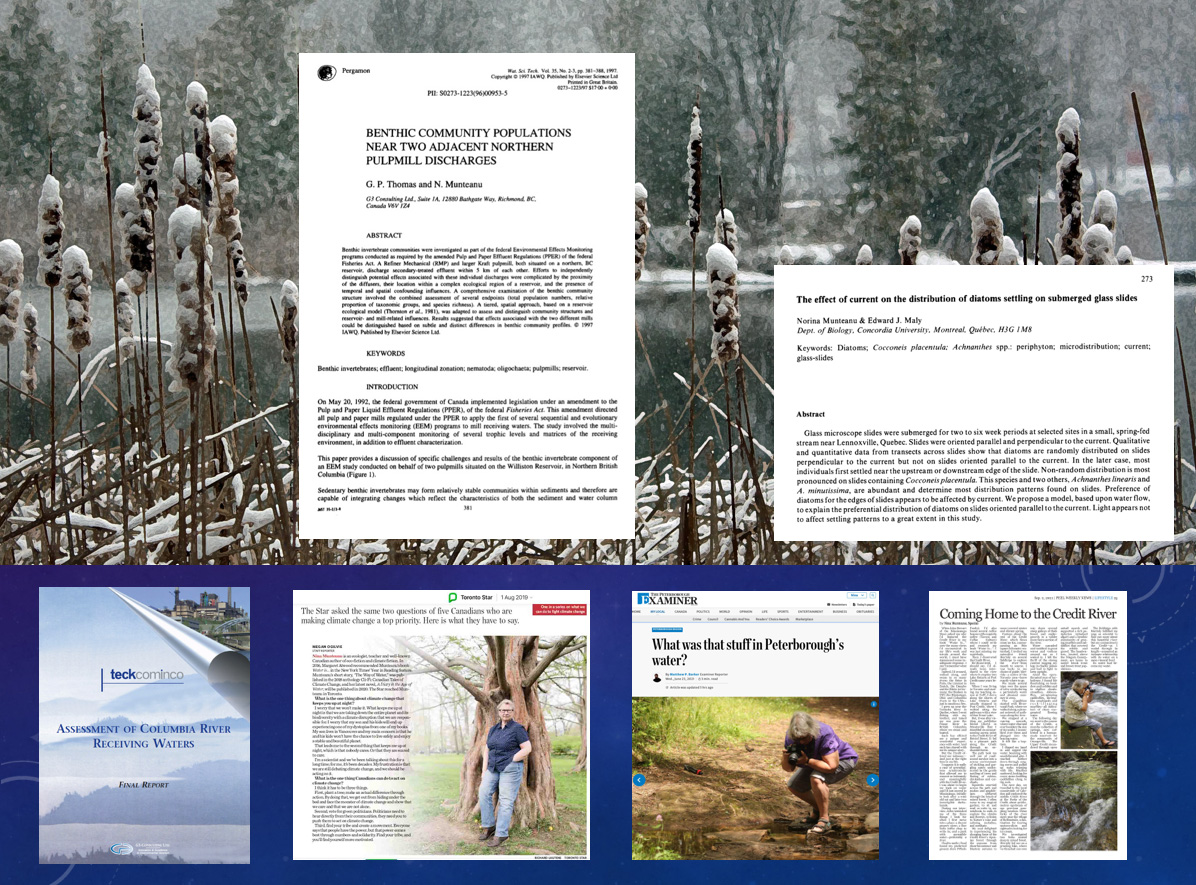
I’d come somewhat full circle to be an eco-warrior, pursuing environmental problems (and corporate mischief) through biology rather than law. I designed and conducted environmental impact assessments and recommended mitigation, restoration, and remediation procedures to various clients from lakefront communities and city planners to mining companies dealing with leaky tailings ponds and pulp mills discharging effluent into the ocean.
.
Various reports, scientific papers and articles I’ve written or been interviewed for
.
It worked for me. I consulted for twenty-some years. It was for the most part both satisfying and encouraging. I felt as though I was making a difference: mostly through educating my clients. But that became less and less the case as the consulting firms I worked for, and the corporations they worked for, seemed to have less and less integrity. They also seemed to care less about the environment and more about profit.
So, just as I’d done on the day of registration at university, I bolted like a horse in a fire and quit my job as a consultant. I never returned to consulting.
Nina photographing pollution of a small creek entering a drinking water source (photo by Matthew Barker, Peterborough Examiner)
My sights went back to storytelling, journalism, and reporting/interviews. Mostly eco-fiction. Creating narratives that would hopefully move people, nudge them to act for the environment. Change their worldview somewhat into eco-friendly territory. Make them care. I’m still an eco-warrior, but my pen and my storytelling is my tool.
The word is a powerful tool. And the stories that carry them are vehicles of change.
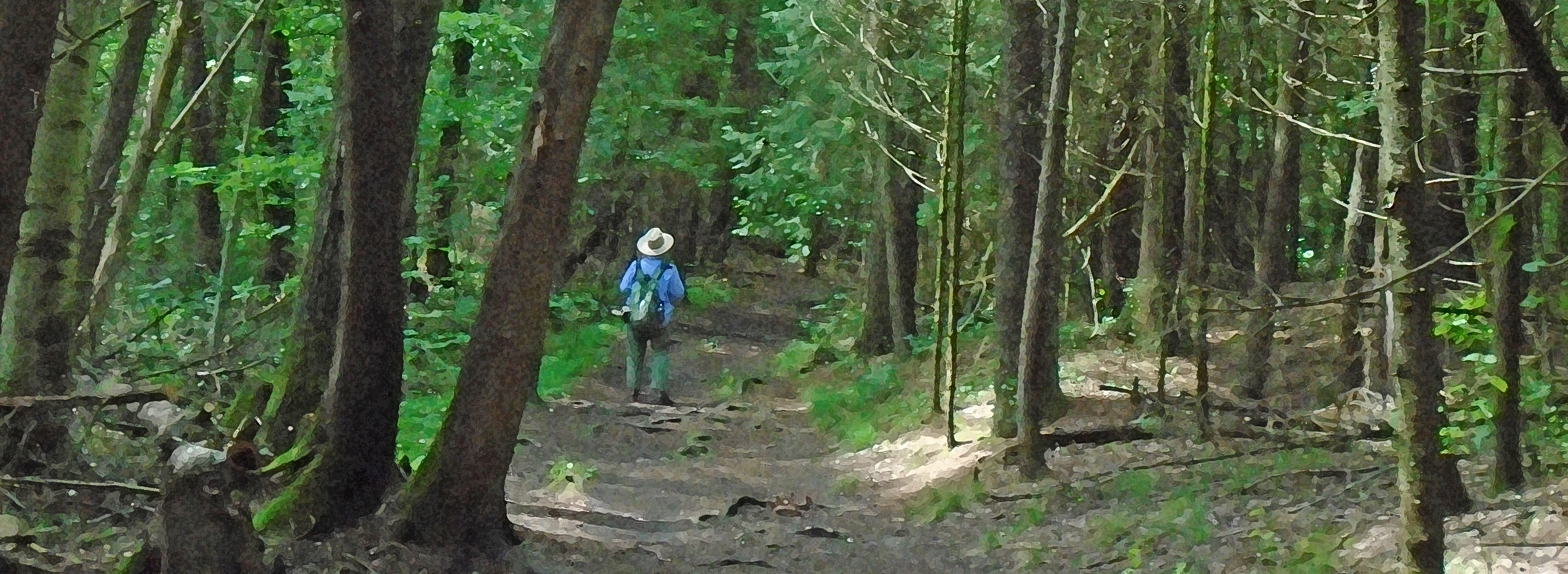
Nina Munteanu wandering the Emily Tract forest, ON (photo by Merridy Cox)
.
Nina Munteanu is a Canadian ecologist / limnologist and novelist. She is co-editor of Europa SF and currently teaches writing courses at George Brown College and the University of Toronto. Visit www.ninamunteanu.ca for the latest on her books. Nina’s bilingual “La natura dell’acqua / The Way of Water” was published by Mincione Edizioni in Rome. Her non-fiction book “Water Is…” by Pixl Press (Vancouver) was selected by Margaret Atwood in the New York Times ‘Year in Reading’ and was chosen as the 2017 Summer Read by Water Canada. Her novel “A Diary in the Age of Water” was released by Inanna Publications (Toronto) in June 2020.
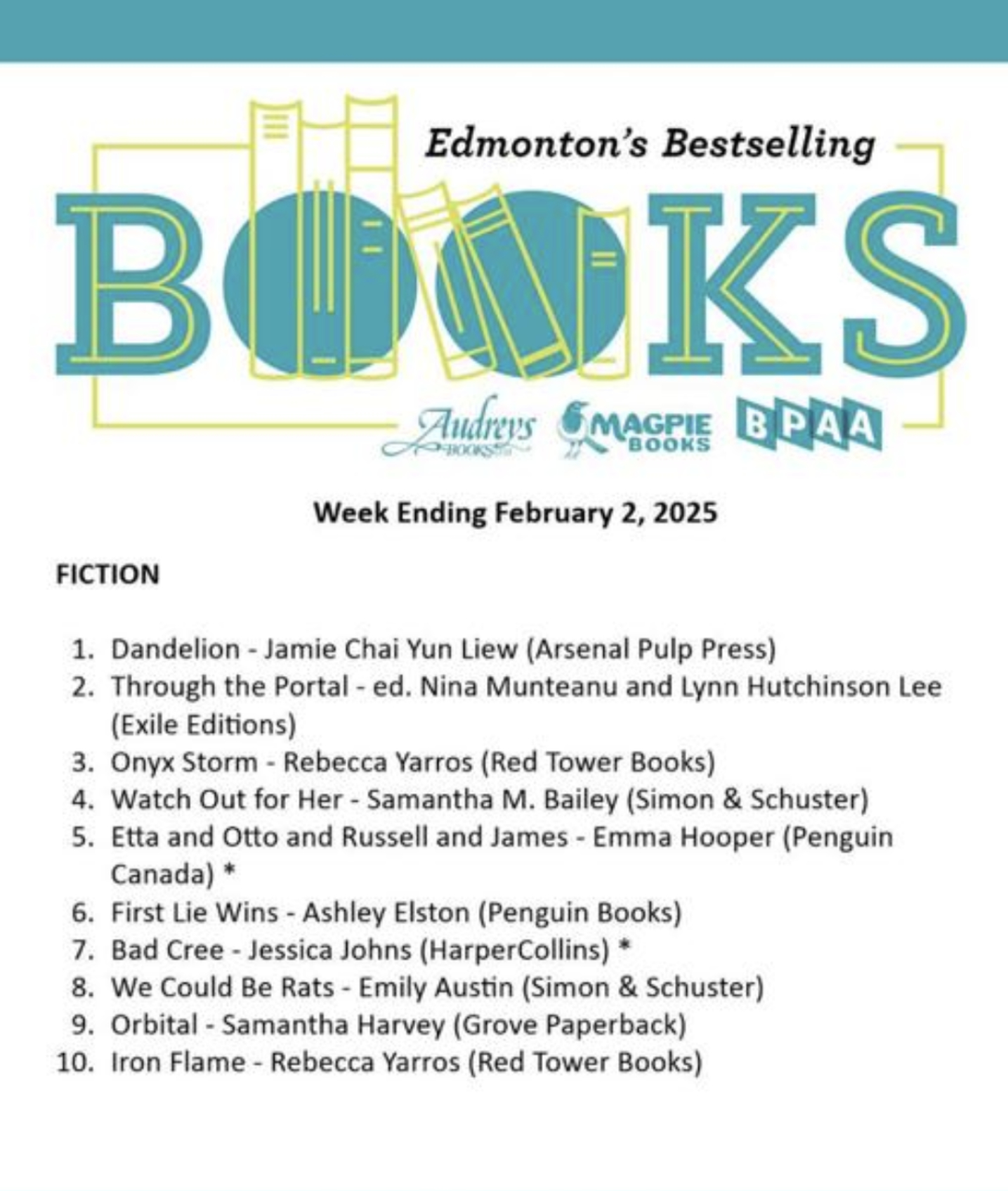
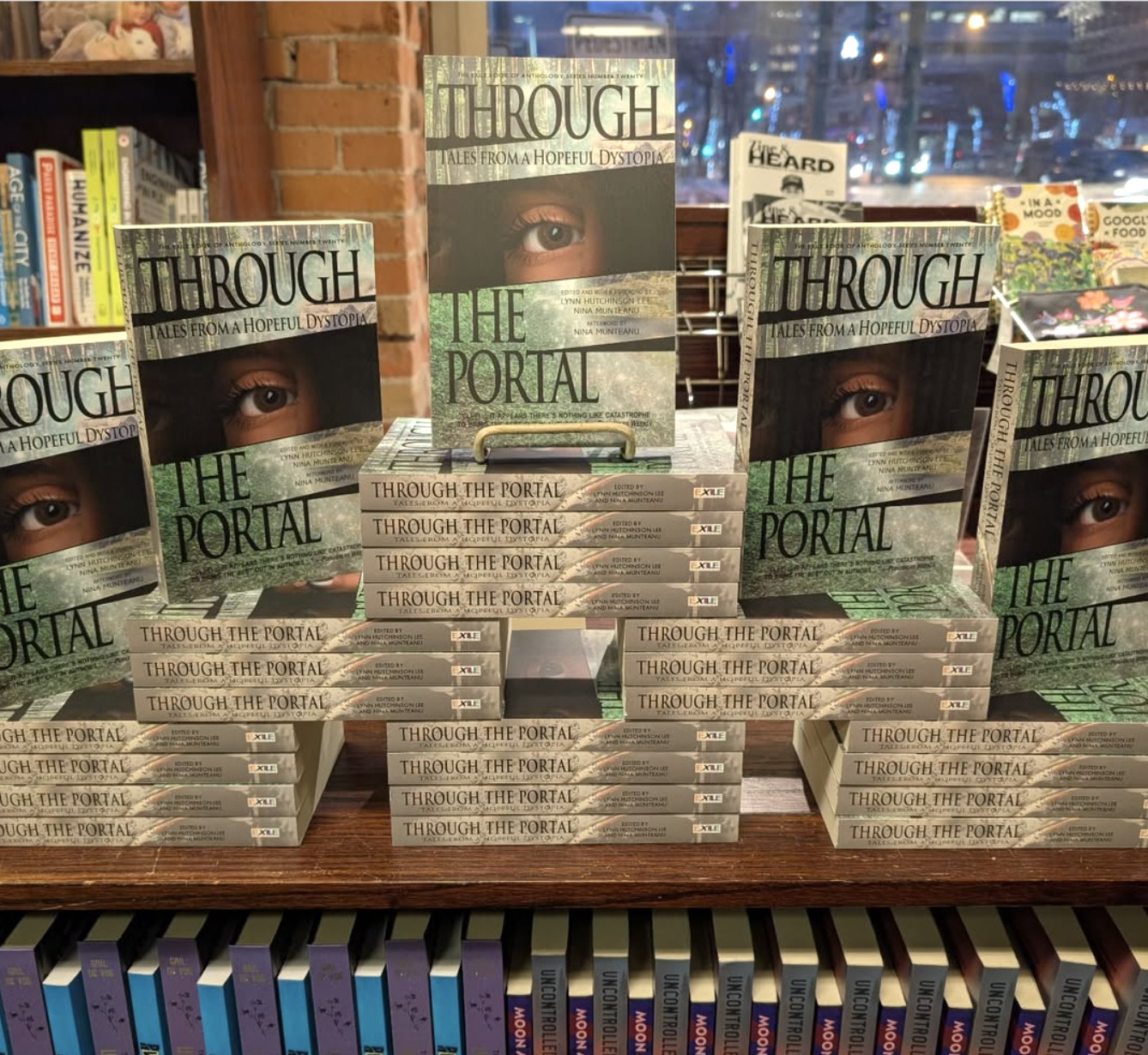
Through the Portal anthology continues to garner attention and accolades by reviewers, booksellers, and readers throughout Canada. Released December 31, 2024 and launched in several locations in Canada, Portal is celebrated for its hopeful lens on an otherwise bleak future with thirty-five unique short stories, flash fiction, and poetry and an afterward.
There are many faces for hope; this anthology has thirty-six of them. Each story in the anthology features a unique hopeful lens that draws from a diversity of authors from around the world and throughout Canada. Stories that touch on nostalgia to respect, enlightenment to endurance. In these tales that range from compassion and healing to cautionary warnings of dark insight, hope may wear a human face or the face of a tree, black crow, or leaf.
Hopeful dystopias are so much more than an apparent oxymoron: they are in some fundamental way the spearhead of the future – and ironically often a celebration of human spirit by shining a light through the darkness of disaster. In Through the Portal: Tales from a Hopeful Dystopia, award-winning authors of speculative fiction Lynn Hutchinson Lee and Nina Munteanu present a collection that explores strange new terrains and startling social constructs, quiet morphing landscapes, dark and terrifying warnings, lush newly-told folk and fairy tales.—Exile Editions
“A stunning collection of short stories and poetry that address our most existential concerns.”
Dragonfly.eco
“Will ingenuity, love, and respect for the earth help us work through whatever changes might lie ahead? Through the Portal offers hope that these qualities, if not enough in and of themselves, will help us find our way.”
The Seaboard Review
.
Nina Munteanu is a Canadian ecologist / limnologist and novelist. She is co-editor of Europa SF and currently teaches writing courses at George Brown College and the University of Toronto. Visit www.ninamunteanu.ca for the latest on her books. Nina’s bilingual “La natura dell’acqua / The Way of Water” was published by Mincione Edizioni in Rome. Her non-fiction book “Water Is…” by Pixl Press (Vancouver) was selected by Margaret Atwood in the New York Times ‘Year in Reading’ and was chosen as the 2017 Summer Read by Water Canada. Her novel “A Diary in the Age of Water” was released by Inanna Publications (Toronto) in June 2020.
Mermaids, arborists, and pollinators are among the characters to be found in Through the Portal: Tales from a Hopeful Dystopia. Edited by Lynn Hutchinson Lee and Nina Munteanu, this eco-fiction collection gathers over thirty stories that fall under the general umbrella of hopeful dystopias…
Through the Portal offers intriguing and imaginative glimpses into the future. As [one of its short stories] “A Fence Made of Names” suggests, we often don’t appreciate what we have until we lose it. By showing us what we stand to lose, these stories offer a reason to increase our actions to preserve the planet…
While many of the tales hint at dark times ahead, it was refreshing to find so many that offered a ray of hope despite that. Whether it’s finding the will to live another day, returning to a better relationship with the land and the Earth, or taking steps to improve the world in even a small way, these stories affirm humanity’s potential for resilience in challenging times.
Will ingenuity, love, and respect for the earth help us work through whatever changes might lie ahead? Through the Portal offers hope that these qualities, if not enough in and of themselves, will help us find our way.
Nina Munteanu is a Canadian ecologist / limnologist and novelist. She is co-editor of Europa SF and currently teaches writing courses at George Brown College and the University of Toronto. Visit www.ninamunteanu.ca for the latest on her books. Nina’s bilingual “La natura dell’acqua / The Way of Water” was published by Mincione Edizioni in Rome. Her non-fiction book “Water Is…” by Pixl Press (Vancouver) was selected by Margaret Atwood in the New York Times ‘Year in Reading’ and was chosen as the 2017 Summer Read by Water Canada. Her novel “A Diary in the Age of Water” was released by Inanna Publications (Toronto) in June 2020.
The environment and how we treat it has always been important to me since I was a child. My passion for storytelling morphed into writing, but the underlying spark came through environmental activism. I got a university degree in aquatic ecology, published numerous papers, and now write eco-fiction that is grounded in accurate science with a focus on human ingenuity and compassion. The most meaningful and satisfying eco-fiction is ultimately optimistic literature that explores serious issues with heroic triumph. Each of these five favourites intimately connects human to environment. Each novel moved me to think and deeply care.
The Books I Picked & Why
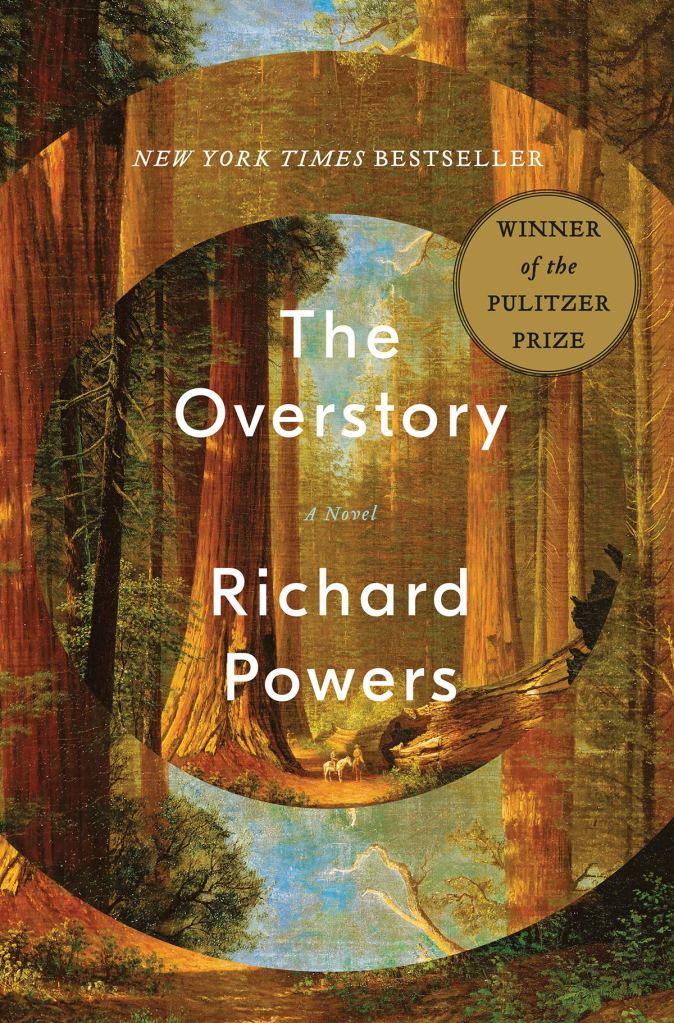
The Overstory
by Richard Powers
What resonated with me on so many levels was the author’s use of lyrical and beautiful language in describing trees and forests: as characters. I’m an ecologist and I felt a particular kinship with the botanist Patricia Westerford, a disabled introvert who must swim against the hegemonic tide with heretical ideas. When she argues that trees communicate, learn, trade goods and services, have intelligence and society, her scientific peers ridicule her and end her university career. This story is as much her triumph over overwhelming challenges as it is about the dwindling majestic forests that must quietly endure our careless apathy as they continue to offer their gift of life-giving oxygen and medicinal aerosols for hundreds of years.
.
Barkskins
by Annie Proulx
This 600-year saga about human-environment interaction through the forest industry in Canada evoked emotional connections with my environment, the Canadian forests, and the plight of indigenous Canadians. From the arrival of the Europeans in pristine forest to its destruction under the veil of global warming, Proulx weaves generational stories of two settler families into a crucible of terrible greed and tragic irony. The bleak impressions by the immigrants of a harsh environment crawling with pests underlie their combative mindset of a presumed infinite resource. I was particularly moved by the linked fate between the Mi’kmaq and the majestic pine forests, how both were similarly mistreated and changed. This history is also my legacy. As the daughter of immigrants, I felt both educated and moved.
.
The Breathing Hole
by Colleen Murphy, Siobhan Arnatsiaq-Murtphy and more
What struck me most was the use of simple language to portray powerful intimacy and connection between human and animal, and by extension, environment. Murphy’s humorous dialogue, together with sparing, often ironic, descriptions, struck deep into my heart. The play starts in 1535 on an ice shelf up north—when an Inuk widow risks her life to save a lost one-eared polar bear cub on an ice floe, and adopts him. In the last scene five hundred years later in the oily waters of the Northwest Passage, the same bear—starving and cruelly injured by eco-tourists on a cruise ship—struggles to keep from drowning. No one on the ship cares. No one weeps for him. But I did. I wept for him and for his world destroyed by apathy.
.
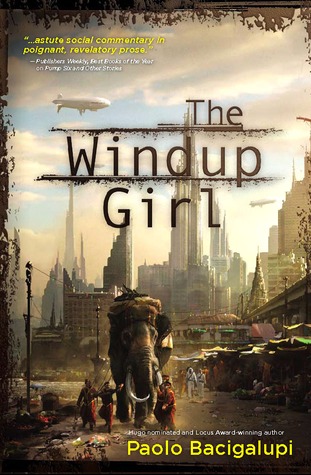
The Windup Girl
by Paolo Bacigalupi
Paolo Bacigalupi’s biopunk science fiction novelexplores a 23rd-century post-food crash Thailand after global warming has raised sea levels and depleted carbon fuel sources. The main character, Emiko, is a ‘windup,’ a modified human who is vilified and abused by humanity, despite her abilities. I was struck by how well this work of ‘mundane science fiction’ used Emiko as an avatar for a trickster Nature after abuse by humanity through the disrespect of reckless gene-hacking, greedy corporate espionage, and arbitrary foreign takeovers. I cheered Emiko’s breakaway from her oppressors as she emerged from a cloak of obedience and embraced her survival in this changing world of unintended consequences—only realizing later that I was cheering for that changing world and the optimism it promised.
.
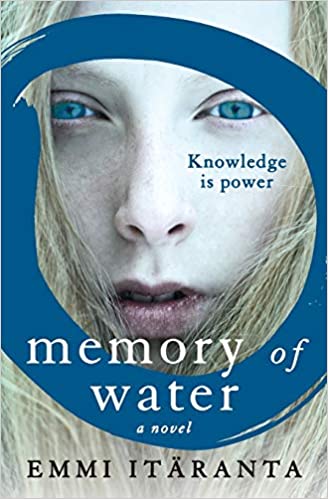
Memory of Water
by Emmi Itäranta
This book features a passion of mine as an ecologist and mother: water and how we treat it. Life-giving symbols of water flow throughout this story, which explores a post-climate change world of sea level rise in which freshwater is severely rationed due to scarcity. Water’s very nature is tightly interwoven with the main character, Noria, a tea master who guards a secret spring in the fell by her house against cruel government agents who would kill her for water crimes. In prose both sensual and lyrical, this book explores honor, sacrifice, betrayal, and friendship, and how each can be victimized through commodification in a power play of ideology. I found myself pulled in by the intrigue even as I cherished and lingered in the beautiful metaphoric prose.
.
Explore my eco-fiction book:
A Diary in the Age of Water follows the climate-induced journey of Earth and humanity through four generations of women, each with a unique relationship to water.
Centuries from now, in a dying boreal forest in what used to be northern Canada, Kyo, a young acolyte called to service in the Exodus, yearns for Earth’s past—the Age of Water—before the “Water Twins” destroyed humanity. Looking for answers and plagued by vivid dreams of this holocaust, Kyo discovers the diary of Lynna, a limnologist from that time of severe water scarcity just prior to the destruction. In her work for a global giant that controls Earth’s water, Lynna witnesses and records in her diary the disturbing events that will soon lead to humanity’s demise.
The feminist book review site Liisbeth recently wrote about A Diary in the Age of Water: “If you believe Canada’s water will remain free forever (or that it’s truly free now) Munteanu asks you to think again. Readers have called A Diary in the Age of Water “terrifying,” “engrossing,” and “literary.” We call it wisdom.”
Marcescent beech leaves among evergreen hemlocks, ON (photo by Nina Munteanu)
.
Nina Munteanu is a Canadian ecologist / limnologist and novelist. She is co-editor of Europa SF and currently teaches writing courses at George Brown College and the University of Toronto. Visit www.ninamunteanu.ca for the latest on her books. Nina’s bilingual “La natura dell’acqua / The Way of Water” was published by Mincione Edizioni in Rome. Her non-fiction book “Water Is…” by Pixl Press (Vancouver) was selected by Margaret Atwood in the New York Times ‘Year in Reading’ and was chosen as the 2017 Summer Read by Water Canada. Her novel “A Diary in the Age of Water” was released by Inanna Publications (Toronto) in June 2020.
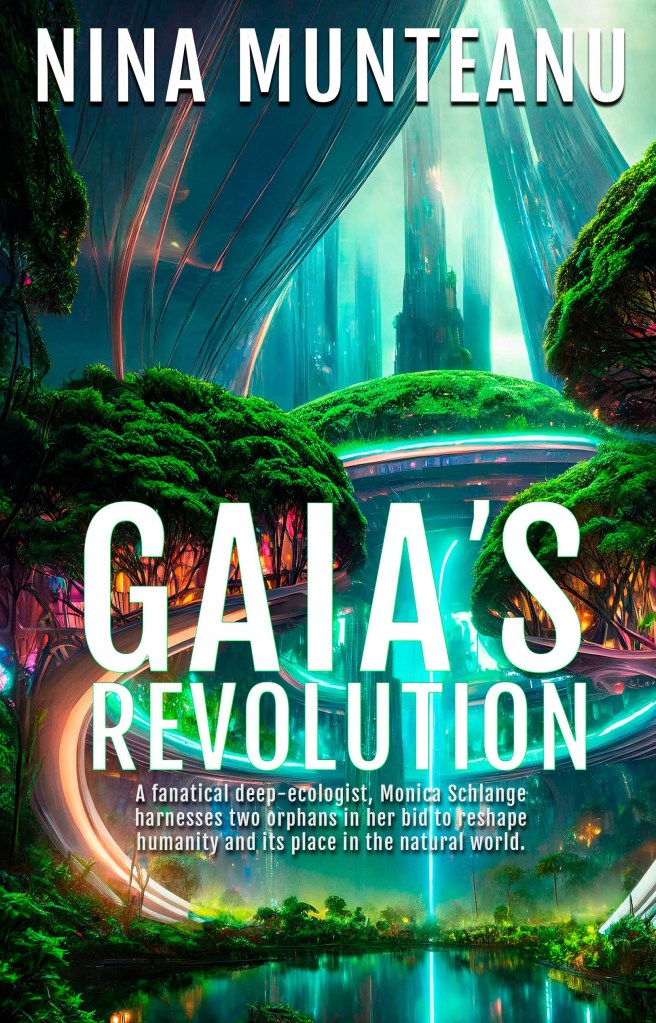
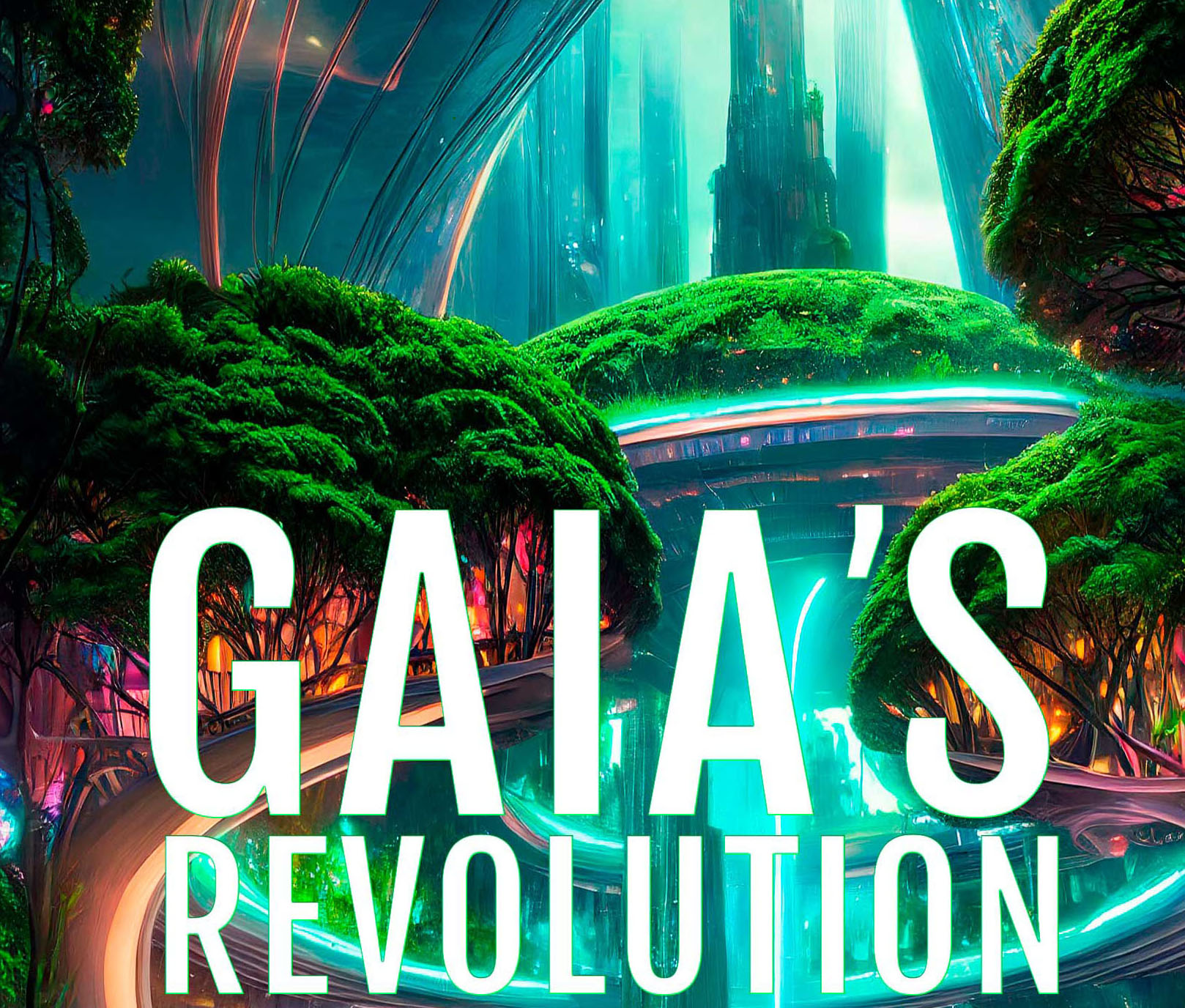
My upcoming book Gaia’s Revolution (Book 1 of The Icaria Trilogy by Dragon Moon Press) explores a collapsing capitalist society in Canada through ravages of climate change and a failing technology. The story is told through the lives of ambitious twin brothers Eric and Damien Vogel, and the woman who plays them like chess pieces in her gambit to ‘rule the world.’
.
It is 2032 and Eric Vogel sits in the Canadian prime minister’s office, ruminating on the changes coming. He imagines what a post-capitalist world will look like and how his twin brother Damien—left behind in Germany—would disagree with his vision:
Over a hundred years ago, Spartacist Rosa Luxemburg—who was shot by the right-wing Freikorps—argued that the “Bourgeois stands at the crossroads, either transition to socialism or regress into barbarism.” Both he and Damien agree with sociologist Wolfgang Streeck who argues that the end of capitalism—of a reigning bourgeois, in love with the objects that define them—is already underway. The signs are neon loud: a ruthless downward trend in economic growth, social equality, and financial stability. All reinforced by climate change and the ongoing collapse of the planet’s sustaining environment. Any system and dialectic based on a concept of infinite resources in a finite world is bound to fail eventually. That collapse has already begun and its catastrophic end is imminent. Already, climate refugees and refugees of resource war (which amounts to the same thing) have flooded northern nations, like Canada, and caused tension and strife. Germany is just one example where left and right have torn the country apart as an influx of foreigners challenged the already tenuous German identity. When Canada granted asylum to over two million climate-refugees in ‘28, with no viable plan for the new residents during a time when unemployment was higher than it had been in decades and housing prices were skyrocketing due to environmental uncertainty, this sparked renewed tensions between ultra-right and ultra-left and opened the gap for a new party based on science and reason. The party now in power: the Technocratic Party of Canada.
But what will life after capitalism look like?
It’s no surprise that he and his brother disagree on what a post-capitalist world should look like and how to best achieve that world. Damien too easily prescribes to the old leftist shibboleth of Nature being the answer to everything and Market being evil. His deep ecology utopia would spring from an atavistic rejection of modern life, a return to ‘the ancient farm.’ But how that fantasy could be achieved without a drastic population reduction is beyond his brother’s imagination. Damien fetishizes the natural world. Just like he does their mother. The naïve fool is a blind romantic, refusing to see reality right in front of him: that Nature is ultimately cruel, cold, and preoccupied with its own survival. Just like their mother.
.
Brother Damien recalls an earlier argument the two brothers had in Berlin that ultimately motivated him to follow his twin to Canada. They’d been debating about the effect of climate change on the human population:
.
Pulled down by a truculent mood, Damien responds to Eric’s usual glib solutions by painting a dark vision of a humanity descending into some pre-technological ‘dark age’ apocalypse.
Eric just laughs. He pokes his fork into the sauerkraut as if to make a point in his argument and scoops up a pile that he shoves into his mouth. He leans forward and argues with a full mouth, “The real question is not whether humanity will survive an ecological collapse, but what part of humanity will survive. You can be sure that the stinking boujee plutocrats will find a way to survive at the expense of everyone else.” He chews down the sauerkraut followed by a gulp of beer and a loud burp. “The stinking rich are already doing it, Dame. They’re already creating their Elysium right here, right now.” Fork now swings like a conductor’s baton. “The future is already here; it’s just unevenly distributed.”
Using his fingers, Damien pulls apart some crisp skin off the pork knuckle—his favourite part—and feeds his mouth. Arguing with Eric always makes him hungry despite his surly temper. He crunches down, enjoying the tasty juices of brazed salty pork skin, and retorts, “You politicize everything and resort to cheap references in pop culture. You always do that: over-simplify the crisis and Nature’s existential power to sustain life. Trophic cascades caused by ecosystem simplification would irreparably devastate the planet and all adapted life. With the Sixth Extinction Event there won’t be any boujee plutocrats because there won’t be anything left to monetize—”
“You’re such a doom-gloom lefty, Dame!” Eric grabs the last of the pork skin—also his favourite— and shoves it into his mouth. He smacks his lips and counters, “The stinking rich will always have technology at their disposal. I’m talking about genetic engineering, nano-technology, gene modification, cybernetics, and even environmental control. For instance, look at Harvard’s RoboBee: tiny robots that mimic flying insects that can fill in as pollinators for the crashing bee populations.”
“You over-estimate technology’s ability to save the planet—and us by extension.”
Eric finishes the pork skin and wipes his mouth on his sleeve with a sniff. “I’m not talking about saving the entire planet—just enough of it. You underestimate what we’re willing to do to survive.”
That is when he brings up E.P. Thompson’s paper on stages of a neoliberal capitalist civilization and the ‘extermination endgame.’ “You’re the population ecologist, Dame, but it’s obvious that when a neoliberal capitalist society exceeds its carrying capacity— when technology makes the masses surplus—there’s no alternative in the scramble for resources and ecological support. Get rid of the surplus. That simple. Thompson tells us that under military capitalism—and you have to accept that all countries are militarizing—the ‘outcome must be the extermination of multitudes.’”
“For God’s sake, Eric!”
“Technology will save humanity, Dame,” Eric insists. He leans back and stretches his legs under the laminate table in self-pleased satisfaction. “One way or another.”
Damien shakes his head and gulps down the last of his beer. “Whatever is left of humanity, you mean. And you accuse me of giving up on humanity. So, the greedy capitalist wins?”
“That’s why the world needs us, Dame. To keep humanity from going down the wrong road.”
And what is that for Eric, Damien wonders. Increasingly, he feels discomfort at what that might be. Eric leans forward, eyes bright with inspiration. He resembles a great bird of prey, long hawk-like nose—the iconic Vogel nose—and copious dark hair cresting back from a high forehead. It’s like looking at a more confident version of himself in the mirror, thinks Damien. And sometimes disconcerting, particularly when it reminds him of what he is not.
“You and I know that humanity won’t stop climate change,” Eric goes on animatedly. “Too many tipping points are already upon us and the direction we’re all going in now…” He swings his fork around the room to indicate this place, Germany, the world. “… isn’t promising to check that. Change is inevitable.” He points the fork at Damien. “But, if we can direct how humanity adapts to our changing environment, we can still win…” Before Damien can charge in with a rebuttal, Eric pushes his face forward, raptor eyes scintillating like sapphires on fire. “So, how do we de-thrown the ultra-rich elite—who are mostly a rabble of materialist self-serving hedonists with no vision or care for the future—and ensure a meritocracy of responsible citizens who can take humanity through the changes to come? … Like establishing a universal basic income toward an egalitarian society. Putting a full stop to fossil fuel mining and adopting clean energy. Re-wilding key ecosystems. Engaging reforestation and dedicating large areas to Nature.”
Damien shakes his head, lost for words. Where is his brother going with this? Will he suggest violent revolution to establish a dictatorship? How else would the rich give up their riches? And how is that any different from the Bolsheviks of 1917 or the Nazis of 1933 or the Stasi-run DDR? Those fascist Reichsbürgers would happily reinstate a society of surveillance, repression, and incarceration that would threaten to slide into the final solution of genocide of an unwanted ‘surplus’. A society of disposable bodies, a biopolitical world of exterminism. Damien thinks of Nietzsche’s aphorism: Beware that, when fighting monsters, you yourself do not become a monster … for when you gaze long into the abyss, the abyss gazes also into you. Violent revolution is not the answer, he decides.
Eric pulls out the worn copy of Walden Two from his jacket pocket. He slaps it on the table and pushes it toward Damien. “That’s the answer, Dame.”
.
.
Models of a Post-Capitalist Future Society
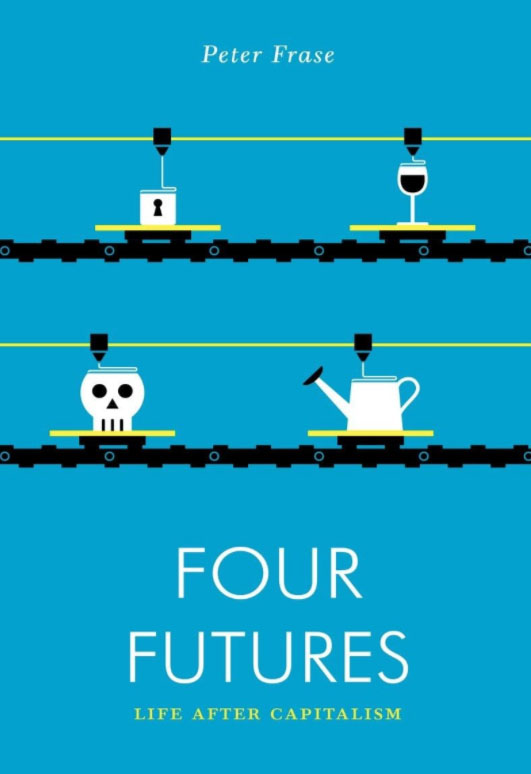
In his book Four Futures: Life After Capitalism , sociologist Peter Frase considers effects of climate change and automation in possible outcomes of a post-Trump election America. Frase envisions four scenarios based on abundance and scarcity and whether a society operates by equality (e.g., communism under abundance / socialism under scarcity) or hierarchy (rentism under abundance /exterminism under scarcity).
.
With scarce resources, the following scenarios are possible:
Socialism (aka Ecotopia) may arise within an egalitarian society if driven by altruistic notions of self-limitation. Ecologists describe such a self-limiting system as K-selected (see my discussion of K-selection and r-selection in “Water Is…”). A K-selected population is at or near the carrying capacity of the environment, which is usually stable and favors individuals that creatively compete, through cooperation, for resources and produce few young. The K-selected strategy runs on a successive gradient of maturity, from initially competitive to ultimately cooperative. Competition is a natural adaptive remnant of uncertainty and insecurity and forms the basis of a capitalist economy that encourages monopolization and hostile takeovers. Competition results from an initial antagonistic reaction to a perception of limited resources. It is a natural reaction based on distrust—of both the environment and of the “other”—both aspects of “self” separated from “self.” The greed for more than is sustainable reflects a fear of failure and a sense of being separate, which ultimately perpetuates actions dominated by self-interest in a phenomenon known as “the Tragedy of the Commons.” Competition naturally gives way to creative cooperation as trust in both “self” and the “other” develops and is encouraged through continued interaction.
Exterminism (aka Mad Max) may arise under a hierarchical model, driven by greed and exacerbated by uncertainty in the environment—not unlike what we are currently experiencing with the planet’s system and cyclical changes. In this scenario, in which resources are both limited and uncertain, those with access to them would guard or hide them away with desperate fervor.
“When mass labor has been rendered superfluous [through automation], a final solution* lurks: the genocidal war of the rich against the poor.”—Peter Frase
.
References:
Frase, Peter. 2016. “Four Futures: Life After Capitalism.” Verso Press, London. 150pp.
Luxemberg, Rosa. 1915. “The Junius Pamphlet: The Crisis in the German Democracy.” Marxists.org.
Munteanu, Nina “Gaia’s Revolution.” Book 1 of the Icaria Trilogy, Dragon Moon Press, upcoming.
Munteanu, Nina. 2016. “Water Is…The Meaning of Water.” Pixl Press, Vancouver. 586pp.
Streeck, Wolfgang. 2014. “How Will Capitalism End?” New Left Review 2 (87): 47p.
Thompson, E.P. 1980. “Notes on Exterminism: the Last Stage of Civilisation, Exterminism, and the Cold War.” New Left Review 1(121).
*the Final Solution was originally used by Nazi Germany as “the Final Solution to the Jewish Question”: the Nazi plan to exterminate the Jews during World War II, formulated in 1942 by Nazi leadership at the Wannsee Conference near Berlin, culminated in the Holocaust, which murdered 90 percent of Polish Jews.
.
.
Nina Munteanu is a Canadian ecologist / limnologist and novelist. She is co-editor of Europa SF and currently teaches writing courses at George Brown College and the University of Toronto. Visit www.ninamunteanu.ca for the latest on her books. Nina’s bilingual “La natura dell’acqua / The Way of Water” was published by Mincione Edizioni in Rome. Her non-fiction book “Water Is…” by Pixl Press (Vancouver) was selected by Margaret Atwood in the New York Times ‘Year in Reading’ and was chosen as the 2017 Summer Read by Water Canada. Her novel “A Diary in the Age of Water” was released by Inanna Publications (Toronto) in June 2020.
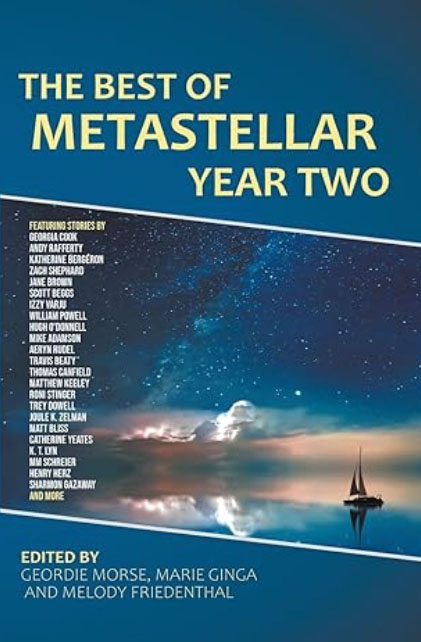
The third of MetastellarMagazine’s ‘Best of’ anthologies The Best of Metastellar Year Three was recently released and is available at numerous booksellers. Available in print and ebook, the anthology hosts forty-six riveting short stories of science fiction, fantasy and horror. This anthology also features my dark speculative story “Virtually Yours.” Their second ‘Best of’ anthology contained my short story “The Way of Water.”
Virtually Yours in The Best of Metastellar Year Three: In a world of seamless surveillance where virtual and real coalesce in a teasing dance, love is the trickster…
The Way of Water in TheBest of Metastellar Year Two: A woman stands two metres from a public water tap, dying of thirst in a water-scarce world rife with corporate/government corruption…
Nina tickled when her copy of “The Best of Metastellar Anthology Three” arrives in the mail
Nina Munteanu is a Canadian ecologist / limnologist and novelist. She is co-editor of Europa SF and currently teaches writing courses at George Brown College and the University of Toronto. Visit www.ninamunteanu.ca for the latest on her books. Nina’s bilingual “La natura dell’acqua / The Way of Water” was published by Mincione Edizioni in Rome. Her non-fiction book “Water Is…” by Pixl Press (Vancouver) was selected by Margaret Atwood in the New York Times ‘Year in Reading’ and was chosen as the 2017 Summer Read by Water Canada. Her novel “A Diary in the Age of Water” was released by Inanna Publications (Toronto) in June 2020.
My eco-fiction book A Diary in the Age of Water was recently cited along with Paolo Bacigalupi’s book The Water Knife, in an article on conflict risk in international transboundary water bodies.
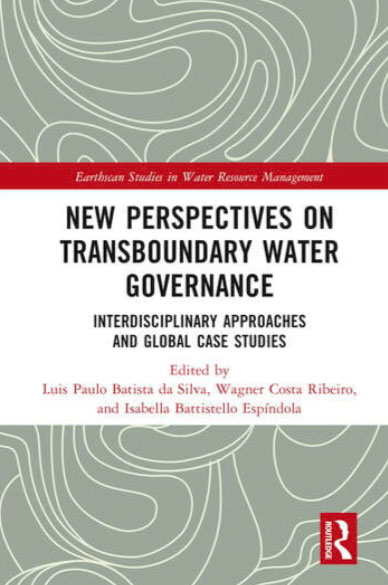
The citation was made in Ken Conca’s article (Chapter 1: “Climate change, adaptation, and the risk of conflict in international river basins: Beyond the conventional wisdom”) of the 2024 Routledge book “New Perspectives on Transboundary Water Governance:Interdisciplinary Approaches and Global Case Studies” (edited by Luis Paulo Batista da Silva, Wagner Costa Ribeiro, and Isabela Battistello Espíndola).
Conca begins his chapter with a statistic—an estimated 310 rivers in the world cross national borders, form borders, or both—and goes on to discuss the risk of conflict that naturally arises in such situations. Conca traces a rich history of disputes, with one of the oldest occurring between Lagash and Umma (present-day southern Iraq) in 2500 BCE. Conca explores the early warning indicators explored by the World Resources Institute that imply “a future in which our bordered politics, combined with hydrologic interdependencies, could yield a combustible mix of tension and grievances” and adds that several rivers flagged in the WRI study lie in regions of crhonic tension and political instability. He then includes a 2013 quote by former UN Secretary-General Ban Ki-moon:
“Our experiences tell us that environmental stress, due to lack of water, may lead to conflict, and would be greater in poor nations … population growth will make the problem worse. So will climate change. As the global economy grows, so will its thirst. Many more conflicts lie just over the horizon.” Ban also stated that climate change promised “an unholy brew that can create dangerous security vacuums” in which “mega-crises may well become the new normal.”
Conca makes his point by quoting the U.S. Center for Strategic and International Studies: “the real wild card for political and social unrest in the Middle East over the next 20 years is not war, terrorism, or revolution—it is water.”
Conca makes the connection with narratives of fiction:
“This framing of scarcity-induced conflict risk has even crept into the world of fiction. Paulo Bacigalupi’s dystopian novel The Water Knife (2016) portrays a parched southwestern United States of the near future. He foresees American states militarizing both their water relations (with corporate militias destroying infrastructure meant to divert water) and their borders (with the water-rich states seeking to keep thirsty migrant out, and the water poor states seeking to keep them in). Nina Munteanu’s A Diary in the Age of Water (2020) envisions Canada as a wholly-owned colony of the United States (itself owned by China). She describes a world in which Niagara Falls has been turned off and pet ownership is outlawed as an unacceptable water burden.”
Conca unpacks various misconceptions on sources of conflict and conflict resolution to do with transboundary water bodies. The chapter is very enlightening, as is the entire book!
The 2024 Routledge book “New Perspectives on Transboundary Water Governance:Interdisciplinary Approaches and Global Case Studies” (edited by Luis Paulo Batista da Silva, Wagner Costa Ribeiro, and Isabela Battistello Espíndola) is described by the publisher below:
This book presents a novel examination of transboundary water governance, drawing on global case studies and applying new theoretical approaches.
Excessive consumption and degradation of natural resources can either heighten the risks of conflicts or encourage cooperation within and among countries, and this is particularly pertinent to the governance of water. This book fills a lacuna by providing an interdisciplinary examination of transboundary water governance, presenting a range of novel and emerging theoretical approaches. Acknowledging that issues vary across different regions, the book provides a global view from South and Central America, Africa, Asia, and the Middle East, with the case studies offering civil society and public managers concrete situations that indicate difficulties and successes in water sharing between bordering countries. The volume highlights the links between natural resources, political geography, international politics, and development, with chapters delving into the role of paradiplomacy, the challenges of climate change adaptation, and the interconnections between aquifers and international development. With rising demand for water in the face of climate change, this book aims to stimulate further theoretical, conceptual, and methodological debate in the field of transboundary water governance to ensure peaceful and fair access to shared water resources.
This book will be of interest to students and scholars of water resource governance from a wide variety of disciplines, including geography, international relations, global development, and law. It will also be of interest to professionals and policymakers working on natural resource governance and international cooperation.
Nina Munteanu is a Canadian ecologist / limnologist and novelist. She is co-editor of Europa SF and currently teaches writing courses at George Brown College and the University of Toronto. Visit www.ninamunteanu.ca for the latest on her books. Nina’s bilingual “La natura dell’acqua / The Way of Water” was published by Mincione Edizioni in Rome. Her non-fiction book “Water Is…” by Pixl Press (Vancouver) was selected by Margaret Atwood in the New York Times ‘Year in Reading’ and was chosen as the 2017 Summer Read by Water Canada. Her novel “A Diary in the Age of Water” was released by Inanna Publications (Toronto) in June 2020.
Water Is… sits on the shelf at Banyen Books (photo by Nina Munteanu)
My books “Water Is… The Meaning of Water” and “A Diary in the Age of Water” are selling at Banyen Books in Kitsilano, Vancouver. While “A Diary in the Age of Water” is on Banyen’s virtual shelf for order, “Water Is…” sits on a shelf in the Water: Life-force & Resource / Ecology section.
“Water Is…” sits on the ‘water as life-force & resource’ shelf at Banyen Books, Vancouver (photo by Nina Munteanu)
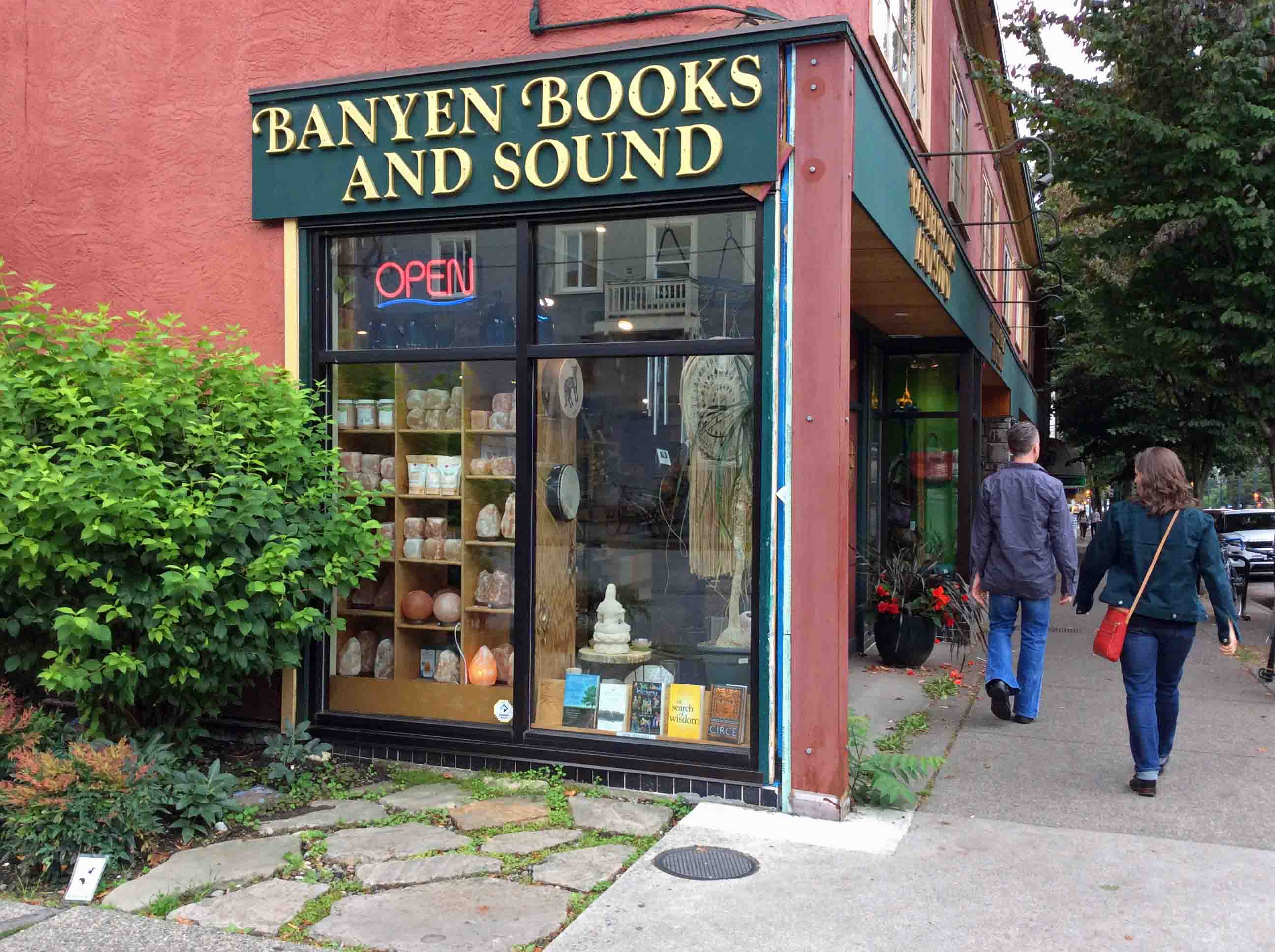
Banyen Books is located in Kitsilano on the south side of W 4th Avenue on the corner of Dunbar under a grove of healthy oak trees. Across the store is Aphrodite’s Organic Pies, itself a destination for awesome pies. Banyen Books is a beautiful store. It is spacious and surrounded with the warmth of wood and plants. Its wonderful atmosphere invites you to browse the shelves and sit on the comfortable chairs to read. Banyen Books has become a destination for me whenever I’m in Vancouver.
Banyen Books on the corner of W 4th and Dunbar, Vancouver, BC (photo by Nina Munteanu)
Since opening in 1970 Banyen Books has become Canada’s most comprehensive metaphysical bookstore, offering a broad spectrum of resources from humanity’s spiritual, healing, and earth wisdom traditions. Here is how they put it:
Banyen is an oasis, a crossroads, a meeting place… for East and West, the “old ways” and current discoveries and syntheses. Our beat is the “Perennial Philosophy” as well as our evolving learning edges and best practices in a wide variety of fields, from acupuncture to Zen, from childbirth and business to the Hermetic Mysteries, from the compost pile to the celestial spheres. We’re “in the philosophy business,” on “a street in the philosophy district” (as an old cartoon wagged). We welcome and celebrate the love of wisdom, be it in art, science, lifecraft, healing, visioning, religion, psychology, eco-design, gardening… Our service is to offer life-giving nourishment for the body (resilient, vital), the mind (trained, open), and the soul (resonant, connected, in-formed). Think of us as your open source bookstore for the “University of Life”.
Whenever I’m in Vancouver to visit family and friends, I make at least one stop at Banyen Books and often come out with an armful of books. On my most recent stop, I purchased a book on plant intelligence and several beautiful journals (I use a journal for each book project I work on).
My latest purchase at Banyen Books (photo by Nina Munteanu)
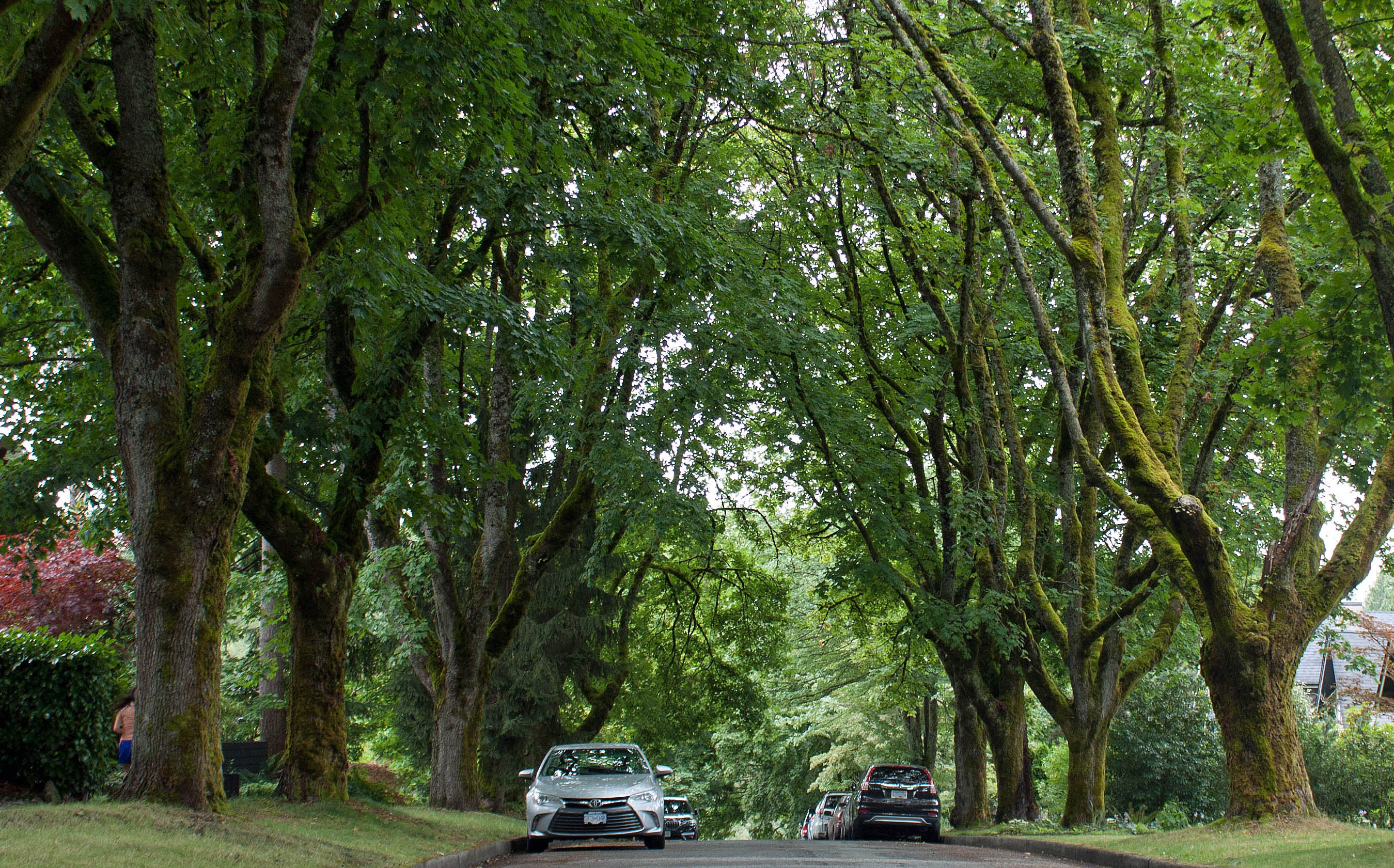
19th Avenue in Vancouver, BC (photo by Nina Munteanu)
Nina Munteanu is a Canadian ecologist / limnologist and novelist. She is co-editor of Europa SF and currently teaches writing courses at George Brown College and the University of Toronto. Visit www.ninamunteanu.ca for the latest on her books. Nina’s bilingual “La natura dell’acqua / The Way of Water” was published by Mincione Edizioni in Rome. Her non-fiction book “Water Is…” by Pixl Press (Vancouver) was selected by Margaret Atwood in the New York Times ‘Year in Reading’ and was chosen as the 2017 Summer Read by Water Canada. Her novel “A Diary in the Age of Water” was released by Inanna Publications (Toronto) in June 2020.























 Nina Munteanu Writing Coach