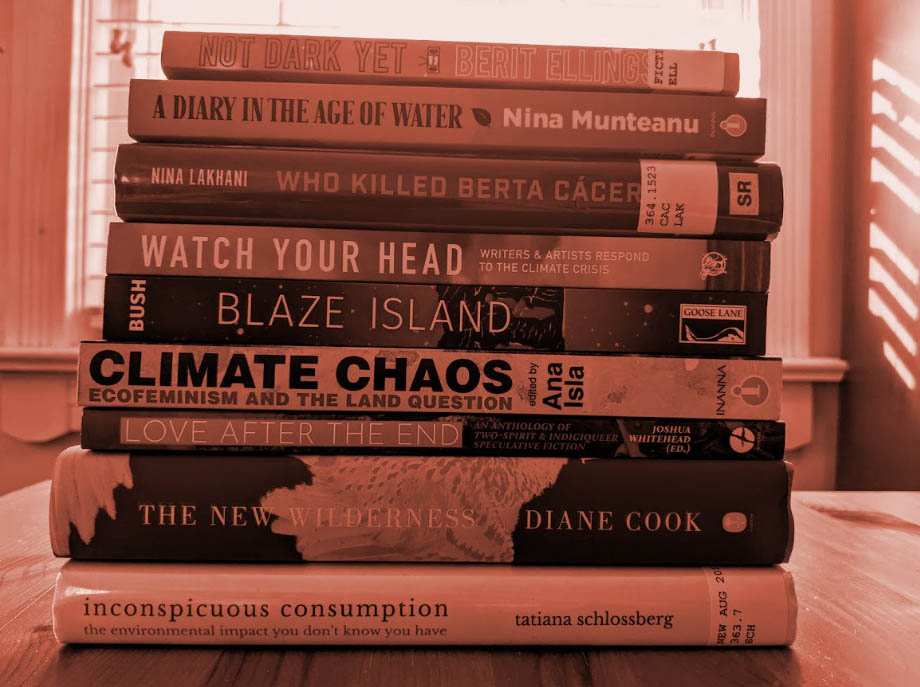
“It’s hard to resist identifying the author with Lynna, the most prominent character, who also works as a limnologist, although her employment is increasingly precarious, as her timeline hastens toward ecological devastation.
A predominantly female cast, a mythic forming narrative and, most saliently, the focus on water, all made this an interesting read for me.
The book’s epigraphs are from Maude Barlow and the chapter’s epigraphs from textbook definitions (sometimes excerpts from limnology tests), and there are even cutaway diagrams that you’d expect in lecture hall.
Ultimately it exists in an in-between place, some mystical elements of the generational tale possibly alienating the dedicated science-y readers and the instructional elements possibly alienating fiction devotees. And, yet, I read on: strangely compelling.”
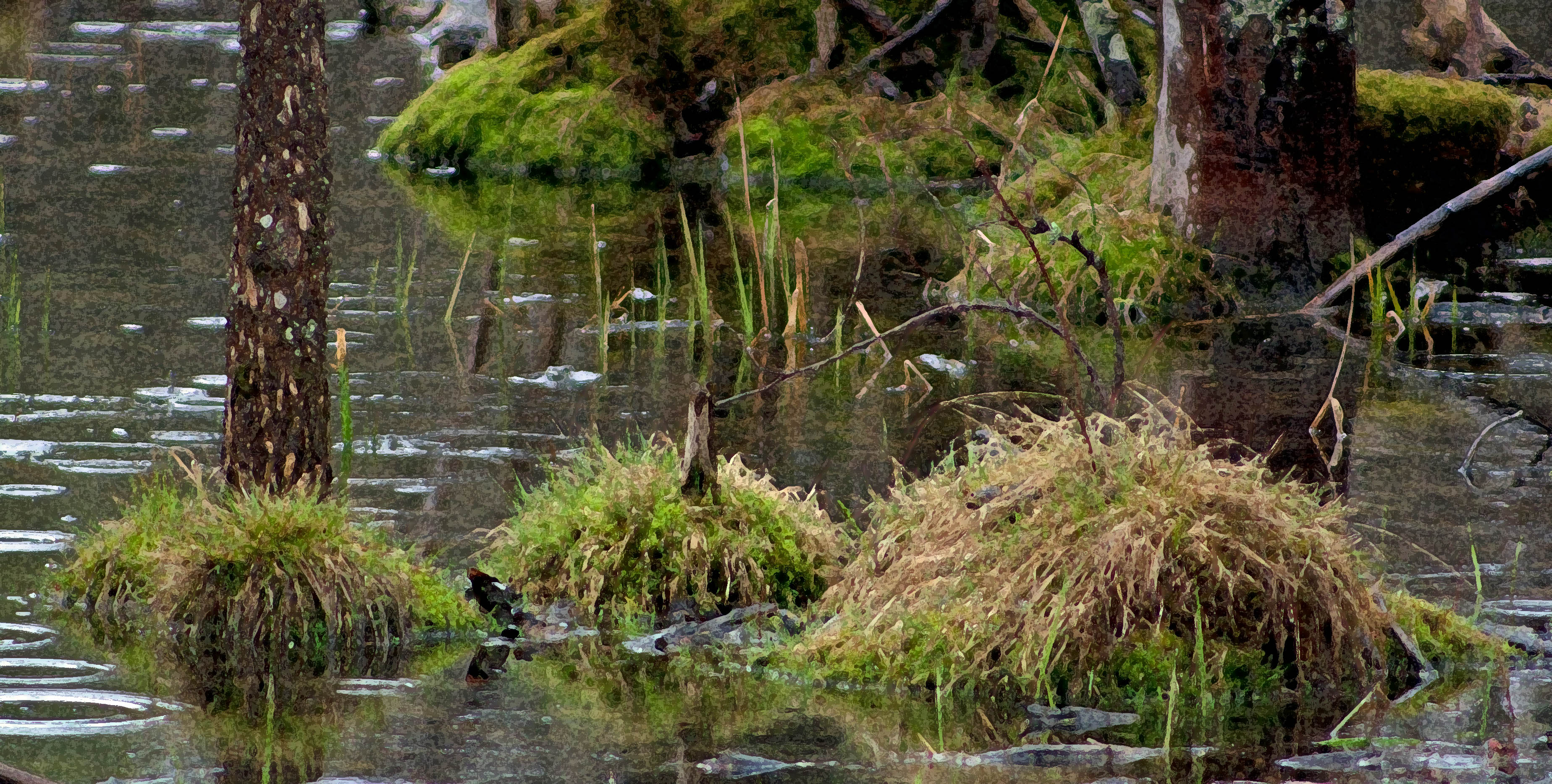
Forest swamp in Kawarthas in spring, ON (photo and dry brush rendition by Nina Munteanu)
Nina Munteanu is a Canadian ecologist / limnologist and novelist. She is co-editor of Europa SF and currently teaches writing courses at George Brown College and the University of Toronto. Visit www.ninamunteanu.ca for the latest on her books. Nina’s bilingual “La natura dell’acqua / The Way of Water” was published by Mincione Edizioni in Rome. Her non-fiction book “Water Is…” by Pixl Press(Vancouver) was selected by Margaret Atwood in the New York Times ‘Year in Reading’ and was chosen as the 2017 Summer Read by Water Canada. Her novel “A Diary in the Age of Water” was released by Inanna Publications (Toronto) in June 2020.
From Anne in Monument Valley, Arizona, to George in Brighton Pier, UK … from Heather coasting on the Ohio River to Noah gliding in a BC Ferry and Jo-Anne basking in the Gulf Islands of BC Canada … from Honoka in Kyoto’s Higashiyama District and Mika in Kyoto’s Bamboo Forest to Rick in his cozy Alberta home and Viviann in a cozy café … from Anne with her favourite dog in Ladner Marsh and Margaret with a favourite ale in an outdoor pub to Carina beside her favourite Buddha and Cathy by her favourite pool …and Noah wearing his hat …
People are reading Darwin’s Paradox.
Nina Munteanu is a Canadian ecologist / limnologist and novelist. She is co-editor of Europa SF and currently teaches writing courses at George Brown College and the University of Toronto. Visit www.ninamunteanu.ca for the latest on her books. Nina’s bilingual “La natura dell’acqua / The Way of Water” was published by Mincione Edizioni in Rome. Her non-fiction book “Water Is…” by Pixl Press(Vancouver) was selected by Margaret Atwood in the New York Times‘Year in Reading’ and was chosen as the 2017 Summer Read by Water Canada. Her novel “A Diary in the Age of Water” was released by Inanna Publications (Toronto) in June 2020.
On Writing My First Speculative Fiction Novel: The Darwin-Angel Duology
The first novel I wrote at the tender age of fifteen was Caged in World, a hundred-page speculative story about a world that had moved “inside” to escape the ravages of a harsh post climate-change environment.
It was 1969, the year that humans first stepped on the moon and the first Concorde test flight was conducted in France. But I was concerned by the environment and what was happening on our planet. It was seven years since Rachel Carson had published Silent Spring, which warned of our declining bird and bee populations and impacts to human health from unregulated pesticide/herbicide use (such as carcinogens and hormone disruptors). It was just a year after Paul Erlich’s Population Bomb warned that attempts to stretch the Earth’s resources to support the ever-growing population would result in mass starvation, epidemics, and, ultimately, the breakdown of social order.
In the 1960s it was already apparent that environmental imbalance and destruction were global concerns and we were on the brink of an environmental crisis. Unchecked deforestation was destroying forests around the world, including the boreal and old-growth forests of my own country Canada. Brazil had already begun cutting down trees and burning forest at an alarming rate. Unregulated use of pesticides, herbicides and growth hormones created toxic contamination of our natural world and our food and water supply—despite Carson’s dire warning with Silent Spring. Our waterways were being contaminated by mining wastes and industrial effluents. Killer smog. Noxious algal blooms. Oil spills. Dead zones. The list was growing.
Bamboo Forest, Kyoto, Japan (photo by Nina Munteanu)
I joined S.T.O.P. (Society To Overcome Pollution) and marched in protests to call for responsible behaviour by governments and large corporations. I tried to raise awareness at my school about our deteriorating environment and likely consequences to human survival; my own teachers tried to silence me. I wrote my first dystopia, Caged in World. The eco-novel was about a subway train driver and a data analyst caught in the trap of a huge lie. The story later morphed into Escape from Utopia. My dad, who was impressed with my dedication and what I’d done, became my first agent; he brokered a meeting with a Doubleday editor he’d met and impressed (my dad was a character and very charming); I did my first book pitch at age sixteen. The editor read my book and, while he didn’t pick the book for Doubleday, he told me that the story was original and imaginative and that I should keep writing.
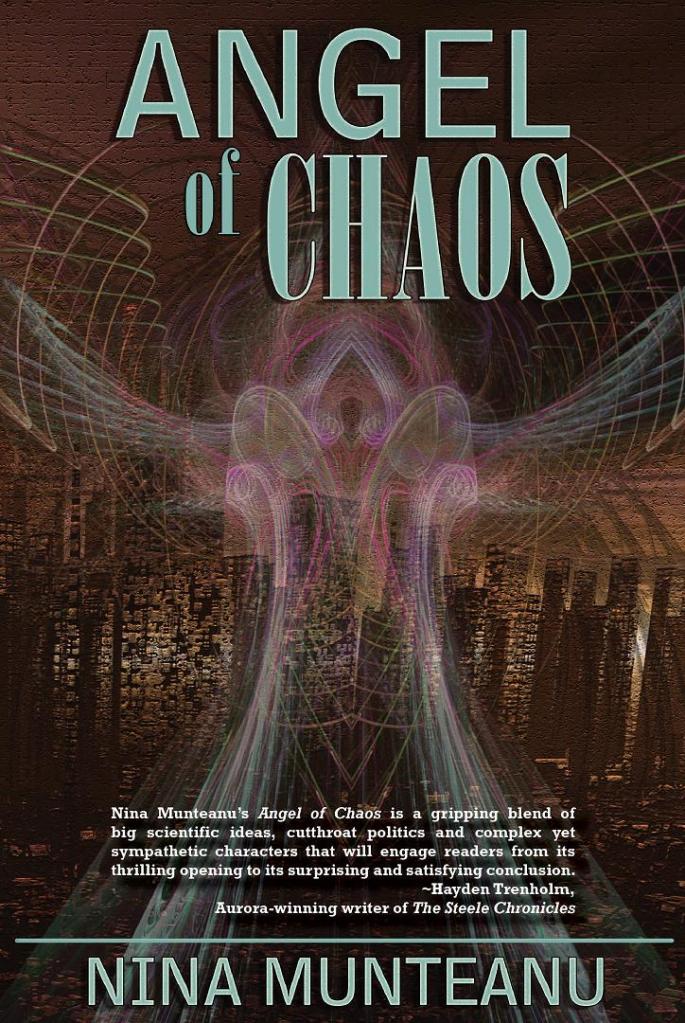
Several drafts—and years later—the novel became the eco-medical thriller Angel of Chaos, set in 2095 as humanity struggles with Darwin’s Disease—a mysterious neurological environmental pandemic. Icaria 5 is one of many enclosed cities within the slowly recoving toxic wasteland of North America, and where the protagonist Julie Crane works and lives. The city is run by technocrats, deep ecologists who call themselves Gaians, and consider themselves guardians of the planet.
The Gaians’ secret is that they are keeping humanity “inside” not to protect humanity from a toxic wasteland but to protect the environment from a toxic humanity.
Since she was a young child, Julie has been hearing voices in her head. She’s not a schizophrenic, but a gifted veemeld (someone who can tap into machine intelligence wavebands). Feeling an inexplicable “karmic” guilt and intent on making a contribution to her society, Julie searches for a cure to Darwin Disease; instead, she makes a horrifying discovery that incriminates her in a heinous conspiracy to recast humankind.
“This is a story with great scope … As Julie finds out the truth about her father, she discovers a truth that will tear her world apart.“
Bill Johnson, author of “a story is a promise”
By virtue of their gifted powers in communicating with the machine world, veemelds are considered a commodity, to be used, traded, hoarded and discarded by ruling technocrats all over North America.
I spent several years shopping the book to agents and publishing houses. Although I received many bites, all finally let go. In the meantime, I did several things: 1) I started writing short stories, some of which were cannibalized from the book, and several were published; 2) I wrote Angel’s prequel, The Great Revolution (never published, it sits in a drawer hibernating) and Angel’s sequel Darwin’s Paradox, (which was published). In fact, in 2007, Dragon Moon Press in Calgary made an offer to publish Darwin’s Paradox; the sequel became my debut novel. Dragon Moon Press later picked up Angel of Chaos and published it in 2010 as a prequel.
“Angel of Chaos is a gripping blend of big scientific ideas, cutthroat politics and complex yet sympathetic characters that will engage readers from its thrilling opening to its surprising and satisfying conclusion.”
Hayden Trenholm, Aurora-winning author of The Steele Chronicles
Darwin’s Paradox follows humanity in its cloistered indoor world as it deteriorates with the disease. Darwin’s Disease—related to indoor living—sweeps across humanity with debilitating genetic deterioration, violent death and the promise of extinction. This is something the self-professed deep ecology Gaians are content to see in—if it means preserving the natural world. Of course, the Gaians—being self-serving humans after all—have an exit plan.
In 2012, Derek Newman-Stille of Speculating Canada wrote an essay on Darwin’s Paradox entitled “Patient Zero and the Post Human”; the article provides an insightful description of the eco-novel and interesting historical context and irony to our current situation with the COVID-19 pandemic:
“In Darwin’s Paradox Nina Munteanu displays her awareness of scientific discourse: focussing on areas like chaos theory, biological theories of co-evolution, symbiosis and virology, and ecological theories. Her protagonist, Julie, is patient zero in a spreading epidemic that has infected most of modern civilisation. Munteanu creates a civilisation where human society is centred around a few urban locales, leaving large parts of the world unoccupied by human beings, and allowing for ecological development uninterrupted by human interference. Technology in this future world has fused with the viral epidemic, questioning the barriers of the human and the nature of human existence. The nature of humanity has changed with this introduction of other elements into the human biosystem, creating a post-human world in which the possibilities of the future of human existence are called into question, and in which several powers are vying for control of the next stage of humanity and the future of the human race.
Munteanu’s Darwin’s Paradox illustrates a collision of past and future as Julie is haunted by her past and ideas of home, while simultaneously representing a next stage in human evolution. The city Icaria 5 itself is a representation of past and present intersecting: buried under the city of Toronto and rising from the structures of the past. Munteanu’s plot is full of family secrets, the hidden past, and the resurfacing of guilt (particularly Julie’s guilt about being patient zero in the spreading viral apocalypse). She explores the draw of the past and home and the continual pull the past has upon one’s existence. Munteanu explores Julie’s simultaneous desire to return home and her realisation that home has forever changed – becoming a foreign place.
Munteanu explores society’s fear of epidemic and the role of medical technology as a mechanism for solving all of the world’s problems. She illustrates that medical technology has its limits and complicates the nature of technological methods of solving problems by allowing virus and technology to meld. Simultaneously Munteanu explores the continuation of society’s obsession with beauty and perfection by creating a society where one can restore one’s beauty through instant medical treatments: Nuyu and Nuergery, using nanites to restore one’s youth and change undesirable aspects of one’s form. Political groups fearing the over-use of technology and the complications to the idea of the human that these surgeries may cause begin using scarring to assert their difference and reluctance to submit to social controls.
Media plays an important role in Munteanu’s vision of the future, illustrating the continuance of the media hegemony for defining the nature of “truth” as media messages replace facts and political leaders manipulate the media system to enforce their own controls over society and further embed their interests into the developing social system. She illustrates the danger of the current system of using the politics of fear as a mechanism for controlling voters (particularly focussing on the use of fear by political groups to shift cultural ideas, sympathies, and ultimately gain control of the developing social system). In Munteanu’s vision of the future, it is impossible to trust anyone completely and layers within layers of plot are illustrated, leaving the reader distrusting of every message he or she receives.
Munteanu raises questions and challenges the development of society’s current systems, asking her readers to think critically about messages they are given and to question everything. She illustrates that the truth is socially constructed and that ideas of the truth serve social purposes and can be used to support hidden agendas.”—Derek Newman-Stille, Patient Zero and the Post-Human
In some ways, the Darwin duology shares a special place in my heart—not just because the duology became my first and second traditionally published novels, but because through them I found my writing voice. Since first writing Caged In World, I spent close to four decades honing my craft; I published short stories and two novellas (Collision with Paradise in 2005 andThe Cypol in 2006), and attended writing workshops and conventions, before publishing my first novel with a traditional publisher. It was a fulfilling heuristic path that taught me writing craft in all its facets.
Since publishing my first novel in 2007, I have published on average a book every year (alternating each year between fiction and non-fiction). I now have fourteen books published with various publishing houses. Most are in keeping with an environmental theme. My latest non-fiction book Water Is… was picked by Margaret Atwood in New York Time’s ‘Year in Reading’ in 2016. My latest eco-novel A Diary in the Age of Water was published by Inanna Publications in 2020 in the midst of the COVID-19 pandemic.
My journey as writer has been rich and varied. I’ve moved and lived from one end of Canada to the other. I raised a family and travelled the world. I worked as a field researcher and environmental consultant, investigating many water bodies in Canada and helping communities in watersheds. I taught limnology and phycology at the University of Victoria and currently teach writing at the University of Toronto. I continue my personal research in the natural world to satisfy my unending curiosity. I’ve changed. My writing has changed. But one thing will never change: my passion for the written word and the worlds of the imagination. That journey will never end (until the end, that is).
Readers have asked for a sequel to Darwin’s Paradox. I’ve also been approached by several writers to collaborate on a sequel. While many of their ideas were wonderfully original, I’ve not taken any of them on their offer. Others have said that both novels would make a great series or movie. I’m inclined to agree. If that were to come to pass, I might be persuaded to create a Darwin’s Paradox series and continue the story of Julie, Daniel, and Angel.
Bamboo Forest in Kyoto, Japan (photo by Nina Munteanu)
Nina Munteanu is a Canadian ecologist / limnologist and novelist. She is co-editor of Europa SF and currently teaches writing courses at George Brown College and the University of Toronto. Visit www.ninamunteanu.ca for the latest on her books. Nina’s bilingual “La natura dell’acqua / The Way of Water” was published by Mincione Edizioni in Rome. Her non-fiction book “Water Is…” by Pixl Press(Vancouver) was selected by Margaret Atwood in the New York Times‘Year in Reading’ and was chosen as the 2017 Summer Read by Water Canada. Her novel “A Diary in the Age of Water” was released by Inanna Publications (Toronto) in June 2020.
In the Spring issue of Ecology & Action, Mary Woodbury, author and publisher of Dragonfly.eco, lists some of her favourite Eco-Fiction that Inspires Action. Among them is Nina Munteanu’s eco-novel “A Diary in the Age of Water.”
“Fiction exploring humanity’s impacts on nature is becoming more popular. It has the distinct ability to creatively engage and appeal to readers’ emotions. In fact, it can stir environmental action. A survey I took last year showed that 88% of its participants were inspired to act after reading ecological fiction.
Principled by real science and exalting our planet’s beauty, these stories are works of art. They live within classic modes of fiction exploring the human condition, but also integrate the wild. They can be referred to as “rewilded stories.” The following Canadian titles are some of my favourites in this genre.”
MARY WOODBURY
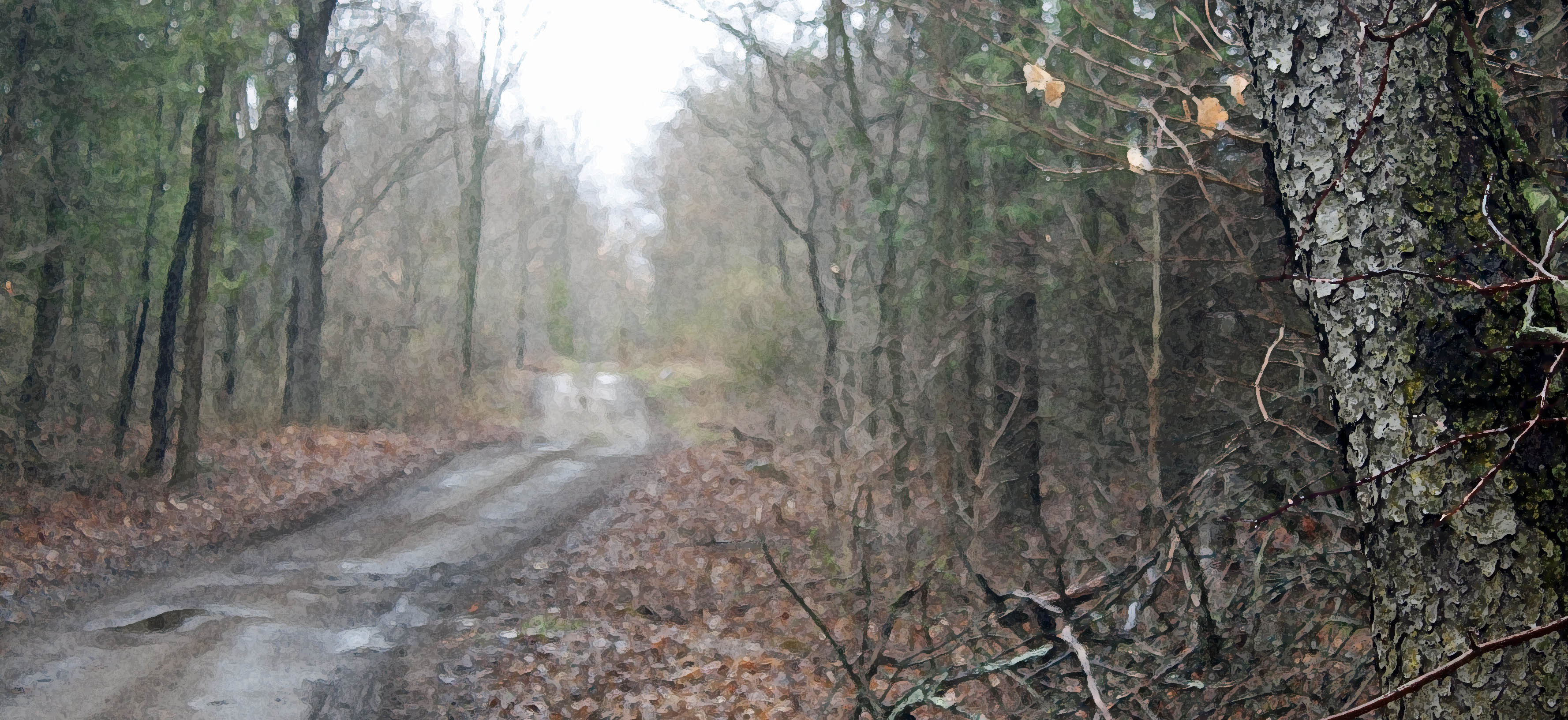
Dirt road to Long Lake in a misty light rain in early spring, ON (photo and dry brush rendition by Nina Munteanu)
Nina Munteanu is a Canadian ecologist / limnologist and novelist. She is co-editor of Europa SF and currently teaches writing courses at George Brown College and the University of Toronto. Visit www.ninamunteanu.ca for the latest on her books. Nina’s bilingual “La natura dell’acqua / The Way of Water” was published by Mincione Edizioni in Rome. Her non-fiction book “Water Is…” by Pixl Press(Vancouver) was selected by Margaret Atwood in the New York Times‘Year in Reading’ and was chosen as the 2017 Summer Read by Water Canada. Her novel “A Diary in the Age of Water” was released by Inanna Publications (Toronto) in June 2020.
In my recent eco-novel A Diary in the Age of Water the limnologist Lynna makes the following entry in her diary in 2057:
Last night after supper, Hilde and I went for a walk along Shaw to Christie Pits, where I used to play as a kid. She wanted to show me the magnificent aurora borealis that had been streaming dramatically for the past several weeks. When I was a kid, auroras this far south were unheard of. Now they are common. The night sky was clear, and we enjoyed the fresh spring air as we ambled down Shaw Street. We parked ourselves on the damp grass among other spectators of the colourful night sky and watched the dancing light show.
It was mesmerizing: ribbons of mostly green and pink light rippled as if tugged by a mischievous wind. They danced with a kind of life that brought me back to my childhood. Northern lights happen when the magnetic field of our planet is disturbed by the solar wind. As the particles slide along the contours of the Earth’s magnetosphere, they glow as they lose their energy. The particles energize the air molecules enough to make them glow in various colours, depending on the composition of the gases.
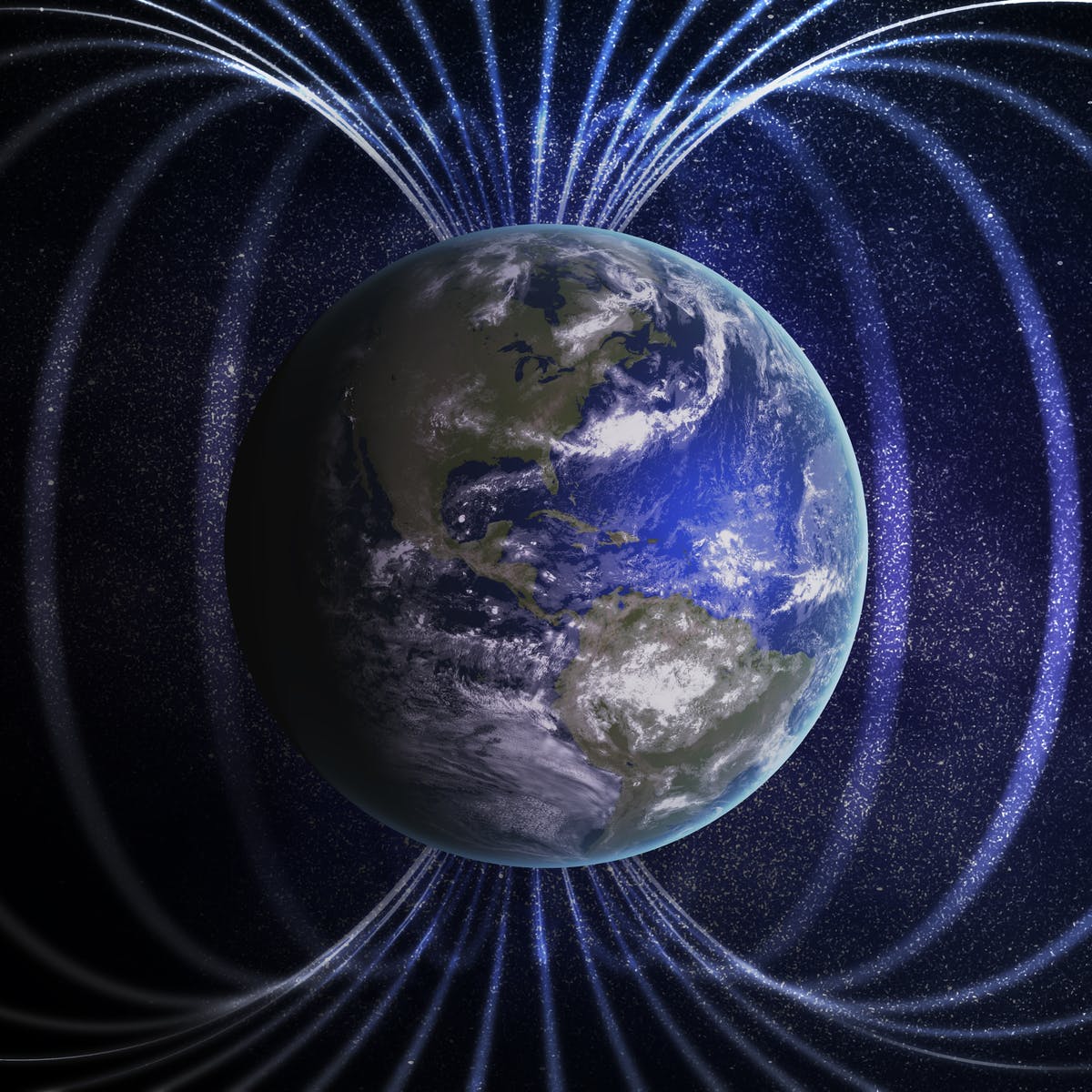
Earth’s magnetic field is generated and maintained by an ocean of superheated, swirling metal around a solid iron core. These act like a dynamo to create electrical currents, which, in turn, create our magnetic field. But our magnetic field is weakening, and a flip is imminent. In the past two hundred years, the field has weakened by fifteen percent. That’s why we’re seeing these auroras in Toronto. A weaker field creates more auroras. They’ve become common here, particularly during the winter and spring months. Nasa predicts that the field could be gone in five hundred years or less and then take another two hundred years to rebuild.
The field will first become more complex and might show more than two magnetic poles—playing havoc with our navigation systems and God knows what else—until it is entirely gone. Then it will presumably build and align in the opposite direction. When the magnetic field goes, so will our shield against radiation. First, the ozone layer—our shield against ultraviolet rays—will be stripped away, and then the atmosphere may lose other key elements and grow thinner. Will we end up like Mars 4.2 billion years ago, when severe solar storms stole its very atmosphere and evaporated all its water?
Mars once had a strong magnetic field like Earth. But then Mars cooled and its conducting geodynamo stopped rotating. In the absence of the protective field, the solar wind surged in and excited the ions in the upper Martian atmosphere to an escape velocity. The solar wind just swept the air away. The surface pressure of the Martian atmosphere dwindled from one thousand millibars to six millibars. Mars lost about the same atmosphere that Earth has today.
Mars is our destiny; it’s just a question of when. We’re all batteries, running dry. I considered this probable fate for Earth as we watched the exquisite example of our changing magnetic field. But I didn’t share it with Hilde, who watched with her mouth open in rapt wonder. If she’s lucky, she will experience no more of this progression than these amazing auroras. The weakening magnetic field and the associated loss of protection and atmosphere won’t happen for a while. I hope. —A Diary in the Age of Water
Earth’s magnetic field
In a 2019 article in New Atlas, David Szondy tells us that “North isn’t quite where it was after the Earth’s north geomagnetic pole made an unexpected sprint across arctic Canada.” Apparently the magnetic pole is moving faster than predicted. The shift is caused by a push/pull between two patches of magnetic field—one under Canada and another under Siberia. The Canadian one appears to be weakening…
Every few hundred thousand years our magnetic field reverses—with the magnetic north switching places with the magnetic south. The last major geomagnetic reversal occurred 780,000 years ago. Between the full geomagnetic reversals—which can last up to 10,000 years—shorter disruptions occur. These are called geomagnetic excursions and are short-lived, involving temporary changes to the magnetic field that last from a few hundred to a few thousand years. The most recent recorded geomagnetic excursion is called the Laschamps Excursion some 42,000 years ago.
“The Laschamps Excursion was the last time the magnetic poles flipped,” explains Chris Turney, one of the lead scientists of a study reported in Science. “They swapped places for about 800 years before changing their minds and swapping back again.”
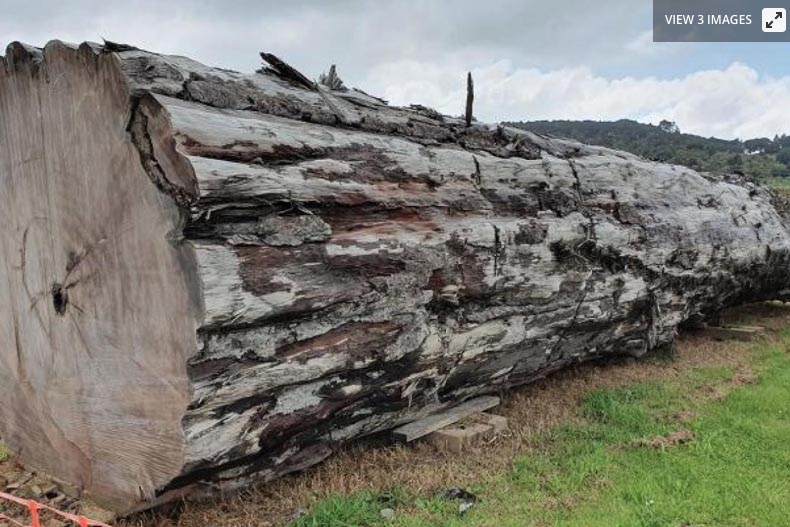
Although scientists have known about these magnetic pole events, they have not clearly understood their impacts on life and the environment. A study published in the journal Science reported on a recent discovery in New Zealand of an ancient kauri tree, that not only confirmed the time of the magnetic collapse, but shed some light on the dramatic period of environmental change, particularly in the time leading up to the few hundred years the Earth’s magnetic field was reversed. These included a depleted ozone layer, higher levels of ultraviolet radiation, and increased atmospheric ionization, all coalescing about 42,000 years ago in the Laschamps Excursion. “Early humans around the world would have seen amazing auroras, shimmering veils and sheets across the sky,” says Alan Cooper, one of the lead scientists. “It must have seemed like the end of days.”
Ancient Kauri tree unearthed in New Zealand (image by New Atlas)
The researchers also speculated that the magnetic field disruption led to an influx of cave art, driven by the need to seek shelter from the increase in ultraviolet rays—particularly during solar flares. The researchers also suggested that the event prompted the extinction of several megafauna in Australia and the end for Neanderthals—whose extinction occurred around 42,000 years ago.
Cooper points to the current movements of the north magnetic pole across the Northern Hemisphere as a potential warning sign of an impending event.
“This speed – alongside the weakening of Earth’s magnetic field by around nine per cent in the past 170 years – could indicate an upcoming reversal,” says Cooper. “If a similar event happened today, the consequences would be huge for modern society. Incoming cosmic radiation would destroy our electric power grids and satellite networks.”
Alan Cooper
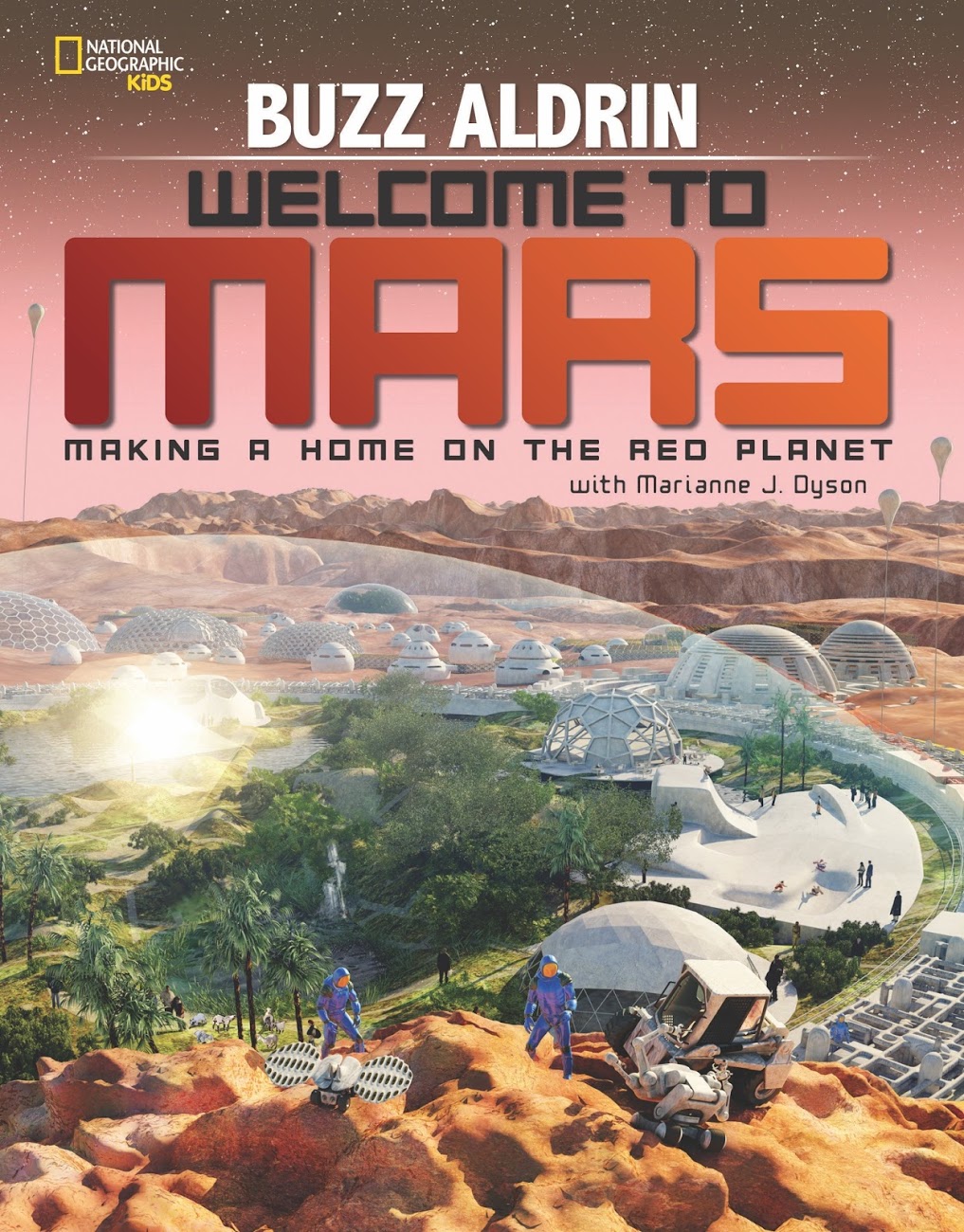
Terraforming Mars (images by NASA)
Making Mars Inhabitable By Re-establishing its Magnetic Field
“Our quest on Mars has been to ‘follow the water’ in our search for life in the universe, and now we have convincing science that validates what we’ve long suspected,” said NASA’s John Grunsfeld.”This is a significant development, as it appears to confirm that water – albeit briny – is flowing today on the surface of Mars.”
That was step one. Mars was once just like Earth, with a thick atmosphere and lots of water.
In a 2017 article in Science Alert, Peter Dockrill reported that “NASA wants to launch a giant magnetic field to make Mars habitable.” This bold plan was to give Mars its atmosphere back and make it habitable for future generations of human colonists consists of launching a giant magnetic shield into space to protect Mars from solar winds. With the shield in place, scientists argued that we could restore the atmosphere and terraform the Martian environment so that liquid water flows on the surface again. Mars once had a thick atmosphere like Earth currently has.
In 2018 NASA concluded: “Our results suggest that there is not enough CO2 (carbon dioxide) remaining on Mars to provide significant greenhouse warming were the gas to be put into the atmosphere; in addition, most of the CO2 gas is not accessible and could not be readily mobilized. As a result, terraforming Mars is not possible using present-day technology.”
Then in 2019, Harvard scientists proposed a way around the problem of insufficient CO2 for greenhouse warming. They proposed that by “covering certain areas of the Martian surface with a thin layer of silica aerogel, namely areas with large amounts of water ice, enough sunlight will come through for warming and combine with natural heating processes beneath the surface to create a potentially habitable environment.”
The study demonstrated through experiments and modelling that under Martian environmental conditions, a 2–3 cm-thick layer of silica aerogel would simultaneously transmit sufficient visible light for photosynthesis, block hazardous ultraviolet radiation and raise temperatures underneath it permanently to above the melting point of water, without the need for any internal heat source.
“Once temperatures were adequate, the gases released from the ice in the lakes and regolith (soil) would build up to form a pressurized atmosphere under the aerogel layer. If successful up to that point, microbes and plant life could theoretically survive. “Placing silica aerogel shields over sufficiently ice-rich regions of the Martian surface could therefore allow photosynthetic life to survive there with minimal subsequent intervention,” the scientists suggested. This photosynthetic life would go on to produce oxygen for pickier Earth dwellers to utilize,” reports Dacia J. Ferris of Teslarati.
p.s. I’m sure I’m not the only one who sees the irony of this situation: Mars has insufficient CO2to warm its atmosphere, when Earth suffers from an excess of this greenhouse-warming gas. While going to Mars is one of my dreams (quite unrealizable for me; but I’m allowed to dream, no?), I still harbor an unsettling feeling that comes with the uncertainty about our prowess and respect in this endeavor. We haven’t exactly been successful in controlling our own runaway global warming or other degradation of our living ecosystems. Read Ray Bradbury’s Martian Chronicles to get my meaning.
“Watch those disposable coffee cups!”
Nina Munteanu is a Canadian ecologist / limnologist and novelist. She is co-editor of Europa SF and currently teaches writing courses at George Brown College and the University of Toronto. Visit www.ninamunteanu.ca for the latest on her books. Nina’s bilingual “La natura dell’acqua / The Way of Water” was published by Mincione Edizioni in Rome. Her non-fiction book “Water Is…” by Pixl Press(Vancouver) was selected by Margaret Atwood in the New York Times‘Year in Reading’ and was chosen as the 2017 Summer Read by Water Canada. Her novel “A Diary in the Age of Water” was released by Inanna Publications (Toronto) in June 2020.
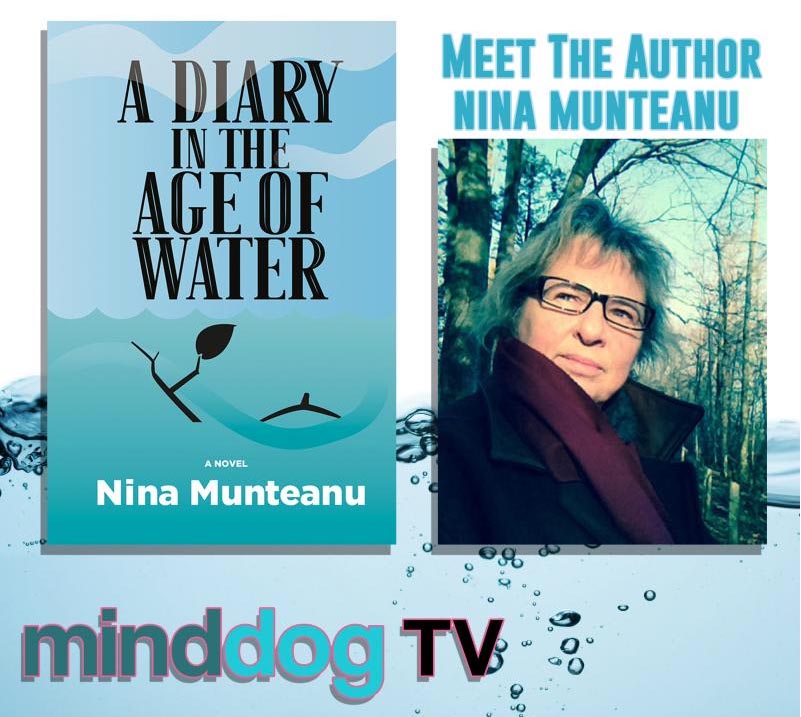
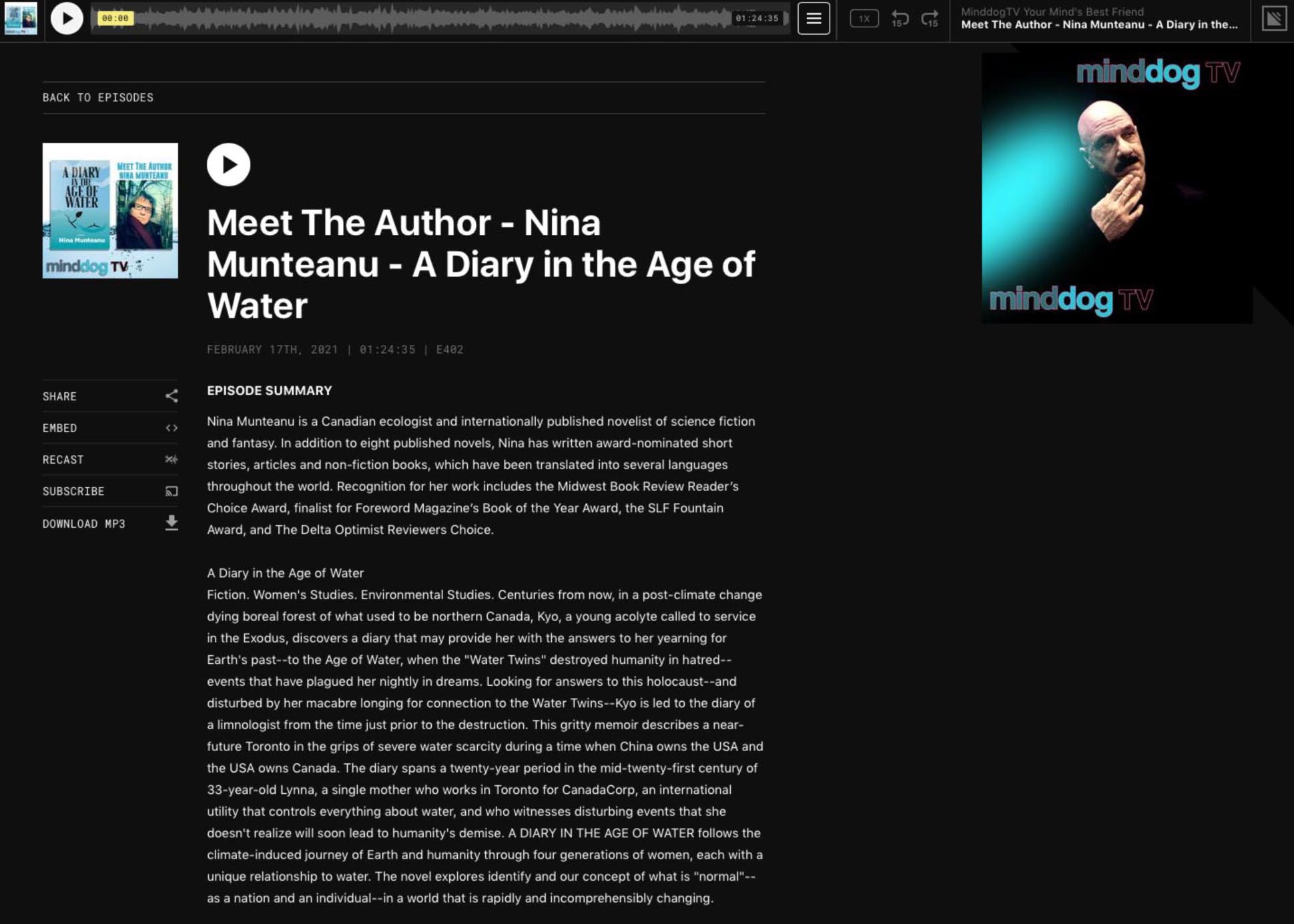
I was recently interviewed by Matt Nappo on Minddog TV in New York, where we talked about the science and magic of water, climate change and how to not become cynical, the process of writing, what scares us and what takes us through it into great storytelling.
Here’s the interview:
Matt Nappo interviews limnologist and clifi author Nina Munteanu on minddog TV
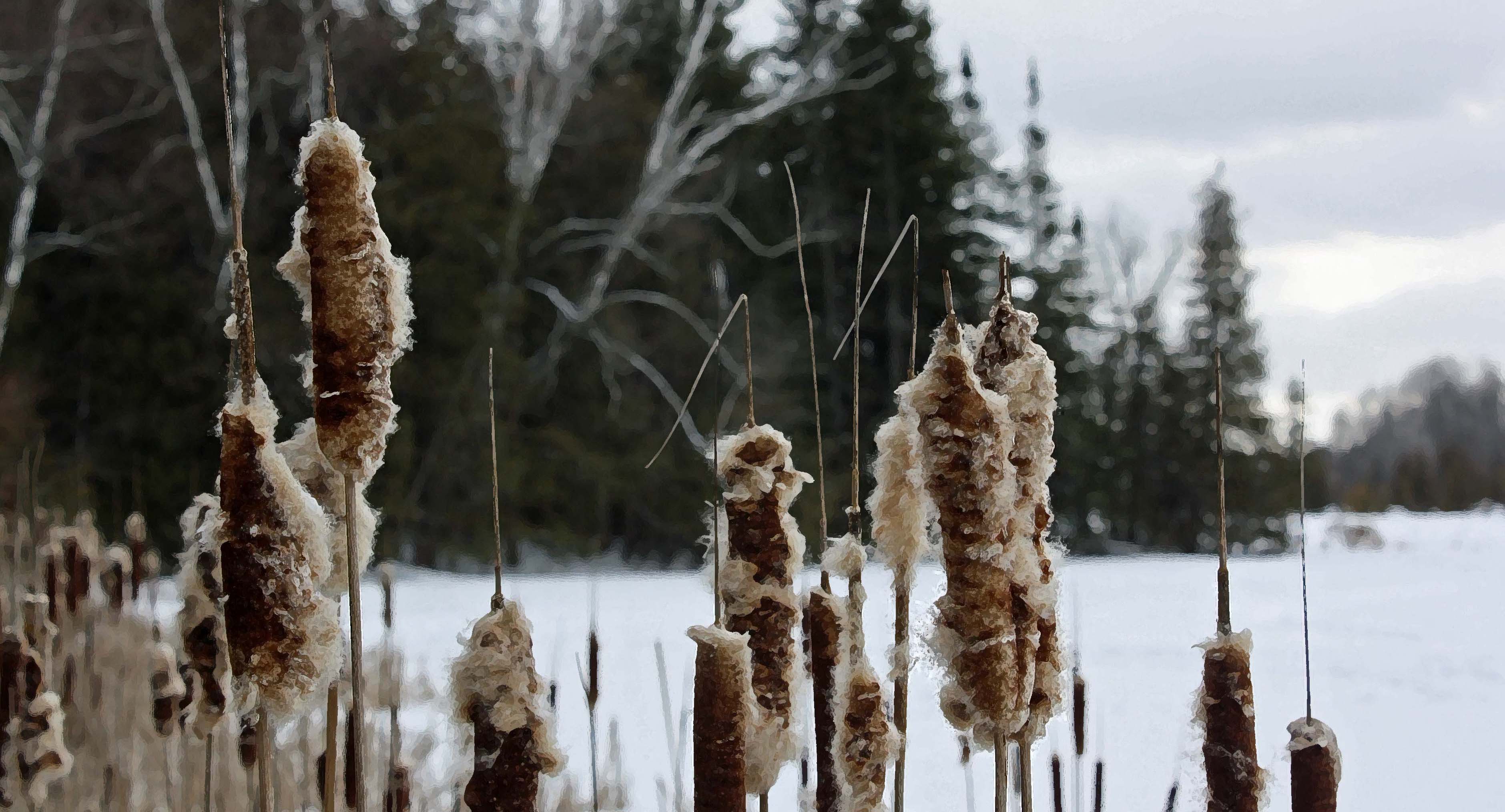
Cattails oversee the snowy plain of the iced-over Trent Canal, ON (photo and dry brush rendition by Nina Munteanu)
Nina Munteanu is a Canadian ecologist / limnologist and novelist. She is co-editor of Europa SF and currently teaches writing courses at George Brown College and the University of Toronto. Visit www.ninamunteanu.ca for the latest on her books. Nina’s bilingual “La natura dell’acqua / The Way of Water” was published by Mincione Edizioni in Rome. Her non-fiction book “Water Is…” by Pixl Press(Vancouver) was selected by Margaret Atwood in the New York Times‘Year in Reading’ and was chosen as the 2017 Summer Read by Water Canada. Her novel “A Diary in the Age of Water” was released by Inanna Publications (Toronto) in June 2020.
“In this bonus episode, we continue our conversation with limnologist and cli-fi author Nina Munteanu. We discuss her book A Diary in the Age of Water and what led her to write this dystopian tale of a future that revolves around water scarcity. Nina’s background as a limnologist gives her a unique perspective on the challenges that await us if we do not address climate change.”
Click below to listen:
Nina Munteanu is a Canadian ecologist / limnologist and novelist. She is co-editor of Europa SF and currently teaches writing courses at George Brown College and the University of Toronto. Visit www.ninamunteanu.ca for the latest on her books. Nina’s bilingual “La natura dell’acqua / The Way of Water” was published by Mincione Edizioni in Rome. Her non-fiction book “Water Is…” by Pixl Press(Vancouver) was selected by Margaret Atwood in the New York Times‘Year in Reading’ and was chosen as the 2017 Summer Read by Water Canada. Her novel “A Diary in the Age of Water” was released by Inanna Publications (Toronto) in June 2020.
Farmer’s field, ON (photo and rendition by Nina Munteanu)
Sometime in the future, Earth is recovering from a devastating 50-year plague that has destroyed most of its natural forests and grasslands and killed two out of every three people. Environmental technocrats now run the world under strict rule: while virgin ecosystems are re-created from original templates through genetic engineering, no human is permitted to set foot in these sanctuaries. As sanctuaries grow ever larger, humanity is pressed into over-crowded cities where boredom and strife dominate. The Emerald Coalition hires reclamation company EcoTech to “recreate the world their great, great grandparents lost.” But their ecosystems are morphing into “aberrations” (new species with surprising properties), which would shock the applied Ecology community—except EcoTech is keeping it a secret. So begins Danita Maslan’s eco-thriller Rogue Harvest by Red Deer Press. Published in 2005, this powerful environmental story is as relevant today as it was fifteen years ago. Perhaps more so.
In his Foreword to Maslan’s book, Hugo-winning author Robert J. Sawyer, shared a story from a 2004 presentation he gave at Mount Royal College in Calgary. In his presentation, Sawyer lamented that science fiction seemed to pull in opposite directions to such an extent that any message was cancelled by its opposition. The example he gave in the Foreword came from two bestselling authors: Kim Stanley Robinson whose Forty Signs of Rainwarned of rising temperatures due to climate change; and Michael Crichton, who denied global warming as fearmongering in State of Fear. According to Sawyer, Rogue Harvest provided a fresh story grounded in the balance of a third perspective—not a neutral middle-ground, but “one that shears away at right angles from the current polarized debate, taking our thinking in new directions by predicting both environmental collapse andenvironmental salvation.”
Told through the unruly character of Jasmine, Rogue Harvest explores a post-plague world in recovery. After radical environmentalists from Green Splinter assassinate her father, Jasmine enlists a street-smart mercenary to help her vindicate her father’s call to open the forbidden preservesto the public. This leads Jasmine into the depths of the genetically re-created South American rainforest, where political intrigue, corporate greed and violence collide in a combustible mix. This is where it gets messy—which biology certainly is. But it gets messy for other reasons. Human-reasons. Reasons of power-mongering and lack of compassion. The very reasons why the environmental technocrats established their hands-off edict in the first place. This is explored through great irony in Rogue Harvest. An irony that L.E. Modesitt, Jr. astutely notes, “[the environmental technocrats] prove that, given power, they’re just like everyone else.” Just as there remain uncompassionate exploiters and pillagers in the likes of harvester Gunther Vint, who heedlessly pollutes the rainforest as he harvests it.
buttressed strangler fig in Costa Maya jungle (photo by Nina Munteanu)
The South American rainforest provides some of the most vivid, colourful and memorable scenes in the book. Maslan traveled to the tropics and ensured accurate science of this incredibly rich ecosystem through Mark W. Moffett’s The High Frontierand Donald Perry’s Life Above the Jungle Floor, as well as Tropical Nature: Life and Death in the Rain Forests of Central and South America by Adrian Forsyth and Ken Miyata. It is in the South American recreated jungle that the key elements—and posed questions—of the story play out.
In his testimonial to Rogue Harvest, Hugo Award Finalist James Alan Gardner poses: “We see both sides of an ecological conundrum that resonates with the present day: how can we live in harmony with our environment, neither vandalizing it nor walling it off as too precious to touch?”
This is the tantamount question. Can our species achieve this balance? Rogue Harvest answers this clarion call with mixed optimism. While showcasing the propensity for greed and careless exploitation, the book also reveals a more altruistic and kinder side of humanity. One that promises hope and light to our darker side. But, is this realistic, given our current dominant worldview?
On page 149 in Rogue Harvest, Jasmine’s politician father Owen Lamberin defends his position of wishing to open up the protected Nature preserves to regular folk by proclaiming, “Do they want to keep us out forever? Then who are we reseeding the globe for if not for us?” This is later echoed by Jasmine to justify flouting the preservationist edicts of the Emerald Coalition. When I first read this passage, part of me rankled. Does not the natural world have an intrinsic value and right to simply be? Must we justify all things by our own presence and direct use of them? Surely functional ecosystems provide ecosystem services for planetary wellness that benefit ALL life, not just humans, and not all directly. For example, our terrestrial and marine forests provide necessary oxygen and climate balance (by removing excess carbon dioxide) that benefits all life on the planet. Ecologists—particularly Canadians—recognize the benefit of ‘preservation’ (wilderness that is not accessed by humans) over ‘conservation’ (areas where humans extract resources with some environmental risk) and the need for both to exist for the planet’s overall well-being. This is based on the simple fact that not all humans behave as they should. Those of us who follow a utilitarian neo-liberal worldview of consumption and “othering nature” are not acting as efficient partners in the natural world. Many see themselves as apart from Nature, above Her, even, and will act less than kindly. Current deforestation of the Amazon and the old-growth forests of British Columbia, are just two examples that reflect this destructive “Nature othering” force.
Ancient red cedar tree in Lighthouse Park, BC (photo by Nina Munteanu)
In contrast, indigenous peoples on the planet incorporate Nature in their beliefs, philosophies and way of life. They conduct themselves with humility and the utmost respect for the natural world of which they are a part. Knowing that they are part of Nature, they act accordingly, with respect. They are efficient partners, taking only what they need, thanking Nature for her gifts, and giving back in return in a process of reciprocal altruism and mutualism.
Robin Wall Kimmerer, author of “Gathering Moss” and “Braiding Sweetgrass” writes:
“In indigenous ways of knowing, it is understood that each living being has a particular role to play. Every being is endowed with certain gifts, its own intelligence, its own spirit, its own story. Our stories tell us that the Creator gave these to us, as original instructions. The foundation of education is to discover that gift within us and learn to use it well.
These gifts are also responsibilities, a way of caring for each other. Wood Thrush received the gift of song; it’s his responsibility to say the evening prayer. Maple received the gift of sweet sap and the coupled responsibility to share that gift in feeding the people at a hungry time of year. This is the web of reciprocity that the elders speak of, that which connects us all. I find no discord between this story of creation and my scientific training. This reciprocity is what I see all the time in studies of ecological communities. Sage has its duties, to draw up water to its leaves for the rabbits, to shelter the baby quail. Part of its responsibility is also to the people. Sage helps us clear our minds of ill thoughts, to carry our good thoughts upward. The roles of mosses are to clothe the rocks, purify the water, and soften the nests of birds … Traditional knowledge is rooted in intimacy with a local landscape where the land itself is the teacher.”
Robin wall kimmerer
Wall-Kimmerer is talking about a way of life through willing participation and an attitude of great respect and humility. But many non-indigenous people do not ascribe to this philosophy and way of life—with dire consequence to our environment and our own welfare. In Rogue Harvest Maslan rightfully demonstrated the continued presence of this destructive force in humanity even as a respectful and thankful attitude was shown by Jasmine and her harvesting team. The question is: How many does it take to spoil this balance?
It would be close to fifteen years after Rogue Harvest was published that I would finally read Maslan’s book—this year, in 2020, during an ongoing planetary-wide plague. Ironically, only two years after Danita’s debut novel, my own debut eco-thriller Darwin’s Paradox was released by Dragon Moon Press in 2007. And the theme was eerily similar: struggling with the devastation of an environmental plague (Darwin Disease), the Gaians—environmental technocrats who run the world—have isolated humanity from Earth’s treasured natural environment. One main difference between Rogue Harvest and Darwin’s Paradox is that in the latter book the technocrats have kept the public ignorant of how the environment has recovered, ensuring its safety from destructive human hands—except for the ‘enlightened’ Gaians, who secretly live out in the beauty of a recovered natural world and commute to the indoor world. However, as the environment recovers, humanity deteriorates in its cloistered indoor world. Darwin’s Disease—related to indoor living—sweeps across humanity with debilitating genetic deterioration, violent death and the promise of extinction. This is something the self-professed deep ecology Gaians—akin to Maslan’s Emerald Coalition—are content to see in—if it means preserving the natural world.
Both the Gaians and Maslan’s Emerald Coalition demonstrate a lack of faith in humanity and an unrealistic need to restore environments to their pristine pre-human levels; something that is highly unrealistic—and doomed to fail. “Aberrations” (as Maslan’s characters called them) are part of the natural process of adaptation and change inherent in the natural world. As a practicing ecological consultant, I was constantly running against an idealised and unrealizable notion to put everything back to what it used to be. For several decades ecologists were tasked to restore habitats to their pristine condition—when the notion of “pristine” was impossible to achieve, let along discern. It would have been like turning back the clock of history to prevent John F. Kennedy from being shot–with its own unknown consequences. Ecologists finally realized that in lieu of “restoration” and looking back, we needed to “rehabilitate” by looking forward. This is what Nature has always done. Nature adapts. So must we. Our management programs must incorporate Nature’s ever-changing processes of resilience and look forward—not backward—to achieve a sacred balance.
If there is a deeper message in Maslan’s book, it is this: that our salvation—and the salvation of the world—lies in not obsessing on returning to a past pristine state (with attempts at over-protection), but in looking forward to healing and nurturing a world in which we have a place. This would involve reimagining our niche (our job) as efficient partners in an ever-evolving and changing natural world, by casting off the parasitoid1 role we’ve all too often assumed and replacing with a role of mutualism2. But … and there is a huge BUT here. This will only work if we pursue this approach with integrity. With our eyes and hearts open to Gaia’s sacred plan of which we are a part. Robin Wall Kimmerer shows us the way through Traditional Ecological Knowledge:
“If each plant has a particular role and is interconnected with the lives of humans, how do we come to know what that role is? How do we use the plant in accordance to its gifts? The legacy of traditional ecological knowledge, the intellectual twin to science, has been handed down in the oral tradition for countless generations. It passes from grandmother to granddaughter gathering together in the meadow, from uncle to nephew fishing on the riverbank … How did they know which plant to use in childbirth, which plant to conceal the scent of a hunter? Like scientific information, traditional knowledge arises from careful systematic observation of nature, from the results of innumerable lived experiments. Traditional knowledge is rooted in intimacy with a local landscape where the land itself is the teacher. Plant knowledge comes from watching what the animals eat, how Bear harvests lilies and how Squirrel taps maple trees. Plant knowledge also comes from the plants themselves. To the attentive observer, plants reveal their gifts.”
Robin Wall Kimmerer, Gathering Moss
But is this possible? To return to Sawyer’s remark and Gardner’s question, can we achieve this sacred balance and harmony? For many of us, I think, yes. But for many more, I’m not sure. And that is what worries me. It is my firm belief that until our worldview embraces humility in partnership with the natural world—until we cast off our parasitoid archetype of self-serving, neo-liberal, capitalist ideologies—we will remain hampered in our journey forward towards a sacred balance. And time is running out for us. Time to rewrite our story.
In Maslan’s book, humanity is given a second chance to prove itself worthy of inclusion. Her book is a call to action. Can we do this before it’s too late for us? Time to listen and learn from our indigenous peoples. Time to learn about Traditional Ecological Knowledge. Time to slow down, set aside our egos, and use all our senses to learn from Birch, Bear, and Beaver…
Cedar pine forest in early winter, Jackson Creek Park, ON (photo by Nina Munteanu)
1.parasitoid is a term that describes a parasite that grows on the body of another organism from which they get nutrients and shelter. Unlike typical parasites, a parasitoid usually kills its host (Munteanu, 2019).
2.mutualism describes an ecological interaction between two or more species that increases fitness in both, through direct interaction and co-adaptation. Two examples include vascular plants and mycorrhizae, their fungal partners, and flowering plants and their pollinating insects. Even predators act in some form of mutualism when their role of culling weaker individuals from the prey gene pool is considered (Munteanu, 2019).
References:
Kimmerer, Robin Wall. 2003. “Gathering Moss.” Oregon State University Press, Corvalis. 168pp.
Munteanu, Nina. 2019. “The Ecology of Story: World as Character.” Pixl Press, Vancouver. 198pp.
White cedar tree and stump in early winter, Jackson Creek Park, ON (photo by Nina Munteanu)
Nina Munteanu is a Canadian ecologist / limnologist and novelist. She is co-editor of Europa SF and currently teaches writing courses at George Brown College and the University of Toronto. Visit www.ninamunteanu.ca for the latest on her books. Nina’s bilingual “La natura dell’acqua / The Way of Water” was published by Mincione Edizioni in Rome. Her non-fiction book “Water Is…” by Pixl Press(Vancouver) was selected by Margaret Atwood in the New York Times ‘Year in Reading’ and was chosen as the 2017 Summer Read by Water Canada. Her novel “A Diary in the Age of Water” was released by Inanna Publications (Toronto) in June 2020.
Nina Munteanu was recently on The Douglas Coleman Show where she and Douglas talked about writing, being scared of water, the sub-genre of eco-fiction and what Canada might have been like if the white settlers hadn’t come.
Here’s the show:
Nina Munteanu is a Canadian ecologist / limnologist and novelist. She is co-editor of Europa SF and currently teaches writing courses at George Brown College and the University of Toronto. Visit www.ninamunteanu.ca for the latest on her books. Nina’s bilingual “La natura dell’acqua / The Way of Water” was published by Mincione Edizioni in Rome. Her non-fiction book “Water Is…” by Pixl Press(Vancouver) was selected by Margaret Atwood in the New York Times‘Year in Reading’ and was chosen as the 2017 Summer Read by Water Canada. Her novel “A Diary in the Age of Water” was released by Inanna Publications (Toronto) in June 2020.
I recently appeared on Episode #142 of award-winning “Sample Chapter Podcast” where I had a wonderful interview with Jason Meuschke and read a sample chapter from my recent eco-novel “A Diary in the Age of Water.”
Jason and I talked about the writing process; what makes good and compelling fiction; creating realistic and interesting characters with flaws–like my flawed detective Rhea Hawke in The Splintered Universe Trilogy‘ writing eco-fiction in which environment can be a character; the “what ifs” in historical fiction and where we get our ideas (The Last Summoner came to me in a dream and later through a single image).
Episode 142 is here with a truly delightful author from Canada, Nina Munteanu. In the episode, Nina and Jason discuss character flaws, having the environment be a character in our prose, the “what ifs” in historical fiction, the writer’s “wavelengths”, and much more all before enjoying a magical chapter reading. Enjoy!
Here’s the podcast:
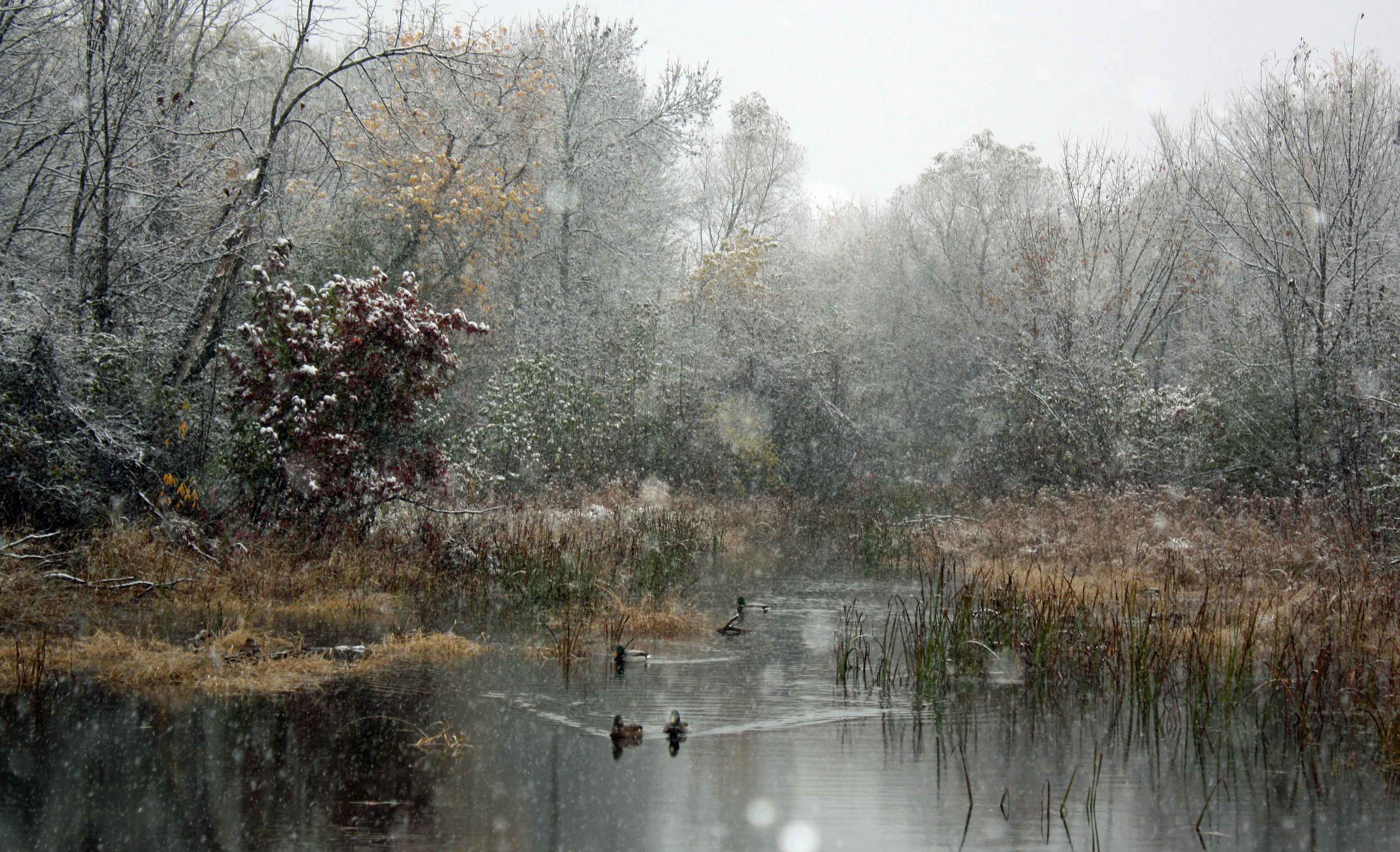
First snow in Thompson Creek marsh, ON (photo by Nina Munteanu)
Nina Munteanu is a Canadian ecologist / limnologist and novelist. She is co-editor of Europa SF and currently teaches writing courses at George Brown College and the University of Toronto. Visit www.ninamunteanu.ca for the latest on her books. Nina’s bilingual “La natura dell’acqua / The Way of Water” was published by Mincione Edizioni in Rome. Her non-fiction book “Water Is…” by Pixl Press(Vancouver) was selected by Margaret Atwood in the New York Times ‘Year in Reading’ and was chosen as the 2017 Summer Read by Water Canada. Her novel “A Diary in the Age of Water” was released by Inanna Publications (Toronto) in June 2020.










 Nina Munteanu Writing Coach