Find Your Focus This Christmas–Reprise

christmas-ballsHow many of you are still running around preparing for the Christmas celebration or secular family festivity? Buying that last minute gift you’d forgotten or were chasing down since a bazillion days ago? Or making last minute changes to your travel plans, house-cleaning for guests, mailing of cards or parcels or meal preparations?

Well, you’re reading this blog post … That means you’re sitting down and taking a minute to relax and regroup. That’s good. Remember to breathe… while I tell you a story…

I’d just finished a three-day drive through snow and rain storms from Mahone Bay, Nova Scotia, to Toronto, Ontario, where I was staying for a few days before catching a flight to Vancouver to spend Christmas with my son and good friends on the west coast. Talk about fast living.

I move around a lot these days. It helps me to appreciate some of the most simple things in life and reminds me of what I love most about Christmas: how it focuses my heart and reconnects me. I don’t mean just with relatives and friends either, although the season certainly does that. I’m talking about my soul and the universe itself. Before I became an itinerant, Christmas bustled with my responsibilities as primary caregiver, social coordinator and hostess of major parties. After I’d said goodbye to our visiting friends and done the dishes and tidied the house; after my husband and son had gone to bed, I sat in the dark living room lit only with the Christmas Tree lights and the flickering candle, and listened to soft Christmas music, primed to write.

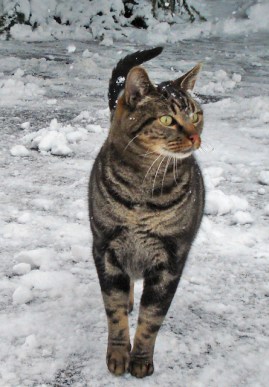
snow-christmas2008-sammyMy male cat, smelling fresh from outside, found his rightful place on my lap and settled there, pinning me down with love. And there, as I breathed in the scent of wax and fir and cat I found myself again.

Most of us think of Christmas as a busy time, of getting together (often dutifully) with family and friends, exchanging presents and feasting. Christmas is certainly this, but that is only a shallow view of a far deeper event; and I don’t mean only for Christians.

Whether celebrating the holy light of Hannukah or the birth of Jesus, or the winter solstice, this season provides us with the opportunity to meditate on far more than the surficial nature of the symbols we have come to associate with the season: the Christmas tree, presents, turkey dinner, Santa Claus or Saint Nicholas—most of which originate from pagan tradition, by the way.

Says Lama Christie McNally (author of The Tibetan Book of Meditation), “once you dive below the surface, you will discover a beautiful clear place—like a diamond hidden beneath the rubble. It is your own mind, uncovered … Tibetans say we have only just begun the process of awakening—that we still have quite a way to go in our evolutionary process. And it has nothing to do with building spaceships or computers. The next step in our evolution takes place within.”

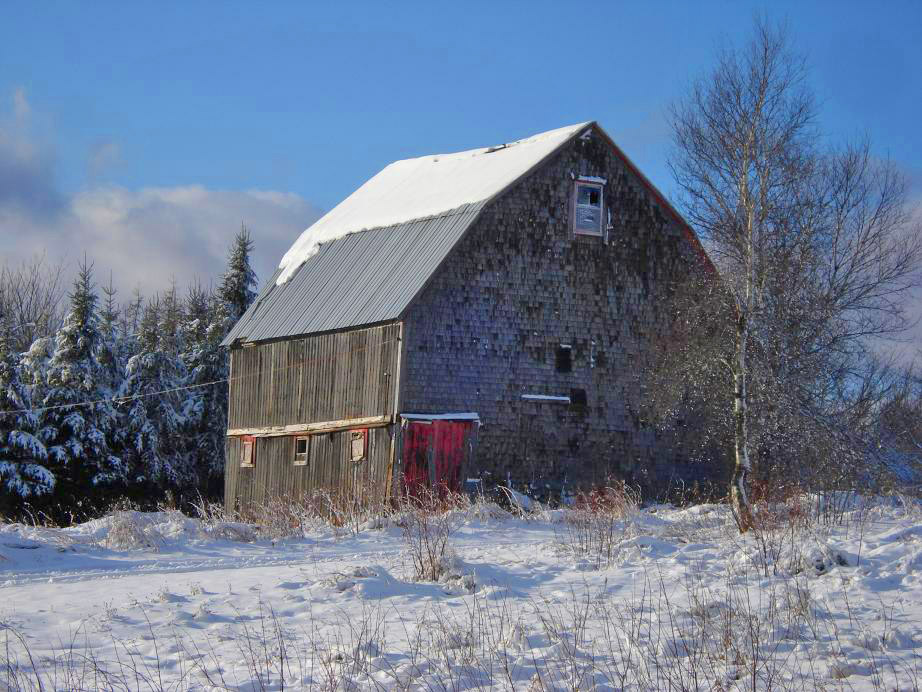
snow-scene-road-to-Wolfville-barn_edited-1

Barn on the road to Wolfville, NS (photo by Nina Munteanu)

Christmas is, more than anything, a time of embracing paradox. It is an opportunity to still oneself amid the bustle; to find joy in duty; to give of one’s precious time when others have none, to embrace selflessness when surrounded by promoted selfishness, and to be genuine in a commercial and dishonest world. If one were to look beyond the rhetoric and imposed tradition, the Christmas season represents a time of focus, a time to reflect on one’s genuine nature and altruistic destiny. A time to reconnect with the harmony and balance in our lives.

A time to sit with our cat, pinned with love, and write our next novel.

Merry Christmas!


Nina Munteanu is an ecologist and internationally published author of award-nominated speculative novels, short stories and non-fiction. She is co-editor of Europa SF and currently teaches writing courses at George Brown College and the University of Toronto. Visit www.ninamunteanu.ca for the latest on her books.

Buy and Give a Book for Christmas

farm in fog-Liverpool NS

shack on road to Wolfville, NS (photo by Nina Munteanu)

There are many reasons to look at buying and giving books for Christmas; not the least to maintain and encourage our literacy, culture and artistic spirit, but also to promote the industry you and I rely on as writers and readers.

According to Literary Statistics Canada, 42% of Canadian adults between the ages of 16 and 65 have low literacy skills. 55% of working age adults in Canada are estimated to have less than adequate health literacy skills. Shockingly, 88% of adults over the age of 65 appear to be in this situation.

Literacy is the ability to identify, understand, interpret, create, communicate, compute and use printed and written materials associated with varying contexts. Literacy involves a continuum of learning to enable an individual to achieve his or her goals, to develop his or her knowledge and potential, and to participate fully in the wider society. — UNESCO

Reading fiction greatly improves our quality of life. Reading is just plain smart. In a study entitled “Reading Literary Fiction Improves Theory of Mind” in the October 2013 issue of Science, researchers Kidd and Castano reported that reading literary fiction led to better performance on tests of affective and cognitive Theory of Mind compared with reading nonfiction, popular fiction or nothing at all. Theory of Mind (ToM) describes the ability to understand others’ mental states, a crucial skill in complex social relationships that characterize human societies. Check out my article on reading fiction, which discusses how it improves empathy, sharpens your brain, helps you sleep better and helps against Alzheimer’s Disease.

I’ve compiled a list of books that I have recently purchased and have or will be giving away this Christmas. Looking at the list, I realize that it represents an eclectic range of style, form and subject matter. That’s good. Diversity is good. Here’s my list:

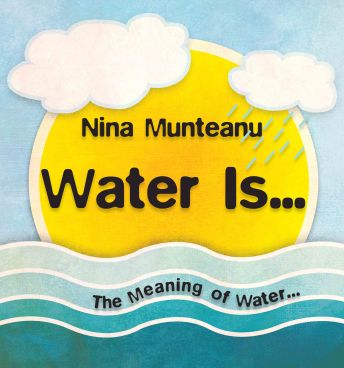
water-is-webWater Is… by Nina Munteanu. Part history, part science and part philosophy and spirituality, “Water Is…” combines personal journey with scientific discovery that explores water’s many identities and ultimately our own. From water’s many scientific anomalies to its metaphoric archetype with humanity’s evolution and ubiquitous existence in the universe, water remains our most precious and mysterious substance.


flight-behaviorFlight Behavior by Barbara Kingsolver. A multi-layered meditation on individual responsibility, told through the discovery by a rural family of the climate-changed behaviour of the monarch butterfly. See my review of Flight Behavior.
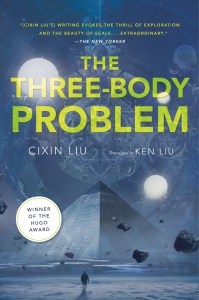


threebodyproblem-cixin-liuThe Three Body Problem by Cixin Liu. In this Hugo Award-winning first of three books on first contact, Liu weaves in metaphoric layers of significance—from the Chinese Cultural Revolution to Rachel Carson’s Silent Spring—to reflect on the perspectives of intelligent beings.


boilingpoint-maude-barlowBoiling Point by Maude Barlow. Barlow lays bare the issues facing Canada water reserves, including long-outdated water laws, unmapped and unprotected groundwater reserves, agricultural pollution, deforestation and climate change. With its focus on Canada, this book provides an “action” companion to my own “Water Is…”


memory-of-water-emmi-itarantaMemory of Water by Emmi Itaranta. This award-winning speculative post-climate change story is dark and reflective like a silent river of unknowable depth, “Memory of Water” flows with a meaning that lingers with you—like the organic scent of soil after a rainstorm—long after you have put the book down. Told in subtle tone and nuance, like an Ingmar Bergman film, the story of a young tea master in a post climate change world unravels a quiet and insidious oppression. Master Noria must navigate the police state to hide her secrets about water. Water remembers…


quantum-nightQuantum Night by Robert J. Sawyer (autographed). Told through a high paced psychological-political thriller, the story explores the thin line between good and evil and the world of the political sociopath from a Canadian perspective. I braved a snowstorm to attend Robert’s Toronto launch of this book, whose haunting story has persisted with me still; the mark of a great work.


year-of-the-flood-atwoodThe Year of the Flood by Margaret Atwood (autographed). Set in the visionary future of Atwood’s acclaimed Oryx and Crake, The Year of the Flood is at once a moving tale of lasting friendship and a landmark work of speculative fiction. In this second book of the MaddAddam trilogy, the long-feared waterless flood has occurred, altering Earth as we know it and obliterating most human life. At a recent talk she gave, I thanked Margaret for her environmental efforts and gave her a copy of my own book, Water Is…


freenetFreenet by Steve Stanton. The novel is about the power of free information in a post-digital age. Told as a thriller with interesting characters and world building, the book explores what digital immortality means. See my review of Freenet.


naturalselectionNatural Selection by Nina Munteanu. This short story collection explores humanity’s co-evolution with our environment and technology. A man uses cyber-eavesdropping to make love. A technocratic government uses gifted people as tools to recast humanity. The ruins of a city serve as battleground between pro-technologists and pro-naturalists. From time-space guardians to cybersex, GMO, and biotech implants, this short story collection is a journey of great scope, imagination and vision. “…a stunning example of good storytelling with an excellent setting and cast of characters.”—Tangent Online
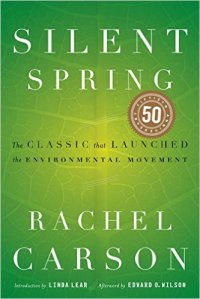


silent-spring-rachel-carsonSilent Spring by Rachel Carson. Written in the 1960s, Carson’s cautionary book remains as relevant and powerful today as it was 50 years ago. Worth reading for her outlook on the awareness and protection of the natural environment just as Jane Jacobs was on the urban environment
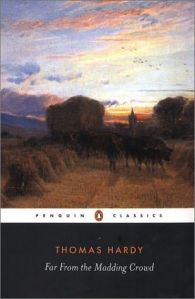


far-from-the-madding-crowd-cover-imageFar from the Madding Crowd by Thomas .Hardy. A classic to be savoured. Thomas Hardy weaves a rich pastoral tale that examines the foibles of humanity: pride, vanity, greed, passion…and gives us a touching love story with a realistic ending. Set in Hardy’s Wessex country, the setting is as much a character as his cornucopia of delightful human characters. What I love best about Hardy is how his setting evokes (like a Greek god) story. Through beautiful description, imagery and evocative language, this is not the sort of book you want to race through to see what happens; but to read slowly and savored like a dark, rich coffee. Breathe in its hypnotic scent and let it linger.


martian-chronicles-copyMartian Chronicles by Ray Bradbury. The Martian Chronicles isn’t really about Mars. It’s about us. Who we are, what we are, and what we may become. What we inadvertently do—to others, and finally to ourselves—and how the irony of chance can change everything. The 1970 Bantam book jacket so aptly calls The Martian Chronicles, “a story of familiar people and familiar passions set against incredible beauties of a new world … A skillful blending of fancy and satire, terror and tenderness, wonder and contempt.” See my 2012 article on Ray.
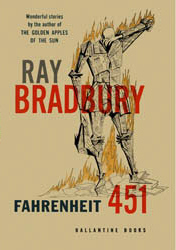


fahrenheit-451-ray-bradburyFahrenheit 451 by Ray Bradbury. A classic tale by a master of the craft of metaphor. Bradbury uses the fireman in a world where they make fires instead of putting them out, to explore the phenomenon of censorship in a world obsessed with being “good”. Scenes in his book were reminiscent of what the Nazis did in Opernplatz, Berlin. In fact, of this event Bradbury made this poignant statement: “It follows then that when Hitler burned a book I felt it as keenly, please forgive me, as his killing a human, for in the long sum of history they are one in the same flesh.”


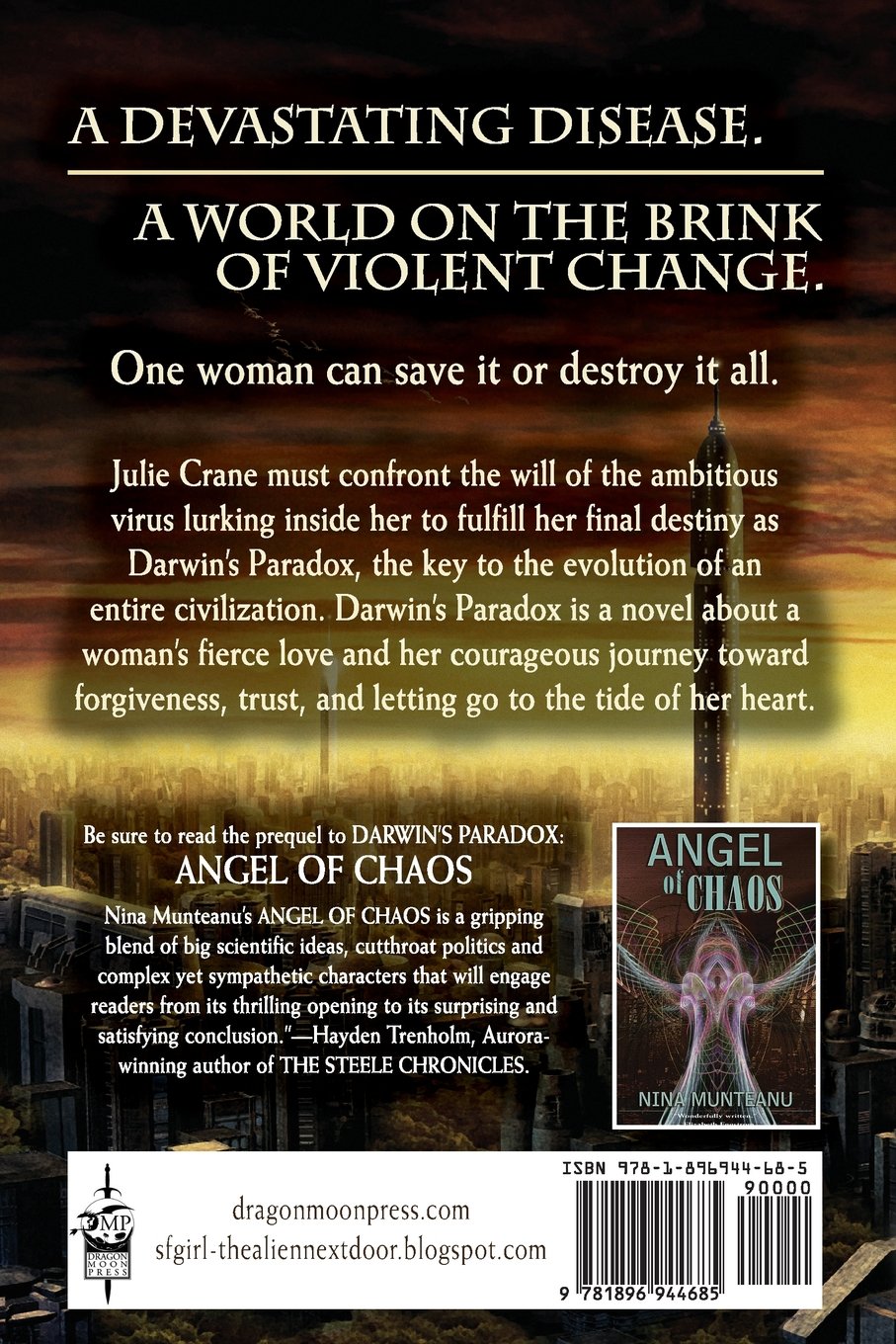
darwins-paradoxDarwin’s Paradox / Angel of Chaos duology by Nina Munteanu. This duology explores human-technological symbiosis, AI consciousness, transhumanism and our reconciliation with Nature. I give this duo away every Christmas because they are quite simply my most popular fiction books.


night-country-loren-eiseleyNight Country by Loren Eiseley. Eiseley reflects on the mystery of life, throwing light on those dark places traversed by himself and centuries of humankind. The Night Country is a gift of wisdom and beauty from the famed anthropologist.


pilgrim-at-tinker-creekPilgrim at Tinker Creek by Annie Dillard. A personal narrative of the author’s explorations on foot in her neighbourhood as she witnesses astonishing incidents of “beauty tangled in a rapture with violence.”


novel-shortstorywritersmarket20172017 Novel & Short Story Writer’s Market by Writer’s Digest. An excellent resource for writers, which includes (besides hundreds of listings for book publishers, literary agents, fiction publications, and contests), erudite and useful articles—including “Creative Cures for Writer’s Block” for which I was consulted.


What’s on your list?


nina-2014aaNina Munteanu is an ecologist and internationally published author of award-nominated speculative novels, short stories and non-fiction. She is co-editor of Europa SF and currently teaches writing courses at George Brown College and the University of Toronto. Visit www.ninamunteanu.ca for the latest on her books.


Write a Great Book Jacket Blurb

fullcoverwtitlesblurblowresA while ago I wrote about the importance of an effective—and accurately portrayed—book cover design for your book. To reprise, this includes not just the choice of cover image but the typology (how the title and name is designed) and overall design. The actual title is another important choice, which I talk about in another article. What remains is the back book jacket blurb—the description on the back cover of a print book and the description section for the book on Amazon (and other bookstores).

Author and digital marketing instructor Laurence O’Bryan discusses seven things every blurb should have in his article on “BooksGoSocial Book Marketing Blurb”. They include:

  1. A strong first sentence. You can insert a tag line, a short sentence from the front cover or a short exciting review quote. You can also state the most dramatic element of the book or what the reader will get, how they will benefit, from reading your book.
  2. In the second paragraph tell the reader who the main characters are, by name, what the circumstances of the book are and the location.
  3. Include the dramatic problem or dilemma of the plot early on. You can use key words such as: “however”, “but” or “until.”
  4. Hint at how the characters might overcome the dilemma.
  5. Indicate the tone and mood of the book. Tell the reader through pace and word choice what kind of story they will get. Is it a romance, a mystery, a thriller, a literary story, a fantasy or another popular genre?
  6. Keep all paragraphs short to make the description easy to read online.
  7. Mention what’s unique about your book and use a dramatic tone, if the book contains drama. A little hype goes a long way.

Darwins Paradox-2nd cov-back

O’Bryan suggests looking at the 5 top books in your genre for length, layout, style and content tips. “Spend time getting this right, writes O’Bryan. “Test each version you create with people you trust who will be honest with you. A poor blurb or book description will seriously impact your book sales. Big publishers spend a lot of time on this, changing or inserting single words to create powerful descriptions.”

It’s worth spending time polishing your book jacket blurb to grab a reader. The cover and title makes them pick it up off the shelf (whether virtual or real); the back jacket blurb makes them buy it.

Microsoft Word - CoverArtJacketBlurb.docx

nina-2014aaNina Munteanu is an ecologist and internationally published author of award-nominated speculative novels, short stories and non-fiction. She is co-editor of Europa SF and currently teaches writing courses at George Brown College and the University of Toronto. Visit www.ninamunteanu.ca for the latest on her books.

“To Boldly Go Where No Human Has Gone Before…”

jungfrau05

Jungfrau, Switzerland (photo by Nina Munteanu)

A while ago I was approached by Robert Gooding-Townsend, Science in Society editor for Science Borealis for my opinion on a persistent idea that post-Star Trek sci-fi is more pessimistic and less technologically imaginative. I wanted to provide for you my full response here, given that the article couldn’t include all of it. You can read the Science Borealis article here, with comments from several authors, including me.

Below is my full response:

Whether this perception is true I can’t definitively say but there is a reason behind it, which I believe reflects a subtle shift in our cultural paradigm and worldview in the past decades since Star Trek. A shift involving a growing awareness of ecology and the emergence of the “feminine archetype” in storytelling.

I think two things are happening in concert: science fiction is maturing as a genre: 1) in its actual breadth; but also 2) in our perception of it.

I think this is partly: 1) a reflection of a more diverse, sophisticated and mature audience (what The Economist terms “mass intelligent”); and 2) the result of a wider acceptance of SF as literature by “non-genre” writers embracing what literary critic Ted Gioia calls “conceptual fiction” (e.g., Walker Percy’s Love in the Ruins; Thomas Pinchon’s Gravity’s Rainbow; Vladimir Nabokov’s Ada; John Barth’s Giles Goat-Boy; Margaret Atwood’s The Handmaid’s Tale, Emmi Itaranta’s The Memory of Water; David Mitchell’s Cloud Atlas, etc.).

Our shifting worldview, along with science fiction’s gradual blending with strong literary elements is reflected in a perception of higher pessimism with less focus on technological “wonders”. When asked to describe SF today, colleague Lynda Williams, author of the Okal Rel series, argued that, “SF is mainstream now … It has grown up, emotionally, from being about wish-fulfilling technologies … to embracing the social implications of change.”

Today, SF is recognized more as “real” literature rather than being dismissed as “escapism.” Williams shares that SF’s roots are as old as myth. “Like myths and bible stories, SF is an instructive literature, pointing out how things can go wrong (or right) and why. The growing up SF has done since the 1950s lies in an increasing recognition that [humanity is its] own worst enemy and a better understanding of human nature is crucial to the problems we face, not just the hard sciences.”

For the past few years I’ve been following a trend in the science fiction writing courses I teach at university: more and more students (male and female) are bringing in WIPs on ecological and global environmental issues. Many of the stories involve a premise of environmental calamity, but not in the same vain as previous environmental disasters that depict “man” against Nature. These works give the Earth, Nature or Water an actual voice (as a character). And a protagonist who learns to interact with it cooperatively. For me this represents a palpable and gestalt cultural awakening in the realm of the “feminine archetype”. One that is focused more on the sociological and ecological consequences of humanity’s evolution.

I believe that ecology—the science of relationships and consequence—best parallels the literature of science fiction, which studies the world and the consequences of our actions (advances in and impacts of science and technology) through metaphor. The literature of science fiction explores large issues faced by humankind and is foremost a literature of allegory and metaphor; one deeply embedded in culture.

Stories of doom and gloom have populated the science fiction genre since its inception. What appears to be changing is the increased sophistication of this assessment and humanity’s place—and technology’s place—in it. Editor and Publisher of On Spec Magazine, Diane Walton shares that she is seeing a lot of Post-Apocalyptic submissions, “mainly because it’s interesting to put your characters in a setting where the rules don’t apply any more. They have to try to rebuild the life and security and order they used to have, or else revert to savagery, or else adapt to a whole new set of circumstances.”

Environmental fiction has been written for years. But I believe that now—partly with new awareness of climate change and with the genesis of the term eco-fiction—the “character” and significance of environment is being acknowledged beyond its metaphor, for its actual value. It may also be that the metaphoric symbols of environment in certain classics are being “retooled” through our current awareness, much in the same way that Aldous Huxley’s Brave New World or George Orwell’s Nineteen Eighty Four are being re-interpreted—and newly appreciated— in today’s world of pervasive surveillance and bio-engineering.

The stories I’m seeing more and more—whether by established writers or by my own students—reflect an emerging worldview of participation, responsibility and accountability. It is the worldview of Jung and synchronicity; of David Bohm and “implicate order”; of Rudolf Steiner and “cosmic intelligence”, of biochemist Mae-Wan Ho and “quantum entanglement”, of Frans de Waal and “empathy”, and of Matt Ridley and “altruism”.

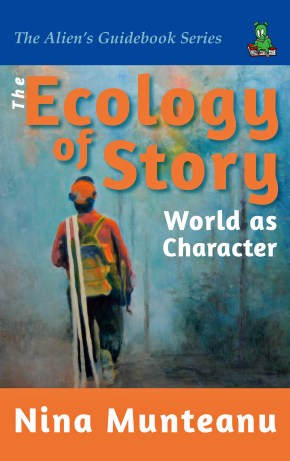
EcologyOfStoryWhether told through cautionary tale / political dystopia (e.g., Margaret Atwood’s MaddAddam trilogy; Bong Jung-Ho’s Snowpiercer), or a retooled version of “alien invasion” (e.g., Cixin Liu’s 2015 Hugo Award-winning The Three Body Problem), these stories all reflect a shift in focus from a technological-centred & human-centred story to a more eco- or world-centred story that explores wider and deeper existential questions. So, yes, science fiction today may appear less technologically imaginative; but it is certainly more sociologically astute, courageous and sophisticated.
 

nina-2014aaNina Munteanu is an ecologist and internationally published author of award-nominated speculative novels, short stories and non-fiction. She is co-editor of Europa SF and currently teaches writing courses at George Brown College and the University of Toronto. Visit www.ninamunteanu.ca for the latest on her books.

Sharing Nature’s Secrets And When Trees Share the Dirt…

EcologyOfStoryOne of the lectures I give to my science fiction writing students is called “Ecology in Storytelling”. It’s usually well attended by writers hoping to gain better insight into world-building and how to master the layering-in of metaphoric connections between setting and character.1

I talk about the adaptations of organisms to their changing environments. I describe the trophic (energy) relationships from producers to consumers and destroyers in a complex cycle of creative destruction. Students perk up when I discuss some of the more strange and interesting adaptations of organisms to their environment: twisted stories of adaptations and strategies that involve feeding, locomotion, reproduction and shelter.

Purposeful Miscommunication & Other Lies

For instance, the Alcon blue butterfly hoodwinks ants into caring alconbluebutterfly-antsfor its larvae. They do this by secreting a chemical that mimics how ants communicate; the ants in turn adopt the newly hatched caterpillars for two years. There’s a terrible side to this story of deception. The Ichneumon wasp, upon finding an Alcon caterpillar inside an ant colony, secretes a pheromone that drives the ants into confused chaos; allowing it to slip through the confusion and lay its eggs inside the poor caterpillar. When the caterpillar turns into a chrysalis, the wasp eggs hatch and consume it from inside.


This reads like something out of a noir thriller. Or better yet, a horror story. Nature is large, profligate, complex and paradoxical. She is by turns gentle and cruel. Creative and destructive. Competitive and cooperative. Idle and nurturing.

When I bring in extremophiles, who thrive in places you and I would cringe to set foot in, students’ imaginations run wild with ideas. I describe a panoply of weird adaptations in Nature—involving poisons, mimicry and deception, phototaxis and something called anhydrobiosis, which permits the tiny tardigrade to shrivel into a tun in the absence of water then revive after a 100 years with just a drop of water.

water-bear03

Tardigrade

All this adaptation hinges on communication. How an organism or population communicates with its environment and among its own. Examples of “strange” communication are the purview of the science fiction writer … and already the nature of our current world—if you only know where to look. The scope of how Nature communicates—her devices and intentions—embraces the strange to the astonishing. From using infrasound to chemical receptors and sensing magnetic fields. To allelopathy. Aggressive symbiosis. And so much more.

When Trees Share the Dirt

“Trees are the foundation of a forest, but a forest is much more than what you see,” says University of British Columbia forest ecologist Suzanne Simard.

suzanne-simard-portrait

Suzanne Simard

Simard, who has published hundreds of papers over 30 years of research, suggests a kind of “intelligence” when she describes the underground world “of infinite biological pathways that connect trees and allow them to communicate” In a forest. This communication allows the forest to behave as if it was a single organism, says Simard. Her early in situ experiments showed solid evidence that tree species, such as Paper Birch and Douglas Fir communicated in a cooperative manner underground through an underground mutualistic-symbiosis involving mycorrhizae (e.g., fungus-root). These trees were conversing in the language of carbon and nitrogen, phosphorus, water, defense signals, allelo-chemicals, and hormones via a network of mycelia. Fungal threads form a mycelium that infects and colonizes the roots of all the trees and plants. Simard compares this dense network to the Internet, which also has nodes and links—just as the forest.

forest-conversing

Myccorhyzae and fungal highways

Fungal highways link each tree and plant to its community, with busiest nodes called hub trees or mother trees. Calling them mother trees is appropriate, given that they nurture their young in the understory; sending excess carbon to the understory trees, which receive less light for photosynthesis. “In a single forest,” says Simard, “a mother tree can be connected to hundreds of other trees.” These mature trees act as nodal anchors—like major hub sites on the Internet—for tree groupings; according to Simard, they look after their families, nurture seedlings and even share wisdom—information—when they are injured or dying.

Simard made another incredible discovery: that mother trees “recognize their kin.” In experiments her team ran using related and unrelated seedlings, the mother tree preferentially sent its excess carbon to kin over non-kin seedlings.

These discoveries pose some serious implications in how we do and should manage our forests. “You can take out one or two hub trees, but there’s a tipping point,” says Simard. “You take out one too many and the whole system collapses.”

Simard shared that “in 2014 the World Resources Institute reported that Canada in the past decade has had the highest forest disturbance rate of any country worldwide…In Canada it’s 3.6% per year…about four times the rate that is sustainable.”

“Massive disturbance at this scale is known to affect hydrological cycles, degrade wildlife habitat and emit greenhouse gases back to the atmosphere, which creates more disturbance and more tree die-backs,” says Simard. She adds that the practice of planting commercially valued species at the expense of the indigenous aspens and birches lacks complexity and promotes vulnerability to disease. It’s creating “a perfect storm,” Simard concludes.

Trees & Climate Change

A major international report on climate change shows that wildlife habitats will be dramatically impacted around the world. In Canada, this could fundamentally alter 65 per cent of its existing natural habitat in the boreal and Arctic regions, where warming will be the greatest. The report says that seven Canadian provinces – Ontario, Quebec, Alberta, British Columbia, the Yukon, Newfoundland and Labrador and Manitoba – will have more than half of their natural habitat at risk.

Simard asks: “Instead of weakening our forests, how can we reinforce them and help them deal with climate change?” She suggests four simple solutions:

  1. Get out into the forest and re-establish local involvement in our forests, using management techniques based on local knowledge
  2. Save our old-growth forests, the repositories of genetic material, mother trees and micorhizal networks
  3. Save the mother trees when cutting trees
  4. Regenerate our forests with a diversity of species types and structures

“Forests aren’t just a bunch of trees competing with each other; they are super-cooperators,” Simard points out. “The great thing about forests,” she reminds us, “is that as complex systems, they have an enormous capacity to self-heal.”

How Healing Trees Can Heal Us

Aside from being highly evolved water management specialists, trees are chemical factories that broadcast a host of aerosols into the atmosphere around them. Researchers have found over 120 substances, of which only half could be identified. These aerosols are part of a sophisticated survival strategy, writes botanist and biochemist Diana Beresford-Kroeger. Studies have shown that willows, poplars and maples warn each other about insect attacks; undamaged trees then pump bug-repelling chemicals to ward off the attack. Black walnut trees emit juglone, an aerosol that repels competing nearby plants and some insects. Scientists demonstrated that airborne communication between individual sagebrush plants (called “eavesdropping”) helped neighbouring plants resist attacks. The monoterpenes like pinene and linene can relieve asthma and even fight cancer.

Water Is-COVERYou can read more about this in my book “Water Is… (Pixl Press).

1I give several lectures based on this general topic of world building for writers. One I gave recently, at CanCon2016 in Ottawa, focused on aquatic worlds, my scientific area of expertise. These lectures are based on my upcoming guidebook “The Ecology of Story: World as Character”

.

.

nina-2014aaNina Munteanu is an ecologist and internationally published author of award-nominated speculative novels, short stories and non-fiction. She is co-editor of Europa SF and currently teaches writing courses at George Brown College and the University of Toronto. Visit www.ninamunteanu.ca for the latest on her books. Read Nina’s climate/eco-fiction Darwin’s ParadoxAngel of Chaos and Natural Selection.

When Art Tangos with Science

Imagination is more important than knowledge—Albert Einstein


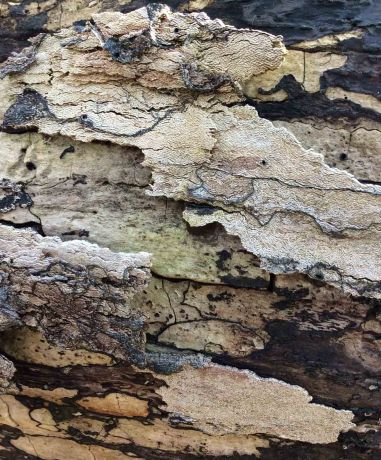
patterns-Cedar log moss2-LR

Cedar log (photo by Nina Munteanu)

I tell stories. I’m also a scientist. I use the scientific method in my research to seek truth; I also find truth presented to me through the symbols of intuition.

A few years ago, I was introduced to Krista Fogel, a University of British Columbia masters student, who was investigating the use of creative art in high-ability scientists. She named her thesis: “The Self-Perceived Experience of Investigating Science with an Artistic Spirit: A Hermeneutic Phenomenological Study of High Ability Scientists Who Also Engage in the Arts”. Hermeneutic, by the way, is the development and study of theories of the interpretation and understanding of texts (I had to look it up) and phenomenology is an approach to philosophy through the study of phenomena.

Krista wanted to interview me as part of her project. I was flattered, of course. Me, a High Ability Scientist? Who’d told her that? Once I got past my own humble angst, I found Krista’s questions bracing; they reopened a world of compelling ideas I had carried with me for some time. The concept of using art to do good science has dwelled inside me since registration day at Concordia University when I quit my fine arts program to pursue a science degree only to come full circle and write fiction. I got my Masters Degree in Ecology and Limnology and was then working as a scientist for an environmental consulting firm (I now write and teach writing full time). I did research, drove boats, collected samples and analyzed data then wrote up my findings and made recommendations. I wrote science fiction novels on the side.

“History shows that eminent scientists, such as Leonardo da Vinci, also engaged in the arts,” said Fogel. She went on to cite 400 other famous scientists who also practiced art at a high level. “If not entirely engaged in the arts, scientists throughout history have at least engaged in science with an artistic spirit. Scientists and artists use common tools for thinking such as intuition and imaginative processes.”

Krista and I met several times at the local Starbucks, where I “toked” on coffee as she fumbled with her notes. A young gal with a direct but unassuming gaze and a gentle smile, Krista asked me to share my personal experience of mixing art with science. Every good scientist is an artist at heart: science is the tool and art is the process.

Fogel concluded that when conducting scientific investigations with an artistic spirit, the scientist holds her heart central, from which the artist springs. This “allows us to connect with serendipitous occurrences, which breed discovery,” Fogel added.

patterns2-log-beetl holes-LR

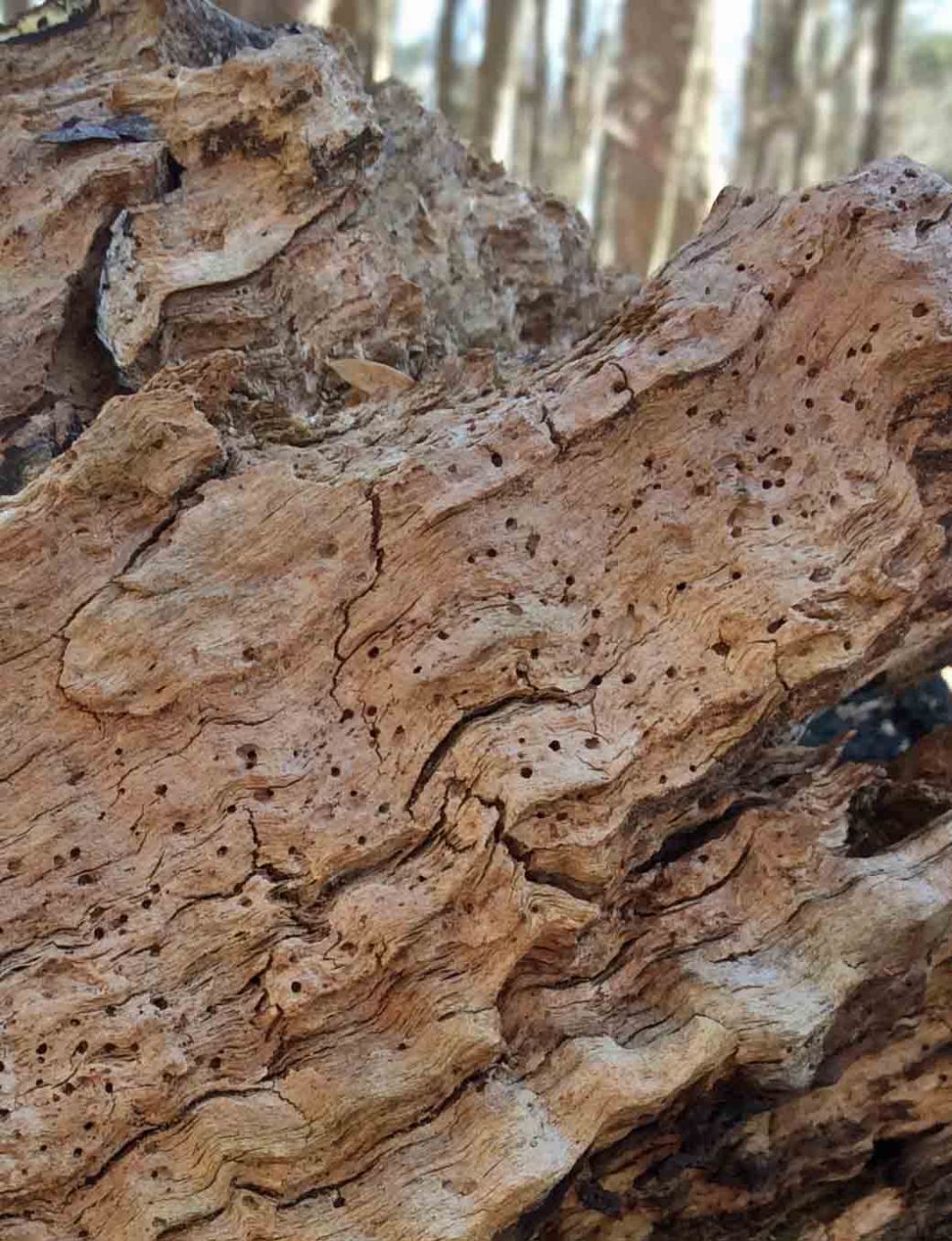
Decaying log with insect bore holes (photo by Nina Munteanu)

You can train your mind as both artist and scientist to become more aware of serendipitous occurrences around you. I call it being in sync and wrote about it in a previous article here (“Writing in Sync”). Often, when I’m researching a novel, I pick up things serendipitously. Something will come up that just fits with what I was searching for. An article pops up in the news. Or I’m talking to someone and they bring up just the topic I am researching. These things always happen to me. This occurs not only in my fiction writing but in my scientific pursuits. Some years ago, I was doing a pollution study using glass slides for colonizing algae to compare communities of an urban stream to those of an agricultural stream. I was really looking to see the difference between communities of these different stream environments when I discovered that the algae were colonizing the glass surfaces according to the current. Compelled with more questions of why, how and what if, I pursued this new line of research (which turned out to be far more interesting than my original research premise) and wrote several ground-breaking papers on it.

Indeed, questions like “why” and “what if” are germane to both art and science; the ‘what if’ question is the science fiction writer’s mantra and the premise, which comes from the artist part of you: imagination and an inquisitive and open mind. The idea of seemingly unrelated events intersecting to produce meaningful patterns has spawned new notions of thought from the scientific study of spontaneous order in the universe (synchrony), to Synchromysticism — the discovery of convergent archetypal symbols in pop culture (e.g., books, music and film).

Writer and philosopher Jake Kotze suggests that, “Synchronicity happens when we notice the bleed-through from one seemingly separate thing into another — or when we for a brief moment move beyond the mind’s divisions of the world.” Synchronicity and serendipitous discovery, like metaphor, appears when we change the way we look at things.

Serendipitous discovery comes to us through peripheral vision. Like our muse, it doesn’t happen by chasing after it; it sneaks up on us when we’re not looking. It comes to us when we focus outward and embrace our wonder for this world. When we quiet our minds and nurture our souls with beauty. It is then that what we had been seeking naturally comes to us. Like a gift.

Author Sibyl Hunter tells us that “Sync operates as an undercurrent of divine awareness personified through the myriad processes and symbols that make up the building blocks of our reality. Within that current, we spin our modern-day myths into books, fairy tales and movies, subconsciously retelling ourselves the same story over and over.” This also holds true in the models and metaphors of scientific genius, which often spring from the creativity of an intuitive heart and imaginative mind.

According to Mark A. Runco (California State University) “creativity depends on originality, while accomplishment and achievement reflect other problem-solving skills. Creative thinking involves at least three things: 1) the cognitive capacity to transform experience into original interpretations, 2) an interest in producing original interpretations, and 3) discretion.” The title of Piaget’s monograph, To Understand Is to Invent, reflects the fact that we do not have an authentic understanding of our experience until we construct that understanding for ourselves. In other words, “it is one thing to memorize some datum; it is quite another to discover it for one’s self; only then do we understand,” says Runco. Fogel concurs: “what Piaget called invention is a kind of creation, a creation of personal meaning. Piaget tied assimilation to imaginative play into creative interpretation.”

Blue-green fungus pattern

Decaying log displaying spalting (photo by Nina Munteanu)

According to Dean Keith Simonton (University of California), even the most illustrious creative geniuses of history have careers riddled by both hits and misses, both successes and failures. He uses Albert Einstein as an example. A man who has achieved almost mythical status as a genius, Einstein’s career “was plagued by terrible ideas, false starts and surprising disasters.” Simonton tells the story of Einstein’s debate with Niels Bohr over the implications of quantum theory, in which Einstein offered a series of arguments that Bohr countered. Bohr once even pointed out that Einstein failed to take into consideration the theory of relativity! According to some, Einstein wasted the final years of his career working on a unified field theory that was almost universally rejected by his colleagues. Einstein defended his missteps by noting that errors can advance science so long as they are not trivial; the greater the error, the greater the opportunity for new perspective and discovery.

It is left for us to simply recognize the dance.


nina-2014aaNina Munteanu is an ecologist and internationally published author of award-nominated speculative novels, short stories and non-fiction. She is co-editor of Europa SF and currently teaches writing courses at George Brown College and the University of Toronto. Visit www.ninamunteanu.ca for the latest on her books. Read Nina’s climate/eco-fiction Darwin’s ParadoxAngel of Chaos and Natural Selection.
 

Eight Ways to Move From Prosaic to Spectacular

Nina-reading-Ward Is

Reading on Algonquin Island, Lake Ontario (photo by Nina Munteanu)

What makes some writing stunning and other writing lackluster? Mostly, it’s the language—the words—you use. And, it isn’t just what words you use; it’s how you use them. Here are a few things you need to consider when translating your work into something that “sings”.

  1. Use Active Verbs and Reduce Modifiers

Many writers, not just beginners, slide into the pattern of using passive and weak verbs (e.g., were, was, being, etc.). Then they add a modifier to strengthen it. It doesn’t. Actively look for strong, vivid verbs. This is the key to good writing. Active and powerful verbs move a story forward. For instance, which version is more compelling?

Jill was walking quickly into the room.

or…

Jill stomped into the room.

The second example not only more quickly and efficiently demonstrates how Jill entered the room, but demonstrates with what attitude. There is no substitute for the use of powerful, appropriate verbs in sentences.   

2. Avoid Excessive & Meaningless Prose

Novice writers often use too many words to describe an event, action or scene. An overabundance of words slows down the story and obscures plot and action. Excessive prose includes:

Repetition: many beginning writers will often first tell then show in a scene. You don’t need to do both; trust the reader to get the “show”.

Extraneous words: e.g. “he started to think” instead of “he thought”; use of the obvious such as “she saw the big man lying on the bed” instead of “a big man lay on the bed” (“she saw” is implied through her POV). This second example also demonstrates how you can shift the readers’ attention from “her seeing” (in the first phrase) to “the man lying” on the bed (in the revised phrase). This simple change can create a much more powerful sentence through the seamless shift in reader attention.

Dull description not related to plot: I recently edited a writer’s over 400-page urban fantasy that contained far too much ordinary detail. Detail that, in small doses, may have enlightened the reader on the qualities of the protagonist; but in larger doses ground the narrative to a boring halt.

When you look for a more efficient and purposeful way to say something, you cut out unnecessary detail. Remember that virtually all description should be related to the plot and theme of the story.

3. Use Alliteration, Metaphor, Simile, Personification

These devices bring lyricism and cadence and powerful imagery to your prose. However, as with anything powerful, you need to use these judiciously. Use them where you wish to convey a strong image and to punctuate your prose.

4. Be Mindful of Word Accuracy

More often than you might think, a writer inadvertently misuses a word to convey an idea or emotion. For instance, let’s consider the following sentence, which describes a character’s reaction to a dog being cruelly mishandled:

“What are they doing?” Jack said crossly.

The modifier crossly suggests that Jack lacks compassion; it infers petulant annoyance.

“What are they doing?” Jack scowled.

Scowled still suggests the same icy disdain, though it may have been delivered with false bravado or through genuine discomfort from a hidden compassion. If the writer wished to convey shock, disgust or compassion, the following would better represent that sentiment:

“What are they doing?” Jack said, eyes wide.

Or:

“What are they doing?” Jack stammered.

5. Avoid Using Words like “Felt” or “Seem”

These “telly” words prevent the reader from directly experiencing the story by imposing a level of interpretation. For example, “he felt himself falling” can be improved to “he fell”. If you want to spice up the phrase, use another verb: “he toppled” “he stumbled” or “he crashed”.

6. Read your Writing Aloud & Punctuate Your Pauses

It isn’t just a clever metaphor when they say your writing style is called your “voice”; because your readers “listen” to what you write. Reading out loud helps define cadence, tone and pace of your prose and streamlines your writing. When you read aloud, pay attention to where you naturally pause. You may wish to put in a comma, semi-colon or period there.

7. Size and Vary Your Paragraphs  

Paragraphs are visual elements that help people read; they break up text on a page in logical places to provide white space for reader ease. I’ve heard people quote the “two-inch” rule for maximum paragraph length and I concur. This is one of the reasons some passages are harder to read than others; long paragraphs are more tiring to the eye. Find those logical breaks and put them in. Varying paragraph length creates a more interesting story “landscape” for the reader. Don’t be afraid to go to some extremes like using the one sentence – or even one word – paragraph.

Looking at Ward Island from Algonquin Is.

View of Ward Island from Algonquin Island (photo by Nina Munteanu

8. Size and Vary Your Sentences  

As with paragraphs, overly long sentences can try a reader’s patience and you may lose them entirely. Too many short choppy sentences can also reduce your prose to a mundane level. Varying your sentence length in a paragraph creates the lyricism and cadence that makes prose enjoyable to read.

For more tips on how to improve your writing for publication, go check my writing guide series The Alien Guidebook Series.

nina-2014aaNina Munteanu is an ecologist and internationally published author of award-nominated speculative novels, short stories and non-fiction. She is co-editor of Europa SF and currently teaches writing courses at George Brown College and the University of Toronto. Visit www.ninamunteanu.ca for the latest on her books. Read Nina’s climate/eco-fiction Darwin’s ParadoxAngel of Chaos and Natural Selection.

Nina Talks Water at Word Up in Barrie

Unity Market-outside

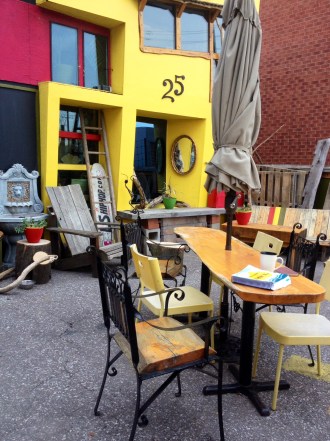
Unity Market & Cafe outside patio

Every month on the second Thursday, Word Up in Barrie hosts readings by writers, poets, and spoken word artists. From pros to amateurs, and all genres of writing, Word Up’s open mic has welcomed writers of all genres, from amateurs to winners of the Governor General’s Award.

The volunteer run group holds its reading night at the artisanal Unity Market and Café, on Toronto Street, just a walk away from Barrie’s charming downtown core and harbor on Lake Simcoe. Apart from its famous “scuffins” (an amalgam of muffin and scone, generously filled with savory goodness), the market is a gestalt meeting place for creativity, holding events almost daily.

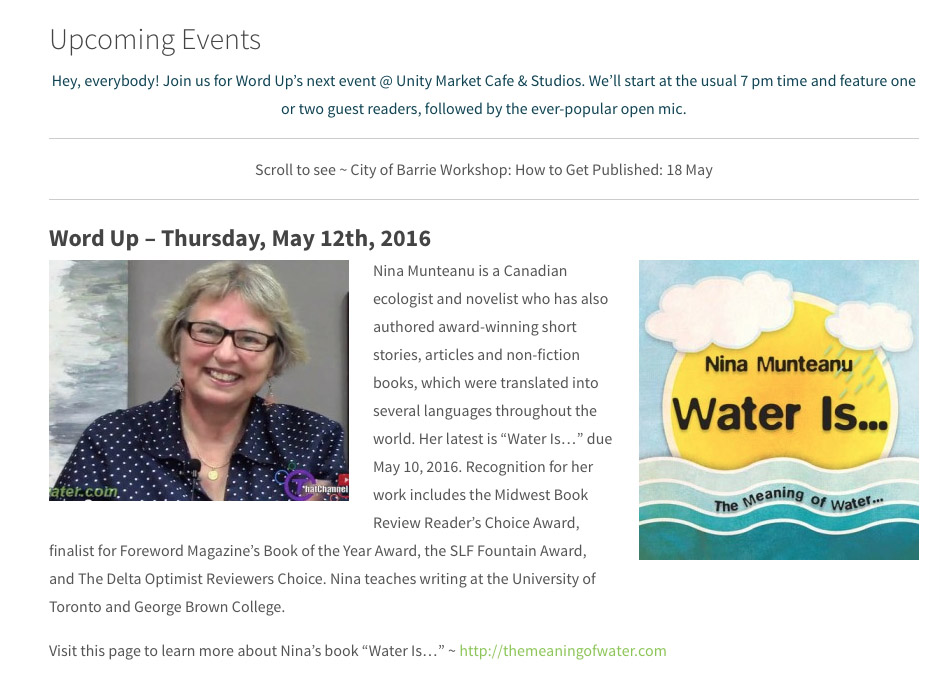
I heartily accepted when Linda Laforge invited me to speak about my last project to those in attendance last Thursday. My latest book is Water Is…, a non-fiction work that took me three years to write and the culmination of a career and life with water.

Shane-Unity Market

Shane making a tea

I talked about how the book came about—linking it to how I came about—and the process of research and writing—which morphed into something beyond what I had initially conceived. The book in some ways wrote itself, telling me to go here and there; gathering friends and colleagues to me—some from far away—to provide important information I needed to put into the book.

I ended my talk with a description of the Watermark Project, a Lake Ontario Water Keepers initiative to give narrative to our connections with water—exactly what I’d intended with Water Is…

Barrie-tulips

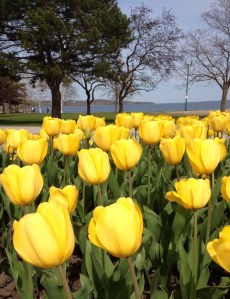
Barrie harbor front

What followed was an open mic that resonated with water connections from a short story about death to learning how to heal with water. Damian Lopes, Barrie’s Poet Laureate, delivered a compelling poem on Canadian sociopolitics.

The open mic closed with Shane Dennis’s freestyle oration—a spontaneous stream-of-consciousness flow of powerful imagery that both summarized the night’s readings and set it aflame and into flight.

Damian Lopes won the raffle for a free Water Is… book. And I sold a few books to a few hydrophiles. A wonderful evening!

Thanks, Linda, Aaron, Bruce and Shane!


For more about my book Water Is… and about water see TheMeaningOfWater.com.

word up banner

Nina at Word Up-Barrie

The Writer-Editor Relationship, Part 1: Editors Preparing Writers


Log patterns 6

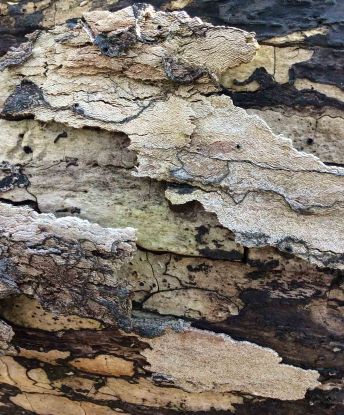
Spalting patterns on decaying log (photo by Nina Munteanu) 

As indie publishing soars into new heights and successes, writers are looking more and more to freelance editors to help them create works of merit that will stand out in the market. Whether this process is seamless and productive or fraught with difficulties relies on the relationship established between editor and writer—at the outset and throughout.

The writer-editor relationship—like any relationship—works best when communication between parties is transparent and clear. What ultimately drives misunderstanding—or its corollary, harmony—is “expectation” and how it is met. Clarifying expectations on both sides is paramount to creating a professional and productive relationship with few hitches.

Realizing Expectations

Indie authors often come to editors with unclear and, at times, unreasonable or unrealistic expectations on services. Many writers know very little about the kind of editing we do and the different levels of effort (time and associated fee) required. They do not understand the difference between “copy-editing” and “structural editing”, particularly as it pertains to their own work. In fact, many indie writers don’t even know what their MS requires. This is because of two things: 1) they can’t objectively assess their own work, particularly in relation to market needs; and 2) many authors have not sufficiently considered their “voice” or brand and matched it to a relevant target market. Both of these will influence how the writer comes into the relationship and the nature of their expectations.

It is best to be “up front” with everything, from understanding a writer’s work and market expectations to establishing your fees, your time, and the nature of your services. This is why a savvy editor will ask for a one to several page example of the author’s writing prior to offering their services and finalizing the nature of a potential relationship. Such an exchange may, in turn, include a sample of the editor’s work for the writer to assess. This exchange helps clarify the process for both parties.

A savvy editor will want to establish with the author the following things prior to taking him/her on as a client and embarking on the actual editing task:

  1. The nature of the writer’s work: a writer’s work should harmonize with the editor and achieve a good fit; e.g., I edit fiction and non-fiction; however, I do not edit horror, because I simply can’t relate to it and don’t care for it. More on this below.
  2. The author’s expectations and target market: this is key to establishing the kind of editing required for the author’s piece. Is it good enough to just copy-edit or will the piece require substantive edits to succeed in the identified market? This often requires open and frank communication between editor and author.
  3. Nature and time of submission: on which the schedule is based.
  4. Schedule and deadlines for deliverables: based on the editor’s realistic timing (including other work) and the nature of the editing job (to be established by some reliable means).
  5. Nature of communication: form and frequency; partly to ensure that the writer does not abuse the communication stream with a barrage of emails, e-chats, phone calls, etc.)
  6. Nature and cost of deliverables: e.g., use of track changes; inclusion of summary letter; follow up meetings, etc.
  7. Mutual agreement on fees, fee structure and payment details: what, how and when.
  8. Inclusion and nature of contract: this may include an NDS, if desired.

By clarifying these, you and the author create a new set of realistic agreed-upon expectations.

Fitting Writer with Editor

The right fit for editor and writer includes more than harmonizing genre, writing style, and content. The fit includes personality. A professional editor and colleague of mine recently shared on our list-serve about his experience as both a freelance and publishing house editor. The editor shared that a majority of writers responded to his edits with comments like, “finally, someone who just comes out and plainly tells me what’s wrong!” However, others complained: “why are you so mean?” The editor admitted to using humor liberally in his assessments and was described by one of his clients as “playfully harsh.” While the work of this editor is no doubt impeccable, the added humor may not be a good fit for some writers, particularly those who are not highly confident in their work.

Knowing your own brand of editing and being up front with it is part of achieving a good fit with a writer and can avoid huge headaches down the line for both of you.

Toward Honesty & Moral Integrity

I and some of my editing colleagues have run across several cases of indie writers who have come to us with “already edited works” that they believed only needed proofing or minor edits, but in fact called for substantive editing and story coaching to fulfill market requirements. The previous editor had either done a poor job of editing or the author had done a poor job of incorporating the edits. Either way, I was now in the position to inform this author, who had already spent several thousand dollars on edits, that his work required more than a “trim job off the top” to meet the standards demanded by the market.

My colleague suggested that it is unethical to copy-edit a manuscript that obviously requires structural editing or has serious “story” problems. I’m inclined to agree. The key lies in the expectations of the author and his/her intended market. This is where the editor’s knowledge of “matching work to market” becomes a critical part of the relationship with the author, whether you take him/her on as a client or not. I talked more about this in a previous article on Boldface, “The Moving Target of Indie Publishing: What Every Editor (and Writer) Needs to Know.” Honesty is best. Following the path of moral integrity may not put food on the table; but it will maintain your reputation as an editor of quality, which will keep the roof over your head.

Below is a mock email of a general response to a writer’s inquiry for help on their MS:

Dear Alice,

Thank you for your interest in my editing services. I am still taking on clients and would be happy to help you.

In your initial letter, you included a brief description of your story. It sounds intriguing and interesting. Science fiction is my passion (I’ve published nine SF books so far).

Before we proceed, I need a few things from you to ensure we are a good fit and to help me do the best I can for your project. First, can you please send me a short sample of your work (2-3 pages) and a very short summary. From this I’ll be able to confirm the kind of editing that best suits your project. For the kinds of editing/coaching services and associated fees please refer to this page on my website: xxxx.

Can you also answer the following questions?

1.     (If they haven’t included the genre or a short premise, I ask them for one).

2.     How do you intend to publish this book (traditional, indie, self-publish)?

3.     Who would you say is your intended audience and market?

4.     Is this book a stand alone or part of a trilogy or series?

5.     Is the book complete (first draft or more)? If not, how much is written?

Based on this, I will suggest the kind of editing (and coaching) required to best fit your needs. This may be one or a combination of the following: 1) an evaluation/assessment at $xx/page; 2) copy-editing (with some substantive editing) at $xx/page; or 3) story coaching at $xx/hour. As outlined on my webpage (xxxx), I provide digital commentary (line by line) in your manuscript (in Word through track changes) accompanied by a summary letter with recommendations. You can find examples of what I do on this page of my website: xxxx.

Once I’ve determined what services best suit your work and you are in agreement with the service and fees, I will draw up a contract for you and I to sign. The contract will stipulate a reasonable schedule that you and I can agree on for the process and deliverables.

Once the contract is signed by both of us, I would ask that you send me your material along with Paypal payment for the first half of the agreed total fee by the date marked in the contract.

I look forward to hearing from you.

Best Wishes,

Nina


Nina MunteanuNina Munteanu is an ecologist and internationally published author of award-nominated speculative novels, short stories and non-fiction. She is co-editor of Europa SF and currently teaches writing courses at George Brown College and the University of Toronto. Visit www.ninamunteanu.ca for the latest on her books.


The Moving Target of Indie Publishing: What Every Editor & Writer Needs to Know

patterns-Cedar log moss2-LR

Decaying cedar log (photo by Nina Munteanu)

I’m a writer and an editor. I’ve written and published novels, short stories, and non-fiction books with traditional publishing houses and indie publishers. I’ve also self-published. As editor, I serve as the in-house copy editor for a publishing house in the United States and have acted as acquisition editor for several anthologies put out by a local indie publisher. I also coach novice writers to publication and edit in that capacity.  You could say I know the industry from many angles and perspectives. That’s been good for me, because this industry is a moving target, and it’s good to triangulate on a moving object. The entire publishing industry is evolving, and it’s a slippery evolution.

Even the words we use are slippery. Indie. Hybrid. Publisher.

Many people, like award-winning author Kristine Kathryn Rusch, when they use the terms indie writer and indie publishing, include what some call self-publishing in their definitions of indie, “because so many [professional] writers who are not with traditional publishers have started their own presses. It’s not accurate to lump all writers who are not following the traditional route into the self-publishing basket any longer.” According to Rusch, an indie publisher is anyone who is not a traditional publisher. For this article, I’ve adopted Rusch’s definition to provide the full range of expectations for editors working with writers in the indie field. I define a traditional publisher as an established and often larger publishing house or press that (1) follows traditional submission criteria; (2) does not charge writers; (3) pays out royalties; and (4) employs in-house editors.

Indie writing and publishing can then be described in several ways depending on where the writer submits and by what mechanism and what model they use. All of these will affect a writer’s needs and perceptions for an editor and, in turn, an editor’s expectations as well.

Table 1 (below) outlines the five major models of indie writing and publishing.

Table 1: Types of indie writing / publishing models
1. Small independent press


(not writer’s)


Author submits to a small press that does not require author to pay for publishing costs. House may pay small royalties. Acceptance criteria limit submissions. There may or may not be formal distribution.
2. Small independent press


(not writer’s)


Author submits to a small press that may require author to pay for part of the publishing costs. House typically does not pay royalties but may provide complimentary copies and/or author’s rate for copies. Acceptance criteria may still apply to submissions. Distributor is typically the Ingram/Amazon model.
3. Small independent press


(writer as sole proprietor or part of a consortium; also called self-publishing by some)

Author can write and publish as they please. Costs of publication are born solely by the writer(s), and royalties come straight from profit. No acceptance criteria apply. Distribution is typically the Ingram/Amazon model.
4. Service publisher


(e.g., iUniverse, Friessen; this is self-publishing, even though the publisher’s name appears on the work)


Author can write and publish as they please. All publication costs born by writer. Service will include copy editing, layout, cover design, printing, some distribution, and some promotion—all at cost (based on service package). Distribution is typically the Ingram/Amazon model.
5. Self-publishing


(e.g., the publication is in the author’s name)

Author can write and publish as they please. Author uses à la carte style of self-publishing in which they do (or hire others to do) the production of the work (e.g., editing, layout, cover, printing, distribution, and promotion).

Depending on which model an author uses for their work, their perceived need and actual need for an editor prior to submission and publication will be affected. I distinguish between perceived and actual because, unfortunately, in many cases, these diverge: an author may not think they need a certain kind of editing for their work when they do. The opposite is more rare: the author thinking they need an editor when they don’t. (More on this in a future article.)

The availability of these models and their hybrid cousins has provided writers with a cornucopia of often confusing choices. In many cases, I find that writers are not even aware of which choice is best for them. Part of the reason is that writers carry forward ideas from the old model. Unfortunately, this often translates into misconceived ideas about and expectations of editors. (That’s another article too.)

For editors, it’s important to recognize these different models and what they, in turn, provide and expect from authors. A savvy editor translates into a savvy author. Your advice, when driven from a place of publishing industry knowledge, will be invaluable to authors seeking your services. And they will come to rely on this as much as, if not more than, your actual editing.

By its very nature, indie publishing has given the freelance editor an opportunity to take on a new role—a service that agents used to and still do provide to many traditionally published authors: that of industry consultant. In the traditional model, an author would seek an agent who would then not only sell their work to a publisher but also provide advice on what to expect in the market as well as help with career-longevity choices (which include branding)—questions many novice authors haven’t even considered, never mind answered sufficiently. Most indie authors will not engage an agent, but most will (should) hire an editor. So, instead of an agent, the freelance editor becomes the first stop in the publishing industry for an indie author. This has become one of my primary roles as editor and writing coach. And this is again because most writers, when they start out, do not know what direction they want to go—mainly because they aren’t familiar enough with what is available to them and the ramifications to their careers.

Here’s an example: one client, working on her first novel, wanted my advice on whether she should try a traditional publisher or just forgo and self-publish. An editor possessing savvy knowledge of the industry and now knowing something of the author’s work and ambitions can bring informed and constructive advice to the author.

The ramifications on how I handle and edit a story directly follows which route the author has decided to follow. This is every bit as relevant to an author publishing with a traditional publishing house, an indie press, or self-publishing. Style—whether it’s that of a publishing house or the author’s brand—relies on consistent application of voice and tone. Just as publishing houses embrace different and unique styles, so do authors. In fact, if they are self-publishing, this is even more important.

The editor plays a crucial role in helping an author establish their voice, style, and, ultimately, their brand. And, perhaps, this becomes one of the principle differences between traditional and indie publishing. While voice and style is predetermined to some extent by traditional publishing houses (hence, they employ their own editors to impose a style in some cases), it’s left to the author—and their freelance editor—to determine this in the indie scene. The structure of traditional publishing is both more orderly and more confining. Indie publishing—particularly self-publishing—is an infinite melting pot of creativity. Some view it as one big mess. In fact, it’s a chaos of astonishing opportunity. It’s a chance for intimate collaboration that demands mutual respect. Freelance editors are poised as both gatekeepers and enabling wizards of the indie world.

Table 2 (below) describes a freelance editor’s focus in the five indie models.

Table 2: Editing for different indie models
1. Small independent press


(with submission criteria similar to a traditional model)


Authors often think they don’t need a freelance editor if they’re submitting to a press with in-house editors; this is incorrect. Those who have had their work edited prior to submission to a press—even a small press—will have a much higher chance of being accepted. The freelance editor’s job, then, will include attending to the style of the publishing house.
2. Small independent press


(without submission criteria)


While authors may not recognize the need for an editor when submitting to an indie publisher without submission criteria, the need for editing remains—particularly because many of these presses don’t employ or have sufficiently qualified editors. Excellence in presentation and nurturing a strong author voice are the freelance editor’s responsibility.
3. Small independent press


(writer’s own press)

Given that the author has carte blanche on what to write and publish, a freelance editor’s role in recognizing, harmonizing with, and helping to establish a genuine and strong author’s voice becomes most important.
4. Service publisher


Authors have misconceptions about service publishers and particularly their editors. I’ve had several clients come to me after recognizing that their works were not well represented by the provider’s in-house editor. Service publisher in-house editors do not represent a particular style, voice, or brand (given that most are underpaid students and there is no style identity); the freelance editor role is as with #3.
5. Self-publishing


The same criteria exist here as for model #3.
Log patterns 6

Spalting patterns on decaying log (photo by Nina Munteanu)

The take home: Freelance editors can flourish in the indie writing and publishing field by (1) establishing their expertise in the industry and what it requires (taking on the role of consultant, which agents normally provide in the traditional model); (2) recognizing a need for strong authorial voices and helping to foster them; and (3) promoting point #2 with consistency in style, tone, etc.


Nina MunteanuNina Munteanu is an ecologist and internationally published author of award-nominated speculative novels, short stories and non-fiction. She is co-editor of Europa SF and currently teaches writing courses at George Brown College and the University of Toronto. Visit www.ninamunteanu.ca for the latest on her books.