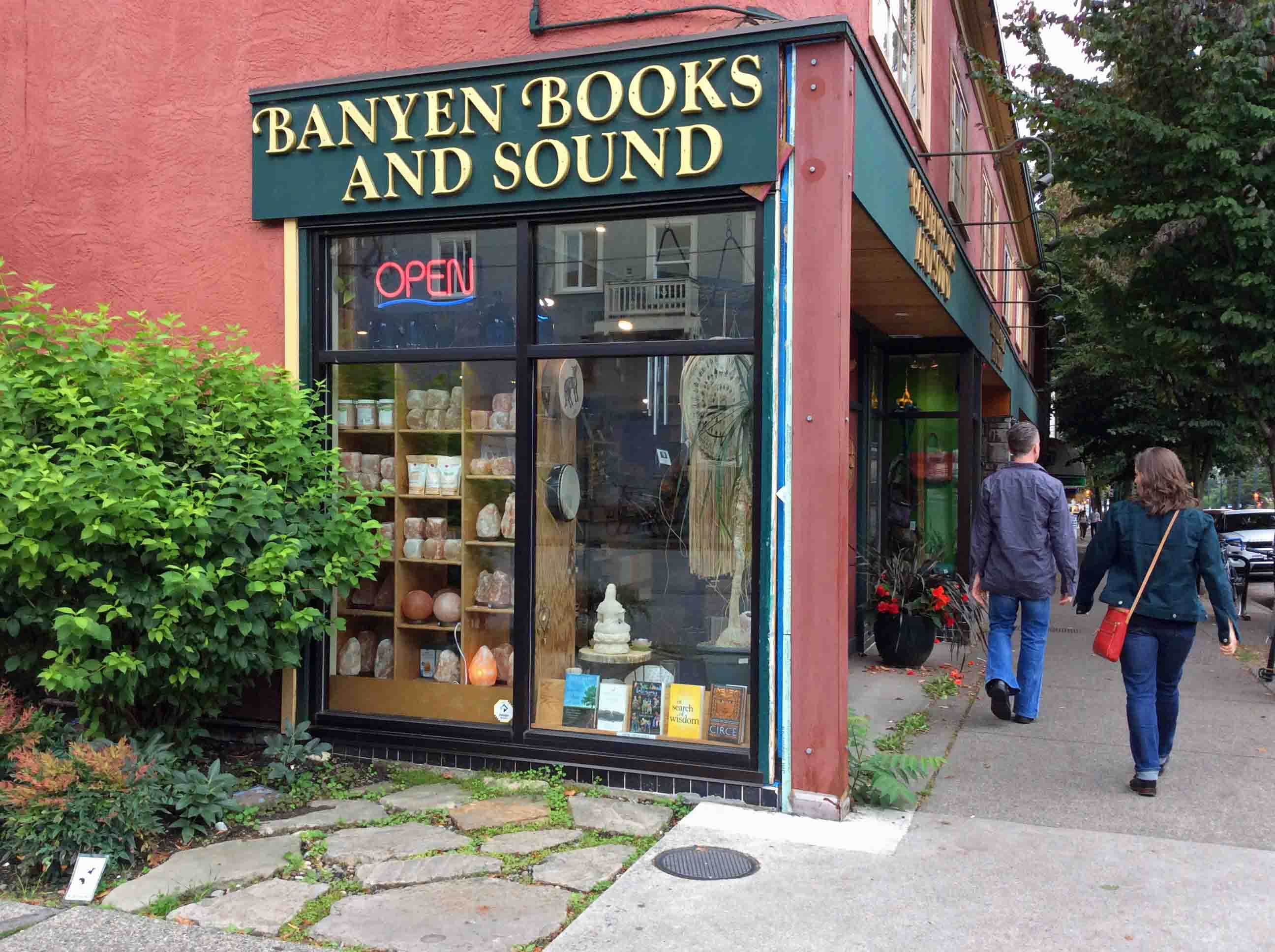
Banyen Books & Sound on corner of Dunbar and W 4th Avenue, Vancouver (photo by Nina Munteanu)
One of my favourite bookstores in Vancouver is Banyen Books & Sound on the southwest corner of W 4th Avenue and Dunbar. So, whenever I go back to my home town to visit family and friends, I stop there to linger amid the shelves of wonder and erudite adventure. Then I usually cross Dunbar to Aphrodite’s Organic Pie Shop for a delicious fresh pie—usually peach, if it is available. So good! Two things I love: books and pie!
Aphrodite’s Organic Pies, next door to Banyen’s, Vancouver (photos by Nina Munteanu)
Pacific Spirit Regional Park, Vancouver, BC (photo by Nina Munteanu)
During my recent visit this year to Vancouver, my friends and I had a fulfilling walk one morning through the big tree forest of Pacific Spirit Park near UBC. Margaret suggested we go to Aphrodite’s Organic Café for lunch, located across 4th Avenue from Banyen Books (the sister restaurant to the pie shop). After a delicious lunch, we wandered into Banyen, like desert nomads looking for water, and lost ourselves in a treasure of books, magazines, crystals, cards, singing bowls and other spiritual/healing items. Like a braided river, we dispersed according to our wayward interests.
Water Is… at Banyen Books, Vancouver (photos by Nina Munteanu)
Then friend Anne soon found me and pulled my sleeve. “Your book is here!” She led me to where my book Water Is… stood, face out, on the top shelf marked ‘Water: Life Force & Resource.’ In truth, I already knew through Pixl Press that the book was selling there. But here it was, showcased so nicely! It sat rather stately amid Emoto’s Secret Life of Water and Ryrie’s Healing Energies of Water.
Banyen customers find Water Is… and find a chair to take a look
One of the perks of Banyen Books are the comfortable seats for easy browsing. When I teasingly asked one of the clerks if they noticed people lingering for the day, they said, “yeah! They might leave for lunch then come back for the afternoon!” I can see why; Banyen is an entire world to discover. It is called Canada’s most comprehensive Body-Mind-Spirit bookstore, “offering a broad spectrum of resources from humanity’s spiritual, healing, and earth wisdom traditions…Our service is to offer life-giving nourishment for the body (resilient, vital), the mind (trained, open), and the soul (resonant, connected, in-formed). Think of us as your open source bookstore for the ‘University of Life’.”
“Banyen is an oasis, a crossroads, a meeting place…for East and West, the ‘old ways’ and current discoveries and syntheses.”
“The Golden Lotus Restaurant and Natural Food Store on Fourth Avenue at Bayswater was a hothouse for spiritual seekers, new vegetarians and spaced-out hippies grounding through good work. Banyen was born in a tiny book corner of the Golden Lotus. That lovely place was a connection to India, meditation and spiritual growth from 1967 to 1970. As its sun set, what was to become the Naam restaurant, Lifestream, Woodlands, Nature’s Path, and Banyen Books arose.”
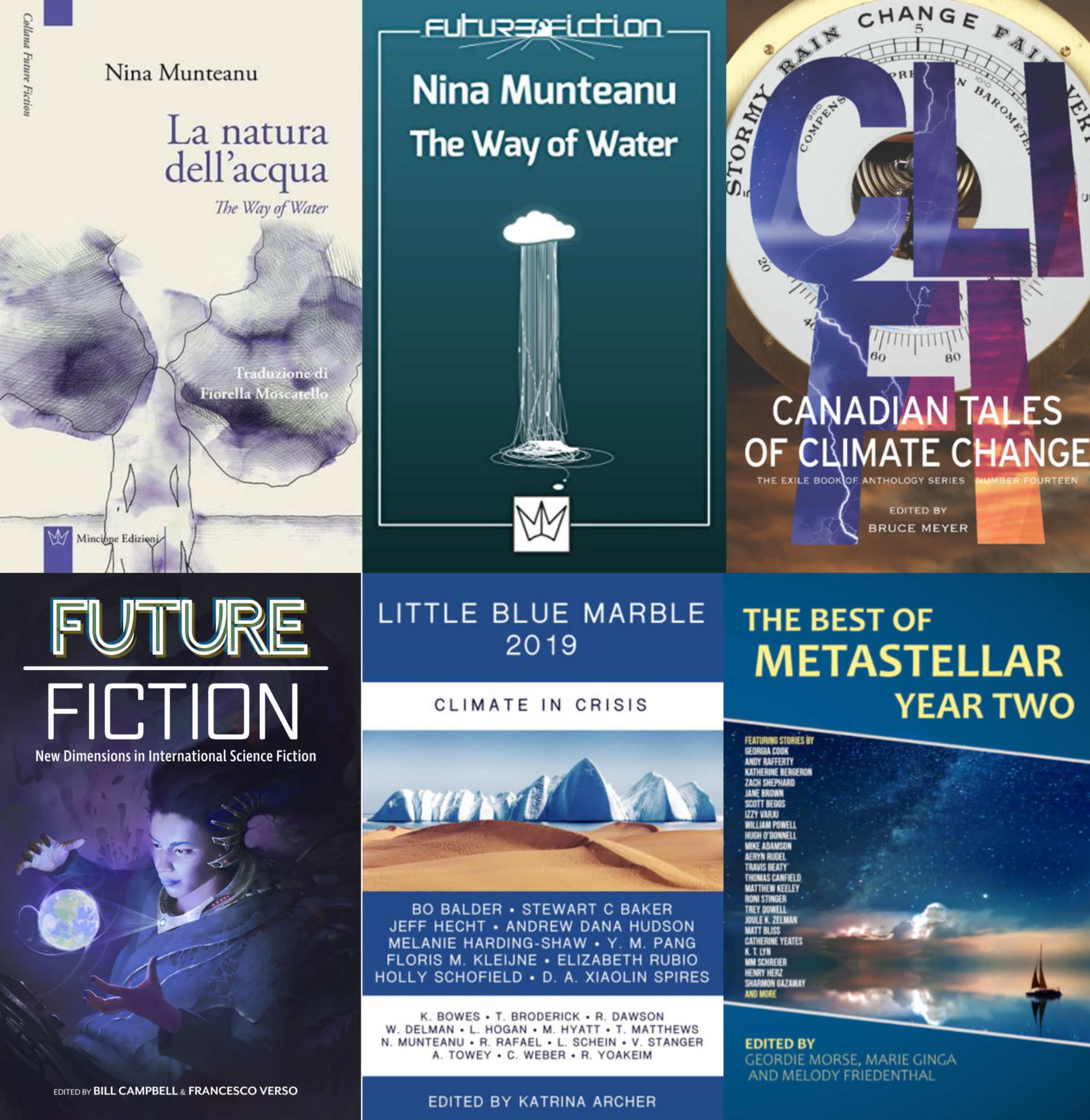
Nina Munteanu is a Canadian ecologist / limnologist and novelist. She is co-editor of Europa SF and currently teaches writing courses at George Brown College and the University of Toronto. Visit www.ninamunteanu.ca for the latest on her books. Nina’s bilingual “La natura dell’acqua / The Way of Water” was published by Mincione Edizioni in Rome. Her non-fiction book “Water Is…” by Pixl Press (Vancouver) was selected by Margaret Atwood in the New York Times ‘Year in Reading’ and was chosen as the 2017 Summer Read by Water Canada. Her novel “A Diary in the Age of Water” was released by Inanna Publications (Toronto) in June 2020.
She imagines its coolness gliding down her throat. Wet with a lingering aftertaste of fish and mud. She imagines its deep voice resonating through her in primal notes; echoes from when the dinosaurs quenched their throats in the Triassic swamps.
Water is a shape shifter.
It changes yet stays the same, shifting its face with the climate. It wanders the earth like a gypsy, stealing from where it is needed and giving whimsically where it isn’t wanted.
Dizzy and shivering in the blistering heat, Hilda shuffles forward with the snaking line of people in the dusty square in front of University College where her mother used to teach. The sun beats down, crawling on her skin like an insect. She’s been standing for an hour in the queue for the public water tap.
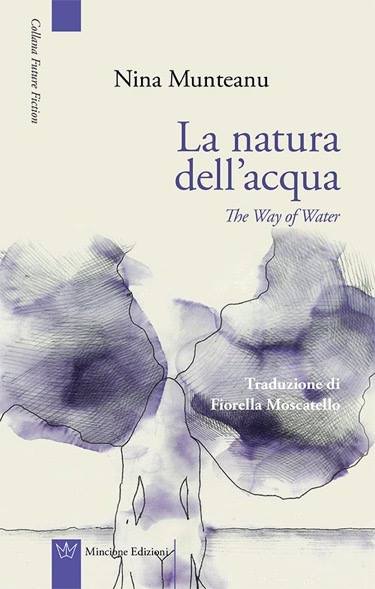
The Way of Water was first published as a bilingual print book by Mincione Edizioni(Rome) in Italian (La natura dell’acqua, translated by Fiorella Moscatello), and English along with a recounting of what inspired it: The Story of Water (La storia dell’acqua) in 2016. The Way of Water has been reprinted several times, in magazines and anthologies, since its first appearance in 2016.
It all started with an invitation by my publisher in Rome in 2015 to write about water and politics in Canada. I had long been thinking of potential ironies in Canada’s water-rich heritage. The premise I wanted to explore was the irony of people in a water-rich nation experiencing water scarcity: living under a government-imposed daily water quota of 5 litres as water bottling and utility companies took it all.
I named the story “The Way of Water” (“La natura dell’acqua”), about a young woman (Hilda) in near-future Toronto who has run out of water credits for the public wTap; by this time houses no longer have potable water and their water taps have been cemented shut (as was done in Detroit in 2014); the only way to get water is through the public wTaps—at great cost. She’s standing two metres from water—in a line of people waiting to use the tap—and dying of thirst.
“The Way of Water” captures a vision that explores the nuances of corporate and government corruption and deceit together with global resource warfare. In this near-future, Canada is mined of all its water by thirsty Chinese and US multinationals—leaving nothing for the Canadians. Rain has not fallen on Canadian soil in years due to advances in geoengineering and weather manipulation that prevent rain clouds from going anywhere north of the Canada-US border. If you’re wondering if this is possible, it’s already happening in China and surrounding countries.
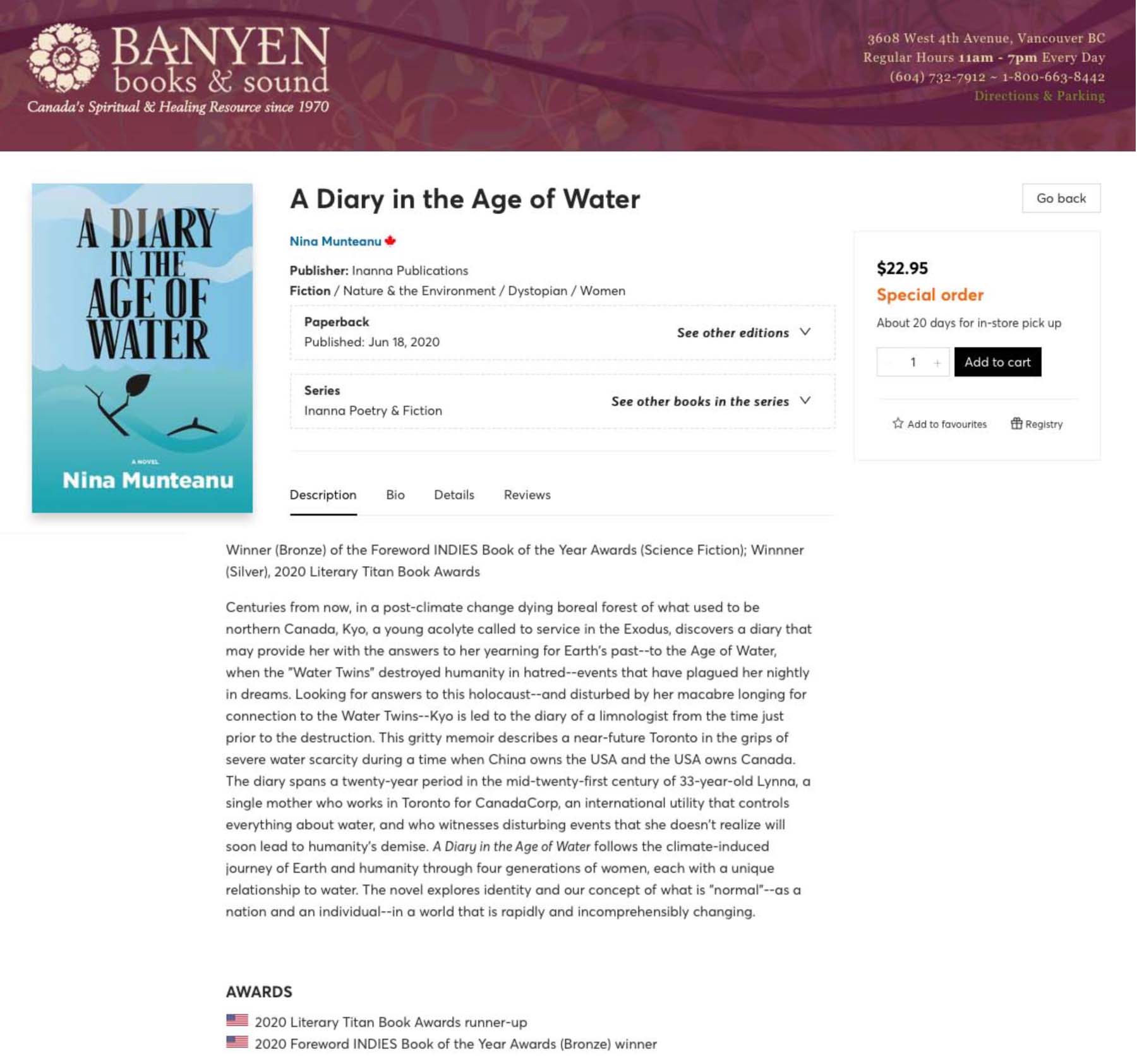
The Way of Water, in turn, inspired my recent dystopian novel A Diary in the Age of Water, which explores the lives of four generations of women and their relationship to water during a time of severe water restriction and calamitous climate change.
Publications (excluding online pubs) that featured The Way of Water
“The Way of Water evokes a sense of awareness about issues of access to water and about the dangers of imbalances in that access.”
Derek Newman-Stille, Speculating Canada
“In a short story in which every word has its weight, Nina Munteanu manages to describe a dystopia with ecological, political, social and economic elements and Hilda’s reactions to her situation with a great emotional intensituy. To avoid thirst, Hilda ends up embracing an extreme idea, a last hope linked to water. The Way of Water is a story of the kind you hope is science fiction but you fear is not.”
Massimo Luciani
Nina Munteanu is a Canadian ecologist / limnologist and novelist. She is co-editor of Europa SF and currently teaches writing courses at George Brown College and the University of Toronto. Visit www.ninamunteanu.ca for the latest on her books. Nina’s bilingual “La natura dell’acqua / The Way of Water” was published by Mincione Edizioni in Rome. Her non-fiction book “Water Is…” by Pixl Press (Vancouver) was selected by Margaret Atwood in the New York Times ‘Year in Reading’ and was chosen as the 2017 Summer Read by Water Canada. Her novel “A Diary in the Age of Water” was released by Inanna Publications (Toronto) in June 2020.
“The truth isn’t about telling; no one just tells you the truth. It needs to be coaxed, even tricked, out. The truth is carefully hoarded—like water—and only flows among privileged acolytes who have proven themselves.”
Lynna Dresden
“Those of us who are captivated by fear, who despair in a dead zone—we need to consider new ways to tell familiar stories, to envision different endings. A book like this can change the way that you see the world at this moment, can allow formulae to take root in fiction and grow into a different kind of solution.”
Marcie McCauley, THE tEmz REVIEW
Jackson Creek in early fall, ON (photo and rendition by Nina Munteanu)
“Climate change is larger than all of us. It speaks in the language of finality. And mostly through water.”
Lynna Dresden
“An eye-opening story for those who are still on the fence about climate change. This is the perfect read for both sci-fi readers and eco-interested readers alike.”
“There simply aren’t enough Canadians to protect our wilderness; but if there were enough of us, there’d be no wilderness left to protect.”
Lynna Dresden
“Strangely compelling.”
BURIED IN PRINT
“A Diary in the Age of Water, is simply and beautifully told, profoundly true; a novel that invites us to embrace the wisdom of ages. The story stirs its readers, teaches them about the importance of water, and leaves an imprint on the canvas of the literary and scientific world.”
LUCIA MONICA GOREA, author of Journey Through My Soul
Boys explore the shore of the Otonabee River, ON (photo and rendition by Nina Munteanu)
This noir/ dystopian story, set in Vancouver B.C., finds Suki prematurely awoken from an induced suspension between being alive and dead. With her retinas deactivated and her Government persona suspended, it’s up to her long-time friend and private investigator, Gabe, to uncover why she was brought back early and the way forward to recover her identity. Through the gritty and flooded streets of East End Vancouver and the mega corporations who control their entire existence, Gabe and Suki scheme to claim what is rightfully Suki’s.
Crime Writers of Canada
The story is set in the near-future in a post climate change Vancouver when sea level rise has water lapping decrepit buildings north of The Oak Street Bridge on Oak and 77th, Amazon owns entire roadways, and people pay corporate credits as currency.
One of the aspects of this mystery story that I found particularly attractive and interesting was Bowlsby’s use of cross-genre (mystery with science fiction), which he indicated in his interview with Erik D’Souza with Crime Writers of Canada he has an affinity for. I was reminded of the eco-techno thriller style of Hayden Trenholm’s detective series The Steele Chronicles, also set in the near future in Alberta Canada where biotechnology strays into the hands of corporate moguls and fundamentalist cults.
Bowlsby manages to cram both rich and seamless world building in his story (a feat in any short story), addressing mundane aspects of life, including the nuances of language (e.g. swear words suited to the time and place). Deadland, for instance, is a slang word that describes a government program that allows people to temporarily commit suicide, allowing them to place their lives on hold to supposedly help them escape their problems and supposedly better cope later (Bowlsby tells us rather pithily that it doesn’t really work).
Characters were fully fleshed out and interesting and I found that I would very much like to see more stories set in this universe with Gabe and Suki.
Interview
NM:One of the first things I noticed and loved about the story is its title. How did you arrive at it? Is there a story behind the choice?
CHB: There’s usually more than one story behind my titles. It started with a very different title for a couple of years. Then I began to revise the story very seriously and that meant I had to reconsider the title too. I postulated hundreds of titles over three more years and ended up with a new one. But a friend pointed out a slight logic problem with that new title, related to the story. So, I had another reason to work on it. Normally if it doesn’t feel right, I always look for something that resonates better. Finally, this one resonated well, and wouldn’t be shaken off.
NM:What was the spark or inspiration for this story? Why did you set it where and when you did (post-climate-change Vancouver)?
CHB: Well, when Erik De Souza asked me about the social commentary of the story in his interview, I forgot that the germ of the first inkling of this story came from a discussion I had with a friend, twenty years ago, who felt that everything in our society should be available for sale. For him that represented a pure state that would fix all our problems. (Sorry Erik—I’ll explain this when I see you next.) I disagreed, but I wondered what it would be like if we started on that path. So as a social background, the characters are acting within a stage created for such a system—a system just starting to find its own steady legs. I don’t say it’s bad or good—I just give it free rein. The story itself came from other elements, but the characters’ difficulties are complicated by the hyper-capitalism. As for the climate change problem, and the flooding, that came naturally with the near-future time period; I’m afraid it’s going to happen no matter what we do. As for Suki, her main problem stems from an idea I had about how we might alleviate suicides. Even if it might not work very well.
NM:In your interview with Erik, you both discussed the use of language as a way to describe the world and create the gritty noir tone of the story. Can you describe some of the ways you derived them and other techniques you used?
CHB: That was hard. Or at least, it forced me to work my synapses hard for years. I don’t really know how I came up with the language changes except I set myself that task and used my brain like a sifter. I needed words for certain kinds of things, put myself into the future, and rattled hundreds of words through the filter. I kept lists of possibilities and used the best ones. I suppose that helps create the tone, but a lot of things do that: attitudes, social background, plot, etc.
NM:You mentioned in your interview with Erik that this story was “essentially a failure” and you’d been tirelessly working on it for five years, polishing, changing, revising—until finally someone liked it. Can you describe the process you went through in writing, preparing and getting out this story? Was this an exception for you or part of a typical process?
CHB: A typical process. Only a few of my stories have been published without being rejected by other publications. This story was first a short story, then a screenplay for a long time, then back to a short story, which meant at that point I had to cut out many scenes. Then it failed many more times in other publications. I just felt though that it generated so many sparks in my mind that it should catch fire somewhere, sometime. It was a surprise when it did. So, for some reason my stories need a lot of work. I’m guilty, therefore, I suppose, of not giving a story time enough time to mature, so in the future I should probably take more time to revise things before they see an editor. Generally, that’s a good approach, though, because you can come up with things that work better if you give them time to appear, which is what happened with this story.
NM:Your writing has covered non-fiction and many genres of fiction: science fiction, fantasy, space adventure, mystery, thrillers. How would you describe yourself as a writer?
CHB: An activationist. But I just made that up because of your question. I get an idea and I have to activate it, no matter the theme or genre. I don’t see myself restricted in any way to theme or subject. But I definitely feel an affinity for a plodding detective, no matter the time period or plot. (Or plod).
NM:What’s next for Craig H. Bowlsby?
CHB: I have several projects ready or pounding on my skull to get out. I have a series of three novels in the works about a Shanghai detective in 1917. Two in this series are complete. One takes place mostly in Shanghai; the next mostly in Vancouver; and the third will take place in Shanghai again.
NM: Now that you’re rich and famous, will you still talk to me? I’ll be in Vancouver soon and would gladly celebrate, starting with you buying me a beer!
CHB: I guess that sounds fair. Although I think I already owe you a six-pack. I enjoy our discussions, Nina. See you then!
You can read Craig’s story in the April 2022 Issue of Mystery Magazine. You can listen to Craig’s interview with Erik D’Souza here.
Glade in Jackson Creek, ON (photo and rendition by Nina Munteanu)
Nina Munteanu is a Canadian ecologist / limnologist and novelist. She is co-editor of Europa SF and currently teaches writing courses at George Brown College and the University of Toronto. Visit www.ninamunteanu.ca for the latest on her books. Nina’s bilingual “La natura dell’acqua / The Way of Water” was published by Mincione Edizioni in Rome. Her non-fiction book “Water Is…” by Pixl Press (Vancouver) was selected by Margaret Atwood in the New York Times ‘Year in Reading’ and was chosen as the 2017 Summer Read by Water Canada. Her novel “A Diary in the Age of Water” was released by Inanna Publications (Toronto) in June 2020.
“Nothing in nature stays the same. Or if it does, it’s because change has brought it back to what it once was.”
Lynna Dresden
“Munteanu excels at extrapolating today’s science into a stark vision of what we face in the next decades. Environmentalists, science fact enthusiasts, and science fiction fans will be shaken by this cautionary tale of climate change. Great for fans of James Lawrence Powell’s The 2084 Report, Kim Stanley Robinson’s The Ministry for the Future.”
PUBLISHERS WEEKLY
Thompson Creek, ON (photo and rendition by Nina Munteanu)
“We shall break down all walls—to let the green wind blow free from end to end—across the earth.”
I-330 in ‘We’
Just last week, I read for the first time Yevgeny Zamyatin’s masterpiece We. My first thought upon finishing it was: why have I waited until now to read it? I’m rather embarrassed to say that I’d only heard of its existence recently during some research I’d conducted on another article. The novel, written in 1920, decades before Brave New World and 1984 (two novels it is often compared to and which I read when I was a budding writer, long ago), was suppressed in Russia. It has remained in the shadows of these two works since. Mesmerized by Zamyatin’s fluid metaphoric prose, I read it in a few days.
I usually savour a good novel, but this one compelled me to take it in like an infusion.
The book jacket of the Harper Voyager edition provides the following tagline and description:
“Before Brave New World…before 1984…there was…We. In the One State of the great Benefactor, there are no individuals, only numbers. Life is an ongoing process of mathematical precision, a perfectly balanced equation. Primitive passions and instincts have been subdued. Even nature has been defeated, banished behind the Green Wall…”
Illustration of “We”masses marching during their personal hour
.
We is told through a series of entries by the main protagonist D-503, mathematician and chief engineer of the Integral (the ship that will take humanity to space). The novel takes place in a glass-enclosed Panopticon-like city of straight lines, and scientifically managed using Taylor’s principles of scientific management. No one knows or cares about the outside environment from which they have been separated. Citizens in the totalitarian society of One State are regulated hourly by the Table of Hours, and ruled by the ‘Benefactor’ who dispenses order through arcane methods such as The Machine (a modern ‘guillotine’ of sorts that literally liquidates its victim, reducing them to a puff of smoke and a pool of water), The Cube, The Gas Bell, and the ruthless precision and vigilance of the Bureau of Guardians. All this is “sublime, magnificent, noble, elevated, crystally pure,” writes D-503, because “it protects our unfreedom—that is, our happiness.” In the foreword to the Penguin edition of We, New Yorker journalist Masha Gessen reminds us that, “Zamyatin imagined [We] twenty years before Nazi Germany began sanitized, industrial mass murder of people who had been reduced to numbers.”
Citizens subsist on synthetic food and march in step in fours to the anthem of the One State played through loudspeakers. There is no marriage, and every week citizens are given a “sex hour” and provided a pink slip to let them draw down the shades of their glass apartment. Every year, on Unanimity Day, the Benefactor is re-elected by the entire population, through an open (not secret) vote that is naturally unanimous—given the singular “we” nature of the population.
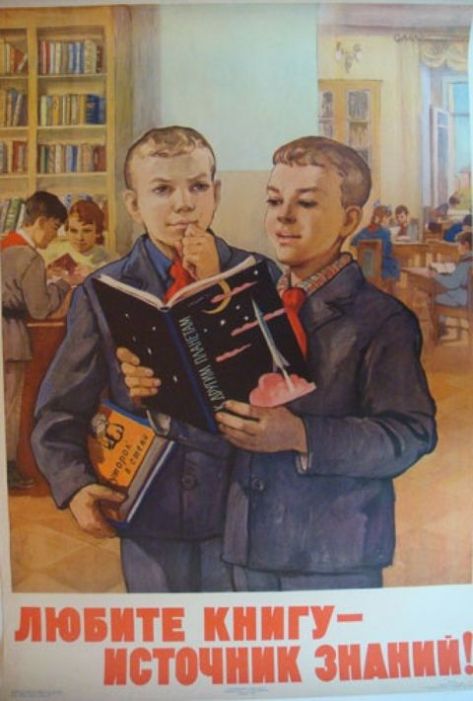
Kids in uniform from Russian poster
.
On Zamyatin’s novel, Michael Brendan Dougherty writes that, “Equality is enforced, to the point of disfiguring the physically beautiful. Beauty–as well as its companion, art–are a kind of heresy in the One State, because ‘to be original means to distinguish yourself from others. It follows that to be original is to violate the principle of equality.”
According to Mirra Ginsburg, who translated the book into English in 1972, Zamyatin and his book explores the oppression of two principles of human existence: eternal change and the individual’s freedom to choose, to want, to create according to his own need and his own will.
Quiet bay of the Otonabee River, ON (photo and rendition by Nina Munteanu)
In some ways, Zamyatin’s satire is as much about our separation from the chaos, ever-evolving and functional diversity of nature as it is about our separation from the unruly thoughts and emotions of the individual. Both are feared and must be defeated, controlled and commodified (I refer to Foucault’s concept of biopolitics).
D-503 writes in his journal: “we have extracted electricity from the amorous whisper of the waves; we have transformed the savage, foam-spitting beast into a domestic animal; and in the same way we have tamed and harnessed the once wild element of poetry. Today poetry is no longer the idle, impudent whistling of a nightingale; poetry is civic service, poetry is useful.”
D-503’s thirteenth entry takes place on a particularly foggy day. When new friend I-330 ‘innocently’ asks him if he likes the fog, he responds, “I hate the fog. I’m afraid of it.” To this, I-330 says, “That means you love it. You are afraid of it because it is stronger than you; you hate it because you are afraid of it; you love it because you cannot subdue it to your will. Only the unsubduable can be loved.”
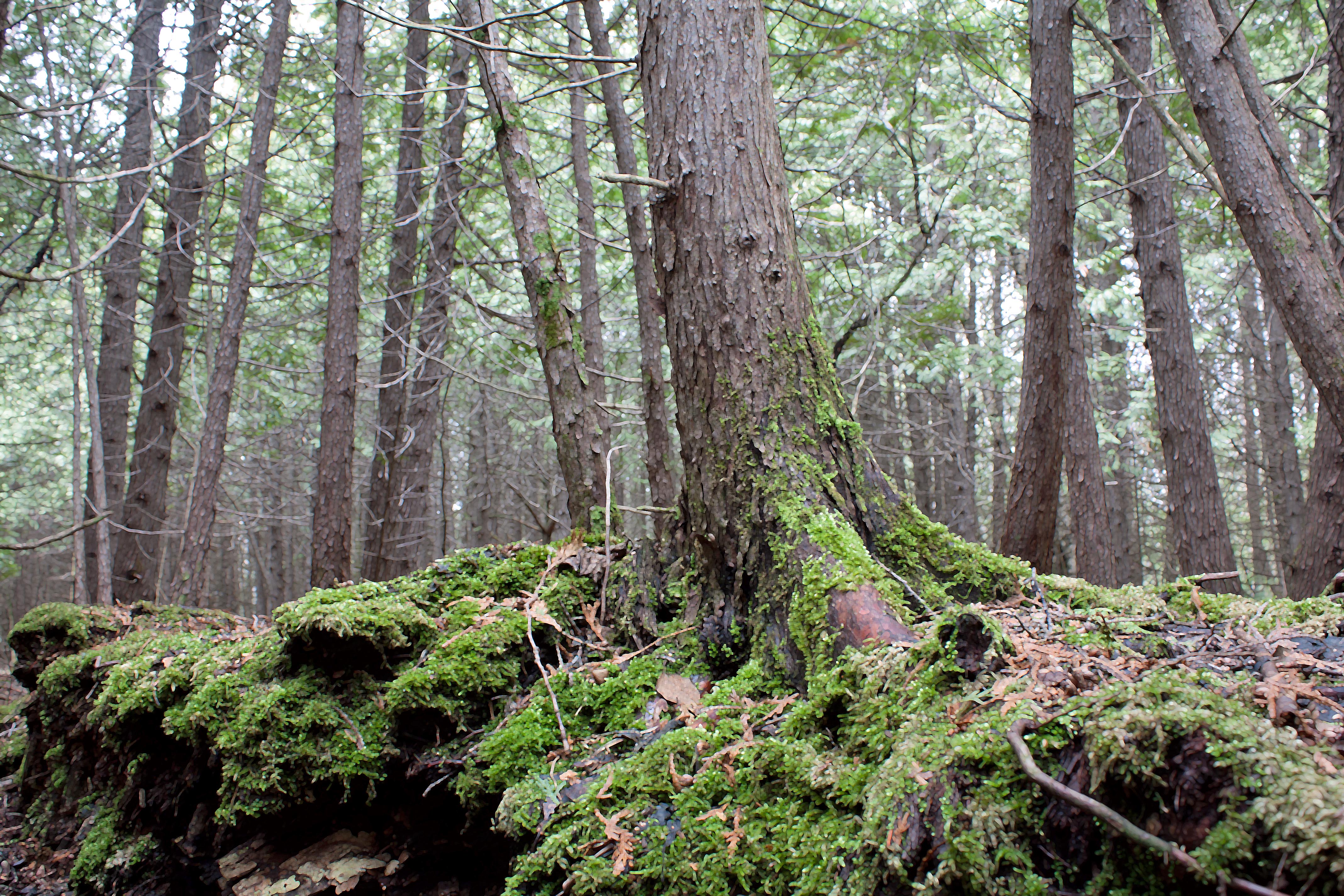
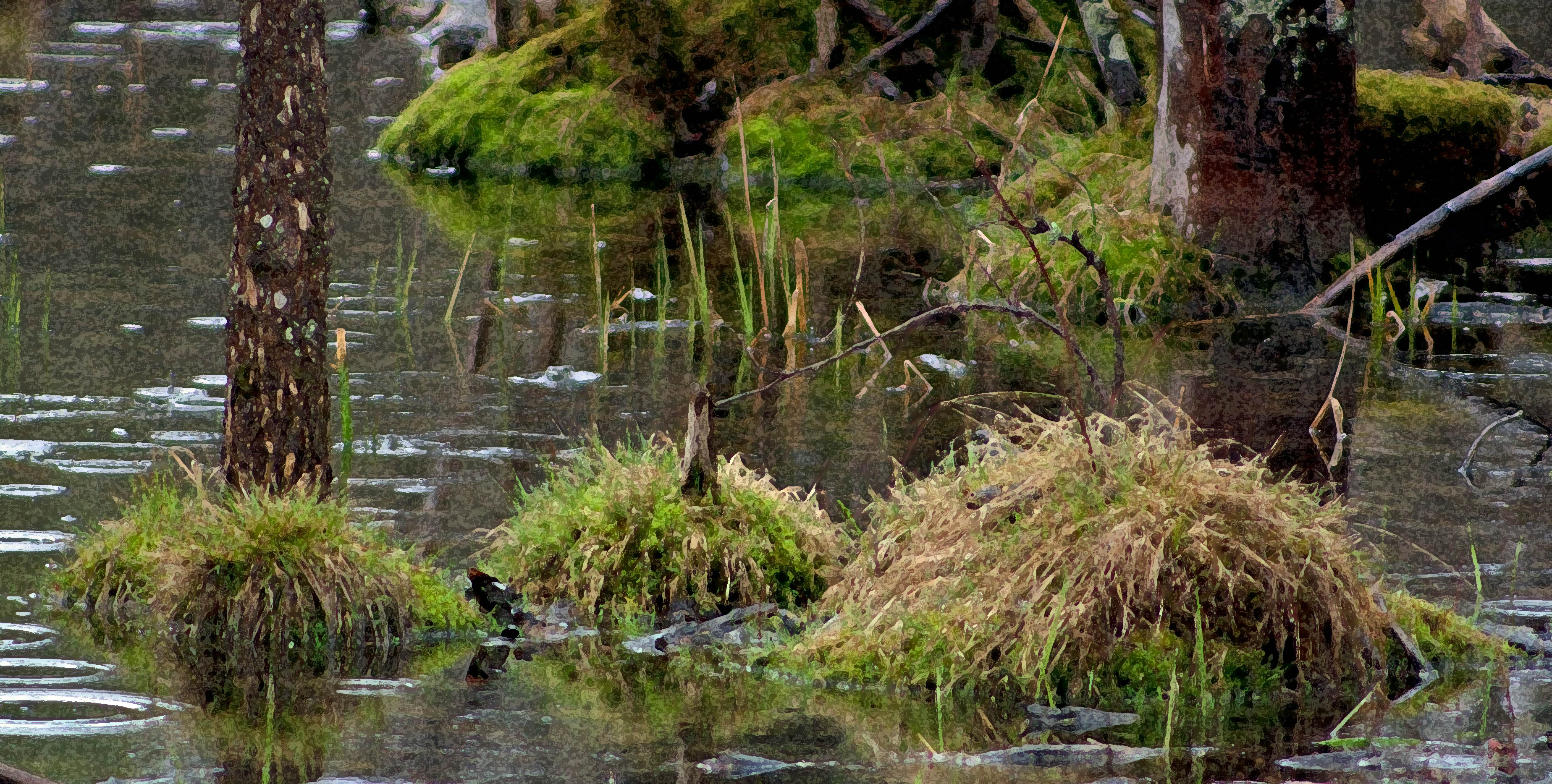
Cedar swamp forest, Trent Nature Sanctuary, ON (photo and rendition by Nina Munteanu)
.
D-503 appears content as a ‘number’ within a larger unity of regimentation and draws comfort from a universe of logic and rationality, represented by the predictive precision of mathematics. For example, he is disturbed by the concept of the square root of -1, the basis for imaginary numbers (imagination being reviled by the One State and which will eventually be lobotomized out of citizens through the mandatory Great Operation). The spaceship’s name Integral represents the integration of the grandiose cosmic equation following the Newtonian hegemony of a machine universe.
The human-machine working the great clock in Metropolis
.
In the following scene in which D-503 watches men work on the spacecraft Integral—itself likened to a giant slumbering machine-human—I am reminded of an iconic scene from Fritz Lang’s 1927 Metropolis:
“I watched the men below move in regular, rapid rhythm…bending, unbending, turning like the levers of a single huge machine. Tubes glittered in their hands; with fire they sliced the glass walls, angles, ribs, brackets. I saw transparent glass monster cranes rolling slowly along glass rails, turning and bending as obediently as the men, delivering their loads into the bowels of the Integral. And all of this was one: humanized machines, perfect men…Measured movements; firmly round, ruddy cheeks; mirror-smooth brows, untroubled by the madness of thought.”
Machine of Metropolis
.
All is indeed sublime … Until he meets I-330, Zamyatin’s unruly heroine who is determined to change D-503’s perspective—and his vacuous state of dutiful ‘happiness.’ She is, of course, a member of an underground resistance, Mephi, bent on overthrowing the One State. I-330 is the herald of change and wishes to use D-503’s connection to the Integral to incite a revolution. In a particularly pithy scene, I-330 challenges D-503’s complacent logic with mathematics to make her point:
“Do you realise that what you are suggesting is revolution?” [says D-503]
“Of course, it’s revolution. Why not?”
“Because there can’t be a revolution. Our revolution was the last and there can never be another. Everybody knows that.”
“My dear, you’re a mathematician: tell me, which is the last number?”
“But that’s absurd. Numbers are infinite. There can’t be a last one.”
“Then why do you talk about the last revolution? There is no final revolution. Revolutions are infinite.”
Confident, powerful and heroic, the liberated I-330 is clearly the driving force of change and the philosophical voice of Zamyatin’s central theme. Her competent manipulations within the system successfully orchestrates a revolution which includes interfering with the unanimous vote, breaching the Green Wall, and braving torture to the end–all the kind of feats usually relegated to a male protagonist in novels of that era. It all starts with a tiny crime and escalates from there. Early in the novel, I-330 lures D-503 to the Medical Office, where the Mephi doctor gives them a sick card so they can play hooky from work. D-503 doesn’t even realize how I-330 has so completely caught him. His description of the facility and the officer is telling:
“A glass room filled with golden fog. Glass ceilings, colored bottles, jars. Wires. Bluish sparks in tubes. And a tiny man, the thinnest I had ever seen. All of him seemed cut out of paper, and no matter which way he turned, there was nothing but a profile, sharply honed: the nose a sharp blade, lips like scissors.”
Biblical references appear throughout We, the One State likened to ‘Paradise’, D-503 to the naïve ‘Adam’, I-330 to the herald temptress ‘Eve’, and S-4711 to the clever snake, with his ‘double-curved body,’ who turns out to be a double-agent. The revolutionary organization named Mephi appears to be after Mephistopheles, who rebelled against Heaven and ‘paradise.’ While these similarities suggest a criticism of organized religion, the novel clearly embodies so much more. It is also so much more than a political statement. Journalist and translator Mirra Ginsburg calls We “a complex philosophical novel of endless subtlety and nuance, allusion and reflections. It is also a profoundly moving human tragedy and a study in the variety of human loves … And, though the people are nameless ‘numbers,’ they are never schematic figures; each is an individual, convincingly and movingly alive.”
Zamyatin wrote We years before the word “totalitarianism” appeared in political speech and he predicted its defining condition: the destruction of the individual. In TheOrigins of Totalitarianism, Hannah Arendt argued that totalitarianism was a novel oppression: previous tyrants demanded obedience; but obedience was not enough for the totalitarian regime, which sought to occupy the entire person and obliterate their very core. As the self disintegrates, humans—like worker bees—fuse into what Arendt called “one man of gigantic dimensions.” Zamyatin’s word for it was: “we.”
“In a world without personal boundaries, a world without deviation, serendipity, difference, a world without ‘I,’ there can be no ‘us.’ The ‘we’ of We is a mass rather than a community of people. Arendt wrote about loneliness as the defining condition of totalitarianism. She drew a distinction between loneliness—a sense of isolation—and solitude, a condition necessary for thinking. One could be lonely in a crowd. But in Zamyatin’s world of transparent houses and uniform lives, one could not have solitude.”
Masha Gessen on the ‘we’ of We
Winston Smith writing his diary out of the view of the ‘Big Brother’ screen
.
Comparison of We with Brave New World and 1984
As I was reading We, I could not help comparing it to George Orwell’s 1984, written over twenty-five years later. Similarities in plot and theme abound, right down to the inverted language of the government: the tyrant is the ‘Benefactor’ just as Orwell’s Ministry of Love is where dissidents are tortured or Oceana’s paradoxical ministry slogans–Freedom is Slavery … Ignorance is Strength … War is Peace. Three years before the publication of Nineteen Eighty-Four in 1949, Orwell reviewed We and compared it with Huxley’s Brave New World, published in 1932:
“The first thing anyone would notice about We is the fact—never pointed out, I believe—that Aldous Huxley’s Brave New World must be partly derived from it. Both books deal with the rebellion of the primitive human spirit against a rationalised, mechanised, painless world, and both stories are supposed to take place about six hundred years hence. The atmosphere of the two books is similar, and it is roughly speaking the same kind of society that is being described though Huxley’s book shows less political awareness and is more influenced by recent biological and psychological theories.”
George Orwell, 1946 review of “We”
Montage of images from 2020 film of ‘Brave New World’
.
While Orwell criticizes Zamyatin’s book as being “less well put together—it has a rather weak and episodic plot which is too complex to summarize,” he praises it for making a political point that according to him Huxley’s book lacks (for the record, I disagree with Orwell on this; Huxley’s political point is just more subtle, just as his characters are). Orwell found Zamyatin’s We more convincing and relevant than Huxley’s Brave New World given that in the technocratic totalitarian state of We “many of the ancient human instincts are still there,” not eradicated by eugenics and medication (such as soma). Citing the many executions in Zamyatin’s Utopia, all taking place publicly in the presence of the Benefactor and accompanied by “triumphal odes recited by the official poets”, Orwell suggested that, “It is this intuitive grasp of the irrational side of totalitarianism—human sacrifice, cruelty as an end in itself, the worship of a Leader who is credited with divine attributes—that makes Zamyatin’s book superior to Huxley’s.”
1976 Penguin cover of ‘Brave New World’ cover; ‘1953 Signet cover of Nineteen Eighty Four’
.
Noam Chomsky considered We more perceptive than Brave New World or 1984, the latter which he called “wooden and obvious” despite clever and original nuances such as “newspeak,” which provided a medium for the world view and principles of Ingsoc and to make other forms of thought impossible (“it’s a beautiful thing, the destruction of words…” says Syme in 1984). I agree with Chomsky. Next to the bleak and hopeless polemic of Nineteen Eighty-Four, We is less dialectic, more visceral, it is full-bodied, ribald, tender, emotional and immediate. But above all, it is hopeful. Again, Mirra Ginsburg says it best:
“We is more multifaceted, less hopeless than Orwell’s 1984, written more than twenty-five years later and directly influenced by Zamyatin’s novel. Despite its tragic ending, We still carries a note of hope. Despite the rout of the rebellion, ‘there is still fighting in the western parts of the city.’ Many ‘numbers’ have escaped beyond the Wall. Those who died were not destroyed as human beings—they died fighting and unsubmissive. And though the hero is reduced to an obedient automaton, certain that “Reason” and static order will prevail, though the woman he loved briefly and was forced into betraying dies (as do the poets and rebels she led), the woman who loves him, who is gentle and tender, is safe beyond the Wall. She will bear his child in freedom. And the Wall has been proved vulnerable after all. It has been breached—and surely will be breached again.”
Mirra Ginsburg, on ‘We’
Image by Amazon media
.
It may seem like a tragic end, particularly for the two main protagonists: D-503 is lobotomized into an obedient drone of the sterile system and betrays his lover; I-330 is no doubt liquidated under The Machine, after refusing to submit and betray her comrades. To the end, she is the messenger of hope and resilience and the force for removal of barriers. The wall does come down–even if for just a moment towards the end of the book–and the Green Wind blows furiously through the land, bringing with it birds and other creatures previously unseen along with the scent of change.
Zamyatin’s We is ultimately a cautionary tale on the folly of logic without love and a profound call to connect to our natural world to nurture our souls. Before he is rendered inert by the Great Operation, D-503 gives O-90 a child. It is no mistake that O-90, who tenderly and selflessly loved and refused to surrender her child to the One State, makes it outside (with the help of I-330) into the natural world. Driven by love (not rationality), she represents the future.
Cedar swamp forest, Trent Nature Sanctuary, ON (photo and rendition by Nina Munteanu)
.
About the Author and His Work
Yevgeny Zamyatin was born in 1884 in Lebedyan, Russia, which according to Mirra Ginsburg was “one of the most colourful towns in the heart of the Russian black-earth belt, some two hundred miles southeast of Moscow—a region of fertile fields, of ancient churches and monasteries, of country fairs, gypsies and swindlers, nuns and innkeepers, buxom Russian beauties, and merchants who made and lost millions overnight.”
Showing influences by Jerome K. Jerome’s 1891 short story The New Utopia and H.G. Wells’ 1899 novel When the Sleeper Wakes and the Expressionist works of Kandinsky, Yevgeny Zamyatin created We in 1920. His political satire was denied publication in Russia but Zamyatin managed to smuggle the manuscript to New York, where it was published in English in 1924 by Dutton. Mirra Ginsburg writes of Zamyatin’s death in 1937: “[it] went unmentioned in the Soviet press. Like the rebellious poet in We, and like so many of the greatest Russian poets and writers of the twentieth century, he was literally ‘liquidated’—reduced to nonbeing. His name was deleted from literary histories and for decades he has been unknown in his homeland.” The first publication of We in Russia had to wait until 1988—after more than sixty years of suppression—when glasnost resulted in it appearing alongside Orwell’s 1984.
Zamyatin called We “my most jesting and most serious work.” His credo, written in 1921 in I am Afraid, proclaimed that “true literature can exist only where it is created, not by diligent and trustworthy officials, but by madmen, hermits, heretics, dreamers, rebels, and skeptics.”
We directly inspired the following literary works: Brave New World by Aldous Huxley, Invitation to a Beheading by Vladimir Nabokov, Anthem by Ayn Rand, Nineteen Eighty-Four by George Orwell, Player Piano by Kurt Vonnegut, Logan’s Run by William F. Nolan and George Clayton, This Perfect Day by Ira Levin, and The Dispossessed by Ursula K. Le Guin.
The Penguin classics edition describes We as “the archetype of the modern dystopia, or anti-Utopia: a great prose poem detailing the fate that might befall us all if we surrender our individual selves to some collective dream of technology and fail in the vigilance that is the price of freedom.”
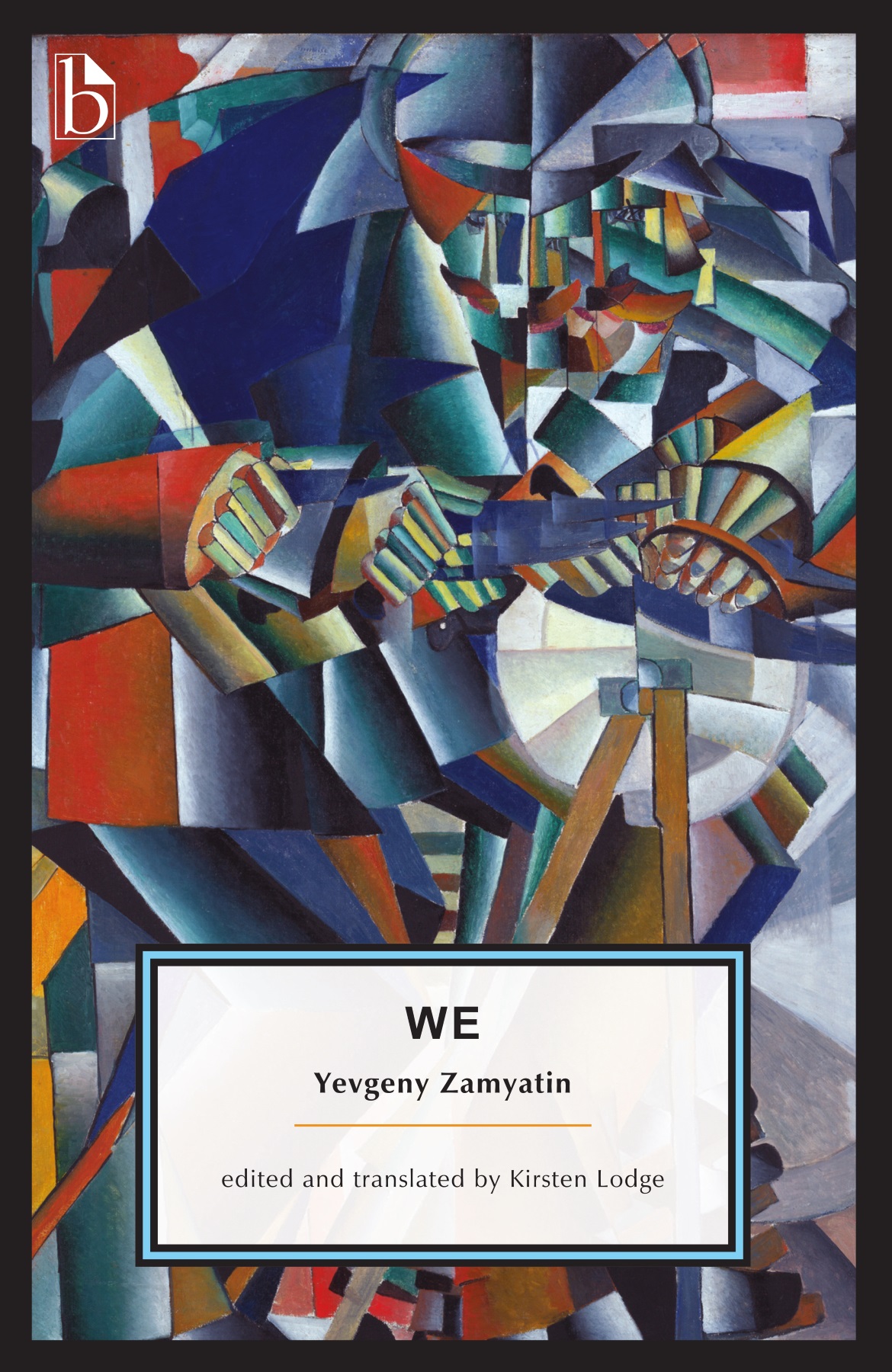
“We,” Broadview Press edition
Nina Munteanu is a Canadian ecologist / limnologist and novelist. She is co-editor of Europa SF and currently teaches writing courses at George Brown College and the University of Toronto. Visit www.ninamunteanu.ca for the latest on her books. Nina’s bilingual “La natura dell’acqua / The Way of Water” was published by Mincione Edizioni in Rome. Her non-fiction book “Water Is…” by Pixl Press (Vancouver) was selected by Margaret Atwood in the New York Times ‘Year in Reading’ and was chosen as the 2017 Summer Read by Water Canada. Her novel “A Diary in the Age of Water” was released by Inanna Publications (Toronto) in June 2020.
“We hold ourselves apart from our profligate nature. But we aren’t unique. We are more part of Nature than we admit. Using the thread of epigenetics and horizontal gene transfer, Nature stitches in us a moving tapestry of terrible irony. The irony lies in our conviction that we were made in the inimitable divine image of God. That we are special. Water flows endlessly through us, whether we are devout Catholics or empty vessels with no purpose. Water makes no distinction. It flows through us even after we bury ourselves.”
Lynna Dresden
A Diary in the Age of Water is “Unsettling and yet deliciously readable … Brilliant.”
THE PRAIRIE BOOK REVIEW
Swamp forest by country road, Kawarthas, ON (photo and rendition by Nina Munteanu)













 Nina Munteanu Writing Coach