My Books at VPL Central Library, Vancouver

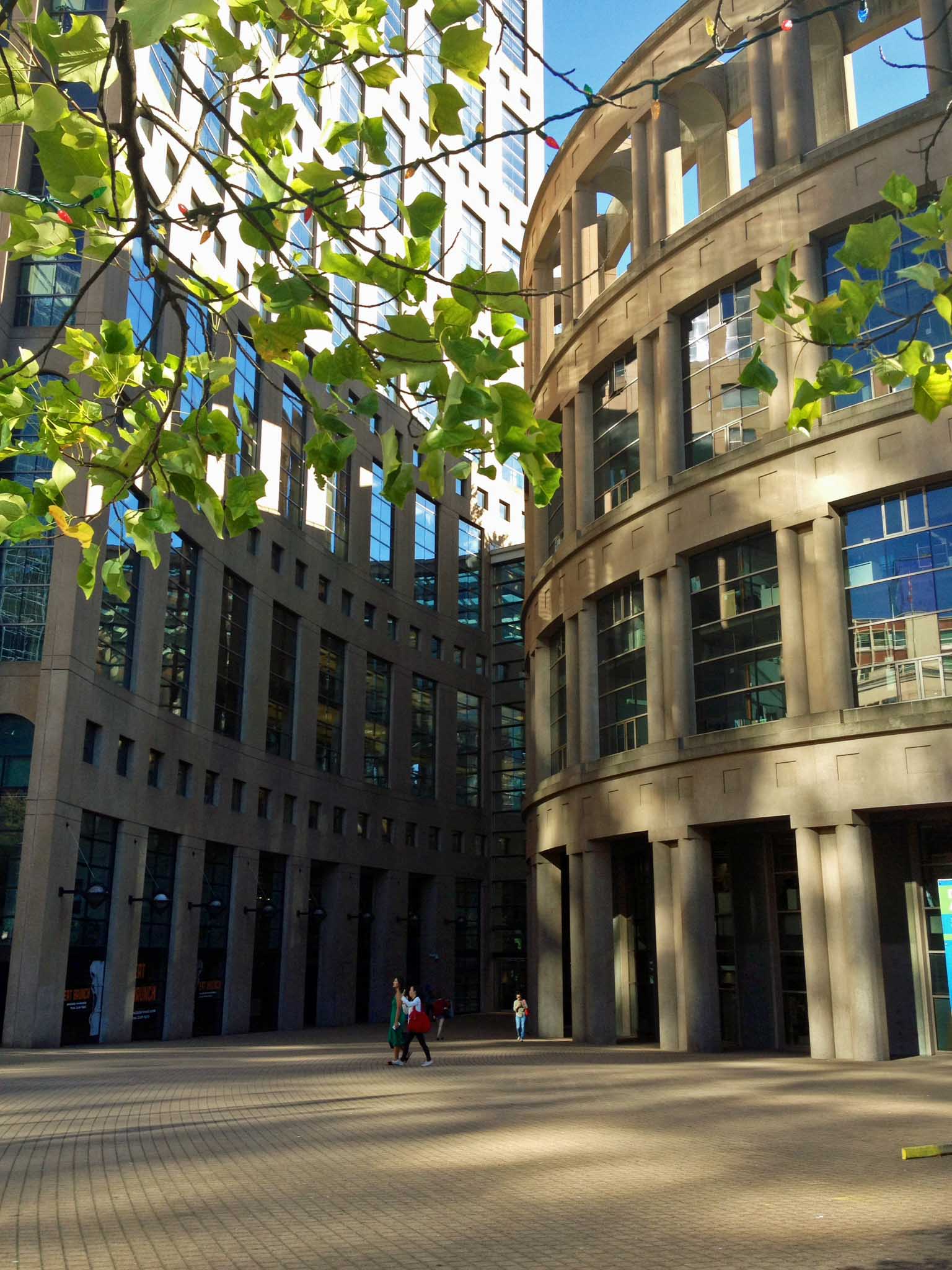
The Vancouver Central Library (photo by Nina Munteanu)

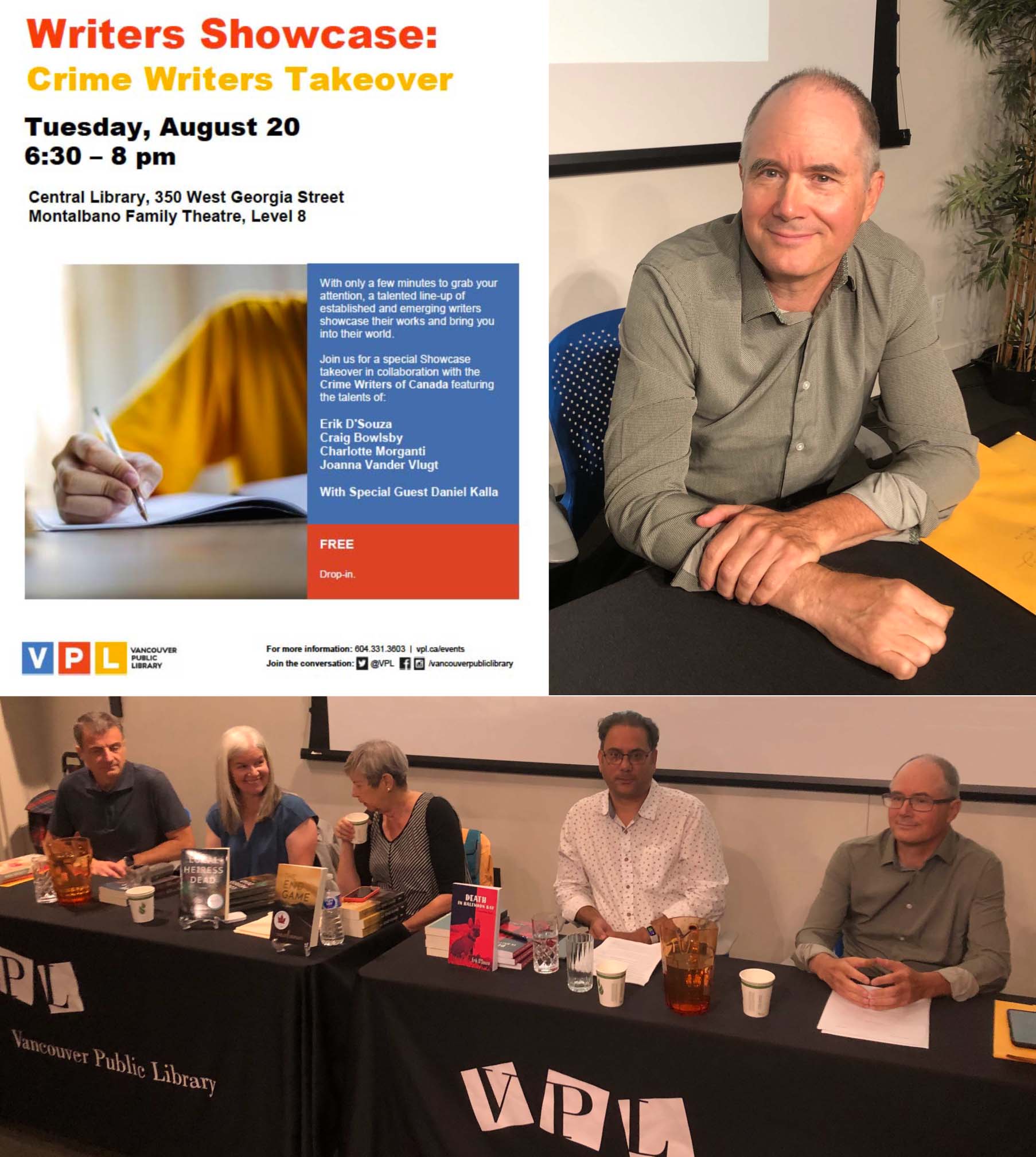
I was recently at Vancouver’s Central Library on Georgia Street to listen to my colleague Craig Bowlsby give a reading from his much anticipated novel Requiem for a Lotus. He was joined by four other crime writers who gave readings that evening, including Daniel Kalla who read from his 2024 book High Society.

Book reading at VPL Central Library

My Books

Feeling whimsical on my way out, I asked the librarian if the library carried any of Nina Munteanu’s books. They did, and plenty of them! Most of my science fiction books were on their shelves as well as my historical fantasy The Last Summoner, my writing guide The Fiction Writer, and my nonfiction book on water Water Is…The Meaning of Water.

I returned the next day to check out my books and to enjoy the wonderful setting of this large and iconic Coliseum-inspired library in downtown Vancouver. It was a typical Vancouver drizzly day; a good day to spend in a library, I thought.

My book “Water Is…” at the Vancouver Central Library; note how my book answers the question posed by the book next to it (photo by Nina Munteanu)

I found Water Is… on the ground floor among other books on water. My science fiction books were up on the fourth floor, clustered with my historical fantasy The Last Summoner. Books included Darwin’s Paradox and two books of my Splintered Universe Trilogy, Inner Diverse and Metaverse; Outer Diverse was out with a customer. They also had my short story collection Natural Selection

My science fiction and fantasy books at the Vancouver Central Library (photo by Nina Munteanu)
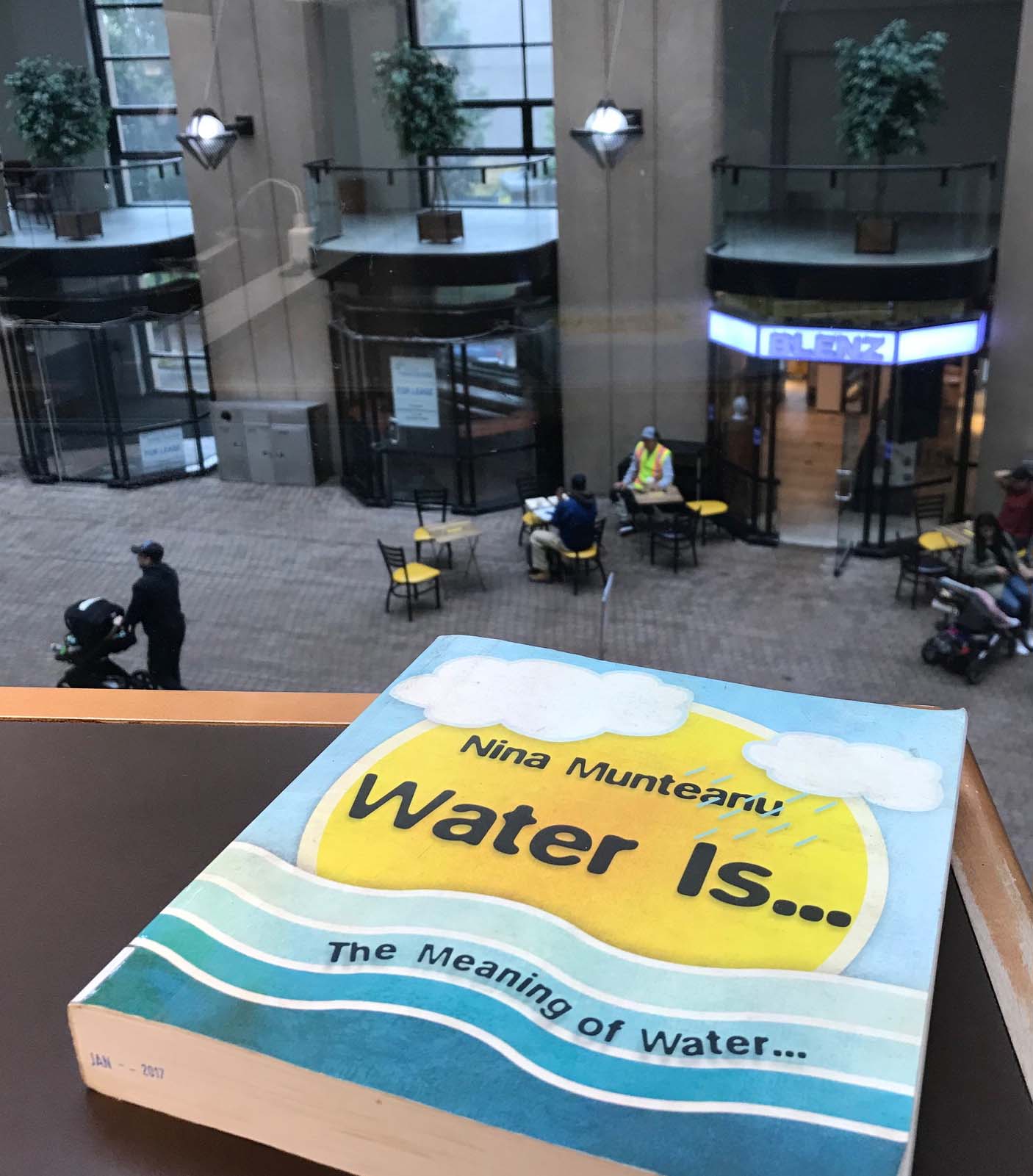
“Water Is…” sits at a desk overlooking the atrium, Vancouver Central Library (photo by Nina Munteanu)

The Library

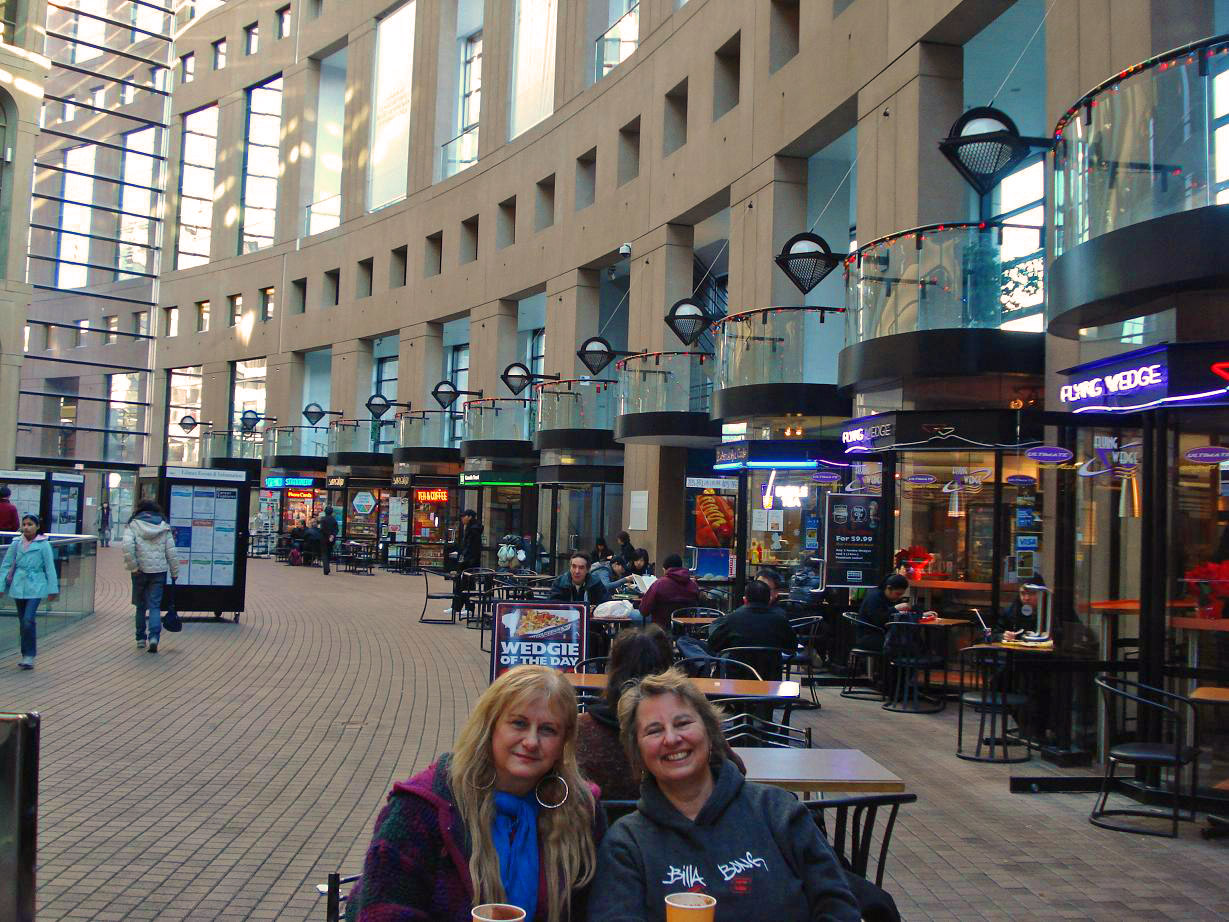
Nina Munteanu and Vancouver poet Lucia Gorea share a Blenz coffee in the atrium of the library complex, Vancouver (photo by

The Vancouver Central Library is an iconic feature of downtown Vancouver. Its Coliseum-style architecture lends a note of gravitas and traditional beauty to the nouveau chic revitalized downtown. Occupying an entire city block in the eastward expansion of Vancouver’s downtown core, the library complex along with federal office building tower is made of sandstone-coloured precast concrete. The building exterior is covered in granite quarried in Horsefly, BC and built to the highest seismic standards. In the words of Safdie Architects: “the heart of the Vancouver Public Library is a spiraling grand urban room that draws the public into Library Square as both a quiet place for study and contemplation and a vital community meeting place.”

Vancouver Central Library complex (photo by Nina Munteanu)

The library opened in May of 1995; then expansion of the upper floors began in June 2017.  As the lease came due on the upper two floors (levels 8 and 9), the library undertook planning to transform the area and offer much needed community spaces.  Rather than featuring traditional collections, the expansion now provides meeting rooms, a glass enclosed reading room, an 80-seat theatre (where I listened to Craig read his book), an exhibition space, as well as a long awaited public rooftop garden and outdoor terraces. Original architects (Moshe Safdie & Associates with local partners DA Architects) were retained to design the new expansion. Cornelia Hahn Oberlander, the landscape architect responsible for the green roof, designed the long-awaited rooftop gardens.

Rooftop gardens of the Vancouver Central Library in the fall

The Environs

I spent a drizzly morning and afternoon in the library with its spacious atrium along with bookstore and Blenz coffee bar, and other interesting places on Georgia Street nearby.

Glowbal, outside and inside (photos by Nina Munteanu)

Close by, at Glowbal, I treated myself to a wonderful lunch on their heated patio undercover. I then dashed through the rain to Telus Gardens next door that I found attractive, fresh and welcoming with its succulent jungle of plants, fragrant orchids and swimming koi ponds. I sipped my London Fog and ate a wonderful apple custard caramel croissant (from Café Bisou), while sitting in a flower-petal chair and enjoying the blissful serenade of a piano player.

Telus Gardens, Vancouver (photos by Nina Munteanu)

The day of sensual pleasures and intellectual satisfaction was complete!

Next time you find yourself in Vancouver’s downtown, check out my books at the Central Library and enjoy the vibrant downtown core.

Looking up at various floors of the Central Library from the atrium (photo by Nina Munteanu)

Nina Munteanu is a Canadian ecologist / limnologist and novelist. She is co-editor of Europa SF and currently teaches writing courses at George Brown College and the University of Toronto. Visit www.ninamunteanu.ca for the latest on her books. Nina’s bilingual “La natura dell’acqua / The Way of Water” was published by Mincione Edizioni in Rome. Her non-fiction book “Water Is…” by Pixl Press (Vancouver) was selected by Margaret Atwood in the New York Times ‘Year in Reading’ and was chosen as the 2017 Summer Read by Water Canada. Her novel “A Diary in the Age of Water” was released by Inanna Publications (Toronto) in June 2020.

Water Scarcity and ‘A Diary in the Age of Water’

My eco-fiction book A Diary in the Age of Water was recently cited along with Paolo Bacigalupi’s book The Water Knife, in an article on conflict risk in international transboundary water bodies.

The citation was made in Ken Conca’s article (Chapter 1: “Climate change, adaptation, and the risk of conflict in international river basins: Beyond the conventional wisdom”) of the 2024 Routledge book New Perspectives on Transboundary Water Governance: Interdisciplinary Approaches and Global Case Studies” (edited by Luis Paulo Batista da Silva, Wagner Costa Ribeiro, and Isabela Battistello Espíndola).

Conca begins his chapter with a statistic—an estimated 310 rivers in the world cross national borders, form borders, or both—and goes on to discuss the risk of conflict that naturally arises in such situations. Conca traces a rich history of disputes, with one of the oldest occurring between Lagash and Umma (present-day southern Iraq) in 2500 BCE. Conca explores the early warning indicators explored by the World Resources Institute that imply “a future in which our bordered politics, combined with hydrologic interdependencies, could yield a combustible mix of tension and grievances” and adds that several rivers flagged in the WRI study lie in regions of crhonic tension and political instability. He then includes a 2013 quote by former UN Secretary-General Ban Ki-moon:

“Our experiences tell us that environmental stress, due to lack of water, may lead to conflict, and would be greater in poor nations … population growth will make the problem worse. So will climate change. As the global economy grows, so will its thirst. Many more conflicts lie just over the horizon.” Ban also stated that climate change promised “an unholy brew that can create dangerous security vacuums” in which “mega-crises may well become the new normal.”

Conca makes his point by quoting the U.S. Center for Strategic and International Studies: “the real wild card for political and social unrest in the Middle East over the next 20 years is not war, terrorism, or revolution—it is water.”

Conca makes the connection with narratives of fiction:

“This framing of scarcity-induced conflict risk has even crept into the world of fiction. Paulo Bacigalupi’s dystopian novel The Water Knife (2016) portrays a parched southwestern United States of the near future. He foresees American states militarizing both their water relations (with corporate militias destroying infrastructure meant to divert water) and their borders (with the water-rich states seeking to keep thirsty migrant out, and the water poor states seeking to keep them in). Nina Munteanu’s A Diary in the Age of Water (2020) envisions Canada as a wholly-owned colony of the United States (itself owned by China). She describes a world in which Niagara Falls has been turned off and pet ownership is outlawed as an unacceptable water burden.”

Conca unpacks various misconceptions on sources of conflict and conflict resolution to do with transboundary water bodies. The chapter is very enlightening, as is the entire book!

The 2024 Routledge book New Perspectives on Transboundary Water Governance: Interdisciplinary Approaches and Global Case Studies” (edited by Luis Paulo Batista da Silva, Wagner Costa Ribeiro, and Isabela Battistello Espíndola) is described by the publisher below:

This book presents a novel examination of transboundary water governance, drawing on global case studies and applying new theoretical approaches.

Excessive consumption and degradation of natural resources can either heighten the risks of conflicts or encourage cooperation within and among countries, and this is particularly pertinent to the governance of water. This book fills a lacuna by providing an interdisciplinary examination of transboundary water governance, presenting a range of novel and emerging theoretical approaches. Acknowledging that issues vary across different regions, the book provides a global view from South and Central America, Africa, Asia, and the Middle East, with the case studies offering civil society and public managers concrete situations that indicate difficulties and successes in water sharing between bordering countries. The volume highlights the links between natural resources, political geography, international politics, and development, with chapters delving into the role of paradiplomacy, the challenges of climate change adaptation, and the interconnections between aquifers and international development. With rising demand for water in the face of climate change, this book aims to stimulate further theoretical, conceptual, and methodological debate in the field of transboundary water governance to ensure peaceful and fair access to shared water resources.

This book will be of interest to students and scholars of water resource governance from a wide variety of disciplines, including geography, international relations, global development, and law. It will also be of interest to professionals and policymakers working on natural resource governance and international cooperation.

Nina Munteanu is a Canadian ecologist / limnologist and novelist. She is co-editor of Europa SF and currently teaches writing courses at George Brown College and the University of Toronto. Visit  www.ninamunteanu.ca for the latest on her books. Nina’s bilingual “La natura dell’acqua / The Way of Water” was published by Mincione Edizioni in Rome. Her non-fiction book “Water Is…” by Pixl Press (Vancouver) was selected by Margaret Atwood in the New York Times ‘Year in Reading’ and was chosen as the 2017 Summer Read by Water Canada. Her novel “A Diary in the Age of Water” was released by Inanna Publications (Toronto) in June 2020.
My Books Selling at Banyen Books & Sound, Vancouver

Water Is… sits on the shelf at Banyen Books (photo by Nina Munteanu)

My books “Water Is… The Meaning of Water” and “A Diary in the Age of Water” are selling at Banyen Books in Kitsilano, Vancouver. While “A Diary in the Age of Water” is on Banyen’s virtual shelf for order, “Water Is…” sits on a shelf in the Water: Life-force & Resource / Ecology section.

“Water Is…” sits on the ‘water as life-force & resource’ shelf at Banyen Books, Vancouver (photo by Nina Munteanu)

Banyen Books is located in Kitsilano on the south side of W 4th Avenue on the corner of Dunbar under a grove of healthy oak trees. Across the store is Aphrodite’s Organic Pies, itself a destination for awesome pies. Banyen Books is a beautiful store. It is spacious and surrounded with the warmth of wood and plants. Its wonderful atmosphere invites you to browse the shelves and sit on the comfortable chairs to read. Banyen Books has become a destination for me whenever I’m in Vancouver.

Banyen Books on the corner of W 4th and Dunbar, Vancouver, BC (photo by Nina Munteanu)

Since opening in 1970 Banyen Books has become Canada’s most comprehensive metaphysical bookstore, offering a broad spectrum of resources from humanity’s spiritual, healing, and earth wisdom traditions. Here is how they put it:

Banyen is an oasis, a crossroads, a meeting place… for East and West, the “old ways” and current discoveries and syntheses. Our beat is the “Perennial Philosophy” as well as our evolving learning edges and best practices in a wide variety of fields, from acupuncture to Zen, from childbirth and business to the Hermetic Mysteries, from the compost pile to the celestial spheres. We’re “in the philosophy business,” on “a street in the philosophy district” (as an old cartoon wagged). We welcome and celebrate the love of wisdom, be it in art, science, lifecraft, healing, visioning, religion, psychology, eco-design, gardening… Our service is to offer life-giving nourishment for the body (resilient, vital), the mind (trained, open), and the soul (resonant, connected, in-formed). Think of us as your open source bookstore for the “University of Life”.

Whenever I’m in Vancouver to visit family and friends, I make at least one stop at Banyen Books and often come out with an armful of books. On my most recent stop, I purchased a book on plant intelligence and several beautiful journals (I use a journal for each book project I work on).

My latest purchase at Banyen Books (photo by Nina Munteanu)

Banyen Books & Sound:

3608 West 4th Avenue
Vancouver, BC
604-732-7912

HOURS:

Mon-Fri: 10am-9pm
Sat: 10am-8pm
Sun: 11am-7pm

19th Avenue in Vancouver, BC (photo by Nina Munteanu)

Nina Munteanu is a Canadian ecologist / limnologist and novelist. She is co-editor of Europa SF and currently teaches writing courses at George Brown College and the University of Toronto. Visit www.ninamunteanu.ca for the latest on her books. Nina’s bilingual “La natura dell’acqua / The Way of Water” was published by Mincione Edizioni in Rome. Her non-fiction book “Water Is…” by Pixl Press (Vancouver) was selected by Margaret Atwood in the New York Times ‘Year in Reading’ and was chosen as the 2017 Summer Read by Water Canada. Her novel “A Diary in the Age of Water” was released by Inanna Publications (Toronto) in June 2020.

Why Writing and Reading Eco-Fiction Will Save the World—From CliFi to Solarpunk

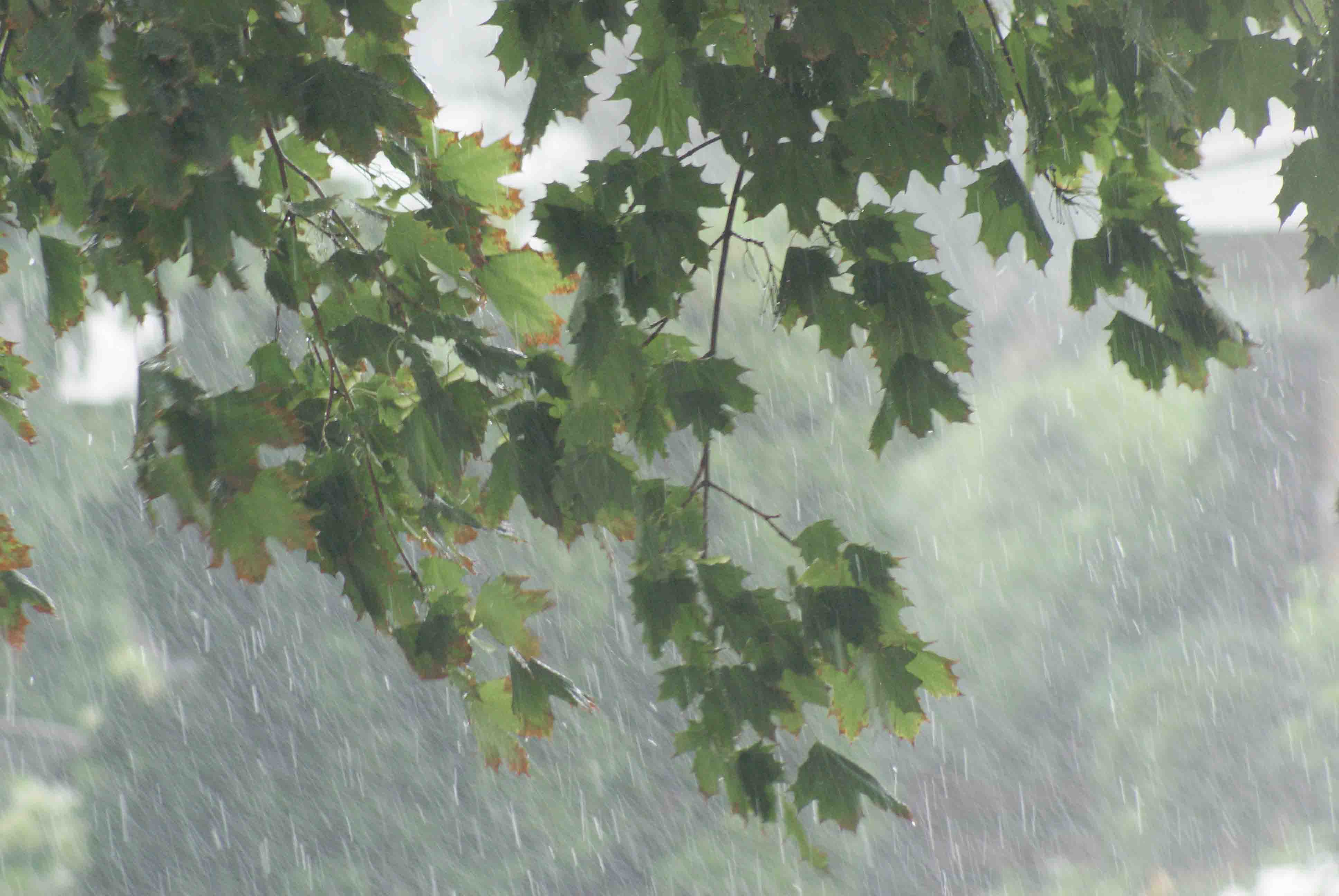
Fence and post at marsh during a rain, ON (photo by Nina Munteanu)

The Universe is made of stories, not atoms—Muriel Rukeyser

Canadian writer Mary Woodbury tells us that: “Fiction exploring humanity’s impacts on nature is becoming more popular [and] has the distinct ability to creatively engage and appeal to readers’ emotions. In fact, it can stir environmental action.” A survey she took in 2020 showed that “88% of its participants were inspired to act after reading ecological fiction.”

Eco-Fiction (short for ecological fiction) is a kind of fiction in which the environment—or one aspect of the environment—plays a major role, either as premise or as character. “Principled by real science and exalting our planet’s beauty, these stories are works of art. They live within classic modes of fiction exploring the human condition, but also integrate the wild,” writes Woodbury. At the heart of eco-fiction are strong relationships forged between the major character on a journey and an aspect of their environment and place. Environment and place can illuminate through the sub-text of metaphor a core aspect of the main character and their journey. 

Green architecture design by Vincent Callebaut

All great literature distills its art form through the exploration of relationship: our relationship with technology, with science, Nature, God, our children, each other, our history. Science fiction illuminates our history and our very humanity by examining our interaction with “the other”—the unfamiliar, the feared, the often downtrodden, the invisible, the ignored. This is the hero’s journey. And it is through this journey relating to the “other” (whether it’s Earth or an alien planet, its water, environment and issues, and its varied peoples and cultures) that our hero discovers herself and her gift to the world. When will we stop portraying Nature as “other”?…

Green neighbourhood design by Vincent Callebaut

We currently live in a world in which climate change and associated water crisis pose a very real existential threat to most life currently on the planet. The new normal is change. And it is within this changing climate that eco-fiction is realizing itself as a literary pursuit worth engaging in. The emergence of the term eco-fiction as a brand of literature suggests that we are all awakening—novelists and readers of novels—to our changing environment. We are finally ready to see and portray environment as an interesting character with agency and to read this important and impactful literature.

Lavender farm and house design by Vincent Callebaut

Many readers are currently seeking fiction that describes environmental issues but also explores a successful paradigm shift: fiction that accurately addresses our current issues with intelligence and hope. This is reflected in the growing popularity of several emerging sub-genres of fiction such as solar punk, optimistic climate fiction, clifi, eco-lit, hope punk, and others. The power of envisioning a certain future is that the vision enables one to see it as possible. Eco-fiction—and all good science fiction—uses metaphor to study the world and the consequences of humanity’s actions through microcosmic dramatization. What makes this literature particularly exciting is: 1) its relevance to our current existential situation; and 2) that it often provides a way forward. 

Solarpunk world imagined (image by Imperial Boy)

The Way Forward with Solarpunk

In his 2014 article “Solarpunk: Notes toward a manifesto” in Hieroglyph Adam Flynn writes of under-30 futurists: “Many of us feel it’s unethical to bring children into a world like ours. We have grown up under a shadow, and if we sometimes resemble fungus it should be taken as a credit to our adaptability.”

“We’re solarpunks because the only other options are denial or despair.”

ADAM FLYNN

Solarpunk, says Flynn, “is about finding ways to make life more wonderful for us now, and more importantly for the generations that follow us—i.e., extending human life at the species level, rather than individually.” Our future, asserts Flynn, “must involve repurposing and creating new things from what we already have (instead of 20thcentury “destroy it all and build something completely different” modernism).” Solarpunk futurism “is not nihilistic like cyberpunk and it avoids steampunk’s potentially quasi-reactionary tendencies: it is about ingenuitygenerativityindependence, and community.”

“Hydrogenase” algae-powered airships by Vincent Callebaut

The ‘punk’ suffix comes from the oppositional quality of solarpunk; opposition that begins with infrastructure as a form of resistance. Flynn tells us that solarpunk draws on the ideal of Jefferson’s yeoman farmer, Ghandi’s ideal of swadeshi, and countless other traditions of innovative dissent

“Hyperion” eco-neighbourhood design by Vincent Callebaut

“Solarpunk is a future with a human face and dirt behind its ears.”

ADAM FLYNN

In response to Flynn’s article, Bob Vanderbob writes, “going solar is a deep mental shift: it will be the central metaphor of our future civilization.” 

Green Paris design by Vincent Callebaut

Musician photographer Jay Springett calls solarpunk, “a movement in speculative fiction, art, fashion, and activism that seeks to answer and embody the question ‘what does a sustainable civilization look like, and how can we get there?’… At once a vision of the future, a thoughtful provocation, and an achievable lifestyle.” Jennifer Hamilton observes in The Conversation that “as a category of fiction, solarpunk remains a fringe dweller…Nevertheless, the aesthetic sensibilities of the subculture are starting to emerge.” Hamilton asserts that “the focus on the cultural change that will necessarily accompany the full transition to renewable energy is the defining feature of solarpunk.” She adds, “we usually ask ‘can renewables replace fossil fuels?’ … solarpunks ask ‘what kind of world will emerge when we finally transition to renewables?’ and their [works] are generating an intriguing answer.”

Beach house design by Vincent Callebaut

How Eco-Fiction Inspires and Galvanizes

Readers responded to Mary Woodbury’s survey question “Do you think that environmental themes in fiction can impact society and if so, how?” with these observations:

  • Environmental fiction encourages empathy and imagination. Stories can affect us more than dry facts. Fiction reaches us more deeply than academic understanding, moving us to action.
  • Environmental fiction triggers a sense of wonder about the natural world, and even a sense of loss and mourning. Stories can immerse readers into imagined worlds with environmental issues similar to ours.
  • Environmental fiction raises awareness, encourages conversations and idea-sharing. Fiction is one way that helps to create a vision of our future. Cautionary tales can nudge people to action and encourage alternative futures. Novels can shift viewpoints without direct confrontation, avoid cognitive dissonance, and invite reframed human-nature relationships through enjoyment and voluntary participation.
  • Environmental themes can reorient our perspective from egocentrism to the greater-than-human world.
Dirt road in Kawarthas during a misting rain, ON (photo and rendition by Nina Munteanu)

Why Our Stories Are Important

We are all storytellers. We share our curiosity with great expression; our capacity and need to tell stories is as old as our ancient beginnings. From the Palaeolithic cave paintings of Lascaux to our blogs on the Internet, humanity has left a grand legacy of “story” sharing. Evolutionary biologist and futurist Elisabet Sahtouris tells us that, “whether we create our stories from the revelations of religions or the researches of science, or the inspirations of great artists and writers or the experiences of our own lives, we live by the stories we believe and tell to ourselves and others.”

Compelling stories resonate with the universal truths of metaphor that reside within the consciousness of humanity. According to Joseph Campbell, this involves an open mind and a certain amount of humility; and giving oneself to the story … not unlike the hero who gives her life to something larger than herself. Fiction becomes memorable by providing a depth of meaning. Stories move with direction, compel with intrigue and fulfil with awareness and, sometimes, with understanding. The stories that stir our hearts come from deep inside, where the personal meets the universal, through symbols or archetypes and metaphor.

Ultimately, we live by the narratives we share. “What you think, you become,” said Buddha.

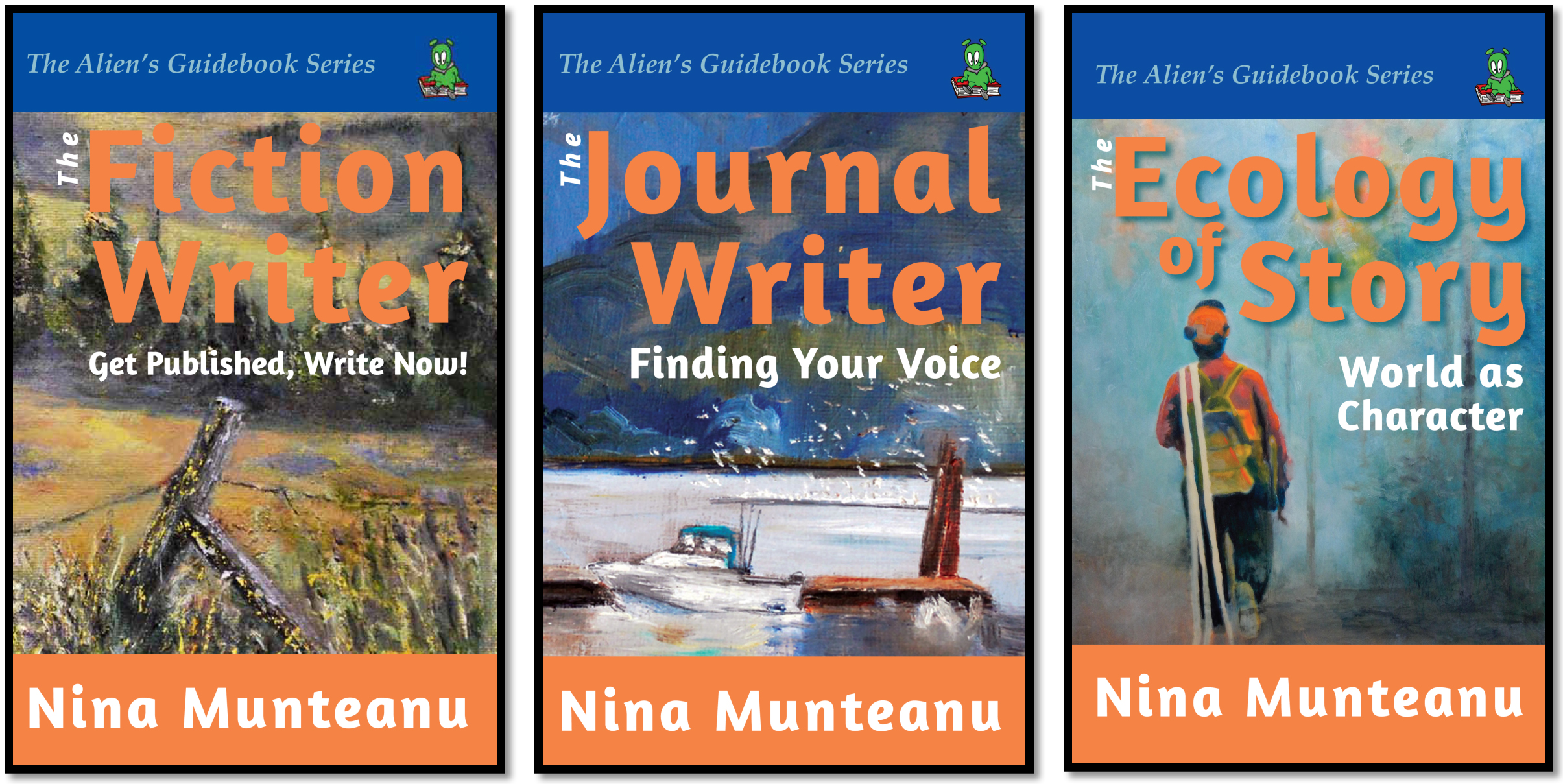
In my writing guidebook The Ecology of Story: World as Character, I write: “When a writer is mindful of place in story and not only accurately portrays environment but treats it as a character, then her story will resonate with multilayers of meaning.”

Poplar stand in the Kawarthas, ON (photo and rendition by Nina Munteanu)

Changing the Narrative…

I was recently interviewed by Forrest Brown on Stories for Earth Podcast in which we discussed the need to change our narrative (particularly our colonial neoliberal capitalist narrative) and various ways to do this, taking into account the challenges posed by belief and language. Lessons from our indigenous wise elders will play a key role in our change toward genuine partnership with the Earth.

“We need to have a whole cultural shift, where it becomes our culture to take care of the Earth, and in order to make this shift, we need storytelling about how the Earth takes care of us and how we can take care of her.” ― Ayana Elizabeth Johnson, All We Can Save: Truth, Courage, and Solutions for the Climate Crisis

“This world, in which we are born and taken our being, is alive. It is not our supply house and sewer; it is our larger body. The intelligence that evolved us from stardust and interconnects us with all beings is sufficient for the healing of our Earth community, if we but align with that purpose. Our true nature is far more ancient and encompassing than the separate self defined by habit and society. We are as intrinsic to our living world as the rivers and trees, woven of the same intricate flows of matter/energy and mind. Having evolved us into self-reflexive consciousness, the world can now know itself through us, behold its own majesty, tell its own stories–and also respond to its own suffering.” 

JOANNA MACY and CHRIS JOHNSTONE, “Active Hope”
Swamp forest in Kawartha region, ON (photo and rendition by Nina Munteanu)

References:

Campbell, Joseph, Bill Moyers. 1991. “The Power of Myth.” Anchor. 293pp.

Munteanu, Nina. 2016. “Water Is… The Meaning of Water.” Pixl Press, Delta, B.C. 584pp.

Munteanu, Nina. 2019. “The Ecology of Story: World as Character.” Pixl Press, Delta, B.C. 200pp.

Sahtouris, Elisabet. 2014. “Ecosophy: Nature’s Guide to a Better World.” Kosmos, Spring/Summer 2014: 4-9pp. 

Nina Munteanu is a Canadian ecologist / limnologist and novelist. She is co-editor of Europa SF and currently teaches writing courses at George Brown College and the University of Toronto. Visit www.ninamunteanu.ca for the latest on her books. Nina’s bilingual “La natura dell’acqua / The Way of Water” was published by Mincione Edizioni in Rome. Her non-fiction book “Water Is…” by Pixl Press (Vancouver) was selected by Margaret Atwood in the New York Times ‘Year in Reading’ and was chosen as the 2017 Summer Read by Water Canada. Her novel “A Diary in the Age of Water” was released by Inanna Publications (Toronto) in June 2020.

Book Review: Evolution, Digital Immortality, and “Freenet”

American book cover of Freenet

Steve Stanton’s 2016 science fiction book Freenet explores humanity in the far future after we have created the “Macpherson Doorway” through folded space-time, and vaulted ourselves with the blink of an eye into a galaxy far far away and 12 million years into the future. No traffic back through the doorway is permitted since a quarantine was placed some dozen years ago to prevent any unwanted DNA from sneaking through from Earth to “New Jerusalem”.  

As the Canadian back book jacket reveals, Freenet is a novel about the “power of [free] information…in a post-digital age.” The book explores what digital immortality means, when “consciousness has been digitized and cybersouls uploaded to a near-omniscient data-matrix.” This is a world where information “is currency and the truth belongs to whoever has the greatest bandwidth.”

Stanton shared with me that he was inspired to write the novel “from the simple observation of watching a woman lose her cellphone. Young people today are so tied to technology that they freak out when the strings are cut. In the future when life experience is delivered directly to the brain by wi-fi, the personal loss will be catastrophic.”

Nina Munteanu reading her advanced copy of Freenet

Told in three parts, the book begins with Simara Ying—a plugged-in V-net jockey and spacer—about to crash-land on the desert planet Bali. Her rescuer, a naïve—almost too nice to be true—native, Zen Valda, introduces her to his cave-dwelling culture with no social network support. The persistent electromagnetic storms of Bali interfere with digital communication and wipe all data. Like a baby removed from her comfortable womb, Simara survives panic attacks and heavy withdrawal chiefly because she is bombarded so heavily with Bali experiences that demand her attention. Lost without the support of her V-net—a comforting web of infinite communication and information—Simara struggles with Bali’s foreign ways. At every turn, she stumbles across some custom or taboo, forced to rely on her own wits; making the kind of mistakes she’s not used to making. More than a simple communication/information tool, the V-net embraces Simara with confidence. Without it, she fears she may go insane.

Intrigue arrives on Bali and chases Simara with a bounty on her head for murder. Zen demonstrates a simple faith in her innocence and helps her escape. Zen accepts a cochlear installation to connect him to the V-net, thinking it will help him better communicate with Simara, who—already somewhat distant—is even more so now that she has reunited with the V-net.  The V-net instead overwhelms him with a surging sea of irrelevant chatter and information, which threatens to drive him insane. Struggling with chaotic information overload, he remains with Simara, even after she estranges herself from him and is captured for murder. They escape and survive an arranged “accident” by literally jumping into space from an abandoned troopship about to crash.

Canadian book cover for Freenet

The story deepens into nuanced commentary in the last third of the book when Roni Hendrik, an energetic V-net anchorman of the Daily Buzz, pokes into the intrigue surrounding Simara Ying. He discovers that she is biogenic, an omnidroid—bioengineered from human DNA—and likely smuggled from Earth.

Omnidroids share a major cerebral augmentation that includes unlimited access to the V-net, higher intelligence and an unknown possibility of enhancements, including pre-cognition and telepathy across vast distances. Created as effective firewalls and filters, omnidroids streamline all V-net data for users across the galaxy. “Omnidroids [are] born into zero-day digital space and live in a fantasyland far beyond the mortal sphere of intelligence,” Henrik reflects, sensing a deeper story than a simple murder conspiracy. “Physical experience and bodily sensation [are] only tiny fragments of their transcendent existence, mundane accessories to digital infinity. In time,” Henrik concludes, “life itself might become a vestigial appendage.”

Hendrik, a humanist and closet idealist, pieces together connections with Neurozonics a New Jerusalem private corporation, responsible for the creation of biogenic humans. With holdings in a vast range of areas and an streaming amoeba of interests, Neurozonics is “a grinning spider on a translucent web of intrigue.” One discovery leads Henrik to more. He learns that the omnidroid community, to which Simara belongs, acts and communicates like a hive-mind, guided by a collective voice called “Mothership”. Other omnidroids have been targeted for elimination—and killed. Hell-bent on getting answers, Henrik confronts the owner of Neurozonics, Colin Macpherson—the same Macpherson who created the wormhole. Macpherson was uploaded earlier and runs his empire from digital space, part of the consortium of eternal intellect. Henrik’s meeting with Colin8 (the seventh clone of the original Colin Macpherson) runs like a “Neo-Architect” lecture in which the truth behind the omnidroids deaths is revealed. It’s not what you might think. Macpherson divulges his vision, which includes the reason for omnidroids’ communication abilities and the role of the Neurozonic brain. The ultimate meaning and use of the omnidroid freenet ties to a greater destiny that redefines what it is to be human and subverts the history of our primordial origins.

The story flows seamlessly from one perspective to another with crisp page-turning narrative, action and intrigue. Stanton trades some richness of character for a page-turning plot and clever dialogue. If there is a weakness in the narrative for me, it lies with Simara, the arcane omnidroid, who remains mysterious—from her introduction aboard her ship about to crash land, to the limited revelations of her character during her interactions with Zen, both in her POV and in his. Considering her unique characteristics and experiences as an omnidroid, I would have enjoyed more insight to her unique outlook and perspective, especially when faced with no social network—perhaps the most frightening experience for an omnidroid: to be disconnected from the hive. On the other hand, Zen Valda as the simple Bali boy on an insane rollercoaster ride is painted with a sensitive and graceful hand. Stanton also skillfully portrays his news team, Roni and Gladyz, with finesse and subtly clever notes. The dialogue and overall interactions between them is some of the most enjoyable of the novel.

Ultimately, Stanton’s Freenet flows like a fresh turbulent river, scouring and building up sediment then meandering like an oxbow into areas that surprise. He lulls you into expectation, based on your own vision of the digital world, then—like a bubble bursting—releases a quantum paradox of wormhole possibility.

“Ma, can you read the part where the cat omnidroid takes over the world?”

Nina Munteanu is a Canadian ecologist / limnologist and novelist. She is co-editor of Europa SF and currently teaches writing courses at George Brown College and the University of Toronto. Visit www.ninamunteanu.ca for the latest on her books. Nina’s bilingual “La natura dell’acqua / The Way of Water” was published by Mincione Edizioni in Rome. Her non-fiction book “Water Is…” by Pixl Press (Vancouver) was selected by Margaret Atwood in the New York Times ‘Year in Reading’ and was chosen as the 2017 Summer Read by Water Canada. Her novel “A Diary in the Age of Water” was released by Inanna Publications (Toronto) in June 2020.
Crossing into the Ecotone to Write Meaningful Eco-Fiction

If you have an apple and I have an apple and we exchange apples then you and I will still each have one apple. But if you have an idea and I have an idea and we exchange these ideas, then each of us will have two ideas.”—George Bernard Shaw

At Calgary’s When Words Collide some years ago, I moderated a panel on Eco-Fiction with publisher/writer Hayden Trenholm, and writers Michael J. Martineck, Sarah Kades, and Susan Forest. The panel was well attended; panelists and audience discussed and argued what eco-fiction was, its role in literature and storytelling generally, and even some of the risks of identifying a work as eco-fiction.

Someone in the audience brought up the notion that “awareness-guided perception” may suggest an increase of ecological awareness in literature when it is more that readers are just noticing what was always there. Authors agreed and pointed out that environmental fiction has been written for years and it is only now—partly with the genesis of the term eco-fiction—that the “character” and significance of environment is being acknowledged beyond its metaphor; for its actual value. It may also be that the metaphoric symbols of environment in certain classics are being “retooled” through our current awareness much in the same way that Aldous Huxley’s Brave New World or George Orwell’s Nineteen Eighty Four are being re-interpreted—and newly appreciated— in today’s world of pervasive surveillance and bio-engineering.

I would submit that if we are noticing it more, we are also writing it more. Artists are cultural leaders and reporters, after all. I shared my own experience in the science fiction classes I was teaching at UofT and George Brown College, in which I noted a trend of increasing “eco-fiction” in the works in progress that students were bringing in to workshop in class. Students were not aware that they were writing eco-fiction, but they were indeed writing it.

I started branding my writing as eco-fiction a few years ago. Prior to that—even though my stories were strongly driven by an ecological premise and strong environmental setting—I described them as science fiction and many as technological thrillers. Environment’s role remained subtle and—at times—insidious. Climate change. Water shortage. Environmental disease. A city’s collapse. War. I’ve used these as backdrops to explore relationships, values (such as honour and loyalty), philosophies, moralities, ethics, and agencies of action. The stuff of storytelling.

Environment, and ecological characteristics were less “theme” than “character,” with which the protagonist and major characters related in important ways.

Just as Bong Joon-Ho’s 2014 science fiction movie Snowpiercer wasn’t so much about climate change as it was about exploring class struggle, the capitalist decadence of entitlement, disrespect and prejudice through the premise of climate catastrophe. Though, one could argue that these form a closed loop of cause and effect (and responsibility).

The self-contained closed ecosystem of the Snowpiercer train is maintained by an ordered social system, imposed by a stony militia. Those at the front of the train enjoy privileges and luxurious living conditions, though most drown in a debauched drug stupor; those at the back live on next to nothing and must resort to savage means to survive. Revolution brews from the back, lead by Curtis Everett (Chris Evans), a man whose two intact arms suggest he hasn’t done his part to serve the community yet.

Minister Mason (Tilda Swinton), an imperious yet simpering figure who serves the ruling class without quite being part of it, reminds the lower class that: 

We must all of us on this train of life remain in our allotted station. We must each of us occupy our preordained particular position. Would you wear a shoe on your head? Of course you wouldn’t wear a shoe on your head. A shoe doesn’t belong on your head. A shoe belongs on your foot. A hat belongs on your head. I am a hat. You are a shoe. I belong on the head. You belong on the foot. Yes? So it is.  In the beginning, order was prescribed by your ticket: First Class, Economy, and freeloaders like you…Now, as in the beginning, I belong to the front. You belong to the tail. When the foot seeks the place of the head, the sacred line is crossed. Know your place. Keep your place. Be a shoe.”

Ecotones are places where “lines are crossed,” where barriers are breached, where “words collide” and new opportunities arise. Sometimes from calamity. Sometimes from tragedy. Sometimes from serendipity.

When environment shapes a story as archetype—hero, victim, trickster, shadow or shape shifter—we get strong eco-fiction. Good eco-fiction, like any good story, explores the choices we make and the consequences of those choices. Good eco-fiction ventures into the ecotone of overlap, collision, exchange and ultimate change.

In my non-fiction book Water Is… I define an ecotone as the transition zone between two overlapping systems. It is essentially where two communities exchange information and integrate. Ecotones typically support varied and rich communities, representing a boiling pot of two colliding worlds. An estuary—where fresh water meets salt water. The edge of a forest with a meadow. The shoreline of a lake or pond.

For me, this is a fitting metaphor for life, given that the big choices we must face usually involve a collision of ideas, beliefs, lifestyles or worldviews: these often prove to enrich our lives the most for having gone through them. Evolution (any significant change) doesn’t happen within a stable system; adaptation and growth occur only when stable systems come together, disturb the equilibrium, and create opportunity. Good social examples include a close friendship or a marriage in which the process of “I” and “you” becomes a dynamic “we” (the ecotone) through exchange and reciprocation. Another version of Bernard Shaw’s quote, above, by the Missouri Pacific Agriculture Development Bulletin reads: “You have an idea. I have an idea. We swap. Now, you have two ideas and so do I. Both are richer. What you gave you have. What you got I did not lose. This is cooperation.” This is ecotone.

I think we are seeing more eco-fiction out there because ecosystems, ecology and environment are becoming more integral to story: as characters in their own right. I think we are seeing more eco-fiction out there because we are ready to see it. Just as quantum physics emerged when it did and not sooner, an idea—a thought—crystalizes when we are ready for it.

Don’t stay a shoe … go find an ecotone. Then write about it.

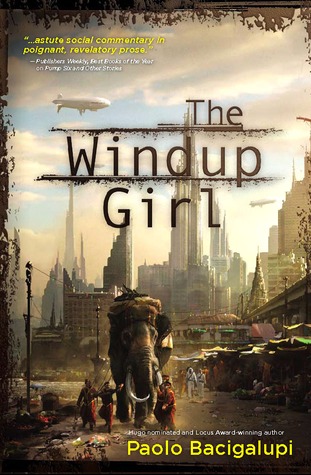
Thirty-Six Eco-Fiction Books Worth Reading…

Nina Munteanu is a Canadian ecologist / limnologist and novelist. She is co-editor of Europa SF and currently teaches writing courses at George Brown College and the University of Toronto. Visit www.ninamunteanu.ca for the latest on her books. Nina’s bilingual “La natura dell’acqua / The Way of Water” was published by Mincione Edizioni in Rome. Her non-fiction book “Water Is…” by Pixl Press (Vancouver) was selected by Margaret Atwood in the New York Times ‘Year in Reading’ and was chosen as the 2017 Summer Read by Water Canada. Her novel “A Diary in the Age of Water” was released by Inanna Publications (Toronto) in June 2020.
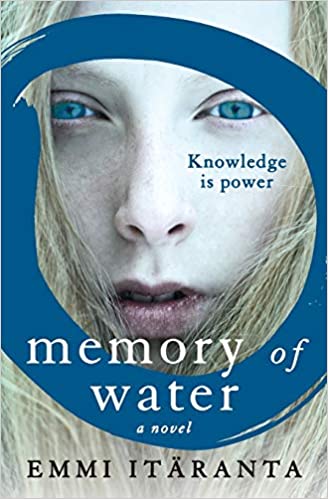
Sound & Fury Reviews “A Diary in the Age of Water” by Nina Munteanu

I recently came across this beautiful Instagram post by TinasAlwaysReading, and was reminded of a wonderfully in-depth review of my eco-fiction novel A Diary in the Age of Water that Tina did on Sound & Fury Book Reviews.

You can watch the review below:

Sound & Fury reviews “A Diary in the Age of Water” by Nina Munteanu

Nina Munteanu is a Canadian ecologist / limnologist and novelist. She is co-editor of Europa SF and currently teaches writing courses at George Brown College and the University of Toronto. Visit www.ninamunteanu.ca for the latest on her books. Nina’s bilingual “La natura dell’acqua / The Way of Water” was published by Mincione Edizioni in Rome. Her non-fiction book “Water Is…” by Pixl Press (Vancouver) was selected by Margaret Atwood in the New York Times ‘Year in Reading’ and was chosen as the 2017 Summer Read by Water Canada. Her novel “A Diary in the Age of Water” was released by Inanna Publications (Toronto) in June 2020.

My Journey with Water: Nina Munteanu Talks to the Toronto Probus Group

People reading “Water Is…” in Vancouver and Toronto

Margaret McCaffery, chair of the PROBUS Toronto Speakers Committee invited me some time ago to speak to their club in June of 2024 on my experience with water: as scientist, mother, and environmentalist. The audience was mostly retired professional and business people with enquiring minds. I gave my Powerpoint talk in the Holy Rosary Parish Hall on St. Clair West and then enjoyed a vigorous session of challenging and interesting questions to which I responded with equal vigour.

Here is the blurb for the presentation:

Canadian limnologist Nina Munteanu explores the many dimensions of water through her journey with water as mother, educator, and scientist. She describes an emotional connection with nature that compels us to take care of our environment with love versus a sense of duty. 

Nina’s talk draws on her book Water Is… The Meaning of Water, part history, part science and part philosophy and spirituality. The book examines water’s many anomalous properties and what these meant to us. In sharing her personal journey with this mysterious elixir, Nina explores water’s many ‘identities’ and, ultimately, our own. Water Is… was Margaret Atwood’s first choice in the 2016 New York Times ‘Year in Reading.’ Water is… will be available for sale at the talk.

I started with my story as a child, growing up in the Eastern Townships of Canada
I defined “limnology” and talked about my career as a limnologist and environmental consultant
I discussed some of water’s anomalous properties, all life-giving
I brought in some interesting things about water…
I tied my journey with water to family and friends and my watershed
I ended my talk with a discussion of the Watermark Project to catalogue significant stories to water bodies all over the world

I also brought my latest eco-clifi novel A Diary in the Age of Water for sale. It interested quite a few people and generated several wonderful discussions.

Nina Munteanu and her latest eco-novel

Nina Munteanu is a Canadian ecologist / limnologist and novelist. She is co-editor of Europa SF and currently teaches writing courses at George Brown College and the University of Toronto. Visit www.ninamunteanu.ca for the latest on her books. Nina’s bilingual “La natura dell’acqua / The Way of Water” was published by Mincione Edizioni in Rome. Her non-fiction book “Water Is…” by Pixl Press (Vancouver) was selected by Margaret Atwood in the New York Times ‘Year in Reading’ and was chosen as the 2017 Summer Read by Water Canada. Her novel “A Diary in the Age of Water” was released by Inanna Publications (Toronto) in June 2020.

Vancouver’s Craig H. Bowlsby wins his second Crime Writers of Canada Award of Excellence in two years.

My good friend author Craig Bowlsby just won the Crime Writers of Canada Award of Excellence for Best Unpublished Crime Novel manuscript.

Requiem for a Lotus takes place in 1917 Shanghai, where police detective Harmon Fletcher must solve the murder of a Chinese sing-song girl he’d failed to protect. Adding his Canadian prairie hunting experience to modern forensic techniques, Fletcher scours Shanghai’s dangerous jig-saw underworld for answers. But while he brings one killer to justice, another escapes, and Fletcher must sacrifice more than he expected before he’s done.

Here’s the opening to Requiem for a Lotus:

“When a man named Hong Song Lin shot his neighbour five times for blowing roasted pig smoke onto his second floor balcony, it wasn’t a hard case to figure out. There was two angry men, a gun, and a hot Shanghai summer.”

The judges selected Craig’s novel for its excellent writing and storytelling, a tense and compelling plot and pace, and intriguing characters:

“… What enjoyable reading! The author quickly pulls the reader into 1917 Shanghai and pins them there with its smells, sights, customs and politics … A very engaging crime novel.”

“… Loved the historical setting of Shanghai and it kept me fascinated … Inspector Fletcher is a solid and clever character, a somewhat rougher Sherlock Holmes.”

Requiem for a Lotus is the first novel of a trilogy. I’m confident that this exciting crime novel and series will be snapped up by a publisher soon. And when it is, I’ll be buying a copy.

Here’s Craig’s podcast interview with CWC interviewer Erik D’Souza when the manuscript was a finalist before it won top prize:

Last year Craig’s short story “The Girl Who Was Only Three Quarters Dead,” published by Mystery Magazine in April 2022, won the Crime Writers of Canada Award for Best Short Story.

Nina Munteanu is a Canadian ecologist / limnologist and novelist. She is co-editor of Europa SF and currently teaches writing courses at George Brown College and the University of Toronto. Visit www.ninamunteanu.ca for the latest on her books. Nina’s bilingual “La natura dell’acqua / The Way of Water” was published by Mincione Edizioni in Rome. Her non-fiction book “Water Is…” by Pixl Press (Vancouver) was selected by Margaret Atwood in the New York Times ‘Year in Reading’ and was chosen as the 2017 Summer Read by Water Canada. Her novel “A Diary in the Age of Water” was released by Inanna Publications (Toronto) in June 2020.

When Art Helps Story

No writer works alone. Sure, we may work alone when writing, but all other aspects of getting our writing out to you, the reader, involves a team of other people. Like all good things, writing is a collaborative affair. All professional writers enter a contract with their publisher to work with editors, marketers, and also with cover artists, designers and interior artists. All together create the final artistic expression shared with the reading audience.

I want to focus on the latter here and celebrate how art and design help create more than what the writer alone produces. When my writing career started in earnest in 1995 with my first publication in a professional magazine, I was involved in collaborations with artists, who all improved my work.

Arc of Time was my first short story publication, appearing in Armchair Aesthete in the Summer/Fall issue of 2002. Armchair Aesthete is a small literary magazine in the United States and features funky cover art.

Magazine cover for Ultra! and interior design for “Arc of Time”

Arc of Time was then accepted in the premiere issue of Ultra! (Aardwolf Publications) in 2004. That issue contained a fully illustrated and designed interior, which really set off the story—an epistemological exchange of emails linked with narrative. In 2013, MetaStellar Speculative Fiction and Beyond, which provides illustrations for each story it carries, used one of my own photographs to illustrate Arc of Time.

Feature cover illustration for “Arc of Time” on MetaStellar site

Virtually Yours first appeared in Hadrosaur Tales in Issue #15 in December 2002. Hadrosaur Tales is a small but vibrant literary magazine out of Las Cruces, New Mexico and featured interesting covers.

Cover and story illustrations in Nowa Fantastyka for “Virtually Yours”

Virtually Yours was republished all over the world and is up to its tenth publication this year. Several publications included artwork specifically for the story. Nowa Fantastyka, out of Poland, is a slick magazine that boasts a lot of images, colour interiors and illustrations. My story was introduced with illustrations that enhanced its impact.

Interior illustrations for “Virtually Yours” in Amazing Stories and MetaStellar, respectively

Its reprint in Amazing Stories was illustrated evocatively by Duncan Long. In the story’s later reprint in MetaStellar Speculative Fiction and Beyond, Brigitte Werner created a beautiful illustration for the story.

Nowa Fantastyka cover art and story art for “A Butterfly in Peking”

A Butterfly in Peking first appeared in Issue #17 of Chiaroscuro in 2003. Its reprint in the Polish magazine Nowa Fantastyka in 2005 included interior art that introduced the tone and feel of the story.

Megan Survival Anthology cover art and story art for “Fingal’s Cave”

Fingal’s Cave was first published in The Megan Survival Anthology (Reality Skimming Press) in December 2016. The publication included art by Jeff Doten specific to each story in the anthology and I found his artwork for Fingal’s Cave wonderfully intriguing.

Artwork for “The Way of Water” in various publications

The Way of Water was first published in Future Fiction then in a smart print publication by Mincione Edizioni in Rome, Italy in May 2016. The story was reprinted several times and artwork associated with it included in some of the publications. One is Little Blue Marble, an online magazine that features artwork for each story it runs.

Cover art of Eagle Magazine and story art for “Natural Selection”

Natural Selection first came out in my short story collection of the same name in 2013. It was then reprinted in the premiere issue of Eagle Magazine and featured stellar and evocative interior illustrations by Ionuț Bănuță.

Interior story art for “Natural Selection”

Out of the Silence first appeared in Issue #85 of subTerrain Magazine in May 2020 and featured diverse and rich interior art and design (not pictured here). Its reprint in A House of Dawn in 2021 received its own artwork, which enhanced the tone and subject of the story.

Cover art for subTerrain Magazine and story art for “Out of the Silence” in A House of Dawn

I’d be remiss if I didn’t add the important artwork of artists on the covers of several of my novels and collections. As a reader, I can attest that cover art plays an important role in introducing a book to a potential reader. Whether we pick up a new author’s book to peruse depends upon the image, title and design of the cover. I have been very fortunate with my publishers and their artists.

Book covers for “Collision with Paradise” and “The Cypol”

My first published novel (Collision with Paradise) and novella (The Cypol)—both SF erotica—were designed to intrigue and titillate.

Costi Gurgu illustrated and designed the covers of my space detective thriller The Splintered Universe Trilogy for Starfire. The three books and their covers, formed a tryptic that reflected the journey of the lead character—a badass galactic detective—and her evolution.

Cover art for books of “The Splintered Universe” Trilogy

Costi Gurgu also designed the cover of my short story collection Natural Selection for Pixl Press in 2013 using an illustration by West Coast artist Anne Moody that showed the fluidity of nature.

Tikulin-illustrated covers for “Darwin’s Paradox” and “The Last Summoner”

Tomislav Tikulin illustrated the cover of my novel Darwin’s Paradox for Dragon Moon Press in 2007. The cover image ostensibly represented a work of hard science fiction and attracted much attention from SF fans. Tikulin’s evocative illustration of a knight in a drowning cathedral was then used for the cover of The Last Summoner for Starfire, with attractive typology design by Costi Gurgu. As with all of Tikulin’s work, this mysterious cover attracted the attention of many readers with many questions.

L’Ultima Evocatrice, a novella version of The Last Summoner in Italian was illustrated and designed for Delos Digital Publications in 2021 and draws the reader into the intrigue of the story.

My most recent novel, A Diary in the Age of Water, published by Inanna Publications in 2020, features elegant cover art by Val Fullard and over thirty pieces of interior art work by my own hand.

Interior art representing the diarist’s sketches in “A Diary in the Age of Water

I wasn’t sure if the publisher would agree to use my sketches, but she did, to my surprised delight. She agreed with me that the interior illustrations, which represent sketches by the scientist diarist, lend a tangible reality to the story and a further focus of interest.

Interior art representing the diarist’s sketches in “A Diary in the Age of Water
Interior art representing the diarist’s sketches in “A Diary in the Age of Water”

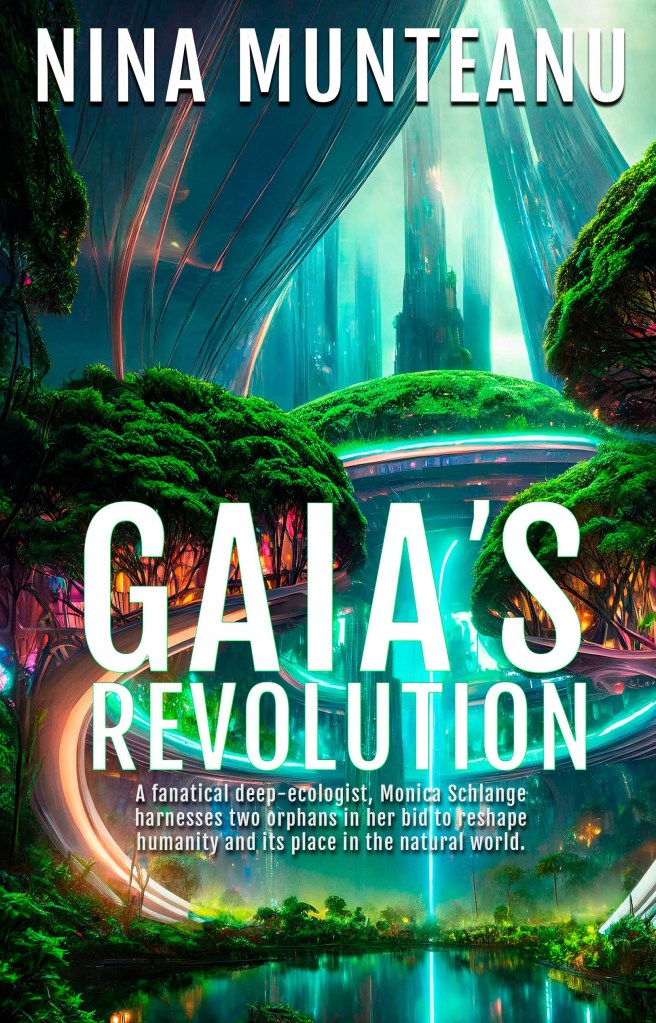
The excitement never ends for me as a writer … With the newest installation to the Icaria Series imminent, Dragon Moon Press will be re-issuing Darwin’s Paradox and Angel of Chaos, along with the newest addition Gaia’s Revolution along with new covers and interiors. I can’t wait to see what Dragon Moon Press comes up with! …

Cover art of print publications my work has appeared in up to 2021-end

Nina Munteanu is a Canadian ecologist / limnologist and novelist. She is co-editor of Europa SF and currently teaches writing courses at George Brown College and the University of Toronto. Visit www.ninamunteanu.ca for the latest on her books. Nina’s bilingual “La natura dell’acqua / The Way of Water” was published by Mincione Edizioni in Rome. Her non-fiction book “Water Is…” by Pixl Press (Vancouver) was selected by Margaret Atwood in the New York Times ‘Year in Reading’ and was chosen as the 2017 Summer Read by Water Canada. Her novel “A Diary in the Age of Water” was released by Inanna Publications (Toronto) in June 2020.