Nina Talks Water at Word Up in Barrie

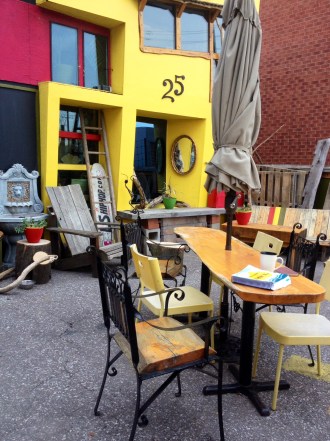
Unity Market-outside

Unity Market & Cafe outside patio

Every month on the second Thursday, Word Up in Barrie hosts readings by writers, poets, and spoken word artists. From pros to amateurs, and all genres of writing, Word Up’s open mic has welcomed writers of all genres, from amateurs to winners of the Governor General’s Award.

The volunteer run group holds its reading night at the artisanal Unity Market and Café, on Toronto Street, just a walk away from Barrie’s charming downtown core and harbor on Lake Simcoe. Apart from its famous “scuffins” (an amalgam of muffin and scone, generously filled with savory goodness), the market is a gestalt meeting place for creativity, holding events almost daily.

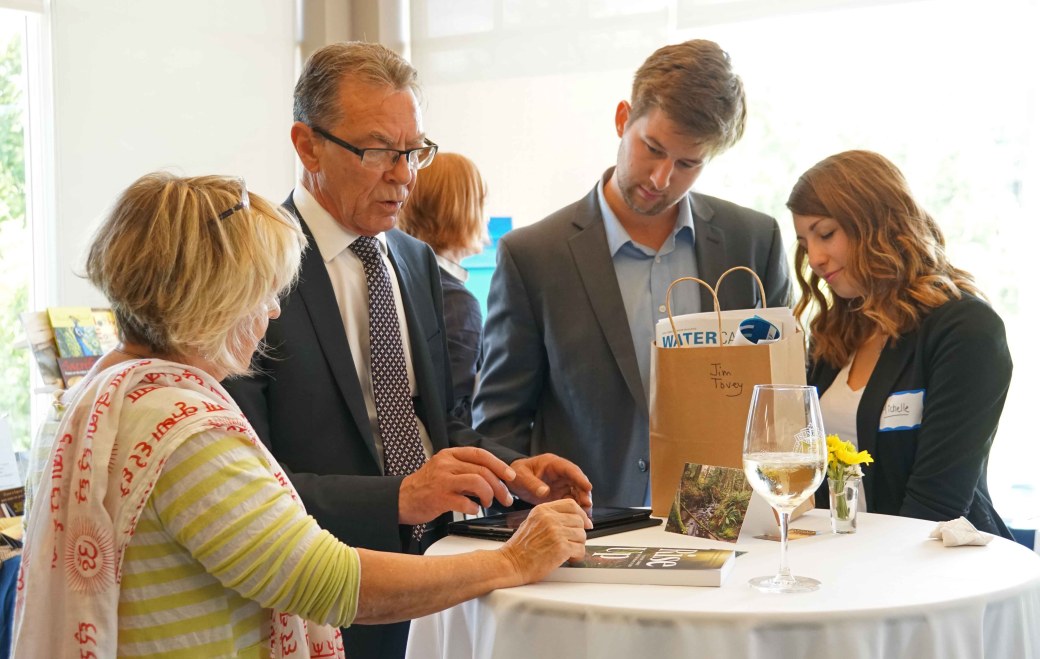
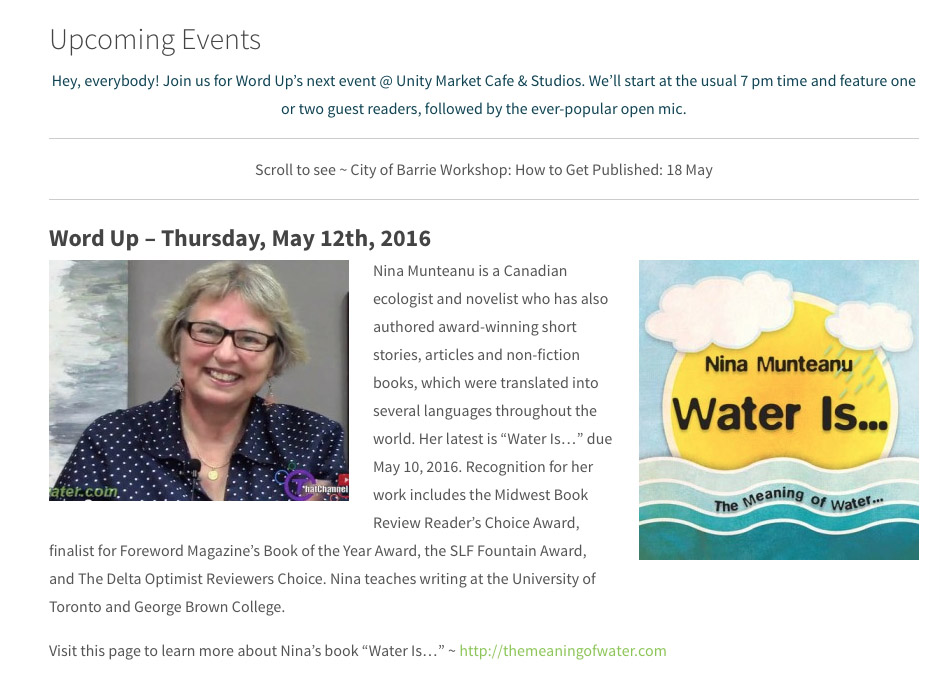
I heartily accepted when Linda Laforge invited me to speak about my last project to those in attendance last Thursday. My latest book is Water Is…, a non-fiction work that took me three years to write and the culmination of a career and life with water.

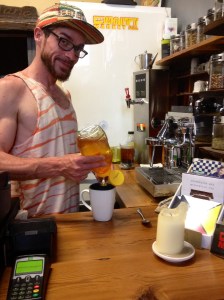
Shane-Unity Market

Shane making a tea

I talked about how the book came about—linking it to how I came about—and the process of research and writing—which morphed into something beyond what I had initially conceived. The book in some ways wrote itself, telling me to go here and there; gathering friends and colleagues to me—some from far away—to provide important information I needed to put into the book.

I ended my talk with a description of the Watermark Project, a Lake Ontario Water Keepers initiative to give narrative to our connections with water—exactly what I’d intended with Water Is…

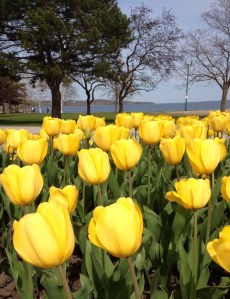
Barrie-tulips

Barrie harbor front

What followed was an open mic that resonated with water connections from a short story about death to learning how to heal with water. Damian Lopes, Barrie’s Poet Laureate, delivered a compelling poem on Canadian sociopolitics.

The open mic closed with Shane Dennis’s freestyle oration—a spontaneous stream-of-consciousness flow of powerful imagery that both summarized the night’s readings and set it aflame and into flight.

Damian Lopes won the raffle for a free Water Is… book. And I sold a few books to a few hydrophiles. A wonderful evening!

Thanks, Linda, Aaron, Bruce and Shane!


For more about my book Water Is… and about water see TheMeaningOfWater.com.

word up banner

Nina at Word Up-Barrie

On Ecology, Women and Science Fiction: Part 2, Praxis

montreux-road from b&b

Montreux, Switzerland (photo by Nina Munteanu)

In Part 1, Gnosis, I explored the nature of our current worldview, its shifting face and how literature and women writers have both contributed and enlightened this shift.

I talked with four women, all in the science fiction or eco-fiction genres; two are writers, and two are publishers. We discussed this shift, what it looks like, what the “feminine archetype” means and the nature of “Optimistic SF.”

When asked to describe SF today, Lynda Williams, author of the Okal Rel series, argued that, “SF is mainstream now … It has grown up, emotionally, from being about wish-fulfilling technologies … to embracing the social implications of change.” Stephanie Johanson, editor and co-publisher of Neo-opsis Science Fiction Magazine, notes that, “Science fiction often reflects the views of the day, following and expanding on newer technologies.” Williams adds that SF fiction has gained a literary presence, but at some expense: “now there’s a sordid fascination, in a lot of self-consciously dark SF, with self-interested cynicism and extended analogies to drug addiction as a means of coping with reality.” Johanson provided a different perspective. “Stories that predict doom have been around since the beginning of SF,” she argued. “But lately perhaps there might be more stories with a glimmer of hope … perhaps it won’t be science that destroys us … the right sciences might actually save us.” Editor and Publisher of On Spec Magazine, Diane Walton shares that she is seeing a lot of Post-Apocalyptic submissions, “mainly because it’s interesting to put your characters in a setting where the rules don’t apply any more. They have to try to rebuild the life and security and order they used to have, or else revert to savagery, or else adapt to a whole new set of circumstances—the choices are endless. Except zombies. I don’t want to see any more zombies.”

When asked if SF had a role in literature, Johanson suggested that, “SF has fewer limitations and more frontiers to explore than other genres.” Both Johanson and Walton suggest that its main role is to challenge our preconceived notions of the world and “open up the mind to new possibilities.” Walton and Williams agree that SF is recognized more today as “real” literature rather than being dismissed as “escapism.” Williams shares that SF’s roots are as old as myth. “Like myths and bible stories, SF is an instructive literature, pointing out how things can go wrong (or right) and why. The growing up SF has done since the 1950s lies in an increasing recognition that [humanity is its] own worst enemy and a better understanding of human nature is crucial to the problems we face, not just the hard sciences.”

I shared that I had witnessed (at least in my classrooms and writing workshops) a rising ecological awareness, reflected in a higher percentage of new writers bringing in works-in-progress (WIPs) that were decidedly “eco-fiction” or “climate fiction.”

“I have always gravitated towards, and often found, literature with ecological components,” Sarah Kades, author of Claiming Love confides. She then adds, “But I do agree with you that ecological awareness is not only gaining momentum, it is front and centre for many, and as such, we are naturally finding it more and more in literature.”

“I never thought of my own work as ecological,” shares Williams. “But it’s true: the underlying issue in it is how does, or can, the collective will prevent groups or individuals from destroying what is irreplaceably precious…Yes, I think SF has graduated from a fascination with building bigger death rays to tackling questions of how we avoid committing the unthinkable while still indulging in lots of entertaining conflict. Because conflict must exist in any story. We wouldn’t be human without it. There’s plenty of conflict in an ecosystem, too, but it stays balanced. SF used to be optimistic about scientific discoveries shifting the system out of balance in the direction of net gain for humankind. And this has happened. Even today’s poor are richer than yesterday’s. What worries us, increasingly, is whether some sudden imbalance could tip us into irreversible catastrophe because unlike 1950s readers we don’t trust smart and powerful people to act sanely in their quest for power.”

“I think that authors have come to a realization that the setting of a book can be just as strong a character (and character-builder) as the people in it,” says Walton. “Humans are so vulnerable, and must depend on their brains and skills at manipulating the environment to be able to adapt to harsh and potentially life-threatening situations…We don’t have fur, for example, or the ability to burrow under the sand to find shelter from a hot sun. So the books that embrace the environment, and that use it to present character-building challenges to the protagonists, can be more interesting than just a ‘good guys against bad guys’ story in any genre.”

Johanson provokes with the concept of awareness-guided perception—itself a valid cultural metric: “Perhaps there is an increase of ecological awareness in literature, or perhaps we are just noticing stories that have always been there.” This notion was discussed in a recent panel on Eco-Fiction in which I participated with Susan Forrest, Michael J. Martineck, Hayden Trenholm, and Sarah Kades at the writer’s festival When Words Collide in Calgary. One author pointed out that environmental fiction has been written for years and it is only now—partly with the genesis of the term eco-fiction—that the “character” and significance of environment is being acknowledged beyond its metaphor; for its actual value. It may also be that the metaphoric symbols of environment in certain classics are being “retooled” through our current awareness much in the same way that Aldous Huxley’s Brave New World or George Orwell’s Nineteen Eighty Four are being re-interpreted—and newly appreciated— in today’s world of pervasive surveillance and bio-engineering. Johanson cites Brian Aldiss’ Helliconia trilogy, John Varley’s Titan trilogy, Joan D. Vinge’s The Snow Queen, and the works of Jules Verne. Classic titles Walton remembers from her younger days include John Brunner’s Stand on Zanzibar and Ursula K. LeGuin’s The Word for World is Forest; and more recently, The Windup Girl by Paolo Bacigalupi. Walton includes the 1965 Dune series by Frank Herbert, given that the environment of the desert and how humanity has adapted to it plays a major role in the series.

I proposed that an awakening to the feminine archetype (cooperation, compassion, relationship, altruism) is occurring and currently reflected in literature. Johanson suggested that, “If [cooperation, compassion, relationship, and altruism] are used in balance with science and logic, there can be an optimistic future.” Had she seen this increasing in literature? “I don’t think so, but perhaps I have been reading the wrong stories,” Johanson admits. Kades shares a different perception. “I would definitely agree there is an awakening to the feminine archetype in our culture as a whole, and literature is reflecting this,” she argues. “The books that resonate most strongly for me are the ones that honour and celebrate both the feminine and masculine, stories that demonstrate mutual respect and successful collaboration between men and women. Throw humour and romance in there, too, and it’s irresistible.”

Walton observes that, “It’s definitely something that drives a story in a different direction from the more “male” pursuits of taking everything by force, or the lone-wolf hero solving problems without any collaboration with others.” She confides, “I loved the new Mad Max film, where compassion and collaboration made the story come alive. And yet, it has been accused, by some, of being a feminist propaganda film.”

Williams answers with a tale of two characters. “Amel, my prince-raised-as-pauper, is a hero of the pol virtues. Loosely speaking, we could call the pol virtues feminine. Horth Nersal, on the other hand, is an alpha male—a hero of the rel variety in Okal Rel theology. There are important female characters in my saga, but I have to confess my teenage self was simply more fascinated with heroic males for reasons inaccessible to my older, sager self. So, in my own work I could make the case that Amel’s problem-solving and character development is absolutely an example of an awakening to the feminine archetype. And he does wind up in power. But even as Amel gets his act together, after book six, and learns to use his more subtle kind of influence to make the world behave, Horth Nersal starts stealing the spotlight. I don’t quite know how this happened. And maybe Amel’s central, anchoring role throughout the series argues in favor of the feminine principle dominating. But I think the Amel/Horth dilemma isn’t unique to my own work. I see it crop up in other SF where, on the face of things, one might say the feminine archetype is in ascendance.”

Can we (as writers and editors and otherwise) foster such a change in worldview and gain a sense of place, purpose and meaning in our lives through it?

“If writers are writing stories to change the world, and I hope some are, then they should write stories that first entertain,” Johanson advises writers. “It doesn’t matter how great a theory, or how good an idea, if it doesn’t entertain, fewer people will read it. This also applies to editors. Karl and I decided early on that we wanted to teach people with the stories we published in Neo-opsis Science Fiction Magazine. We wanted our readers so entertained that they wouldn’t necessarily realize that their views had just been broadened.”

“As a writer I feel a rather persuasive responsibility to help foster positive social change,” says Kades. “For me it is considerable motivation of the stories that take turns between calming, weaving, and banging around in my head, eager to get out. And stories don’t have to tackle epic social issues to be a conduit of positive social change. Stories that create new ‘normals’ of compassion, respect and tolerance are just as important and interesting as stories that address specific social issues. To create change, first we must imagine it. Writers can help with that.”

“I’ve been reading and thinking a lot about meaning and purpose these days,” Williams confides. “First, we need to foster creativity in others and respect it in ourselves. But in both cases we must challenge our creative cravings to do work. I personally believe the richest entertainment comes not just from simple wish-fulfillment narratives – although these are fun and perfectly at home in epic literature – but from touching a raw nerve here and there, and making sure the ‘bad guys’ are at least as realistic as the heroes, not just straw men defeated by a better ray guy. Best of all, can a resolution be found in which the bad guys co-exist with their conquerors? At least think about it, and how your society might avoid problems cropping up again, and make that part of the fabric of your tale.”

“I’m not sure I agree with this being part of my role as an editor,” Walton shared. “It may be that I am drawn more to the kinds of books and stories that espouse this concept, and thus more likely to buy them to publish. We are all gatekeepers of some kind or another. One thing that is interesting is the recent brouhaha over the Hugo awards, where, I think, the various ‘puppy’ slates would look on any sort of eco-fiction that embraced the feminine archetype as being something only a Social Justice Warrior would like. Some people just don’t want their worldview changed, I guess.”

…Which brings me to “Optimistic SF” and what it represents. In a recent discussion with Lynda Williams over several Schofferhofers at Sharkey’s Pub in Vancouver, we shared our thoughts on how the evolution of the science fiction genre and the place that optimism holds in literature and art, generally. Is “saving the world” and “The Hero’s Journey” still viable in literature today? And how many Schofferhofers does it take to get there?

“I’ve asked people to help me define ‘Optimistic SF’ on my blog,” Lynda shares. “Check out what we’ve got so far at http://realityskimming.com/2015/09/10/fall2015optimisticsf/ and leave your own suggestions if something springs to mind. My own definition has to do with how a story makes me feel. If I’m entertained and emerge feeling there’s some point to living another day rather than convinced human beings are a bad idea best eliminated quickly before they do more harm, it’s optimistic SF. I want to encourage the notion that it’s not dumb or simple minded to strive for improving the world or defending moral behavior when feasible.”

Johanson adds that, “I became a fan of SF, because of stories that I might now classify as ‘Optimistic SF’, stories that made me look forward to the future, characters that I would love to have as friends, and places I wanted to explore. Optimistic literature to me isn’t free from problems. It wouldn’t be a story if everything was splendid. It is conflict that makes a story, but optimistic SF solves problems, and by the end of the story things are looking that much brighter. Anne McCaffrey wrote a lot of ‘Optimistic SF’. I was very fond of her Dragons of Pern series, though the later books by her son Todd McCaffrey seem far less optimistic in nature. I found many of Larry Niven’s novels to be optimistic, like the Ringworld books. Lynda Williams’ Okal Rel novels have a lot of suffering in them, but her series has always seemed like ‘Optimistic SF’.” For Johanson, optimistic SF has at least one optimistic character, one positive goal achieved and a positive [resolved as opposed to ‘happy’] ending, not “leaving evil posed to strike.” She suggests that this includes “overcoming adversity, exploring, discovering, and/or self-growth.”

Walton submits that optimistic SF is, in fact, a challenge to write, “because you still need to have some kind of antagonist (be it human, alien or environment) to make the protagonist want or need something enough to take risks and go on that literary journey. Maybe the optimism comes from stories that are ‘less dark’ than others?”

Lynda Williams openly shared her ambitions for her recent publishing venture, Reality Skimming Press: “Reality Skimming Press is my answer to how to continue being creative now I’m post-published. Not just to keep the Okal Rel Saga in print, although that’s my core motivation for even considering becoming a publisher. But to be brazen enough to talk about ideas and art and what it means to be optimistic, for example, instead of bowing to the demands of commercial success and elusive, fickle fame. Arguably, Reality Skimming Press is the ultimate feminine solution where the meaningfulness of the work and quality of the relationships, on and off the page, trump the call to do battle for the big prizes. Success is lovely, of course. And showers of gold and fame wouldn’t be scornfully rejected. It’s more a case of asking the question: ‘Would I do this even if I never got rich or famous?’ And if the answer is ‘yes’ to have the courage to keep enjoying the journey.”martian_chronicles

Sarah Kades echoed my initial discovery in “responsibility and connection,” noted in my first article, with her admission: “It was rather startling [to] first realize [that] the responsibility I feel [in writing] socially relevant stories is not universally held among writers. It is not, which is of course just fine; it just surprised me because of how [strong] it is in me. The knowledge brought my writing and my voice into sharper focus for me.”


nina-LL-interviewe-closerNina Munteanu is an award-winning Canadian ecologist and novelist. In addition to eight published novels, she has authored short stories, articles and non-fiction books, which have been translated into several languages throughout the world. She is currently an editor of European zine Europa SF and writes for Amazing Stories. Nina teaches writing at George Brown College and the University of Toronto. Her latest book “Water Is…” (release May 10 2016 by Pixl Press; available for pre-order April 12) is a non-fiction examination of the meaning of water.

Lynda WilliamsLynda Williams is the author of the ten-novel Okal Rel Saga and editor of the growing collection of works by Hal Friesen, Craig Bowlsby, Krysia Anderson, Elizabeth Woods, Nina Munteanu, Randy McCharles and others writing works set in the ORU. As a publisher, she is working with Kyle Davidson, Jeff Doten, Sarah Trick, Jennifer Lott, Paula Johanson, Lynn Perkins and Yukari Yamamoto in re-inventing publishing through Reality Skimming Press. Lynda holds three degrees and works as Learning Technology Analyst and manager of the Learn Tech support team at Simon Fraser University. She teaches part-time at BCIT.
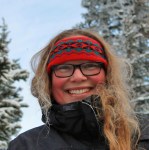
Sarah KadesSarah Kades hung up her archaeology trowel and bid adieu to Traditional Knowledge facilitation to share her love of the natural world and happily-ever-afters. She writes literary romantic eco-fiction where nature, humour and love meet. She lives in Calgary, Canada with her family. Connect with Sarah on Facebook, Twitter and www.sarahkades.com.


Stephanie and IsaacStephanie Johanson is the art director, assistant editor, and co-owner of Neo-opsis Science Fiction Magazine, publishing since 2003. She is an artist who has worked in a variety of media, though painting and soapstone carving are her passions. Stephanie paints realism with a hint of fantasy, often preferring landscapes as her subjects. Examples of her work can be viewed on the Neo-opsis Science Fiction Magazine website at www.neo-opsis.ca/art.
.

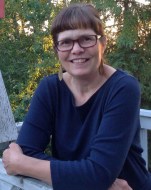
Diane-Walton02Diane Walton is currently serving a life sentence as Managing Editor of On Spec Magazine, and loving every minute of it. She and her lovely and talented husband, Rick LeBlanc, share their rural Alberta home with three very entitled cats. 


What Genre Are You Writing … And Marketing?

Our multiplex world of discerning consumers is getting used to having what they consume laid out clearly and categorized. Literature is no different. Since the time of the ancient Greeks, when Aristotle proclaimed in his Poetics that poetry could be categorized into many “species”, critics have endeavored to label art to help the “commoner” interpret it.

Defining Genre

The word “genre” comes from the French word for “kind” or “gender” and provides a loose set of criteria for a category of composition. People in the book industry often use it to categorize literature.

“Genre” is notoriously difficult to define. For instance, what kinds of literary form should properly be called genres? Poetry is generally thought of as a literary “mode”, being too broad and too varied to be called a “genre”. The various types and forms of poetry are more properly called genres, such as the epic or the lyric.

A genre can be defined either by the formal properties of the work, or by its subject matter. A poem can be called a sonnet if it is 14 lines long, or described as an elegy if it speaks of the death of a loved or admired person.

Although genres are not precisely definable, genre considerations are one of the most important factors in determining what a person will see or read. Many genres have built-in audiences and corresponding publications that support them, such as magazines and websites. Some people think that books and movies that are difficult to categorize into a genre are likely to be less successful commercially. They’re probably right. And this is why we do it.

So, if you haven’t figured out what “genre” your writing falls under, start figuring it out now; your future publisher and marketer will want to know because they, in turn, have to tell their distributor and bookseller where to shelve the book. This is why you need to do this; the alternative is leaving it to Jack in the marketing department who may not have even read your book, but used the cover picture to figure it out. Yikes!

Genre Categories

Today’s Teacher provides the following list for genres in literature:

  • Biography/autobiography
  • Fantasy
  • Historical Fiction
  • Myths & Legends
  • Poetry
  • Science Fiction
  • Fairy Tales
  • Folk Tales
  • Mystery
  • Realistic Fiction
  • Non-Fiction
  • Short stories

They were pretty good in identifying the major genres but they missed Romance, Westerns, Horror, Erotica, Literary Fiction, Humor, and Young Adult (if you want to call that a genre). The point I’m making is that each person is bound to come up with a different list of genre categories. Go to five of your favorite bookstores (not just the chain stores, but the independent bookstores) and see for yourself how the professionals do it. It’s a miserable confusing mess. I’ve seen science fiction thrown in with fantasy and the whole category called “fantasy”. I’ve seen Diana Gabaldon’s historical time traveler series shelved under romance, mainstream and science fiction or fantasy depending on the bookstore. In truth, it’s all of these. Which brings us to cross-genre literature.

Crossing the Genre Lines

“Cross-genre”, also called “slipstream” or “interstitial fiction” or “fabulation”, is most commonly defined as fiction that crosses genre boundaries. Unless you’re Bruce Sterling, that is, who defines slipstream as:

A contemporary kind of writing which has set its face against consensus reality. It is fantastic, surreal sometimes, speculative on occasion, but not rigorously so. It does not aim to provoke a ‘sense of wonder’ or to systematically extrapolate in the manner of classic science fiction. Instead, this is a kind of writing that simply makes you feel very strange; the way that living in the late twentieth century makes you feel, if you are a person of a certain sensibility. We could call this kind of fiction Novels of Postmodern Sensibility, but that looks pretty bad on a category rack, and requires an acronym besides; so for the sake of convenience and argument, we will call these books ‘slipstream.’

“…Simply makes you feel strange”? Although lots of writing may do that to me (of course, I’m strange already), I’m not sure that I would define “slipstream” as writing that “makes you feel strange”. This is because I don’t think you can pin it down; it’s too slippery a “creature”. However, I think that this form (or is it a movement?) is promising to be one of the most exciting things occurring in literature today.

Patrick Kelly, in Asimov’s Science Fiction, wrote:

Today, we have literally many dozens of writers in both mainstream and genre who are working from these influences and creating new forms of cross-pollination. The problem with talking about cross-genre is that it’s not a single movement–it’s a bunch of individual writers pursuing individual visions that tend to simply share some of the same diverse influences. So it’s difficult to pin down and say ‘this is what it is and what it isn’t.’ That’s what is exciting to me about it–that it is difficult to categorize. In a sense, that means it’s a complex, organic creature.

Some popular “cross-genre” mixes include:

  • Action comedy = action + comedy
  • Black comedy (tragicomedy) = tragedy + comedy
  • Comedy-drama (dramedy) = comedy + drama
  • Romantic comedy = romance + comedy
  • Science fiction Western = science fiction + western

A friend of mine who is part Cree writes “slipstream” or “cross-genre” works that are essentially unclassifiable. Although she is a great writer, she has yet to find a publisher. I know why; they don’t know how to market her books to the booksellers. Where do you put them on the bookshelf? What a conundrum for the publisher and bookseller alike.

But, things are changing and hopefully my friend will see the results of that change. The irony of “slipstream” defying categorization is that it may be the next bestseller.

“From the ‘Lord of the Rings’ box-office smashes in the theaters to adults reading ‘Harry Potter’ books on their commute, it seems that the fantasy genre has permeated the mainstream,” notes Alana Abott, with Thomson Gale (an e-research and educational publishing firm). “The publishing industry has noticed, and new books combining familiar mainstream forms such as historical fiction, romance, and chick-lit are beginning to see an influx of magic.” Cross-pollination is cool. Cross-genre is “in”.

What genre are you writing?

Steveston-boats

Steveston, BC (photo by Nina Munteanu)


nina-2014aaNina Munteanu is an ecologist and internationally published author of award-nominated speculative novels, short stories and non-fiction. She is co-editor of Europa SF and currently teaches writing courses at George Brown College and the University of Toronto. Visit www.ninamunteanu.ca for the latest on her books.


Write a Story Title That Arouses

Think of the title to your story as the ultimate headline. It’s the first thing an editor reads of your work. Titles are often used by one reader to describe the story to another reader. According to Kathryn Bohnhoff, author of The Crystal Rose, “titles can determine whether a story is read, in what spirit it’s read, and whether it’s remembered by name or forgotten.” Choose it wisely.

Three Cardinal Rules for Title Selection

When choosing a title for your story it should be: 1) original; 2) easy to read; and 3) appropriate to your story.

Make your title original (like your story) and preferably unusual in some way. It’s best to use something that is different enough to stand out but not so different that it will be difficult to remember. It should “role” off the tongue with ease. Titles are best if they are short and not difficult to pronounce. One way to check this is to read it out loud. Some publicists have suggested that a title should be short enough (and therefore large enough) to be read from across a room. One or two word titles are often chosen for that reason. Lastly, your title should reflect the subject or heart of your story, but without giving it away. A title should be the ultimate tease, the ultimate promise. Titles, says Bohnhoff “can be like store windows that offer a tantalizing glimpse of what’s inside, or they can give away the entire inventory.”

Darwins Paradox-2nd coverTypes of Titles

The best titles are those that grow naturally out of the subject matter and capture the emotion and heart of the story. A title can be a play on words (e.g., You Only Live Twice) or convey several meanings at once (e.g., Darwin’s Paradox). A title could be the name of a place, thing of person (e.g., Doctor Zhivago). Titles can be metaphors or provide contradiction or irony (e.g., Calculating God). They can be a popular expression or harbor a hidden meaning that unfolds in the story (e.g., Pale Fire). They can also be a portion of a famous line (e.g., Brave New World).

Some Titles Are Better Than Others

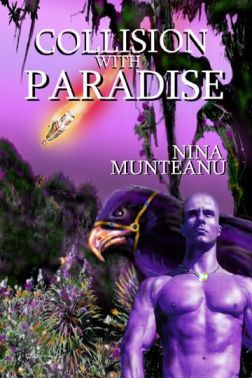
collision with paradise1I chose the title, Collision with Paradise for my 2005 science fiction romantic thriller to convey the paradox of conflict and action in collision with the quest for well-being (paradise) that reflected my lead character’s own conflict. The two juxtaposed as oxymoron made the title provocative and readers became naturally curious. What made it particularly tantalizing—and me somewhat smug—was that the cover and the setting and premise/plot all resonated with the abstract theme. The plot involved the real collision of a spaceship with hotshot pilot on a planet with a jungle paradise. So, even though the title very accurately conveyed the overall theme, it didn’t give it away; the reader still had to tease it out through the subtext and subplots of the story.
Highland cr in winter

Highland Creek, ON (photo by Nina Munteanu)

Whatever title you select, remember the three rules and keep it simple and relevant. Think of some titles of your favorite stories. Think of what the title conveys and what it quietly implies, given your knowledge of the story. Here are some to ponder: A Tale of Two Cities; Gone With the Wind; White Oleander; Lady Chatterley’s Lover; The Blue Sword; Return of the Native; Lord of the Flies.


nina-2014aaNina Munteanu is an ecologist and internationally published author of award-nominated speculative novels, short stories and non-fiction. She is co-editor of Europa SF and currently teaches writing courses at George Brown College and the University of Toronto. Visit www.ninamunteanu.ca for the latest on her books.


Dreams and Perceptions…The Stuff of Science Fiction

farm in fog-Liverpool NS

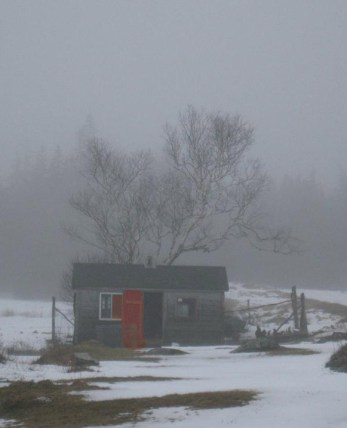
Shed on road to Wolfville, NS (photo by Nina Munteanu)

It was several days ago, as I was driving home from a friend’s place in the sultry dark of night that I noticed the change…

Perhaps it was the rain and the winding road that nudged my psyche to wander into that other realm. Or was it the motion picture The Fountain that I’d seen the evening before—a surrealistic journey of the mind and the soul through crisis and toward enlightenment, true love and “ever-lasting life”?

Or had it more to do with the fact that I’d been, for various reasons, without sleep for over forty hours, that I glimpsed the ordinary in an extra-ordinary light?

Light had everything to do with it, too…Amber traffic lights at a construction site pulsed like living things…smoky clouds billowed over an inky sky…a garish screen of trees, caught in the beams of my car as I turned a corner, screamed quietly…a half-built apartment building loomed up like the dark tower in Lord of the Rings… I was reminded of a scene early on in The Fountain where the viewer is disoriented initially by a busy street at night because it was shot upside down—ironically, in my hometown of Montreal and I didn’t even recognize it.

Have you ever done that? Looked backward or craned while driving through a familiar scene to gain a different perspective? And felt different for just a moment? Like you’d briefly entered a different dimension and glimpsed “the other”?

What is it like to meet “the other”?

I firmly believe that we ultimately define ourselves through our experience and our approach of the unfamiliar. A new relationship. A stranger in town. A different culture. An alien encounter…

How do we react? Is it with fear? Wonder? Curiosity?

This is why the genre of science fiction so vividly and deeply and satisfyingly explores our humanity. By describing “the other” science fiction writers describe “us”. Who we are and where we might go. It is, after all, through our own eyes that the other is described and viewed.

The very best science fiction does this impeccably. Think of your favorite SF authors and books… Here are some that stand out for me:

  • Robert J. Sawyer’s Calculating God or his Neanderthal Parallax trilogy
  • Stanislaw Lem’s Solaris
  • Isaac Asimov’s I, Robot
  • John Wyndham’s The Chrysalids
  • Ursula LeGuin’s The Dispossessed or The Left Hand of Darkness
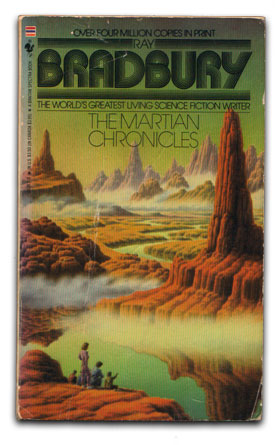
  • Ray Bradbury’s Martian Chronicles

I know I’ve left out so many…What are some of your favorites?


nina-2014aa

Nina Munteanu is an ecologist and internationally published author of award-nominated speculative novels, short stories and non-fiction. She is co-editor of Europa SF and currently teaches writing courses at George Brown College and the University of Toronto. Visit www.ninamunteanu.ca for the latest on her books.


Our Deepest Fear

Swiss Alps 2

Mountains in Switzerland (photo by Nina Munteanu)

It’s not what you think it is…

There’s a poignant scene near the end of the 2005 movie “Coach Carter” where a student finally responds to Carter’s insistent question of “what is your deepest fear?”. It is a quote often mistakenly attributed to Nelson Mandela but originally written by Marianne Williamson (“A Return to Love: Reflections on the Principles of A Course in Miracles”). And it speaks to the artist in all of us:

swiss-cabin02

Mountain cabin, Switzerland (photo by Nina Munteanu)

“Our deepest fear is not that we are inadequate. Our deepest fear is that we are powerful beyond measure. It is our light, not our darkness that most frightens us. We ask ourselves, Who am I to be brilliant, gorgeous, talented, fabulous? Actually, who are you not to be? You are a child of God. Your playing small does not serve the world. There is nothing enlightened about shrinking so that other people won’t feel insecure around you. We are all meant to shine, as children do. We were born to make manifest the glory of God that is within us. It’s not just in some of us; it’s in everyone. And as we let our own light shine, we unconsciously give other people permission to do the same. As we are liberated from our own fear, our presence automatically liberates others.”

Let me tell you a story… I’ve been writing stories since I was ten years old. I used to stay up until late at night with my sister, when our parents were snoring in their bed. We told stories: fantastical stories with a cast of thousands and spanning the entire universe. When I was in my teens, I began to write a book, inspired by several dystopian movies and my own passion for saving the planet. It was called “Caged in World”. By the time I was married and had my son, I had written three entire books, none of which I’d published. I had by then sold several short stories and essays and articles to mainstream, travel and science fiction magazines. I started to become known as a reviewer and critic of movies and books. And my short stories were gaining good reputation with stellar reviews and invitations to appear in anthologies.

I began to market my first book—a medical ecological thriller—to agents and publishers. Although I got many bites for partials and even full manuscripts, none came to fruition.

Then something strange happened.

collision with paradise1Driven by something inside me, I wrote over the space of a few months a book entitled “Collision with Paradise” based on some research I’d done on Atlantis, the bible and the Great Flood. The book was important to me on a number of fronts: in its ecological message of cooperation and its exploration of new paradigms of existence. I wrote it fast and well and it hardly needed editing. Without thinking and without hesitation, I submitted it for publication. As quickly as I’d written it, I had an offer from a publisher. My first published book! My first reaction was elation. My second reaction was: What have I done? I was proud of my book and its story, but it also contained erotica. My first thought was: how are my family and friends going to react? What about my parents? OMG! Fear, not of failure but of success came crashing down on me and I felt so exposed. If I could have retracted it, I might have several times. Thankfully, I didn’t. While some friends and family did in fact shake their heads and look askance at my work (and labeled it variously), the book was very well received by mainstream critics and readers alike. It was, in fact, a hit. Faced with success, I bowed to its consequences and embraced what it brought: the good, the bad and the ugly. I was, in fact, relieved. I have many times since contemplated my actions in submitting this subversive novel that exposed me incredibly. Was it brave intuition or bold recklessness that propelled me? The point is, I’d stepped out into the light, crossed the line into another paradigm. There was no way back into the shadows. And that’s good.

Ralph Keyes, author of The Courage to Write, tells us “any writing lays the writer open to judgment about the quality of his work and thought. The closer he gets to painful personal truths, the more fear mounts—not just about what he might reveal, but about what he might discover [about himself] should he venture too deeply inside. But to write well, that’s exactly where we must venture.” If you’re emotionally or psychologically not ready for the consequences of getting published, then you will falter, procrastinate, forever fuss over your creation and convince yourself that it isn’t ready. In truth it’s you who aren’t ready. It’s you who aren’t ready to shine.

karen-sun-zermatt

Author’s friend in Zermatt, Switzerland (photo by Nina Munteanu)

Just remember that while we are born artists, it is still our choice to live as artists. Until we embrace that which is within us, we will not find our voice to give to the world. That is our gift to the world. Laurance Gartel says “to be an artist is to take responsibility for the world’s destiny. You shape it by your vision.”

The true artist is not interested in having a nice life, being comfy or fitting in, but rather sees himself as a benefactor. His goal is to make a contribution to life, and to this end there are no barriers, doors or blocks, but only wide open spaces.”—Brian Simons


nina-2014aaNina Munteanu is an ecologist and internationally published author of award-nominated speculative novels, short stories and non-fiction. She is co-editor of Europa SF and currently teaches writing courses at George Brown College and the University of Toronto. Visit www.ninamunteanu.ca for the latest on her books.

On the Successful Anatomy of a Short Story

2015-novel-short-story-market-WDSome time ago, I was invited by writer and editor Jennifer D. Foster to participate in an interview on how to create a successful short story. Jennifer knew my work as a short story writer and had heard me speak at the Editors Association of Canada. She also knew that I teach the short story form as part of my science fiction course at George Brown College.

Writer’s Digest had asked Jennifer to write two “writing tips” chapters in its highly popular “Novel and Short Story Writer’s Market” (34th Annual Edition, 2015). Years ago I got my start as an author using this helpful market guidebook. Not only did the guide provide hundreds of listings with submission guidelines and current contact information; the guide’s writing tips section was also very helpful. So, I was both pleased and thrilled to be inside the 2015 edition!

As with previous editions, the 2015 edition contained—in addition to current market listings—articles on “Craft and Technique”, “Getting Published”, and “Marketing and Promotion”.

Below, I provide some excerpts of the 8-page chapter in the Craft & Technique Section, entitled “Anatomy of a Successful Short Story.” You can read the whole thing if you get your own copy of the guide, which is very decently priced. While it’s a year old, the advice remains as germane now as it was then. And many of the markets remain relevant too. You can also find the guide in most libraries, which tend to carry the entire Writer’s Digest series of market guides for writers.

Defining the Short Story

“Short stories are perhaps one of the best places for novice writers to start their careers,” wrote Foster in the opening to her article. “They’re not too long and complicated, and they offer the writer a chance to intimately explore a plot, a character, and a theme. Short stories also offer writers the opportunity to hone their craft and actually finish a piece of fiction—a great confidence booster!” Foster was quick to add that you shouldn’t be fooled by their short length compared with a novel—or their assumed simplicity: “Short stories are not necessarily any easier to write than novels or novellas.” I talk more about the significance of short story length  in a previous article on this blog: “Know What You’re Writing: Short Story or Long Story?”

Madison Davis at the University of Oklahoma suggested that short stories are “more concentrated … and notable for what they leave out.”

I mentioned that the short story is “a metaphoric event, a moment in time. It’s a single place—a crossroad—compared with the landscape of a novel. Short stories are more about awareness … and have the potential to be far more memorable and disturbing, with the power to enlighten.” Best-selling Canadian author Andrew Pyper suggested that, “a novel is the result of lengthy mulling, while a short story is the rising of an event out of the subconscious.”

Starting the short story in the middle of things “is crucial,” said Davis. “The reader must be thrown into the water immediately. There simply isn’t time or space to wind up.” Steve Woodward, associate editor of Graywolf Press in Minneapolis, Minnesota argued that good first lines are vital: “they can tell you everything you need to know in an instant. Find that right first line, even if it means cutting several pages to get to it, and build outward from there.”

Theme

The message—or theme—of the short story is its raison d’être. In How to Write Short Stories, 4th Edition, Sharon Sorenson wrote that, “if you have no message, you have no story.”

I concurred: “Every good story explores a theme. In a short story, it is a single theme told as a ‘statement’ rather than a novel’s ‘argument.’ It’s a ‘close-up’ rather than a novel’s landscape. All story elements reflect the theme.” Susan Hesemeier, instructor at MacEwan University in Edmonton, Alberta, added that the theme must be “limited to one subject or overall message rather than [the] multiple, interconnected themes [found] in a novel.” Margot Livesey, fiction editor of Emerson College’s Ploughshares magazine in Boston, Massachusetts summed it up eloquently: “theme is probably the hardest element to define, but we recognize its absence when we call something an anecdote.”

Conflict

According to author Louise Boggess, conflict “is the heartbeat of a story.” Conflict expresses internally or externally. Hesemeier wrote that in a short story, “there are fewer conflicts that lead to one climax; in a novel, a series of smaller conflicts and climaxes lead to or connect with a larger overall conflict and climax.”

Plot

Publisher Kevin Watson suggested that a great short story, much like a novel, “is presented to the reader in layers, delivered using setting, character, conflict, and dialogue.” At the center of those layers, said Watson, lay the plot, the theme, and the heart of everything that was presented.

Award-winning author Kevin Barry cited William Trevor: “a short story doesn’t need a plot, it just needs a point.” Toronto-based editor and author Andrew J. Borkaowski agreed: “it’s usually a matter of a single word, gesture, or incident and a handful of actions leading up to it.”

Character

Sorenson wrote that, “Believable, motivated characters make or break a story. If readers cannot understand or accept them, nothing else you do matters.” This is because the actions of your characters convey theme.

Novelist and writing instructor at Western University, Terence M. Green concurred. “Character is most important. Make the long chord of understanding and involvement with a character the goal. This is the emotional resonance, the epiphany that is the goal of the best long-lasting fiction.”

Setting

snow-scene-road-to-Wolfville-stream3

river in Nova Scotia (photo by Nina Munteanu)

Characters and action should interact with the setting,” said Borkowski. She suggested that, “Setting is important as a conveyor of mood or atmosphere, and … has to be rendered succinctly, poetically almost.” Hesemeier added that, “Setting is usually limited to essentials that are necessary to describe the particular moment or that have symbolic significance for the reader’s understanding of the story.”

I further clarified: “A short story’s plot, setting, and character are often portrayed through strong metaphor, the short story writer’s major tool. Metaphor conveys so much more than the surface narrative might suggest; this is because metaphor by its very nature resonates with deeper truths, interpreted individually by members of a culture.”

Point of View

Foster wrote that for Borkowski, it was all about picking a side and sticking with it: “Once you start wanting to explore the inner lives of multiple characters, you’re on your way to something bigger than a short story.” Be mindful how many characters you provide agency and viewpoints to!

Woodward believed that once voice was established, everything else followed. Woodward preferred a solo voice in short story. “Stories are wonderful when concise and focused, often confined to a single narrative voice and to a single moment in time.”

Beaches-snow03

Winter in The Beach (photo by Nina Munteanu)

Andrew J. Borkowski suggested that an exceptional short story arose from the intensity of emotion that resonated with the reader: “A great short story leaves you feeling you’ve experienced ten times more than what’s actually described on the page.” I shared a similar view: “The best short story is an elegant thing. It draws you into a singular experience that resonates at a visceral level, like an arrow through the heart; no time to think—just feel. A bad short story misses the heart … and this is why writers who master the short story form are some of the very best authors in the world.”

Excerpted from “Anatomy of a Successful Short Story” by Jennifer D. Foster. In: “Novel and Short Story Writer’s Market” Writer’s Digest Books; 34th Edition (Rachel Randall, editor), 2015. 569 pp.

Available at: Amazon.comAmazon.ca, and Writer’s Digest Shop.

Douglas Smith’s “Playing the Short Game” is also valuable with great advice for those wishing to market their short stories.

Natural Selection, my short story collection published by Pixl Press in 2013 is available at several bookstores.NaturalSelection-frontHR

Written with flare and a conscience…Munteanu shines a light on human evolution and how the choices we do or don’t make today, may impact our planet and future generations.”—J.P. McLean, author of The Gift Legacy

“Nina Munteanu is a gifted writer. Each story surprises and delights.”—Allan Stanleigh, co-author of USNA and The Caretakers


nina-2014aaNina Munteanu is an ecologist and internationally published author of award-nominated speculative novels, short stories and non-fiction. She is co-editor of Europa SF and currently teaches writing courses at George Brown College and the University of Toronto. Visit www.ninamunteanu.ca for the latest on her books.

Summoning the Slow Train To Find “The Last Summoner”

Atonement_(novel)In her book The Art of Slow Writing, Louise DeSalvo tells the story of how Ian McEwan composed his book Atonement.

McEwan had shared that the novel “grew out of many months of sketches and doodling.” Then one morning, he wrote “six hundred words or so describing a young woman entering a drawing room with some wild flowers in her hand, searching for a vase,” and “aware of a young man outside gardening whom she wishes both to see and avoid.”

He knew he had at last started a novel, says DeSalvo. But beyond that, he knew nothing. Slowly, McEwan pieced together a chapter, the one in which “Cecilia and Robbie go to the fountain, the vase breaks, she strips off and plunges into the water to retrieve the pieces, she walks away from him without a word.”

McEwan then languished for six weeks with questions: who was the woman? Who was the young man? What was their relationship? When and where did this event take place? And what was its significance to the story? What was the story about?

McEwan went on to write the chapter in which Briony attempts to put on a play with her cousins. Upon completing that chapter, he finally realized what the story was about. He realized that he would write about Dunkirk and St. Thomas’s hospital. He also knew that Briony was the main protagonist and POV character; that “she was going to commit a terrible error, and that writing…throughout her life would be her form of atonement.” Briony is in fact, what we call a displaced narrator. While the focus of the story is on the tragic journeys of Ceclia and Robbie—resulting largely from Briony’s eventful action—the deeper tragedy is Briony’s who must live the remainder of her life with what she has done.

“McEwan’s remarks illustrate how a successful writer sometimes begins without knowing the work’s subject,” writes DeSalvo. This process of creative problem solving can take on many forms. McEwan sketched and wrote what Diana Gabaldon calls “kernel scenes”, muse-inspired scenes—usually character-based—that represent major emotional turning points or events: important moments in forming a larger set piece toward a larger story. McEwan wrote a scene that required for him to solve some creative problems. Each solution provided him with another piece to the creative puzzle and the blurry meaning of the story slowly came into focus.

According to DeSalvo, McEwan swapped his first two chapters and rewrote them several times before he realized that the novel should begin with Briony. Once that watershed moment came to him, the rest of the process fell into place and practically wrote itself.

This type of “organic” writing can be very exciting and revealing to an author; it can also be chaotic and time-consuming. That’s OK. You need the time for the story to reveal itself to you. As DeSalvo says, “we can’t force a resolution too quickly.” She adds that “creative solutions often take us into unexpected territory—the introduction of Briony’s narrative, for example—and often these swerves take us into exciting solutions we hadn’t anticipated—Briony as narrator, for example—and push our work in an altogether different direction.”

If McEwan had kept the first narrative that emerged—Cecilia and Robbie at the fountain—and if he hadn’t been open to the potential in Briony’s narrative, he would no doubt have written a less complex but still successful novel about love, class, and war. But in deciding to give Briony a voice and combine both narratives, McEwan introduced another more metaphoric layer of meaning to the more literal one—that of personal betrayal and the impact of knowing you have destroyed two people’s lives.

The Last Summoner … Summoned

Cover1_LastSummoner-frontcover

cover art by Tomislav Tikulin

My historical fantasy The Last Summoner came to me in a single image. I’d run across a spectacular image by Croation artist Tomislav Tikulin (he’d done the cover art for Darwin’s Paradox, my previous book published by Dragon Moon Press). When I checked his website, there it was: this incredibly evocative image of a knight, standing in the war-littered mire of a drowned cathedral. The knight gazed up, questioning, at the vaulted ceiling from which shone streams of white gold. It sent my imagination soaring with thoughts of chivalry, adventure and intrigue.

Who was this knight? Where was he and why? What were the circumstances?

At that point I only had an image and many questions. I knew I wanted to write about this knight and this setting. Since I can remember, I’ve been fascinated by Europe during the medieval ages and I had been thinking of writing outside the science fiction genre for a while.

The image remained imprinted inside me for weeks, months, until the next nexus moment came. I stumbled across a significant but little-known battle in the medieval Baltic, the Battle of Grunwald. It would turn out to be the defining battle for what are now the countries of Poland and Lithuania. On June 14th 1410, they were still part of Prussia and tyrannized by the Teutonic Order, who were Christianizing the pagan Baltic on behalf of the Pope. In truth, the Order had been for centuries gathering wealth and land for colonizing Germans in their drang nach osten; they built sturdy castles (many of which still stand today) and a force of monk warriors, feared for their cunning strategy and treacherous combat abilities.

chateau-chillon-lake-geneva

Chilean castle, Switzerland (photo by Nina Munteanu)

The Battle of Grunwald was, in fact, an upset in history. The Teutonic Order was powerful, intimidating and extremely capable. They should have won; but the peasant armies of Prussia slaughtered the Order, killing most of its knights. Historians debate that the hochmeister’s arrogance—indeed, the arrogance of the entire Order—precipitated their downfall. They underestimated their adversaries and got sloppy. After the Polish and Lithuanian armies outsmarted the Order and slayed their hochmeister, along with most of their knights, the Order’s own peasant slaves finished the job using clubs, pitchforks and stones.

chillon-inner courtyard

Courtyard at Chillon Castle, Switzerland (photo by Nina Munteanu)

Intrigued by this lessor known order of religious crusaders, I pursued the premise of an alternative consequence: what if the Teutonic Knights had NOT underestimated their enemy and won the Battle of Grunwald? Would they have continued their catastrophic sweep of Northeast Europe into Russia and beyond? Would they have claimed the whole for Germany’s expansionist lebensraum movement, fueled by its sonderweg, a dialectic that would ultimately lead to the killing fields of the Holocaust? What if the success of the Teutonic Order helped consolidate a united fascist elite, ambitious to conquer the world?

And what if, as a result, Nazism sprang up 100 years earlier? The Last Summoner, arose from this premise.

I’d already conceived a heroine: a self-centered romantic noblewoman who has a vision of a knight in a drowned cathedral. Fourteen-year old Vivianne Schoen, Baroness von Grunwald, dreams that her ritter will rescue her from the drudgeries of her duties and an arranged marriage to some foreign warrior. When she discovers that her intended is a cruel and abusive mercenary, Vivianne makes a bold and impetuous choice that results in a startling discovery that she can alter history—but not before she’s branded a witch and must flee through a time-space tear into a alternate present-day Paris, now ruled by fascists. There, in present-day Paris she learns that every choice has its price. She meets François, a self-serving street kid who tries to monetize her and her gear but then falls for her anachronistic charm.

knight-cameoI originally wrote the Paris section in Vivianne’s point of view, but it seemed flat with too obvious fish-out-of-water observations. I let the book sit, while I conducted more research on Paris, and then it came to me: give the narrative to François. This part of the book was his story. By giving François the only POV, I also gave his character agency to react and change to Vivianne’s role as “catalyst hero.” I rewrote this section, starting with François fleeing from a street crime he’d committed, when Vivianne literally appears and knocks him down. She then sweeps him up in a high-stakes chase that will change his worldview. When Vivianne returns to 1410 Poland in the last section of the book, her great journey of self-discovery and atonement begins.

Spanning from medieval Poland to present day Paris, France, The Last Summoner explores the sweeping consequences of our “subtle” choices. From the smallest grab to the most sweeping gesture, we are accountable for the world we’ve made. During her 600-year journey to save the world and undo the history she authored, Vivianne learns wisdom and humility. Through the paradox of history, she learns that what might have seemed the right choice for an immediate future, turns out to be disastrous for a distant future. To win is also to lose; to save oneself one must surrender oneself; and to save the world one need only save a single soul.

The knight standing in the drowned cathedral is Vivianne.


 The Last Summoner, published by Starfire World Syndicate, was released in Cover1_LastSummoner-frontcover2012 and remained a Canadian bestseller on Amazon for several months. It represents my first historical fantasy in an otherwise repertoire of hard science fiction. The cover of the book is indeed the original image that had inspired the book in the first place; and was kindly acquired by my publisher. The Polish and Lithuanians celebrate June 14th with pride, erecting mock-ups of the battle annually. Some day I hope to participate.


References:

DeSalvo, Louise. 2014.”The Art of Slow Writing”. St. Martin’s Griffin. New York, NY. 306pp.

Munteanu, Nina. 2012. “The Last Summoner”. Starfire World Syndicate.

nina-2014aaNina Munteanu is a Canadian ecologist and internationally published author of award-nominated speculative novels, short stories and non-fiction. She is co-editor of Europa SF and currently teaches writing courses at George Brown College and the University of Toronto. Visit www.ninamunteanu.ca for the latest on her books.

Revising: Improve Your Story Using Paragraphs

Enhance Reader Ease by Addressing Paragraphs in Your Revision.

patterns-Spalting log and blu-green stain fungus LR

Spalted maple log (photo by Nina Munteanu)

Ever so often I get a story from a student that reads like one long run-on sentence… A James Joyce special of stream-of-conscious… In fact, what the writer had done is write many sentences without breaking up the narrative into paragraphs. You might be laughing at this point. “I don’t do that,” you might be saying to yourself. “I haven’t done that since high school!” But go take a look at that first draft you’re working on; there it will be: a page-long paragraph. Oops.

We can’t help ourselves. When immersed in the creative process, we often don’t think about structure. That’s OK; that kind of thinking is more appropriate during the second draft revision process, when you are more objectively assessing the “storytelling”. That’s when you want to pay attention to storytelling devices like paragraph breaks.

Paragraphs are defined by a main point or expression or an idea, not by any specific length. Strong paragraphs contain a sentence or several sentences that are unified around one central, controlling idea. A paragraph may be a single sentence or occupy half a page of sentences.

What a Paragraph Does

Paragraphs do several jobs in stories. They: 1) provide a break from long stretches of text both in content and in space on the page, and 2) they help clue the reader in to key changes in your story. The second point is often subtle and can be assigned almost arbitrarily if the need of the first point must be met. This is because the rules are not hard and fast and, ultimately in fiction, an author can “break” them according to their judgment of style and flavor.

Before you start “breaking” rules, you need to understand what paragraphs are meant to do. They:

  • Introduce something new
  • Define a shift in something already there
  • Mark a movement in a sequence

Each of the above is definable and interpretable in many ways from very subtle alterations to very obvious changes. Because of this, it is important to pay attention to the visual role of paragraphs; that is, how they create a more attractive and easeful text for readers. There’s nothing more “slowing” than seeing a page of narrative without any breaks.

Fiction writers use paragraphs much like punctuation to create a visual flow of narrative that varies in cadence, tone and flavor for readers. This is accomplished in several ways.

Vary Paragraph Lengths

Varying paragraph lengths in text provides diversity in the narrative that adds interest for the reader. Long paragraphs unify a more ponderous and serious mood in a reader. Interspersing these with short paragraphs will break up the reader’s tendency for complacent reading and livens the narrative. The short paragraphs, by default, provide areas of emphasis within a sea of longer text. The fiction writer may use these to make a subtle point.

Using Dialogue

Dialogue effectively breaks up paragraphs and provides a lot of open white space that is attractive to readers and increases pace of narrative. However, even dialogue requires variation. Variation can take on the form of 1) dialogue interspersed with descriptive narrative vs. the use of straight back and forth dialogue, and 2) one-line dialogue vs. dialogue containing several sentences (the one line dialogue serves to punctuate).

Paragraph Checklist

In their 2008 book, The Little Brown Handbook by Pearson Longman (Toronto), H. Ramsey Fowler, Jane E. Aaron, Murray McArthur, Deane E.D. Downey, and Barbara H. Pell provide a general checklist for revising paragraphs that is adapted here for fiction writing. This consists of asking the following questions:

  • Is the paragraph unified? Is it tied to one general idea or narrative direction?
  • Is the paragraph coherent? Are the sentences linked and do they follow a clear and consistent sequence?
  • Is the paragraph developed? Is there a logical beginning and end that “frames” a whole idea or thought?

Hope this helps. Don’t forget the one line paragraph.

Very effective.


nina-2014aaNina Munteanu is a Canadian ecologist and internationally published author of award-nominated speculative novels, short stories and non-fiction. She is co-editor of Europa SF and currently teaches writing courses at George Brown College and the University of Toronto. Visit www.ninamunteanu.ca for the latest on her books.