Nina Munteanu Interviewed on Splintered Universe Trilogy

I was recently interviewed by writer Simon Rose on my space detective thriller trilogy Splintered Universe, now available in all three formats: print, ebook, and audiobook. 


Below is the interview:

My guest today is Nina Munteanu, author of science fiction and fantasy novels, non-fiction books and essays on writing and science. Her latest in a series of prolific works is the recent completion of the audiobook of her science fiction space-thriller trilogy, Splintered Universe.

Can you tell us a little about the Splintered Universe Trilogy?

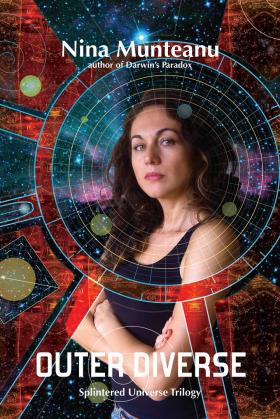
OuterDiverse-cover-web copy

Book 1 of Splintered Universe

The Splintered Universe Trilogy is a detective mystery-thriller that explores metaphysical and existential questions through a high-test space adventure. The three books include Outer Diverse, Inner Diverse and Metaverse.

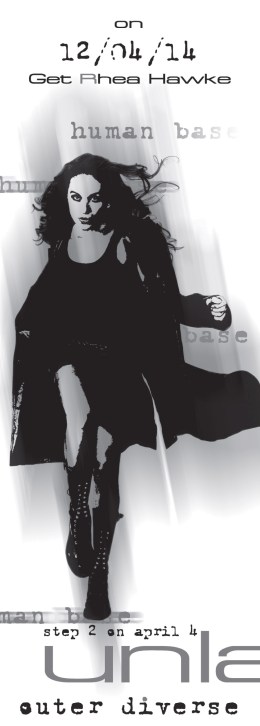
The main character Rhea Hawke is a Galactic Guardian and the only human in an otherwise alien race of 7-foot tall purple-skinned Eosians—who she actually despises (for reasons you find out later). She’s a loner and a misfit in an elite police force tasked with keeping order in the galaxy; Rhea’s unruly tactics grate on them—particularly her boss. In Outer Diverse, Rhea investigates the genocide of an entire spiritual sect; but instead she kills her only lead.

Following the scent of Glitter Dust, Rhea connects the massacre to the murders of several prominent galactic citizens and finally to the deadly Vos, who invaded our galaxy, then disappeared. She realizes that the Vos have quietly returned, infiltrating every aspect of the civilized world—with dark menace in mind. But no one believes her—particularly her boss, who fires her instead for incompetence: badge, Great Coat and MEC weapon confiscated and her sentient ship Benny put in storage. Compelled by an urgency she herself doesn’t understand, she goes rogue and enlists the aid of surprising allies to save the galaxy.

You mention that Splintered Universe explores issues of existentialism and metaphysics. Can you speak to them?


Inner-diverse-front-cover-WEB copy

Book 2 of Splintered Universe

The Splintered Universe Trilogy explores the fractal fabric of paradox, where the flow of particle, energy, wave and intention embrace: black holes, quasars, neutrinos, intuition, déjà vu, clairvoyance, altruism, faith…

The prediction by Gnostic priest Raphael Martinez (The coming of the Suntelia Aeon will be signified by the joining of twin souls) weaves many disparate threads of existence to Atlantis and the Eosian alien race (who resemble the Bible’s Nephilim), the sacred vishna tree (part of L’Ordre de l’Arbre Sacré in Quebec) and the precious mythical metal Orichalcum used by the Eosians. The prediction ties to an ancient knowledge that describes our very existence through déjà vu, synchronicity, sacred geometry, phi and the golden mean and the notion that “diverses” are mirror universes linked through dreams. The key is Rhea herself—who discovers that she is not who or what she thinks.

You’re a bit known for your world building. Tell us a little about that in this trilogy.

Metaverse-FRONT-web copy

Book 3 of Splintered Universe

I’m an ecologist, so world building with realistic ecosystems is more than fun for me. I enjoy doing the research to create realistic and meaningful worlds. I consulted authorities in the areas of space exploration and habitable zones, AI, biotechnology, sleep biology, neuroscience, and ecology to design alien worlds and systems, populated with extremophiles.

In her pursuit of justice, Rhea travels to all parts of the galaxy and encounters some very strange worlds. In Book 1, Rhea pursues dust trafficker V’mer to the sulphurous AI-run water planet (Mar Delena), located inside the hole of the gaseous “donut” of Fomalhaut; it’s always raining acid. That’s where Book 1 starts: acid rain painfully spattering Rhea’s face as she lies injured and waiting to be dusted (with a lethal dose) by V’mer, surrounded by the oily fur-covered rodent-like Delenians—all dust addicts.

Rhea almost drowns in a high-speed skipboat chase of the murderer of a spiritual sect on the icy moon, Uma 1, (orbiting 47 Uma b of 47 Ursae Majoris b). The moon is mostly ocean beneath a thick layer of ice with thermal vents that provide the inhabitants—a spiritual sect called the Schiss—a home.

NinaMunteanuHalfPage-AD-Astra47 Uma a (also called Horus) was colonized in ancient times by the Khonsus, a raptor-like biped race with mind-probing capability. It is also the home of the ancient migrating trees, ammuts (giant flying insects), and the weeping mountains with their narcotic boiling seas used by the giant apophus to attack and set its millions of babies to devour Rhea in Book 1.

Virgil 9 is a tidally locked moon that orbits the gas giant 70 Virginis b; day and night last for weeks while water swings the extreme from deluge flood to desert conditions. In Virgil City, Rhea does commerce with information broker Shlsh Shle She, a moody amoeba-like photosynthetic Ngu who is just a pseudopod of a larger hive-entity.

Sekmet is a bog planet, where the raw materials of dust are harvested by the Rill, bulbous short smelly bog creatures with tube eyes, webbed limbs and large sexual organs; and who Rhea pretty much wipes out with her MEC weapon. Sekmet is also the location of a galactic penal colony (Hades) where Rhea is sent in Book 2. When she tries to escape, she must contend with other native creatures of Sekmet such as the giant crocodile-like sobeks and the terrifying kepry—giant flying crustaceans.

In Book 3, Rhea returns to Earth, transformed by Eosian settlers from its former polluted state dominated by urban concrete cities to an entirely natural world, now unpolluted and featuring the ancient purple vishna tree and a crystal symbiotic organic technology.


Rhea on Iota Hor

Rhea on Iota Hor-2

Worlds always have cool bling associated with them. What technologies or devices are featured in Splintered Universe?

I created an entire fleet of ships, all run on various technologies, from crystals, to wave-energy to dreams. That was fun to create. Two main ship builders include: Zeta Corp from Earth and Tangent Shipping run by the Fauche from Sigma Draconis. Rhea’s own ship, Benny, is an old ray class Fauche-built corvette, a two-man hybrid organic/nano-tech vehicle with folding wings and fuel scoops (so it can mine energy fuel from gas giants). Benny is a sentient ship that jacks the particle-stream and with whom Rhea has an interesting relationship. The ship serves essentially as butler, administrator, companion, and rescuer.

I also created a wide range of weapons, based on which alien race created them and for what purpose. Rhea gained some notoriety with her own created weapon, the MEC (short for Magnetic-Electro Concussion) pistol, a versatile wave-weapon that can target DNA signatures and do almost anything you want with a single sweep. Her proprietary MEC design is coveted by many groups—from shady crime syndicates such as Eclipse to her own Guardians.

I hear that the last audiobook (the third book) in the trilogy is finally out this January. That means that all three books of the Splintered Universe are now available in print, ebook and audiobook format. How does it feel to have a trilogy available in three complete formats?

It feels great! I’m so excited that readers can now obtain my trilogy in those different ways. It speaks to our different ways of consuming story. Some prefer to settle back by the fire or our favourite place to read with a “real” book; others like a mobile ebook so we can read while we travel and play; and then some like to lean back in the car and listen to a great story.

What was your experience with the narrator of the three books?

Dawn-Harvey

Dawn Harvey of “Dawn of Voice”

The experience was truly cosmic. When Iambik took on the books as audiobooks, they provided me with three voice artists to audition. I chose Dawn Harvey because I could visualize my main character through her voice, and given that the entire trilogy is told in the first person, the narrator’s voice had to be just right. Dawn’s voice is dark and sultry like coffee. It is sexy and irreverent with a hidden vulnerability and sensitivity that perfectly captured the main character Rhea Hawke. What I didn’t realize then was how well Harvey would represent the 30-odd other characters, mostly aliens—one who spoke through several mouths.

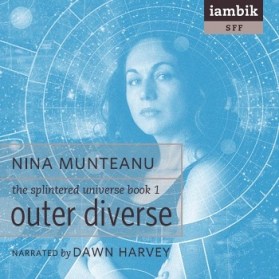
OuterDiverse-audiobook-Iambik

Audiobook of Outer Diverse

Working with Dawn was a pleasure. Dawn is a dedicated professional; she created unique and consistent voices for the book’s thirty-odd mostly alien characters. She ensured that each character had the appropriate vernacular, tone, accent and cadence. Then she did proofs and confirmed them with me. She also tackled the “alien” vocabulary; Rhea’s universe is full of strange and foreign terms (I have a comprehensive glossary at the back of each book). Dawn sent me a list to make sure she was pronouncing everything correctly—mostly made-up words. Dawn is a professional dedicated to her craft and her art. She literally breathed life into Rhea Hawke and all the other characters. The result is three audiobooks that will blow your socks off. I mean it. If you like audiobooks, get the first one and tell me different. When I first listened to Outer Diverse in the car on my way to Nova Scotia, I lost myself in her storytelling and forgot that I’d written it.

Where can people find the Splintered Universe Trilogy?

The best place, of course is Amazon (Amazon.ca or Amazon.com). All three formats are available through Amazon. The Audiobooks are currently available for free through Audible on Amazon. The books are also available through Barnes & Noble, Chapters/Indigo, Kobo, and many other book selling sites and brick and mortar stores.

When you’re not writing what do you do?

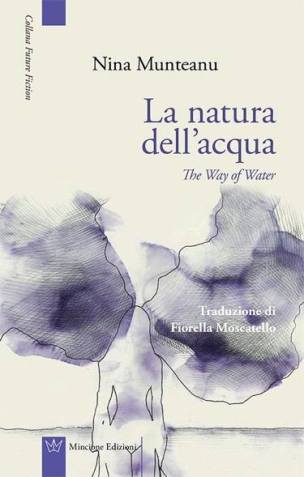
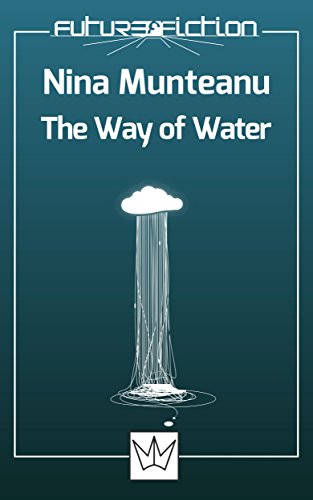
These days I’m mostly on the University of Toronto campus, teaching health science and engineering students how to write. When the students find out that I write science fiction, they get all excited. It’s a lot of fun. I also teach a science fiction writing coarse at George Brown College. When I’m not teaching or writing, I’m doing something in Nature, usually by the water. I’ve always had an interest in water. I studied and researched freshwater ecology as a limnologist for three decades. I’m a bit of an environmentalist these days, hoping to raise awareness and action for water. My latest novel—hopefully coming out next year—arose from my nature walks and my research in water. The story chronicles the lives of four generations of women and their relationship with water.

TALKING-AUDIOBOOKS2 copyYou can also listen to the Podcast interview of Dawn Harvey and Nina Munteanu by Casey Trowbridge of Talking Audiobooks on the process of their collaboration. Learn more about the process between writer and voice artist narrator:

The trilogy has received a fair bit of acclaim from reviewers and readers:

Martha’s Bookshelf
Speculating Canada
Dab of Darkness
Goodreads
Amazon
Amazon Canada

“Rhea Hawke is a Galactic Guardian, and I love to say her name. Her name alone let’s you know that there is a bad ass super hero of a woman on site. I can picture her boots, her great coat, and her side arms. I want to be her when I grow up. Obviously, you can tell I developed some hero worship for her by the end of this book. I really got wrapped up in this novel.”–Goodreads Review of Outer Diverse


“Ms. Harvey manages to enthuse the personality of the characters into each voice. The wise, gentle Ka has a soft, strong sound that reminds you of a wise old bird. Shlsh She She, a slippery, slimy creature has a slurry, garbled voice like a mouthful of mushy, wet food. Dawn’s reading conveys the loneliness in Rhea, the sexiness of Serge, the frustrated friendliness of Bas, and the faithful coziness of Benny. She is able to bring emphasis to the action or romance, weariness or fear elements of the story. The narration never takes over the story; but rather enhances it.”–Martha’s Bookshelf on Outer Diverse Audiobook

The excellent cover art for all three books is done by Toronto graphic artist and SF author Costi Gurgu (author of RecipeArium). People keep asking me who the model for the covers is; you’ll have to corner Costi at the next spec fiction con and ask him yourself.

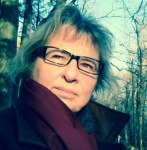
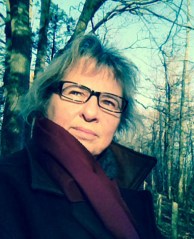
nina-2014aaaNina Munteanu is an ecologist, limnologist and internationally published author of award-nominated speculative novels, short stories and non-fiction. She is co-editor of Europa SF and currently teaches writing courses at George Brown College and the University of Toronto. Visit www.ninamunteanu.ca for the latest on her books.


How Art Reveals Truth in Science

It is quite possible … that we will always learn more about human life and personality from novels than from scientific psychology —Naom Chomsky

niels bohr

Niels Bohr

In the 1920s, physicist Niels Bohr struggled to re-imagine the structure of matter. He rejected the current hegemony of a fractal “solar system” model and sought a new metaphor.

“When it comes to atoms,” said Bohr, “language can only be used as poetry.”

Bohr compared the invisible world of atoms and electrons to cubist art because, according to Jonah Lehrer in an article in SeedMagazine.com, it “revealed the fissures in everything, turning the solidity of matter into a surreal blur.” In 1923 deBroglie had determined that electrons could exist as particles or waves. Bohr maintained that the form they took depended on how you looked at them: by simply observing, you determined their nature.

Many of us believe that while art can be profound, it does not solve practical challenges of reality; only scientific knowledge, which progresses on a linear ascent toward greater understanding, resolves the serious challenges of our world and will one day solve everything.

This is, of course a matter of belief. Novelist Vladimir Nabokov once wrote, “the greater one’s science, the deeper the sense of mystery.” The traditional elements of science have used a reductionist approach to understand the whole, looking at the parts and reconstructing the causal pathways. Take the synapse, for instance. Neuroscientists now know that 100 billion electrical cells occupy a human brain, that every cubic millimeter of the cerebral cortex contains a billion synapses involved in the neurotransmission of electrical impulses in perception and thought. Yet, as Novelist Richard Powers challenged, ‘If we knew the world only through synapses, how could we know the synapse?”

“The paradox of neuroscience,” said Lehrer, “is that its astonishing progress has exposed the limitations of its paradigm … Neuroscience has yet to capture [the] first-person perspective. Artists … distill the details of real life into prose and plot … They capture a layer of reality that reductionism cannot … and provide science with a glimpse into its blind spots … Sometimes the whole is better understood in terms of the whole … No scientific model of the mind will be complete unless it includes what can’t be reduced.”

Logical minds will reject art as too incoherent and imprecise to contribute to the knowledge base provided by scientific process. They will maintain that Beauty isn’t Truth, that the novel is just a work of fiction, and abstract art the arcane expression of a micro-culture.

But what of paradox? Critic Randall Jarrell contended that, “it is the contradictions of works of art which make them able to represent us — as logical and methodical generalizations cannot — our world and our selves, which are also full of contradictions.” The cultural hypotheses of artists can inspire the questions that stimulate important new scientific answers, adds Lehrer.

The irony of modern physics is that it seeks reality in its most fundamental form, and yet we are incapable of comprehending these fundamentals beyond the math we use to represent them. The only way to know the universe is through analogy.

Richard Feyman

Richard Feynman

Richard Feynman said, “Our imagination is stretched to the utmost, not, as in fiction, to imagine things which are not really there, but just to comprehend those things which are there.” While artists rely on imagination, much of modern physics exceeds the imagination: dark matter, quarks and neutrinos, black holes, multiple dimensions and folded space. To venture beyond the regular confines of our “ordinary world” where matter is certain, time flows forward and there are only three dimensions, we must resort to metaphor. “Metaphor in science serves not just as a pedagogical device,” wrote physicist and novelist Alan Lightman, “but also as an aid to scientific discovery.” Einstein came up with relativity while thinking about moving trains; Arthur Eddington compared the expansion of the universe to an inflated balloon; James Clerk Maxwell visualized magnetic fields as little whirlpools in space. String theory is often imagined as garden hoses.

Pablo Picasso bullfight,1934

Pablo Picasso’s Bull Fight, 1934

The greatest physicists of the 20th century thought metaphorically. String theorist Brian Greene wrote that the arts have the ability to “give a vigorous shake to our sense of what’s real.” Picasso never understood the equations, says Lehrer: “he picked up the non-Euclidian geometry via the zeitgeist.” A century later some scientists still use his fragmented images to symbolize their ideas.  “Novelists can stimulate the latest theories of consciousness through their fiction … Painters can explore new theories about the visual cortex … Dancers can help untangle the mysterious connection between the body and emotion.”

Both science and art benefit from exchange. By inviting art to participate in its conversation, science provides art with the opportunity to add science to its repertoire. And through its interpretation of scientific ideas and theories, art offers science a new lens through which to see itself.

Karl Popper exhorts us to “give up the idea of ultimate sources of knowledge, and admit that all knowledge is human; that it is mixed with our errors, our prejudices, our dreams, and our hopes.”

And that is the stuff of fiction after all…


Nina MunteanuNina Munteanu is an ecologist, limnologist and internationally published author of award-nominated speculative novels, short stories and non-fiction. She is co-editor of Europa SF and currently teaches writing courses at George Brown College and the University of Toronto. Visit www.ninamunteanu.ca for the latest on her books.


On Conducting Interviews…

Nina-SiriusXM-Radio 2016

Nina Munteanu doing an interview on SiriusXM Radio

Being a Smart Reporter

Whether you’re writing non-fiction or fiction, at some point in your research you may need to conduct an interview. It might be a local police officer who handled a case similar to something you are writing about; it might be a scientist in the university who has critical information on something covered in your story; it might be a friend who has experienced something you wish to get first-hand knowledge of for one of your characters. Either way, you need to conduct your interview professionally, efficiently and with sufficient thoroughness and accuracy to get what you need.

In other words, you need to be a good journalist.

Pillars of Good Journalism

The pillars of good journalism include: 1) thoroughness; 2) accuracy; 3) fairness; and 4) transparency.

These days, thoroughness means more than exhausting your resources, real or virtual. It also includes getting input from your readers, says Robin Good, online publisher and new media communication expert.

Likewise, says Good, being accurate may include saying what you don’t know and being open to input from your readership; this invites dialogue between you and your respected reader. The key, of course, is respect.

Which brings us to fairness: this includes listening to different viewpoints and incorporating them into your journalism. Fairness, says Good, is about letting people respond and listening to them, particularly if they disagree with you. Both learn from the experience.

And, lastly, part of being transparent is revealing and making accessible to your readers your source material.

Things to Consider When Doing That Interview

As a writer it’s guaranteed that you will at some time require information from a real person. Depending on the nature of your research and its intended destination and audience, you may wish to conduct anything from a casual phone or email enquiry to a full-blown formal face-to-face interview. This will also depend on who you are interviewing, from a neighbor to a government official.

In an article in Writer’s Digest, Joy Lanzendorfer suggests that you adopt the following tactics to get your interview further than the basics and to fully take advantage of your source (oh, I didn’t mean it that way!):

  • Do your research ahead of time: read up on your subject and include both sides of an issue (if that’s relevant). This helps you to respond intelligently with better follow-up questions.
  • Ask open-ended questions: avoid yes and no questions and get them to elaborate. Asking “why” solicits explanation, which will give your article depth.
  • Ask for examples: this provides a personal aspect to the article that gives it warmth and makes it more interesting.
  • Ask personal questions: what’s the worst thing that can happen? They can simply say “no”; the up side is you may get a gem. The personal angle from the interviewee’s perspective gives your article some potential emotional aspect that gives it human-interest.
  • Ask the interviewee for any further thoughts to share: it’s an innocuous question, but can offer-up more gems. What it provides you with is the possibility of getting something you might not have thought of, sparked by your conversation.

Don’t be afraid to confirm names, places or any facts your interviewee brings up. This will inspire confidence in them about the thoroughness and accuracy in your reporting.

What NOT to Say…

In an article in Writer’s Digest, Nancie Hudson gives the following excellent advice about what you should never say to a source:

  • “There’s no rush.”—never reveal your deadline. Think about it; what do you normally do when there’s a deadline? Right … If you’re going to share a deadline, say it’s sooner than it really is.
  • “I’ve never covered this topic before.”—this kind of information is inappropriate and may make your interviewee uncomfortable (and worried about your unproven abilities to properly interview her instead of focusing on herself and what you’re interviewing her about). Besides, it’s not what you know but what you learn that counts.
  • “I’ll be using what you say extensively.”—don’t assume and make promises you may not be able to keep, until after the interview.
  • “I don’t get it.”—if you don’t understand something, get clarification rather than making a negative remark that tends to stop them dead in their tracks.
  • “you can review the piece before it’s published.”—this is something that can be dealt with over the phone to confirm facts; the source doesn’t need to see the whole piece before it’s published.
  • “This is going to be a fantastic article!”—keep your tone professional; there’s nothing wrong with being positive, but you should maintain a professional attitude that inspires confidence in the interviewee rather than giddy wild energy. 


References

Good, Robin. “The Pillars of Good Journalism”. In: Master New Media:  http://www.masternewmedia.org/news/2005/01/29/the_pillars_of_good_journalism.htm

Hudson, Nancie. 2007. “6 Things You Should Never Say to a Source”. In: Writer’s Digest. April, 2007.

Lanzendorfer, Joy. 2008. “Interview Tactics”. In: Writer’s Digest. February, 2008.

Munteanu, Nina. 2009. “The Fiction Writer: Get Published, Write Now!” Starfire World Syndicate. Chapter “I”.


Nina Munteanu

Nina Munteanu is an ecologist, limnologist and internationally published author of award-nominated speculative novels, short stories and non-fiction. She is co-editor of Europa SF and currently teaches writing courses at George Brown College and the University of Toronto. Visit www.ninamunteanu.ca for the latest on her books.


Fiction Writer on Recommended Reads

FictionWriter-front cover-2nd edWriter Timea Noemi selected The Fiction Writer by Nina Munteanu along with the works of Angela Ackerman and Katie Weiland as her Top books on How to Write.

“[The Fiction Writer]is the most practical book on publishing that I’ve ever read, and I’ve read them all! Not only is each chapter packed with advice for writers at every level of the publishing process, but the text is highly readable and even entertaining. The clear format, the direct style and the playful layout keep the large volume of information from ever becoming dry or boring.”–Lucia Gorea, English Instructor, University of Vancouver

FictionWriter-No1-tweet

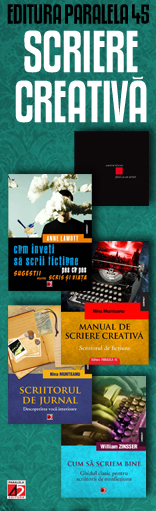
scriitorul_de_fictiune_Munteanu_coperta1Timea Noemi also recommended the Romanian translated version of “The Fiction Writer: Get Published, Write Now!” (“Manual de Scriere Creativa. Scriitorul de fictiune”) by Nina Munteanu along with “The Emotion Thesaurus” by Angela Ackerman and the Hungarian “How to Write a Book” by Krisz Nadasi.

Of “the Fiction Writer” Timea said:

“Eu mutumesc enorm! Cartea aceasta ma invatat atat de multe lucruri este bibia mea de scriitor. Din pacate nu prea se gasesc carti despre scriere creative in tara si m-am bucurat tare mult sa gasesc aceasta carte.” (Thank you so much! This book taught me so many things; it is my writer’s Bible. Unfortunately, there are no books on creative writing in the country, and I enjoyed finding this book.)

FictionWriter Tesimonial-Romanian

editura-paralela-45-scriere creativa.Cu plecere, Timi!

In fact, I knew this (that writing guides were lacking in Romania, a country full of writers!) and so did my Romanian publisher Calin Vlasie of Editura Paralela 45. This is why Editura Paralela 45 translated and published a Romanian version of The Fiction Writer. It so gladdens me to hear that this book on writing is making its way around the country.

Gaudeamus-LaunchMy father is originally from Romania and grew up in Bucharest.  So, I was delighted to attend the launch of Manual de Scriere Creativa. Scriitorul de fictiune (The Fiction Writer) in Bucharest in 2011, hosted by Editura Paralela 45 in the Gaudeamus Book Fair. It was a wonderful experience, which included drinking copious amounts of Romania’s national drink Tuica (plum liquor that packs a punch!) with my publisher. You can find out more about my adventure in Bucharest on my good friend’s site, Toulouse On the Loose.

Canadians can purchase “The Fiction Writer” at a very decent price right now from Chapters / Indigo. The Fiction Writer is the first book of The Alien Guidebook Series, which includes The Journal Writer: Finding Your Voice (for journalling and memoir writing) and upcoming The Ecology of Story: World as Character (on setting, place and world building–scheduled release Summer 2019).


Nina MunteanuNina Munteanu is an ecologist, limnologist and internationally published author of award-nominated speculative novels, short stories and non-fiction. She is co-editor of Europa SF and currently teaches writing courses at George Brown College and the University of Toronto. Visit www.ninamunteanu.ca for the latest on her books.


Fingal’s Cave by Nina Munteanu

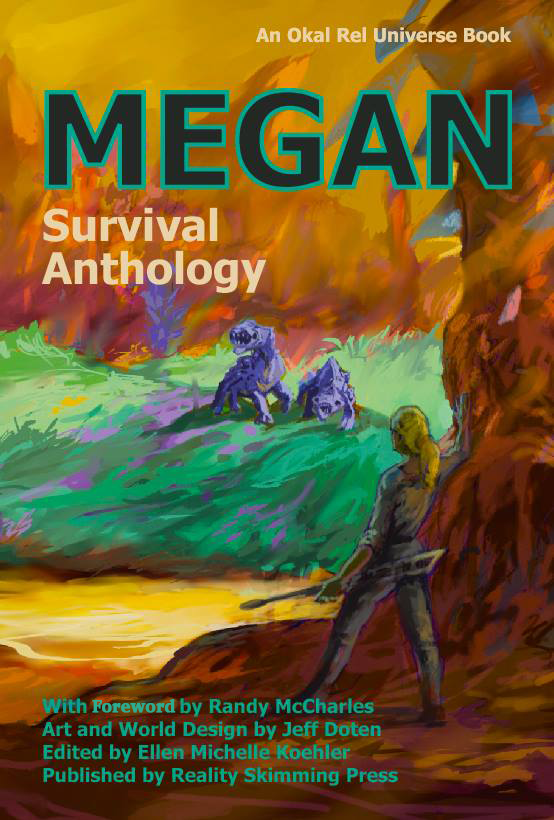
FingalsCave-MeganSurvivalAfter she and fellow colonists crash land on the hostile jungle planet of Mega, rebel-scientist Izumi, widower and hermit, boldly sets out against orders on a hunch that may ultimately save her fellow survivors—but may also risk all. As the other colonists take stock, Izumi—obsessed with discovery and the need to save lives—plunges into the dangerous forest, which harbors answers, not only to their freshwater problem, but ultimately to the nature of the universe itself. Mega was a goldilocks planet—it had saltwater and supported life—but the planet also possessed magnetic-electro-gravitational anomalies and a gravitational field that didn’t match its size and mass. The synchronous dance of its global electromagnetic field suggested self-organization to Izumi, who slowly pieced together Mega’s secrets: from its “honeycomb” pools to the six-legged uber-predators and jungle infrasounds—somehow all connected to the water. Still haunted by the meaningless death of her family back on Mars, Izumi’s intrepid search for life becomes a metaphoric and existential journey of the heart that explores how we connect and communicate—with one another and the universe—a journey intimately connected with water.

Megan coverFingal’s Cave by Nina Munteanu is the first story in the Megan Survival Anthology by Reality Skimming Press. The story is available as an ebook here. The print anthology is available here.

Nina was interviewed by Ellen Mitchell of Reality Skimming Press on writing Fingal’s Cave.

On the connection between ecology and science fiction, Nina says:

The science of ecology studies relationships. It looks at how things relate to one another. Ecology is the study of communities and ecosystems and how these interact—often in a global setting. Science fiction writing explores the interaction of humanity with some larger phenomenon involving science. Robert J. Sawyer calls it the fiction of the large. Large ideas, large circumstance, large impact. Both ecology and science fiction explore consequence in a big way. Ecology—like “setting” and “world”—manifests and integrates in story theme more than some of the hard sciences, which may contribute more to a story’s premise or plot. This is because, while most sciences study the nature and behaviour of “phenomena”, ecology examines the consequences of the relationship of these phenomena and the impact of their behaviours on each other and the rest of the world. It is in this arena that science fiction becomes great: when it explores relationship and consequence.

On the significance and importance of optimism in science fiction, Nina says:

Optimistic SF is the antithesis of pointless SF. The reason I define it that way is because I believe many would box the term too tightly, equating it to “happy ending” or the equivalent of “and they all lived happily ever after.” Others may even include a certain requisite language and tone, and subject matter that must be excluded to make it optimistic.

For me, it is enough that the story resolves and has a point to it; that the reader is able—even if the hero isn’t—to see a way out into the light. The story itself need not be “optimistic”; but the reader is fulfilled somehow. I suppose one could elucidate Optimistic SF through the “Hero’s Journey Myth”, a plot approach that describes the metaphoric journey of a character or set of characters toward some destiny that involves change and learning. Ultimately, for a story to be worthwhile, it must have a point to it. Otherwise, it’s just “reality TV”.

You can read the entire interview with Nina Munteanu by Ellen Mitchell of Reality Skimming Press here.

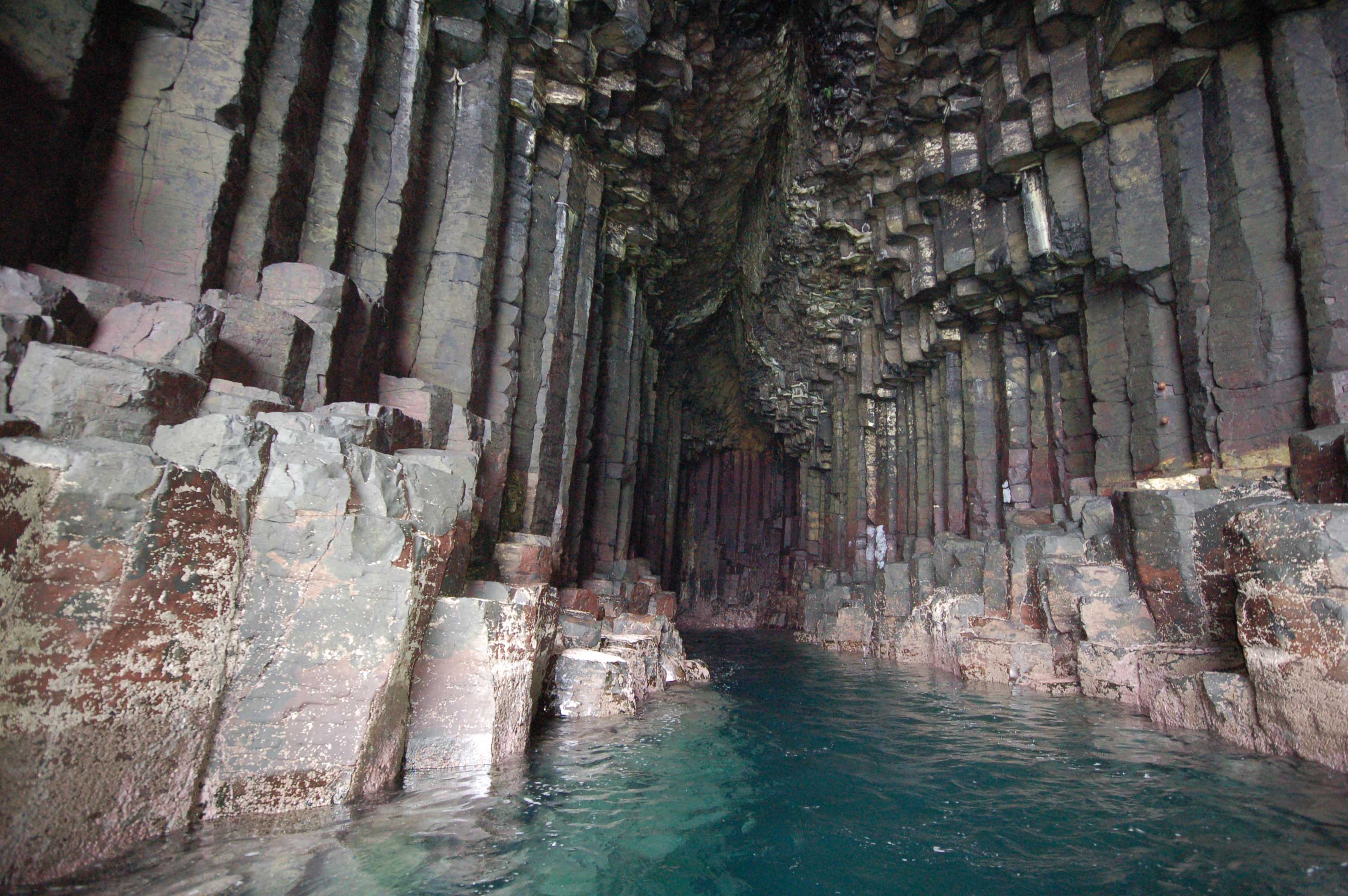
fingalsCaveFingal’s Cave is a sea cave on the uninhabited island of Staffa in the Inner Hebrides of Scotland. The cave is formed entirely from hexagonally jointed basalt columns in a Paleocene lava flow (similar to the Giant’s Causeway in Northern Ireland). Its entrance is a large archway filled by the sea. The eerie sounds made by the echoes of waves in the cave, give it the atmosphere of a natural cathedral. Known for its natural acoustics, the cave is named after the hero of an epic poem by 18th century Scots poet-historian James Macpherson. Fingal means “white stranger”.

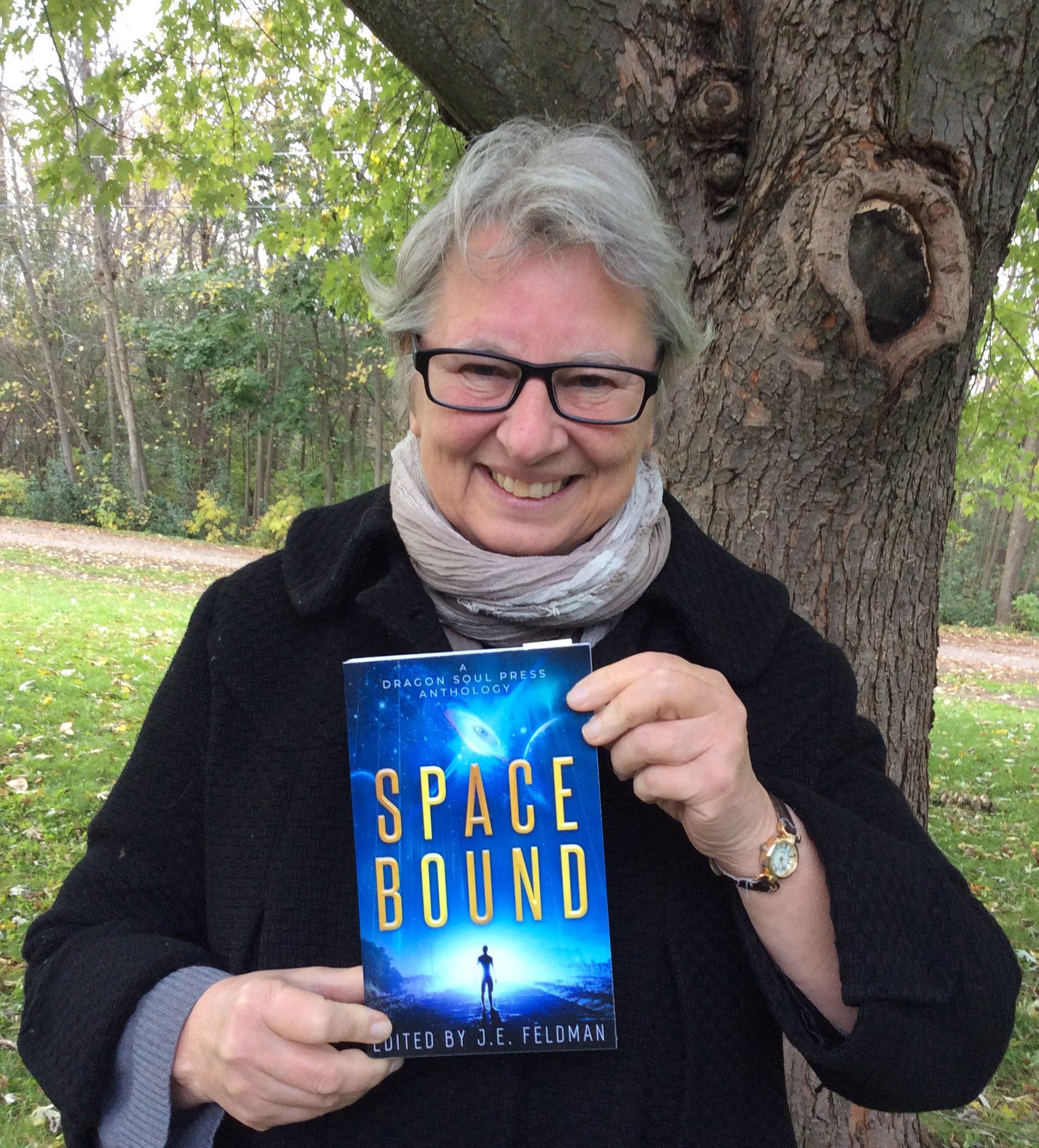
p.s. Dragon Soul Press has recently included “Fingal’s Cave” in their 2021 anthology “Space Bound.”

Nina Munteanu holds her copy of “Space Bound” anthology with her story “Fingal’s Cave”

Fingal’s Cave was reprinted in 2023 on the online magazine Metastellar Speculative Fiction and Beyond.

Nina Munteanu is an ecologist, limnologist and internationally published author of award-nominated speculative novels, short stories and non-fiction. She is co-editor of Europa SF and currently teaches writing courses at George Brown College and the University of Toronto. Visit www.ninamunteanu.ca for the latest on her books.

Ursula K. Le Guin: Her Name is Freedom

Amid the sadness of the passing of Ursula K. Le Guin, we offer her wise advice on art and literature, given in 2014. In receiving her lifetime achievement award in 2014, Ursula delivered a speech that was prescient, timely and necessary:

Neil Gaiman presents lifetime achievement award to Ursula K. Le Guin at 2014 National Book Awards from National Book Foundation on Vimeo.

Ursula K. Le Guin first told her audience that she wanted to share her award with her fellow-fantasy and science fiction writers, who have for so long watched “the beautiful awards” like the one she’d just received, go to the “so-called realists”. She then went on to

ursula le guin

Ursula K. Le Guin

say:

“I think hard times are coming, when we will be wanting the voices of writers who can see alternatives to how we live now, and can see through our fear-stricken society and its obsessive technologies, to other ways of being. And even imagine some real grounds for hope. We will need writers who can remember freedom: poets, visionaries–the realists of a larger reality. Right now, I think we need writers who know the difference between production of a market commodity and the practice of an art…The profit motive is often in conflict with the aims of art…We live in capitalism. Its power seems inescapable; so did the divine right of kings… Power can be resisted and changed by human beings; resistance and change often begin in art, and very often in our art–the art of words. I’ve had a long career and a good one, in good company, and here, at the end of it, I really don’t want to watch American literature get sold down the river… The name of our beautiful reward is not profit. Its name is freedom.”

nina-2014aaaNina Munteanu is an ecologist and internationally published author of novels, short stories and essays. She coaches writers and teaches writing at George Brown College and the University of Toronto. For more about Nina’s coaching & workshops visit www.ninamunteanu.me. Visit www.ninamunteanu.ca for more about her writing.

Nina Munteanu’s Writing Featured in “Morphology” Art Exhibit

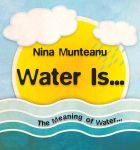
“We are water, what we do to water, we do to ourselves”—Nina Munteanu

WaterIs-story-quote2

“Story” quote by Nina Munteanu from “Water Is…”

On Sunday January 14, “Morphology”, an art/writing exhibit and gala located in the world-class Lakeview Water Treatment Plant celebrated the new Waterfront Connection through the eyes of eleven photographers and writer/limnologist Nina Munteanu.

The show documented the initial stages of the newly created wetlands in Lakeview, Mississauga, on the shores of Lake Ontario. This revitalization project was the realized dream of visionary Ward 1 Councillor Jim Tovey, and was spearheaded by various organizations, including Credit Valley Conservation Foundation, The Region of Peel and the TRCA.

WaterIs-beauty-JulieKnox

Photo Art by Julie Knox, “Beauty” quote by Nina Munteanu from “Water Is…”

The Lakeview Waterfront Connection reclamation project will extend from the old Lakeview generating station to Marie Curtis Park in Toronto When completed, the 64-acre site will provide 1.5 km of beach, meadow, forest, wetland and islands—providing excellent habitat for migratory birds, fish and other aquatic life. Clean rubble from demolition projects are being used to build new land.

“It is the first ecosystem that’s ever been built in Lake Ontario in the GTA—ever,” said Councillor Tovey.


MarceloPazan-photo

Photo Art by Marcelo Pazan

The art of eleven photographers documented the early stages of the wetland construction. “It sort of looks like a Salvador Dali surrealistic sculpture garden…and what an interesting way to really celebrate all of this,” said Councillor Tovey to the Mississauga News. Nina Munteanu was invited to provide water-related literature to augment the photography; quotes from Munteanu’s “Water Is…” and her upcoming novel “A Diary in the Age of Water” appeared in key locations with the photo art.

DiaryAgeOfWater-quoteReiterating Jim Tovey’s earlier comment on the water treatment plant as its own sculpture-art, Munteanu celebrated the location and the nature of the exhibit: “When technology, art and ecology are celebrated together, you get magic.”

JimTovey-ElizabethDowdeswell

Councillor Jim Tovey and The Honourable Elisabeth Dowdeswell tour the exhibit

The Honourable Elisabeth Dowdeswell (Lieutenant Governor of Ontario) was present for the exhibit: “The Great Lakes … face certain challenges,” said The Honourable Dowdeswell. “Threats such as increased pollution, habitat destruction and climate change are all having negative effects on much of our natural world.” We need strong stewardship, she added.

CathieJamieson-WaterIs-happy

Councillor Cathie Jamieson with her copy of “Water Is…”

Cathie Jamieson, Councillor of the New Credit First Nation gave a stirring speech. “We are the water carriers and it’s in our best interest to respect and take care of our natural surroundings for the next seven generations,” she said.

Councillor Jamieson was presented with a copy of “Water Is…” during the exhibit.

The exhibit will be moved and on public display at Mississauga’s Great Hall in March 2018. It is a must see!


Featured this year is the photo art by: Gabriella Bank, Sandor Bank, PJ Bell, Darren Clarke, Julie Knox, Lachlan McVie, Marcelo Leonardo Pazán, Martin Pinker, Annette Seip, Stephen Uhraney and Bob Warren; and written quotes by Nina Munteanu from “Water Is…” and upcoming “A Diary in the Age of Water”.


LWTP-blue-green-red pipes

Lakeview Water Treatment Plant

nina-2014aaaNina Munteanu is an ecologist, limnologist and internationally published author of award-nominated speculative novels, short stories and non-fiction. She is co-editor of Europa SF and currently teaches writing courses at George Brown College and the University of Toronto. Visit www.ninamunteanu.ca for the latest on her books.


LWTP-catwalk-close

“Water” a Speculative Fiction Anthology by Reality Skimming Press

WaterAnthology-RealitySkimmingPressIn December 2017, “Water”, the first of Reality Skimming Press’s Optimistic Sci-Fi Series was released in Vancouver, BC. I was invited to be one of the editors for the anthology, given my passion for and experience with water.

This is how Reality Skimming Press introduces the series:

Reality Skimming Press strives to see the light in the dark world we live in, so we bring to you the optimistic science fiction anthology series. Water is the first book in the series, and is edited by author and scientist Nina Munteanu. Six authors thought optimistically about what Earth will be like in terms of water in the near future and provide us with stories on that theme. Step into the light and muse with us about the world of water.

Editing “Water” was a remarkable experience, best described in my Foreword to the anthology:

LyndaWilliams

Lynda Williams

This anthology started for me in Summer of 2015, when Lynda Williams (publisher of RSP) and I were sitting on the patio of Sharky’s Restaurant in Ladner, BC, overlooking the mouth of the Fraser River. As we drank Schofferhoffers over salmon burgers, Lynda lamented that while the speculative / science fiction genre has gained a literary presence, this has been at some expense. Much of the current zeitgeist of this genre in Canada tends toward depressing, “self-interested cynicism and extended analogies to drug addiction as a means of coping with reality,” Lynda remarked.

Nina-Sharkys

lunch at Sharky’s

Where was the optimism and associated hope for a future? I brought up the “hero’s journey” and its role in meaningful story. One of the reasons this ancient plot approach, based on the hero journey myth, is so popular is that its proper use ensures meaning in story. This is not to say that tragedy is not a powerful and useful story trope; so long as hope for someone—even if just the reader—is generated. Lynda and I concluded that the science fiction genre could use more optimism. Reality Skimming Press is the result of that need and I am glad of it.

Megan coverIn the years that followed, Reality Skimming Press published several works, including the “Megan Survival” Anthology for which I wrote a short story, “Fingal’s Cave”. It would be one of several works that I produced on the topic of water.

As a limnologist (freshwater scientist), I am fascinated by water’s anomalous and life-giving properties and how this still little understood substance underlies our lives in so many ways. We—like the planet—are over 70% water. Water dominates the chemical composition of all organisms and is considered by many to be the most important substance in the world. The water cycle drives every process on Earth from the movement of cells to climate change. Water is a curious gestalt of magic and paradox, cutting recursive patterns of creative destruction through the landscape. It changes, yet stays the same, shifting its face with the climate. It wanders the earth like a gypsy, stealing from where it is needed and giving whimsically where it isn’t wanted; aggressive yet yielding. Life-giving yet dangerous. Water is a force of global change, ultimately testing our compassion and wisdom as participants on a grand journey.

When Reality Skimming invited me to be editor of their first anthology in their hard science optimistic series, and that it would be about water, I was delighted and excited.

WATER Anthology-interior-image

Illustration by Digbejoy Gosh for Bruce Meyer’s “The River Tax”

The six short stories captured here flow through exotic landscapes, at once eerie and beautiful. Each story uniquely explores water and our relationship with its profound and magical properties:  melting glaciers in Canada’s north; water’s computing properties and weather control; water as fury and the metaphoric deluge of flood; mining space ice from a nearby comet; water as shapeshifter and echoes of “polywater”. From climate fiction to literary speculative fiction; from the fantastic to the purest of science fiction and a hint of horror—these stories explore individual choices and the triumph of human imagination in the presence of adversity.

I invite you to wade in and experience the surging spirit of humanity toward hopeful shores.

Nina Munteanu, M. Sc., R.P.Bio.
Author of Water Is…
October, 2017
Toronto, Canada

waterbooks2L

My desk with copies of “Water” among my current books to read…

The anthology features the art work of Digbejoy Ghosh (both cover and interior for each story) and stories by:

Holly Schofield
Michelle Goddard
Bruce Meyer
Robert Dawson
A.A. Jankiewicz
Costi Gurgu

You can buy a copy on Amazon.ca or through the publisher.

nina-2014aaaNina Munteanu is an ecologist, limnologist and internationally published author of award-nominated speculative novels, short stories and non-fiction. She is co-editor of Europa SF and currently teaches writing courses at George Brown College and the University of Toronto. Visit www.ninamunteanu.ca for the latest on her books.
Find Your Focus This Christmas–Reprise

snow-scene-road-to-Wolfville-barn_edited-1

Barn on road to Wolfville, NS (photo by Nina Munteanu)

How many of you are still running around preparing for the Christmas celebration or secular family festivity? Buying that last minute gift you’d forgotten or were chasing down since a bazillion days ago? Or making last minute changes to your travel plans, house-cleaning for guests, mailing of cards or parcels or meal preparations?

Well, you’re reading this blog post … That means you’re sitting down and taking a minute to relax and regroup. That’s good. Remember to breathe… while I tell you a story…

I’d just finished a three-day drive through snow and rain storms from Mahone Bay, Nova Scotia, to Toronto, Ontario, where I was staying for a few days before catching a flight to Vancouver to spend Christmas with my son and good friends on the west coast. Talk about fast living.

I move around a lot these days. It helps me to appreciate some of the most simple things in life and reminds me of what I love most about Christmas: how it focuses my heart and reconnects me. I don’t mean just with relatives and friends either, although the season certainly does that. I’m talking about my soul and the universe itself. Before I became an itinerant, Christmas bustled with my responsibilities as primary caregiver, social coordinator and hostess of major parties. After I’d said goodbye to our visiting friends and done the dishes and tidied the house; after my husband and son had gone to bed, I sat in the dark living room lit only with the Christmas Tree lights and the flickering candle, and listened to soft Christmas music, primed to write.

snow-christmas2008-sammy

Sammy

My male cat, smelling fresh from outside, found his rightful place on my lap and settled there, pinning me down with love. And there, as I breathed in the scent of wax and fir and cat I found myself again.

Most of us think of Christmas as a busy time, of getting together (often dutifully) with family and friends, exchanging presents and feasting. Christmas is certainly this, but that is only a shallow view of a far deeper event; and I don’t mean only for Christians.

Whether celebrating the holy light of Hannukah or the birth of Jesus, or the winter solstice, this season provides us with the opportunity to meditate on far more than the surficial nature of the symbols we have come to associate with the season: the Christmas tree, presents, turkey dinner, Santa Claus or Saint Nicholas—most of which originate from pagan tradition, by the way.

Says Lama Christie McNally (author of The Tibetan Book of Meditation), “once you dive below the surface, you will discover a beautiful clear place—like a diamond hidden beneath the rubble. It is your own mind, uncovered … Tibetans say we have only just begun the process of awakening—that we still have quite a way to go in our evolutionary process. And it has nothing to do with building spaceships or computers. The next step in our evolution takes place within.”

Christmas is, more than anything, a time of embracing paradox. It is an opportunity to still oneself amid the bustle; to find joy in duty; to give of one’s precious time when others have none, to embrace selflessness when surrounded by promoted selfishness, and to be genuine in a commercial and dishonest world. If one were to look beyond the rhetoric and imposed tradition, the Christmas season represents a time of focus, a time to reflect on one’s genuine nature and altruistic destiny. A time to reconnect with the harmony and balance in our lives.

A time to sit with our cat, pinned with love, and write our next novel.

Merry Christmas!


Nina Munteanu is an ecologist and internationally published author of award-nominated speculative novels, short stories and non-fiction. She is co-editor of Europa SF and currently teaches writing courses at George Brown College and the University of Toronto. Visit www.ninamunteanu.ca for the latest on her books.

Wake up Your Muse–How my Cat Taught Me the Art of Being…

SammyI’m not a very patient person. I make no time for writer’s block or lingering in useless limbo over some plot issue or misbehaving minor character. I write pretty much to a tight schedule: this short story to that market by this date; edits to this book to the editor by that date; blog posts created by such and such a time; an article to another market by another date. It goes on and on. When I go to my computer to write, I write.

Then there’s Sammy. My cat.

Who likes to jump on my lap, make himself all comfortable and then lie over my arm — trapping it along with five of my typing digits. Now what??? Some of you would advise me to simply pull out my pinned arm and/or shove him off. But how can I disturb such a blissful creature? He is so content furled on me, so satisfied that he has captured that wandering appendage of business that is all his now. Content in the bliss of now. In the bliss of cat-purr-meditation…

sammy-2010-01_edited-1Pinned in the moment, my mind first struggles with the need to pound out the next line. My mind then rephrases and teases out nuances of that line. Finally, it wanders out with my gaze and I find myself daydreaming in a kind of trance. Giving in to the cat-purr-meditation.

And it is here that magic happens. In the being; not in the doing.

This is the irony of writing and the muse. To write we need to live; we need to have something to write about and we need to be in that state of mind that allows us to set it to print. I am at my best as a writer when I am focused on the essence of the story, its heart and soul beating through me with a life of its own.

My cat Sammy isn’t the only vehicle to my magical muses.


Waking up the Muse

Here are a few things that help me entice those capricious muses into action:

snow-christmas2008-sammy

Sammy hunting

Music: music moves me in inexplicable ways. I use music to inspire my “muse”. Every book I write has its thematic music, which I play while I write and when I drive to and from work (where I do my best plot/theme thinking). I even go so far as to have a musical theme for each character.

Walks: going for a walk, particularly in a natural environment, uncluttered with human-made distractions, also unclutters the mind and soul. It grounds you back to the simplicity of life, a good place to start.

Cycling: one of my favorite ways to clear my mind is to cycle (I think any form of exercise would suffice); just getting your heart rate up and pumping those endorphins through you soothes the soul and unleashes the brain to freely run the field.

Attend writer’s functions: go to the library and listen to a writer read from her work. You never know how it might inspire you. Browse the bookshelves of the library or bookstore. Attend a writer’s convention or conference.

Visit an art gallery, go to a movie: art of any kind can inspire creativity. Fine art is open to interpretation and can provoke your mind in ways you hadn’t thought before. If you go with an appreciative friend and discuss what you’ve seen you add another element to the experience.

snow-scene-road-to-Wolfville-stream3

Road to Wolfville, NS (photo by Nina Munteanu)

Go on a trip with a friend: tour the city or, better yet, take a road trip with a good friend or alone (if you are comfortable with it). I find that travelling is a great way to help me focus outward, forget myself, and open my mind and soul to adventure and learning something new. Road trips are metaphoric journeys of the soul.

Form a writer’s group: sharing ideas with people of like mind (or not, but of respectful mind) can both inspire you and provide the seeds of ideas.

Practice Cat-Purr-Meditation: you need a willing cat for this; I find that I need tostudy my cat’s meditative practices; where does he most like to relax? Mine loves to look outside the window onto the back yard and garden. That’s where I take him and there, together, we breathe deep and “purr” in the moment…You can read more about purring cat meditation in my Alien Next Door post, “Perfecting the Cat Purr Meditation


Nina Munteanu is an ecologist and internationally published author of award-nominated speculative novels, short stories and non-fiction. She is co-editor of Europa SF and currently teaches writing courses at George Brown College and the University of Toronto. Visit www.ninamunteanu.ca for the latest on her books.