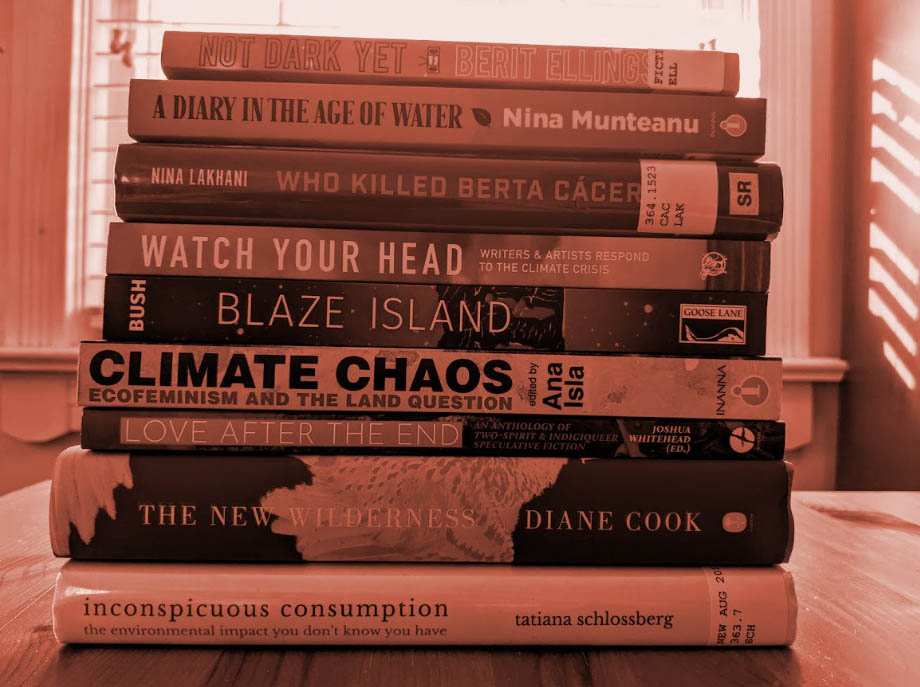
To Boldly Go Where No Human Has Gone Before…

A while ago I was approached by Robert Gooding-Townsend, Science in Society editor for Science Borealis for my opinion on a persistent idea that post-Star Trek sci-fi is more pessimistic and less technologically imaginative. 

Whether this perception is true I can’t definitively say but there is a reason behind it, which I believe reflects a subtle shift in our cultural paradigm and worldview in the past decades since Star Trek. A shift involving a growing awareness of ecology and the emergence of the “feminine archetype” in storytelling.

I think two things are happening in concert: science fiction is maturing as a genre: 1) in its actual breadth; but also 2) in our perception of it.

I think this is partly: 1) a reflection of a more diverse, sophisticated and mature audience (what The Economist terms “mass intelligent”); and 2) the result of a wider acceptance of SF as literature by “non-genre” writers embracing what literary critic Ted Gioia calls “conceptual fiction” (e.g., Walker Percy’s Love in the Ruins; Thomas Pinchon’s Gravity’s Rainbow; Vladimir Nabokov’s Ada; John Barth’s Giles Goat-Boy; Margaret Atwood’s The Handmaid’s Tale, Emmi Itaranta’s The Memory of Water; David Mitchell’s Cloud Atlas, etc.).

Our shifting worldview, along with science fiction’s gradual blending with strong literary elements is reflected in a perception of higher pessimism with less focus on technological “wonders”. When asked to describe SF today, colleague Lynda Williams, author of the Okal Rel series, argued that, “SF is mainstream now … It has grown up, emotionally, from being about wish-fulfilling technologies … to embracing the social implications of change.”

Today, SF is recognized more as “real” literature rather than being dismissed as “escapism.” Williams shares that SF’s roots are as old as myth. “Like myths and bible stories, SF is an instructive literature, pointing out how things can go wrong (or right) and why. The growing up SF has done since the 1950s lies in an increasing recognition that [humanity is its] own worst enemy and a better understanding of human nature is crucial to the problems we face, not just the hard sciences.”

For the past few years I’ve been following a trend in the science fiction writing courses I teach at university: more and more students (male and female) are bringing in WIPs on ecological and global environmental issues. Many of the stories involve a premise of environmental calamity, but not in the same vain as previous environmental disasters that depict “man” against Nature. These works give the Earth, Nature or Water an actual voice (as a character). And a protagonist who learns to interact with it cooperatively. For me this represents a palpable and gestalt cultural awakening in the realm of the “feminine archetype”. One that is focused more on the sociological and ecological consequences of humanity’s evolution.

I believe that ecology—the science of relationships and consequence—best parallels the literature of science fiction, which studies the world and the consequences of our actions (advances in and impacts of science and technology) through metaphor. The literature of science fiction explores large issues faced by humankind and is foremost a literature of allegory and metaphor; one deeply embedded in culture.

Stories of doom and gloom have populated the science fiction genre since its inception. What appears to be changing is the increased sophistication of this assessment and humanity’s place—and technology’s place—in it. Editor and Publisher of On Spec MagazineDiane Walton shares that she is seeing a lot of Post-Apocalyptic submissions, “mainly because it’s interesting to put your characters in a setting where the rules don’t apply any more. They have to try to rebuild the life and security and order they used to have, or else revert to savagery, or else adapt to a whole new set of circumstances.”

Environmental fiction has been written for years. But I believe that now—partly with new awareness of climate change and with the genesis of the term eco-fiction—the “character” and significance of environment is being acknowledged beyond its metaphor, for its actual value. It may also be that the metaphoric symbols of environment in certain classics are being “retooled” through our current awareness, much in the same way that Aldous Huxley’s Brave New World or George Orwell’s Nineteen Eighty Four are being re-interpreted—and newly appreciated—in today’s world of pervasive surveillance and bio-engineering.

The stories I’m seeing more and more—whether by established writers or by my own students—reflect an emerging worldview of participation, responsibility and accountability. It is the worldview of Jung and synchronicity; of David Bohm and “implicate order”; of Rudolf Steiner and “cosmic intelligence”, of biochemist Mae-Wan Ho and “quantum entanglement”, of Frans de Waal and “empathy”, and of Matt Ridley and “altruism”.

Whether told through cautionary tale / political dystopia (e.g., Margaret Atwood’s MaddAddam trilogy; Bong Jung-Ho’s Snowpiercer), mundane science fiction (e.g. Paolo Bacigalupi’s The Windup Girl, my own A Diary in the Age of Water), or a retooled version of “alien invasion” (e.g., Cixin Liu’s 2015 Hugo Award-winningThe Three Body Problem), these stories all reflect a shift in focus from a technological-centred & human-centred story to a more eco- or world-centred story that explores wider and deeper existential questions. 

So, yes, science fiction today may appear less technologically imaginative; but it is certainly more sociologically astute, courageous, sophisticated, and relevant. As for the question of pessimism, I’d suggest that rather than being more pessimistic, current SF literature is more realistic and meaningful.
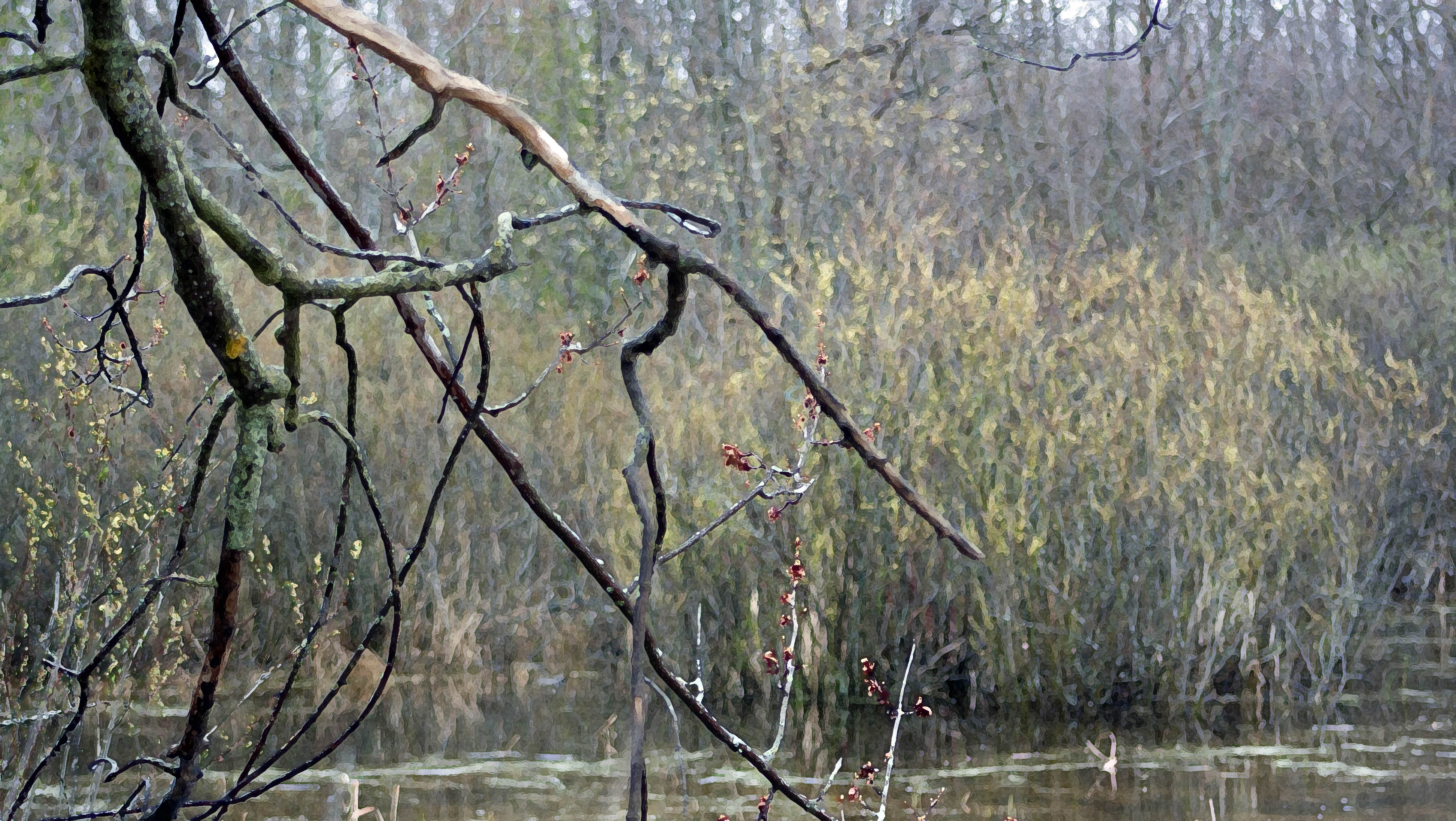
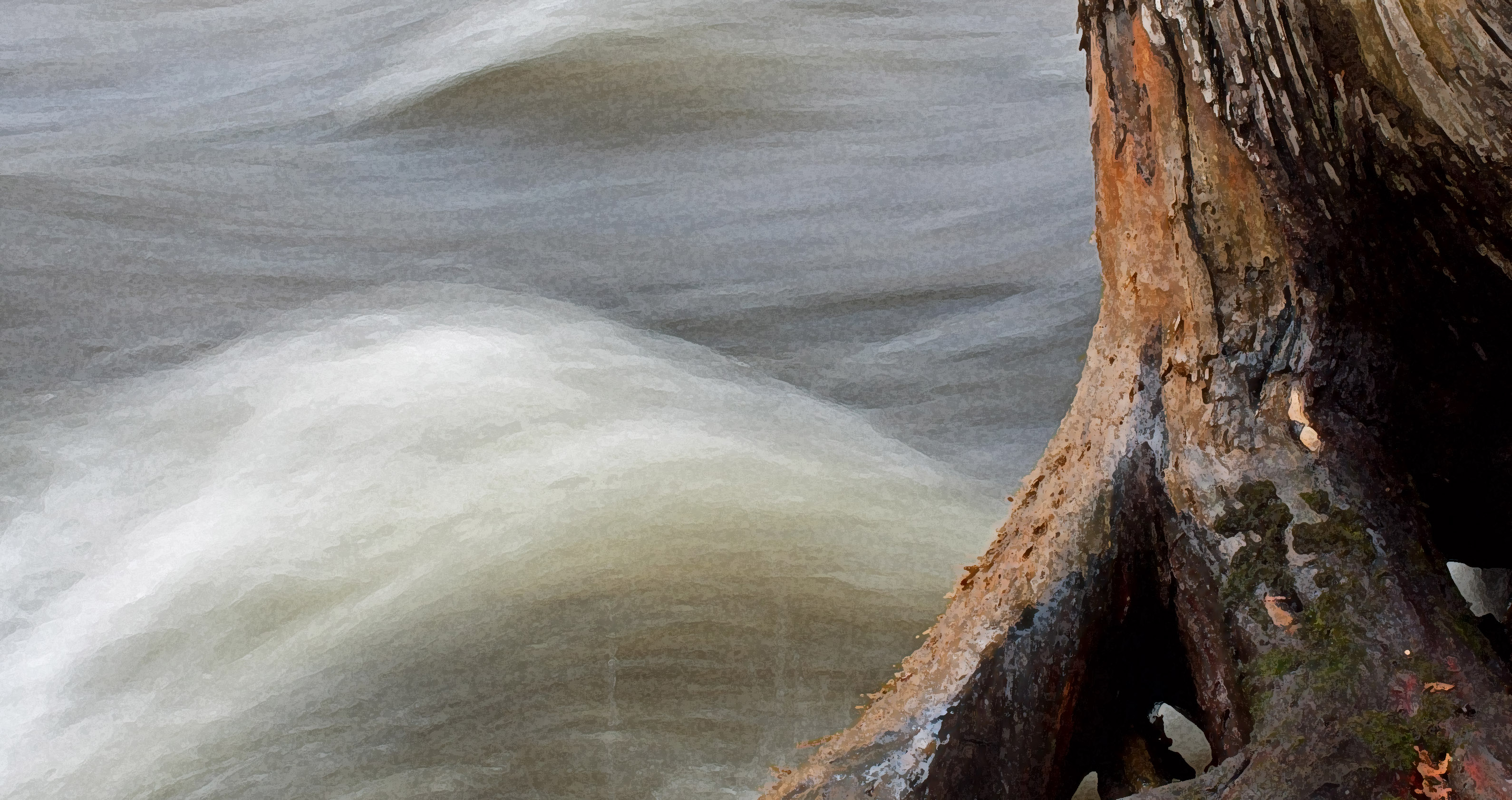
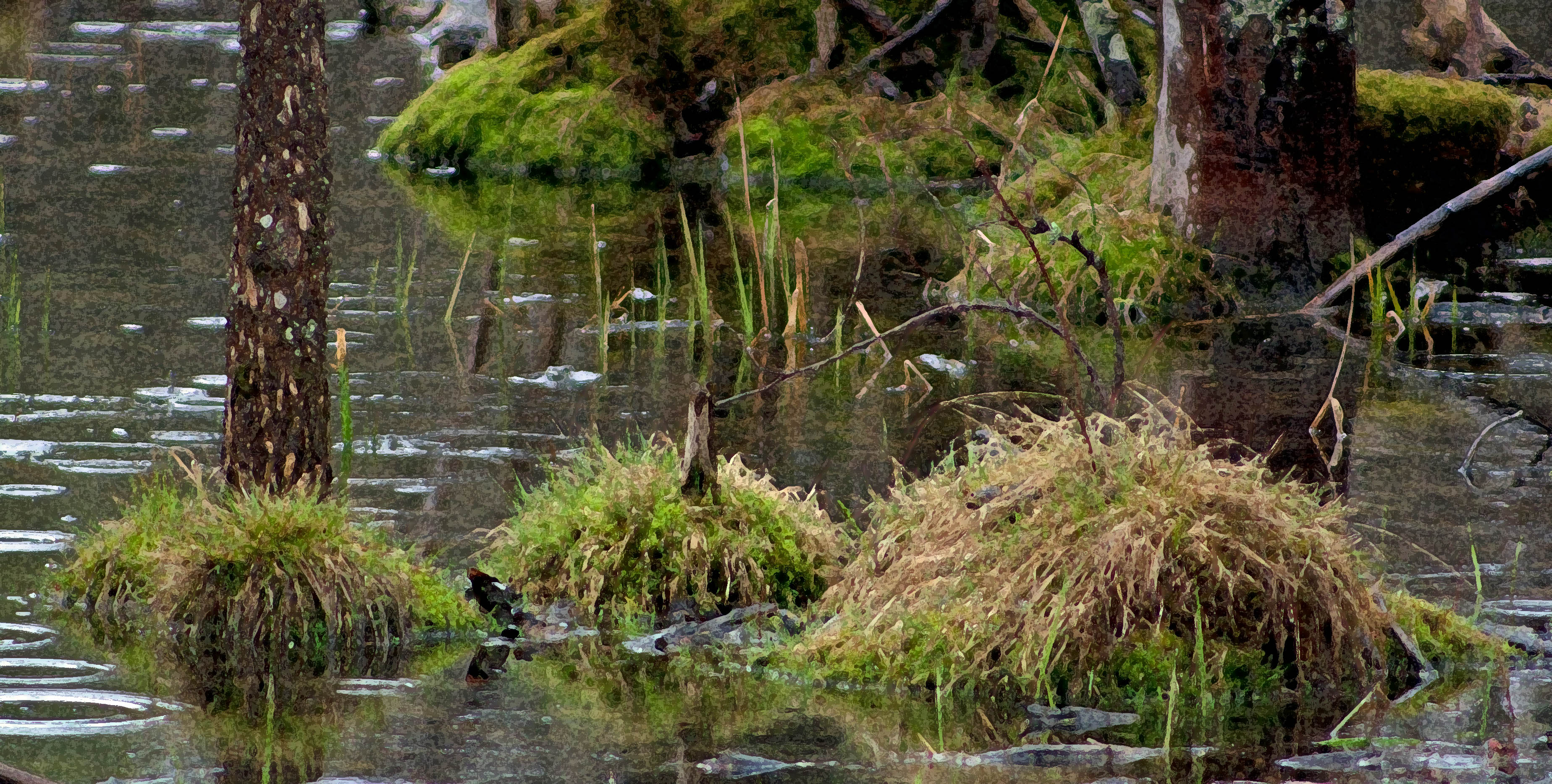
Swamp forest in Kawartha region, ON (photo and rendition by Nina Munteanu)

Nina Munteanu is a Canadian ecologist / limnologist and novelist. She is co-editor of Europa SF and currently teaches writing courses at George Brown College and the University of Toronto. Visit www.ninamunteanu.ca for the latest on her books. Nina’s bilingual “La natura dell’acqua / The Way of Water” was published by Mincione Edizioni in Rome. Her non-fiction book “Water Is…” by Pixl Press(Vancouver) was selected by Margaret Atwood in the New York Times ‘Year in Reading’ and was chosen as the 2017 Summer Read by Water Canada. Her novel “A Diary in the Age of Water” was released by Inanna Publications (Toronto) in June 2020.

“A Diary in the Age of Water” Reviewed in Alternatives Journal

Shanella Ramkissoon reviews my latest eco-fiction mundane science fiction novel “A Diary in the Age of Water” in Issue 46 of Alternatives Journal (Playbook for Progress):

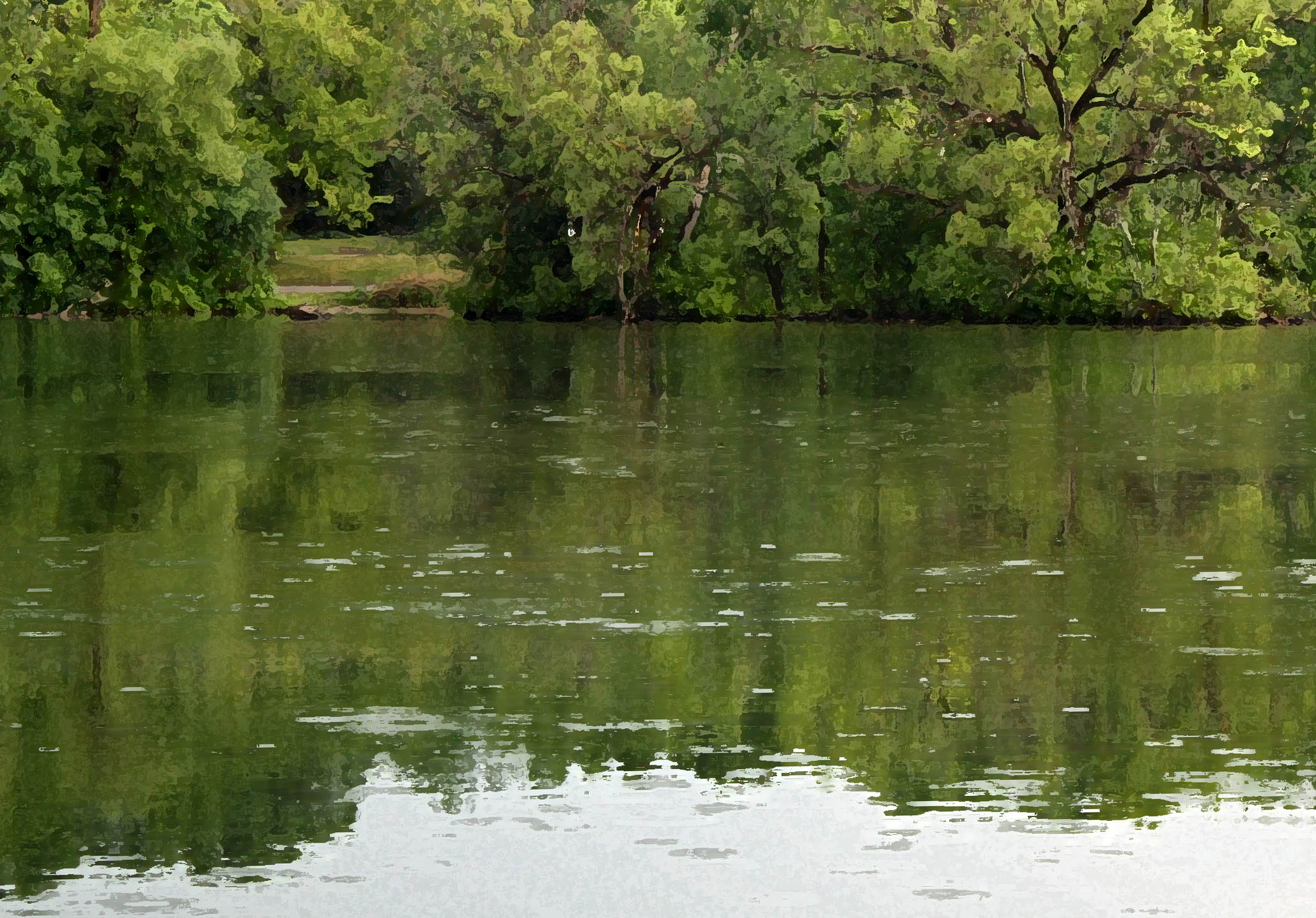
Rain falls on the Otonabee River, ON (photo and rendition by Nina Munteanu)

Nina Munteanu is a Canadian ecologist / limnologist and novelist. She is co-editor of Europa SF and currently teaches writing courses at George Brown College and the University of Toronto. Visit www.ninamunteanu.ca for the latest on her books. Nina’s bilingual “La natura dell’acqua / The Way of Water” was published by Mincione Edizioni in Rome. Her non-fiction book “Water Is…” by Pixl Press(Vancouver) was selected by Margaret Atwood in the New York Times ‘Year in Reading’ and was chosen as the 2017 Summer Read by Water Canada. Her novel “A Diary in the Age of Water” was released by Inanna Publications (Toronto) in June 2020.

Nina Munteanu Talks Books, Water and COVID on ConversationsLIVE

I recently had a wonderful discussion on Cyrus Webb’s show ConversationsLIVE on BlogTalkRadio and WYAD Radio in Mississippi.

We talked about curiosity in our world and how fiction connects us with relevance and meaning. We discussed writing eco-fiction, my latest eco-novel and work of mundane science fiction “A Diary in the Age of Water. We also discussed what was involved in combining art with science in mundane science fiction. Cyrus then asked me what it was like to get a book out during COVID. I enjoyed this interview for its refreshing questions. They made me think.

You can listen to the interview through the link below:

https://www.blogtalkradio.com/conversationslive/2021/06/22/author-nina-munteanu-talks-adiaryintheageofwater-on-conversationslive

Pond lilies in Thompson Creek marsh, ON (photo and rendition by Nina Munteanu)

Nina Munteanu Talks Water, Writing, and Weather on ‘All About Canadian Books’

I recently had the pleasure of chatting with Crystal Fletcher on “All About Canadian Books” about my recent clifi dystopian novel “A Diary in the Age of Water.” We covered a number of topics from water’s over 70 anomalous properties–virtually all of them life-giving–to how water seems to inform all aspects of my life, particularly my writing life. Crystal was particularly fascinated with the four generations of women in the book and we talked at length about how these characters were developed and the roles they played in the greater saga.

After bringing up the Toronto Star’s question of me (“What keeps you up at night about climate change”) in which I admitted that I lose sleep over the thought of how my son and his children will fair in this changing world, Crystal admitted that “Your book, Nina, is an eye opener…it freaked me out when I was reading it…and now I’m losing sleep!”

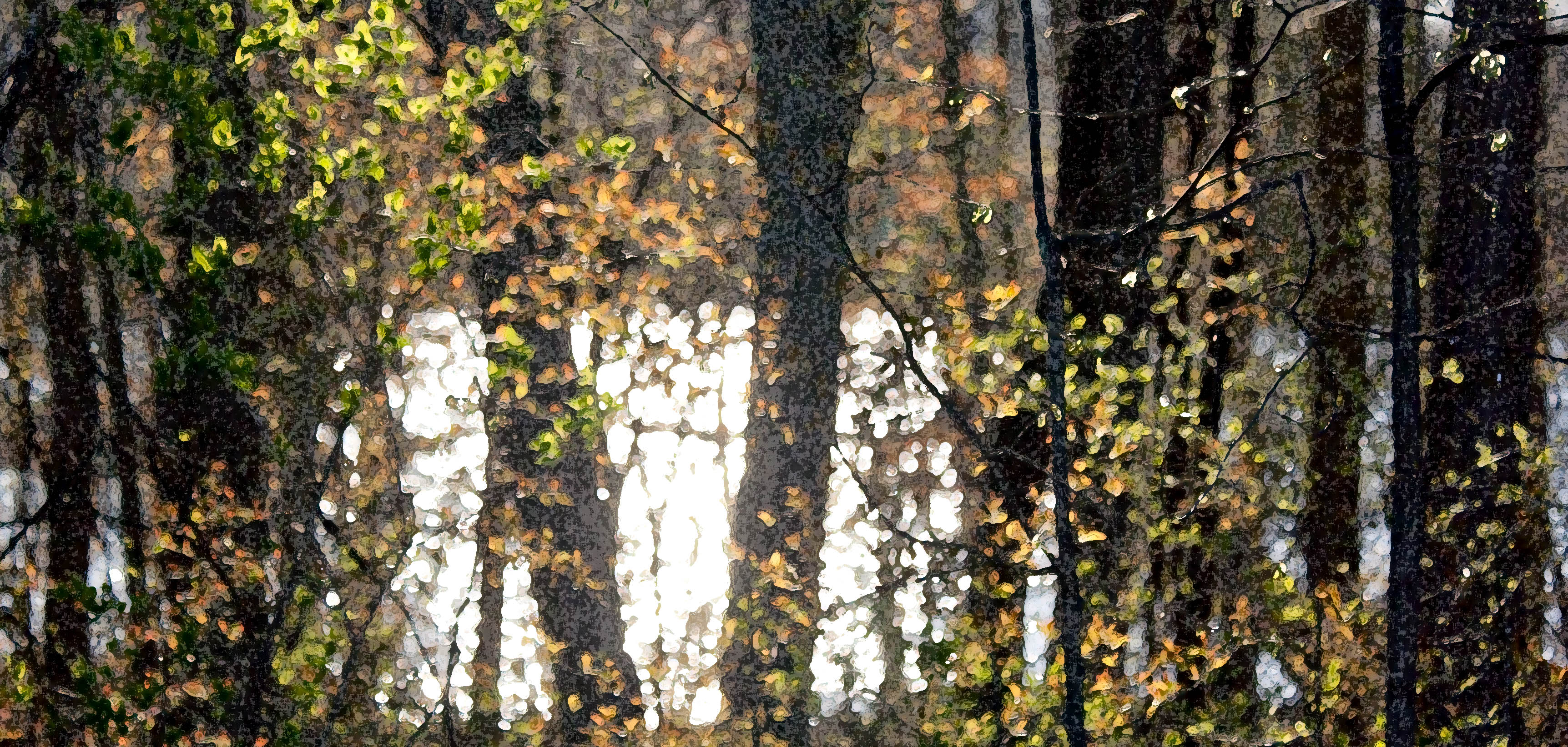
Hardwood forest back lit by glittering Otonabee River, ON (photo and rendition by Nina Munteanu)

Nina Munteanu Talks Water and Writing on Kentucky’s WMST-am Radio

Dan Manley interviews Nina Munteanu on Mid Morning on Main WMST-AM Radio

I was recently interviewed (on June 21) by Dan Manley on Kentucky’s Mid-Morning on Main show on WMST-AM Radio. I’ve visited Kentucky several times before, including the famous Bardstown Road in Louisville, but this time it was a virtual visit.

Dan and I talked about how I became a limnologist and ecologist, about my growing up in a small town and playing in the local forest with my older brother and sister and how we made ‘potions’ out of moss, soil, evening nightshade and water.

We talked about my recent eco-novel “A Diary in the Age of Water” and why I wrote it and its effect on people. We covered the difference between stereotypes and archetypes and how science informs me and my writing. We also explored how life changes us and our writing and how writing, in turn, changes us.

We covered a vast range of water-related topics from the movie “Water World” to the TV show “Bonanza.” We talked about water scarcity and water politics and what Canada was doing and what’s happening in America.

I really enjoyed this interview because Dan asked me some surprising and challenging questions that led us into interesting territory. My interview with him starts about 43 minutes into the show. Go have a listen!

Otonabee River sparkles behind a hardwood forest in spring, ON (photo and dry brush rendition by Nina Munteanu)

Nina Munteanu is a Canadian ecologist / limnologist and novelist. She is co-editor of Europa SF and currently teaches writing courses at George Brown College and the University of Toronto. Visit www.ninamunteanu.ca for the latest on her books. Nina’s bilingual “La natura dell’acqua / The Way of Water” was published by Mincione Edizioni in Rome. Her non-fiction book “Water Is…” by Pixl Press(Vancouver) was selected by Margaret Atwood in the New York Times‘Year in Reading’ and was chosen as the 2017 Summer Read by Water Canada. Her novel “A Diary in the Age of Water” was released by Inanna Publications (Toronto) in June 2020.
Movie Review: Pan’s Labyrinth–Innocence Has a Power Evil Cannot Resist

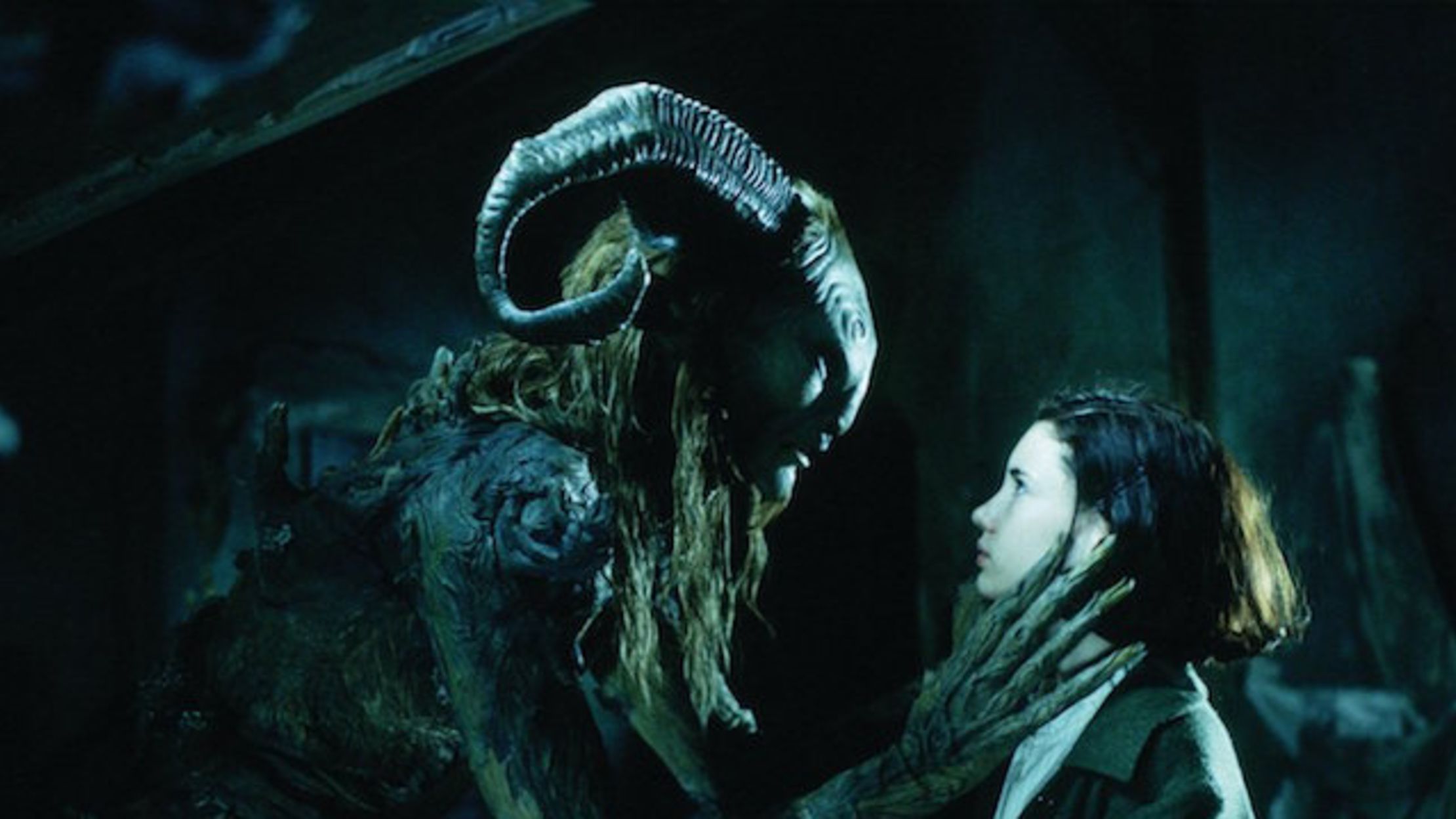
“Pan’s Labyrinth” is a dark and disturbing allegorical adult fairy tale by writer-director Guilermo del Toro. Set in 1944 Spain (the aftermath of the Spanish Civil War) 12-year old Ofelia (Ivana Baquero) travels with her frail and pregnant mother, Carmen (Ariadna Gil) to a remote village to meet her new stepfather, a sadistic Fascist captain named Vidal (Sergi Lopez), who is bent on exterminating the last Republican resistance to Franco scattered in the nearby hills. Clutching her books of myths and fantasy, which her mother suggests she cast aside to face the real world, Ofelia refuses to call Vidal “Father.” From the start, she pegs him rightly as a ruthless monster, and her unruly behavior only invites wrath from this psychopath who tortures and kills innocent victims without remorse. Ofelia retreats into the dark labyrinth and down a William Blake-like spiral staircase where she encounters an untrustworthy faun (Doug Jones). This encounter sparks a braided narrative that seamlessly weaves from tragic reality to magical mystery as Ofelia struggles to keep them apart. Alas, collision is imminent. The faun tells Ofelia that she is really a princess, but to prove it and gain entrance into the underworld kingdom of immortality, she must complete three dangerous tasks. Each task is progressively more daunting, from scolding a giant toad in a bug-infested cave to fleeing a Goya-like child-devouring ‘Satan’ with eyes in his hands. And each adventure draws her closer on a terrifying collision with the real world.

The faun with Ofelia

The horrors of both the realistic and surrealistic worlds are woven into the beautifully aligned narrative structure of del Toro’s story,” said Gene Seymour of Newsday. Glenn Whipp of U-Entertainment, calls Pan’s Labyrinth “dark poetry set to startling images, a one-of-a-kind nightmare that has a soaring, spiritual center.” Gene Seymour further suggests that “as hard as it may be to watch Guillermo del Toro’s dark fairy tale unravel, one comes away from this magical-realist masterwork oddly invigorated by the way the movie and its principal character triumph over the banality of evil through the autonomy of imagination. The movie may give you nightmares, but it may also give you a few more good reasons to get out of bed the next morning.”

“Pan’s Labyrinth” can be interpreted on many levels from literal to metaphorical allegory to psychological and mythic journey. Every aspect of the film, from tiny visual to people’s names (think of Ofelia’s name, for instance) has metaphoric meaning. Several excellent reviews by Harry Tuttle (Screenville) and Julian Walker (Julian’s Blog) tease out both mythic and Jungian elements of this dark poetic fantasy and I urge you to check these sites for their excellent commentary. From describing the classic Hero’s Journey (described by Joseph Campbell) to making references to the mythic Psyche, these two reviewers insightfully unveil the nuance and filigree that weave the complicated tapestry of “Pan’s Labyrinth”. For me, the allegorical symbol represented by Ofelia’s last task brought out the metaphor that struck me the most: the death of innocence required to protect the birth of freedom. Ofelia is the embodiment of the nation’s innocence. Refusing to obediently accept the deviant orders of the didactic father figure of Fascism (embodied by both Vidal and the faun), Ofelia (innocence) defies authority and sacrifices her life to “die” to protect her baby brother (freedom). Her sacrifice is rewarded by her immortal ‘re-birth’ (hope and faith).

The cruel beauty of “Pan’s Labyrinth” shows the power of innocence over evil and the triumph of imagination over prosaic servitude.

Indian River, ON (photo and dry brush rendition by Nina Munteanu)

Nina Munteanu is a Canadian ecologist / limnologist and novelist. She is co-editor of Europa SF and currently teaches writing courses at George Brown College and the University of Toronto. Visit www.ninamunteanu.ca for the latest on her books. Nina’s bilingual “La natura dell’acqua / The Way of Water” was published by Mincione Edizioni in Rome. Her non-fiction book “Water Is…” by Pixl Press(Vancouver) was selected by Margaret Atwood in the New York Times‘Year in Reading’ and was chosen as the 2017 Summer Read by Water Canada. Her novel “A Diary in the Age of Water” was released by Inanna Publications (Toronto) in June 2020.

Delos Digital Publishes Nina Munteanu’s “l’Ultima Evocatrice”

I was recently commissioned by Andrea Franco at Delos Digitalin Milan to write a novelette for their Fantasy Tales Series. The resulting story was Summoning the Future’s Past a short adaptation of my alternative history novel The Last Summoner published by Starfire in 2012.

The novelette was translated by Chiara Beltrami then released by Delos Digital as the ebook l’Ultima Evocatrice, (Fantasy Tales 66), on April 13, 2021. 

Here is what Andrea Franco said about l’Ultima Evocatrice:

“Recentemente in Fantasy Tales-Delos Digital abbiamo pubblicato il primo testo ‘internatiozionale’, della bravissima scrittrice Canadese Nina Munteanu, tradotta per noi in modo eccellente da Chiara Beltrami. Un bellissimo racconto lungo che gli appassionati di fantasy non dovrebbero farsi scappare. Lo avete letto?”

As with The Last Summonerl’Ultima Evocatrice(Summoning the Future’s Past) is a fresh twist on chaos theory and observer-induced collapse of quantum entanglement. It’s June 14th, 1410, on the eve of the Battle of Grunwald, when history records that a ragtag peasant army will slaughter the arrogant monk knights of the imperialistic Teutonic Order … or will they? Because of an impetuous choice, 14-year old Vivianne Schoen, Baroness von Grunwald, makes the startling discovery that her mother is from the future and Vivianne herself can alter history—but not before she’s branded a witch and must make the most difficult choice of her life …

 “l’Ultima Evocatrice”was recently featured in Fantasy Magazine

Nina Munteanu is a Canadian ecologist / limnologist and novelist. She is co-editor of Europa SF and currently teaches writing courses at George Brown College and the University of Toronto.  Visit www.ninamunteanu.ca for the latest on her books. Nina’s bilingual “La natura dell’acqua / The Way of Water” was published by Mincione Edizioni in Rome. Her non-fiction book “Water Is…” by Pixl Press(Vancouver) was selected by Margaret Atwood in the New York Times‘Year in Reading’ and was chosen as the 2017 Summer Read by Water Canada. Her novel “A Diary in the Age of Water” was released by Inanna Publications (Toronto) in June 2020.

Nina Munteanu On The Age of Water: Interview on “Mysterious Goings On Podcast”

Alex Greenwood, host of The Mysterious Goings On Podcast recently interviewed me about my latest novel and work of climate fiction, the dystopia “A Diary in the Age of Water.”

Alex and I discussed water scarcity and climate change as a water phenomenon. I also shared my thoughts on water as a character in the novel, water’s many anomalous properties–all of which promote life and wellness, and why writing a dystopian cautionary tale is an act of optimism.

Listen to the podcast on: Anchor; Spotify; Stitcher; Apple Podcasts; iHeartRadio; YouTube; Podchaser; Listennotes; Audible

Boys exploring by the Otonabee River, ON (photo and dry brush rendition by Nina Munteanu)

Nina Munteanu is a Canadian ecologist / limnologist and novelist. She is co-editor of Europa SF and currently teaches writing courses at George Brown College and the University of Toronto. Visit www.ninamunteanu.ca for the latest on her books. Nina’s bilingual “La natura dell’acqua / The Way of Water” was published by Mincione Edizioni in Rome. Her non-fiction book “Water Is…” by Pixl Press(Vancouver) was selected by Margaret Atwood in the New York Times ‘Year in Reading’ and was chosen as the 2017 Summer Read by Water Canada. Her novel “A Diary in the Age of Water” was released by Inanna Publications (Toronto) in June 2020.

Nina Talks About Being a Scientist and a Storytelling Artist on “The Authors Book Club”

Cedar beside swift water of Jackson Creek, ON (photo and rendition by Nina Munteanu)

Fiona Ross with The Authors Book Club talked with limnologist and eco-fiction author Nina Munteanu about her journey as both author and scientist and her latest book A Diary in the Age of Water (Inanna Publications). 

Advice on writing:

“Write with passion. A lot of people say ‘write what you know.’ Those two in some ways are the same thing. You can do a lot of research on things that you don’t know and bring that in [to your writing.] But to know in your soul, in your heart, the thing that’s important that you need to write about is more what I mean by ‘write what you know.’ If you’re passionate about something—a global catastrophe or a personal journey with abuse—if it comes from the heart, it will keep you on track through those rejections and to finish and complete your work. Otherwise you won’t persist and you’ll let someone tell you that it isn’t important, it’s just a hobby.”

On water:

Nina and Fiona discuss the perils of commodifying water and Canada’s role in protecting the freshwater of the world and the boreal zone of Canada.

Nina talks about how she turned her fear of water as a child into a fascination for water and a passion for its protection. “I’m a limnologist, an ecologist. I’ve have been studying it since I was a little kid who was scared of water. I triumphed over that into fascination and made that into a career.” Nina’s non-fiction book Water Is… was published in 2016 as a biography of water and was endorsed by Margaret Atwood in the New York Times ‘Year in Reading.’

Nina talks about some of water’s over 70 anomalous properties and how virtually each is life-giving. She shares how water can teach us to be stewards and protectors of water within an emerging paradigm of gratitude and humbleness.  

On being both scientist and artist:

Nina suggests that: “All great scientists are informed by art. They are creative in some way. [Scientists] bring that creativity, that original thinking and that curiosity, with them into their science. That’s what makes their science great because they are willing to look outward…We try to compartmentalize so we can better understand [art and science] but the irony is that we better understand them by bringing them together and integrating them…”

Nina Munteanu is a Canadian ecologist / limnologist and novelist. She is co-editor of Europa SF and currently teaches writing courses at George Brown College and the University of Toronto. Visit www.ninamunteanu.ca for the latest on her books. Nina’s bilingual “La natura dell’acqua / The Way of Water” was published by Mincione Edizioni in Rome. Her non-fiction book “Water Is…” by Pixl Press(Vancouver) was selected by Margaret Atwood in the New York Times‘Year in Reading’ and was chosen as the 2017 Summer Read by Water Canada. Her novel “A Diary in the Age of Water” was released by Inanna Publications (Toronto) in June 2020.
‘Buried in Print’ Reviews “A Diary in the Age of Water”

Nina Munteanu’s novel A Diary in the Age of Water (2020) will not suit every reader.” 

“It’s hard to resist identifying the author with Lynna, the most prominent character, who also works as a limnologist, although her employment is increasingly precarious, as her timeline hastens toward ecological devastation.

A predominantly female cast, a mythic forming narrative and, most saliently, the focus on water, all made this an interesting read for me.

The book’s epigraphs are from Maude Barlow and the chapter’s epigraphs from textbook definitions (sometimes excerpts from limnology tests), and there are even cutaway diagrams that you’d expect in lecture hall.

Ultimately it exists in an in-between place, some mystical elements of the generational tale possibly alienating the dedicated science-y readers and the instructional elements possibly alienating fiction devotees. And, yet, I read on: strangely compelling.”

Buried in Print

Forest swamp in Kawarthas in spring, ON (photo and dry brush rendition by Nina Munteanu)

Nina Munteanu is a Canadian ecologist / limnologist and novelist. She is co-editor of Europa SF and currently teaches writing courses at George Brown College and the University of Toronto. Visit www.ninamunteanu.ca for the latest on her books. Nina’s bilingual “La natura dell’acqua / The Way of Water” was published by Mincione Edizioni in Rome. Her non-fiction book “Water Is…” by Pixl Press(Vancouver) was selected by Margaret Atwood in the New York Times ‘Year in Reading’ and was chosen as the 2017 Summer Read by Water Canada. Her novel “A Diary in the Age of Water” was released by Inanna Publications (Toronto) in June 2020.