The environment and how we treat it has always been important to me since I was a child. My passion for storytelling morphed into writing, but the underlying spark came through environmental activism. I got a university degree in aquatic ecology, published numerous papers, and now write eco-fiction that is grounded in accurate science with a focus on human ingenuity and compassion. The most meaningful and satisfying eco-fiction is ultimately optimistic literature that explores serious issues with heroic triumph. Each of these five favourites intimately connects human to environment. Each novel moved me to think and deeply care.
The Books I Picked & Why
The Overstory
by Richard Powers
What resonated with me on so many levels was the author’s use of lyrical and beautiful language in describing trees and forests: as characters. I’m an ecologist and I felt a particular kinship with the botanist Patricia Westerford, a disabled introvert who must swim against the hegemonic tide with heretical ideas. When she argues that trees communicate, learn, trade goods and services, have intelligence and society, her scientific peers ridicule her and end her university career. This story is as much her triumph over overwhelming challenges as it is about the dwindling majestic forests that must quietly endure our careless apathy as they continue to offer their gift of life-giving oxygen and medicinal aerosols for hundreds of years.
.
Barkskins
by Annie Proulx
This 600-year saga about human-environment interaction through the forest industry in Canada evoked emotional connections with my environment, the Canadian forests, and the plight of indigenous Canadians. From the arrival of the Europeans in pristine forest to its destruction under the veil of global warming, Proulx weaves generational stories of two settler families into a crucible of terrible greed and tragic irony. The bleak impressions by the immigrants of a harsh environment crawling with pests underlie their combative mindset of a presumed infinite resource. I was particularly moved by the linked fate between the Mi’kmaq and the majestic pine forests, how both were similarly mistreated and changed. This history is also my legacy. As the daughter of immigrants, I felt both educated and moved.
.
The Breathing Hole
by Colleen Murphy, Siobhan Arnatsiaq-Murtphy and more
What struck me most was the use of simple language to portray powerful intimacy and connection between human and animal, and by extension, environment. Murphy’s humorous dialogue, together with sparing, often ironic, descriptions, struck deep into my heart. The play starts in 1535 on an ice shelf up north—when an Inuk widow risks her life to save a lost one-eared polar bear cub on an ice floe, and adopts him. In the last scene five hundred years later in the oily waters of the Northwest Passage, the same bear—starving and cruelly injured by eco-tourists on a cruise ship—struggles to keep from drowning. No one on the ship cares. No one weeps for him. But I did. I wept for him and for his world destroyed by apathy.
.
The Windup Girl
by Paolo Bacigalupi
Paolo Bacigalupi’s biopunk science fiction novelexplores a 23rd-century post-food crash Thailand after global warming has raised sea levels and depleted carbon fuel sources. The main character, Emiko, is a ‘windup,’ a modified human who is vilified and abused by humanity, despite her abilities. I was struck by how well this work of ‘mundane science fiction’ used Emiko as an avatar for a trickster Nature after abuse by humanity through the disrespect of reckless gene-hacking, greedy corporate espionage, and arbitrary foreign takeovers. I cheered Emiko’s breakaway from her oppressors as she emerged from a cloak of obedience and embraced her survival in this changing world of unintended consequences—only realizing later that I was cheering for that changing world and the optimism it promised.
.
Memory of Water
by Emmi Itäranta
This book features a passion of mine as an ecologist and mother: water and how we treat it. Life-giving symbols of water flow throughout this story, which explores a post-climate change world of sea level rise in which freshwater is severely rationed due to scarcity. Water’s very nature is tightly interwoven with the main character, Noria, a tea master who guards a secret spring in the fell by her house against cruel government agents who would kill her for water crimes. In prose both sensual and lyrical, this book explores honor, sacrifice, betrayal, and friendship, and how each can be victimized through commodification in a power play of ideology. I found myself pulled in by the intrigue even as I cherished and lingered in the beautiful metaphoric prose.
.
Explore my eco-fiction book:
A Diary in the Age of Water follows the climate-induced journey of Earth and humanity through four generations of women, each with a unique relationship to water.
Centuries from now, in a dying boreal forest in what used to be northern Canada, Kyo, a young acolyte called to service in the Exodus, yearns for Earth’s past—the Age of Water—before the “Water Twins” destroyed humanity. Looking for answers and plagued by vivid dreams of this holocaust, Kyo discovers the diary of Lynna, a limnologist from that time of severe water scarcity just prior to the destruction. In her work for a global giant that controls Earth’s water, Lynna witnesses and records in her diary the disturbing events that will soon lead to humanity’s demise.
The feminist book review site Liisbeth recently wrote about A Diary in the Age of Water: “If you believe Canada’s water will remain free forever (or that it’s truly free now) Munteanu asks you to think again. Readers have called A Diary in the Age of Water “terrifying,” “engrossing,” and “literary.” We call it wisdom.”
Marcescent beech leaves among evergreen hemlocks, ON (photo by Nina Munteanu)
.
Nina Munteanu is a Canadian ecologist / limnologist and novelist. She is co-editor of Europa SF and currently teaches writing courses at George Brown College and the University of Toronto. Visit www.ninamunteanu.ca for the latest on her books. Nina’s bilingual “La natura dell’acqua / The Way of Water” was published by Mincione Edizioni in Rome. Her non-fiction book “Water Is…” by Pixl Press (Vancouver) was selected by Margaret Atwood in the New York Times ‘Year in Reading’ and was chosen as the 2017 Summer Read by Water Canada. Her novel “A Diary in the Age of Water” was released by Inanna Publications (Toronto) in June 2020.
Early editions of “I, Robot”: 1950 1st edition hardcover by Gnome Press; 1950 dust jacket of 1st edition hardcover by Grosset & Dunlap; 1950 1st book club edition by Doubleday; 1952 1st UK edition by Grayson & Grayson; 1956 Signet cover; 1958 Digit Books UK; 1961 Signet 3rd printing; 1968 Signet 6th printing; 1970 Fawcett Crest; 1968 Panther Science Fiction
I reread Dr. Isaac Asimov’s 74-year-old masterpiece, I, Robot, in preparation for the 2004 Twentieth Century Fox motion picture of the same name, knowing fully well that to appeal to today’s action-thriller rollercoaster-addicted audience there was no way the movie and the book could even come close. I was right. But not the way I thought I would be.
The movie, directed by Alex Proyas, begins with the three laws of robotics:
First Law: that robots must not harm a human being;
Second Law: they must obey human orders, so long as this does not violate the first law; and
Third Law: they must protect their own existence, so long as that doesn’t violate laws one and two.
Apart from these three laws and the use of the same title and some of the character names, the motion picture appears to radically depart from Asimov’s book, first published by Gnome Press in 1950. To give Twentieth Century Fox credit, the film does not pretend to be the same as the book; I noticed that in the credits the movie was “suggested by,” rather than “based on” Asimov’s work. But how different was it, really? I submit that the two are much more similar than they first appear.
The robot Sonny causes a great ruckus when he ignores the three laws
Surficial differences between book and motion picture are nevertheless glaring. First off, Asimov’s, I, Robot, is essentially a string of short stories that evolve along a theme; much in the vein of Martian Chronicles by Ray Bradbury. The book is told largely from the point of view of Dr. Susan Calvin, a plain and stern robo-psychologist, who gets along better with robots than with humans. Dr. Asimov uses this cold and colourless character as a vehicle to stir undercurrents of poignant thought on the human condition through a series of deceptively mundane tales. I, Robot offers a treatise both of humanity’s ingenuity and its foibles and how these two are inexorably intertwined in paradoxes that speak to the ultimate truth of what it is to be human. Each of his nine stories discloses a metaphoric piece of his clever puzzle. The puzzle pieces successively tease us through the three laws of robotics, as ever more sophisticated robots toil with their conflicts when dealing with perceived logical contradictions of the laws. For instance, there is “Robbie,” the endearing nursemaid robot. Cutie (QT-1) is a robot Descartes in “Reason.” In “Liar,” Herbie has problems coping with the three laws as a mind-reading robot. And in “Little Lost Robot,” Susan Calvin must out-smart Nestors — or the NS-2 — model robots, whose positronic brains were not impressioned with the entire First Law of Robotics. The larger question and ultimate paradox posed by the three laws culminate in Asimov’s final story, “The Evitable Conflict,” which subtly explores the role of “free will” and “faith” in our definition of what it means to be human.
The book jacket of the mass market 1991 Bantam book aptly describes I, Robot this way: “…humans and robots struggle to survive together — and sometimes against each other … and both are asking the same questions: what is human? And is humanity obsolete?” Interestingly, the latter part of the book jacket quote, which accompanied the 1991 Bantam mass-market edition, can be interpreted in several ways.
Asimov’s stories span fifty years of robot evolution, which play out mostly in space from Mercury to beyond our own galaxy. Proyas’s movie is set in Chicago in 2035 and condenses the time frame into a short few weeks with some flashbacks from several years prior. This serves the film well but at some cost. What is gained in tension and focus is lost in scope and erudition, two qualities often best left to the literary field. Asimov’s tales are quirky, contemplative, and thoughtful. The film version is more direct, trading these for a faster pace, pretty much a prerequisite in the film industry today.
Chicago of “I, Robot” in 2035
The original screenplay, entitled “Hardwired” by Jeff Vinter, was reworked by Akiva Goldsman into a techno-thriller/murder mystery directed by Alex Proyas (Dark City) with its requisite hard-boiled detective cop (Will Smith) and a ‘suicide’ that looks suspiciously like murder. Smith’s character (a Hollywood invention, so don’t go looking for him in the book) is a 20th century anachronism: a Luddite who wears retro clothes and sets his computer car on manual. The story centers on Spooner’s investigation of a so-called suicide by Dr. Alfred Lanning, robot pioneer and the originator of the three laws of robotics. Lanning was an employee of U.S. Robotics, a mega-corporation run by Lawrence Robertson (Bruce Greenwood). Robertson relies on the real brains, V.I.K.I, the corporation’s super-intelligent virtual computer.
the NS-5 robot Sonny with VIKI in the background
NS-5 robot assisting in the home
By this time, technology and robots are a trusted part of everyday life; except for robo-phobic police detective Spooner, who nurses a guilty secret for his prejudice.
With a “simple-minded” plot (according to Roger Ebert, Chicago Sun-Times) and a lead character who is little more than a “wisecracking … guns-a-blazin’… action-hero cliché” (Rob Blackwelder, Splicedwire), the motion picture rendition of Asimov’s ground-breaking book seems to promise little but disappointment for the literate science fiction fan according to many critics.
I disagree.
I was not disappointed. This is both despite and because of director Alex Proyas’s interpretation of Asimov’s book and his three laws. Several critics focused on the surficial plot at the expense of the subtle multi-layered thematic sub-plots contrived by a director not known for creating superficial action-figure fluff. I think this critical myopia was generated from critics admittedly not having read Asimov’s masterpiece. Familiarity with Asimov’s I, Robot is a prerequisite to recognizing the subtle intelligence Proyas wove into his otherwise playful and glitzy Hollywood techno-thriller.
Detective Spooner talks to Dr. Lanning’s holo at USR after his apparent suicide
While literate science fiction fans will certainly recognize the names of Lanning, Calvin and Robertson, these movie characters in no way resemble their book counterparts. Dr. Calvin (Bridget Moynahan) is a robo-psychologist, but in the movie she is far from plain and fails to disguise that she is clearly ruled by her feelings, unlike the coldly logical book character. The lead character in the film, Detective Del Spooner (Will Smith) is, of course, a Hollywood fabrication, along with an entourage of requisite techno-thriller components: spectacular chase and battle scenes, explosions, lots of shooting, and some romantic tension. The film is also fraught with Hollywood clichés: for instance, repressed psychologist (Moynahan), who typically speaks in three-syllabic words, encounters cynical anti-hero beefy cop (Smith) whose rude attentions help transform her into a gun-slinging kick-ass warrior.
Megalithic USR vehicles housing killer robots close in on Spooner’s car in a rousing car-chase scene
Of course, there is also the ‘evil’ machine that turns against its masters to rule the world. But Proyas also treats us to some of the most convincing portrayals of a futuristic metropolis, complete with seamlessly incorporated CGI-generated robots and an evocative score by Peter Anthony. Dr. Asimov fans will, of course, also recognize certain aspects of the book in the movie, such as a scene and concepts borrowed from “Little Lost Robot.”
NS-4 Fedex courier in future Chicago
Despite the clichés and comic-action razzle-dazzle, Proyas manages to preserve the soul and spirit of Dr. Asimov’s great creation. He does this by allowing us to glimpse some of Asimov’s elevated theme, if not his more complex questions.
The most poignant scenes in the movie are those which involve the ‘humanity’ of the robot called Sonny (Alan Tudyk). A unique NS-5 model with a secondary processing system that clashes with his positronic brain, Sonny is capable of rejecting any of the three laws and hence provides us ironically with the most complex (and interesting) character in the movie. Sonny is both humble and feisty, a robot who dreams and questions. For me, this was not unlike the several stirring scenes in Asimov’s “Liar,” where the mind-reading robot, Herbie, when dealing with the complex nature of humans, unintentionally caused its own destruction (with the help of a bitter Dr. Calvin) by trying to please everyone by telling them what he thought they wanted to hear. Sonny’s complex character (like any character with depth) keeps you guessing. Sonny asks the right questions and at the end of the film we are left wondering about his destiny and what he will make of it. This parallels Asimov’s equally ambiguous ending in “The Evitable Conflict.”
As Spooner searches for him, Sonny hides among his own
Sonny holds a gun to Dr. Calvin’s head
Which brings me back to the foundation shared by both book and movie: the three laws of robotics, the infinite ways that they can be interpreted, and how they may be equally applied to robot or human. The laws may apply physically or emotionally; individually or toward the whole of humanity; long-term or short-term … the list is potentially endless. Asimov’s collection of stories centers on these questions by showing how robots deal with the conflicts the perceived contradictions present by the laws. Asimov’s last story describes a world run by a network of powerful but benevolent machines, who guide humankind through strict adherence to the three laws (their interpretation, of course!).
USR vehicles dominate the streets of Chicago
Taking his cue from this, Proyas cleverly takes an old cliché—that of ‘evil’ machine with designs to rule the world—and turns it upside down according to the first law of robotics. His ‘evil’ machine turns out not to be evil, but misguided. V.I.K.Y acts not out of its own interests, like the self-preserving HAL in 2001: A Space Odyssey, but in the best interests of humankind (at least according to the machine). Citing humanity’s self-destructive proclivity to pollute and make war, V.I.K.Y decides to treat us as children and pull the plug on free-will. Viewed from the perspective of the first law, this is simply a logical, though erroneous, extrapolation of ‘good will’; and far more interesting than the workings of simple ‘evil,’ which I feel is much overdone and overrated in films these days. The well-meaning dictator possessed of the hubristic notion that he holds all the keys to the happiness and well-being of others smacks of a reality and a humanity all too prevalent in well-meaning governments today. It is when the line between ‘good-intentions’ and ‘wrong-doing’ blur that things get really interesting.
Doctor Calvin prepares to terminate Sonny
Both Asimov and Proyas explore this chiaroscuro in I, Robot, though in different ways. The challenge is still the same: If given the choice of ending war and all conflict at the expense of ‘free will,’ would we permit benevolent machines to run our world? Or is it our destiny—and requirement for the transcendence of our souls—to continue to make those mistakes at the expense of a life free of self-destruction and violence?
On the surface, Proyas offers the obvious answer. He likens the benevolent machine to an overprotective parent, who in the interests of a child’s safety, prevents the enrichment of that child’s heart, soul, and spirit otherwise provided by that very conflict. Asimov is far more subtle in “The Evitable Conflict” and while these questions are discussed at length, they remain largely unanswered.
In one of his most clever stories, “Evidence,” near the end of his book, Dr. Asimov expounds on the three laws to describe the ultimate dilemma: of defining and differentiating a human-looking robot with common sense from a genuine human on the basis of psychology. Asimov’s Dr. Calvin says: “The three Rules of Robotics are the essential guiding principles of a good many of the world’s ethical systems. Every human being is supposed to have the instinct of self-preservation. That’s Rule Three to a robot. Also every ‘good’ human being, with a social conscience and a sense of responsibility, is supposed to defer to proper authority. That’s Rule Two to a robot. Also, every ‘good’ human being is supposed to love others as himself, protect his fellow man, risk his life to save another. That’s Rule One to a robot. To put it simply, if [an individual] follows all the Rules of Robotics, he may be a robot, and may simply be a very good man.” Proyas metaphorically (if not literally) explores the question of “what is human” with his robotic character, Sonny.
Spooner discovers older robot models, grouped together in a storage container
In a stirring scene of the motion picture where Sonny is prepared for permanent shut down, Dr. Lanning expounds on his belief that robots could evolve naturally: “There have always been ghosts in the machine… random segments of code that have grouped together to form unexpected protocols. Unanticipated, these free radicals engender questions of free will, creativity, and even the nature of what we might call the soul… Why is it that when some robots are left in the dark they will seek the light? Why is it that when robots are stored in an empty space they will group together rather than stand alone? How do we explain this behaviour? Random segments of code? Or is it something more? When does a perceptual schematic become consciousness? When does a difference engine become the search for truth? When does a personality simulation become the bitter moat of the soul?”
Where abandoned robots congregate
I found myself following a less dazzling but deeper thread in the movie version of I, Robot. One steeped in metaphor that pulled at my emotions. Throughout the film, we were given subtle and brief glimpses of old robot models discarded as new ones were designed and launched. I remember one scene in particular that saddened me; alongside the cheerful rollout of the NS-5s, the NS-4s were unceremoniously removed and stored offsite to spend their remaining days in the darkness of storage.
In a later scene in the movie, these older models are hunted down by newer models and violently destroyed. It’s a slaughter. When Spooner stumbles on this robot-carnage, one injured NS-4, fearing for Spooner’s welfare, urges him to run.
Injured NS-4 exhorts Spooner to run away to save himself
Why did I find these scenes so sad? Was it the curiously disarming design of the ND-4? They did not fight back; designed to be kind, they simply let themselves be destroyed.
Perhaps I was reminded of how we can so easily abandon an old thing once loved for a new and shiny toy. No longer useful they are carelessly cast aside as somehow less than they might have once been. We’ve seen what becomes of anything we deem inferior or unworthy of our compassion. How we treat a perceived lesser being can often be cruel and careless. One need only look to our long history of human slavery, of animal abuse, of environmental exploitation, and even of material destruction. Our capitalist world lies replete with examples of neoliberal consumerism that favours a throwaway ethic. We have become a user society, addicted to the next big thing; the next i-phone, the next shiny car, the next new friend… Toss the old away without a care while we embrace the new…
Abandoned NS-4s left in storage with no purpose
Near the end of the film, Sonny, having fulfilled his initial purpose (i.e., stopping V.I.K.Y. to save humanity from oppressive subjugation), asks Spooner, “What about the others [the NS-4s and the NS-5s, recalled for servicing and storage]? Can I help them? Now that I have fulfilled my purpose I don’t know what to do.” To this, an enlightened Spooner answers: “I guess you’ll have to find your way like the rest of us, Sonny… That’s what it means to be free.”
Sonny finds a following
Proyas gives us a strong indication of what his film was really about by ending not with Spooner—his lead action-figure character who has just saved humanity from the misguided robot army—but with Sonny, the enigmatic robot just embarking on his uncertain journey. The motion picture closes with a final scene of Sonny, resembling a messianic figure on the precipice of a bluff, overlooking row upon row of his robotic counterparts.
We are left with an ambiguous ending of hope and mystery. What will Sonny do with his abilities, his dreams, and his potential “following”? Will his actions be for the betterment of humankind and/or robots? Will society trust him and let him seek and find his destiny or, like Asimov’s fearful “Society for Humanity,” will we squash them all before they get so complex and powerful that not only do we fail to understand them but we have no hope of controlling them? This parallels Asimov’s equally ambiguous ending in his book. In it, Stephen Byers (a humanoid AI), and robo-psychologist, Susan Calvin, discuss the fate of robots and humanity. Ironically, it is through her interaction with robots that Susan discovers a human trait that may be more valuable to humanity than exercising “free will”: that of faith. It is she who confronts the coordinator with these words: “…How do we know what the ultimate good of Humanity will entail? We haven’t at our disposal the infinite factors that the Machine has at its.” Then to his challenge that human kind has lost its own say in its future, she further responds with: “It never had any, really. It was always at the mercy of economic and sociological forces it did not understand … at the whims of climate, and the fortunes of war…Now the Machines understand them…for all time, all conflicts are finally evitable. Only the Machines, from now on, are inevitable.” This quote in Asimov’s final story may horrify or anger some, even as it may inspire and reassure others. But, if true “free will” is largely a self-perpetuated myth of the Western pioneer movement, then we are effectively left with respect and faith in oneself and in others. Perhaps, ultimately, that is what both Asimov and Proyas had in mind.
It is interesting to note that Harlan Ellison and Asimov collaborated on a screenplay of I, Robot in the 1970s, which Asimov said would provide “the first really adult, complex worthwhile science fiction movie ever made.” Am I disappointed that this earlier rendition, most likely truer to the original book, did not come to fruition? No. That is because we already have that story. You can still read the book (and I strongly urge you to, if you have not). Proyas’s film I, Robot is a different story, with a different interpretation. And like the robot’s own varying interpretation of the three laws, it is refreshing to see a different human’s interpretation expressed.
“I, Robot” movie poster
Nina Munteanu is a Canadian ecologist / limnologist and novelist. She is co-editor of Europa SF and currently teaches writing courses at George Brown College and the University of Toronto. Visit www.ninamunteanu.ca for the latest on her books. Nina’s bilingual “La natura dell’acqua / The Way of Water” was published by Mincione Edizioni in Rome. Her non-fiction book “Water Is…” by Pixl Press (Vancouver) was selected by Margaret Atwood in the New York Times ‘Year in Reading’ and was chosen as the 2017 Summer Read by Water Canada. Her novel “A Diary in the Age of Water” was released by Inanna Publications (Toronto) in June 2020.
Illustration depicting ‘Rocket Summer’ (image from The Black Cat Moan)
They came because they were afraid or unafraid, happy or unhappy. There was a reason for each man. They were coming to find something or get something, or to dig up something or bury something. They were coming with small dreams or big dreams or none at all
Ray Bradbury, The Martian Chronicles
When I was but a sprite, and before I became an avid reader of books (I preferred comic books), I read Ray Bradbury’s The Martian Chronicles. It changed me, what I thought of books and what I felt about the power of stories. It made me cry. And perhaps that was when I decided to become a writer. I wanted to move people as Bradbury had moved me.
The 1970 Bantam book jacket aptly describes The Martian Chronicles as, “a poetic fantasy about the colonization of Mars. The story of familiar people and familiar passions set against incredible beauties of a new world…A skillful blending of fancy and satire, terror and tenderness, wonder and contempt.”
.
Rockets land on Mars overlooking Bradbury Lane (illustration from Sutori)
.
The Martian Chronicles isn’t really about Mars. True to Bradbury’s master metaphoric storytelling, The Martian Chronicles is about humanity. Who we are, what we are and what we may become. What we inadvertently do—to others, and finally to ourselves—and how the irony of chance can change everything. Despite the knowledge of no detectable amounts of oxygen, Bradbury gave Mars a breathable atmosphere: “Mars is a mirror, not a crystal,” he said, using the planet for social commentary rather than to predict the future.
From “Rocket Summer” to “The Million-Year Picnic,” Ray Bradbury’s stories of the colonization of Mars form an eerie tapestry of past and future. Written in the 1940s, the chronicles long with the nostalgia of shady porches with pitchers of lemonade, ponderously ticking grandfather clocks, and comfortable sofas. Expedition after expedition leave Earth to investigate and colonize Mars. Though the Martians guard their mysteries well, they succumb to the diseases that come with the rocketeers and grow extinct—not unlike the quiet disappearance of the golden toad, the Pinta giant tortoise, or the Bramble Cay melomys. Humans, with ideas often no more lofty than starting a tourist hot-dog stand, bear no regret for the native alien culture they exploit and eventually displace.
It is a common theme of human colonialism and expansionism, armed with the entitlement of privilege. Mars is India to the imperialistic British Empire. It is Rwanda or Zaire to the colonial empire of the cruel jingoistic King Leopold II of Belgium. Mars is Europe to Nazi Germany’s sonderweg. We need look no further than our own Canadian soil for a reflection of this slow violence of disrespect and apathy by our settler ancestors on the indigenous peoples of Canada.
Mars was a distant shore, and the men spread upon it in waves… Each wave different, and each wave stronger.
The Martian Chronicles
Tyler Miller of The Black Cat Moan makes excellent commentary in their 2016 article entitled “How Ray Bradbury’s ‘The Martian Chronicles’ changed Science Fiction (and Literature).”The article begins with a quote from Argentinean author Jorge Luis Borges (in the introduction to the Spanish-language translation of The Martian Chronicles: “What has this man from Illinois done, I ask myself when closing the pages of this book, that episodes from the conquest of another planet fill me with horror and loneliness?”
.
Remember, this was the 1950s … halfway through a century dominated by scientific discovery, and expansion. The 1950s saw developments in technology, such as nuclear energy and space exploration. On the heels of the end of World War II, the 1950s was ignited by public imagination on conquering space, creating technological futures and robotics. The 1950s was considered by some as the real golden age for science fiction, still a kind of backwater genre read mostly by boys and young men, that told glimmering tales of adventure, exploration, and militarism, of promising technologies, and often-androcratic societies who used them in the distant future to conquer other worlds full of strange and disposable alien beings in the name of democracy and capitalism. (In some ways, this is still very much the same.Though, it is thankfully changing…)
(Bantam 1951 1st edition cover)
Many scientists deeply involved in the exploration of the solar system (myself among them) were first turned in that direction by science fiction. And the fact that some of that science fiction was not of the highest quality is irrelevant. Ten year‐olds do not read the scientific literature.
Carl Sagan, 1978
First edition book covers of Martian Chronicles (Doubleday, 1950); I, Robot (Grayson & Grayson, 1952); Childhood’s End (Ballantine Books, 1953); and Starship Troopers (G.P. Putnam’s Sons, 1959)
Large idea-driven SF works that typified this time period included Robert A. Heinlein’s Starship Troopers, Arthur C. Clarke’s Childhood’s End, Isaac Asimov’s I, Robot and his Foundation series.
It was at this time that Ray Bradbury published The Martian Chronicles. Though filled with the requisite rocket ships, gleaming Martian cities, ray guns, and interplanetary conquest, from the very start—as Borges noted—The Martian Chronicles departed radically from its SF counterparts of the time.
(Illustration on album cover of “Rocket Summer”, music by Chris Byman)
Instead of starting with inspiring technology or a stunning action sequence, or a challenging idea or discovery, Bradbury’s The Martian Chronicles opens with a domestic scene.
One minute it was Ohio winter, with doors closed, windows locked, the panes blind with frost, icicles fringing every roof, children skiing on the slopes, housewives lumbering like great black bears in their furs along the icy streets.
And then a long wave of warmth crossed the small town. A flooding sea of hot air; it seemed as if someone had left a bakery door open. The heat pulsed among the cottages and bushes and children. The icicles dropped, shattering, to melt. The doors flew open. The windows flew up. The children worked off their wool clothes. The housewives shed their bear disguises. The snow dissolved and showed last summer’s ancient green lawns.
Rocket summer. The words passed among the people in the open air, airing houses. Rocket summer. The warm desert air changing the frost patterns on the windows, erasing the art work. The skis and sleds suddenly useless. The snow, falling from the cold sky upon the town, turned to a hot rain before it touched the ground.
Rocket summer. People leaned from their dripping porches and watched the reddening sky.
The rocket lay on the launching field, lowing out pink clouds of fire and oven heat. The rocket stood in the cold winter morning, making summer with every breath of its mighty exhausts. The rocket made climates, and summer lay for brief moment upon the land…
Ray Bradbury, The Martian Chronicles, Rocket Summer
Bradbury’s focus was on the domestic. Housewives fighting off the ice and snow of Ohio. A Martian woman “cleaning the house with handfuls of magnetic dust which, taking all dirt with it, blew away on the hot wind.”
They had a house of crystal pillars on the planet Mars by the edge of the empty sea, and every morning you could see Mrs. K eating the golden fruits that grew from the crystal walls, or cleaning the house with handfuls of magnet dust which, taking all dirt with it, blew away on the hot wind. Afternoons, when the fossil sea was warm and motionless, and the wine trees stood stiff in the yard…you could see Mr. K in his room, reading from a metal book with raised hieroglyphs over which he brushed his hand, as one might play a harp. And from the book, as his fingers stroked, a voice sang, a soft ancient voice, which told tales of when the sea was red steam on the shore and ancient men had carried clouds of metal insects and electric spiders into battle…
This morning Mrs. K stood between the pillars, listening to the desert sands heat, melt into yellow wax, and seemingly run on the horizon.
Something was going to happen.
She waited.
Ray Bradbury, The Martian Chronicles, Ylla
Bradbury’s gift to literature—and to his SF genre—was his use of metaphor. Unlike the science fiction of his colleagues, Bradbury’s stories are a lens to study the past and the present. According to Miller, “The Earthmen’s exploration and desolation of Mars allowed Bradbury to look not forward but backward at exploration and desolation on Earth, namely the European arrival in the New World. Just as Europeans landed in North and Central America wholly unprepared for what they found there, Bradbury’s Earthmen are unprepared time and again for the wonder and the horror of Mars. And just as European diseases decimated native people in the Americas, it is chicken-pox which wipes out the Martians.”
.
.
The back cover of the 2012 mass market paperback Simon & Schuster Reprint edition of The Martian Chronicles reads:
Bradbury’s Mars is a place of hope, dreams and metaphor—of crystal pillars and fossil seas—where a fine dust settles on the great, empty cities of a silently destroyed civilization. It is here the invaders have come to despoil and commercialize, to grow and to learn—first a trickle, then a torrent, rushing from a world with no future toward a promise of tomorrow. The Earthman conquers Mars … and then is conquered by it, lulled by dangerous lies of comfort and familiarity, and enchanted by the lingering glamour of an ancient, mysterious native race.
“Ask me then, if I believe in the spirit of the things as they were used, and I’ll say yes. They’re all here. All the things which had uses. All the mountains which had names. And we’ll never be able to use them without feeling uncomfortable. And somehow the mountains will never sound right to us; we’ll give them new names, but the old names are there, somewhere in time, and the mountains were shaped and seen under those names. The names we’ll give to the canals and the mountains and the cities will fall like so much water on the back of a mallard. No matter how we touch Mars, we’ll never touch it. And then we’ll get mad at it, and you know what we’ll do? We’ll rip it up, rip the skin off, and change it to fit ourselves.”
“We won’t ruin Mars,” said the captain. “It’s too big and too good.”
“You think not? We Earth Men have a talent for ruining big, beautiful things.”
Ray Bradbury, The Martian Chronicles, And the Moon be Still as Bright
Ray Bradbury’s The Martian Chronicles is a profound and tender analysis of the quiet power humanity can wield unawares and how we define and treat ‘the other.’ It is a tragic tale that reflects only too well current world events where the best intended interventions can go awry. From the meddling friend who gossips to “help” another (only to make things worse) to the righteous “edifications” of a religious group imposing its “order” on the “chaos” of a “savage” peoples … to the inadvertent tragedy of simply and ignorantly being in the wrong place at the wrong time (e.g., the introduction of weeds, disease, etc. by colonizing “aliens” to the detriment of the native population; e.g., smallpox, AIDs, etc.). Bradbury is my favourite author for this reason (yes, and because he makes me cry…)
.
Mars terrain (photo by NASA)
Nina Munteanu is a Canadian ecologist / limnologist and novelist. She is co-editor of Europa SF and currently teaches writing courses at George Brown College and the University of Toronto. Visit www.ninamunteanu.ca for the latest on her books. Nina’s bilingual “La natura dell’acqua / The Way of Water” was published by Mincione Edizioni in Rome. Her non-fiction book “Water Is…” by Pixl Press (Vancouver) was selected by Margaret Atwood in the New York Times ‘Year in Reading’ and was chosen as the 2017 Summer Read by Water Canada. Her novel “A Diary in the Age of Water” was released by Inanna Publications (Toronto) in June 2020.
Steve Stanton’s 2016 science fiction book Freenet explores humanity in the far future after we have created the “Macpherson Doorway” through folded space-time, and vaulted ourselves with the blink of an eye into a galaxy far far away and 12 million years into the future. No traffic back through the doorway is permitted since a quarantine was placed some dozen years ago to prevent any unwanted DNA from sneaking through from Earth to “New Jerusalem”.
As the Canadian back book jacket reveals, Freenet is a novel about the “power of [free] information…in a post-digital age.” The book explores what digital immortality means, when “consciousness has been digitized and cybersouls uploaded to a near-omniscient data-matrix.” This is a world where information “is currency and the truth belongs to whoever has the greatest bandwidth.”
Stanton shared with me that he was inspired to write the novel “from the simple observation of watching a woman lose her cellphone. Young people today are so tied to technology that they freak out when the strings are cut. In the future when life experience is delivered directly to the brain by wi-fi, the personal loss will be catastrophic.”
Nina Munteanu reading her advanced copy of Freenet
Told in three parts, the book begins with Simara Ying—a plugged-in V-net jockey and spacer—about to crash-land on the desert planet Bali. Her rescuer, a naïve—almost too nice to be true—native, Zen Valda, introduces her to his cave-dwelling culture with no social network support. The persistent electromagnetic storms of Bali interfere with digital communication and wipe all data. Like a baby removed from her comfortable womb, Simara survives panic attacks and heavy withdrawal chiefly because she is bombarded so heavily with Bali experiences that demand her attention. Lost without the support of her V-net—a comforting web of infinite communication and information—Simara struggles with Bali’s foreign ways. At every turn, she stumbles across some custom or taboo, forced to rely on her own wits; making the kind of mistakes she’s not used to making. More than a simple communication/information tool, the V-net embraces Simara with confidence. Without it, she fears she may go insane.
Intrigue arrives on Bali and chases Simara with a bounty on her head for murder. Zen demonstrates a simple faith in her innocence and helps her escape. Zen accepts a cochlear installation to connect him to the V-net, thinking it will help him better communicate with Simara, who—already somewhat distant—is even more so now that she has reunited with the V-net. The V-net instead overwhelms him with a surging sea of irrelevant chatter and information, which threatens to drive him insane. Struggling with chaotic information overload, he remains with Simara, even after she estranges herself from him and is captured for murder. They escape and survive an arranged “accident” by literally jumping into space from an abandoned troopship about to crash.
Canadian book cover for Freenet
The story deepens into nuanced commentary in the last third of the book when Roni Hendrik, an energetic V-net anchorman of the Daily Buzz, pokes into the intrigue surrounding Simara Ying. He discovers that she is biogenic, an omnidroid—bioengineered from human DNA—and likely smuggled from Earth.
Omnidroids share a major cerebral augmentation that includes unlimited access to the V-net, higher intelligence and an unknown possibility of enhancements, including pre-cognition and telepathy across vast distances. Created as effective firewalls and filters, omnidroids streamline all V-net data for users across the galaxy. “Omnidroids [are] born into zero-day digital space and live in a fantasyland far beyond the mortal sphere of intelligence,” Henrik reflects, sensing a deeper story than a simple murder conspiracy. “Physical experience and bodily sensation [are] only tiny fragments of their transcendent existence, mundane accessories to digital infinity. In time,” Henrik concludes, “life itself might become a vestigial appendage.”
Hendrik, a humanist and closet idealist, pieces together connections with Neurozonics a New Jerusalem private corporation, responsible for the creation of biogenic humans. With holdings in a vast range of areas and an streaming amoeba of interests, Neurozonics is “a grinning spider on a translucent web of intrigue.” One discovery leads Henrik to more. He learns that the omnidroid community, to which Simara belongs, acts and communicates like a hive-mind, guided by a collective voice called “Mothership”. Other omnidroids have been targeted for elimination—and killed. Hell-bent on getting answers, Henrik confronts the owner of Neurozonics, Colin Macpherson—the same Macpherson who created the wormhole. Macpherson was uploaded earlier and runs his empire from digital space, part of the consortium of eternal intellect. Henrik’s meeting with Colin8 (the seventh clone of the original Colin Macpherson) runs like a “Neo-Architect” lecture in which the truth behind the omnidroids deaths is revealed. It’s not what you might think. Macpherson divulges his vision, which includes the reason for omnidroids’ communication abilities and the role of the Neurozonic brain. The ultimate meaning and use of the omnidroid freenet ties to a greater destiny that redefines what it is to be human and subverts the history of our primordial origins.
The story flows seamlessly from one perspective to another with crisp page-turning narrative, action and intrigue. Stanton trades some richness of character for a page-turning plot and clever dialogue. If there is a weakness in the narrative for me, it lies with Simara, the arcane omnidroid, who remains mysterious—from her introduction aboard her ship about to crash land, to the limited revelations of her character during her interactions with Zen, both in her POV and in his. Considering her unique characteristics and experiences as an omnidroid, I would have enjoyed more insight to her unique outlook and perspective, especially when faced with no social network—perhaps the most frightening experience for an omnidroid: to be disconnected from the hive. On the other hand, Zen Valda as the simple Bali boy on an insane rollercoaster ride is painted with a sensitive and graceful hand. Stanton also skillfully portrays his news team, Roni and Gladyz, with finesse and subtly clever notes. The dialogue and overall interactions between them is some of the most enjoyable of the novel.
Ultimately, Stanton’s Freenet flows like a fresh turbulent river, scouring and building up sediment then meandering like an oxbow into areas that surprise. He lulls you into expectation, based on your own vision of the digital world, then—like a bubble bursting—releases a quantum paradox of wormhole possibility.
“Ma, can you read the part where the cat omnidroid takes over the world?”
Nina Munteanu is a Canadian ecologist / limnologist and novelist. She is co-editor of Europa SF and currently teaches writing courses at George Brown College and the University of Toronto. Visit www.ninamunteanu.ca for the latest on her books. Nina’s bilingual “La natura dell’acqua / The Way of Water” was published by Mincione Edizioni in Rome. Her non-fiction book “Water Is…” by Pixl Press (Vancouver) was selected by Margaret Atwood in the New York Times ‘Year in Reading’ and was chosen as the 2017 Summer Read by Water Canada. Her novel “A Diary in the Age of Water” was released by Inanna Publications (Toronto) in June 2020.
I recently came across this beautiful Instagram post by TinasAlwaysReading, and was reminded of a wonderfully in-depth review of my eco-fiction novel A Diary in the Age of Water that Tina did on Sound & Fury Book Reviews.
You can watch the review below:
Sound & Fury reviews “A Diary in the Age of Water” by Nina Munteanu
Nina Munteanu is a Canadian ecologist / limnologist and novelist. She is co-editor of Europa SF and currently teaches writing courses at George Brown College and the University of Toronto. Visit www.ninamunteanu.ca for the latest on her books. Nina’s bilingual “La natura dell’acqua / The Way of Water” was published by Mincione Edizioni in Rome. Her non-fiction book “Water Is…” by Pixl Press (Vancouver) was selected by Margaret Atwood in the New York Times ‘Year in Reading’ and was chosen as the 2017 Summer Read by Water Canada. Her novel “A Diary in the Age of Water” was released by Inanna Publications (Toronto) in June 2020.
I started out by reviewing what I had read in 2023. It looked like I’d read about thirty odd books, almost half and half non-fiction to fiction. That’s not many, but I’m a slow reader. I pore through each book at a snail’s pace, spending time making notes with some, particularly the non-fiction books, which I use to research my writing. With fiction, I dive in deep and thoroughly savor each word and sentence like a mouthful of an excellent meal made with loving hands. Books varied from non-fiction scholarly works on forest ecosystems (The Treeline by Ben Rawlence) and post-capitalism (Four Futures by Peter Frase) to literary fiction, political thrillers, speculative fiction, clifi, and eco-fiction.
It was a tough choice, but I came up with three choices and a thematic rationale that resonated with me and made a deep kind of sense for that year: all three books were eco-fiction of sorts and featured hopeful stories of strong women, acting out of compassion and in solidarity with intelligence, kindness and courage. For me, 2023 was a year of strong feminine energy for the planet and my favourite books reflect that. Here they are (read the original article on Shepherd here):
The first of my favourite three books of 2023 is Michelle Min Sterling’s Camp Zero.
Set in the remote Canadian north—a place I love for its harsh beauty—this feminist climate fiction explores a warming climate through the perilous journeys of several female characters, each relating to her environment in different ways. Each woman exerts agency in surprising ways that include love, bravery and shared community. The strength of female power carried me through the pages like a braided river heading to a singular ocean. These very different women journey through the dark ruins of violent capitalism, colonialism and patriarchy—flowing past and through hubristic men pushing north with agendas and jingoistic visions—to triumph in an ocean of solidarity. I empathized with each woman as she found her strength and learned to wield true heroism—one based on collaboration and humble honesty.
My second favourite book of 2023 is Yevgeni Zamyatin’s We.
I enjoyed this 1920 hopeful dystopia for its courageous and unprecedented feminism. While the story centres on logical D-503, a man vacuously content as a number in the One State, it is I-330—Zamyatin’s unruly heroine—who stole my attention. Confident, powerful and heroic, the liberated I-330 embraces the Green Wind of change to influence D-503. A force of hope and resilience, she braves torture to successfully orchestrate a revolution that breaches the Green Wall—feats typically relegated to a male protagonist in novels of that era. When pregnant O-90 refuses to surrender her child to the State, I-330 helps her escape to the outside, where the Green Wind of freedom blows. I resonated with Zamyatin’s cautionary tale on the folly of logic without love and Nature.
My third favourite book of 2023 is Hugh Howie’s Wool (first of the SILO series).
Juliette—humble and gutsy, kind and relentlessly motivated in her journey for the truth—kept the pages turning for me. Juliette is a mechanic from the Down-Deep of the underground Silo, humanity’s last refuge to a toxic world. When Juliette inexplicably lands the job of sheriff, she treats her new position as a tool to seek the truth about her lover’s mysterious recent death. At her own peril, she pulls on threads that ultimately reveal a great conspiracy.
Juliette’s literal and metaphoric rise from the Down-Deep to the Up-Top is a feminist’s journey that transcends intersectional barriers as she battles small-minded men of power and maintains her integrity by refusing to abide by the inhumane Up-Top rules of order. By the end, I sensed a victory for humankind through womankind.
You might be interested in two of my own eco-fiction novels that feature several strong female protagonists:
Darwin’s Paradox follows the complex dynamic of a brave mother and her willful teenage daughter, both ‘gifted’ by a virus living inside them. Accused of murder and deliberately spreading the virus that killed many, Julie fled the enclosed city and settled in the climate wastelands with her husband and their child. Years later, when their harsh refuge is threatened by city forces seeking mother and daughter for experimentation, Julie leaves her family and gives herself up to the city, hoping they will abandon pursuing her daughter. Still psychically connected to the city’s AI community (now evolving into an autonomous entity with the intelligent virus), Julie entangles with political intrigue while her daughter, who followed her to the city, stumbles into her mother’s violent past.
A Diary in the Age of Waterfollows the climate-induced journey of Earth and humanity through four generations of women, each with a unique relationship to water. Centuries from now, in a dying boreal forest in what used to be northern Canada, Kyo, a young acolyte called to service in the Exodus, yearns for Earth’s past—the Age of Water—before the “Water Twins” destroyed humanity. Looking for answers and plagued by vivid dreams of this holocaust, Kyo discovers the diary of Lynna, a limnologist from that time of severe water scarcity just prior to the destruction. In her work for a global giant that controls Earth’s water, Lynna witnesses and records in her diary the disturbing events that will soon lead to humanity’s demise.
.
Path through a mixed forest in early winter, ON (photo and rendition by Nina Munteanu)
Nina Munteanu is a Canadian ecologist / limnologist and novelist. She is co-editor of Europa SF and currently teaches writing courses at George Brown College and the University of Toronto. Visit www.ninamunteanu.ca for the latest on her books. Nina’s bilingual “La natura dell’acqua / The Way of Water” was published by Mincione Edizioni in Rome. Her non-fiction book “Water Is…” by Pixl Press (Vancouver) was selected by Margaret Atwood in the New York Times ‘Year in Reading’ and was chosen as the 2017 Summer Read by Water Canada. Her novel “A Diary in the Age of Water” was released by Inanna Publications (Toronto) in June 2020.
“We shall break down all walls—to let the green wind blow free from end to end—across the earth.”
I-330 in ‘We’
Just last week, I read for the first time Yevgeny Zamyatin’s masterpiece We. My first thought upon finishing it was: why have I waited until now to read it? I’m rather embarrassed to say that I’d only heard of its existence recently during some research I’d conducted on another article. The novel, written in 1920, decades before Brave New World and 1984 (two novels it is often compared to and which I read when I was a budding writer, long ago), was suppressed in Russia. It has remained in the shadows of these two works since. Mesmerized by Zamyatin’s fluid metaphoric prose, I read it in a few days.
I usually savour a good novel, but this one compelled me to take it in like an infusion.
The book jacket of the Harper Voyager edition provides the following tagline and description:
“Before Brave New World…before 1984…there was…We. In the One State of the great Benefactor, there are no individuals, only numbers. Life is an ongoing process of mathematical precision, a perfectly balanced equation. Primitive passions and instincts have been subdued. Even nature has been defeated, banished behind the Green Wall…”
Illustration of “We”masses marching during their personal hour
.
We is told through a series of entries by the main protagonist D-503, mathematician and chief engineer of the Integral (the ship that will take humanity to space). The novel takes place in a glass-enclosed Panopticon-like city of straight lines, and scientifically managed using Taylor’s principles of scientific management. No one knows or cares about the outside environment from which they have been separated. Citizens in the totalitarian society of One State are regulated hourly by the Table of Hours, and ruled by the ‘Benefactor’ who dispenses order through arcane methods such as The Machine (a modern ‘guillotine’ of sorts that literally liquidates its victim, reducing them to a puff of smoke and a pool of water), The Cube, The Gas Bell, and the ruthless precision and vigilance of the Bureau of Guardians. All this is “sublime, magnificent, noble, elevated, crystally pure,” writes D-503, because “it protects our unfreedom—that is, our happiness.” In the foreword to the Penguin edition of We, New Yorker journalist Masha Gessen reminds us that, “Zamyatin imagined [We] twenty years before Nazi Germany began sanitized, industrial mass murder of people who had been reduced to numbers.”
Citizens subsist on synthetic food and march in step in fours to the anthem of the One State played through loudspeakers. There is no marriage, and every week citizens are given a “sex hour” and provided a pink slip to let them draw down the shades of their glass apartment. Every year, on Unanimity Day, the Benefactor is re-elected by the entire population, through an open (not secret) vote that is naturally unanimous—given the singular “we” nature of the population.
Kids in uniform from Russian poster
.
On Zamyatin’s novel, Michael Brendan Dougherty writes that, “Equality is enforced, to the point of disfiguring the physically beautiful. Beauty–as well as its companion, art–are a kind of heresy in the One State, because ‘to be original means to distinguish yourself from others. It follows that to be original is to violate the principle of equality.”
According to Mirra Ginsburg, who translated the book into English in 1972, Zamyatin and his book explores the oppression of two principles of human existence: eternal change and the individual’s freedom to choose, to want, to create according to his own need and his own will.
Quiet bay of the Otonabee River, ON (photo and rendition by Nina Munteanu)
In some ways, Zamyatin’s satire is as much about our separation from the chaos, ever-evolving and functional diversity of nature as it is about our separation from the unruly thoughts and emotions of the individual. Both are feared and must be defeated, controlled and commodified (I refer to Foucault’s concept of biopolitics).
D-503 writes in his journal: “we have extracted electricity from the amorous whisper of the waves; we have transformed the savage, foam-spitting beast into a domestic animal; and in the same way we have tamed and harnessed the once wild element of poetry. Today poetry is no longer the idle, impudent whistling of a nightingale; poetry is civic service, poetry is useful.”
D-503’s thirteenth entry takes place on a particularly foggy day. When new friend I-330 ‘innocently’ asks him if he likes the fog, he responds, “I hate the fog. I’m afraid of it.” To this, I-330 says, “That means you love it. You are afraid of it because it is stronger than you; you hate it because you are afraid of it; you love it because you cannot subdue it to your will. Only the unsubduable can be loved.”
Cedar swamp forest, Trent Nature Sanctuary, ON (photo and rendition by Nina Munteanu)
.
D-503 appears content as a ‘number’ within a larger unity of regimentation and draws comfort from a universe of logic and rationality, represented by the predictive precision of mathematics. For example, he is disturbed by the concept of the square root of -1, the basis for imaginary numbers (imagination being reviled by the One State and which will eventually be lobotomized out of citizens through the mandatory Great Operation). The spaceship’s name Integral represents the integration of the grandiose cosmic equation following the Newtonian hegemony of a machine universe.
The human-machine working the great clock in Metropolis
.
In the following scene in which D-503 watches men work on the spacecraft Integral—itself likened to a giant slumbering machine-human—I am reminded of an iconic scene from Fritz Lang’s 1927 Metropolis:
“I watched the men below move in regular, rapid rhythm…bending, unbending, turning like the levers of a single huge machine. Tubes glittered in their hands; with fire they sliced the glass walls, angles, ribs, brackets. I saw transparent glass monster cranes rolling slowly along glass rails, turning and bending as obediently as the men, delivering their loads into the bowels of the Integral. And all of this was one: humanized machines, perfect men…Measured movements; firmly round, ruddy cheeks; mirror-smooth brows, untroubled by the madness of thought.”
Machine of Metropolis
.
All is indeed sublime … Until he meets I-330, Zamyatin’s unruly heroine who is determined to change D-503’s perspective—and his vacuous state of dutiful ‘happiness.’ She is, of course, a member of an underground resistance, Mephi, bent on overthrowing the One State. I-330 is the herald of change and wishes to use D-503’s connection to the Integral to incite a revolution. In a particularly pithy scene, I-330 challenges D-503’s complacent logic with mathematics to make her point:
“Do you realise that what you are suggesting is revolution?” [says D-503]
“Of course, it’s revolution. Why not?”
“Because there can’t be a revolution. Our revolution was the last and there can never be another. Everybody knows that.”
“My dear, you’re a mathematician: tell me, which is the last number?”
“But that’s absurd. Numbers are infinite. There can’t be a last one.”
“Then why do you talk about the last revolution? There is no final revolution. Revolutions are infinite.”
Confident, powerful and heroic, the liberated I-330 is clearly the driving force of change and the philosophical voice of Zamyatin’s central theme. Her competent manipulations within the system successfully orchestrates a revolution which includes interfering with the unanimous vote, breaching the Green Wall, and braving torture to the end–all the kind of feats usually relegated to a male protagonist in novels of that era. It all starts with a tiny crime and escalates from there. Early in the novel, I-330 lures D-503 to the Medical Office, where the Mephi doctor gives them a sick card so they can play hooky from work. D-503 doesn’t even realize how I-330 has so completely caught him. His description of the facility and the officer is telling:
“A glass room filled with golden fog. Glass ceilings, colored bottles, jars. Wires. Bluish sparks in tubes. And a tiny man, the thinnest I had ever seen. All of him seemed cut out of paper, and no matter which way he turned, there was nothing but a profile, sharply honed: the nose a sharp blade, lips like scissors.”
Biblical references appear throughout We, the One State likened to ‘Paradise’, D-503 to the naïve ‘Adam’, I-330 to the herald temptress ‘Eve’, and S-4711 to the clever snake, with his ‘double-curved body,’ who turns out to be a double-agent. The revolutionary organization named Mephi appears to be after Mephistopheles, who rebelled against Heaven and ‘paradise.’ While these similarities suggest a criticism of organized religion, the novel clearly embodies so much more. It is also so much more than a political statement. Journalist and translator Mirra Ginsburg calls We “a complex philosophical novel of endless subtlety and nuance, allusion and reflections. It is also a profoundly moving human tragedy and a study in the variety of human loves … And, though the people are nameless ‘numbers,’ they are never schematic figures; each is an individual, convincingly and movingly alive.”
Zamyatin wrote We years before the word “totalitarianism” appeared in political speech and he predicted its defining condition: the destruction of the individual. In TheOrigins of Totalitarianism, Hannah Arendt argued that totalitarianism was a novel oppression: previous tyrants demanded obedience; but obedience was not enough for the totalitarian regime, which sought to occupy the entire person and obliterate their very core. As the self disintegrates, humans—like worker bees—fuse into what Arendt called “one man of gigantic dimensions.” Zamyatin’s word for it was: “we.”
“In a world without personal boundaries, a world without deviation, serendipity, difference, a world without ‘I,’ there can be no ‘us.’ The ‘we’ of We is a mass rather than a community of people. Arendt wrote about loneliness as the defining condition of totalitarianism. She drew a distinction between loneliness—a sense of isolation—and solitude, a condition necessary for thinking. One could be lonely in a crowd. But in Zamyatin’s world of transparent houses and uniform lives, one could not have solitude.”
Masha Gessen on the ‘we’ of We
Winston Smith writing his diary out of the view of the ‘Big Brother’ screen
.
Comparison of We with Brave New World and 1984
As I was reading We, I could not help comparing it to George Orwell’s 1984, written over twenty-five years later. Similarities in plot and theme abound, right down to the inverted language of the government: the tyrant is the ‘Benefactor’ just as Orwell’s Ministry of Love is where dissidents are tortured or Oceana’s paradoxical ministry slogans–Freedom is Slavery … Ignorance is Strength … War is Peace. Three years before the publication of Nineteen Eighty-Four in 1949, Orwell reviewed We and compared it with Huxley’s Brave New World, published in 1932:
“The first thing anyone would notice about We is the fact—never pointed out, I believe—that Aldous Huxley’s Brave New World must be partly derived from it. Both books deal with the rebellion of the primitive human spirit against a rationalised, mechanised, painless world, and both stories are supposed to take place about six hundred years hence. The atmosphere of the two books is similar, and it is roughly speaking the same kind of society that is being described though Huxley’s book shows less political awareness and is more influenced by recent biological and psychological theories.”
George Orwell, 1946 review of “We”
Montage of images from 2020 film of ‘Brave New World’
.
While Orwell criticizes Zamyatin’s book as being “less well put together—it has a rather weak and episodic plot which is too complex to summarize,” he praises it for making a political point that according to him Huxley’s book lacks (for the record, I disagree with Orwell on this; Huxley’s political point is just more subtle, just as his characters are). Orwell found Zamyatin’s We more convincing and relevant than Huxley’s Brave New World given that in the technocratic totalitarian state of We “many of the ancient human instincts are still there,” not eradicated by eugenics and medication (such as soma). Citing the many executions in Zamyatin’s Utopia, all taking place publicly in the presence of the Benefactor and accompanied by “triumphal odes recited by the official poets”, Orwell suggested that, “It is this intuitive grasp of the irrational side of totalitarianism—human sacrifice, cruelty as an end in itself, the worship of a Leader who is credited with divine attributes—that makes Zamyatin’s book superior to Huxley’s.”
1976 Penguin cover of ‘Brave New World’ cover; ‘1953 Signet cover of Nineteen Eighty Four’
.
Noam Chomsky considered We more perceptive than Brave New World or 1984, the latter which he called “wooden and obvious” despite clever and original nuances such as “newspeak,” which provided a medium for the world view and principles of Ingsoc and to make other forms of thought impossible (“it’s a beautiful thing, the destruction of words…” says Syme in 1984). I agree with Chomsky. Next to the bleak and hopeless polemic of Nineteen Eighty-Four, We is less dialectic, more visceral, it is full-bodied, ribald, tender, emotional and immediate. But above all, it is hopeful. Again, Mirra Ginsburg says it best:
“We is more multifaceted, less hopeless than Orwell’s 1984, written more than twenty-five years later and directly influenced by Zamyatin’s novel. Despite its tragic ending, We still carries a note of hope. Despite the rout of the rebellion, ‘there is still fighting in the western parts of the city.’ Many ‘numbers’ have escaped beyond the Wall. Those who died were not destroyed as human beings—they died fighting and unsubmissive. And though the hero is reduced to an obedient automaton, certain that “Reason” and static order will prevail, though the woman he loved briefly and was forced into betraying dies (as do the poets and rebels she led), the woman who loves him, who is gentle and tender, is safe beyond the Wall. She will bear his child in freedom. And the Wall has been proved vulnerable after all. It has been breached—and surely will be breached again.”
Mirra Ginsburg, on ‘We’
Image by Amazon media
.
It may seem like a tragic end, particularly for the two main protagonists: D-503 is lobotomized into an obedient drone of the sterile system and betrays his lover; I-330 is no doubt liquidated under The Machine, after refusing to submit and betray her comrades. To the end, she is the messenger of hope and resilience and the force for removal of barriers. The wall does come down–even if for just a moment towards the end of the book–and the Green Wind blows furiously through the land, bringing with it birds and other creatures previously unseen along with the scent of change.
Zamyatin’s We is ultimately a cautionary tale on the folly of logic without love and a profound call to connect to our natural world to nurture our souls. Before he is rendered inert by the Great Operation, D-503 gives O-90 a child. It is no mistake that O-90, who tenderly and selflessly loved and refused to surrender her child to the One State, makes it outside (with the help of I-330) into the natural world. Driven by love (not rationality), she represents the future.
Cedar swamp forest, Trent Nature Sanctuary, ON (photo and rendition by Nina Munteanu)
.
About the Author and His Work
Yevgeny Zamyatin was born in 1884 in Lebedyan, Russia, which according to Mirra Ginsburg was “one of the most colourful towns in the heart of the Russian black-earth belt, some two hundred miles southeast of Moscow—a region of fertile fields, of ancient churches and monasteries, of country fairs, gypsies and swindlers, nuns and innkeepers, buxom Russian beauties, and merchants who made and lost millions overnight.”
Showing influences by Jerome K. Jerome’s 1891 short story The New Utopia and H.G. Wells’ 1899 novel When the Sleeper Wakes and the Expressionist works of Kandinsky, Yevgeny Zamyatin created We in 1920. His political satire was denied publication in Russia but Zamyatin managed to smuggle the manuscript to New York, where it was published in English in 1924 by Dutton. Mirra Ginsburg writes of Zamyatin’s death in 1937: “[it] went unmentioned in the Soviet press. Like the rebellious poet in We, and like so many of the greatest Russian poets and writers of the twentieth century, he was literally ‘liquidated’—reduced to nonbeing. His name was deleted from literary histories and for decades he has been unknown in his homeland.” The first publication of We in Russia had to wait until 1988—after more than sixty years of suppression—when glasnost resulted in it appearing alongside Orwell’s 1984.
Zamyatin called We “my most jesting and most serious work.” His credo, written in 1921 in I am Afraid, proclaimed that “true literature can exist only where it is created, not by diligent and trustworthy officials, but by madmen, hermits, heretics, dreamers, rebels, and skeptics.”
We directly inspired the following literary works: Brave New World by Aldous Huxley, Invitation to a Beheading by Vladimir Nabokov, Anthem by Ayn Rand, Nineteen Eighty-Four by George Orwell, Player Piano by Kurt Vonnegut, Logan’s Run by William F. Nolan and George Clayton, This Perfect Day by Ira Levin, and The Dispossessed by Ursula K. Le Guin.
The Penguin classics edition describes We as “the archetype of the modern dystopia, or anti-Utopia: a great prose poem detailing the fate that might befall us all if we surrender our individual selves to some collective dream of technology and fail in the vigilance that is the price of freedom.”
“We,” Broadview Press edition
Nina Munteanu is a Canadian ecologist / limnologist and novelist. She is co-editor of Europa SF and currently teaches writing courses at George Brown College and the University of Toronto. Visit www.ninamunteanu.ca for the latest on her books. Nina’s bilingual “La natura dell’acqua / The Way of Water” was published by Mincione Edizioni in Rome. Her non-fiction book “Water Is…” by Pixl Press (Vancouver) was selected by Margaret Atwood in the New York Times ‘Year in Reading’ and was chosen as the 2017 Summer Read by Water Canada. Her novel “A Diary in the Age of Water” was released by Inanna Publications (Toronto) in June 2020.
Poplar trees in fall, ON (photo and rendition by Nina Munteanu)
I just finished reading Ben Rawlence’s 2022 book The Treeline. It is a book that made me think. It made me cry. It made me despair. It also gave me hope.
Cattails line a snow-covered marsh with spruce and fir behind, ON (photo and rendition by Nina Munteanu)
I was gripped by this honest and unflinching exploration on the moving treeline with climate change and what it will mean for humanity. Beautifully written and rigorously reported, Rawlence invited me on a journey of all major treelines over the globe from Scotland, Norway and Russia, to Alaska, Canada and Greenland. Throughout his description of a warming world and a vanishing way of life, Rawlence meditates on the many repercussions on how humans live.
Pine-cedar forest in Ontario (photo and rendition by Nina Munteanu)
He aptly describes the forests of the world as the ‘heartbeat of the planet,’ the cycles of breathing and the pulses of life from the spike of oxygen in the spring when trees put out their leaves to the peaks and troughs over day and night that regulate plant photosynthesis and respiration. The peaks and troughs are getting shallower, he writes. With more carbon dioxide in the air the trees work less; they inhale less and exhale less oxygen.
“The planet is a finely tuned system. A few degrees of change in its orbit can usher in an ice age; a few degrees of temperature change can transform the distribution of species, can melt glaciers and create oceans. In the future, when the ice is gone, there may be no such thing as a treeline at all. As the stable currents of air and water associated with the Gulf Stream, the polar front, polar vortex and Beaufort Gyre dissipate or fluctuate, the Arctic Ocean melts completely, and the Rossby waves in the upper atmosphere go haywire, the fine gradations of temperature, altitude and latitude first observed by Alexander von Humboldt will become decoupled and ecological transition zones scrambled. Instead of a majestic sweeping zone of forest around the planet, we might find discontinuous pockets of trees in odd places, refugees from soil and temperatures long gone, and crocodiles once again at the North Pole.”
Ben Rawlence, The Treeline
Snow-covered river shoreline with mixed forest, ON (photo and rendition by Nina Munteanu)
Rawlence brings this all into perspective to our present situation and the role science has played in our hubristic illusion of control:
“An unfortunate side effect of science is the illusion of human mastery: the idea that if we know what is happening then we can control. The irony is that we might have been able to. The tragedy is that it is too late. The chain reaction is under way. The curve only gets steeper from here…five metres of sea level rise is locked in; it’s just a question of how fast the ice melts. Once again, the models seem to underestimate the speed…”
Ben Rawlence, The Treeline
Willow by a river at first snow, ON (photo and rendition by Nina Munteanu)
What is most unfortunate for us, for humanity, is that we have known all this for some time. But we’ve done little. “Industrialist capitalism and its export colonialism” with its exploitive gaze that drives our needs and wants and actions has chosen to ignore the signs. That exploitive gaze ignored that we are not only embedded in but dependent upon the natural world and all the forests to live and flourish.
Tamarack and birch trees in the fall, ON (photo and rendition by Nina Munteanu)
What Rawlence does acknowledge is a way out of our self-created doom and accompanying solastalgia:
“Our present emergency is forcing us to remember what, until recently, we have always known: that there is a web of communication, meaning and significance beyond us, a world of life forms constantly chattering, shouting and flirting and hunting each other, indifferent to human affairs. And there is solace in such a vision. The way out of the depression and grief and guilt of the carbon cul-de-sac we have driven down is to contemplate the world without us. To know the earth, that life, will continue its evolutionary journey in all its mystery and wonder. To widen our idea of time, and of ourselves. If we see ourselves as part of a larger whole, then it is the complete picture that is beautiful, worthy of meaning and respect, worth perhaps dying for, safe in the knowledge that life is not the opposite of death but a circle, as the forest teaches us, a continuum.”
Ben Rawlence, The Treeline
Poplar trees line a road in the Ontario country (photo and rendition by Nina Munteanu)
The planet will be alright. Species will go and others will come. Earth has experienced five extinction events (we are currently experiencing the sixth extinction event now) and after each, life flourished again, albeit different life.
Is there still hope for humanity? Perhaps—if we set our hubris aside and embrace humility and kindness. And, if in that humility, we can adapt our way through the succession we’ve triggered. There might be hope for us still…
Rawlence devotes his epilogue called “Thinking Like a Forest” to the wisdom of the indigenous people who have for millennia co-existed sustainably with the natural ecosystems of the Earth. “The Koyukon, the Sámi, the Nganasan, the Anishinaabe are just a few of the countless indigenous peoples whose world view attests to our foundational reliance on the forest.”
Time to learn from them.
Trees at sunset in winter, ON (photo and rendition by Nina Munteanu)
Nina Munteanu is an ecologist and internationally published author of award-nominated speculative novels, short stories and non-fiction. She is co-editor of Europa SF and currently teaches writing courses at George Brown College and the University of Toronto. Visit www.ninamunteanu.ca for the latest on her books. Nina’s recent book is the bilingual “La natura dell’acqua / The Way of Water” (Mincione Edizioni, Rome). Her latest “Water Is…” is currently an Amazon Bestseller and NY Times ‘year in reading’ choice of Margaret Atwood.
In Costi Gurgu’s near-future political thriller Servitude (Kult Books, 2022), what is real and what is fiction blurs with terrible prescience and possibility. Gurgu has created a scenario based on a premise that stirs dangerously in the reality of today’s capitalist western world: what if corporations were allowed to take back with impunity what their debtors owed them—in whatever way they pleased?
In Gurgu’s near-future America, the fourth Republican president in a row will be elected with virtually 100% Republican representation in Congress and the Senate—ensuring a monopoly government and creating a potential dictatorship (something a certain Republican president was trying to achieve not too long ago—and came dangerously close).
The story begins in the UK, which has recently made corporate slavery law. Under the Freedom Act, corporations under the British Servitude Exchange (BSX) can lawfully capture and detain persons with significant debt to sell them and their services in exchange for what is owed.
Wishing to do the same, the American corpocracy pushes the Freedom Act bill through Congress, potentially making corporate slavery a lawful pursuit using the concept of servitude. The concept of unconditional restitution in a country of people living largely on credit becomes popular among wealthy corporations; (consider that over two thirds of Americans are currently in debt with an average of $96,000 owed by each American, which includes mortgage, student loans, auto and credit card, personal loans and home equity1).
Neoliberal idealogues and proponents of the Freedom Act suggest that citizens should learn to be responsible for their lifestyles and should not expect the government to bail them out of bankruptcy every time they overspend (ignoring the fact that the U.S. government’s current national debt is some 30 trillion dollars—to corporate investors, China, Japan, and intra-government agencies.2 However, given that corporate investors currently hold over a third of the national debt2, dominant corporate influence on government to create a slavery act as demonstrated in Servitude is not outlandish).
A fifth of the way into the book, a Texas governor proclaims: “Servitude is merely a form of adult education. If you have graduated from the American education system and proceeded to live your life as though there is no tomorrow and spent more money than you have earned, well beyond your fair share, then you must be re-educated with America’s modernized value system. Servitude is an educational tool for the people.”
Gurgu hints at key events that brought us to this point: from the shenanigans of Donald Trump to starving children in New York City and Chinese troops taking down the American flag at the Hawaii State Legislature. The European Union has been dismantled and the Eastern Block reborn. Climate change related resource wars were waged by the Second Ottoman Empire and others, leading to the collapse of the global market. All have led to the reintroduction of slavery and homo sacer, the disposable human. Foucault would attest that the biopolitical hegemony of Capitalism already enslaves human beings as disposable ‘human capital.’
In my upcoming eco-thriller Thalweg, character Daniel considers his 2050s world in which humanity is largely commodified, a world similar to Gurgu’s Servitude world:
It’s the end of the world…The beginning of the end of the world really came with the steam engine back in 1784 and the enslavement of water, when James Watt’s ‘universal machine’ coerced water to help usher in the industrial age of carbon extraction and the disposable human, homo sacer. By 1920, 97% of electricity in Canada came from hydropower. We were sure eager beavers. Enslaved water germinated a culture obsessed with defining itself through a ‘precession of simulacra’—the truth which conceals that there is none. Social media. Facebook. Twitter. Echo-chambers of denatured reality, signs reflecting other signs, saturated with ‘likes’ and emojis, where meaning becomes infinitely mutable to the point of being meaningless.
What’s left is a ‘desert of the real,’ a Kafkaesque menagerie of interminable, unresponsive fragments of experience in a fiction that no longer knows it’s fiction. One in which Huxley’s Soma rules in a kind of warped Foucauldian governmentality, where corporations like CanadaCorp use facial recognition and Pegasis spyware to manage plebian behaviour through quiet authoritarianism. Like bioelectricity subverting the neural pathway, it infects our fragile brains with subliminal notions of freedom when we’ve already surrendered our sovereignty to the omnioptic gaze of capitalism …
Why is it easier to imagine the end of the world than the end of capitalism? Half a century ago, Mark Fisher took up that concept first introduced by Fredric Jameson and Slavoj Žižek in his book Capitalist Realism3… Several things Fisher pointed out resonate, such as, “Capitalism is what is left when beliefs have collapsed at the level of ritual or symbolic elaboration, and all that is left is the consumer-spectator, trudging through the ruins and the relics.”3 This sad construct leaves us with a kind of ‘post-literate’ world in which the ruling ideology is cynicism or what Fisher calls ‘reflexive impotence.’4
Daniel Schindler in “Thalweg” by Nina Munteanu
.
.
How realizable is Gurgu’s Servitude?…
Since 1989, neoliberal ideologues have fed us the narrative that capitalism is the only realistic political-economic system. We cheerfully engage in this confabulation to feed our rapacious desires; and like an insatiable amoeba, capitalist realism consumes and digests our dreams and desires then feeds it back to us at a price. At what cost? Fisher astutely tells us that in our current world, “ultra-authoritarianism and Capital are by no means incompatible: internment camps and franchise coffee bars co-exist.”3 Gilles Deleuze tells us that “Control societies are based on debt rather than enclosure.”5
In Gurgu’s story, Detective Blake Frye—himself burdened with heavy debt—becomes ensnared in an inter-agency investigation into the for-now-still illegal slave trade in America that has already created secret slave camps and is actively kidnapping ‘nobodies’ off the streets. Connected somehow to UK’s BSX and several billionaire tycoons, the slave trade has become highly lucrative. Earlier, Frye’s wife, Isa—who is an investigative journalist and TV producer—embarks on an exposé of the illegal slave trade. Just before her show “Debt Hunters” is about to air, the material is confiscated by the NSA who consider it a breach of national security; her entire crew is detained and the NSA investigate her on suspicion of treason. Later, when slavers kidnap Isa and put her on the market, Frye must navigate through corrupt government officials and rogue agency operatives to find her before she’s sold and disappears forever.
Near the end of the book, Gurgu’s not-so-hidden message resonates loudly through Detective Frye’s lamentations:
“Hard-hitting investigative journalism appealed to an increasingly smaller pool of customers. People were always working, always checking their phones and other electronic devices, and they wanted their news to be just as easy to digest. Well documented and researched reportages took too many minutes to watch, and didn’t often line up with their social or political viewpoints. Truth had become debatable. Everyone had their own, personalized version of the facts, easy to access on targeted media outlets. They no longer questioned the facts they consumed. Doubt took too much effort. Everyone was entitled to their own opinions, and considered them the definition of a political truth. That philosophy had been in effect since 2017, the year that practically everything that mattered in the world deteriorated.”
Detective Frye’s analysis is relevant to today’s sybaritic North American society. Gurgu’s fiction is not about the future; it is about today. And his message is clear: we have become lazy and apathetic, seduced by a craving for comfort and pleasure at the expense of integrity and freedom. Freedom is not given; it is earned. Only through active responsible vigilance will we keep it.
Path meanders through a black walnut forest in an early winter fog, ON (photo and rendition by Nina Munteanu)
References:
First Republic. 2022 “Average American Dept.” September 13, 2022. FirstRepublic.com
Porter, TJ. 2022. “Who Owns the US National Debt?” September 3, 2022. Finmasters
Fisher, Mark. 2009. “Capitalist Realism: Is There No Alternative?” Zero Books. 92pp.
Steven Soderbergh’s stylish psychological thriller, released November 2002 in the United States by 20th Century Fox, eloquently captures the theme of Stanislaw Lem’s 1961 book. Written almost fifty years ago, Solaris is an intelligent, introspective drama of great depth and imagination that meditates on humanity’s place in the universe and the mystery of God. Soderbergh’s Solaris is a poem to Lem’s prose. Both explore the universe around us and the universe within. Not particularly palatable to North America’s multiplex crowd, eager for easily accessed answers, Solaris will appeal more to those with a more esoteric appreciation for art.
When I recently saw the 2002 20th Century Fox remake of Solaris, I was blissfully unaware of its legendary history. I say blissfully because I harbored no pre-conceived notions or expectations and therefore I was struck like a child viewing the Northern Lights for the first time. The stylish, evocative and dream-like imagery flowed to a surrealistic soundtrack by Cliff Martinez like the colors of a Salvador Dali painting. It was only later that I discovered that Russian experimental director, Andrei Tarkovsky, had previously filmed Solaris in 1972 based on Lem’s masterful 1961 book of the same name. Reprinted by Harcourt, Inc. with a new cover featuring a sensual image from the 2002 film, the original book was translated in 1970 from the French version by Joanna Kilmartin and Steve Cox for Faber and Faber Ltd.
Written almost fifty years ago, Solaris is a dark psychological drama. Soderbergh faithfully captures the intellectual yet sensual essence of Lem’s book by tempering the language and movements. Featuring a fluid and haunting soundtrack, his film flows like a choreographed ballet. There is a dream-like quality to it that is enhanced by creative use of camera angles, unusual lighting, tones and contrast, and sparse language. Solarisis not an action film (no one gets shot, at least not on stage), yet the tension surges and builds to its irrevocable conclusion from frame to frame like a slow motion Tai Chi form.
In response to his friend’s plea, a depressed psychologist with the ironic name of Kris Kelvin (played with quiet depth by George Clooney), sets out on a mission to bring home the dysfunctional crew of a research space station orbiting the distant planet, Solaris. Kelvin arrives at the space station, Prometheus, to find his friend, Gibarian, dead by suicide and a paranoid and disturbed crew obviously withholding a terrible secret from him. It is not long before he learns the secret first-hand: some unknown power (apparently the planet itself) taps into his mind and produces a solid corporeal version of his tortured longing: his beloved wife, Rheya (played sensitively by Natascha McElhone) who years ago had committed suicide herself. Faced with a solid reminder, Kelvin yearns to reconcile with his guilt in his wife’s death and struggles to understand the alien force manifested in the form of his wife. He learns that the other crew are equally influenced by Solaris and have been grappling, each in their own way, with their “demons,” psychologically trapping them there.
Ironically, our hero’s epic journey of great distance has only led him back to himself. The alien force defies Kelvin’s efforts to understand its motives; whether it is benign, hostile, or even sentient. Kelvin has no common frame of reference to judge and therefore to react. This leaves him with what he thinks he does understand: that Rheya is a product of his own mind, his memories of her, and therefore a mirror of his deepest guilt—but perhaps also an opportunity to redeem himself.
Lem packs each page of his slim 204 page book with a wealth of intellectual introspection. Through first person narrative, he intimately unveils the complicated influence of this arcane force on Kelvin. Lem explains it this way: “I wanted to create a vision of a human encounter with something that certainly exists, in a mighty manner perhaps, but cannot be reduced to human concepts, ideas or images.” (Author’s Website.) Such an incomprehensible entity would serve as a giant mirror for our own motives, yearnings and versions of reality. For me the contrast presented by such an arcane alien force emphatically—but also ironically—defines what it is to be human. It is only when faced with what we are not that we discover what we are. Later in the book, Kelvin cynically observes: “Man has gone out to explore other worlds and other civilizations without having explored his own labyrinth of dark passages and secret chambers, and without finding what lies behind doorways that he himself has sealed.” In the film Gibarian sadly proclaims of the Solaris mission: “We don’t want other worlds—we want mirrors.” In the book, Lem has Snow deliver a similar message, but neither Gibarian or Snow realize that these two desires may be one and the same.
Lem’s existentialist leaning is provided throughout the book and even alluded to in the name he chose for the space station: Prometheus. In Greek mythology, Prometheus stole fire from the gods and gave it to humankind for which Zeus chained him to a rock and sent an eagle to eat his liver (which grew back daily). It is interesting that Soderbergh chose to send Prometheus to a fiery crash and named Kelvin’s dead wife, Rheya, after the Greek goddess, mother of Zeus and all Olympian gods. In a late passage of Lem’s book, a devastated and sorrowful Kelvin formulates a personal theory of an imperfect god, “a god who has created clocks, but not the time they measure … a god whose passion is not a redemption, who saves nothing, fulfills no purpose—a god who simply is.”
Soderbergh addresses Lem’s existential vision with several brief but pivotal scenes. One occurs when Kelvin’s dead friend, Gibarian, returns to him in a dream on Prometheus and responds to Kelvin’s question, “What does Solaris want?” with: “Why do you think it has to want something?” Another scene occurs as a flashback to a dinner on Earth, when the real Rheya, prior to her suicide, argues with both Gibarian and her own husband about the existence of an all-knowing purposeful God, which both men argue is a myth made up by humankind: to Kelvin’s suggestion that “the whole idea of God was dreamed up by man,” Rheya insists that she’s “talking about a higher form of intelligence,” to which Gibarian cuts in with: “No, you’re talking about a man in a white beard again. You are ascribing human characteristics to something that isn’t.” Kelvin fuels it with: “We’re a mathematical probability,” which prompts Rheya’s challenge: “How do you explain that out of the billions of creatures on this planet we’re the only ones conscious of our immortality?” Neither man has an answer. Gibarian later commits suicide on Solaris rather than deal with the manifestation of his conscience. And I can’t help but wonder if the underlying reason for his inability to reconcile with his “demon” is because he was unequipped to, given his nihilistic beliefs.
Gibarian also tells Kelvin (and we must remember that all this is Kelvin really saying this to himself through his memory of the character): “There are no answers, only choices.” It is interesting then that the first pivotal choice in the story is made by the Doppelganger Rheya (also a manifestation of Solaris but a mirror of Kelvin’s own mind) and it is a choice made out of love: to be annihilated, rather then serve as an instrument of this unknown alien power to study the man she loves.
Some critics have called Soderbergh’s Solaris pretentious, boring and devoid of action and intimacy. I strongly disagree. It is simply that, as with Lem’s original story, Soderbergh’s Solaris does not surrender its messages easily. The viewer, as with the reader, must intuitively feel his or her way through the fluid poetry, free to interpret and ponder the questions. This is what I think good art should do. And I feel both the original book and Soderbergh’s movie do this with enthralling brilliance.
Where Soderbergh and Lem depart lies more in each artist’s personal vision and belief. Soderbergh seems to view the forces that drive our universe as the manifestation of an arcane motive more readily known through spirituality, perceived by the heart, and existing as a matter of belief. Lem, however, suggests that these forces are random and without purpose, defined by science, and perceived by the mind. Still, Lem is not proclaiming a nihilism of his own: he believes we are defined by the questions we ask and Lem asks a great deal of questions—leaving the reader to do the answering.
Reviewer Rick Kisonak asserted that Lem’s “novel is an icy meditation on man’s place in the universe and the mystery of God. It poses countless metaphysical questions and makes a point of answering none of them. In Soderbergh’s hands, however, Solaris becomes a celebration of romantic love, which culminates in the revelation of a caring, forgiving creator. At the end of his book, Lem writes [Kelvin ponders]: ‘the age-old faith of lovers and poets in the power of love, stronger than death, that finis vitae sed non amoris [life ends but not love] is a lie, useless and not even funny.’ The director ignores the author in favor of just such a poet” (Film Threat, [Online]). Kisonak is referring here to Rheya’s interest in Dylan Thomas and its reference throughout the movie. Another reviewer, Dennis Morton, goes so far as to suggest that the screenplay of Solaris is the first stanza of the poem, which ends with: “…though lovers be lost love shall not; And death shall have no dominion” (Santa Cruise Sentinel, [Archived online])
While I agree with some of Kisonak’s reasoning, I think he has missed the point of Lem’s book. If one continues to read from the passage Kisonak quoted above—as Kris Kelvin transcends from what he “thinks” in his intellect to what he feels and “knows” in his heart, to accept his (and humanity’s) destiny with humble fatalism—we learn that Lem ends his book in much the same way as Soderbergh’s movie: life ends but not love. The endings are physically different, in keeping with some radical alterations from the book in the movie’s setting (e.g., the original Solaris station is located on the planet and Lem assiduously describes Kelvin’s observations and interactions with the alien ocean; whereas Soderbergh’s crew virtually never leave orbit and the planet remains aloof in the background, reflecting Soderbergh’s focus). Yet, Kris makes the same choice in faith and love in both book and movie (although the choices play out differently). In matters of faith and love, here is what Kris has to say in the book: “Must I go on living here then, among the objects we both had touched, in the air she had breathed? … In the hope of her return? I hoped for nothing. And yet I lived in expectation … I did not know what achievements, what mockery, even what tortures still awaited me. I knew nothing, and I persisted in the faith that the time of cruel miracles was not past.” In the end of both movie and book, Kris Kelvin lets go of his fears and lets his spirit rise in wonder at what astonishing things Solaris (and the universe) will offer next.
In the final analysis, both book and movie are incredibly valuable but for different reasons. Soderbergh paints an impressionistic poem, using Kafkaesque brushstrokes on a simpler canvas, to Lem’s complex tapestry of multi-level prose. Lem challenges us far more by refusing to impose his personal views, where Soderbergh lets us glimpse his hopeful vision. I think that both, though, come to the same conclusion about the ethereal, mysterious and eternal nature of love. On the one hand, love may connect us within a fractal autopoietic network to the infinity of the inner and outer universe, uniting us with God and His purpose in a collaboration of faith. On the other hand, love may empower us to accept our place in a vast unknowable and amoral universe to form an island of hope in a purposeless sea of indifference. Whether love mends our souls to the fabric of our destiny; enslaves us on an impossible journey of desperate yearning; or seizes us in a strangling embrace of unspeakable terror at what lurks within—surely, then, love is God, in all its possible manifestations. This is unquestionably the message that unifies book and movie. And it is one worth proclaiming.
Indian River, ON (photo and dry brush rendition by Nina Munteanu)
Nina Munteanu is a Canadian ecologist / limnologist and novelist. She is co-editor of Europa SF and currently teaches writing courses at George Brown College and the University of Toronto. Visit www.ninamunteanu.ca for the latest on her books. Nina’s bilingual “La natura dell’acqua / The Way of Water” was published by Mincione Edizioni in Rome. Her non-fiction book “Water Is…” by Pixl Press(Vancouver) was selected by Margaret Atwood in the New York Times‘Year in Reading’ and was chosen as the 2017 Summer Read by Water Canada. Her novel “A Diary in the Age of Water” was released by Inanna Publications (Toronto) in June 2020.

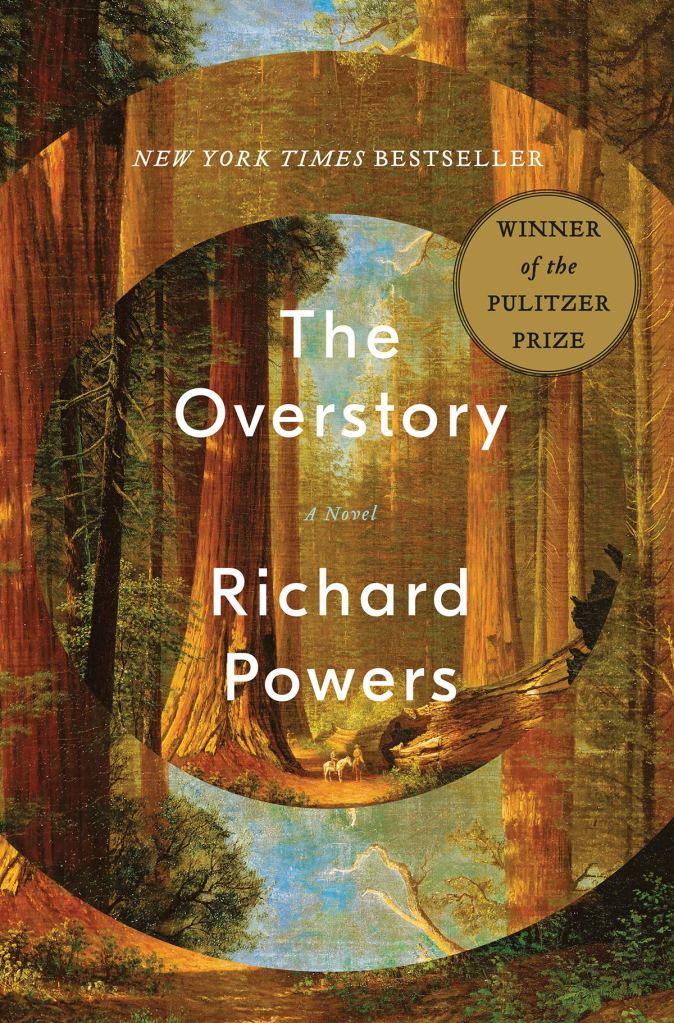


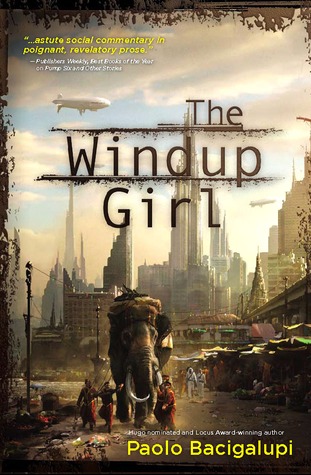
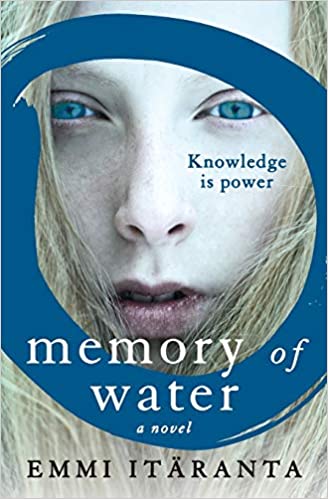


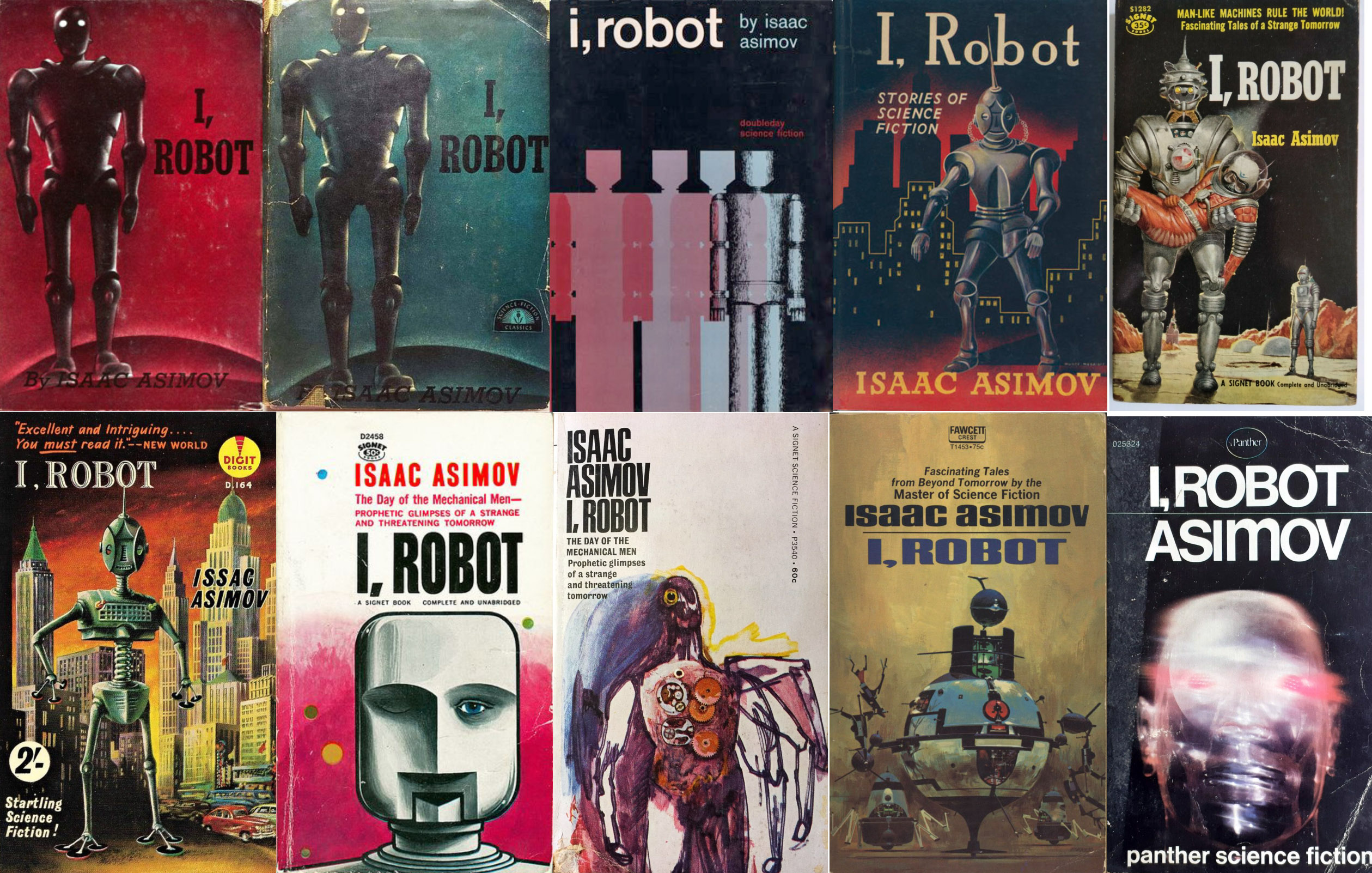


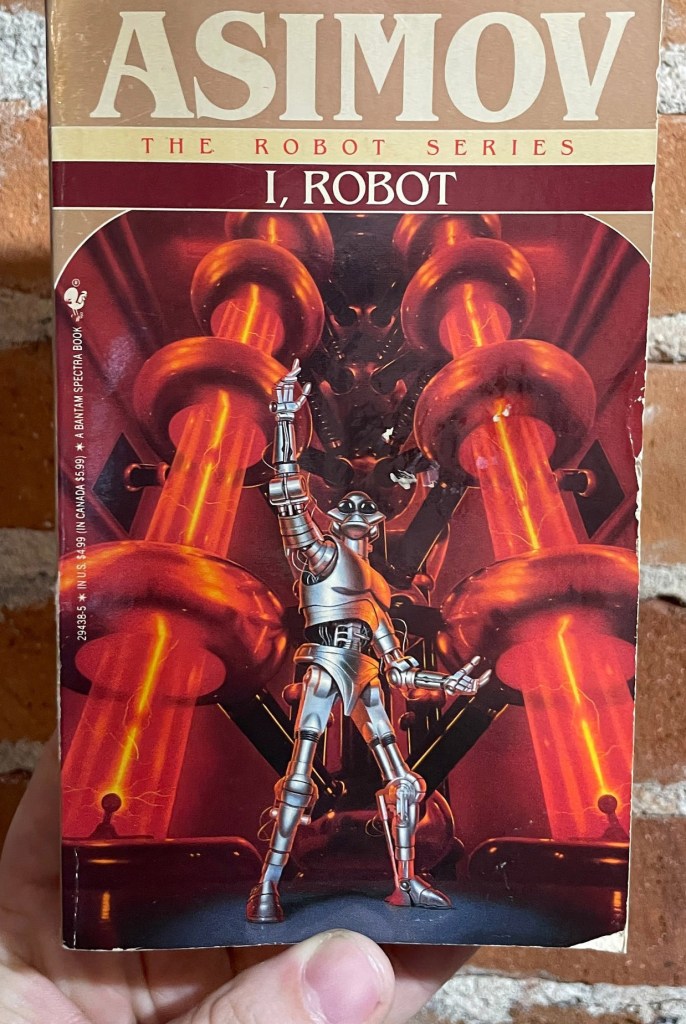
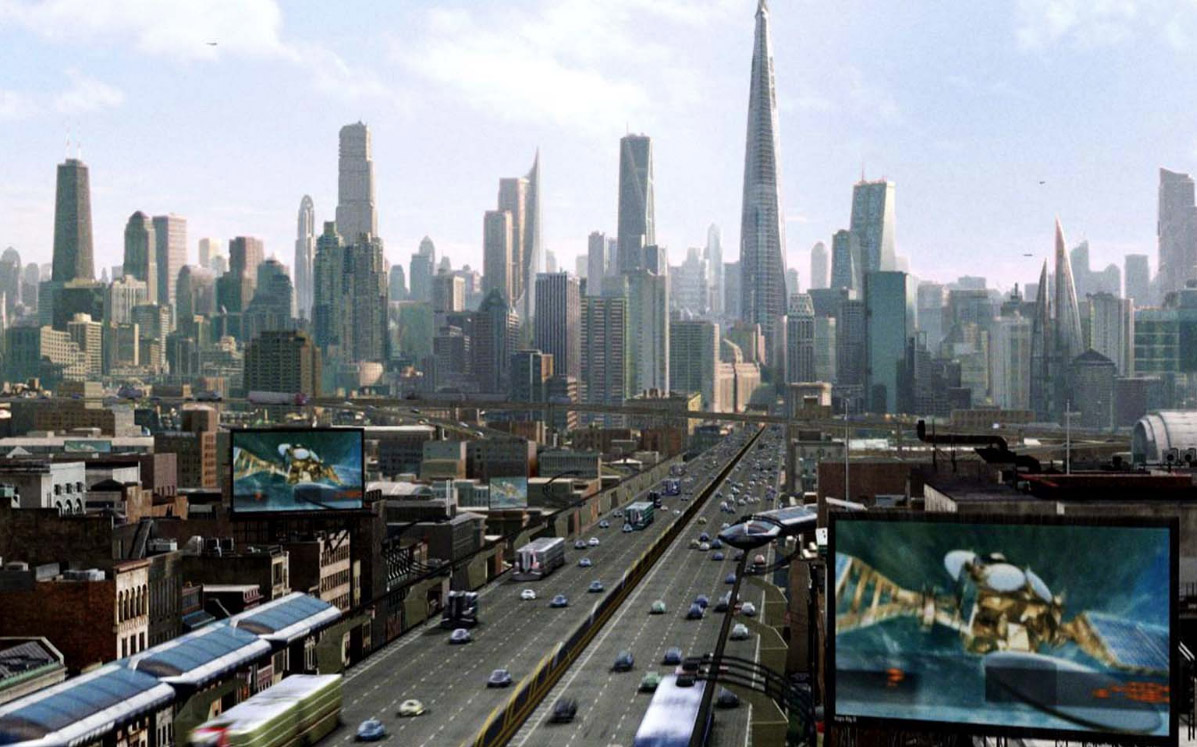


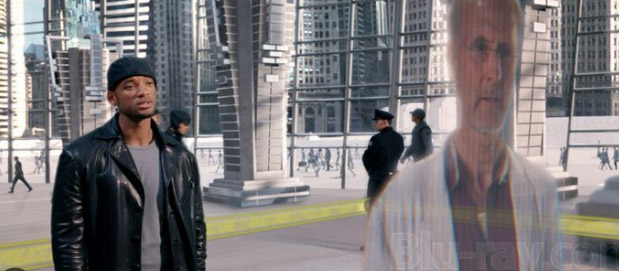

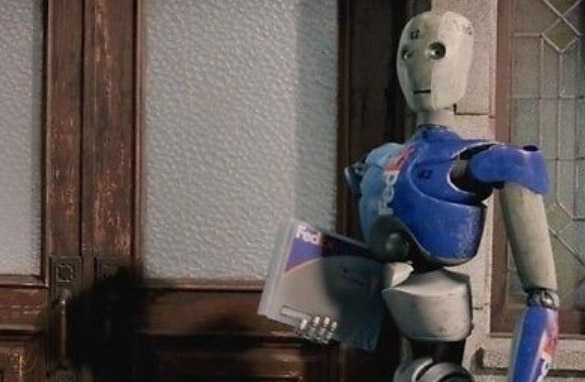

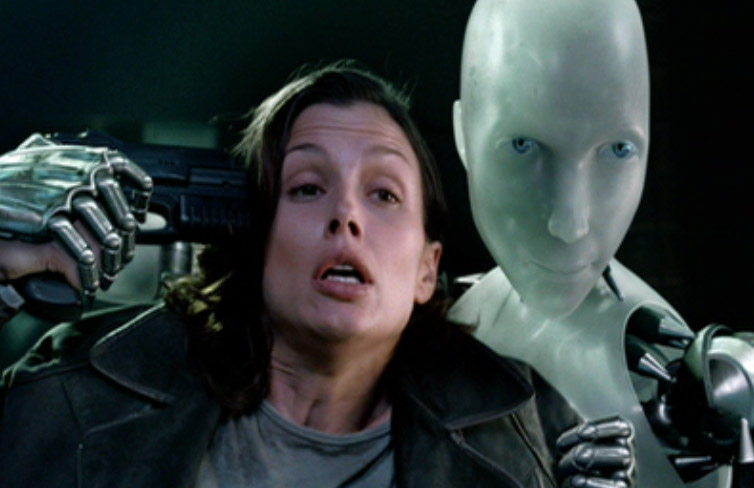

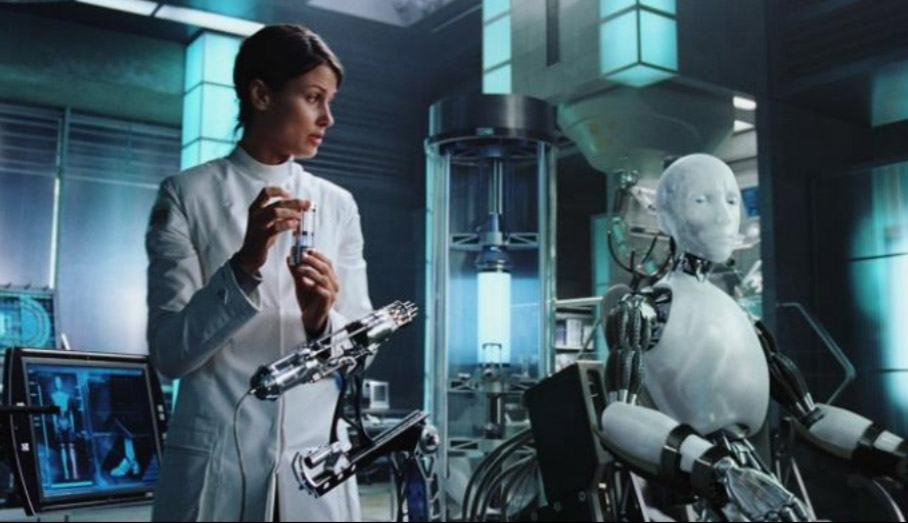


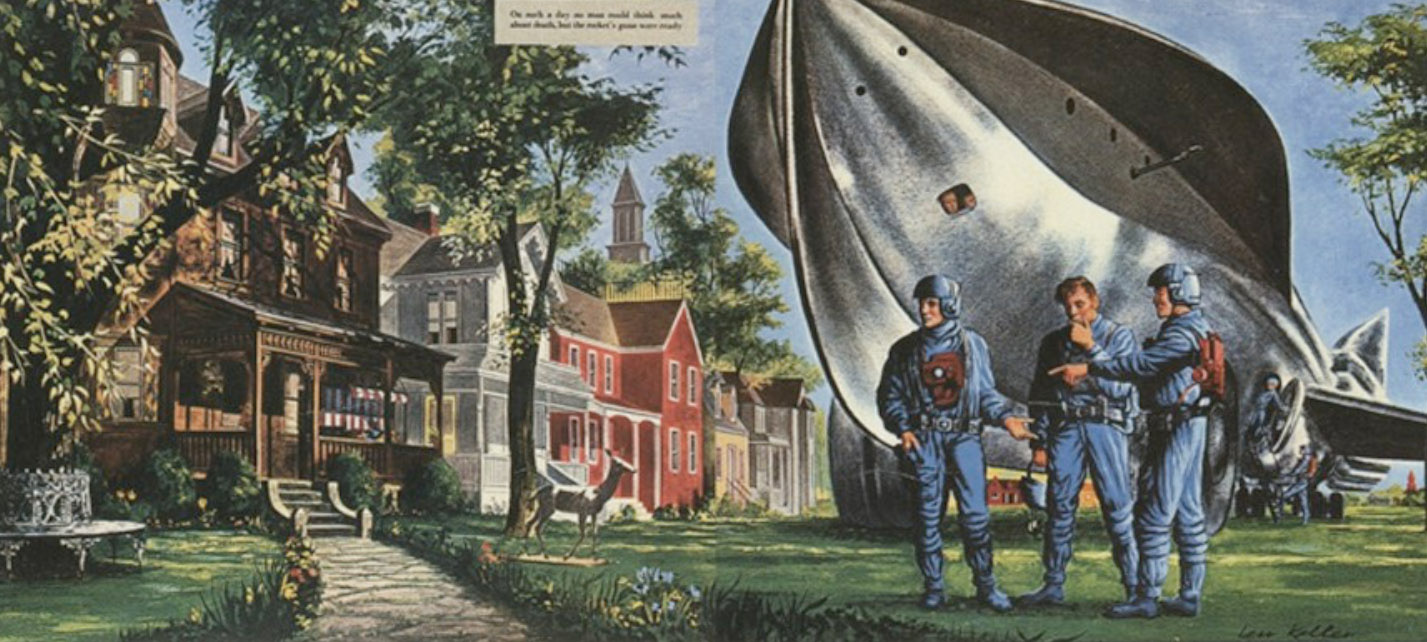

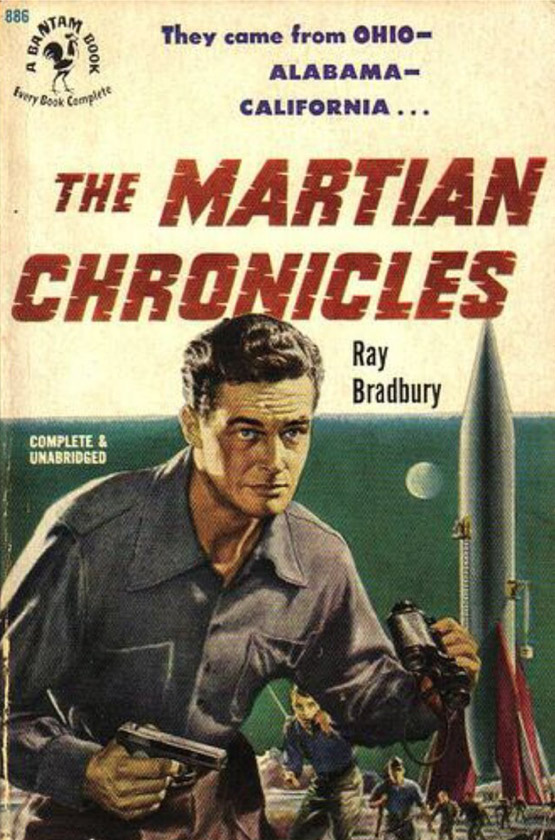
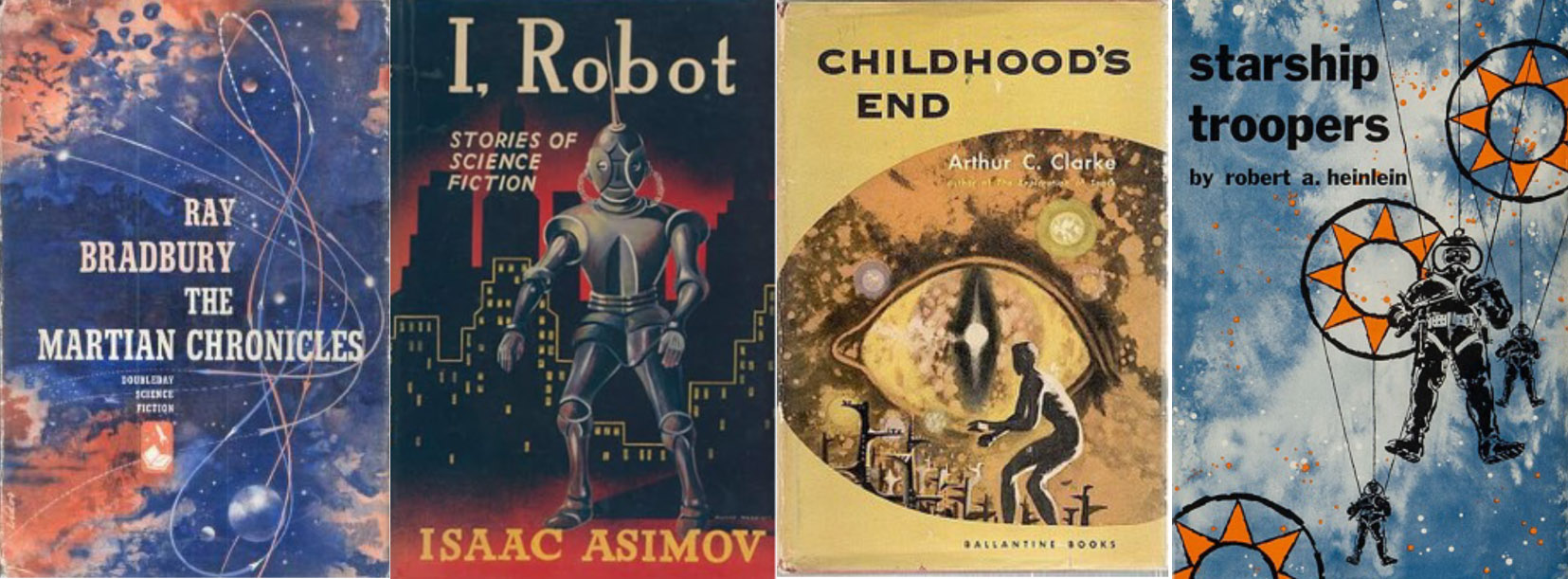

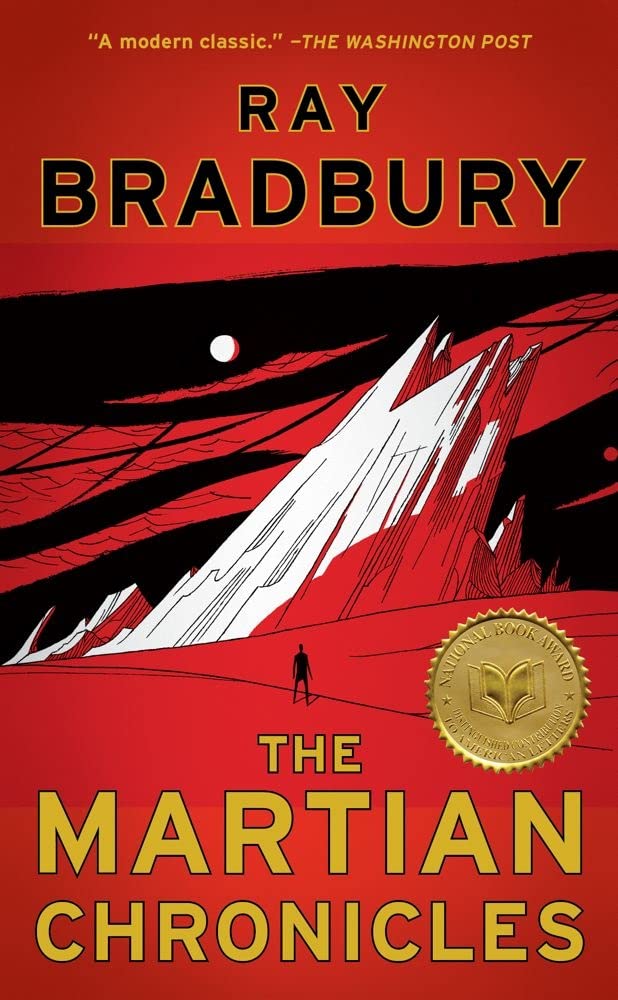
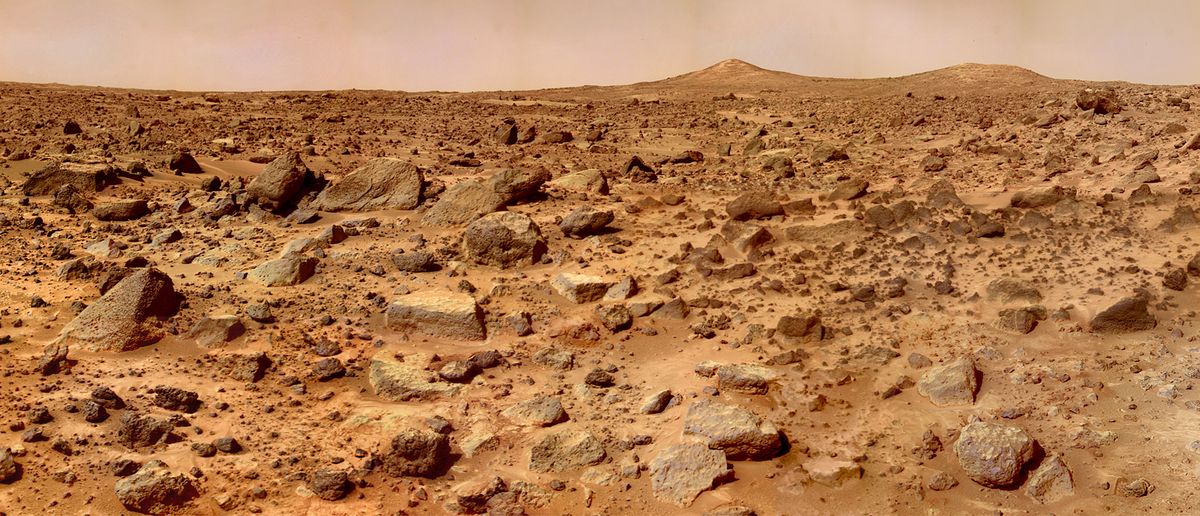
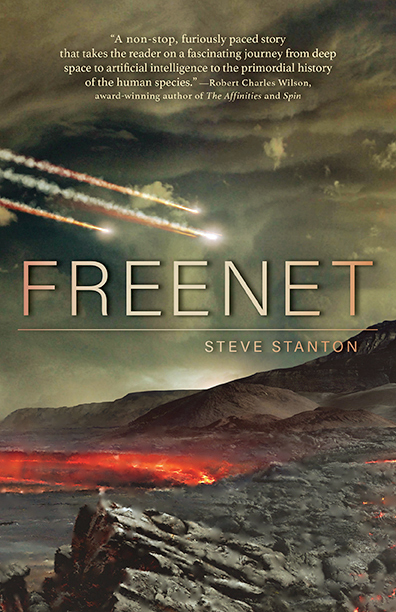


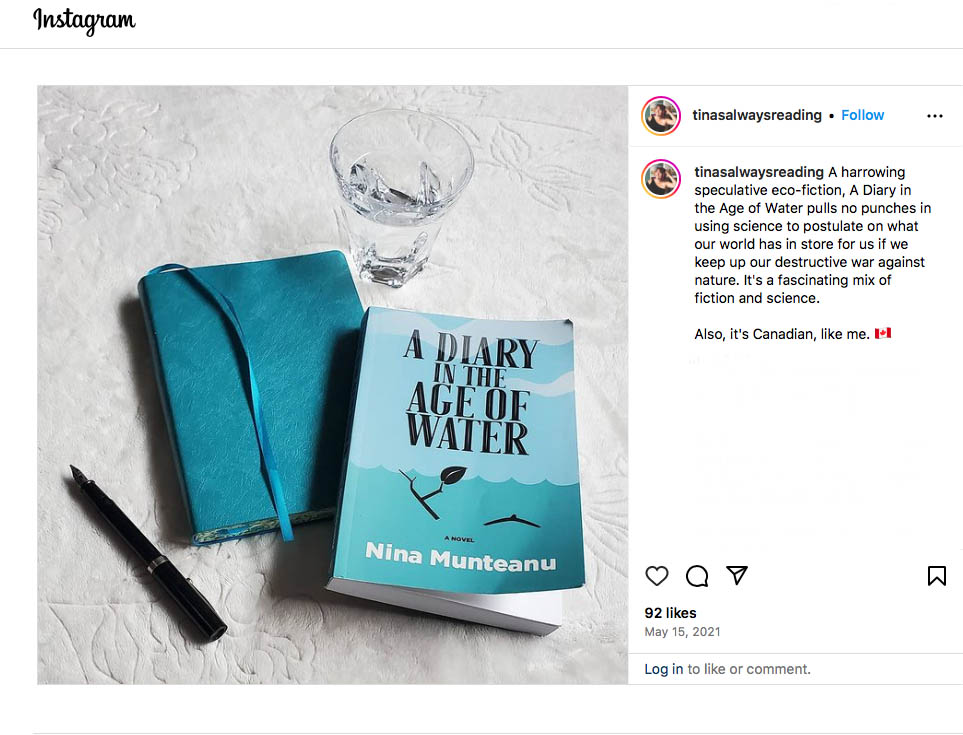

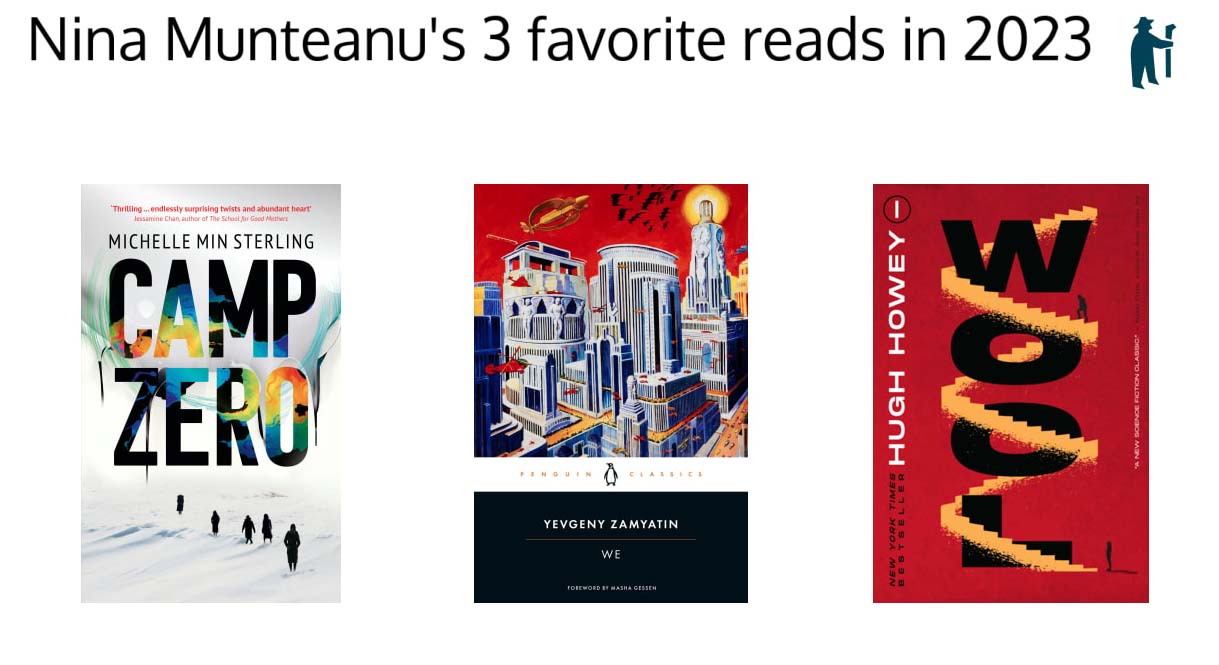


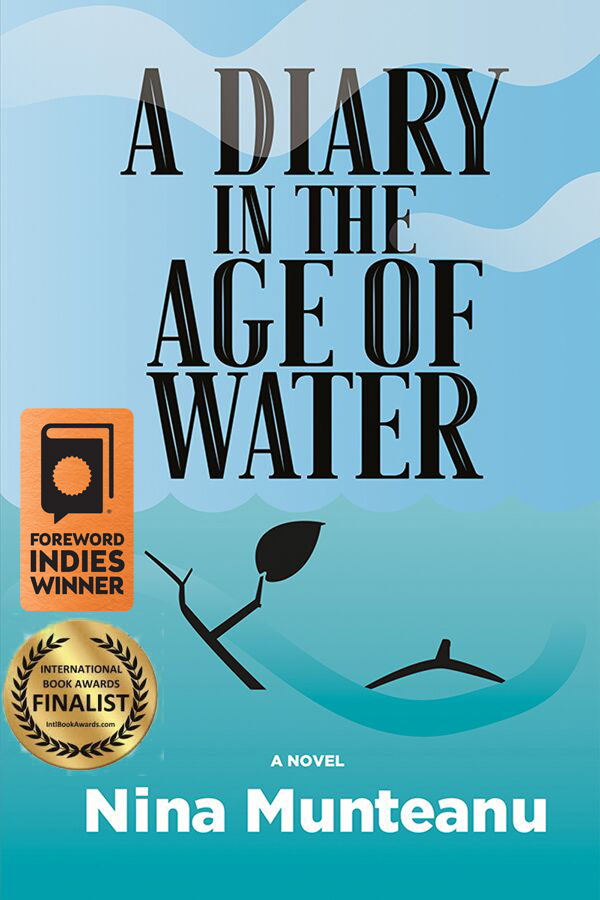
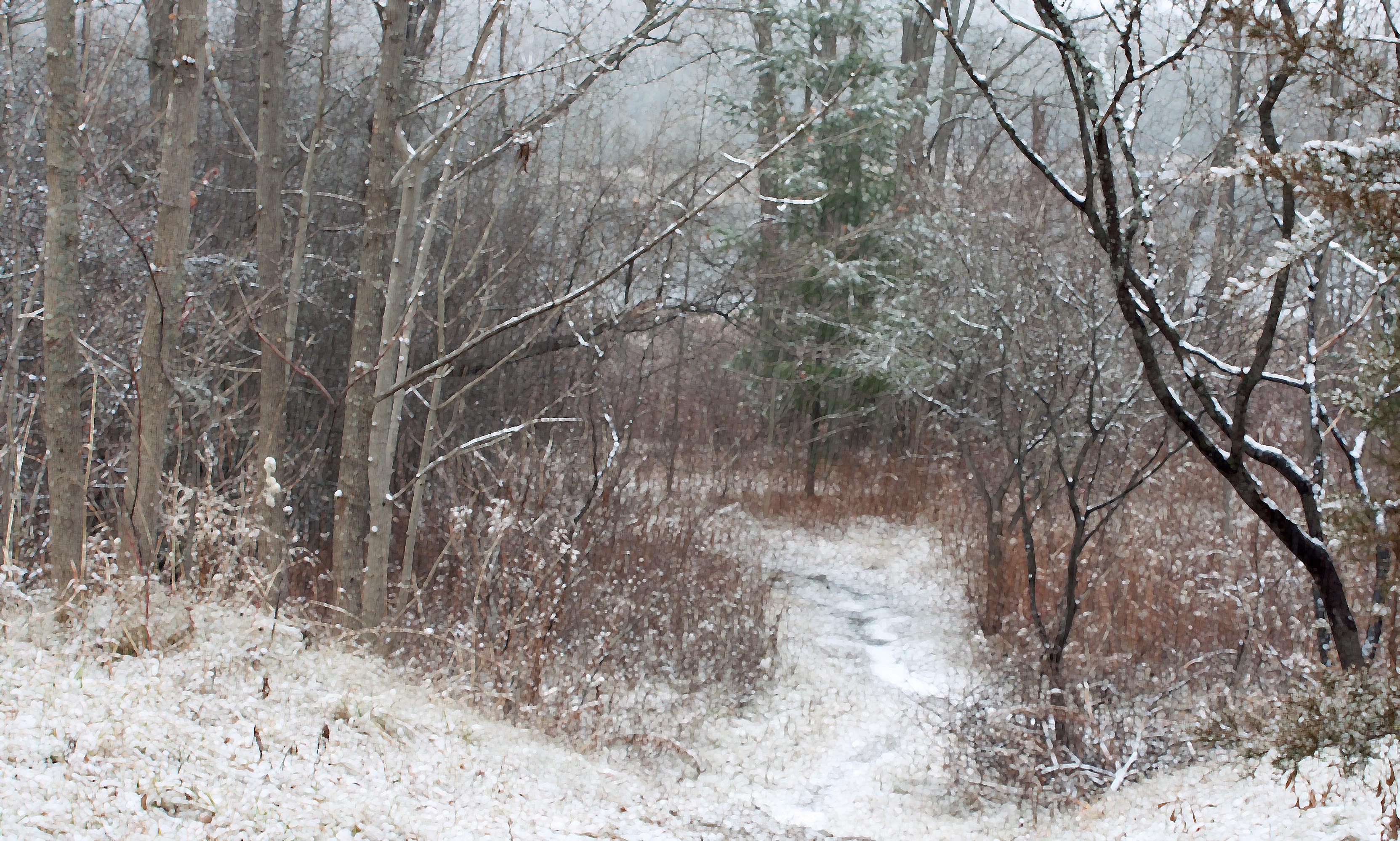


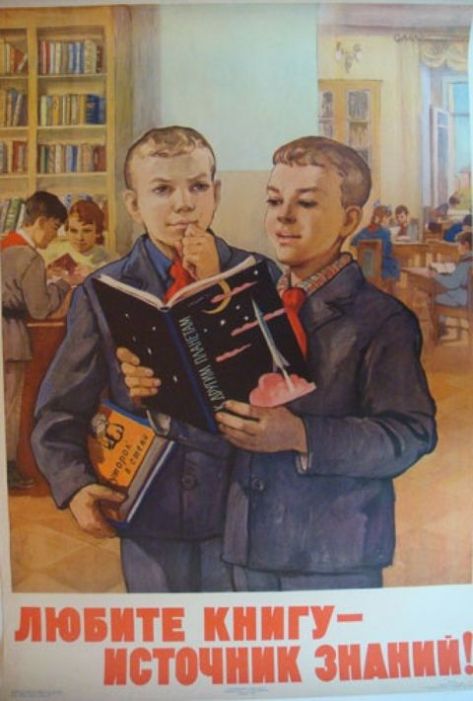


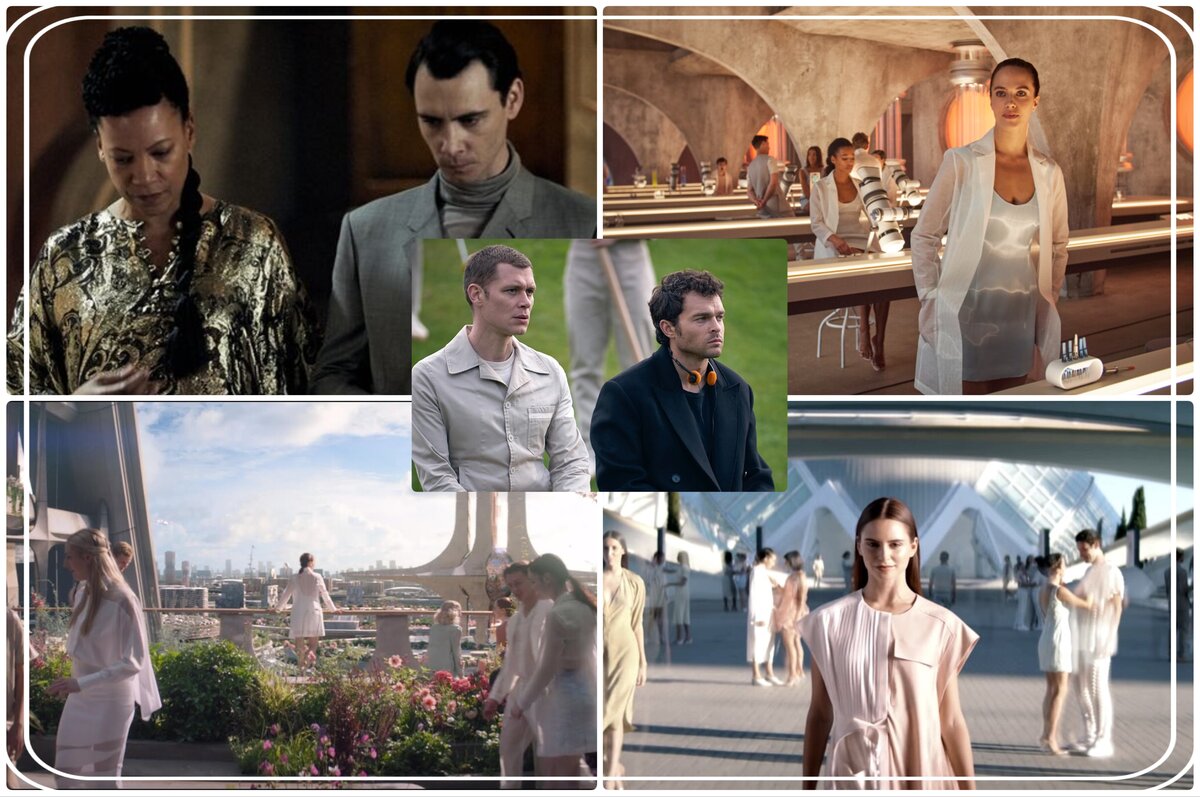


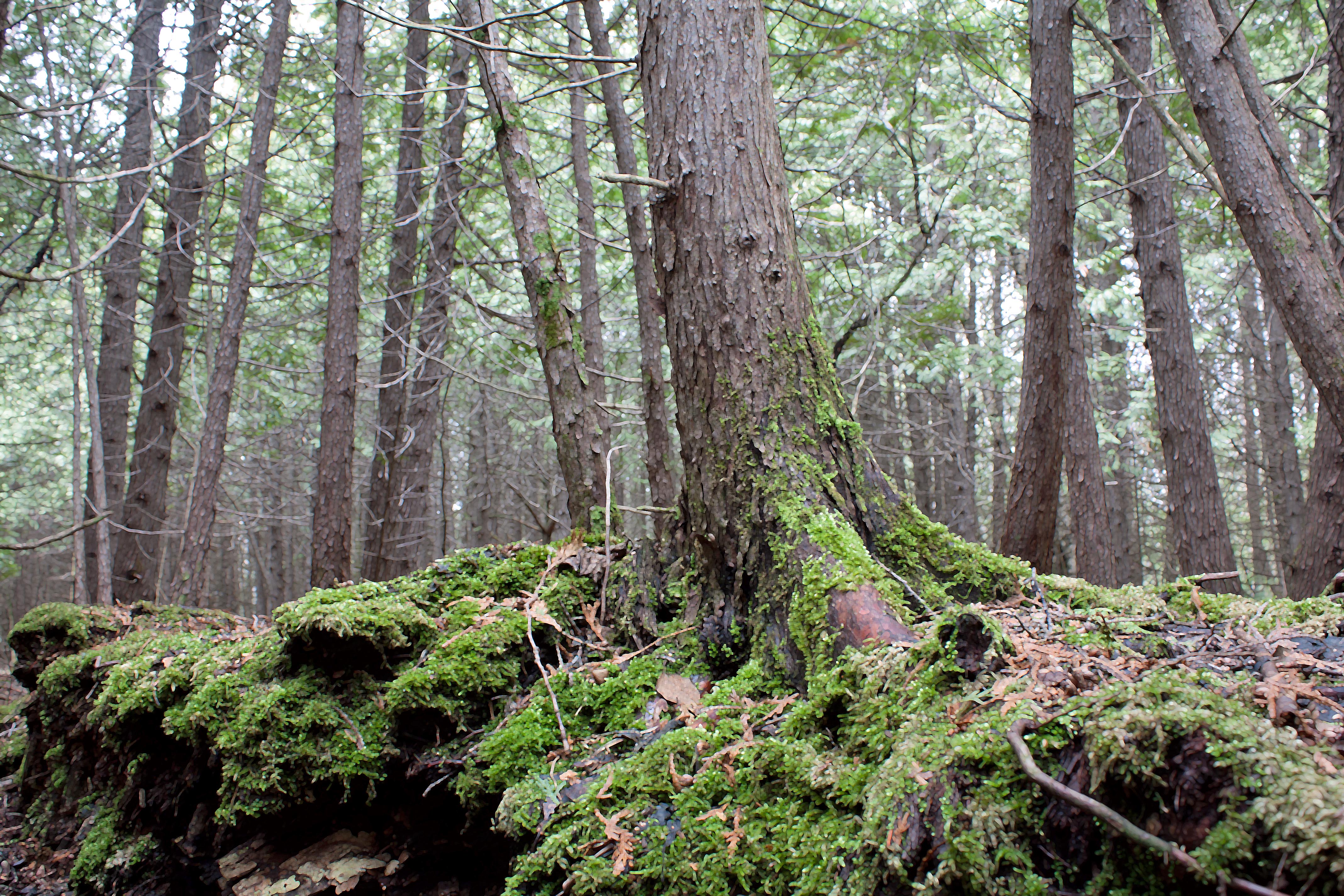

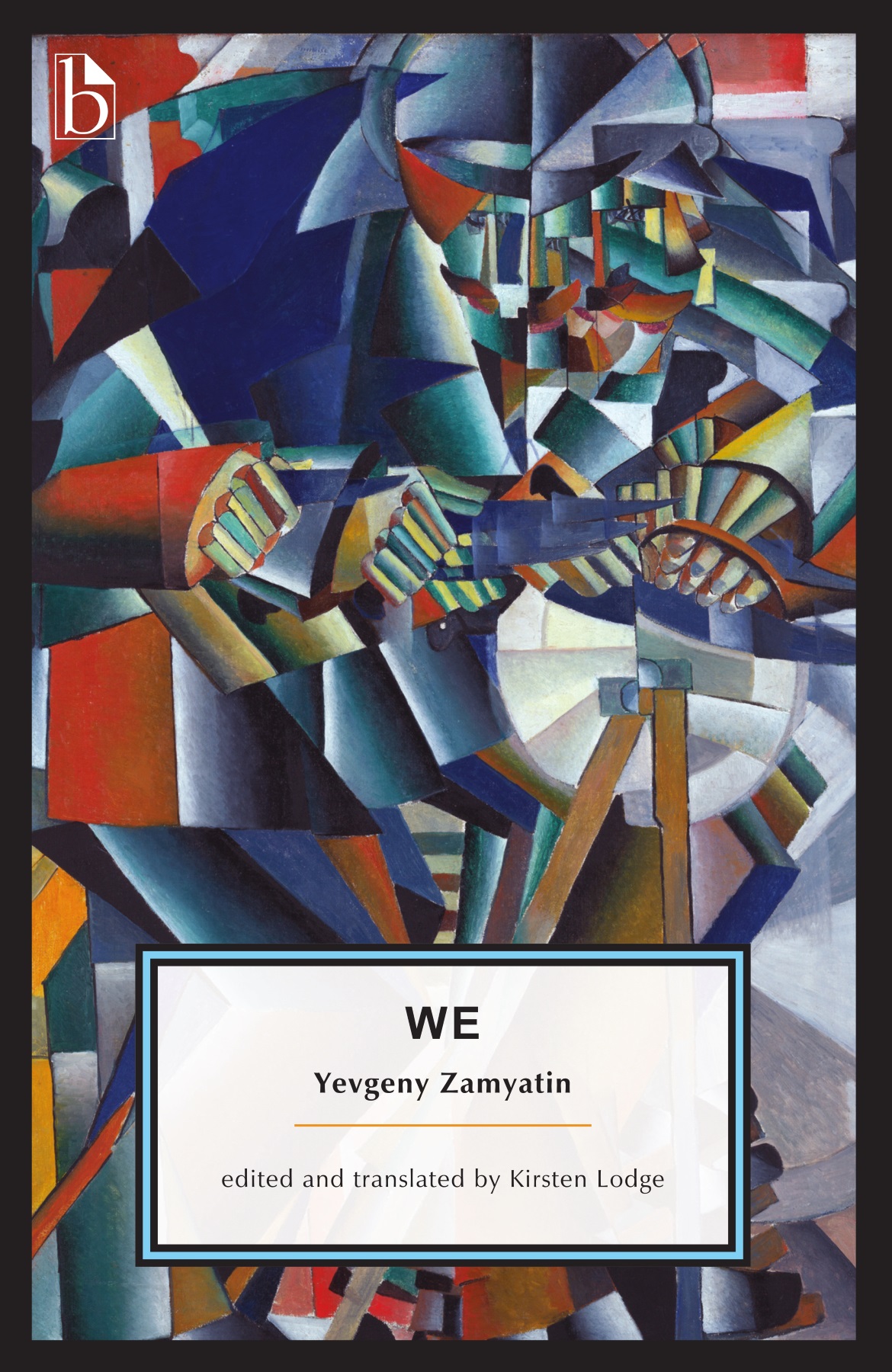




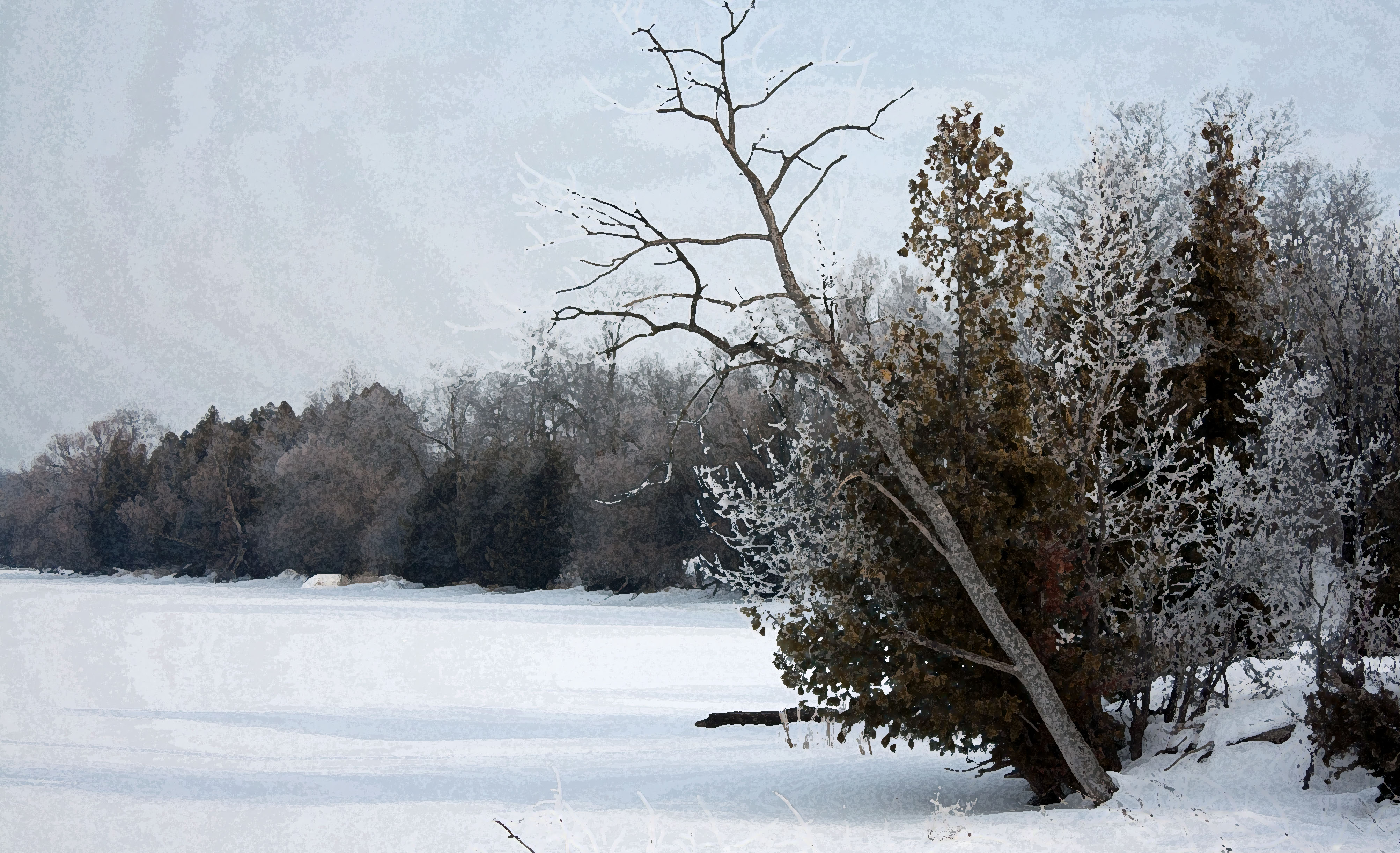
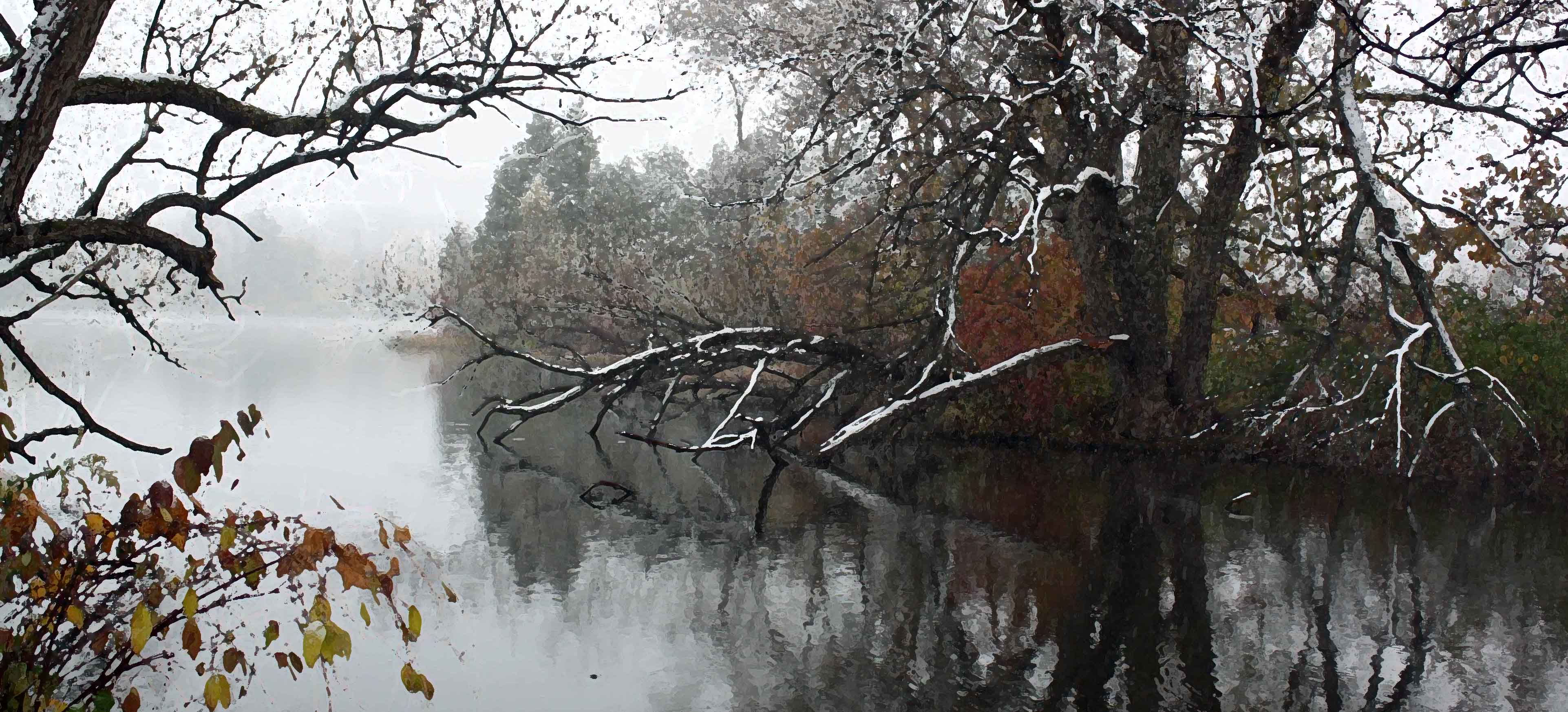




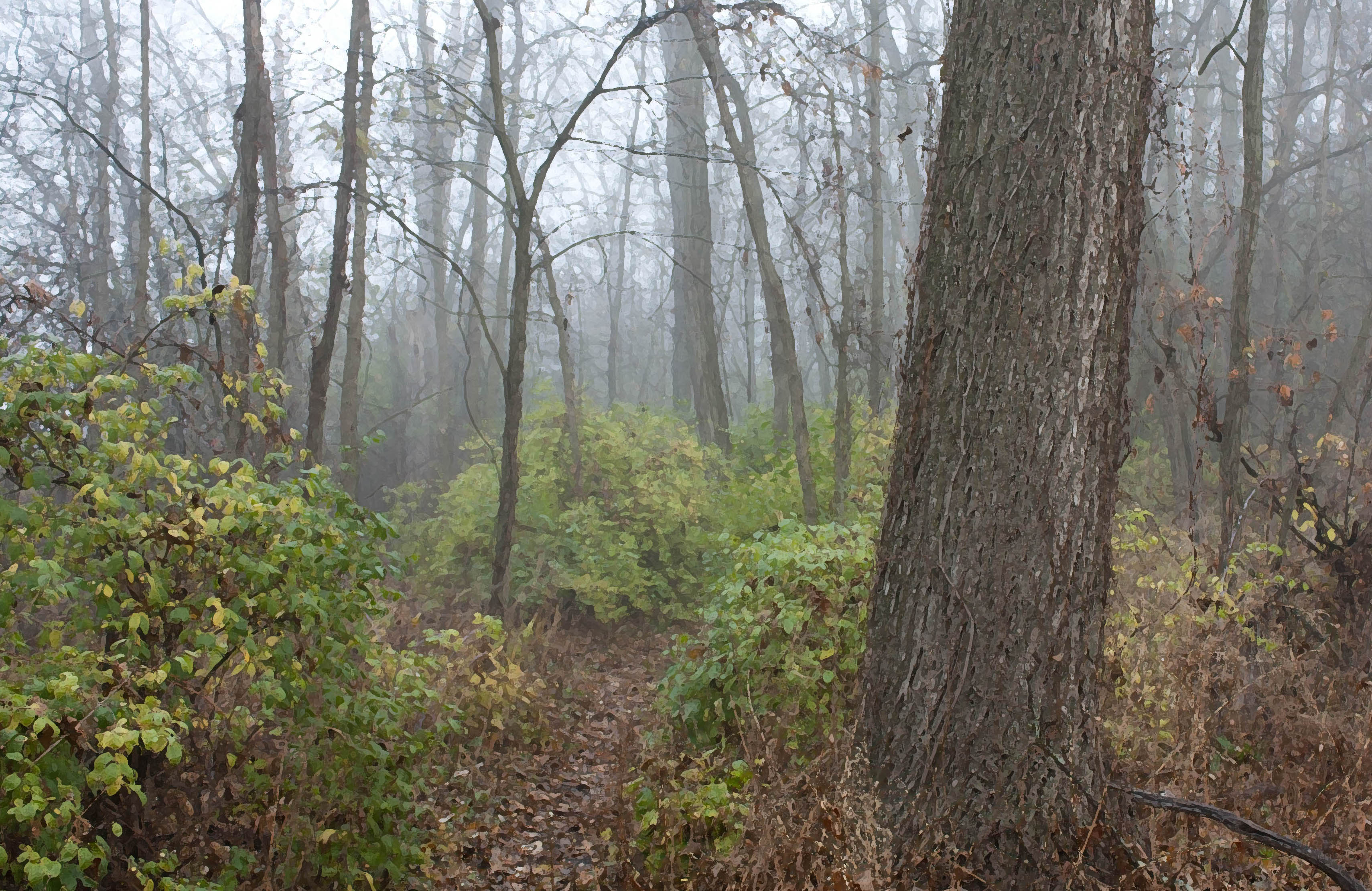




 Nina Munteanu Writing Coach