“During spring thaw or fall turnover, the thermocline erodes and the changing temperature forces a lake to mix, revealing her secrets.”
Lynna Dresden

A Diary in the Age of Water is“One of the most important books of a generation.”
REEDSY REVIEWS

“During spring thaw or fall turnover, the thermocline erodes and the changing temperature forces a lake to mix, revealing her secrets.”
Lynna Dresden
A Diary in the Age of Water is“One of the most important books of a generation.”
REEDSY REVIEWS

As indie publishing soars into new heights and successes, writers are looking more and more to freelance editors to help them create works of merit that will stand out in the market. Whether this process is seamless and productive or fraught with difficulties relies on the relationship established between editor and writer—at the outset and throughout.
The writer-editor relationship—like any relationship—works best when communication between parties is transparent and clear. What ultimately drives misunderstanding—or its corollary, harmony—is “expectation” and how it is met. Clarifying expectations on both sides is paramount to creating a professional and productive relationship with few hitches.
Clarity of expectation, honesty, and mutual respect are key features in a productive and successful writer-editor relationship. Writers expect editors to inform them if their expectations are out of line, and writers rely on editors’ honesty and transparency to let them know if they are comfortable with the task being asked of them. This, of course, is predicated on the editor’s full understanding of what that task is; again, it is the responsibility of the editor to determine the scope of work from the author—just as a doctor will ask key questions to diagnose a patient. If an editor has reservations, caveats, or limitations with the project, these should be shared upfront. Honesty is always best, and it should start right from the beginning so that mutual respect is cemented.
Below, I list five things that writers should look for and expect from a good editor. Each of these five items can be determined at the outset, when you and your potential editor first meet. Consider that first meeting as an interview for both of you, to determine if you are a good match.
1. The editor will preserve the writer’s voice through open and respectful dialogue: Losing your voice to the “hackings of an editor” is perhaps a beginner writer’s greatest fear. This makes sense, given that a novice writer’s voice is still in its infancy; it is tentative, evolving, and striving for an identity. While a professional editor is not likely to “hack,” the fear may remain well-founded.
A novice’s voice is often tangled and enmeshed in a chaos of poor narrative style, grammatical errors, and a general misunderstanding of the English language. Editors trying to improve a novice writer’s narrative flow without interfering with voice are faced with a challenge. Teasing out the nuances of creative intent amid the turbulent flow of awkward and obscure expression requires finesse—and consideration. Good editors recognize that every writer has a voice, no matter how weak or ill-formed, and that voice is the culmination of a writer’s culture, beliefs, and experiences. Editing to preserve a writer’s voice—particularly when it is weak and not fully formed—needs a “soft touch” that invites more back-and-forth than usual, uses more coaching-style language, and relies on good feedback.
An editor colleague of mine consistently accompanies her edits with the question, “Does this change preserve your meaning?” This prompt both focuses on “voice” and reminds the writer that the editor is considering it, which fosters a nurturing environment of mutual respect. Editors who are not familiar with working with writers in the early stage of their careers may wish to defer to one who is more experienced. This is something you should ask when you first find an editor.
Editors also need to consider how the author’s narrative voice harmonizes with the standard in the author’s targeted genre and niche market. Pursuing respectful and open dialogue about how the author’s voice fits or doesn’t fit that standard is another responsibility of a good editor and one an author will come to rely on—particularly early on in their career.
2. The editor understands—and embraces—the market and genre of your writer: Writers are often told to write what they know. This edict applies equally to editors: edit what you “know” and understand. Each form of writing—from literary and genre fiction to journalism, the memoir, and technical writing—encompasses an overall style, culture and vision, associated language, and even “jargon” that is important to understand to succeed with readers. Even writers who subvert the trope need to first understand what they are subverting, and so does the editor.
I write and edit science fiction and fantasy. I do it very well, because I have a passion for the genre and I intimately understand its world and language, including where the boundaries lie and where the risks—and sublime nuances of originality—also lie. I worked as a scientist for over 20 years and have published papers in peer-reviewed journals, so I am comfortable editing technical and scientific papers. I live that world. On the other hand, I do not read, nor do I understand or care for, the horror fiction genre. Not only would I do a lousy job editing a work of horror, but I wouldn’t provide the discerning editorial advice to best place that work in the horror market. It is in the area of market niche that one editor will shine over another based on their familiarity with, and current activity in, that industry sector. This is ultimately what writers are paying for: the multi-layered understanding of the editor that comes with a full embrace of that world.
Your potential editor should ensure a good fit and the best chance for success by not taking on work in a genre with which they are neither familiar nor comfortable. Which leads me to the next point:
3. The editor is honest and practices moral integrity: they don’t take on a writer’s work unless they like and believe in it: When I was starting out as a writer with my first novel, I shopped it around to many agents, hoping for representation. While the book was eventually published with great success, many agents had rejected it. Literary agents take on clients and shop their books to publishing houses. They usually charge a percentage of the take and are not paid (if they are good agents) until the book is sold to a publishing house. Payment, therefore, is predicated on success. In many cases, an agent would respond with good things to say about my first manuscript but would not take it on, citing this common phrase: “It just didn’t excite me enough.” I was initially puzzled by this response. If they liked it, why didn’t they take it on? But “I like” isn’t the same as “I’m excited.” I soon realized the importance that excitement played in the agent’s business. They were my advocate, after all. If they weren’t eager about the book, how could they sell it to someone else? And if they couldn’t sell it to someone else, how could they get paid?
While the editor is usually paid up front and/or upon deliverable, they fulfill a similar role: that of advocate. If an editor takes on a writer’s work without enjoying it or believing in it, they are much less likely to do a good job. And both lose when that happens.
When we just do a job for the money and not for the passion of doing something well, we run the risk of losing on all fronts. We run the risk of being dishonest in our assessments and then doing a shabby job. And then losing our reputation. Editors need to be an advocate and be honest; sometimes, that means saying “no” to a project and explaining why. As a writer, you are entitled to working with an editor who enjoys your work.
4. Editor edits professionally and appropriately to promised deliverable: In my capacity as writing coach, I have met with several writers who have complained that their work had been insufficiently or inappropriately edited. This can occur for several reasons: (a) lack of time; (b) incompetence; or (c) inappropriate match-up.
As a writer, I once experienced an insufficient copy edit by a freelance professional editor. In fact, this particular editor was a good editor and had impeccably edited a previous work of mine. When I submitted my “edited” work to a beta reader, he pointed out many places that my copy editor had missed. A few is OK, but she’d missed many. From subsequent correspondence, I deduced that my editor had been overrun with other projects and had skimmed mine a little too fast. Unfortunately, this was unacceptable, given that I’d agreed to pay her a professional rate for a specific deliverable: a copy-edited, proofed, and publication-ready manuscript.
The ultimate message here for editors is, don’t take on a writer’s work and make promises of delivering until you know what you’re getting into and know that you can do it in the time you suggested. Honesty is best here. If an editor is too busy to meet the specified deadline, they need to say so and refer the writer to another respected editor if they can’t wait. A smart editor knows they aren’t “losing” the client. But that editor I mentioned in the previous paragraph did. It’s best to create a contract with the editor that is mutually beneficial, transparent, and detailed with reasonably scheduled updates, etc.
Unfortunately, most editors who are incompetent are unaware of it. One of my professional writer-editor colleagues at SF Canada invoked the Dunning-Kruger Effect (“at a certain point, people who really don’t know something don’t know that they don’t know it”) to share her story of what passes for editorial input in “an age of homonym errors.” She suggested that some self-appointed editors are convinced they have significant skills but allow a large error rate.
This is where organizations like Editors Canada become invaluable. Editors Canada certifies editors for skills in various editing fields and forms (that is, structural-, stylistic-, and copy editing and proofreading). Professional editors can be variously certified, and should ensure that they make this known to the writer; many writers not only don’t understand the various editing forms (for example, copy editing vs. structural editing), they also don’t necessarily recognize competence until after the job is done—when it’s too late. You, the writer, are entitled to ask your editor for references, testimonials, certifications and other forms of proven experience before signing on with them.
This is similar to point 2, which talks about matching writer and editor through genre and market. A good fit also includes temperament, schedules, communication style, and other considerations that will affect the editor-writer relationship and the natural progress of the project. As editor, I have encountered a few clients whose communications with me created tension and misunderstanding. We mutually agreed to terminate our arrangement early on, which saved much tension and grief. The transparency of the relationship allowed us to recognize the mismatch early on and attend to it before it became problematic and wasted both our time and efforts. You can prevent this to some degree by researching the editor’s style and experience with other writers. Many editors—like me—put their testimonials, experience, and even editing examples on their website. Another way to achieve match-up success is to get a referral from a trusted writer friend.
5. The editor keeps the relationship—and language—professional and respectful: Without necessarily expressing this, the majority of writers—particularly beginning writers and, by default, indie/self-published writers—seek a professional editor who will treat them with respect. What this translates into is the use of professional language, tone, and behaviour. You aren’t looking for an editor to be your “friend.” You are also not looking for a professional editor to validate your work or you as a person. As a writer, you seek a professional editor to give you honest and helpful advice that will help you create the very best work you can for eventual publication.
Simple. Not so simple.
As an editor who is also a writer (who gets edited a lot), I provide rationale as much as I can for the suggestions I make to writers and I do it through professional language, tone and behaviour. I am friendly but I keep it professional. This helps establish and maintain a respectful and collaborative relationship between author and editor. Think of it as a doctor-patient relationship; I’ve dropped doctors like hot potatoes who are not willing to sit with me as an equal and discuss their prognoses. I want to know why, and ultimately, it’s my decision. The editor is an expert, but so is the writer.
In the final analysis, the writer-editor relationship is foremost a professional one. As an editor, I feel it is my duty to promote integrity and respect with the writer, and this hopefully within a safe and nurturing environment for the achievement of mutual excellence. As a writer, I expect my editor to be respectful and act as advocate to my work. I offer my respect on their expertise with communication.
I’ve been edited by many editors, including freelance editors with Editors Canada to publishing house editors throughout North America and beyond. A good editor is like gold in your pocket. They can help you improve your work beyond your own imaginings. In the end, every decision remains yours. While I normally take most of my editor’s advice (usually 95% of the time), I often find the odd place where their suggestion does not fit the heart of my writing. Then I simply say “no.”


Nina Munteanu is a Canadian ecologist / limnologist and novelist. She is co-editor of Europa SF and currently teaches writing courses at George Brown College and the University of Toronto. Visit www.ninamunteanu.ca for the latest on her books. Nina’s bilingual “La natura dell’acqua / The Way of Water” was published by Mincione Edizioni in Rome. Her non-fiction book “Water Is…” by Pixl Press (Vancouver) was selected by Margaret Atwood in the New York Times ‘Year in Reading’ and was chosen as the 2017 Summer Read by Water Canada. Her novel “A Diary in the Age of Water” was released by Inanna Publications (Toronto) in June 2020.
“As Nature tames a lake over time, one thing replaces another. As it undergoes a natural succession from oligotrophic to highly productive eutrophic, a lake’s beauty mellows and it surrenders to the complexities of destiny. Minimalism yields to a baroque richness that, in turn, heralds extinction. The lake shrinks to a swamp then buries itself under a meadow.”
Lynna Dresden

’A Diary’ is a brilliant story…Munteanu writes with fresh, stimulating style.”
CRAIG H. BOWLSBY, author of The Knights of Winter
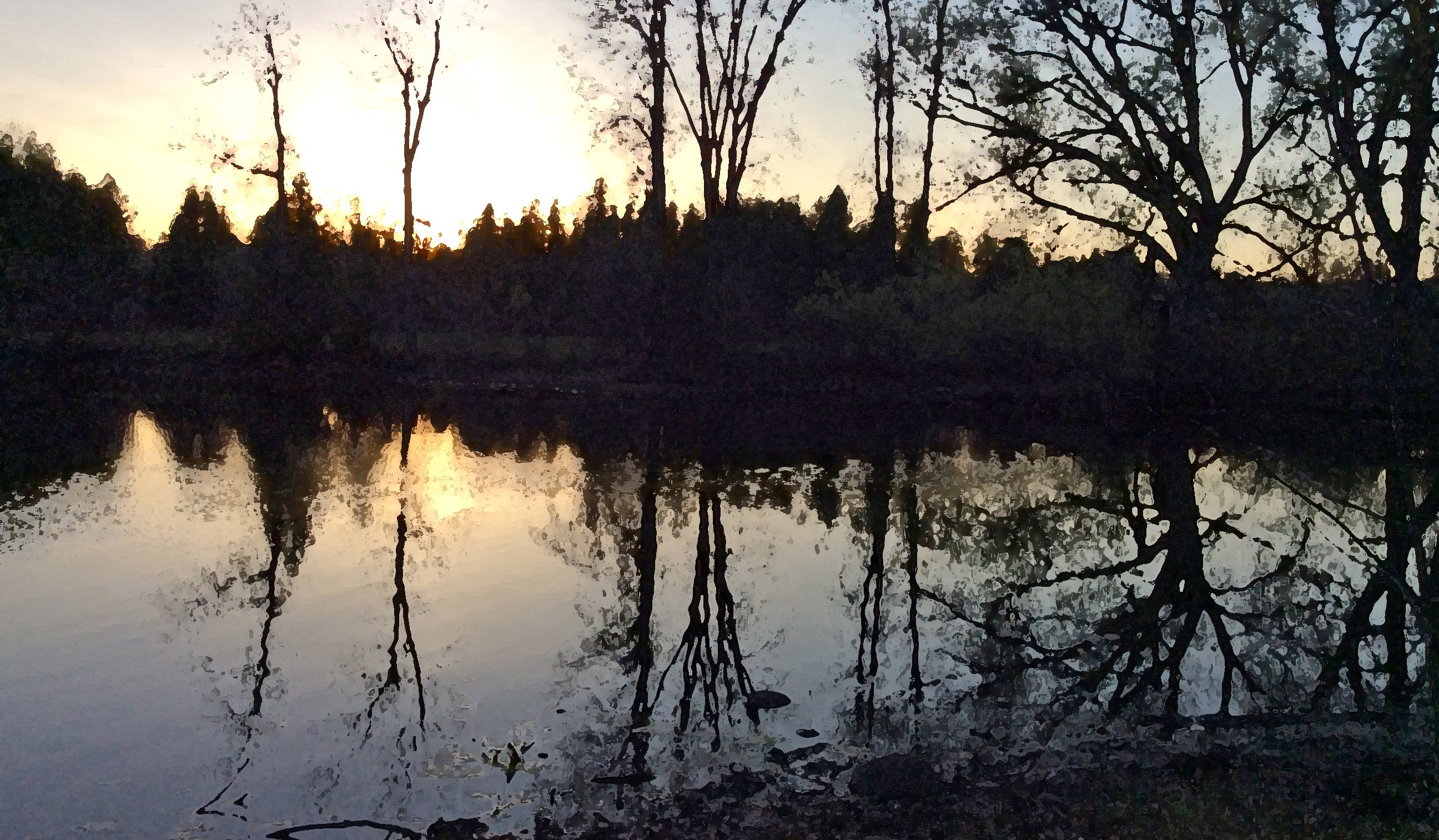
“During spring thaw or fall turnover, the thermocline erodes and the changing temperature forces a lake to mix, revealing her secrets.”
Lynna Dresden
“Munteanu’s experience in bridging the worlds of biology and writing makes A Diary in the Age of Water unique in being strong and focused from both the scientific and literary perspectives.”
STRANGE HORIZONS
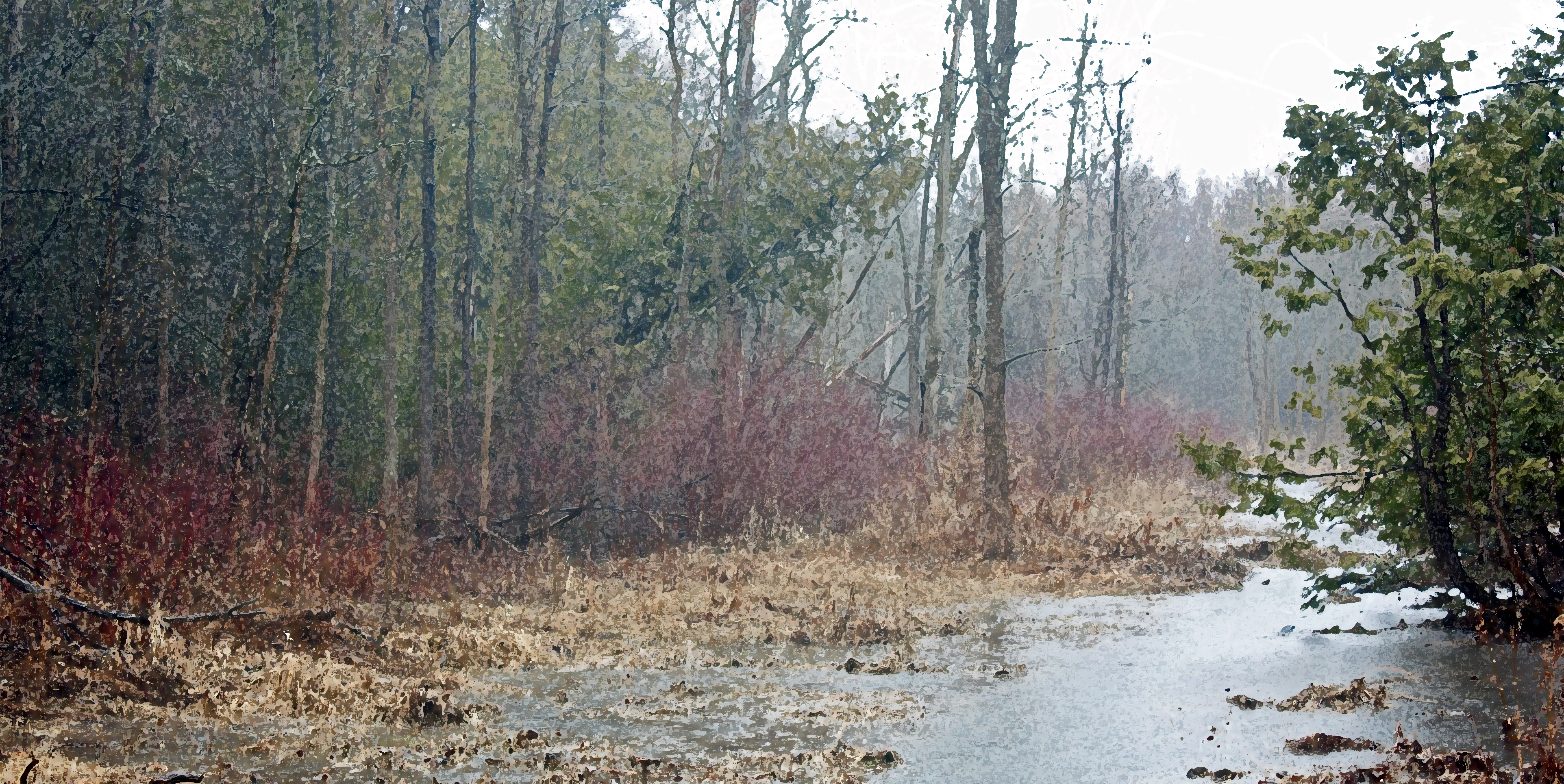
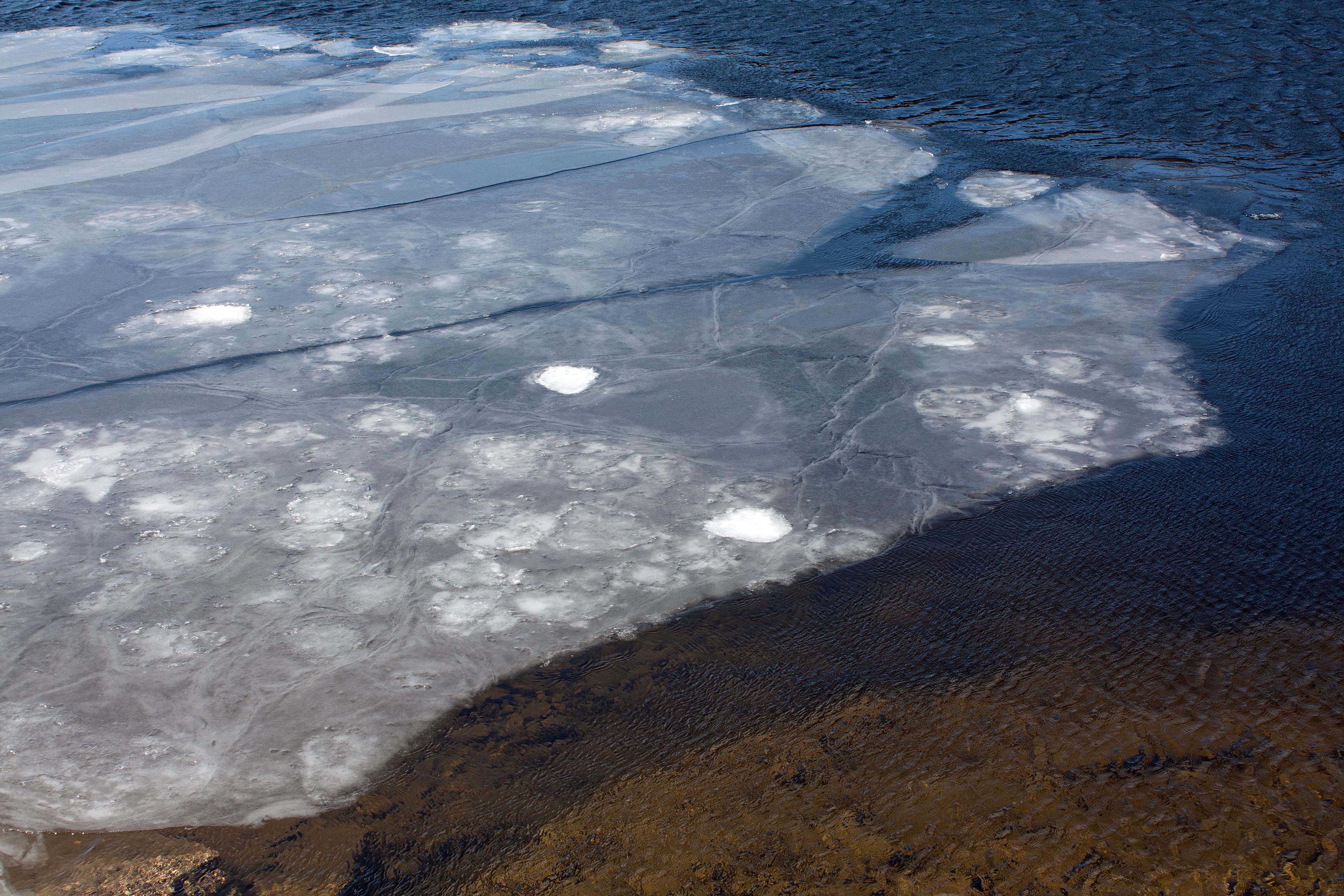
It’s spring and every day on the river is different. One day the ice thaws. The next day it reforms only to thaw again.
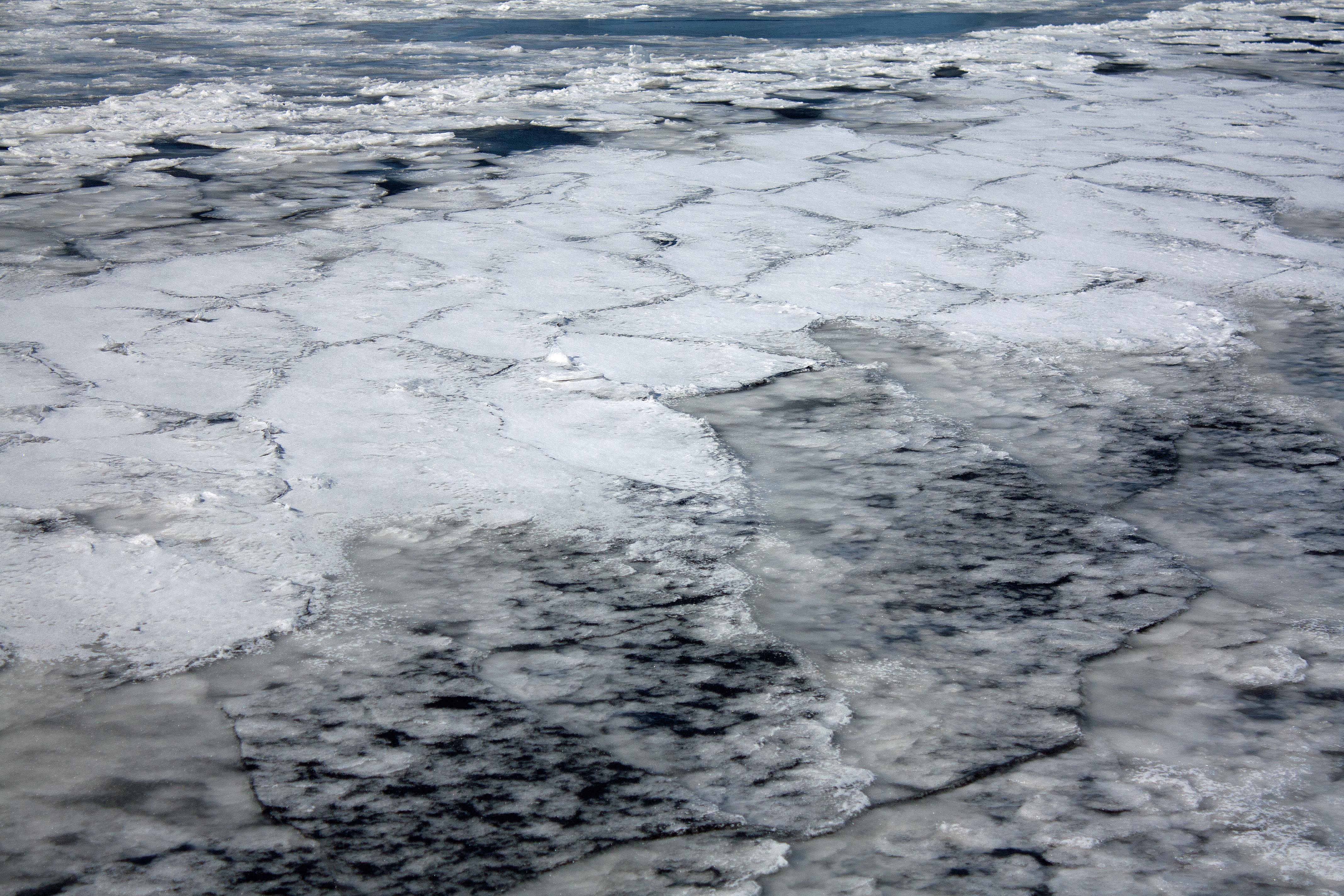
I love watching the process of ice pancake formation and reformation on the Otonabee River. It starts with primordial ice-froth, which then coagulates into ice sheets. These sometimes look like fabric or white felt.
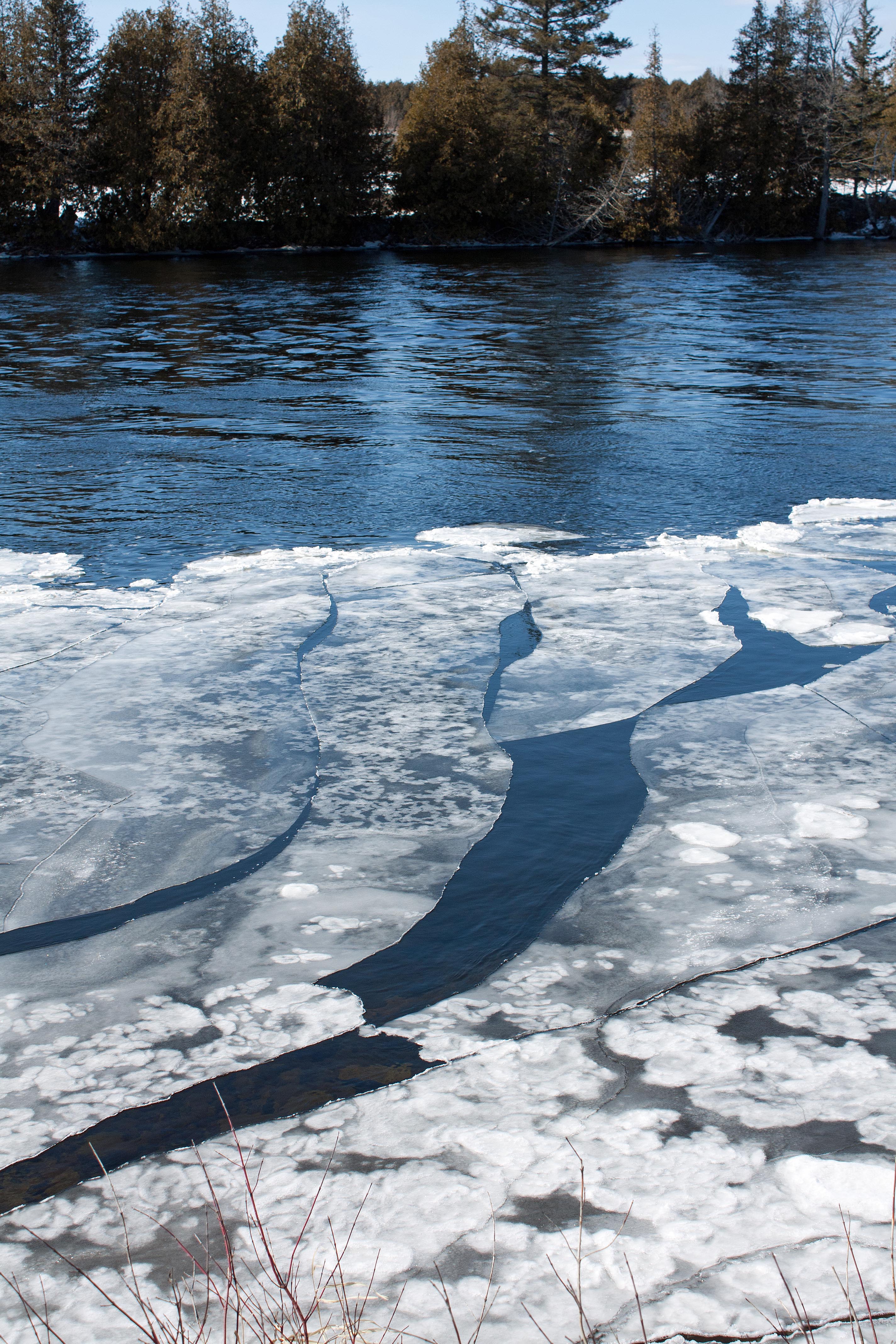
Then entire sheets break up into long fragments like giant pieces of glass shards, all floating down the river, little opaque pancakes embedded in clear glassy sheets. And the water beneath is the darkest blue.


Nina Munteanu is a Canadian ecologist / limnologist and novelist. She is co-editor of Europa SF and currently teaches writing courses at George Brown College and the University of Toronto. Visit www.ninamunteanu.ca for the latest on her books. Nina’s bilingual “La natura dell’acqua / The Way of Water” was published by Mincione Edizioni in Rome. Her non-fiction book “Water Is…” by Pixl Press(Vancouver) was selected by Margaret Atwood in the New York Times‘Year in Reading’ and was chosen as the 2017 Summer Read by Water Canada. Her novel “A Diary in the Age of Water” was released by Inanna Publications (Toronto) in June 2020.

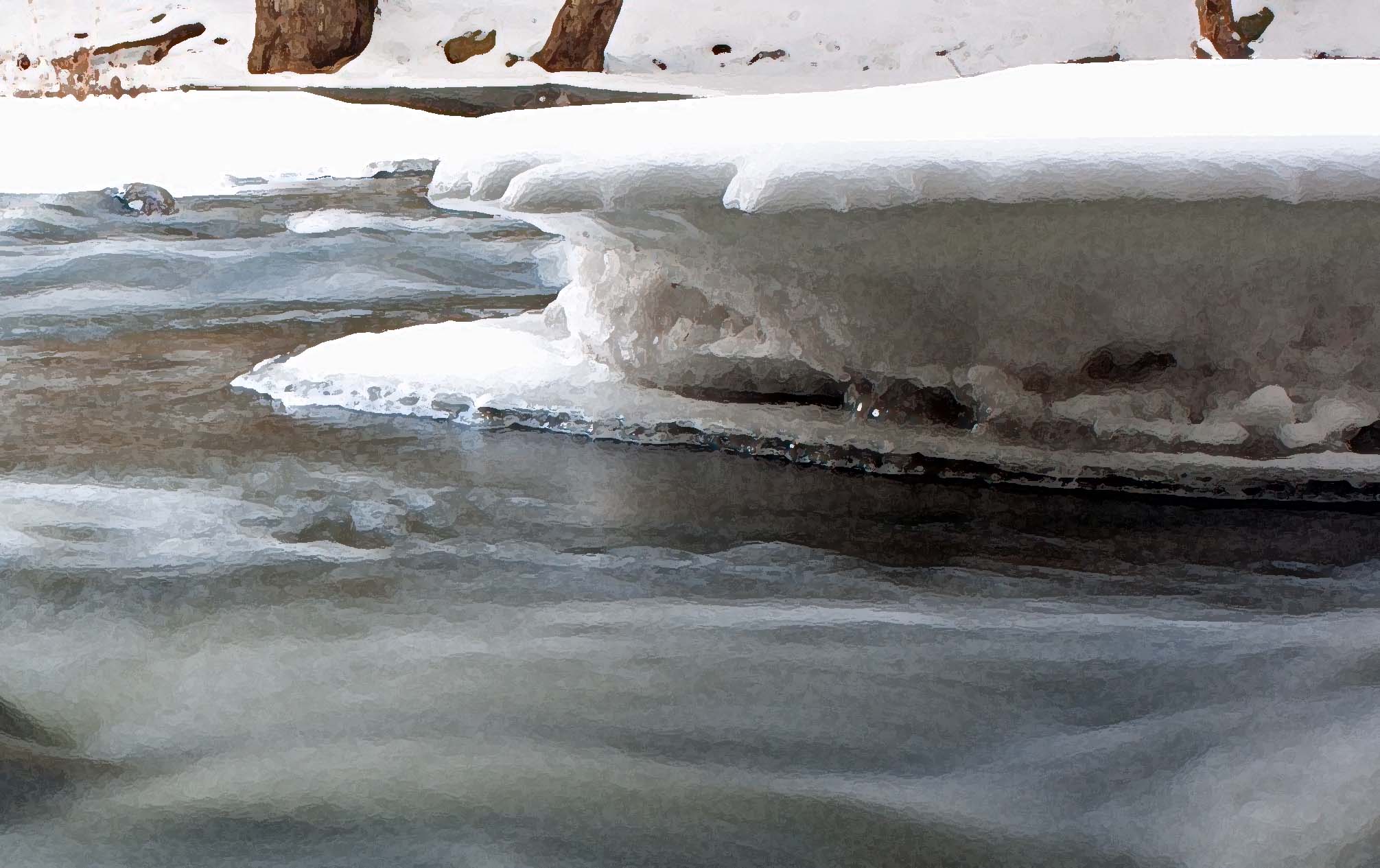
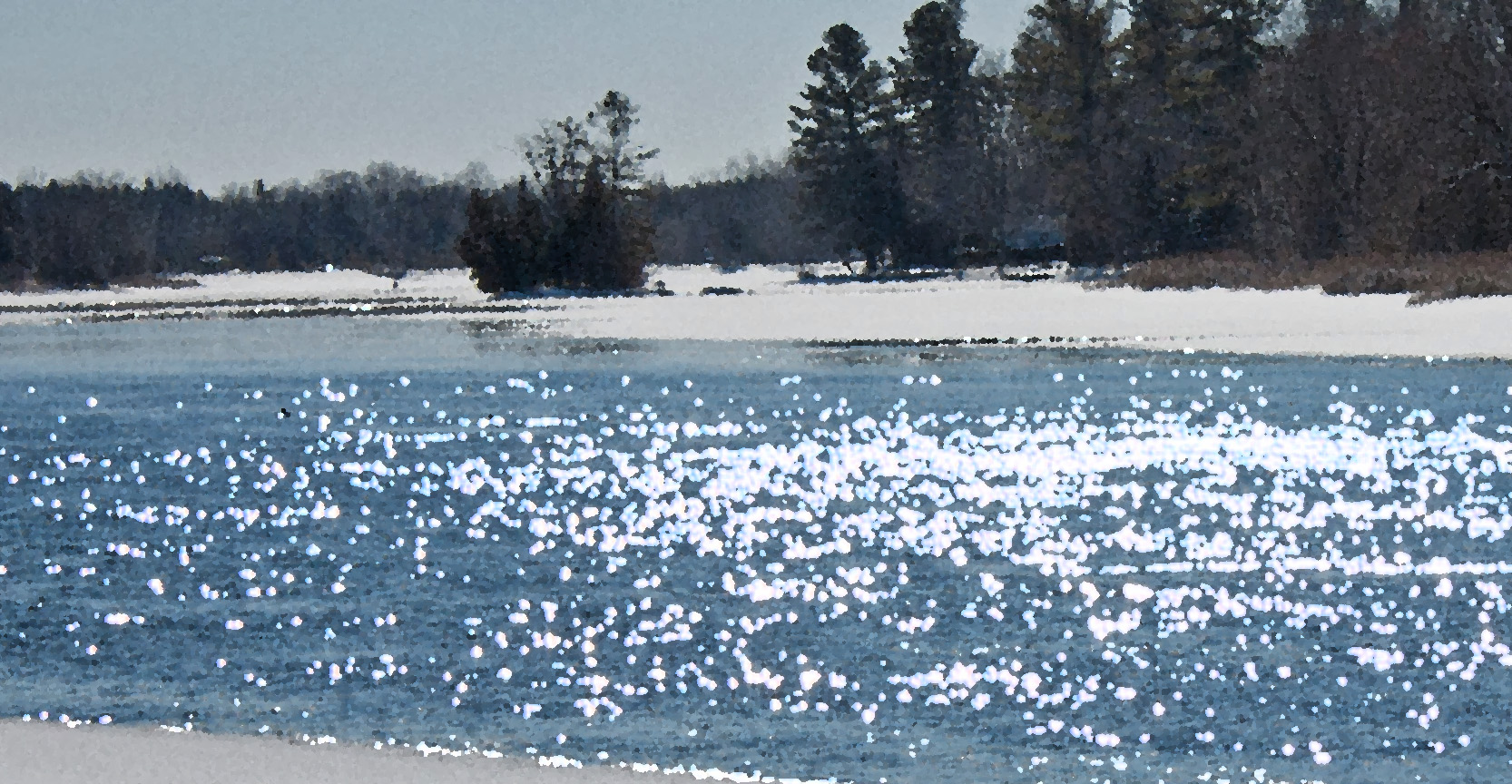
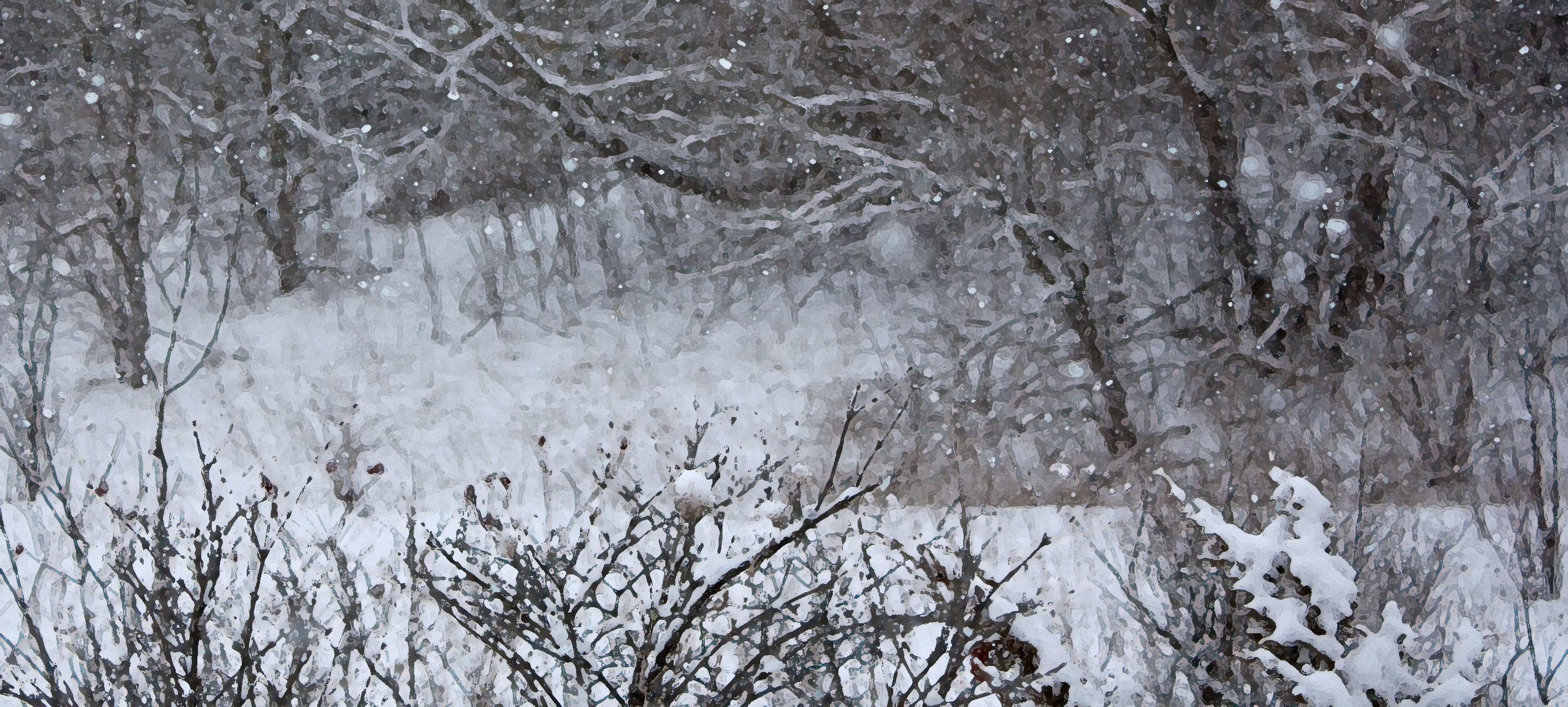
Ice clad prisms, snow covered fields of glittering fire…
Winter days, the wondrous glow: ultramarine lights and turning shades
The magic song: ice and gently underflow of meandering streams
Singing waters on the tortuous pathway below…
Clangor, bell sounds: the moving harmonies on icy slopes…


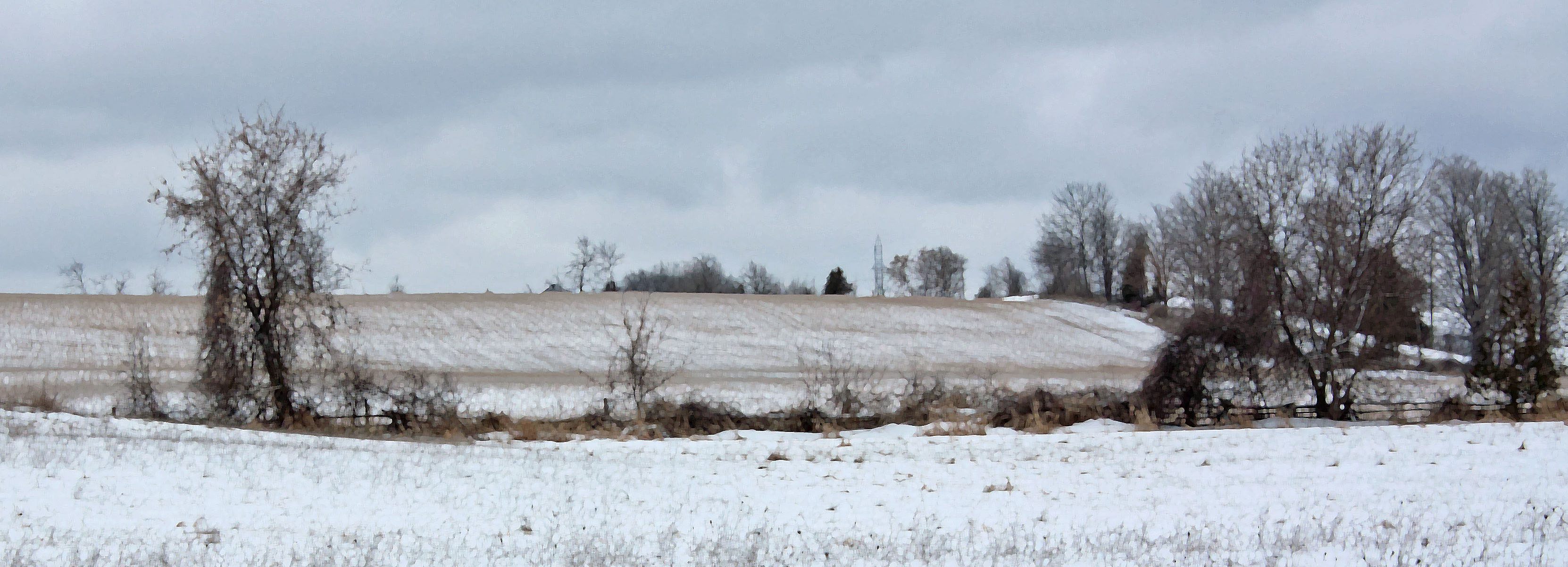
A bronze feathered hawk sails high above
Into the bright sunlit skies,
Hawk, swiftly carried in its flight above bended fir and aspen forests,
A wild, fierce, freewheeling majesty…

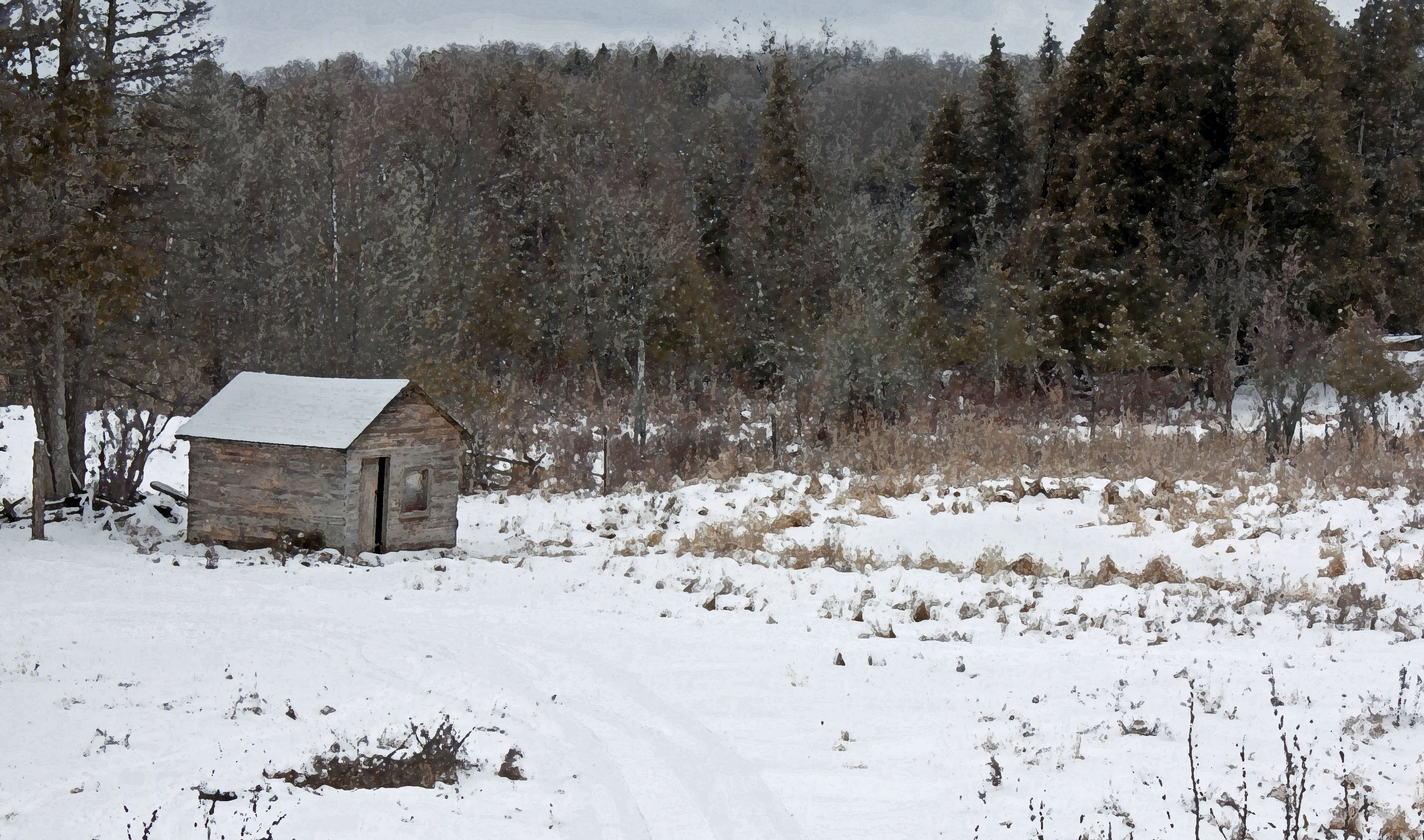
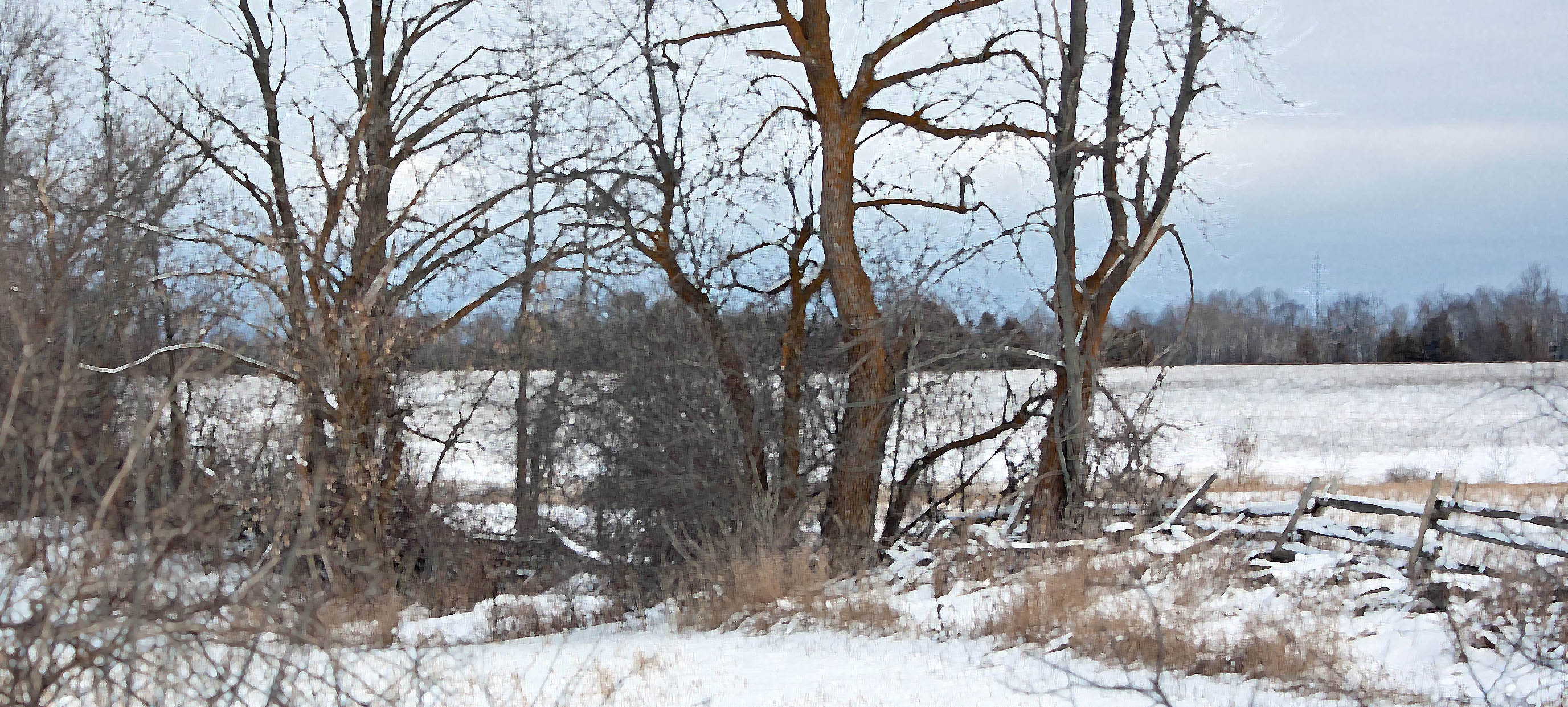

The many pristine snow reflected lights, glittering fires
Above a snow clad world in a time of darkness:
Nature’s magic universe everywhere extant:
We are overwhelmed, confounded by the wonder of it all.


Bev Gorbet is a Toronto poet. She has published several poems with the Retired Teachers Organization and most recently in “Literary Connection IV: Then and Now” (In Our Words Inc., 2019), edited by Cheryl Antao Xavier.
Nina Munteanu is a Canadian ecologist / limnologist and novelist. She is co-editor of Europa SF and currently teaches writing courses at George Brown College and the University of Toronto. Visit www.ninamunteanu.ca for the latest on her books. Nina’s bilingual “La natura dell’acqua / The Way of Water” was published by Mincione Edizioni in Rome. Her non-fiction book “Water Is…” by Pixl Press(Vancouver) was selected by Margaret Atwood in the New York Times‘Year in Reading’ and was chosen as the 2017 Summer Read by Water Canada. Her novel “A Diary in the Age of Water” was released by Inanna Publications (Toronto) in June 2020.

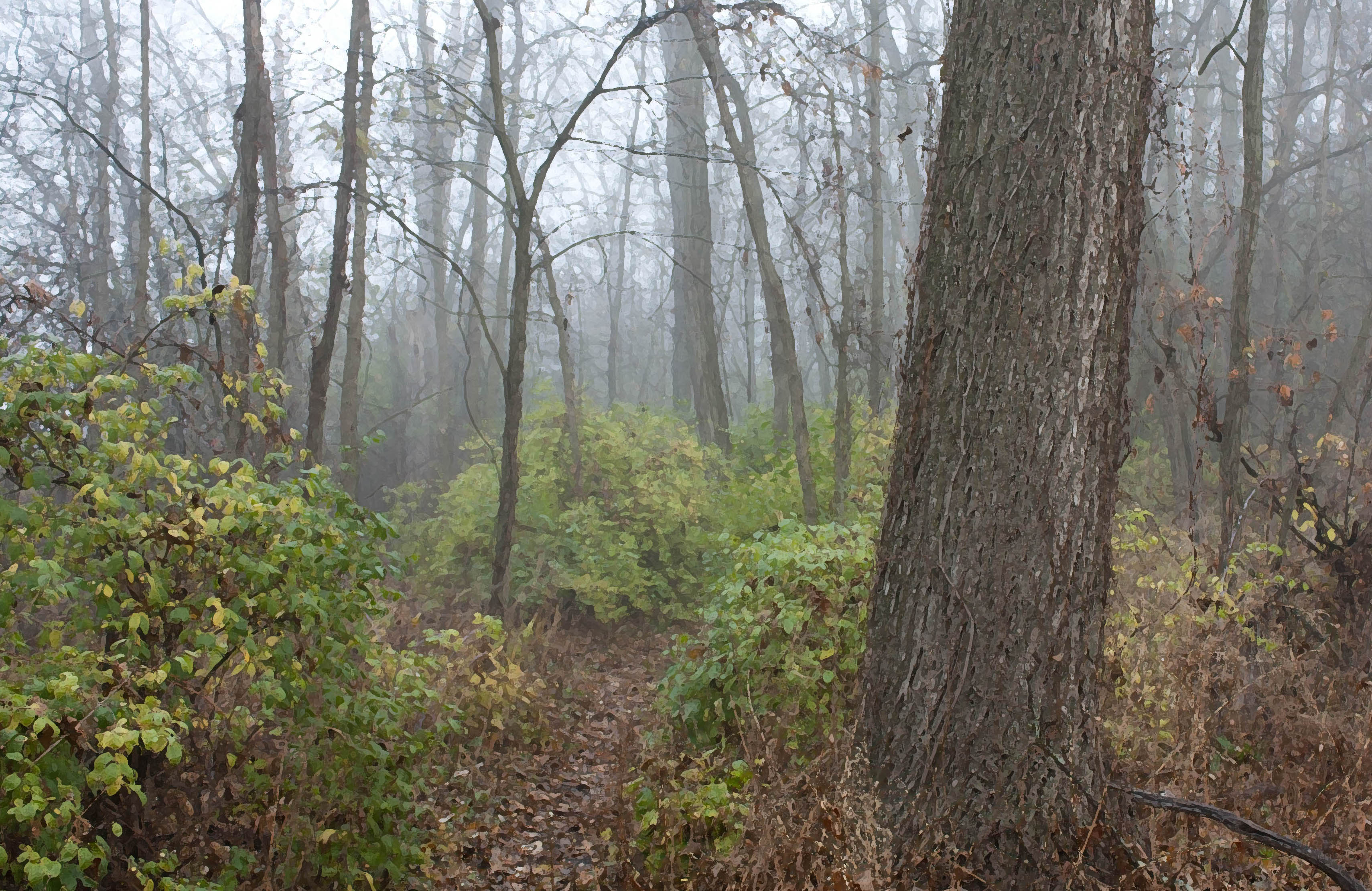
A few days ago, I woke up in the morning to a dense fog outside. I hastily dressed, grabbed a clementine, put on my boots and coat and raced outside into the gentle morning. The air was fresh. A calm stillness had settled over everything, from ghostly forest to dripping branches by the path to people who appeared and disappeared in the mist.

As I strolled along the trail and forest paths, camera in hand, I realized that I needn’t have rushed; the fog didn’t burn away and dissipate beneath a strong sun. It remained foggy the entire day.

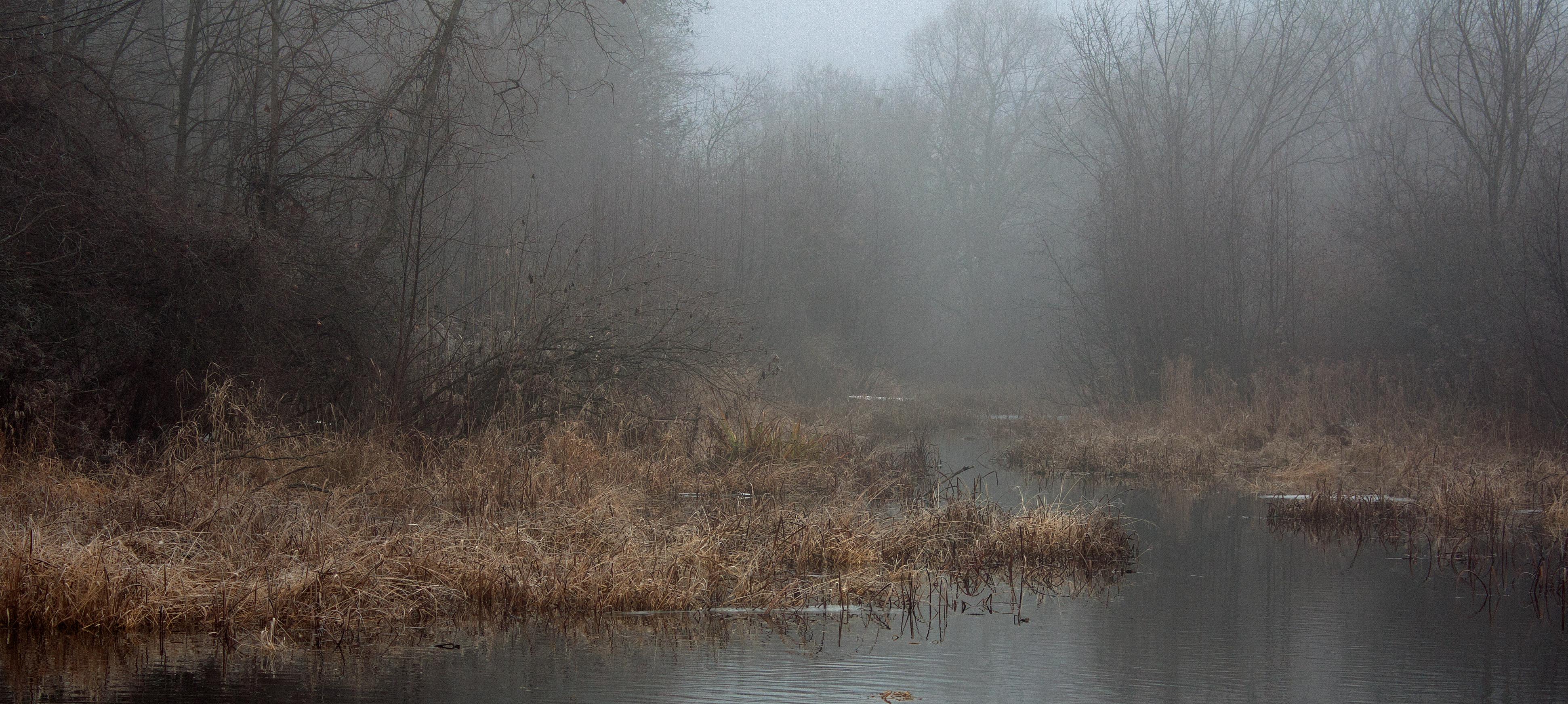
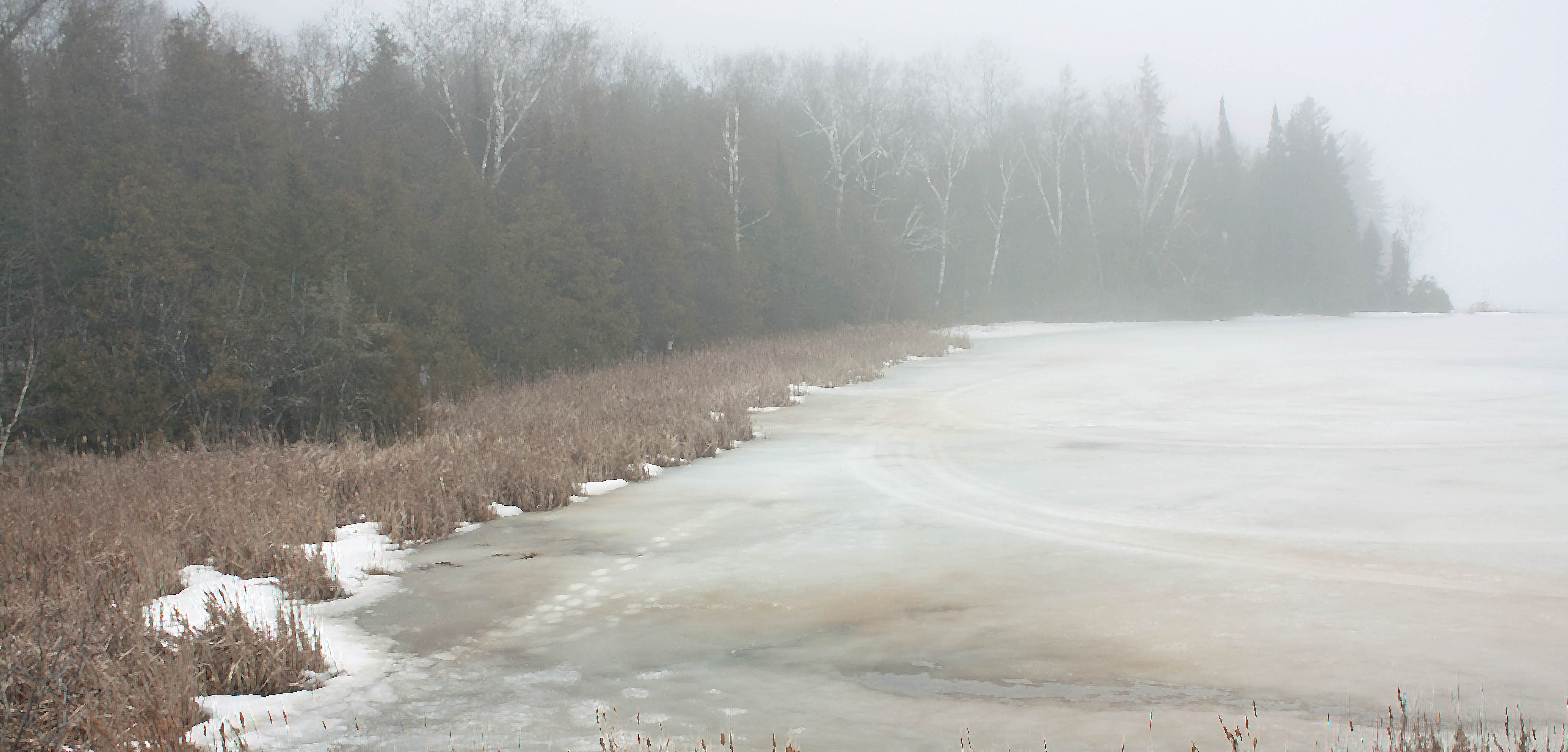

At Thompson Creek marsh, crimson dogwood shrubs and gnarly trees greeted me with arms stretched through the fog. The damp air, fragrant with the stirring of Winter, caressed my cheeks. I felt like I’d entered a Camille Pissarro painting…


During my drive along the river, the calm stillness of the day settled over me with muted beauty. Nature’s shapes peered through the mist like quantum entangled apparitions, coalescing to the nearness of my gaze then vanishing again on my parting.


I drove along country roads that vanished in the mist. As I plied through the fog, phantom trees loomed, quietly announcing themselves on the side of the road as their shapes assembled into something solid.
I imagined I was catching the breath of heaven…

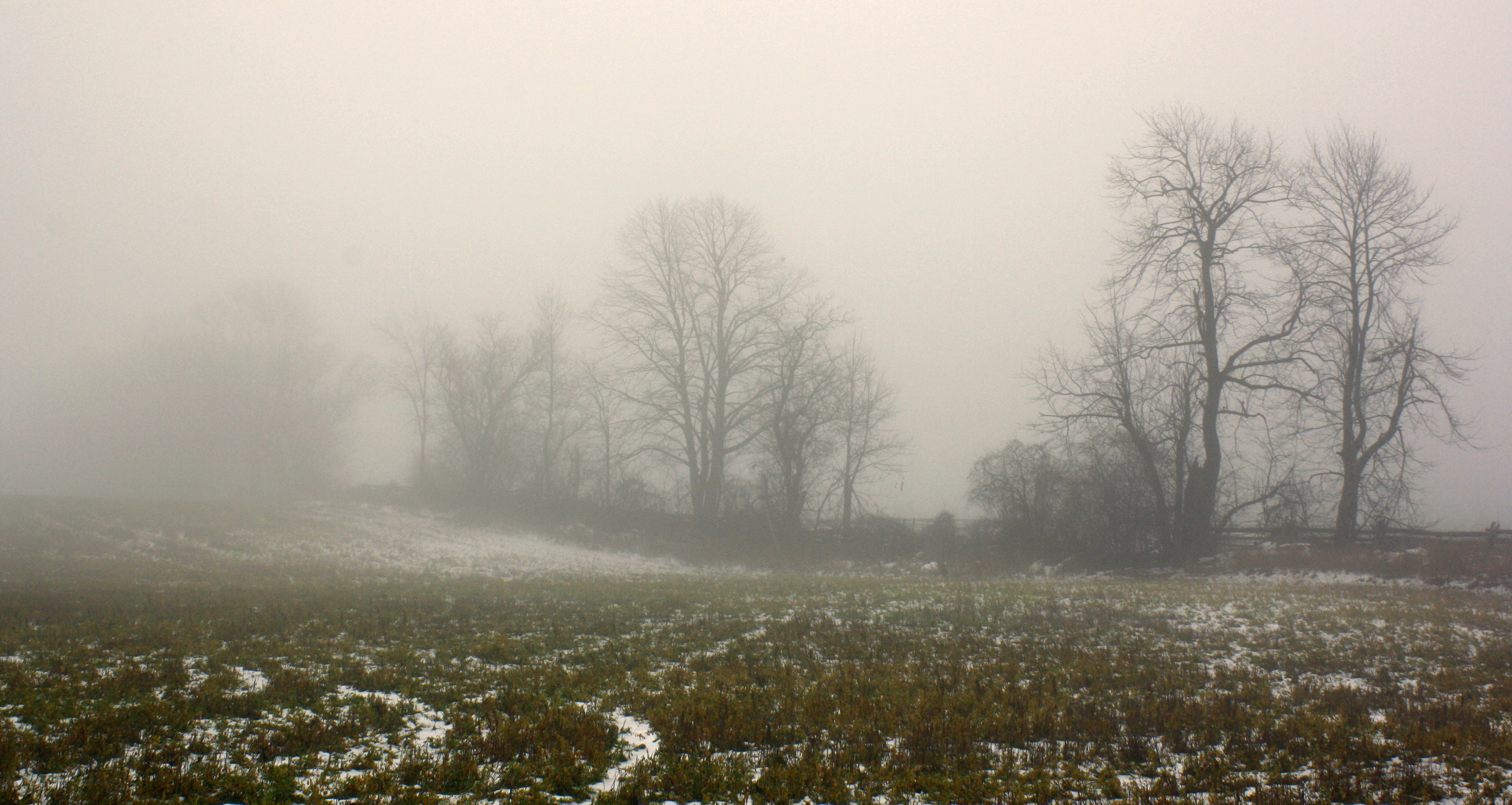

The fog is a shape-shifter. Sometimes a brooding beast, obscuring all in its indiscriminate path. Other times an impish rogue, a pale coquette, winking and teasing as it both reveals and hides, like a good mystery novel…


Nina Munteanu is a Canadian ecologist / limnologist and novelist. She is co-editor of Europa SF and currently teaches writing courses at George Brown College and the University of Toronto. Visit www.ninamunteanu.ca for the latest on her books. Nina’s bilingual “La natura dell’acqua / The Way of Water” was published by Mincione Edizioni in Rome. Her non-fiction book “Water Is…” by Pixl Press(Vancouver) was selected by Margaret Atwood in the New York Times‘Year in Reading’ and was chosen as the 2017 Summer Read by Water Canada. Her novel “A Diary in the Age of Water” was released by Inanna Publications (Toronto) in June 2020.
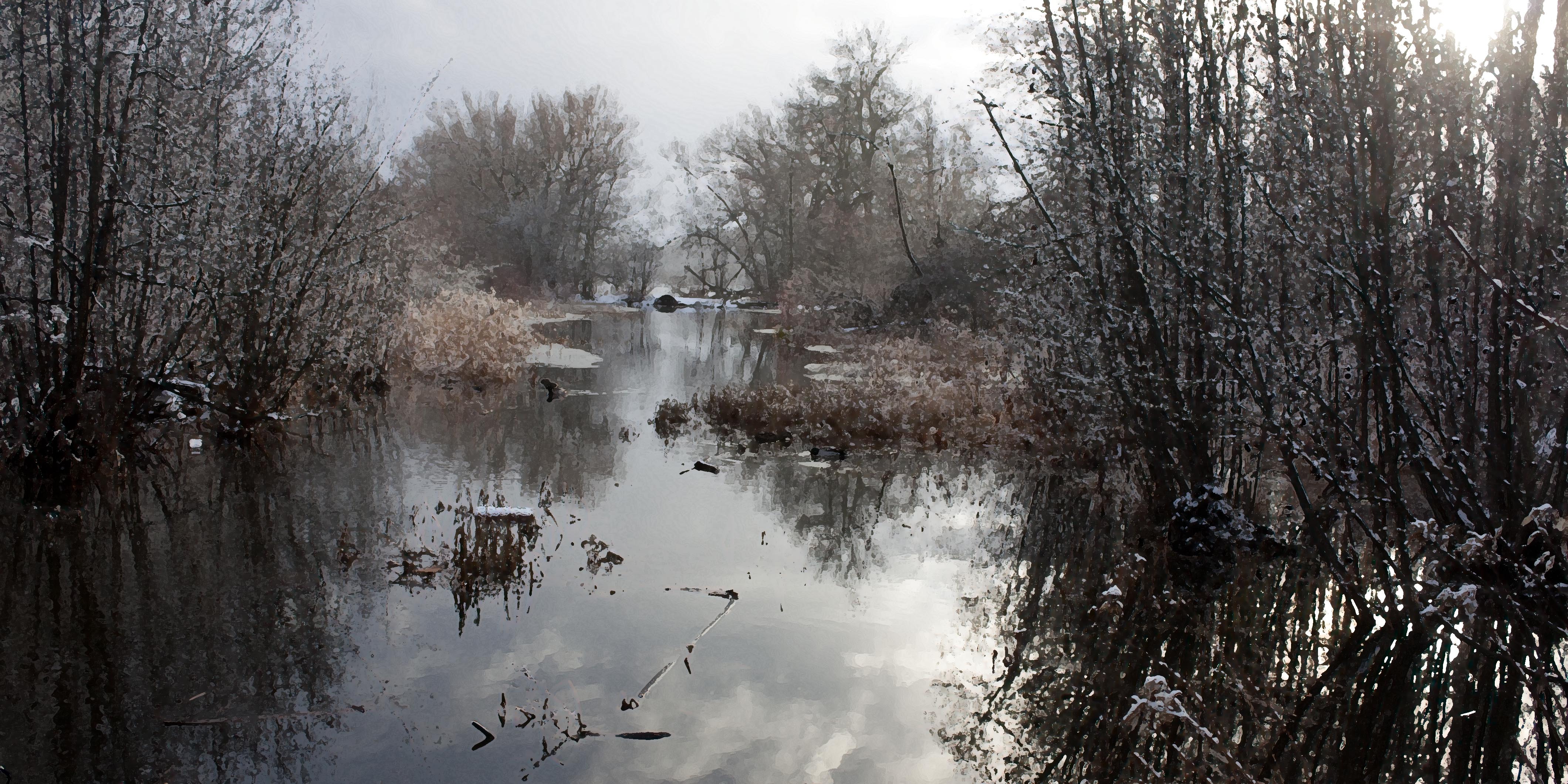
The strange merry-go- round will turn and turn;
Season to season in sacred passage,
Time’s gentle silences softly unwinding…

Days of a savage beauty:
The world’s innate beauty,
The world’s inevitable pain…
We, both predator and prey:
Wild song, wild nature’s order…
Moments of perplexity and loss,
The many daunting questions:
Unanswerable visions beyond the abyss.

Too often the inaction,
The inscrutable silences
In a time of fear…

The cruel histories: these misbegotten tales?
Where has love gone this solemn time?
Sacred memory and hope?

Generations have trod on unending journey
Neither question nor answer to guide
The lost ever lost, the perplexed ever perplexed…
Love is all, time’s vast unwinding.
Bev Gorbet is a Toronto poet. She has published several poems with the Retired Teachers Organization and most recently in “Literary Connection IV: Then and Now” (In Our Words Inc., 2019), edited by Cheryl Antao Xavier.
Nina Munteanu is a Canadian ecologist / limnologist and novelist. She is co-editor of Europa SF and currently teaches writing courses at George Brown College and the University of Toronto. Visit www.ninamunteanu.ca for the latest on her books. Nina’s bilingual “La natura dell’acqua / The Way of Water” was published by Mincione Edizioni in Rome. Her non-fiction book “Water Is…” by Pixl Press(Vancouver) was selected by Margaret Atwood in the New York Times‘Year in Reading’ and was chosen as the 2017 Summer Read by Water Canada. Her novel “A Diary in the Age of Water” was released by Inanna Publications (Toronto) in June 2020.

In Costi Gurgu’s near-future political thriller Servitude (Kult Books, 2022), what is real and what is fiction blurs with terrible prescience and possibility. Gurgu has created a scenario based on a premise that stirs dangerously in the reality of today’s capitalist western world: what if corporations were allowed to take back with impunity what their debtors owed them—in whatever way they pleased?
In Gurgu’s near-future America, the fourth Republican president in a row will be elected with virtually 100% Republican representation in Congress and the Senate—ensuring a monopoly government and creating a potential dictatorship (something a certain Republican president was trying to achieve not too long ago—and came dangerously close).
The story begins in the UK, which has recently made corporate slavery law. Under the Freedom Act, corporations under the British Servitude Exchange (BSX) can lawfully capture and detain persons with significant debt to sell them and their services in exchange for what is owed.
Wishing to do the same, the American corpocracy pushes the Freedom Act bill through Congress, potentially making corporate slavery a lawful pursuit using the concept of servitude. The concept of unconditional restitution in a country of people living largely on credit becomes popular among wealthy corporations; (consider that over two thirds of Americans are currently in debt with an average of $96,000 owed by each American, which includes mortgage, student loans, auto and credit card, personal loans and home equity1).
Neoliberal idealogues and proponents of the Freedom Act suggest that citizens should learn to be responsible for their lifestyles and should not expect the government to bail them out of bankruptcy every time they overspend (ignoring the fact that the U.S. government’s current national debt is some 30 trillion dollars—to corporate investors, China, Japan, and intra-government agencies.2 However, given that corporate investors currently hold over a third of the national debt2, dominant corporate influence on government to create a slavery act as demonstrated in Servitude is not outlandish).
A fifth of the way into the book, a Texas governor proclaims: “Servitude is merely a form of adult education. If you have graduated from the American education system and proceeded to live your life as though there is no tomorrow and spent more money than you have earned, well beyond your fair share, then you must be re-educated with America’s modernized value system. Servitude is an educational tool for the people.”
Gurgu hints at key events that brought us to this point: from the shenanigans of Donald Trump to starving children in New York City and Chinese troops taking down the American flag at the Hawaii State Legislature. The European Union has been dismantled and the Eastern Block reborn. Climate change related resource wars were waged by the Second Ottoman Empire and others, leading to the collapse of the global market. All have led to the reintroduction of slavery and homo sacer, the disposable human. Foucault would attest that the biopolitical hegemony of Capitalism already enslaves human beings as disposable ‘human capital.’
In my upcoming eco-thriller Thalweg, character Daniel considers his 2050s world in which humanity is largely commodified, a world similar to Gurgu’s Servitude world:
It’s the end of the world…The beginning of the end of the world really came with the steam engine back in 1784 and the enslavement of water, when James Watt’s ‘universal machine’ coerced water to help usher in the industrial age of carbon extraction and the disposable human, homo sacer. By 1920, 97% of electricity in Canada came from hydropower. We were sure eager beavers. Enslaved water germinated a culture obsessed with defining itself through a ‘precession of simulacra’—the truth which conceals that there is none. Social media. Facebook. Twitter. Echo-chambers of denatured reality, signs reflecting other signs, saturated with ‘likes’ and emojis, where meaning becomes infinitely mutable to the point of being meaningless.
What’s left is a ‘desert of the real,’ a Kafkaesque menagerie of interminable, unresponsive fragments of experience in a fiction that no longer knows it’s fiction. One in which Huxley’s Soma rules in a kind of warped Foucauldian governmentality, where corporations like CanadaCorp use facial recognition and Pegasis spyware to manage plebian behaviour through quiet authoritarianism. Like bioelectricity subverting the neural pathway, it infects our fragile brains with subliminal notions of freedom when we’ve already surrendered our sovereignty to the omnioptic gaze of capitalism …
Why is it easier to imagine the end of the world than the end of capitalism? Half a century ago, Mark Fisher took up that concept first introduced by Fredric Jameson and Slavoj Žižek in his book Capitalist Realism3… Several things Fisher pointed out resonate, such as, “Capitalism is what is left when beliefs have collapsed at the level of ritual or symbolic elaboration, and all that is left is the consumer-spectator, trudging through the ruins and the relics.”3 This sad construct leaves us with a kind of ‘post-literate’ world in which the ruling ideology is cynicism or what Fisher calls ‘reflexive impotence.’4
Daniel Schindler in “Thalweg” by Nina Munteanu
.
.
How realizable is Gurgu’s Servitude?…
Since 1989, neoliberal ideologues have fed us the narrative that capitalism is the only realistic political-economic system. We cheerfully engage in this confabulation to feed our rapacious desires; and like an insatiable amoeba, capitalist realism consumes and digests our dreams and desires then feeds it back to us at a price. At what cost? Fisher astutely tells us that in our current world, “ultra-authoritarianism and Capital are by no means incompatible: internment camps and franchise coffee bars co-exist.”3 Gilles Deleuze tells us that “Control societies are based on debt rather than enclosure.”5
In Gurgu’s story, Detective Blake Frye—himself burdened with heavy debt—becomes ensnared in an inter-agency investigation into the for-now-still illegal slave trade in America that has already created secret slave camps and is actively kidnapping ‘nobodies’ off the streets. Connected somehow to UK’s BSX and several billionaire tycoons, the slave trade has become highly lucrative. Earlier, Frye’s wife, Isa—who is an investigative journalist and TV producer—embarks on an exposé of the illegal slave trade. Just before her show “Debt Hunters” is about to air, the material is confiscated by the NSA who consider it a breach of national security; her entire crew is detained and the NSA investigate her on suspicion of treason. Later, when slavers kidnap Isa and put her on the market, Frye must navigate through corrupt government officials and rogue agency operatives to find her before she’s sold and disappears forever.
Near the end of the book, Gurgu’s not-so-hidden message resonates loudly through Detective Frye’s lamentations:
“Hard-hitting investigative journalism appealed to an increasingly smaller pool of customers. People were always working, always checking their phones and other electronic devices, and they wanted their news to be just as easy to digest. Well documented and researched reportages took too many minutes to watch, and didn’t often line up with their social or political viewpoints. Truth had become debatable. Everyone had their own, personalized version of the facts, easy to access on targeted media outlets. They no longer questioned the facts they consumed. Doubt took too much effort. Everyone was entitled to their own opinions, and considered them the definition of a political truth. That philosophy had been in effect since 2017, the year that practically everything that mattered in the world deteriorated.”
Detective Frye’s analysis is relevant to today’s sybaritic North American society. Gurgu’s fiction is not about the future; it is about today. And his message is clear: we have become lazy and apathetic, seduced by a craving for comfort and pleasure at the expense of integrity and freedom. Freedom is not given; it is earned. Only through active responsible vigilance will we keep it.
References:

My world: most wondrous, mystic shelter,
Holy meridian of a life’s overwhelming mystery,
Magic center of hope
Haunting universe of a deepest longing…

My autumn world, tormented season
And still time of the calm pastoral moon:
Skies overhead, windtossed wildernesses,
Seasons of joy, seasons of a bittersweet discontent
Time’s last flowering before a fierce winter of silences
Autumn ‘s last reflections midst storm ravaged skies…
Last songs, the changing lights,
Amber and golden hours
Windswept calls, wild cry, surge, a windswept rage
Rising lights, moving shadow across far spread field,
Across wide spread glade…

A sacred bend and flow this existential time,
Rhapsodies across a dying land
Rain and storm riven sky songs,
Windsong days, wild blasts to ravage and torment

The high windstorm prophesies:
Promises of a fierce unmanning;
Storm and lost days, winter and last days’
Their return too soon presage….
Haunted universes of a deepest longing.

Bev Gorbet is a Toronto poet. She has published several poems with the Retired Teachers Organization and most recently in “Literary Connection IV: Then and Now” (In Our Words Inc., 2019), edited by Cheryl Antao Xavier.


NINA MUNTEANU is a Canadian ecologist / limnologist and novelist. She is co-editor of Europa SF and currently teaches writing courses at George Brown College and the University of Toronto. Visit www.ninamunteanu.ca for the latest on her books. Nina’s bilingual “La natura dell’acqua / The Way of Water” was published by Mincione Edizioni in Rome. Her non-fiction book “Water Is…” by Pixl Press(Vancouver) was selected by Margaret Atwood in the New York Times ‘Year in Reading’ and was chosen as the 2017 Summer Read by Water Canada. Her novel “A Diary in the Age of Water” was released by Inanna Publications (Toronto) in June 2020.
 Nina Munteanu Writing Coach