“We’ve done terrible things to water.”
Hilde Dresden

“The story like water itself fills you, moves you, hypnotizes you, and eventually, totally engulfs you.”
GOODREADS REVIEW
“We’ve done terrible things to water.”
Hilde Dresden
“The story like water itself fills you, moves you, hypnotizes you, and eventually, totally engulfs you.”
GOODREADS REVIEW
“The slow violence of free-market capitalism isn’t so much the deliberate and focused actions of a few evil men as the accumulated negligence of an undiscriminating collective of unimaginative humans.”
Lynna Dresden
“In her dystopian novel Canadian limnologist Nina Munteanu employs Solar Punk’s technique of using dystopic descriptions of present ecological catastrophe to predict the end of the world as we know it, and to indicate a utopian future.”
THE SONOMA INDEPENDENT


I’ve just returned from Montreal, where I was invited to participate in a two-day conference hosted by McGill University’s Bieler School of Environment at Esplanade Tranquil. Named after Kim Stanley Robinson’s eco-fiction novel New York 2140, the conference brought together a diverse assemblage of scientists, academic researchers, urban planners, speculative fiction writers, artists, and students in a small setting dedicated to encourage cross-pollination of ideas and visions through panels and workshops. I sat on a panel and a roundtable with other writers, urban planners, engineers, scientists and activists to discuss futures through science and story. Much of the event focused on the literary genre called Hopepunk—a sub-genre of Speculative Fiction devoted to optimistic themes of scientific transformation, discovery and empathy. Resulting dialogue explored forms of communication, expression, and ways not just to deal with growing solastalgia, eco-grief, and environmental anxiety but to move forward through action and hope.

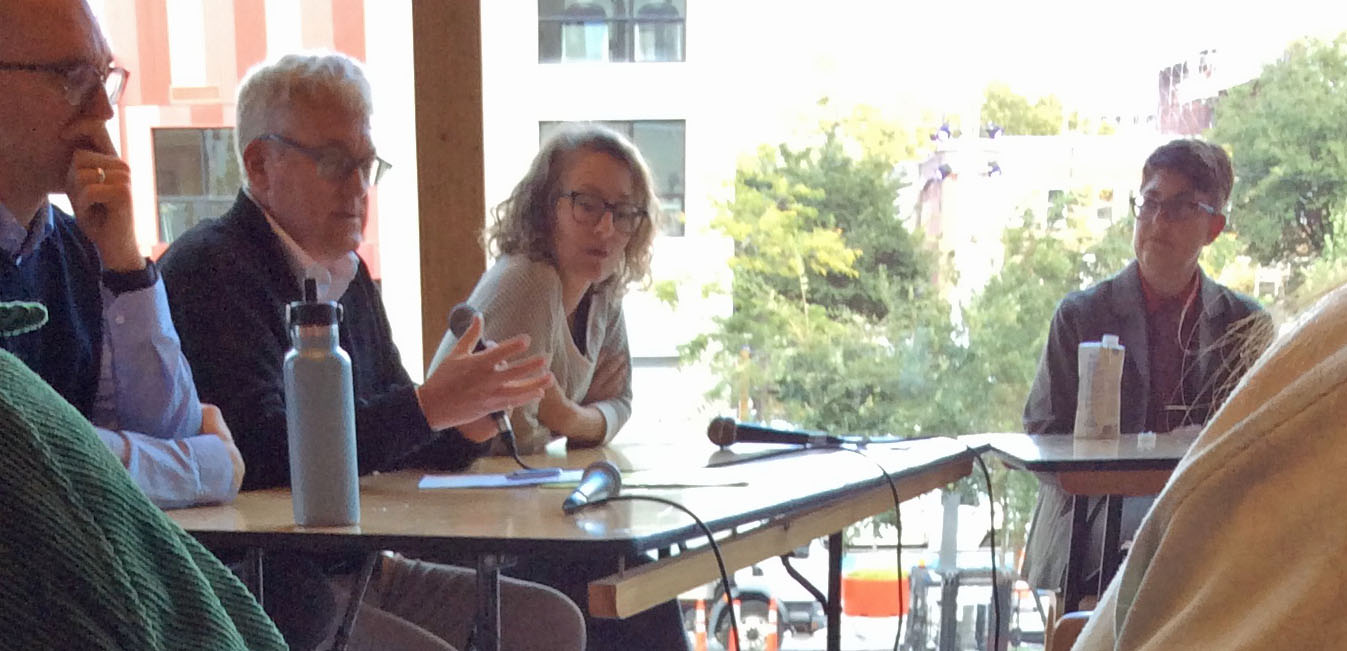
In the Thursday morning writer’s panel, in which we explored the role of science knowledge and hope in story, I shared the writing process I underwent with my latest published novel A Diary in the Age of Water, which I categorize as a hopeful dystopia (‘Hopeful dystopias’ are much more than an apparent oxymoron; they are in some fundamental way, the spearhead of the future—and ironically often a celebration of human spirit by shining a light through the darkness of disaster):
The main character in A Diary in the Age of Water was a limnologist like me who kept a journal (the diary referenced in the title of the book). This part of the story took place in the near-future when the water crisis and associated climate change phenomena had become calamitous. Being a scientist with so much intimate knowledge of the crisis, the diarist became cynical and lost her faith in humanity. I recall my own journey into despair as I did the research needed to convey the character’s knowledge and situation. I found myself creating a new character (the diarist’s daughter) much in the way a drowning swimmer takes hold of a life-saver, to pull me out of the darkness I’d tumbled into. The daughter’s hopeful nature and faith in humanity pulled both me and the reader out of the darkness. The cynical nature of the diarist came from a sense of being overwhelmed by the largeness of the crisis and froze her with feelings of powerlessness. The diarist’s daughter rose like an underground spring from the darkness by focusing on a single light: her friend and lover who pointed to a way forward. As Greta so aptly said once, “action leads to hope” and hope leads to action. Despite the dire circumstances in the novel, I think of A Diary in the Age of Water as a story of resilience. And ultimately of hope.

I came to the conference as a writer, scientist, mother, and environmental activist. What I discovered was an incredible solidarity with a group so diverse in culture, disciplines, expression and language—and yet so singularly united. It was heartwarming. Hopeful. And necessary. This conference ultimately felt like a lifeline to a world of possibilities.
Organizers brought in a wide variety of talent, skill, and interest and challenged everyone through well-run workshops to think, feel, discover, discuss, collaborate and express. Workshops, panels, and multimedia art incited co-participation with all attendees in imaginative and fun ways. On-site lunches and drinks helped keep everyone together and provided further space for interaction and discussion.

At every turn, I made contacts across disciplines and interests and had stimulating and meaningful conversations. I discovered many hopeful ‘stories’ of Montreal and elsewhere on hopeful visions and endeavors. These included “Seeds of good Anthropocenes” (small ground-rooted projects and initiatives aimed at shaping a future that is just, prosperous, and sustainable); turning scientific research into hopeful stories; and world building as resistance. I talked with artistic creators, students doing masters in Hopepunk literature and co-panelists on all manner of subjects from urban encampments, greening and rewilding Montreal, to how Rachel Carson’s Silent Spring informed a main character in Liu Cixin’s novel The Three Body Problem.


Conversations often led to an acknowledgement of art as an effective means of expression and creative therapy in the context of the climate crisis. I met creatives such as Marc-Olivier Lamothe and his colleagues at MAPP and had the chance to experiment first hand with his creative tools. I had wonderful discussions with storytelling visual artist Alina Gutierrez Mejia of Visual Versa, whose evolving mural of each day’s events was truly mesmerizing to watch—and rather revealing.

In future, I’ll post more on these and other creatives I encountered at the conference.
Program for Montreal 2140
THURSDAY morning began with an introduction by BDE Director Frédéric Fabry.
This was followed by a panel entitled Hopeful Stories Across Science and Fiction, in which I participated, along with fellow writers Su J. Sokol (author of Zee), Alyx Dellamonica (author of Gamechanger), Rich Larson (author of Annex and Ymir), Genevieve Blouin (author of Le mouroir des anges) and Andrea Renaud Simard (author of Les Tisseurs). The panel was moderated by McGill geographer Renee Sieber and McGill urban planner Lisa Bornstein.
After lunch, a panel entitled Faculty Workshop: Turning Research into Hopeful Stories was moderated by McGill researcher Kevin Manaugh and Annalee Newitz (journalist and author of Four Lost Cities). McGill researchers included: Caroline Wagner (bioengineering), Hillary Kaell (anthropology and religious studies); Jim Nicell (civil engineering); Sébastien Jodoin (law); and Michael Hendricks (biology).

The faculty panel was followed by the Student Workshop, Hope and the Future, led by McGill students Tom Nakasako, Rachel Barker, Tatum Hillier, and Lydia Lepki.
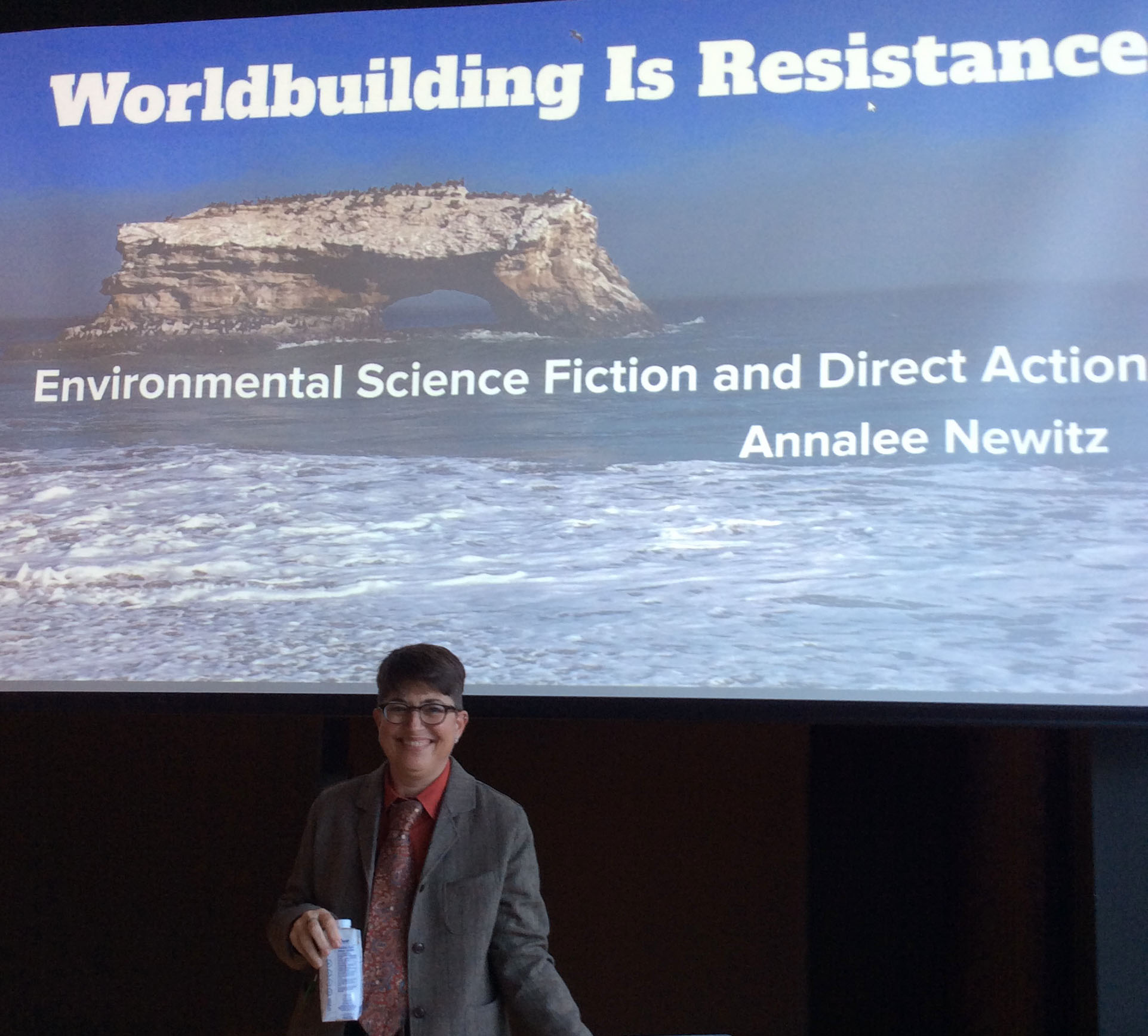
Annalee Newitz closed the day with their keynote presentation Worldbuilding Is Resistance that explored the dystopia binary of environmental science fiction. A theme to which the next keynote by Kim Stanley Robinson would touch on as well.

FRIDAY morning started with Elson Galang and Elena Bennett (McGill University), who led the Seeds of Good Anthropocenes Workshop, which introduced the concept of seeds programs then further explored through breakout discussion groups they moderated.
This was followed by faculty-led Teaching and Learning for Hopeful Futures Workshop, in which McGill instructors from varied disciplines (including education, political science, environment, urban planning and planetary sciences) discussed translating science into hopeful narratives.

I then participated in a roundtable of authors, scholars, researchers and planners entitled Telling the Story of the Future, moderated by Chris Barrington-Leigh (McGill BSE/Health and Social Policy). The roundtable included fellow authors Alyx Dellamonica and Su J. Sokol. Other participants of the roundtable included Stephanie Posthumus (languages, literatures, cultures at McGill), Jayne Engle (public policy at McGill) Richard Sheamur (urban planning at McGill), and limnologist Irene Gregory-Eaves (biology at McGill).

The final keynote was given by Kim Stanley Robinson (author of New York 2140 and The Ministry of the Future).


Nina Munteanu is a Canadian ecologist / limnologist and novelist. She is co-editor of Europa SF and currently teaches writing courses at George Brown College and the University of Toronto. Visit www.ninamunteanu.ca for the latest on her books. Nina’s bilingual “La natura dell’acqua / The Way of Water” was published by Mincione Edizioni in Rome. Her non-fiction book “Water Is…” by Pixl Press (Vancouver) was selected by Margaret Atwood in the New York Times ‘Year in Reading’ and was chosen as the 2017 Summer Read by Water Canada. Her novel “A Diary in the Age of Water” was released by Inanna Publications (Toronto) in June 2020.

Like a car, every novel has its point of ignition: a spark that sets it in motion. This occurs when a premise or idea comes together with an incendiary moment of clarity or a thematic question. Mine—though I didn’t know it at the time—happened in a church on the Summer of 2016.
I was in a United Church on Bloor Street, in Toronto’s Annex, watching a talk given by Maude Barlow on water justice. The radical talk was based on her recent book Boiling Point, a comprehensive exploration of Canada’s water crisis—a crisis that most Canadians weren’t—and still aren’t—aware. Canada is steward to a fifth of the world’s fresh water, after all. It is a water-rich country. Of the dozen largest inland lakes in the world, Canada holds eight of them. So, why water crisis? Barlow explains. And you should read Boiling Point, particularly if you’re Canadian. It will open your eyes to the politics of water and how multinational corporations—like Nestlé—are already grabbing and funneling water away from Canadians and into the global profit machine.
I sat close to the front of the Church sanctuary to best see her. But I soon noticed that many people had elected to sit in the gallery above. I found myself focusing on a young mother and her little girl. The girl had some paper and crayons and was busy with that as the enthusiastic mother listened to Maude deliver dire facts about corporate water high-jacking and government complicity.
I saw a story there.
What mother would take her pre-school child to a socio-political talk on water? I would later reflect that memory of the mother and her little girl through my characters Una and her little daughter Lynna, the diarist in my novel A Diary in the Age of Water (eventually published in 2020 with Inanna Publications).

My novel really began with a short story I was invited to write in 2015 by editors of Future Fiction and Mincione Edizioni about water and politics in Canada; the premise of this story would later find it’s way into the larger novel. I had long been thinking of potential ironies in Canada’s water-rich heritage. The premise I wanted to explore was the irony of people in a water-rich nation experiencing water scarcity: living under a government-imposed daily water quota of 5 litres as water bottling and utility companies took it all. I named the story “The Way of Water.” It was about a young woman (Hilda) in near-future Toronto who has run out of water credits for the public wTap; by this time houses no longer have potable water and their water taps have been cemented shut; the only way to get water is through the public wTaps—at great cost. She is in a line of people; she’s two metres from water—and dying of thirst.
“The Way of Water” captures a vision that explores the nuances of corporate and government corruption and deceit together with global resource warfare. In this near-future, Canada is mined of all its water by thirsty Chinese and US multinationals—leaving nothing for the Canadians. Rain has not fallen on Canadian soil in years due to advances in geoengineering and weather manipulation that prevent rain clouds from going anywhere north of the Canada-US border. If you’re wondering if this is possible, it’s already happening in China and surrounding countries.
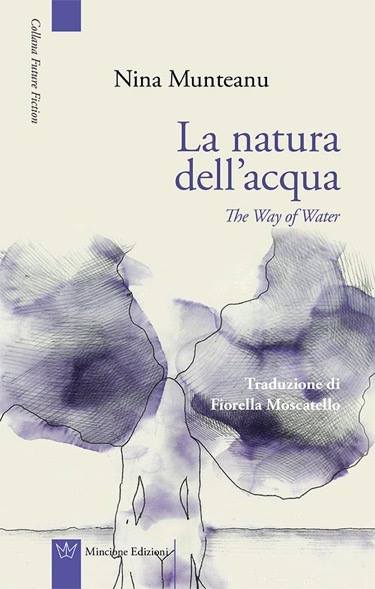
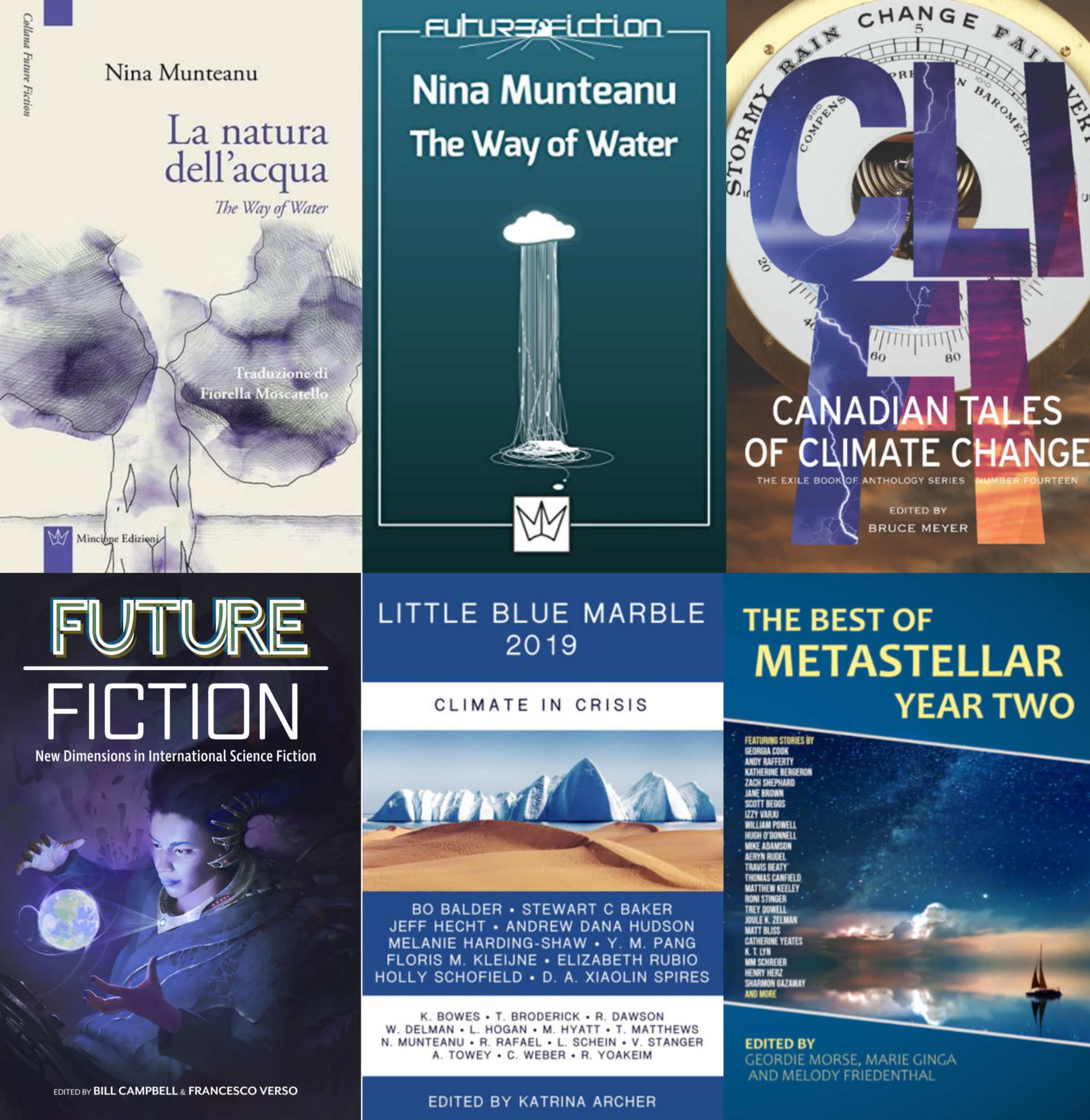
The story first appeared in 2015 in Future Fiction, edited by Francesco Verso, and in 2016 as a bilingual (English and Italian) book and essay published by Mincione Edizioni in Rome. The story has so far been reprinted seven times in magazines and anthologies, including “Cli-Fi: Canadian Tales of Climate Change Anthology” (Exile Editions, Bruce Meyer, ed), in 2017, “Future Fiction: New Dimensions in International Science Fiction” (Francesco Verso & Bill Campbell, eds; Future Fiction / Rosarium Publishing, Rome and Greenbelt, MD) in 2018; and in Little Blue Marble Magazine (Katrina Archer, ed) in January, 2019 and in their ‘Best of’ anthology. It was then published in 2022 in Metastellar Magazine and later in their ‘Best of’ anthology. “The Way of Water” received generous praise from review sites and the press worldwide.
After the success of this short story, I realized that I needed to tell the larger story—how did the world—Canada—get to where Hilda was? Her mysterious mother, the limnologist Lynna who was taken away by the RCMP in 2063, clamored for more attention. I remembered that four-year old girl and her mother in the gallery at Maude Barlow’s talk on water politics. And I thought of my characters: young Lynna and her mother Una. How does a daughter of an activist mother behave and think? How best to express her voice? I had earlier written a short story that was a mix of correspondence (emails) and third person narrative (“The Arc of Time” in Natural Selection, later reprinted in Metastellar Magazine), which I felt captured the voices of the characters well. I realized that a diary by Lynna would be an ideal way for her to express her unique worldview and cynicism—yet allow her vulnerable humanity to reveal itself through this unique relationship with her diary. The remaining characters and their narratives emerged easily from there: Una, her activist mother; Daniel, her conspiracy theorist colleague (and her conscience); Orvil, the water baron (and lover she betrayed); and Hilda, her “wayward” supposedly mind-challenged daughter—who appears in the short story that takes place later.
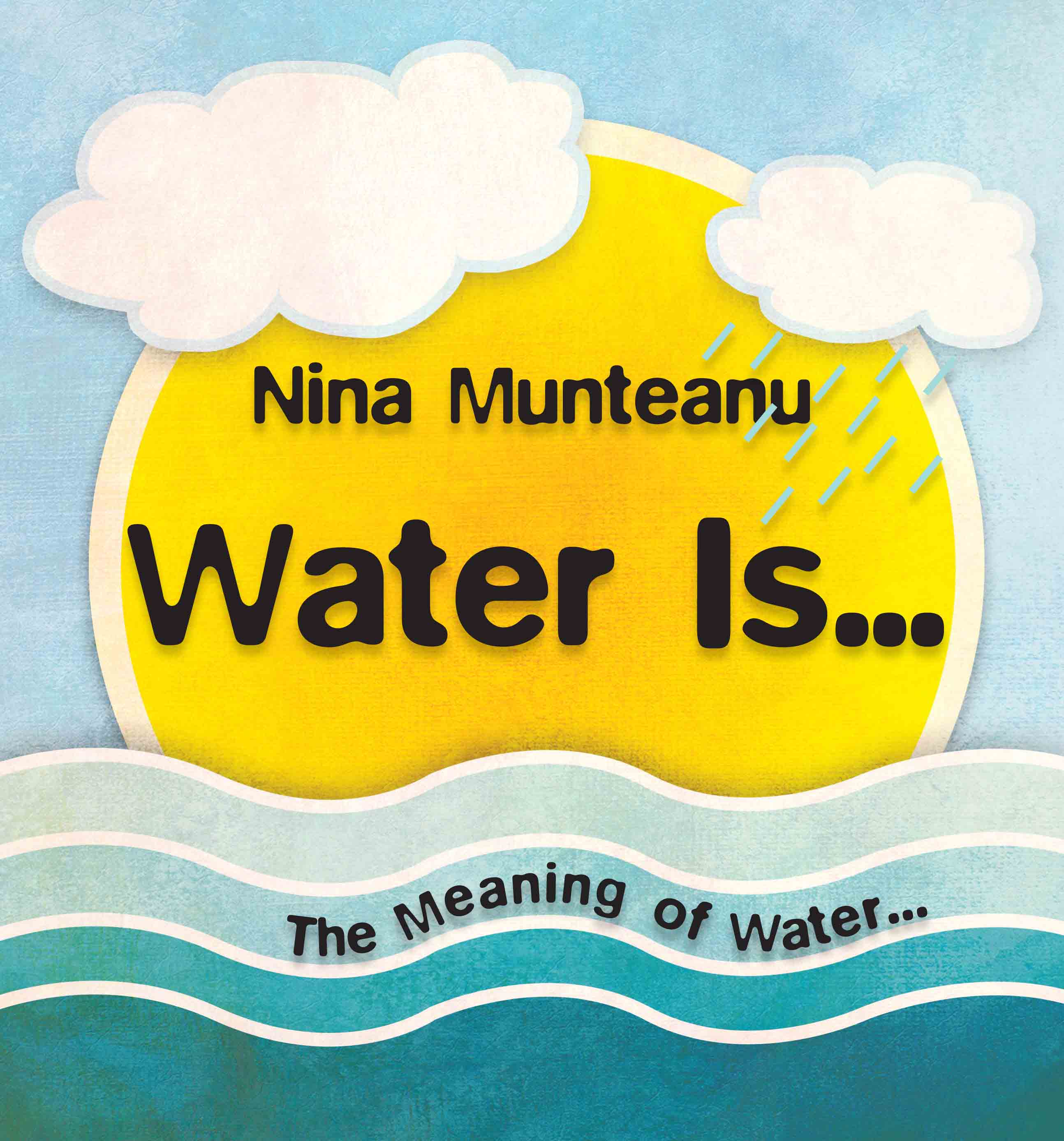
I had a lot of material; I had already been researching water issues and climate change in my activism as a science writer and reporter. In 2016, Pixl Press had published “Water Is… The Meaning of Water”, essentially a biography of water, written from the perspective of mother, environmentalist and scientist. I had practiced as a limnologist for over twenty-five years and could mine my various personal experiences in the field, lab and office with genuine realism. I chose Wetzel’s Limnology (the classic text book I used in my introductory limnology course) for quotes to each of Lynna’s entries; this added an opportunity to provide additional metaphor and irony through Lynna’s scientific voice. I placed the child Lynna (who was born in 2012) into actual events in Toronto, where I currently live. This pushed the story further into the area of documentary and blurred the lines between fiction and non-fiction to achieve a gritty and textured reality. Lynna also taught limnology at the University of Toronto, where I currently teach.
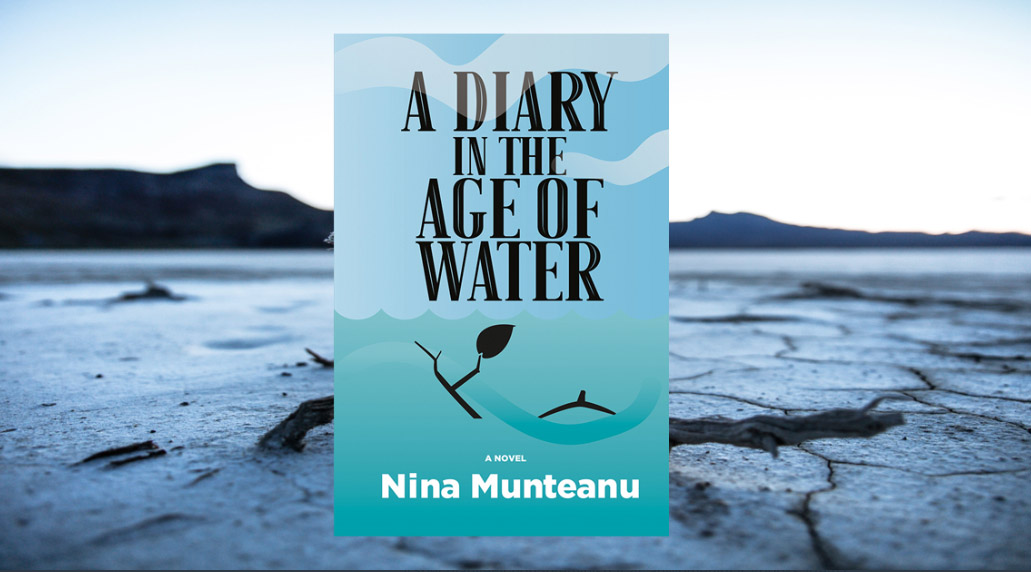
Just as Water Is… served as a watershed for all my relevant experiences as mother, environmentalist and scientist, A Diary in the Age of Water would galvanize many of my personal experiences, doubts, challenges and victories into compelling story. Although parts of the story wrote themselves, the entire book was not easy to write. There were times when I had to walk away from the book to gain some perspective—and optimism—before continuing. When I found myself drowning in Lynna’s voice, I invoked Hilda to guide me to shore. I found a balance that worked and compelled. Ultimately this opened to some of the best internal conflict and tension I have experienced in my writing.
Like water itself, A Diary in the Age of Water expresses through many vessels and in many perspectives, spanning hundreds of years—and four generations of women—with a context wider than human life. Through its characters, A Diary in the Age of Water explores the big question of humanity’s deadlock with planetary wellness and whether one is worth saving at the expense of the other. One of the characters asks Lynna the hard question: “If you had the chance to save the planet [stop the mass extinctions, deforestation and pollution ravaging the planet], but it was at the expense of humanity, would you do it?”
Water is, in fact, a character in the book—sometimes subtle and revealed in subtext, other times horrific and roaring with a clamorous voice. Water plays both metaphoric and literal roles in this allegorical tale of humanity’s final journey from home. The story explores identity and our concept of what is “normal”—as a nation and an individual—in a world that is rapidly and incomprehensibly changing—and in which each of us plays a vital role simply by doing or not doing.
A Diary in the Age of Water promises to leave you adjusting your frame of reference to see the world, yourself—and water—in a different way.

This is what PK Mutch of Liisbeth and Ariel Kroon (PhD graduate of English Literature at the University of Alberta and co-editor at Solarpunk Magazine) say about A Diary in the Age of Water, published by Inanna Publications in 2020:
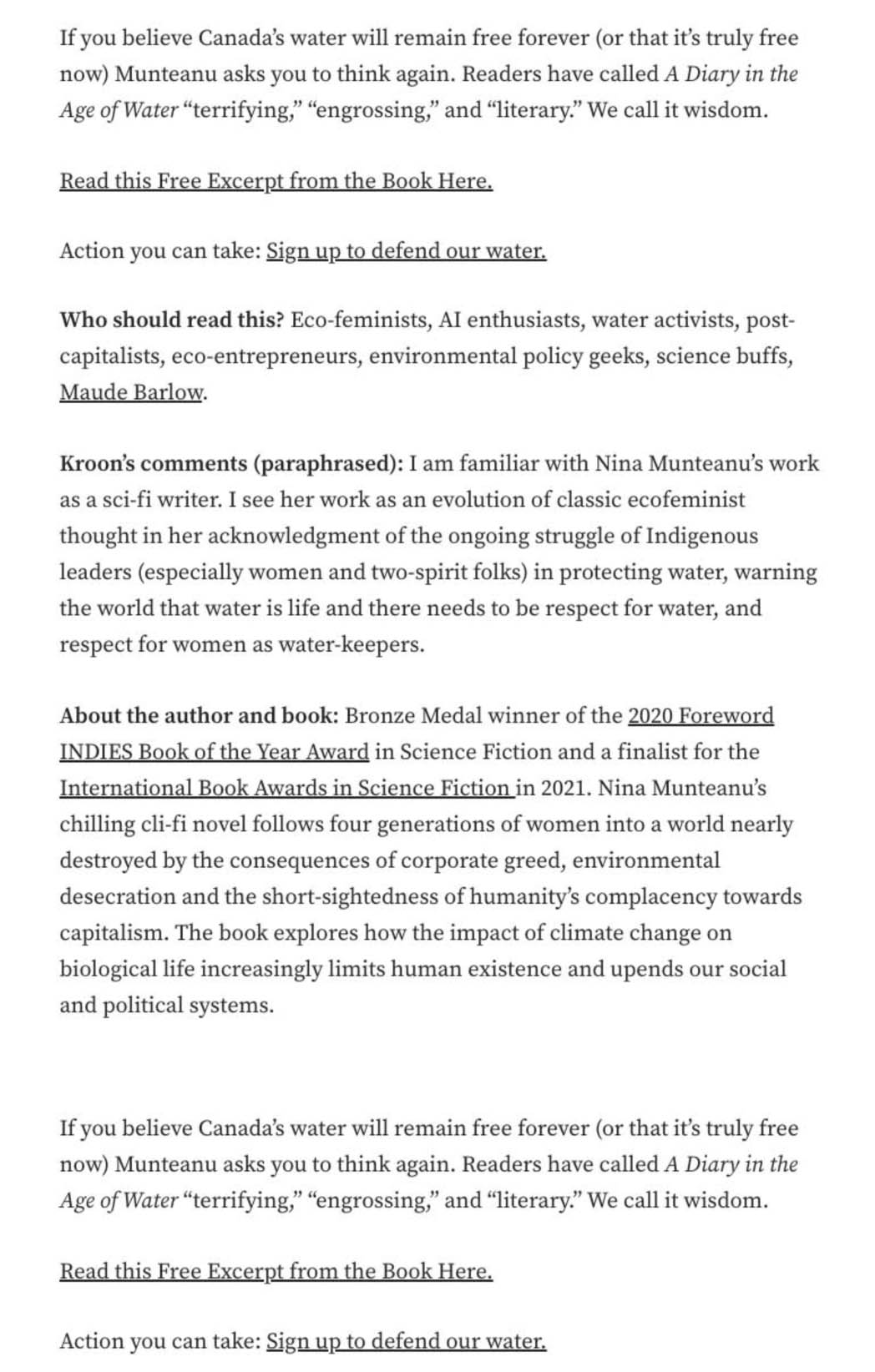
The novel has received wonderful praise and prizes, including the Literary Titan Award, the Foreword Indies Award and finalist in the International Book Awards. I wonder if Maude Barlow has read it?… Maybe I (or someone) should get her a copy, huh?…

Maude Barlow is a Canadian activist and author of Blue Gold, Boiling Point and several other books on water justice. She chairs the board of Washington-based Food and Water Watch and Ottawa-based Blue Planet Project. Maude co-founded the Council of Canadians and chaired its board for over three decades.

Nina Munteanu is a Canadian ecologist / limnologist and novelist. She is co-editor of Europa SF and currently teaches writing courses at George Brown College and the University of Toronto. Visit www.ninamunteanu.ca for the latest on her books. Nina’s bilingual “La natura dell’acqua / The Way of Water” was published by Mincione Edizioni in Rome. Her non-fiction book “Water Is…” by Pixl Press (Vancouver) was selected by Margaret Atwood in the New York Times ‘Year in Reading’ and was chosen as the 2017 Summer Read by Water Canada. Her novel “A Diary in the Age of Water” was released by Inanna Publications (Toronto) in June 2020.
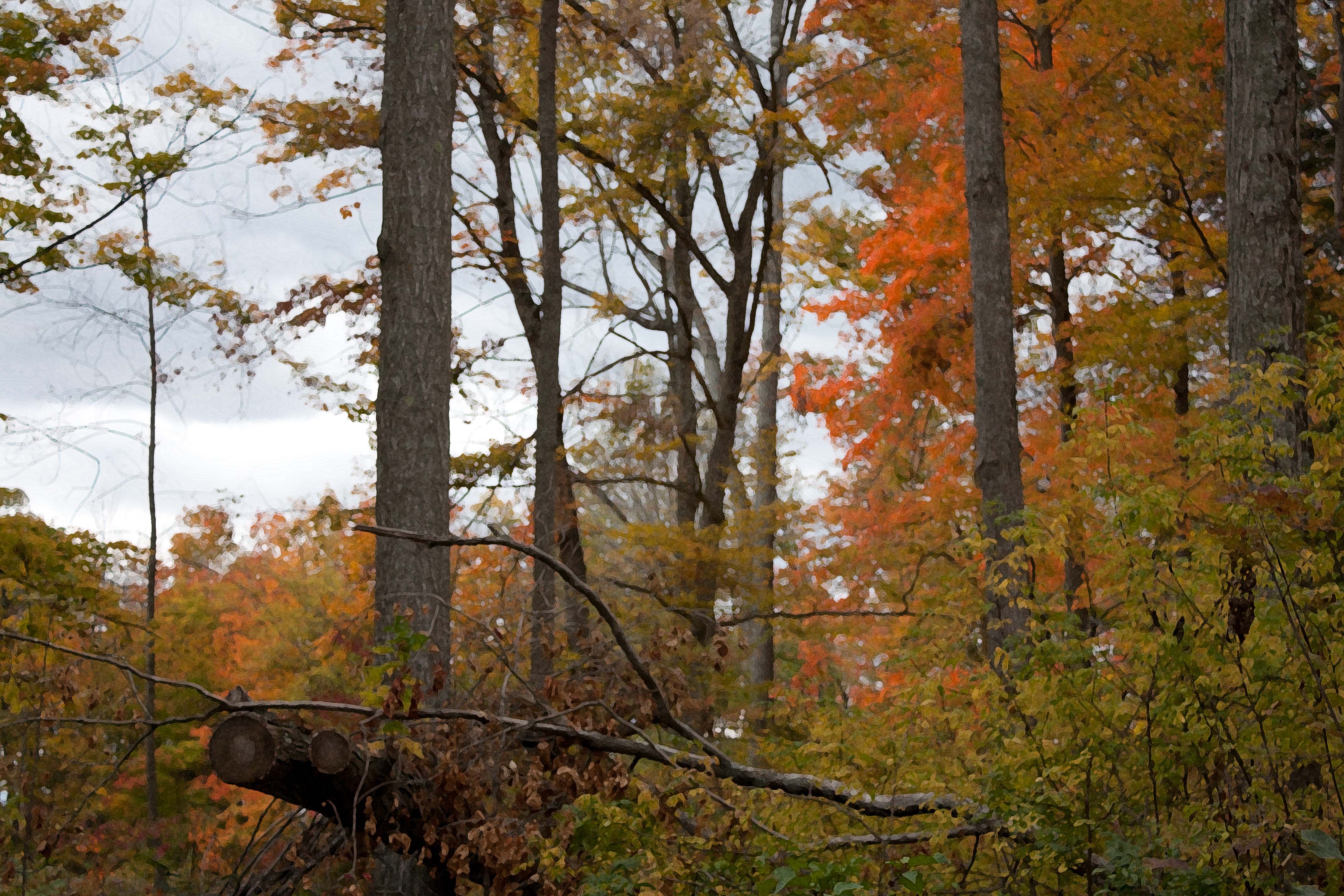
For the past few days, I’ve been wandering, entranced, in the various forests, swamps and marshes of the Kawarthas. I found myself inspired by the autumnal light and organic scent in the air.
They pulled me into the verge…

It’s the time of “the verge,” when the seasons collide in the wake of the equinox and anticipate the unruly winds of change. A moment of stillness before the Earth shifts, relinquishes, and embraces.
In the hush of a great threshold, Nature holds its breath and a leaf settles in the arms of a cedar root…

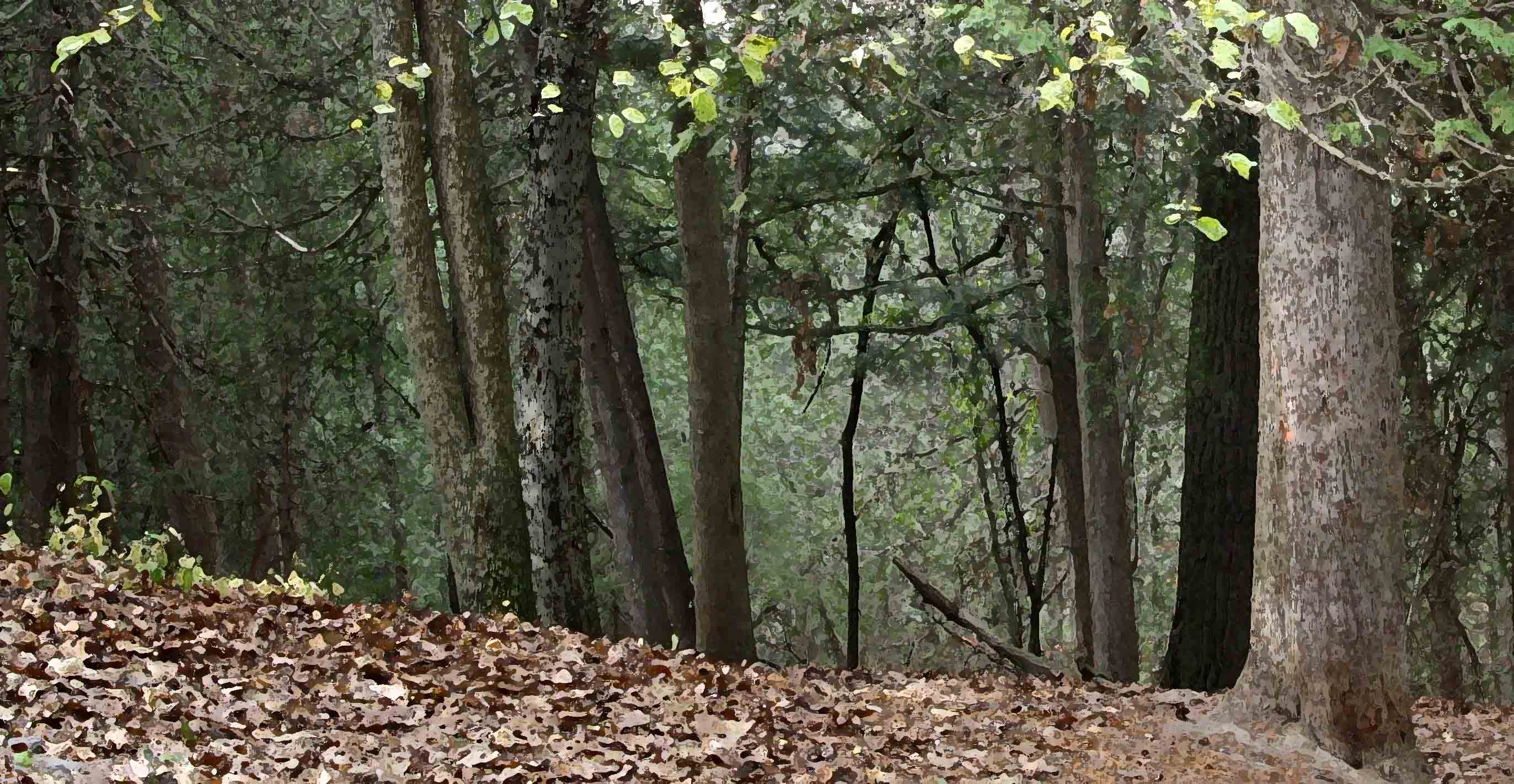
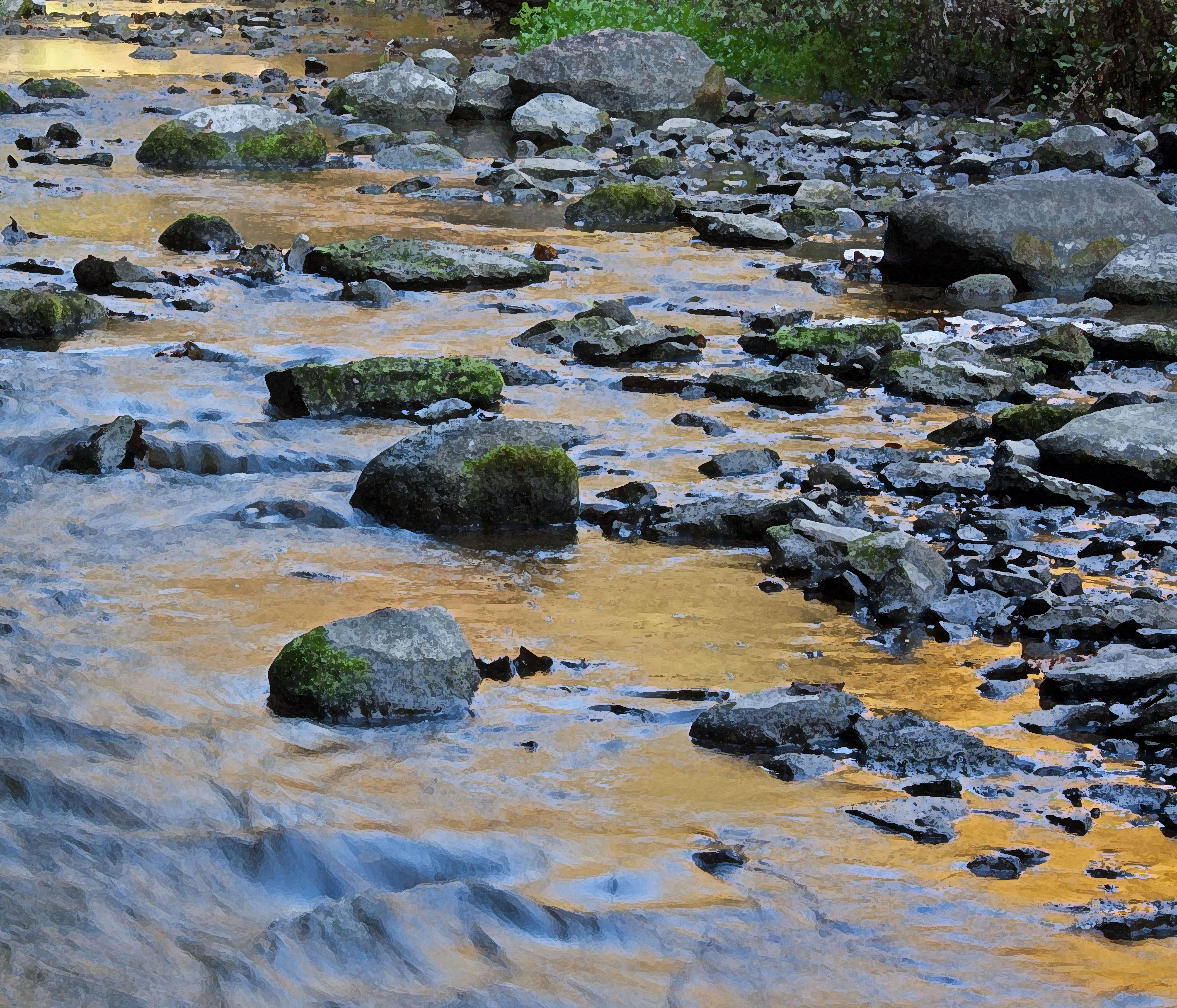
There I was, eyes and ears–all senses–wide, taking in Nature’s gifts of the verge. The rustling leaves in a cool wind. The musky smell of swamp water and the sweet rot of vegetation. The lazy gurgle of shallow creeks around smooth rocks. The halting shrill of a Blue Jay.

On one walk, a giant toad—the biggest I’d ever seen!—waddled across my path. I think it was an American toad, mottled and rough with warts. He looked rather grumpy and took his time, somehow confident—or not caring—that I could step on him and squish him easily. He was rather jiggly as he lumbered on. I did not take his picture; I don’t think he wanted me to, so I didn’t.

Soon after, a small garter snake slithered across my path, less confident of my steps. It froze once it was safely out of my way. Good snake…
The forest was alive with the domestic chaos of wildlife busy with itself. Chipmunks chugged and squirrels scolded from the tree tops. Surely not at me! I climbed out of the lowland of old-growth hemlock-beech swamp forest to the top of a drumlin of maple-hop hornbeam-ash forest and then descended again into the dark hemlocks and pines.


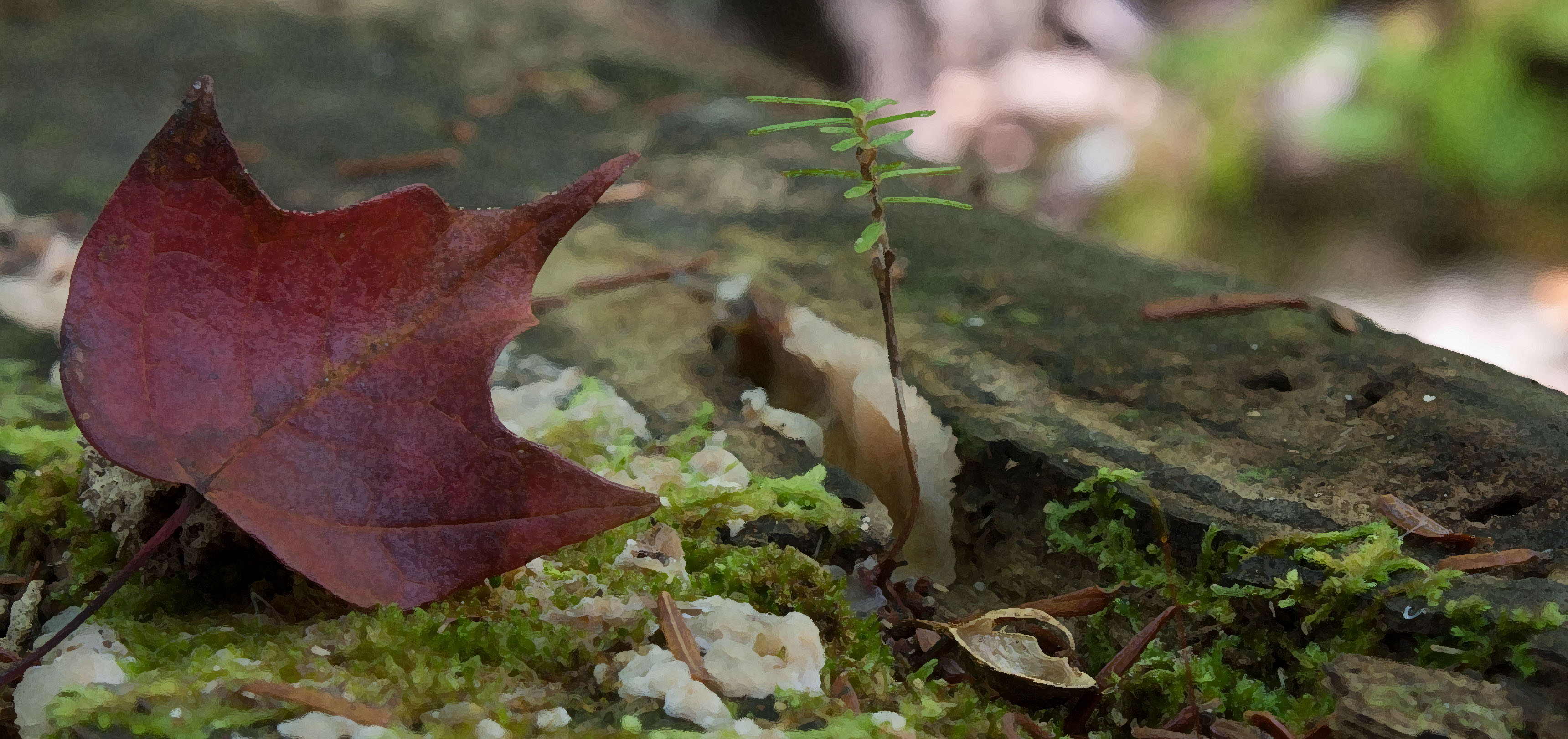
The colours of sugar and red maple blazed in the canopy above, frothy clouds of bright orange, red, yellow and everything in-between under a deep blue sky. I wandered, camera in hand, and found treasures everywhere—from blue fungi to tiny bright red maple leaves freshly fallen.

I have a silly habit of picking up leaves and pressing them when I get home; my books are repositories of colourful prizes from years past.

In the marsh, I encountered a green frog, sitting in the mud. It decided to pose for my camera. And I obligingly took its picture. My new best friend.
No, I did not take him home. I left him there, lollying in the mud, looking very content.
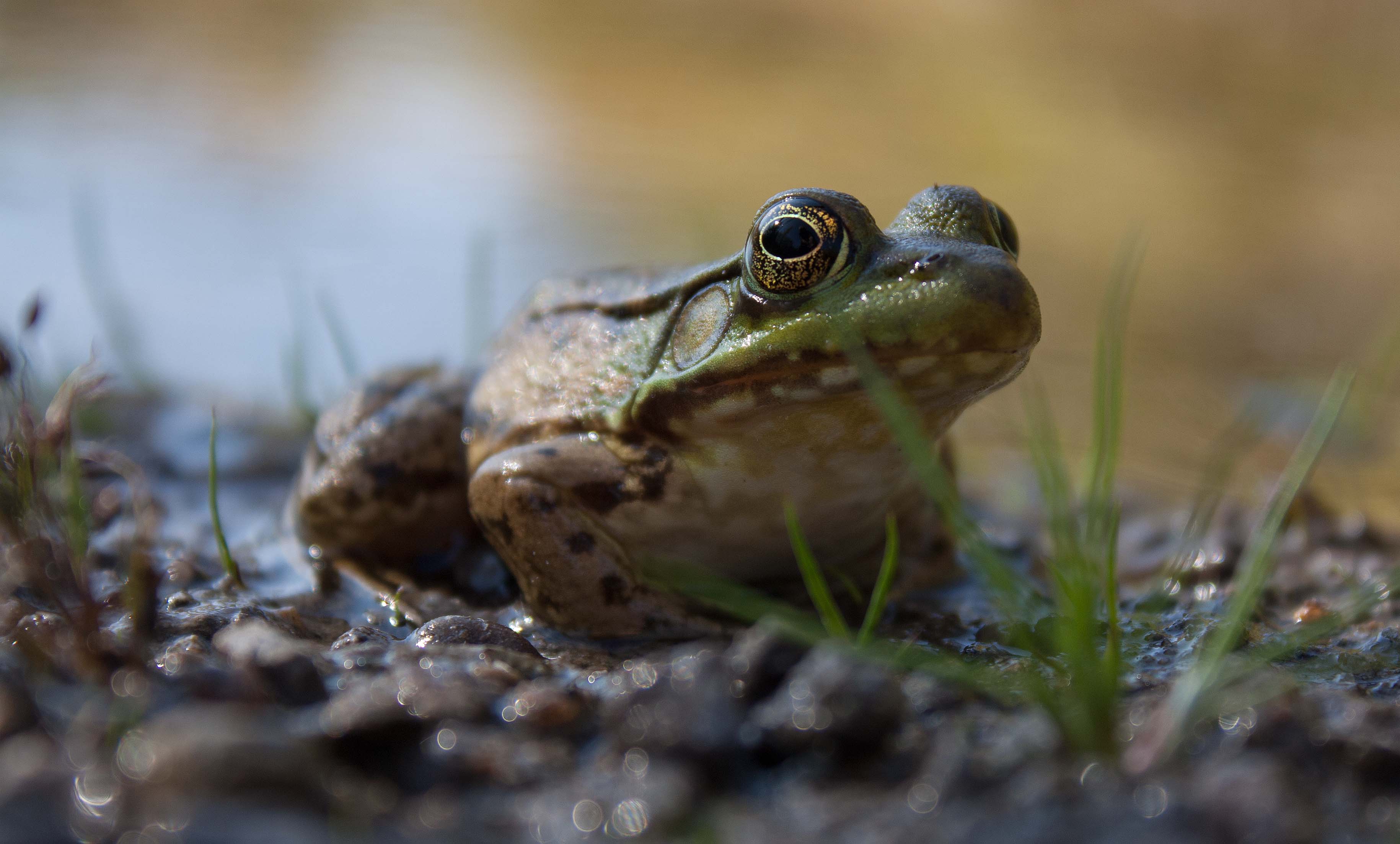
For all I know he’s still there, presiding over the autumn verge…
Nina Munteanu is a Canadian ecologist / limnologist and novelist. She is co-editor of Europa SF and currently teaches writing courses at George Brown College and the University of Toronto. Visit www.ninamunteanu.ca for the latest on her books. Nina’s bilingual “La natura dell’acqua / The Way of Water” was published by Mincione Edizioni in Rome. Her non-fiction book “Water Is…” by Pixl Press (Vancouver) was selected by Margaret Atwood in the New York Times ‘Year in Reading’ and was chosen as the 2017 Summer Read by Water Canada. Her novel “A Diary in the Age of Water” was released by Inanna Publications (Toronto) in June 2020.
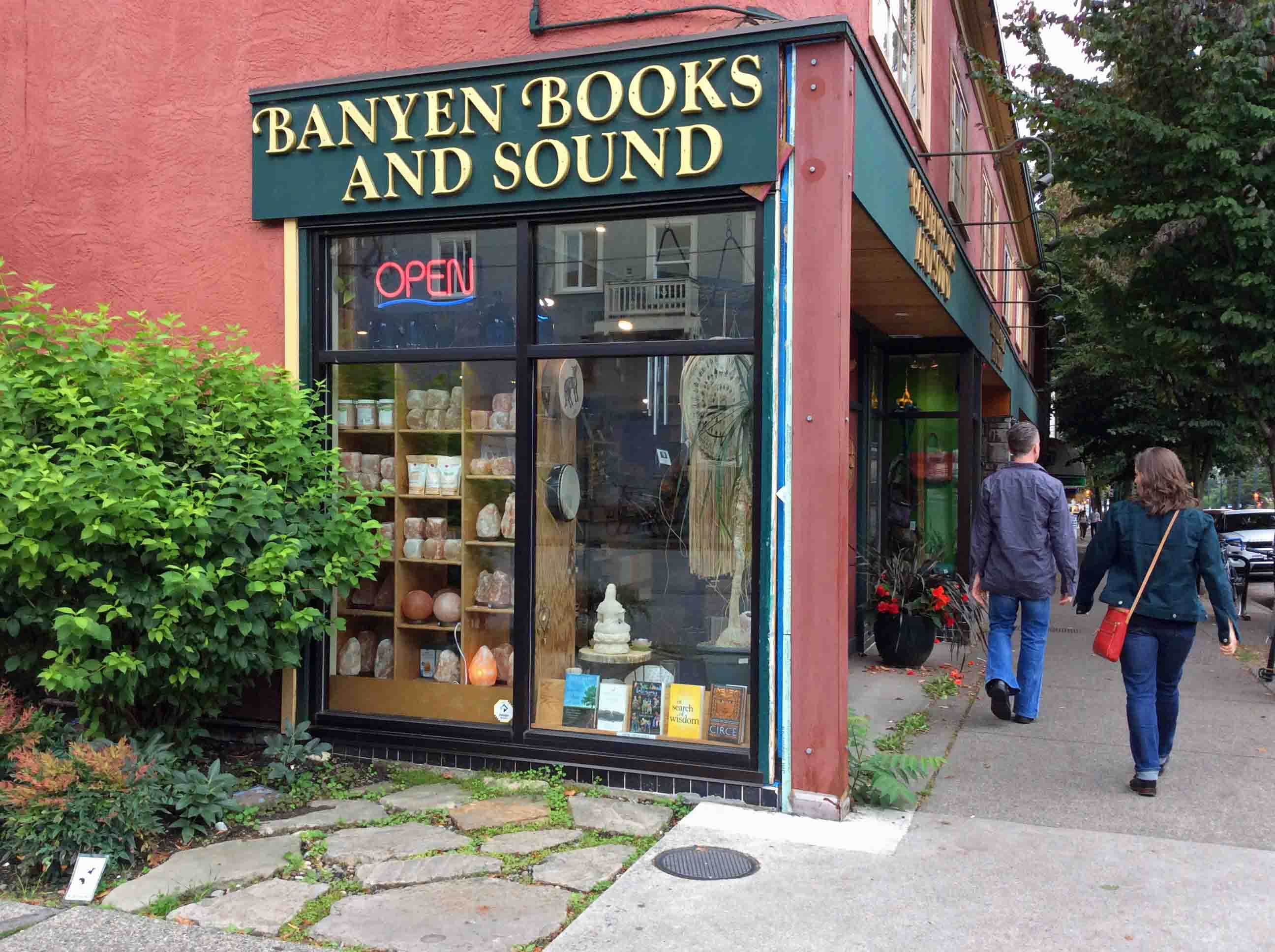
One of my favourite bookstores in Vancouver is Banyen Books & Sound on the southwest corner of W 4th Avenue and Dunbar. So, whenever I go back to my home town to visit family and friends, I stop there to linger amid the shelves of wonder and erudite adventure. Then I usually cross Dunbar to Aphrodite’s Organic Pie Shop for a delicious fresh pie—usually peach, if it is available. So good! Two things I love: books and pie!


During my recent visit this year to Vancouver, my friends and I had a fulfilling walk one morning through the big tree forest of Pacific Spirit Park near UBC. Margaret suggested we go to Aphrodite’s Organic Café for lunch, located across 4th Avenue from Banyen Books (the sister restaurant to the pie shop). After a delicious lunch, we wandered into Banyen, like desert nomads looking for water, and lost ourselves in a treasure of books, magazines, crystals, cards, singing bowls and other spiritual/healing items. Like a braided river, we dispersed according to our wayward interests.

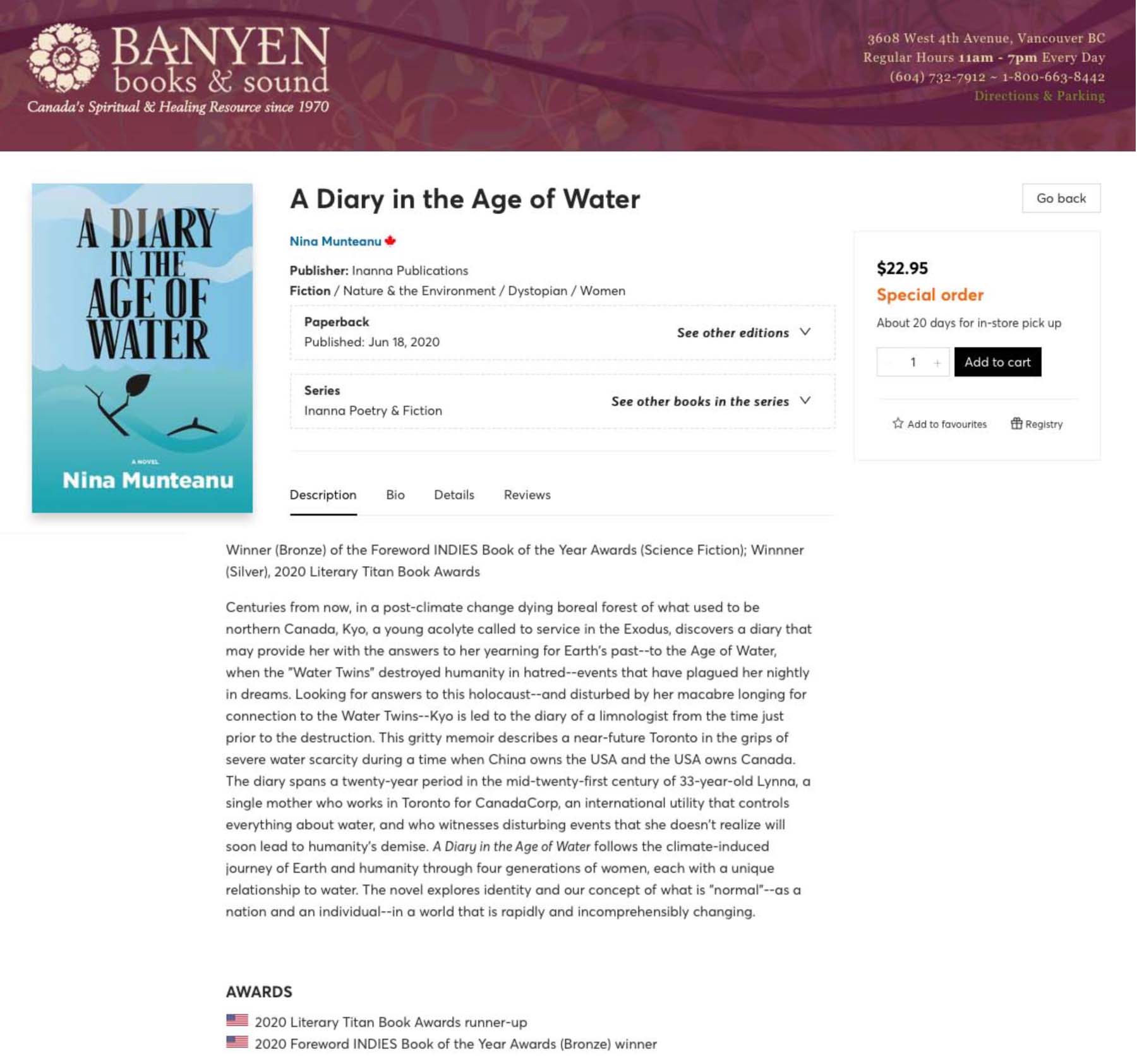
Then friend Anne soon found me and pulled my sleeve. “Your book is here!” She led me to where my book Water Is… stood, face out, on the top shelf marked ‘Water: Life Force & Resource.’ In truth, I already knew through Pixl Press that the book was selling there. But here it was, showcased so nicely! It sat rather stately amid Emoto’s Secret Life of Water and Ryrie’s Healing Energies of Water.

One of the perks of Banyen Books are the comfortable seats for easy browsing. When I teasingly asked one of the clerks if they noticed people lingering for the day, they said, “yeah! They might leave for lunch then come back for the afternoon!” I can see why; Banyen is an entire world to discover. It is called Canada’s most comprehensive Body-Mind-Spirit bookstore, “offering a broad spectrum of resources from humanity’s spiritual, healing, and earth wisdom traditions…Our service is to offer life-giving nourishment for the body (resilient, vital), the mind (trained, open), and the soul (resonant, connected, in-formed). Think of us as your open source bookstore for the ‘University of Life’.”
“Banyen is an oasis, a crossroads, a meeting place…for East and West, the ‘old ways’ and current discoveries and syntheses.”
This is how Banyen describes its birth in 1970:
“The Golden Lotus Restaurant and Natural Food Store on Fourth Avenue at Bayswater was a hothouse for spiritual seekers, new vegetarians and spaced-out hippies grounding through good work. Banyen was born in a tiny book corner of the Golden Lotus. That lovely place was a connection to India, meditation and spiritual growth from 1967 to 1970. As its sun set, what was to become the Naam restaurant, Lifestream, Woodlands, Nature’s Path, and Banyen Books arose.”
Along with Water Is… Banyen is also selling my latest eco-fiction novel A Diary in the Age of Water.

Nina Munteanu is a Canadian ecologist / limnologist and novelist. She is co-editor of Europa SF and currently teaches writing courses at George Brown College and the University of Toronto. Visit www.ninamunteanu.ca for the latest on her books. Nina’s bilingual “La natura dell’acqua / The Way of Water” was published by Mincione Edizioni in Rome. Her non-fiction book “Water Is…” by Pixl Press (Vancouver) was selected by Margaret Atwood in the New York Times ‘Year in Reading’ and was chosen as the 2017 Summer Read by Water Canada. Her novel “A Diary in the Age of Water” was released by Inanna Publications (Toronto) in June 2020.
She imagines its coolness gliding down her throat. Wet with a lingering aftertaste of fish and mud. She imagines its deep voice resonating through her in primal notes; echoes from when the dinosaurs quenched their throats in the Triassic swamps.
Water is a shape shifter.
It changes yet stays the same, shifting its face with the climate. It wanders the earth like a gypsy, stealing from where it is needed and giving whimsically where it isn’t wanted.
Dizzy and shivering in the blistering heat, Hilda shuffles forward with the snaking line of people in the dusty square in front of University College where her mother used to teach. The sun beats down, crawling on her skin like an insect. She’s been standing for an hour in the queue for the public water tap.
The Way of Water
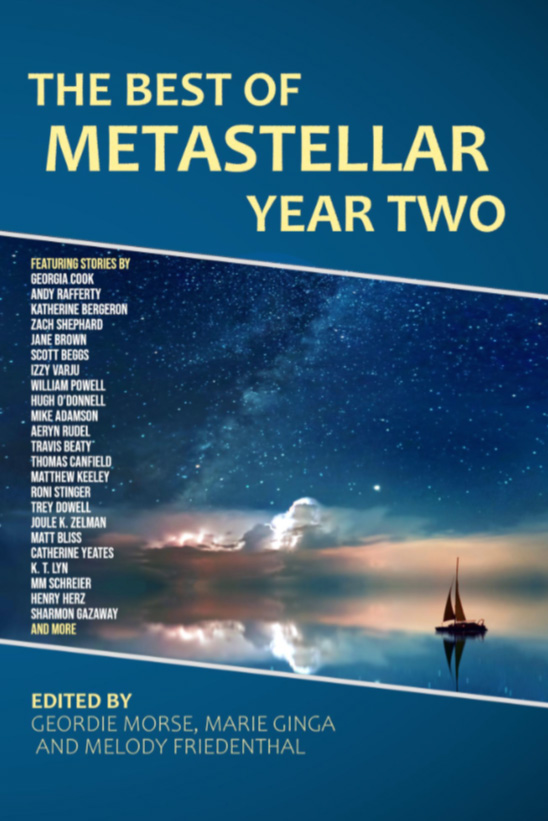
My short story, The Way of Water, which was recently reprinted in Metastellar Speculative Fiction and Beyond (rated the second most popular online sci-fi magazine), is now in The Best of Metastellar Year Two, an anthology of forty-eight stellar short stories previously published with Metastellar.
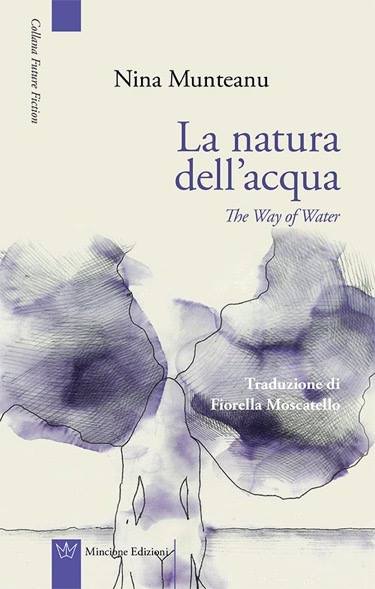
The Way of Water was first published as a bilingual print book by Mincione Edizioni (Rome) in Italian (La natura dell’acqua, translated by Fiorella Moscatello), and English along with a recounting of what inspired it: The Story of Water (La storia dell’acqua) in 2016. The Way of Water has been reprinted several times, in magazines and anthologies, since its first appearance in 2016.
It all started with an invitation by my publisher in Rome in 2015 to write about water and politics in Canada. I had long been thinking of potential ironies in Canada’s water-rich heritage. The premise I wanted to explore was the irony of people in a water-rich nation experiencing water scarcity: living under a government-imposed daily water quota of 5 litres as water bottling and utility companies took it all.
I named the story “The Way of Water” (“La natura dell’acqua”), about a young woman (Hilda) in near-future Toronto who has run out of water credits for the public wTap; by this time houses no longer have potable water and their water taps have been cemented shut (as was done in Detroit in 2014); the only way to get water is through the public wTaps—at great cost. She’s standing two metres from water—in a line of people waiting to use the tap—and dying of thirst.
“The Way of Water” captures a vision that explores the nuances of corporate and government corruption and deceit together with global resource warfare. In this near-future, Canada is mined of all its water by thirsty Chinese and US multinationals—leaving nothing for the Canadians. Rain has not fallen on Canadian soil in years due to advances in geoengineering and weather manipulation that prevent rain clouds from going anywhere north of the Canada-US border. If you’re wondering if this is possible, it’s already happening in China and surrounding countries.

The Way of Water, in turn, inspired my recent dystopian novel A Diary in the Age of Water, which explores the lives of four generations of women and their relationship to water during a time of severe water restriction and calamitous climate change.
“The Way of Water evokes a sense of awareness about issues of access to water and about the dangers of imbalances in that access.”
Derek Newman-Stille, Speculating Canada
“In a short story in which every word has its weight, Nina Munteanu manages to describe a dystopia with ecological, political, social and economic elements and Hilda’s reactions to her situation with a great emotional intensituy. To avoid thirst, Hilda ends up embracing an extreme idea, a last hope linked to water. The Way of Water is a story of the kind you hope is science fiction but you fear is not.”
Massimo Luciani

Nina Munteanu is a Canadian ecologist / limnologist and novelist. She is co-editor of Europa SF and currently teaches writing courses at George Brown College and the University of Toronto. Visit www.ninamunteanu.ca for the latest on her books. Nina’s bilingual “La natura dell’acqua / The Way of Water” was published by Mincione Edizioni in Rome. Her non-fiction book “Water Is…” by Pixl Press (Vancouver) was selected by Margaret Atwood in the New York Times ‘Year in Reading’ and was chosen as the 2017 Summer Read by Water Canada. Her novel “A Diary in the Age of Water” was released by Inanna Publications (Toronto) in June 2020.
“The truth isn’t about telling; no one just tells you the truth. It needs to be coaxed, even tricked, out. The truth is carefully hoarded—like water—and only flows among privileged acolytes who have proven themselves.”
Lynna Dresden
“Those of us who are captivated by fear, who despair in a dead zone—we need to consider new ways to tell familiar stories, to envision different endings. A book like this can change the way that you see the world at this moment, can allow formulae to take root in fiction and grow into a different kind of solution.”
Marcie McCauley, THE tEmz REVIEW

“Climate change is larger than all of us. It speaks in the language of finality. And mostly through water.”
Lynna Dresden
“An eye-opening story for those who are still on the fence about climate change. This is the perfect read for both sci-fi readers and eco-interested readers alike.”
ANTHONY AVINA, author, review blog

The Beyond is a 2018 science fiction thriller, set in the near-future, that explores the evolution of our humanity through “first contact.”
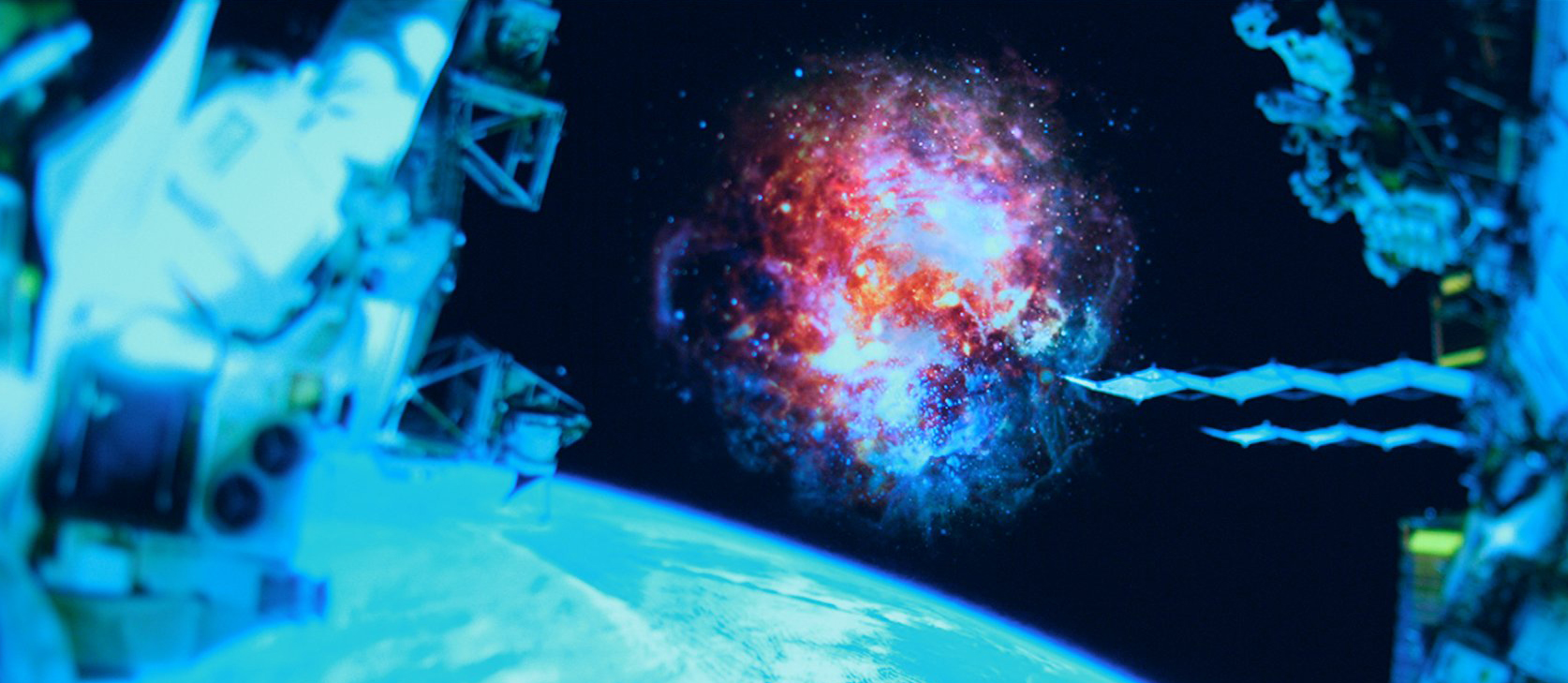
The sudden appearance of a wormhole causes the disappearance of astronaut Jim Marcell during EVA on the space station, followed by associated calamitous phenomena on Earth. Giant dark spherical clouds then appear and settle all over the Earth, disrupting the world’s population, and setting in motion a series of fearful and aggressive reactions by various sectors of humanity; as expected, the military of each nation mobilize, ready to attack. Some do attack, with no consequence.

With the help of the military’s groundbreaking transhumanism technology, the international space agency sends two transhuman (Human 2.0) astronauts into the wormhole (called the Void) on an information-seeking (and peace-seeking) mission. The astronauts have been modified by advanced robotics to withstand the pressures of the “throat” of the wormhole as they embark on humanity’s first interstellar—possibly inter-dimensional—journey in search of extra-terrestrial sentient life and its intent. One of the astronauts is a soldier, armed with additional weapons built into his physiology. The other is the Space Agency’s chief cosmologist, Jessica Johnson (played by Kosha Engler). When the mission returns unexpectedly, and without the soldier, the space agency races to discover what happened on the “other side.” Of particular interest is evidence indicating that the ship had been away much longer than the days it was actually gone. Johnson later reveals that the soldier had suddenly disappeared from the cockpit and reappeared outside. She saw him stare at his arm, which then detonated like a nuclear bomb—no doubt because his arm was indeed something of that nature.

The tag line of the movie says: “to find our place in the universe, we must venture beyond our boundaries.” This imaginative indie film by Hasraf Dulull is all about breaking boundaries and transcending beliefs: such as mission director Gilian’s first lie to her daughter (to contain a bigger lie by the space agency); and chief cosmologist Jessica conquering ethical barriers to embark on a journey that will irrevocably change her.
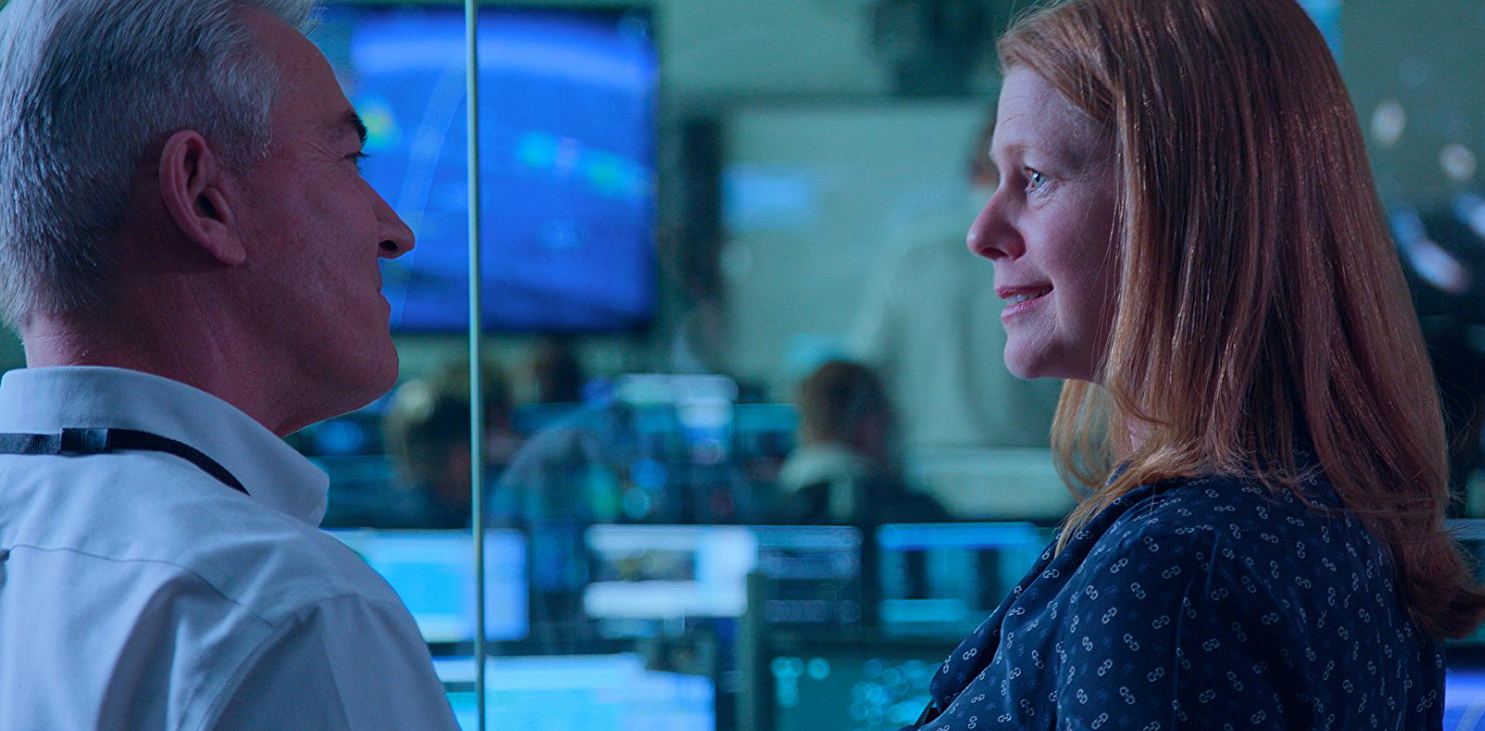
The story unfolds like a docu-drama, making use of interviews with key people and retrieved footage amidst dramatic narrative (similar to Blomkamp’s District 9). The mixed narrative creates an immediacy that grips us emotionally and deeply connects us to the characters in a real-life way. Characters are portrayed as ordinary people who find themselves in extra-ordinary circumstances and performed with genuine candor, particularly the mission commander Gillian Laroux (Jane Perry) who plays a Canadian.
The Beyond appeals to our senses and sensibilities, challenging our assumptions and definitions of what it is to be human through our values, hopes and fears. Told with an unassuming realism, The Beyond is really a simple, yet deeply meaningful story that asks the big questions—and leaves it for us to answer them.

The climax, discovery and resolution is really more of a question. I was somehow unprepared for the discovery and emotionally struck by its trajectory into the denouement. Some reviewers on the Internet were off-put by the shift following “the discovery” that preceded the denouement at the end. I found closure for the chief cosmologist, who had sacrificed her life to seek answers and find a solution for humanity; however, the question remained: what is that solution for humanity? What does that solution look like and how does it encompass more than us? The movie doesn’t have a tidy end; its solution is veiled with more questions.
The film ends with a cautious hope, implicitly asking that big question: are we (humanity) worth saving? When Jessica asks why humanity was offered a second chance by benevolent beings way beyond our comprehension, the returned Jim Marcell (currently a spokesman for the aliens) shows her the GAD (Golden Archive Drive with video images of Earth and humanity—basically our “hello” message to extra-solar life like the one placed onboard NASA’s Pioneer missions) that had accompanied the ship into the wormhole. The message displayed scenes of mothers and their children, people laughing in joy; it also showed scenes of other aspects of this beautiful planet worth saving: the ocean surf, the forests and wildlife. In our hubris, we have lost our perspective about this planet. Perhaps, it wasn’t so much humanity the alien beings intended to save but the Earth itself; we just come along with it. The Earth is, after all, a beautiful, vital and unique world, rich with life-giving water, trees, animals, creatures of all kinds in a diverse network of flowing and evolving beauty. A planet worth saving and that, frankly, functions better without us.

So, the question remains: is humanity worth saving? For centuries we have hubristically and disrespectfully used, discarded and destroyed just about everything on this beautiful planet. According to the World Wildlife Federation, 10,000 species go extinct every year. That’s mostly on us. They are the casualty of our selfish actions. We’ve become estranged from our environment, lacking connection and compassion. That has translated into a lack of consideration—even for each other. In response to mass shootings of children in schools, the U.S. government does nothing to curb gun-related violence through gun-control measures; instead they suggest arming teachers. We light up our cigarettes in front of people who don’t smoke and blow deleterious second-hand smoke in each other’s faces. We litter our streets and we refuse to pick up after others even if it helps the environment. The garbage we thoughtlessly discard pollutes our oceans with plastic and junk, hurting sea creatures in unimaginable ways. We do not live lightly on this planet. We tread with incredibly heavy feet. We behave like bullies and, as The Beyond points out, our inclination to self-interest makes us far too prone to suspicion and distrust: when met with the unknown, we respond with fear and aggression rather than curiosity and hope. Something we need to work on if we are going to survive–and find our place in the universe.

The Beyond is a simple film made well; something not easy to accomplish. The film delved into existential questions with an emotional intelligence that was both sensitive and insightful. As Gillian Laroux says in the end: “I hope we won’t make the same mistakes of the past and prove that we are in fact worth saving.” Ultimately, I found The Beyond a refreshing change from the senseless soul-gutting violence, and sordid aimless or overly-complicated plots that currently populate most of our current science fiction TV and movies.
The Beyond marks the directorial debut of Dulull, a VFX wiz who spent a year shooting and working on this project (previously titled The Void). Changing the title from The Void to The Beyond is itself an interesting shift in what the film represents and suggests.
Let us tread more lightly on this planet, then…And perhaps we too will be worth saving. Perhaps our destiny won’t be a void but a transcendence beyond…
Nina Munteanu is a Canadian ecologist / limnologist and novelist. She is co-editor of Europa SF and currently teaches writing courses at George Brown College and the University of Toronto. Visit www.ninamunteanu.ca for the latest on her books. Nina’s bilingual “La natura dell’acqua / The Way of Water” was published by Mincione Edizioni in Rome. Her non-fiction book “Water Is…” by Pixl Press (Vancouver) was selected by Margaret Atwood in the New York Times ‘Year in Reading’ and was chosen as the 2017 Summer Read by Water Canada. Her novel “A Diary in the Age of Water” was released by Inanna Publications (Toronto) in June 2020.
 Nina Munteanu Writing Coach