My flash fiction story “Alien Landscape” was recently accepted by the online magazine Sudden Flash and released on December 30, 2025—making it my last story published that year. The story follows Blika who crash lands in potential hostile territory of an alien planet after responding to a distress call. What Blika discovers is not what she expected…
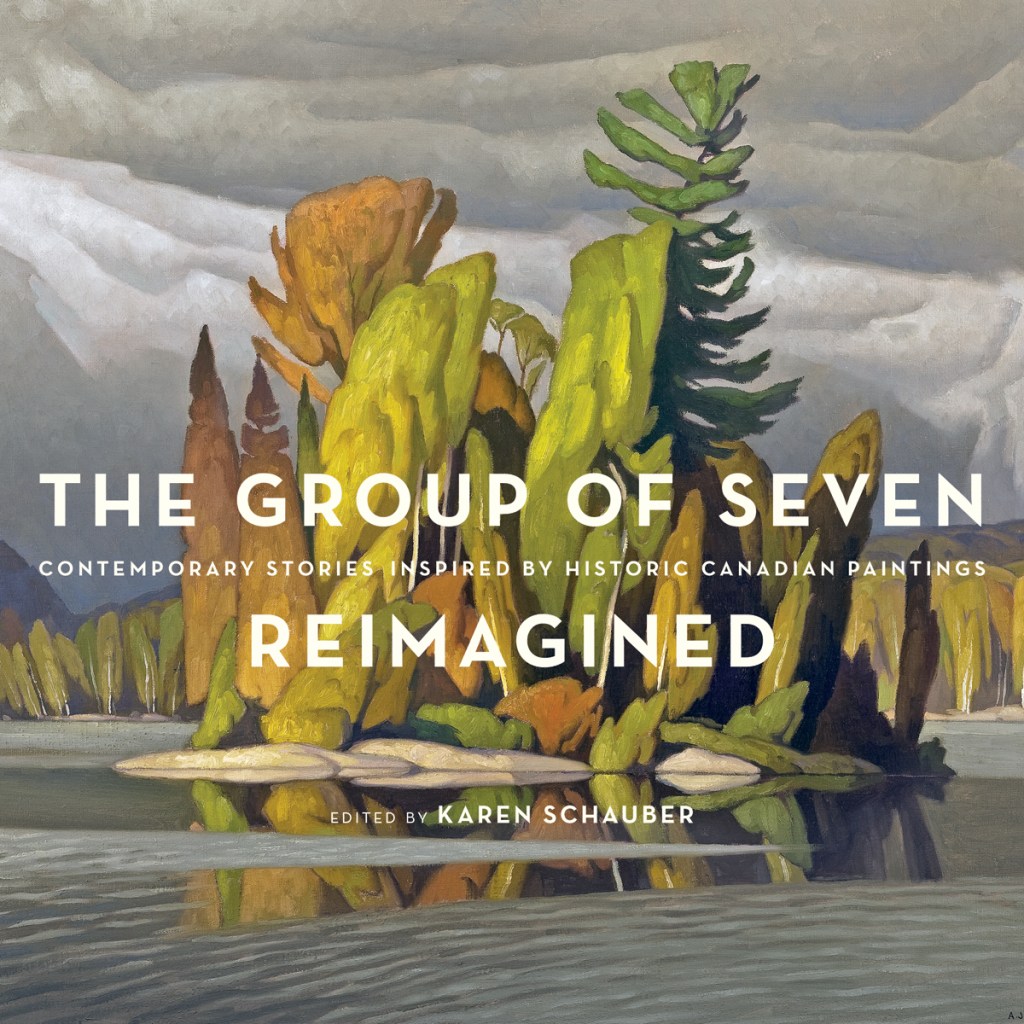
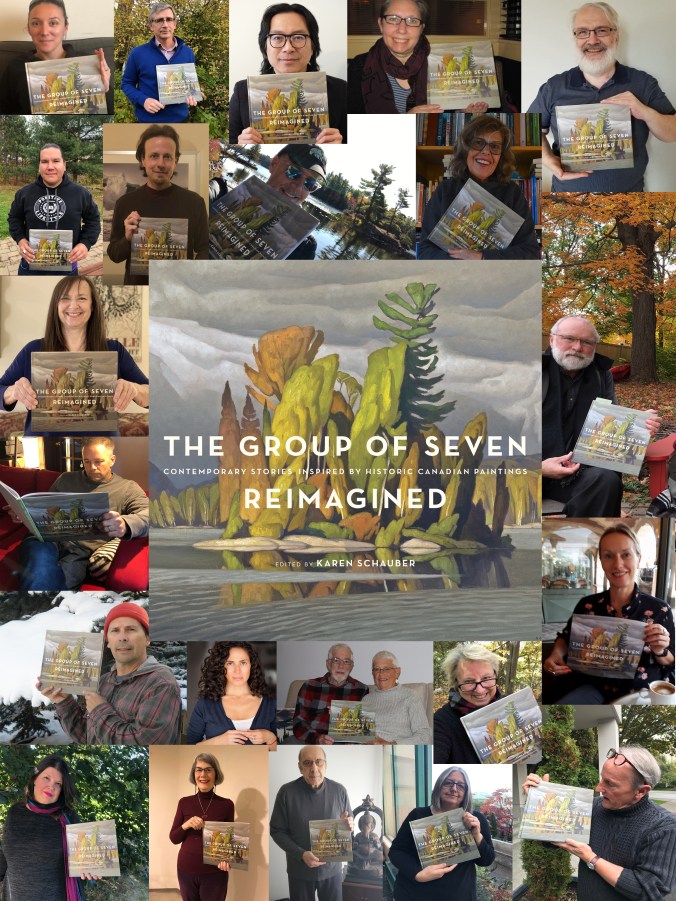
“Alien Landscape” first appeared in the 2019 celebratory ekphrastic anthology, edited by Karen Schauber and published by Heritage House: “The Group of Seven Reimagined.” The anthology celebrated the centenary of the formation of the Canadian iconic Group of Seven artists. Check my article which describes more about the Group of Seven movement. The Group of Seven movement “dragged Canadian art into the modern age,” writes Christine Sismondo of The Toronto Star in her review of “The Group of Seven Reimagined.” Sismondo astutely identifies and encapsulates the resonant meaning of the Group of Seven, then and now:
.
“A hundred years ago, seven Canadian painters got together and decided to start a movement. It was born out of the horrors of war. Now, the potential horrors of climate change are giving the movement an unexpected new life and meaning.”
.
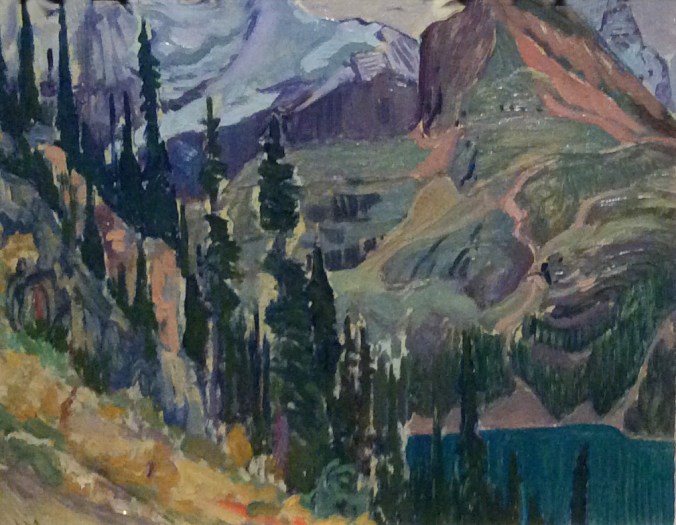
I joined twenty other flash fiction authors who linked our flash fiction to one the Group of Seven’s works. My “Alien Landscape” was inspired by J.E.H. MacDonald’s Lake O’Hara.
Lake O’Hara by J.E.H. MacDonald
.
Karen had invited me to contribute a piece of flash fiction (a piece of less than 500 words), inspired by a Group of Seven piece I would choose to inspire me. I took my time; this would be the first flash fiction piece I would write. It was an art form I was not familiar with, but was happy to experiment with. But I waited too long to decide and when I finally submitted my first choice for a painting, Karen informed me that it had already been selected by another writer. To my great frustration, this went on for a few pieces.
I finally took a short trip to the McMichael Gallery in Kleinburg to find my piece. In the main hall, I passed the pieces already claimed by my twenty colleagues; I sighed that I had waited so long. By chance, a large selection of artwork by J.E.H. MacDonald—one of the founders of the group—was currently on exhibit on the second floor. That was where I first saw the original oil sketch called Lake O’Hara by MacDonald. It was perfect! My story “Alien Landscape” emerged from the sketch like they had always belonged together.
.
Christine Sismondo of The Toronto Star wrote: “while you might expect a lot of peaceful communing with nature on the page, a surprising number of the written pieces are actually dark tales of conflict and danger—forest fires, mining accidents, boat thieves and murderous plots in the woods.
Nina Munteanu, a Canadian ecologist and science-fiction writer, takes J.E.H. MacDonald’s Lake O’Hara in a novel direction in ‘Alien Landscape’ by reimagining it as a refuge for a space heroine fleeing a world that had destroyed nature in pursuit of progress and ended in post-apocalyptic chaos.”
.
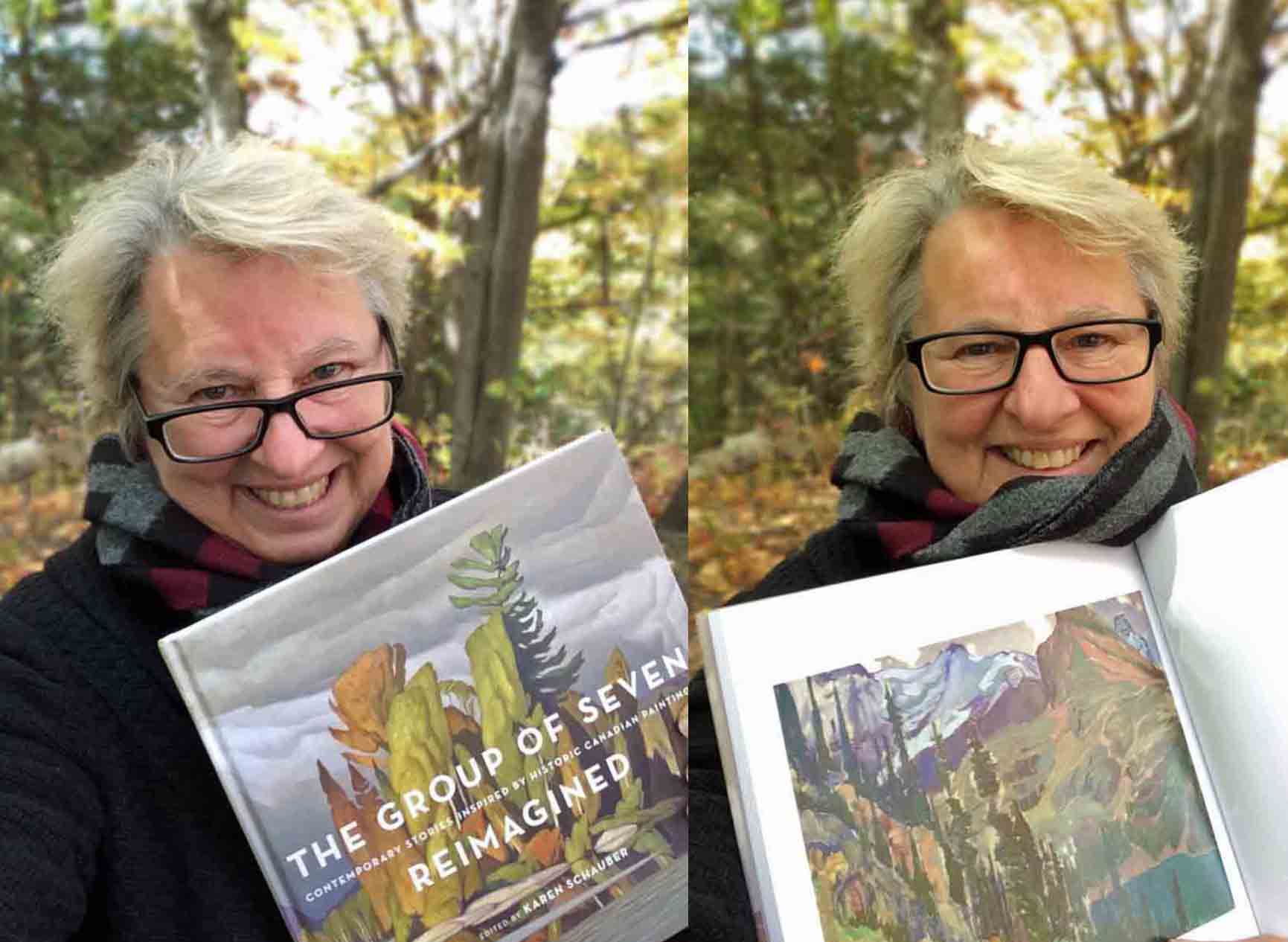
Nina Munteanu with cover and selected Group of Seven art to write about
.
Nina Munteanu is an award-winning novelist and short story writer of eco-fiction, science fiction and fantasy. She also has three writing guides out: The Fiction Writer; The Journal Writer; and The Ecology of Writing and teaches fiction writing and technical writing at university and online. Check the Publications page on this site for a summary of what she has out there. Nina teaches writing at the University of Toronto and has been coaching fiction and non-fiction authors for over 20 years. You can find Nina’s short podcasts on writing on YouTube. Check out this site for more author advice from how to write a synopsis to finding your muse and the art and science of writing.
It was several years ago, in 2020, that Terry Birdgenaw approached me as a writing coach to look at his first novel. When he described its premise, I was hooked right away and agreed to give it an editorial review. It was the beginning of a wonderful and rich experience with Terry’s books, now a series entitled The Antunite Chronicles. From the start, I was impressed and fascinated with his imagination and accurate use of science to produce a diverting allegorical CliFi series about cyborg insects on a far-away planet that serves as metaphor to developing autocracies on Earth.
Terry has three books out, with a fourth upcoming. The three books in this YA series take place on a far-away planet and moon, serving as a political and environmental allegory of an evolving technological society and failed democracy. They include: Antuna’s Story; The Rise and Fall of Antocracy; and Antunites Unite. The theme of induced climate change and environmental destruction runs deeply through the first three books. The fourth book, soon to release, is Cyborg Contact, which returns us to Earth. I’ll let Terry describe the series in the following interview I conducted with him on November 26:
.
Nina: Your background and expertise is in neuroscience and psychology with over 150 scientific publications. You are Harold Griffith Professor of Anesthesia Research at McGill University in Montreal and your main research focus is on the mechanisms underlying neuroplasticity and its influence on the perception of pain. What got you started writing this incredible series, an adventure story that embraces ecology and entomology? What gave you the idea to create this imaginative modern allegory on the evolution of a technological society using insects as your main characters?
Terry: Oddly enough, I was not originally planning to write fiction. My inspiration came from my school librarian wife, Ann Birdgenaw, when she began writing the second book of her children’s chapter book series, Black Hole Radio. Her series features fifth-grade kids who travel through a wormhole to different planets, aiding the inhabitants they discover. She was considering what kind of planet and civilization her explorers would encounter, and I gave her some ideas about a giant cyborg-insect world that she ran with. Having some skin in the game, I participated beyond my welcome, offering plotlines that were far too advanced for her 7- to 11-year-old readers. Graciously, Ann suggested I take my ideas and write the backstory for her book, Black Hole Radio – Bilaluna, but target my book at young adults and adults. Thus began my fiction writing adventure. It was a rough start, but with the help of a tolerant book coach, my planned novella rapidly expanded to a trilogy. Perhaps a quick study because of years of scientific writing, I still credit Nina with opening in me an imaginative creativity I never knew I possessed.
.
Nina: The narrative of your stories is from the POV of various insects and in some way, the stories are dramatizations of real and accurate ecological relationships of insects with their environment and each other. How did you prepare for this—both in relaying accurate ecologies and in realizable dramatization and characterization of your main characters—all insects? How did you avoid what I would call the Disney-effect: anthropomorphising insect characters into human archetypes to achieve reader engagement? How did you create that balance between realistic representation and empathic portrayal?
Terry: Although my books are parodies with characters who face political and ecological problems and anthropomorphise human dilemmas, I did not want them to be simply furry or slimy stand-ins for the humans they satirize. Thus, I drew on my long-standing expertise as a scientific researcher to delve deeply into entomology, ecology and environmental science. Fascinated by the richness of insect activities and interactions and the similarity between insect and human behaviour, I endeavoured to exploit my newly acquired knowledge within the pages of my story. I was inspired both by Orwellian dystopias and works such as Bernard Werber’s Empire of the Ants and Laline Paull’s The Bees. But more than that, I learned to let myself be taken into the world my insects lived in, experiencing both their instinctive realities and the human predicaments I intended to lampoon in equal measure.
.
Nina: I noticed some fun metaphoric descriptions and expressions that incorporated insect terms to represent human counterparts. Did these come to you easily or were they a lot of work over time? Can you describe the process you used? For instance, did you spend a lot of time watching ants on the sidewalk?
Terry: Some phrases like ‘she shook her antenna to tune her attention’, ‘I took that as a back-clawed compliment’, or ‘he is such a hindgut hole’ came easily to me as differences in insect and human anatomy necessitated them. Others, like the expressions explained in my dictionary of pheromonal insect emotions, took much more reflection. This literary technique was inspired by your writing guide, The Fiction Writer, when you described how to add colour to one’s writing by using word pairings that mix up the senses, like the well-known one ‘biting cold’. This excellent advice led me to develop an extensive lexicon of insect emotions/non-verbal speech, including word combinations such as abrasive aroma, bitter bouquet, frosty fragrance, and vacillating vapour. They were not all alliterations, but some, like ‘she emitted an effervescent essence, were clearly intended to be. I didn’t watch ants walking, but I thought a lot about how they might communicate their emotions pheromonally.
.
Nina: One of the things I enjoyed throughout your series is how you seamlessly imparted interesting facts about insects on our planet in the storytelling. I learned a lot about various insects! Tell us a little about the process you used to achieve this so effectively.
Terry: As a long-time researcher, I have learned how to find and use facts from scientific literature and reliable web-based information on many subjects within and outside my scientific field. Insect behaviour is little known, but often fascinating, and I enjoyed both discovering many details and incorporating them into fiction scenes. Sometimes I was required to dig even deeper than I initially expected to make my stories scientifically accurate. One of these cases had a very significant impact on a critical component of my book’s key plot. In Antunites Unite, ants are separated into a hierarchy of castes based on exoskeleton colour. Although clearly an anti-racism story, I originally wrote it with black ants as oppressors of both brown and red ants. Perhaps influenced by previous literature and movies, where the bad guys are often dressed in black, I had a feeling that some readers might interpret my choice as having a racist underpinning. I convinced myself that readers would not take the colour choice as representative of human ethnicity. However, the last beta reader to comment on the book made such an interpretation and confirmed my fear that some readers might see it as the opposite of my intention. So, while I debated altering the colour schemes, I dug deeper into the entomological discovery of a phenomenon my story paralleled, involving what entomologists call slave-maker ants. When my extensive research confirmed that red ants are more often the ants using raids to steal the eggs of other ants to be raised as slave-like workers for the dominant reds, I knew I had to reverse the colours. And this was no easy task, because all the characters in each caste took names that reflected their colour, like Ruby and Obsidiant. There were also many humorous references to colour, such as black widow spiders and lava fields, that needed to be reworked. It was an editing nightmare: Rose became Raven, and Raven – Rose, while Cole gave way to Clay, and Jett morphed to Jasper, etc., etc., etc. But in the end, it was true to nature and avoided any unwanted racial interpretations.
.
Nina: In your first three books—a political modern satire on developing autocracies and human-induced climate change—you explore the technological and biological evolution of an insect exo-community in which certain species—ants for instance—acquire the ability to become cyborgs, ANTs, growing in size and abilities to navigate their world more effectively with related achievements—and consequences. As an ecologist, I was fascinated by how you portrayed the changing relationship of these beings to their environment as they evolved. Do you see a parallel with human society? Can you elaborate on this?
Terry: Yes, on a macro level. That is, technology can benefit society immensely, but it can also cause significant harm when coupled with greed, wilful ignorance of scientific warnings, and leaders misleading the public. I highlight one line of poetry written by my narrator in The Rise and Fall of Antocracy: “Like Peter and the crows, tis science, truth and reality denied ere climate is crucified.” Cyborg insects were created to enhance the production of honey, which was their currency. Cyborg ants, who most craved both power and honey, deceived the public to the detriment of the environment and ignored the science that provided evidence of environmental changes, which most insectoids on the planet denied. Perhaps an obvious cataclysmic message to those in our world, but many on this Earth apparently need to be hit over the head to see where this all may lead.
.
Nina: Tell us about your latest book, the fourth in the series, Cyborg Contact, in which one of the cyborg ANTs returns to Earth through a wormhole with an important mission. I found that, while the first three books served as satirical allegory to a developing technological society through the evolving insect communities, the fourth book—being a first contact—shifts into more of an exploration of ‘the other,’ its perception and treatment by humans and their civilizations. Can you expand on this? How does humanity’s perception and treatment of the ‘other’ factor into our treatment of our environment and the growing phenomenon of climate change?
Terry: I might disagree and point out that ‘exclusion of the other’ is a dominant theme in all four books. The difference is that in Cyborg Contact, the main character embodies ‘the other’, so it hits home more strongly. What could be more ‘otherly’ than an alien (from another planet) who is treated like an illegal alien and hunted by ICE agents? And, too, aside from being hunted, many other dangers the alien experiences on Earth, including hurricanes, droughts, mudslides, and forest fires, are all caused by climate change, which has accelerated in the near-future North America our hero traverses. It seems that for some world leaders, a lack of empathy for others is paired with a disregard for the environment.
.
Nina: Who is reading your books? And who should be who isn’t?
Terry: They are read by both young adults and adults; sometimes by parents reading to their pre-teens. They are not New York Times best sellers, but are highly celebrated by those who have read them. They should be read by all sci-fi and fantasy readers aged 13 and up who enjoy a thought-provoking read, except those who support fascism.
.
Nina: How have your books been generally received? I understand that your trilogy has won the Firebird Book Award. Congratulations! What are people saying about your books?
Terry: Editorial reviews have been stellar, and the books have received awards from most of the contests to which they have been entered. Awards for all three books include Gold Medal/Badge (Readers’ Favourite, Literary Titan), First Place Prize (Firebird, Entrada Incipere), Silver & Bronze Medal (Firebird, Bookfest), Honourable Mention (Readers’ Favourite), and Finalist (American Writing Awards, Chanticleer, The Wishing Shelf). Most notable review comments describe the books as: “soon-to-be a bestseller”, “takes speculative fiction to a new level”, “fantastical to a degree not seen elsewhere in any Sci-Fi dystopian fiction”, “as big in spirit as any literary giant in the genre” and “holds its ground next to Brave New World, Dune, Animal Farm, and 1984”. These reviews have “blown me away”, like an enthusiastic reader’s comment on Antuna’s Story.
.
Nina: What’s next for Terry Birdgenaw?
Terry: Finish editing Book 4 and writing a dystopian novel featuring humans for a change.
.
Nina: That sounds very intriguing! Thanks for coming out for the interview, Terry.
Terry: My pleasure, Nina.
.
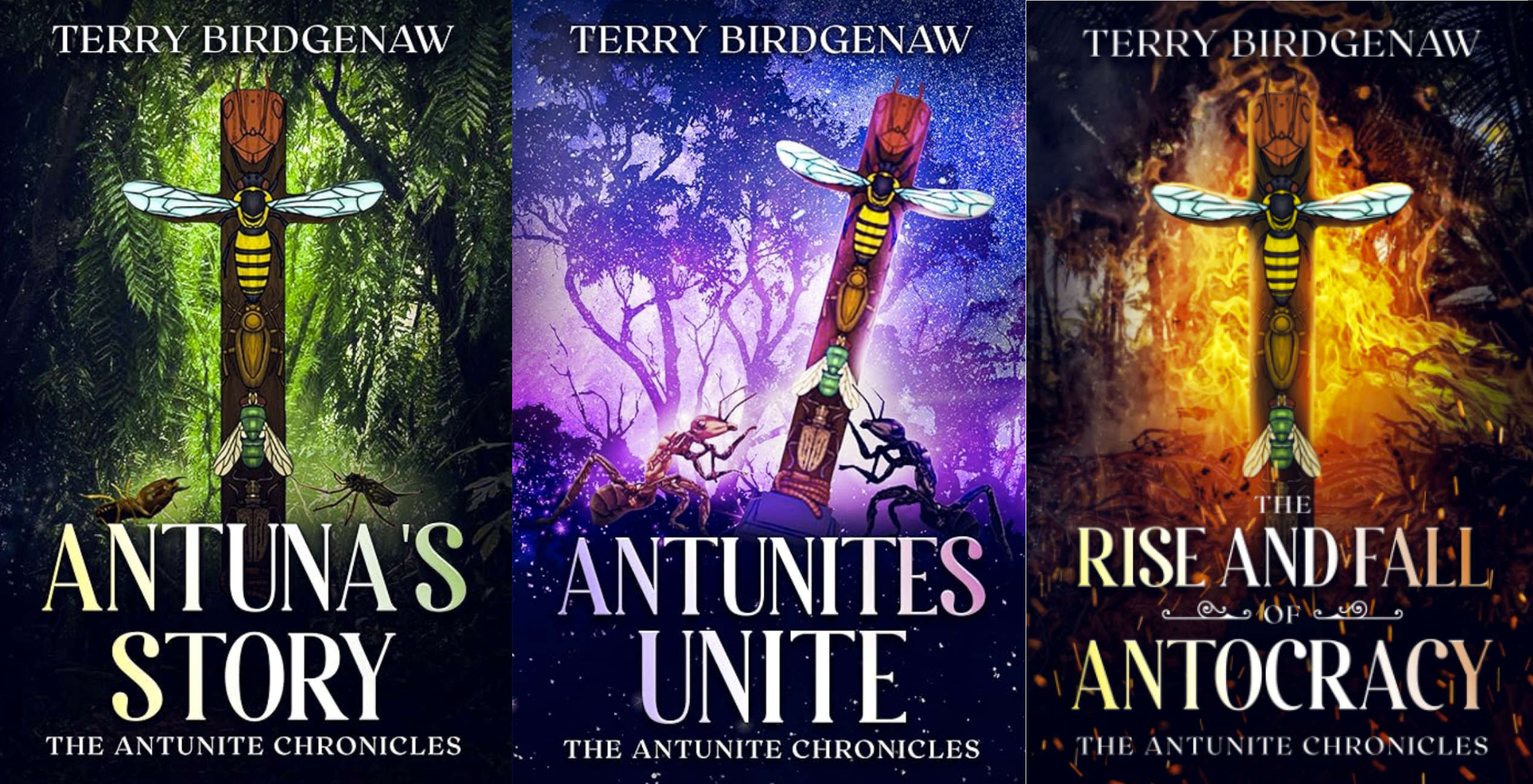
The first three books of the Antunite Chronicles series by Terry Birdgenaw
.
You can find Terry’s books all over the place, including Amazon. Find out more about Terry on his website and check out Terry’s interview on SF Canada in which he talks more about his heritage and interests.
Terry Birdgenaw and one of his fans
.
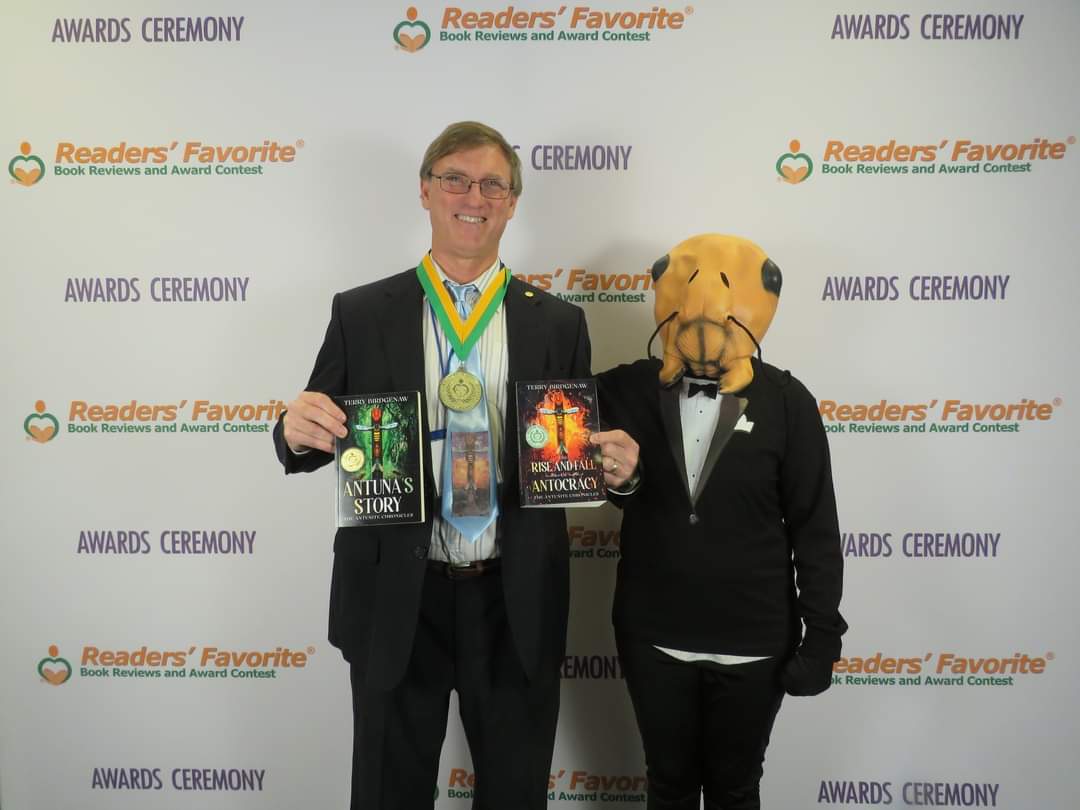
Terry Birdgenaw with Narrant at award ceremonies
.
Nina Munteanu is a Canadian ecologist / limnologist and novelist. She is co-editor of Europa SF and currently teaches writing courses at George Brown College and the University of Toronto. Visit www.ninamunteanu.ca for the latest on her books. Nina’s bilingual “La natura dell’acqua / The Way of Water” was published by Mincione Edizioni in Rome. Her non-fiction book “Water Is…” by Pixl Press (Vancouver) was selected by Margaret Atwood in the New York Times ‘Year in Reading’ and was chosen as the 2017 Summer Read by Water Canada. Her novel “A Diary in the Age of Water” was released by Inanna Publications (Toronto) in June 2020.
A short while ago I was contacted by fellow SF Canada member Lisa Timpf to provide information on an article she was writing about editing anthologies. Lisa’s article, entitled “Anthology Editing: Advice and Insights from Those Who’ve Been There”recently appeared on the Jane Friedman site.
Lisa interviewed two publishers and several editors, including me, on what’s involved in putting out an anthology. The article was thorough and well written and provided useful insight and advice to would be anthology editors. Aspects included: what the job entails, what skills are needed (e.g. storytelling, organization, communication and negotiation, flexibility, the ability to deal with difficult situations, and the willingness to go outside your comfort zone), and the payoffs, of course.
The article covered all stages of producing the anthology, from pitching to a publisher to the process of acquisition and production. She ends her article with “Final Words” of her own reflection and great advice. Lisa draws on Christine Lowther’s advice to be patient and to be “honest about your priorities.” Given how long and involved the process can be (it took three years from call for submissions to final release for the latest anthology I edited), she rightly suggests strongly considering whether you “can dedicate the time and effort to editing without resenting the impact on [your] own writing.”
Lisa then ends with:
“If you, too, are on the fence, consider Nina Munteanu’s reflection on the anthology editing process. As she explains it, ‘Watching the anthology emerge through the slow collection of many outside sources of individual creativity, style and message is akin to watching the birth of a galaxy full of stars—gathered and orchestrated by you but so much more than the sum of its parts—comprising many singular notes of a symphony that together create something wondrous and beautiful.’
Lisa Timpf served as guest editor for Eye to the Telescope 32: Sports and Games. Her book reviews, poems, and short stories have appeared in a variety of venues, and her speculative poetry collection, Cats and Dogs in Space, is available from Hiraeth Publishing. You can find out more about Lisa’s writing and artwork at lisatimpf.blogspot.com, and also find her on Bluesky.
.
Go to this link to read my review of Lisa’s speculative poetry collection, Cats and Dogs in Space.
.
Nina Munteanu is a Canadian ecologist / limnologist and novelist. She is co-editor of Europa SF and currently teaches writing courses at George Brown College and the University of Toronto. For the latest on her books, visit www.ninamunteanu.ca. Nina’s bilingual “La natura dell’acqua / The Way of Water” was published by Mincione Edizioni in Rome. Her non-fiction book “Water Is…” by Pixl Press (Vancouver) was selected by Margaret Atwood in the New York Times ‘Year in Reading’ and was chosen as the 2017 Summer Read by Water Canada. Her novel “A Diary in the Age of Water” was released by Inanna Publications (Toronto) in June 2020.
Illustration depicting Ray Bradbury’s ‘Rocket Summer’ in The Martian Chronicles (image from The Black Cat Moan)
.
Twenty years ago, when I started seriously publishing short stories and novels, the environment was not recognized by the public or writers as an entity that deserved a literary category. Nature and environment were mostly portrayed and viewed as passive entities, to conquer, subdue, exploit and destroy at will (particularly in science fiction—with some notable exceptions such as The Martian Chronicles by Ray Bradbury). Environment and Nature were not generally considered characters on a journey like the progatonist and other major characters; the environment lacked agency and was often ‘othered’ as dangerous, treacherous and unknowable.
Despite the fact that eco-fiction has in fact been in existence for centuries, use of this literary term is quite recent. Its first recognized use was in 1971, appearing as the title in John Stadler’s anthology published by Washington Square Press, which compiled environmental scifi works from the 1930s to the 1960s.
Defining Eco-Fiction
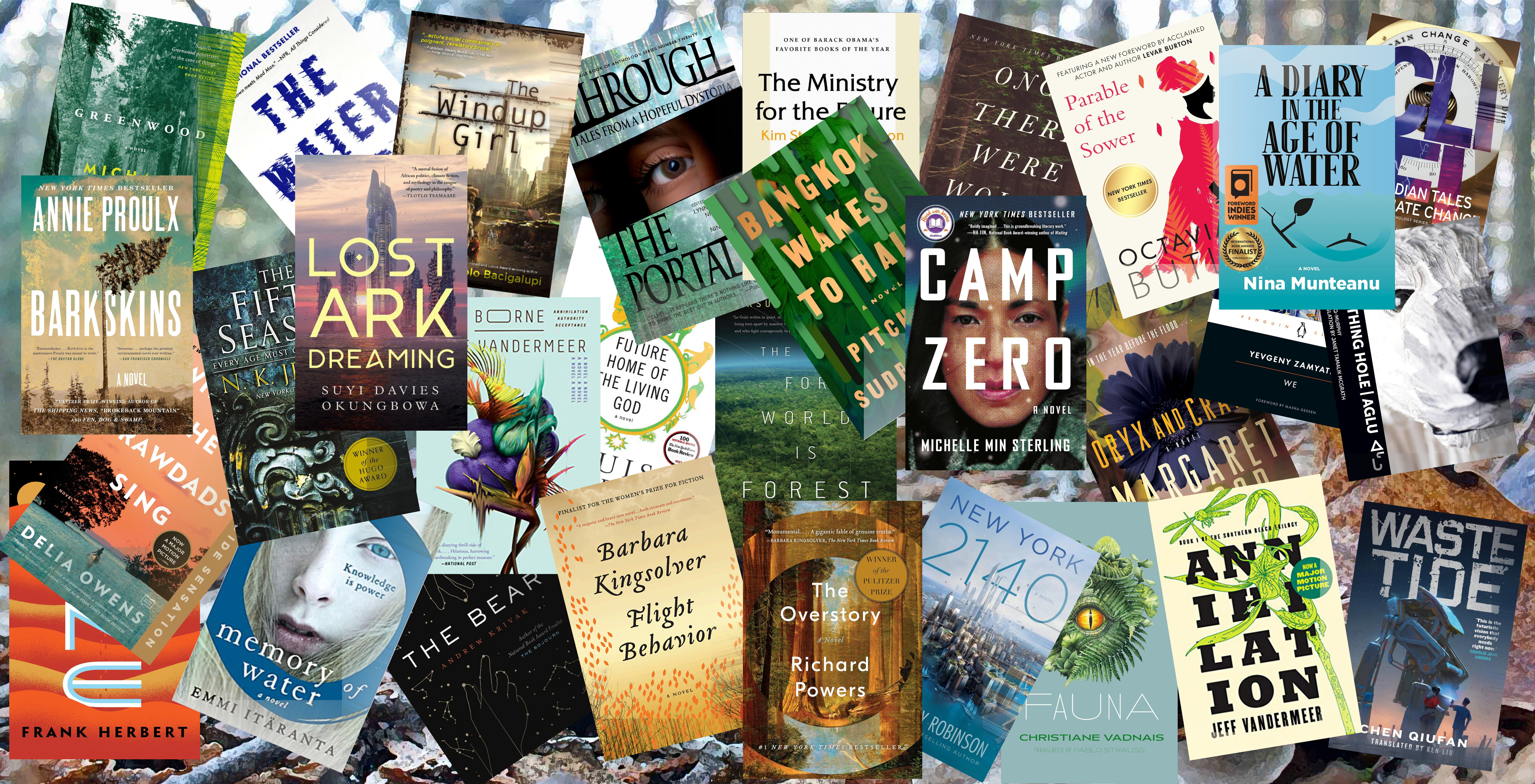
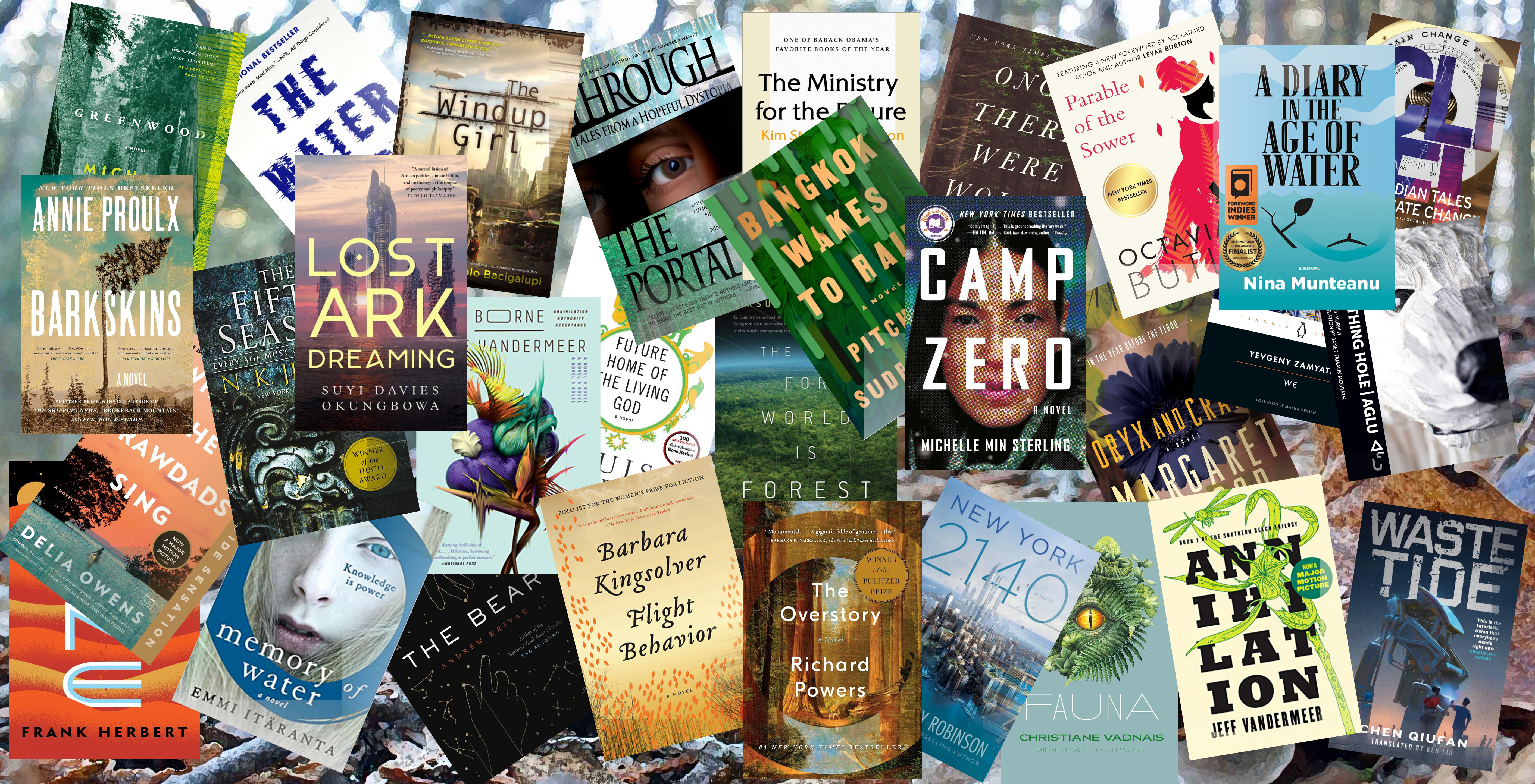
Thirty works of impactful eco-fiction
.
Author / scholar Mary Woodbury defines eco-fiction as “made up of fictional tales that reflect important connections, dependencies, and interactions between people and their natural environments.” In her article “Eco-Fiction—The SuperGenre Hiding in Plain Sight”, Judith defines eco-fiction as literature that “portrays aspects of the natural environment and non-human life as an evolving entity with agency in its relationship between and interaction with human characters.” In the preface to his 1995 book Where the Wild Boks Are: A field guide to Eco-Fiction, Jim Dwyer provides four criteria for eco-fiction:
The nonhuman environment is present not merely as a framing device but as a presence that begins to suggest that human history is implicated in natural history
The human interest is understood to be not the only legitimate interest
Human accountability to the environment is part of the text’s ethical orientation
Some sense of the environment as a process rather than as a constant or a given is at least implicit in the text.
These designations could be easily met by prehistoric cave art and first nations artwork and storytelling. These definitions also allow for the inclusion of many classics defined as eco-fiction from Herman Melville’s Moby Dick and Thomas Hardy’s Return of the Native to John Wyndham’s Day of the Triffids.
.
Evolving Eco-Fiction & Eco-SciFi
.
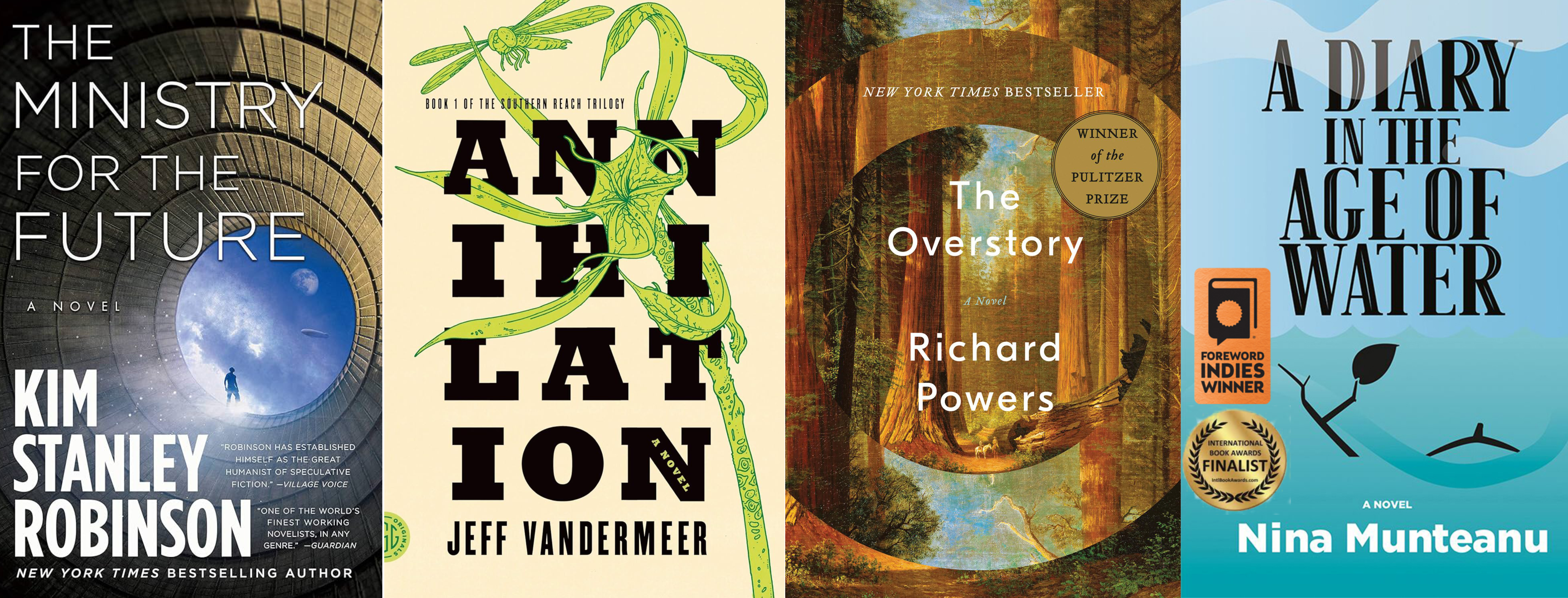
Like the environment it describes, Eco-Fiction is changing and evolving as a genre. Inventor/author Kyo Hwang Cho used the genre designation of Eco-SciFi when he recently identified me along with Kim Stanley Robinson, Jeff VanderMeer, and Richard Powers as Leading Voices in Eco-Science Fiction. Cho defines Eco-SciFi as: “a subgenre of SciFi that foregrounds ecological consciousness, blending speculative fiction with climate science, ethics, and planetary survival.” He includes a table that distinguishes Eco-SciFi from traditional Sci-Fi in several core areas from core theme, tone and motivation to protagonists and ‘message.’ The table can also be used to distinguish this sub-genre from other sub-categories within the umbrella term eco-fiction.
.
Cho described me as a Canadian ecologist and writer whose “stories explore how humans interact with the environment. Her narratives often examine the intersection of science, climate crisis, and spiritual transformation.” He described A Diary in the Age of Water as a noteworthy work of eco-science fiction: “a dystopian look at a future shaped by water scarcity, societal collapse, and ecological memory.”
.
Categories of Eco-Fiction
Partially due to this literature’s growing popularity there are currently many categories within and overlapping with eco-fiction; these include: climate fiction or clifi;solarpunk; eco literature, eco-horror, eco-punk, hopeful dystopia, mundane science fiction, speculative fiction, and weird fiction. Each of these focuses on particular idiosyncracies within the literary form that uniquely identify a work.
.
.
For instance,A Diary in the Age of Water has been variously described by reviewers and readers as eco-fiction, speculative fiction, science fiction or scifi, Fem-lit, mundane science fiction, hopeful dystopia, hopepunk or solarpunk, ecological science fiction or Eco-Sci-Fi. All to say that these designations and sub-genres are somewhat arbitrary and overlap; they may ultimately depend on the reader’s expectations of the work, and their own worldview and predilections. Given the still relevant reason for genre identification (to be able to best find the book in a brick and mortar or virtual bookstore), this makes sense; a work may easily satisfy several reader perspectives and therefore merit many sub-genre descriptors.
Eco-SciFi and mundane science fiction can be viewed this way. In an interview on Solarpunk Futures, I describe mundane science fiction as a sub-genre of science fiction that is very much like speculative fiction in that this sub-genre focuses on scenarios on Earth and involves matters to do with everyday life—hence the term mundane. Given the speculative aspect of mundane science fiction (e.g., set on Earth, often in the near-future), much of what Cho describes as Eco-SciFi also fits the designation of mundane science fiction. in my article “The Power of Diary in Fiction,” I describe Paolo Bacigalupi’s The Windup Girl, Emmi Itäranta’s Memory of Water and my own novel A Diary in the Age of Water as examples of mundane science fiction. Other good examples of mundane science fiction or Eco-SciFi include Kim Stanley Robinson’s New York 2041, Pitchaya Sudbanthad’s Bangkok Wakes to Rain and Michelle Min Sterling’s Camp Zero. These can all be labelled clifi as well. Min Sterling’s book also fits well under Femlit, Feminist Eco-Fiction, and Hopeful Dystopia.
The determining features provided by Cho that distinguish Eco-Sci-Fi help distinguish works that fall more easily into science fiction from those that better fit within the category of literary fiction or climate fiction.
Eco-Fiction—like Science Fiction—is a large category and provides a kind of umbrella term for all environmental fiction in which the environment plays a central role that informs the plot, theme and character-journey. In literature, it serves many literary works that do not include scifi aspects (e.g. fantastical or speculative); because of this, reserving the sub-genre of Eco-SciFi for those that do include fantastical elements makes sense. For non scifi works of Eco-Fiction, I would suggest using the term Eco-Lit (ecological literature), a term already in existence that incorporates the word ‘literature’ to suggest a type of literary fiction.
.
Ecological Literature or Eco-Lit
Eco-Lit—unlike Eco-SciFi—tends to restrict its narrative to the current time, does not include fantastical or speculative elements, and tends to use the ecological or climate elements more as metaphorical setting to examine personal drama. In all eco-fiction, however, the environmental setting/characteristic remains central to the story—as theme and/or premise— which would not work without it. Good examples of Eco-Lit include Migration and Once There Were Wolves by Charlotte McConaghy, Flight Behavior and Prodigal Summer by Barbara Kingsolver, and Greenwood by Michael Christie. In each of these works, the environmental characteristic sparks, motivates, and helps direct the actions of the main protagonist. For instance, in Flight Behavior, if the protagonist Dellarobia Turnbow had not encountered the changed migration of the monarchs (as a result of climate change), she would not have taken a drastic turn in her own journey.
Thomas Hardy’s 1878 Return of the Native was a work of powerful literary eco-fiction (Eco-Lit) that gave Egdon Heath powerful agency over the other traditional characters: destroying, enabling, enlightening, strengthening, isolating.
.
Eco-Fiction as Hyperobject
Some have suggested that eco-fiction be considered a supergenre, given that it defies strict boundaries. Elements of eco-fiction can be found in many other genres, from romance or thriller to science fiction or historical, suggesting that it is more a state of being than a category with static boundaries; more like a door or a window than a room. In my opinion, eco-fiction encompasses more than a genre or category; it is a hyperobject that has been with us since storytelling was born. In his book Hyperobjects, philosopher Timothy Morton attempts to synthesize the still divergent fields of quantum theory (weirdness of tiny objects) and relativity (weirdness of large objects), inserting them into philosophy and art. According to Morton, a hyperobject is an entity that is massively distributed in space and time, making it difficult to grasp its totality or experience it as a single, unified object. Morton argues that the hyperobjects of the Anthropocene, such as global warming, climate or oil that have extensive time/space presence, have newly become visible to humans—mainly due to the very mathematics and statistics that helped to create these disasters. Glimpsing them through our copious data, hyperobjects “compel us to think ecologically, and not the other way around.”
.
I think that much of the fiction that authors write touches on climate and environment, whether they realize it or not, whether they are conscious of it or not. Climate and environment are both large, yet penetrating at the cellular level—influencing us in so many ways from obvious and literal to subtle and visceral. Try as we might—and we have for centuries tried—to separate ourselves and ‘other’ environment, we can’t escape it. “We are always inside an object,” says Morton. Hyperobjects show us that “there is no centre and we don’t inhabit it.”
.
I’ve created my own table, fashioned after Cho’s, and adapted to include Eco-Lit with pertinent examples:
Categories of Fiction Genres Related to Ecology and Environment
SciFi
Eco-Fiction
Eco-SciFi
Eco-Lit
Setting
Science, technology, space, time travel, AI, aliens, etc.* driven by elements of science fact or fiction
Ecological systems, environmental collapse, climate change, sustainability.* Some element of science fact or fiction; speculative fiction
Ordinary people, often linked in some intimate and actionable way to Nature
Examples
Dune (Herbert) I, Robot (Asimov) Neuromancer (Gibson) 1984 (Orwell) Brave New World (Huxley) The Martian Chronicles (Bradbury) Childhood’s End (Clarke)
The Ministry for the Future (Robinson) Annihilation (VanderMeer) A Diary in the Age of Water (Munteanu) The Windup Girl (Bacigalupi) Memory of Water (Itaranta) Waste Tide (Quifan) Camp Zero (Min Sterling) Bangkok Wakes to Rain (Sudbanthad) Lost Arc Dreaming (Okungbowa)
Flight Behavior (Kingsolver) Migration by (McConaghy) Greenwood (Christie) Barkskins (Proulx) The Overstory (Powers) Oil on Water (Habila) Where the Crawdads Sing (Owens) Return of the Native (Hardy) Moby Dick (Melville)
Message
Broad speculative insight into human potential* & survival, future tech, and evolution of civilization
Warns pf ecological degradation, offers alternative visions of coexistence* often through personal or community perspective
Exploration of the human spirit, growth and inspiration through personal environmental awareness and action
Structure
Often premise-based or plot-based; environment often ‘othered’
Theme-based and character-based; environment often with agency
Character-based; environment may be metaphoric character with or without agency
*descriptions taken directly from Cho’s article
.
References:
Morton, Timothy. 2013. “Hyperobjects: Philosophy and Ecology After the End of the World.” University of Minnesota Press, Minneapolis. 240pp.
.
Nina Munteanu is a Canadian ecologist / limnologist and novelist. She is co-editor of Europa SF and currently teaches writing courses at George Brown College and the University of Toronto. Visit www.ninamunteanu.ca for the latest on her books. Nina’s bilingual “La natura dell’acqua / The Way of Water” was published by Mincione Edizioni in Rome. Her non-fiction book “Water Is…” by Pixl Press (Vancouver) was selected by Margaret Atwood in the New York Times ‘Year in Reading’ and was chosen as the 2017 Summer Read by Water Canada. Her novel “A Diary in the Age of Water” was released by Inanna Publications (Toronto) in June 2020.
The writing competition invites writers to submit a story about transformation, when a moment of epiphany causes one or more characters to change for the greener.
The transformative realisation doesn’t have to explicitly mention climate or the environment as long as it inspire behaviours with environmental implications (e.g. food, travel, consumption, gardening, cleaning, etc.), or the story could focus on the benefits of any greener alternative (e.g. environment, health, status, spirit, soul). For more about judging, prizes and terms and conditions, visit their site Green Stories Project.
.
The Green Stories Project
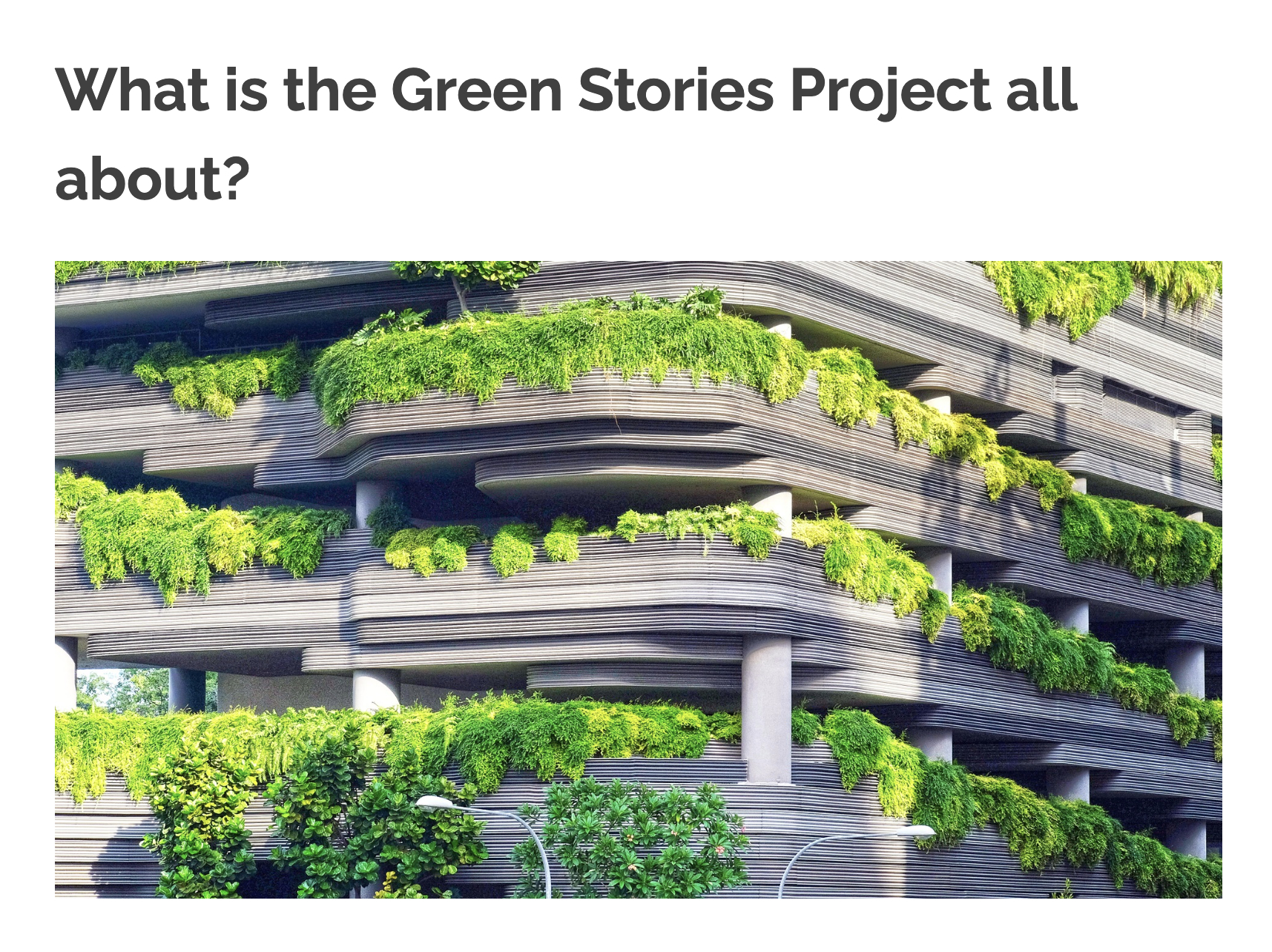
Their mission is to create a cultural body of work that entertains and informs about green solutions, inspires green behaviour and raises awareness of the necessary transformations towards a sustainable economy.
Green Stories began as a series of free writing competitions across various formats to solicit stories that showcase what a sustainable society might look like. They have run over 20 free competitions since they set up in 2018.
Green Stories engage writers, academics and policymakers in sustainability projects. They also partnered with BAFTA on the #ClimateCharacters project to research whether audiences believe presenting characters with high carbon-consumption as aspirational is still acceptable.
.
Cedar trees colonize a mossy log, ON (photo and rendition by Nina Munteanu)
.
Nina Munteanu is a Canadian ecologist / limnologist and novelist. She is co-editor of Europa SF and currently teaches writing courses at George Brown College and the University of Toronto. Visit www.ninamunteanu.ca for the latest on her books. Nina’s bilingual “La natura dell’acqua / The Way of Water” was published by Mincione Edizioni in Rome. Her non-fiction book “Water Is…” by Pixl Press (Vancouver) was selected by Margaret Atwood in the New York Times ‘Year in Reading’ and was chosen as the 2017 Summer Read by Water Canada. Her novel “A Diary in the Age of Water” was released by Inanna Publications (Toronto) in June 2020.
Here is my current list of 30 favourite eco-fiction novels and short story collections that have impacted me, and incited me to think, to feel and to act.
Flight Behavior is a multi-layered metaphoric study of “flight” in all its iterations: as movement, flow, change, transition, beauty and transcendence. Flight Behavior isn’t so much about climate change and its effects and its continued denial as it is about our perceptions and the actions that rise from them: the motives that drive denial and belief. When Dellarobia questions Cub, her farmer husband, “Why would we believe Johnny Midgeon about something scientific, and not the scientists?” he responds, “Johnny Midgeon gives the weather report.” Kingsolver writes: “and Dellarobia saw her life pass before her eyes, contained in the small enclosure of this logic.”
.
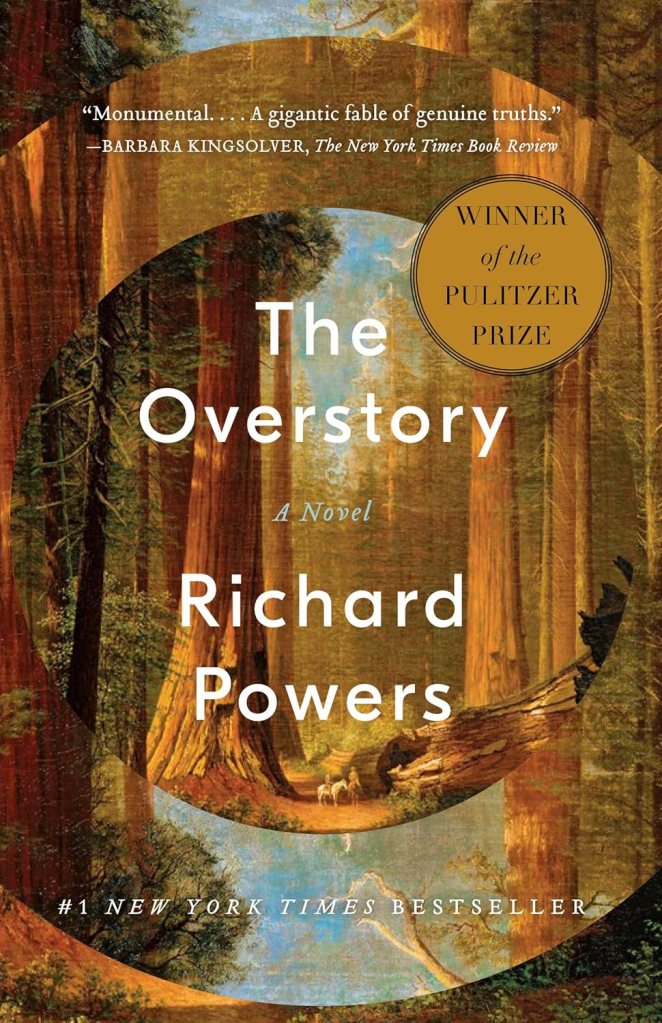
The Overstory follows the life-stories of nine characters and their journey with trees–and ultimately their shared conflict with corporate capitalist America. At the heart of The Overstory is the pivotal life of botanist Patricia Westerford, who will inspire movement. Westerford is a shy introvert who discovers that trees communicate, learn, trade goods and services—and have intelligence. When she shares her discovery, she is ridiculed by her peers and loses her position at the university. What follows is a fractal story of trees with spirit, soul, and timeless societies–and their human avatars.
.
The Maddaddam Trilogy is a work of speculative dystopian fiction that explores the premise of genetic experimentation and pharmaceutical engineering gone awry. On a larger scale the cautionary trilogy examines where the addiction to vanity, greed, and power may lead. Often sordid and disturbing, the trilogy explores a world where everything from sex to learning translates to power and ownership. The dark poetry of Atwood’s smart and edgy slice-of-life commentary is a poignant treatise on our dysfunctional society. Atwood accurately captures a growing zeitgeist that has lost the need for words like honor, integrity, compassion, humility, forgiveness, respect, and love in its vocabulary. And she has projected this trend into an alarmingly probable future. This is subversive eco-fiction at its best.
.
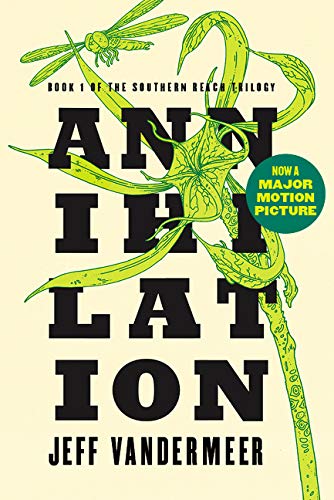
Annihilation is a science fiction eco-thriller that explores humanity’s impulse to self-destruct within a natural world of living ‘alien’ profusion. Annihilation is a bizarre exploration of how our own mutating mental states and self-destructive tendencies reflect a larger paradigm of creative-destruction—a hallmark of ecological succession, change, and overall resilience. VanderMeer masters the technique of weaving the bizarre intricacies of ecological relationship, into a meaningful tapestry of powerful interconnection. Bizarre but real biological mechanisms such as epigenetically-fluid DNA drive aspects of the story’s transcendent qualities of destruction and reconstruction. On one level Annihilation acts as parable to humanity’s cancerous destruction of what is ‘normal’ (through climate change and habitat destruction); on another, it explores how destruction and creation are two sides of a coin.
.
Barkskins chronicles two wood cutters who arrive from the slums of Paris to Canada in 1693 and their descendants over 300 years of deforestation in North America. Proulx weaves generational stories of two settler families into a crucible of terrible greed and tragic irony. The bleak impressions by immigrants of a harsh environment crawling with pests underlies the combative mindset of the settlers who wish only to conquer and seize what they can of a presumed infinite resource. From the arrival of the Europeans in pristine forest to their destruction under the veil of global warming, Proulx lays out a saga of human-environmental interaction and consequence that lingers with the aftertaste of a bitter wine.
.
Memory of Water is a work of speculative fiction about a post-climate change world of sea level rise. Symbols of water as shapeshifter archetype and its omnipotent life- and death-giving associations flow throughout the story, from the ‘fishfires’ in the northern skies to the painted blue circles on the doors of water criminals about to die. Water couples to main character Tea Master Noria, to explore consequences of commodification and exploitation. Teamaster Noria Kaitio guards its secrets; she alone knows the location of the hidden water source, coveted by the new government. Told in the literary fiction style of emotional nuances, Itäranta’s lyrical narrative follows a deceptively quiet yet tense pace that builds like a slow tide into compelling crisis and a poignant end.
.
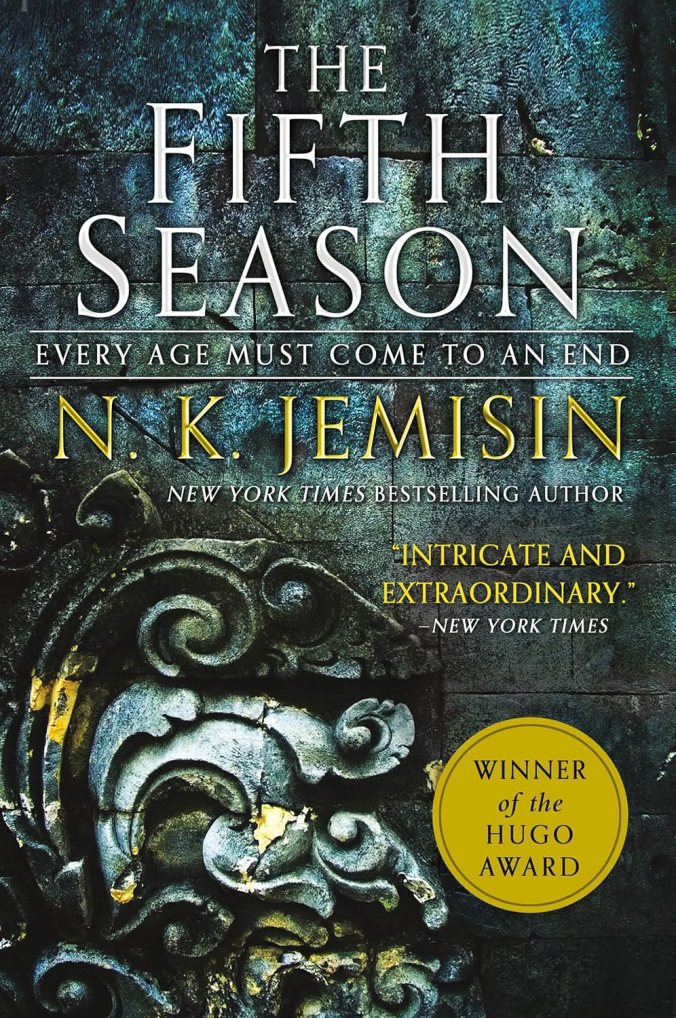
The Broken Earth Trilogy is a fantasy trilogy set in a far-future Earth devastated by periodic cataclysmic storms known as ‘seasons.’ These apocalyptic events last over generations, remaking the world and its inhabitants each time. Giant floating crystals called Obelisks suggest an advanced prior civilization. The first book of the trilogy introduces Essun, an Orogene—a person gifted with the ability to draw magical power from the Earth such as quelling earthquakes. The trilogy focuses on the dangers of marginalization, oppression, and misuse of power. Jemison’s cautionary dystopia explores the consequence of the inhumane profiteering of those who are marginalized and commodified.
.
The Windup Girl is a work of mundane science fiction that occurs in 23rd century post-food crash Thailand after global warming has raised sea levels and carbon fuel sources are depleted. Thailand struggles under the tyrannical boot of predatory ag-biotech multinational giants that have fomented corruption and political strife through their plague-inducing genetic manipulations. The rivalry between Thailand’s Minister of Trade and Minister of the Environment represents the central conflict of the novel, reflecting the current global conflict of neoliberal promotion of globalization and unaccountable exploitation with the forces of sustainability and environmental protection. Given the setting, both are extreme and there appears no middle ground for a balanced existence using responsible and sustainable means. The Windup Girl, Emiko, who represents the future, is precariously poised.
.
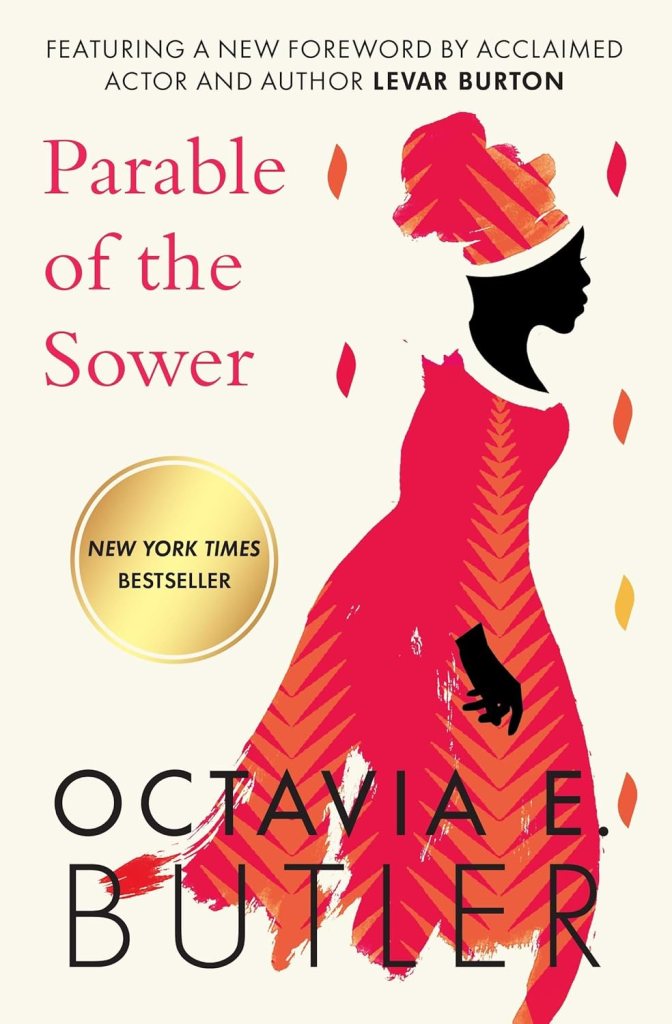
Parable of the Sower is a science fiction dystopian novel set in 21stcentury America where civilization has collapsed due to climate change, wealth inequality and greed. Parable of the Soweris both a coming-of-age story and cautionary allegorical tale of race, gender and power. Told through journal entries, the novel follows the life of young Lauren Oya Olamina—cursed with hyperempathy—and her perilous journey to find and create a new home. What starts as a fight to survive inspires in Lauren a new vision of the world and gives birth to a new faith based on science: Earthseed. Written in 1993, this prescient novel and its sequel Parable of the Talent speak too clearly about the consequences of “making America Great Again.”
.
The Water Knife is set in the near-future in the drought-stricken American southwest, where corrupt state-corporations have supplanted the foundering national government. Water is the new gold—to barter, steal, and murder for. Corporations have formed militias and shut down borders to climate refugees, fomenting an ecology of poverty and tragedy. Massive resorts—arcadias—constructed across the parched landscape, flaunt their water-wealth in the face of exploited workers and gross ecological disparity. Water is controlled by corrupt gangsters and “water knives” who cleverly navigate the mercurial nature of water rights in a world where “haves” hydrate and “have nots” die of thirst.
.
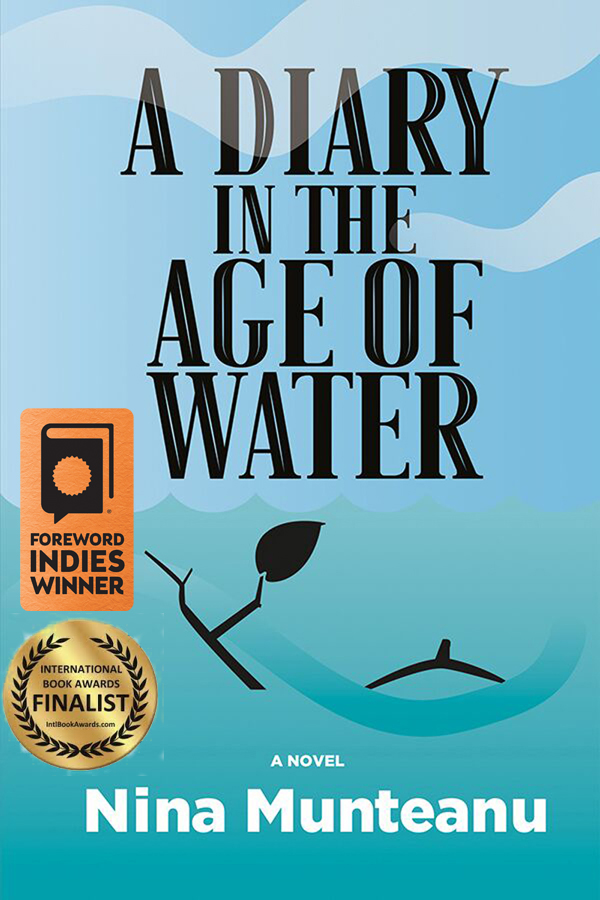
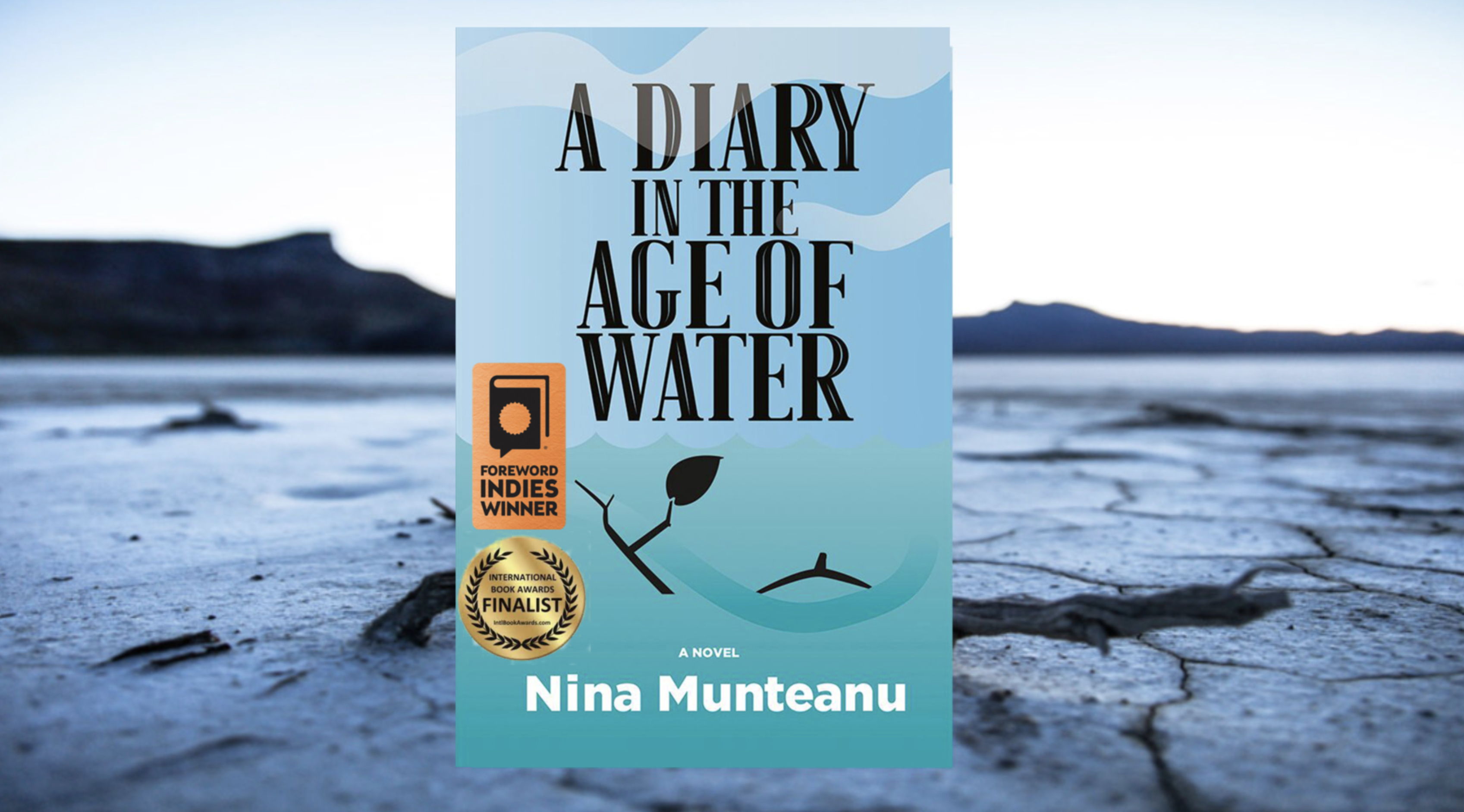
A Diary in the Age of Water explores the socio-political consequences of corruption in Canada, now owned by China and America as an indentured resource ‘reservoir’; it is a story told through four generations of women and their unique relationship with water during a time of great unheralded change. Centuries from now, in a dying boreal forest in what used to be northern Canada, Kyo, a young acolyte called to service in the Exodus, yearns for Earth’s past—the Age of Water—before the “Water Twins” destroyed humanity. Looking for answers and plagued by vivid dreams of this holocaust, Kyo discovers the diary of Lynna, a limnologist from that time of severe water scarcity just prior to the destruction. In her work for a global giant that controls Earth’s water, Lynna witnesses and records in her diary the disturbing events that will soon lead to humanity’s demise.
.
Waste Tide is an eco-techno thriller with compelling light-giving characters who navigate the dark bleak world of profiteers and greedy investors. Mimi is a migrant worker off the coast of China who scavenges through piles of hazardous technical garbage to make a living. She struggles, like the environment, in a larger power struggle for profit and power; but she finds a way to change the game, inspiring others. The story of Mimi and Kaizong—who she inspires—stayed with me long after I put the book down.
.
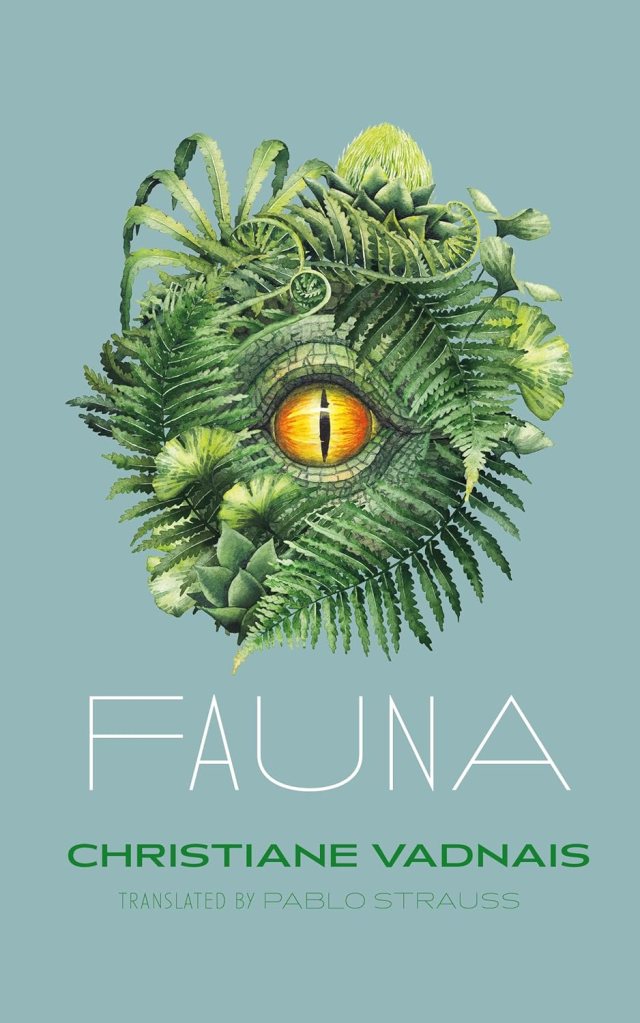
Fauna is at once beautiful and terrifying. Vadnais’s liquid prose immersed me instantly in her flowing story about change in this Darwinian eco-horror ode to climate change. I felt connected to the biologist Laura as she navigated through a torrent of rising mists and coiling snakes and her own transforming body with the changing world around her. It was an emotional rollercoaster ride that made me think.
.
The Word for World is Forest chronicles the struggles of the indigenous people under the conquering settlers through empathetic characters. The irony of what the indigenous peoples must do to save themselves runs subtle but tragic throughout the narrative. Given its relevance to our own colonial history and present situation, this simple tale rang through me like a tolling bell.
.
The Breathing Hole story begins in 1535, when the Inuk widow Hummiktuq risks her life to save a lost one-eared polar bear cub on an ice floe and adopts him. She names him Angu’ruaq. We soon learn that Angu’ruaq is timeless when we encounter him in scenes over the centuries from the Franklin Expedition in 1845 (who he helps by bringing them food) to 2031 when Angu’ruaq—old, hungry, his fur yellowing—returns to the breathing hole where long-dead Hummiktuq rescued him. By then the glaciers have receded and the ground is slush. Murphy’s spare and focused narrative achieves a timeless, dreamlike quality that plays strongly on the emotional connections of the reader; it elicits immense empathy for the Other in a deeply moving saga on the tragic dance of colonialism and climate change.
.
The Bearby Andrew Krivak is a fable of a post-anthropocene Earth told through the point of view of a young girl—possibly the only remaining human in the world—and the bear that guides her. Unlike the polar bear of The Breathing Hole, who remains silent and is clearly victimized by humanity’s actions, the black bear of The Bear lives with agency in a post-anthropocene world; he proselytizes and tells stories to instruct the girl on living harmoniously with Nature. His actions and elegant use of speech reflect his archetype as mentor in this story. This is foreshadowed in the fairytale the girl’s father recounts to her of a bear that saved a village from a cruel despot through cleverness and a sense of community.
.
Duneuses powerful world building and symbols of desert, water and spice coupled to the indigenous Fremen, to address exploitation and oppression by colonial greed.
The novel chronicles the journeys of new colonists and indigenous peoples of the desert planet Arrakis, enslaved by its previous colonists. The planet known as Dune lies at the heart of an epic story about taking, giving and sharing. The planet also serves as symbol to any new area colonized by settlers and already inhabited by Othered indigenous. It is the Mars of Martian Chronicles, the Bangkok of The Windup Girl, the North America of Barkskins.
.
Camp Zero, set in the remote Canadian north, is a feminist climate fiction that explores a warming climate through the perilous journeys of several female characters, each relating to her environment in different ways. Each woman exerts agency in surprising ways that include love, bravery and shared community. The strength of female power carried me through the pages like a braided river heading to a singular ocean. These very different women journey through the dark ruins of violent capitalism, colonialism and patriarchy—flowing past and through hubristic men pushing north with agendas and jingoistic visions—to triumph in an ocean of solidarity. I empathized with each woman as she found her strength and learned to wield true heroism—one based on collaboration and humble honesty.
.
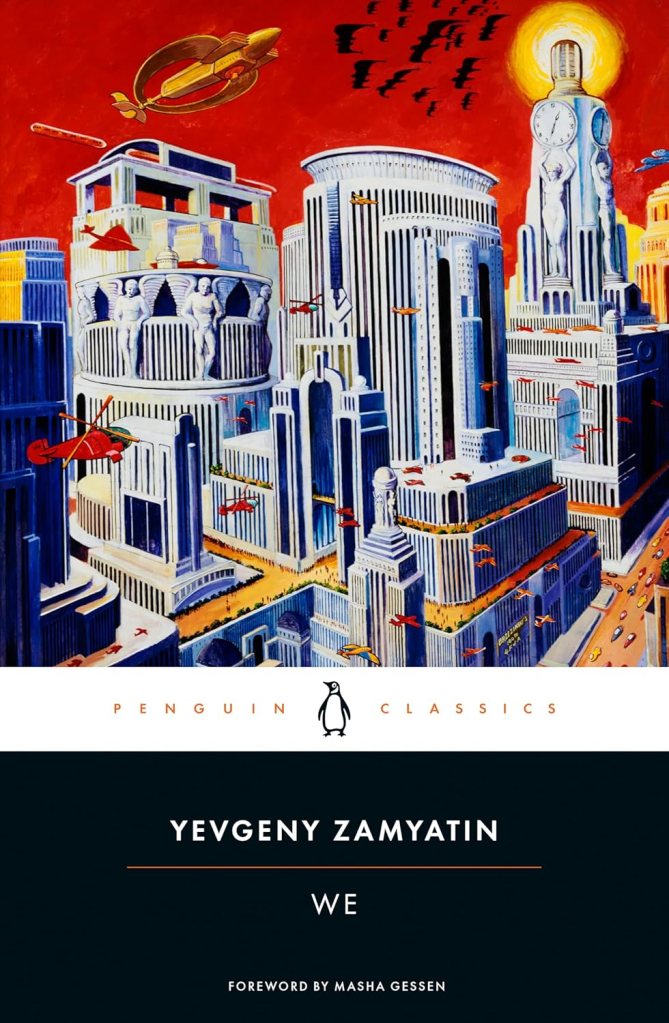
We, written in 1920, is a hopeful dystopic work of courageous and unprecedented feminism. While the story centres on logical D-503, a man vacuously content as a number in the One State, it is I-330—Zamyatin’s unruly heroine—who stole my attention. Confident, powerful and heroic, the liberated I-330 embraces the Green Wind of change to influence D-503. A force of hope and resilience, she braves torture to successfully orchestrate a revolution that breaches the Green Wall—feats typically relegated to a male protagonist in novels of that era. When pregnant O-90 refuses to surrender her child to the State, I-330 helps her escape to the outside, where the Green Wind of freedom blows. I resonated with Zamyatin’s cautionary tale on the folly of logic without love and Nature.
.
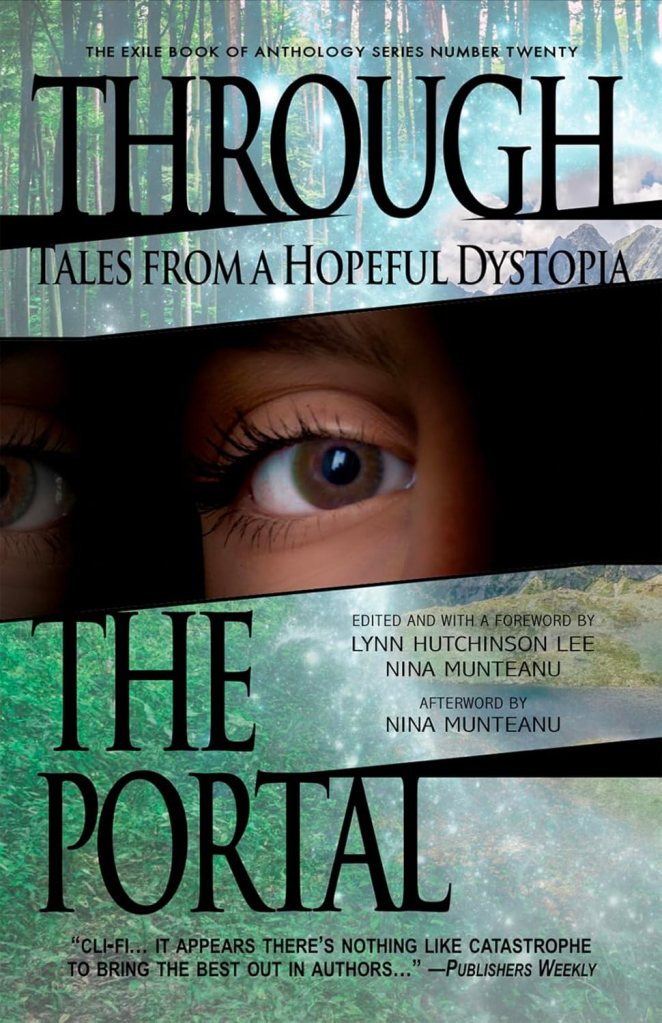
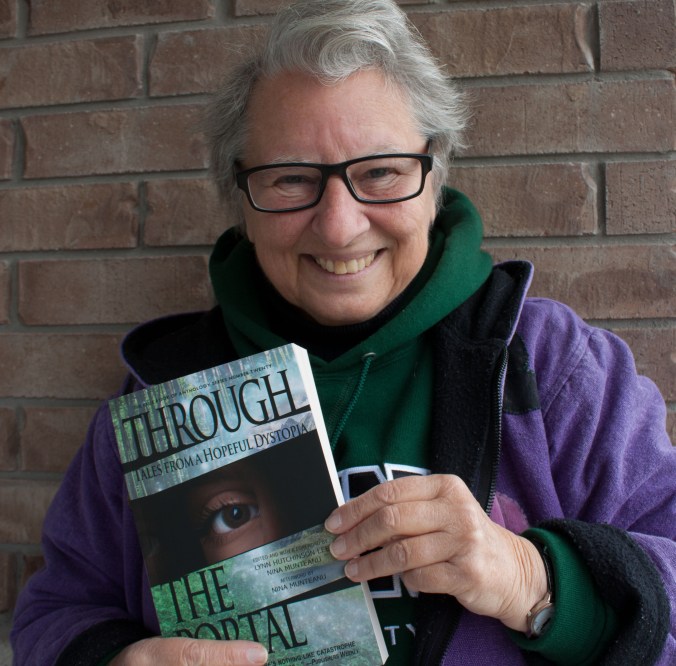
In Through the Portal: Tales from a Hopeful Dystopia, award-winning authors of speculative fiction Lynn Hutchinson Lee and Nina Munteanu present a collection that explores strange new terrains and startling social constructs, quiet morphing landscapes, dark and terrifying warnings, lush newly-told folk and fairy tales.
.
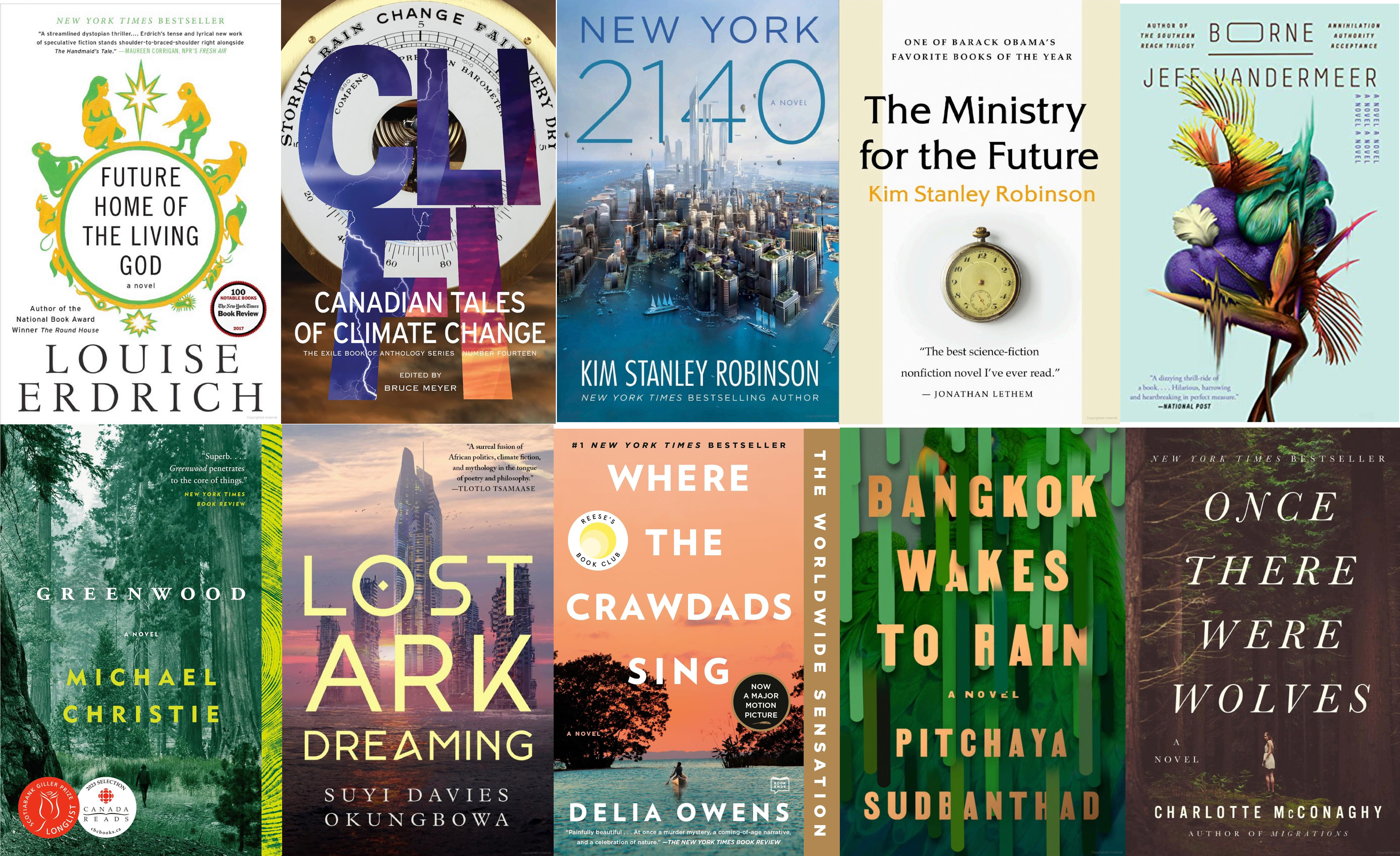
I list other significant and impactful eco-fiction books below:
New York 2140 by Kim Stanley Robinson
Canadian Tales of Climate Change (edited) by Bruce Meyer
Ministry for the Future by Kim Stanley Robinson
Borne by Jeff Vandermeer
Bangkok Wakes to Rain by Pitchaya Sudbanthad
Future Home of the Living God by Louise Erdrich
Lost Arc Dreaming by Suyi Davies Okungbowa
Greenwood by Micheal Christie
Where the Crawdads Sing by Della Owens
Once There Were Wolves by Charlotte McConaghy
.
.
Nina Munteanu is a Canadian ecologist / limnologist and novelist. She is co-editor of Europa SF and currently teaches writing courses at George Brown College and the University of Toronto. Visit www.ninamunteanu.ca for the latest on her books. Nina’s bilingual “La natura dell’acqua / The Way of Water” was published by Mincione Edizioni in Rome. Her non-fiction book “Water Is…” by Pixl Press (Vancouver) was selected by Margaret Atwood in the New York Times ‘Year in Reading’ and was chosen as the 2017 Summer Read by Water Canada. Her novel “A Diary in the Age of Water” was released by Inanna Publications (Toronto) in June 2020.
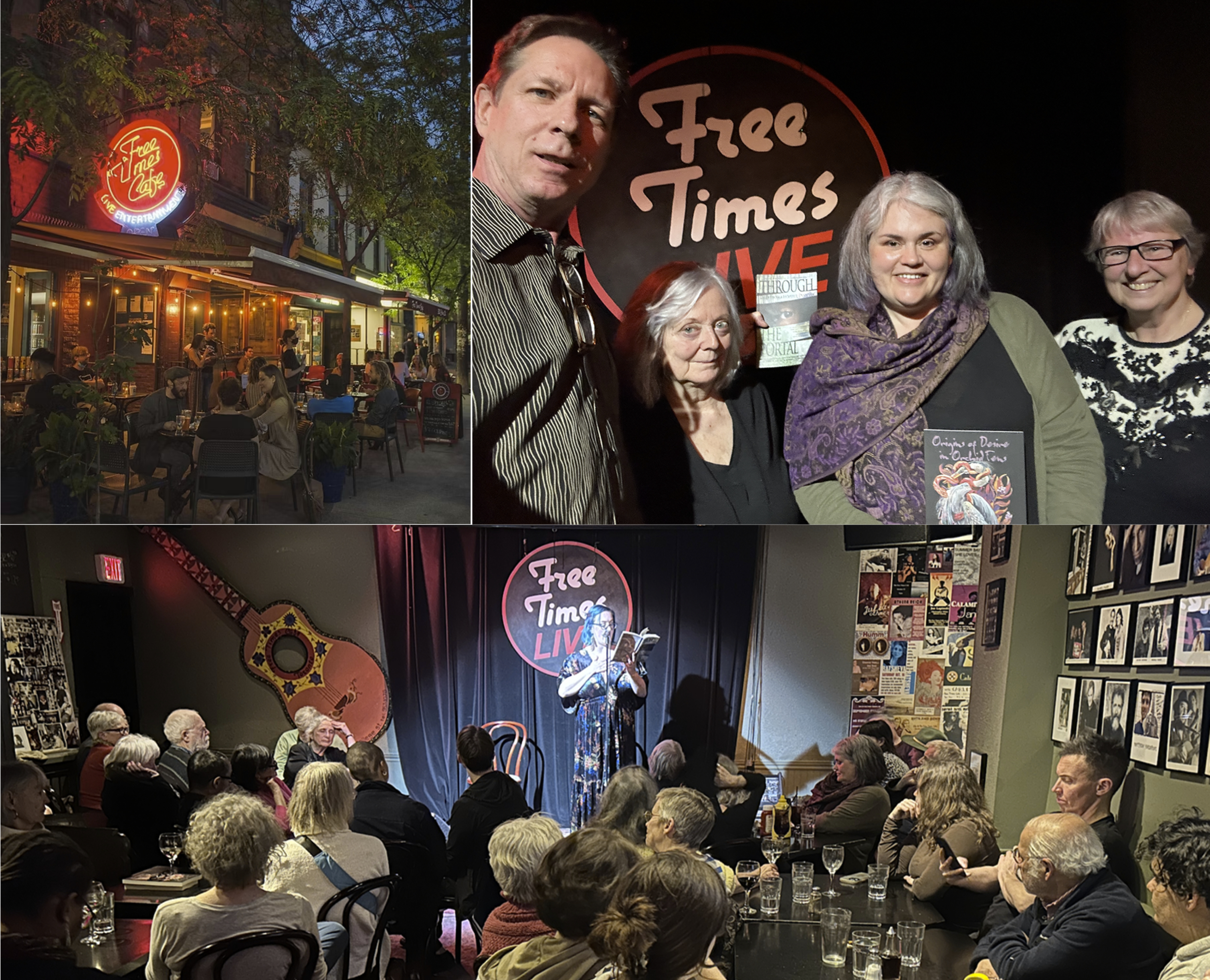
Free Times Cafe venue at night (photo by Ashish Pillai)
.
Appropriately, on the eve of Earthday, Exile Editions and Stelliform Press launched two eco-fiction books at one of Toronto’s oldest and established cultural/dining venues, Free Times Café, by Kensington Market. Both books were works of eco-fiction and climate fiction that focused on issues of environmental treatment and destruction. Both works focused on hope.
.
Top left: Free Times Cafe venue at night (photo by Nick Wons). Top right: Michael Callaghan of Exile Editions, Lynn Hutchinson Lee, Selena Middleton of Stelliform Press, Nina Munteanu. Bottom: Lynne Sargent reads from Portal.
.
Exile launched their anthology Through the Portal: Tales of a Hopeful Dystopia, edited by Lynn Hutchinson Lee and Nina Munteanu. It was their twentieth in a series; this one focused on hope in a climate-changing world that is progressively becoming more dystopic. Short stories and poems were read by authors.
.
Top left: Ursula Pflug reads from Portal. Top right: Michael Callaghan introduces the anthology. Bottom: Lynn Hutchinson Lee reads from her novel Origins of Desire in Orchid Fens.
.
Stelliform launched Origins of Desire in Orchid Fens a novel written by Lynn Hutchinson Lee, who read several excerpts of her novel.
Both works have received much praise.
.
.
Nina Munteanu is a Canadian ecologist / limnologist and novelist. She is co-editor of Europa SF and currently teaches writing courses at George Brown College and the University of Toronto. Visit www.ninamunteanu.ca for the latest on her books. Nina’s bilingual “La natura dell’acqua / The Way of Water” was published by Mincione Edizioni in Rome. Her non-fiction book “Water Is…” by Pixl Press (Vancouver) was selected by Margaret Atwood in the New York Times ‘Year in Reading’ and was chosen as the 2017 Summer Read by Water Canada. Her novel “A Diary in the Age of Water” was released by Inanna Publications (Toronto) in June 2020.
Art is the oar that guides us through dystopian rivers
Mary Woodbury, dragonfly.eco
.
Through the Portal: Tales from a Hopeful Dystopiathe ecofiction anthology edited by Lynn Hutchinson Lee and me and published December 2024 by Exile Editions, recently received another wonderful review from Mary Woodbury at dragonfly.eco. Here is an excerpt:
As the world teeters on disaster, what saves us ranges from graceful failure to full-fledged resistance and opposition. Through the Portal, an anthology of eco-fiction, offers 35 artful, provoking stories to propel us forward. The book serves to reconnect us with Nature in diverse storytelling, from cautionary tales to fiction that brims with hope while also helping us grieve what we’ve lost—described as solastalgia.
The anthology is a stunning collection of short stories and poetry that address our most existential concerns through metaphysical, epic, solarpunk, mythological, and contemporary perspectives. From landscape and weather transformations to stars, fairy tales, parking lots, mermaids, whales, storms, bees, and much more, the reader is treated to a journey of colorful narratives woven into a chronology: imagination, after the fall, and Earth hour.
Hopeful dystopias are so much more than an apparent oxymoron: they are in some fundamental way the spearhead of the future—and ironically often a celebration of human spirit by shining a light through the darkness of disaster. In Through the Portal: Tales from a Hopeful Dystopia, award-winning authors of speculative fiction Lynn Hutchinson Lee and Nina Munteanu present a collection that explores strange new terrains and startling social constructs, quiet morphing landscapes, dark and terrifying warnings, lush newly told folk and fairy tales.—Exile Editions
.
Nina Munteanu is a Canadian ecologist / limnologist and novelist. She is co-editor of Europa SF and currently teaches writing courses at George Brown College and the University of Toronto. Visit www.ninamunteanu.ca for the latest on her books. Nina’s bilingual “La natura dell’acqua / The Way of Water” was published by Mincione Edizioni in Rome. Her non-fiction book “Water Is…” by Pixl Press (Vancouver) was selected by Margaret Atwood in the New York Times ‘Year in Reading’ and was chosen as the 2017 Summer Read by Water Canada. Her novel “A Diary in the Age of Water” was released by Inanna Publications (Toronto) in June 2020.
A November mist settles on Thompson Creek marsh, ON (photo by Nina Munteanu)
In January of this year, I posted a shot I’d taken in early winter of a marsh I often visit. That morning was cool and a thick mist lurked in the marsh like a shadow, giving it a mysterious timeless quality. A quiet stillness had settled like dew on everything, muting both colour and sound into a hush of anticipation. The stillness made me feel as though I’d entered a John Atkinson Grimshaw painting. A moody darkness pervaded the bare braided trees and the marsh oozed the scent of humus and wet vegetation. I inhaled it all deeply.
The image I posted caught the attention of colleague writer and publisher Lorina Stephens, who is also a superlative artist and painter. Inspired, she responded to my image with a painting.
The Painting:
Lorina Stephen’s ekphrastic painting entitled “Fog on West Grey Pond”
“I very much wanted to create that feeling of dreamscape that often happens in still waters, of there being something out there in the mist, of that sense of wonder and mystery. So, for this painting, it meant employing a gentle hand, allowing pigment to flow and pool, waiting until water had evaporated slightly, and then using a small, natural sponge to dab out areas to allow the white of the paper to shine through, then as the paper dried in an hour or so, or in some cases the next day, brushing in details little by little, from soft washes to hard lines, in order to create depth and definition.
It always amazes me when depth of field happens on the two dimensions of paper, that in this flat, thin sheet of paper I can take my viewer out and away into the distance, through a portal to another place, and in this case perhaps create that sense of the dampness and chill of a foggy day.”
Biography of Lorina Stephens
Lorina Stephens has been painting since the age of 14 when she studied under well-known, award-winning Ontario landscape artist, Dorothy Milne-Eplett. In those days it was oils and mostly copy-painting, although there were originals. Most of those paintings ended up in a collection under patreon, Oscar LaBerge, who was a construction worker in Newmarket, Ontario.
In the 1980s, Lorina rediscovered watercolours during an intensive 12 week Georgian College course, during which time the Tottenham Art Association was formed, and juried shows ensued, as well as solo exhibitions in galleries in Central Ontario.
.
Then the recession of the 1990s happened, and art became a way to stretch the family budget by way of hawking wares at the Orangeville Farmers Market, what Lorina came to call “painting pretty pictures for tourists”. These days Lorina paints simply as a way of expressing her love of the land, the ineffable communication that exists in the vast expanse of Canadian geography.
Lorina inherited from her mother a lifetime supply of watercolour paper. Among all those papers is a block of 7″ x 10″ Arches 140 lb hot pressed paper. That began a journey of studies.
Hot pressed paper has its own set of demands, having a very smooth finish and thus doesn’t absorb water the way of cold pressed, and the weight also means it tends to buckle and warp easily in larger sizes. Lorina addresses that by using a tempered glass painting desk, and creating a suction seal with water between the glass and paper, rather than the frustration of stretching paper onto a surface with masking tape. Using hot pressed paper also allows for some pretty interesting results by way of sponging and wiping out areas, and accepting precise detail work when the paper is dry. Her palette of colours is mostly transparent, with the addition of some pretty aggressively staining bullies added in.
Thompson Creek marsh on a foggy November morning, ON (photo by Nina Munteanu)
.
Nina Munteanu is a Canadian ecologist / limnologist and novelist. She is co-editor of Europa SF and currently teaches writing courses at George Brown College and the University of Toronto. Visit www.ninamunteanu.ca for the latest on her books. Nina’s bilingual “La natura dell’acqua / The Way of Water” was published by Mincione Edizioni in Rome. Her non-fiction book “Water Is…” by Pixl Press (Vancouver) was selected by Margaret Atwood in the New York Times ‘Year in Reading’ and was chosen as the 2017 Summer Read by Water Canada. Her novel “A Diary in the Age of Water” was released by Inanna Publications (Toronto) in June 2020.
AI entity performing a myriad of duties (image from Bernard Marr & Co.)
.
I teach academic writing to students at the University of Toronto Writing Centre. It’s wonderful and fulfilling work and I enjoy helping students in several disciplines (engineering, health sciences, social sciences) learn to write better. As with the rest of the academic world of writing, we are all making sense of the use of AI-generated tools by students, instructors and researchers: large language models (LLMs) such as ChatGPT, Claude, Copilot, and even Grammarly. Students have told me that they found AI helpful in brainstorming and outlining as well as organizing literature reviews and editing for grammar and such. A recent survey of universities and corporations around the world by the Digital Education Councilrevealed that a majority of students used AI tools. Of those surveyed, close to two thirds used AI as a search engine; a third used it to summarize documents; and a fifth used it to create first drafts.
In her 2024 article “The Future Is Hybrid”, Beth McMurtrie suggested that genAI “may eventually take its place in the pantheon of game-changing technologies used every day in education—alongside calculators, search engines, and Excel.”
In my other pursuit as a professional fiction author, I see the artistic and communication industries embracing AI, particularly in the visual arts. I’m now told that several publishing houses and magazines have dedicated efforts to publish AI-generated work. Some magazines are entirely AI generated, Copy Magazine, for instance. Author futurist Bernard Marr writes that “Generative AI is already being adopted in journalism to automate the creation of content, brainstorm ideas for features, create personalized news stories, and produce accompanying video content.” Marr then goes on to provide 13 ways that all writers should embrace Generative AIthat includes anything from drafting plot lines to world building. Sports Illustrated was recently found to publish AI generated stories. Even newspapers, such as the LA Times, the Miami Herald, and Us Weekly acknowledge AI-written content. And I recently learned that one of the top five online science fiction magazines, Metastellar, accepts AI-assisted stories with the proviso that “they better be good.” And Metastellar provides some convincing reasons. This has become a hot topic among my fellow professional writers at SF Canada. One colleague informed me that a “new publisher Spines plans todisrupt industry by publishing 8000 AI books in 2025 alone.” On checking the news release, I discovered that Spines is, in fact, a tech firm trying to make its mark on publishing, primarily through the use of AI. The company offers the use of AI to proofread, produce, publish, and distribute books. They are, in fact, a vanity publishing platform (essentially a service for self-publishing), charging up to $5000 a book and often taking just three weeks to go from manuscript to a published title.
The emerging field of AI-assisted writing and communicating is a burgeoning field that promises to touch every person in some way—writers and readers alike. Tech companies are scrambling to use it to save time and effort. Others are involved in improving current and developing new models. Many are training LLMs for improved use. Even I was headhunted as a creative writer by one tech firm to help create more safe, accurate and reliable LLMs.
Generative AI applications (Image from Neebal Technologies)
.
Universities and Other Educational Institutions Use of AI
How universities and other educational institutions are dealing with the challenge and promise of these emerging tools in communication varies from out right forbidding AI use in the classroom to full on acceptance and obligatory use in some classroom projects. McMurtrie described how two instructors at Rollins College, Dan Myers and Anne Murdaugh, had students collaborating with AI on semester-long research projects. They were instructed to use Claude and Copilot to brainstorm paper topics, conduct literature reviews, develop a thesis, and outline, draft, and revise their papers. Myers and Murdaugh asserted that “the skills that students use to engage thoughtfully with AI are the same ones that colleges are good at teaching. Namely: knowing how to obtain and use information, thinking critically and analytically, and understanding what and how you’re trying to communicate.”
In fall of 2024, Stephanie Wheeler and others at the department of writing and rhetoric in the University of Central Florida, along with their philosophy department, set up an interdisciplinary certificate in AI. Their purpose was to develop conceptual knowledge about AI. Wheeler asserted that writing and rhetoric have long been concerned with how technology shapes these disciplines. Sharon L.R. Kardia, senior associate dean of education at the University of Michigan argued that AI could greatly benefit public health in its ability to aid in data analysis, research review, and the development of public-health campaigns. However, she cautioned that LLMs also absorb and reflect the social biases that lead to public-health inequities.
One of my Writing Centre colleagues at UofT recently shared some thoughts about a conference session he’d participated in, in which a student panel listed tasks that they thought genAI cannot do (yet). These included: generate music, offer interpersonal advice, and verify facts; I think AI can already help with two of these. Chad Hershock, executive director of the Eberly Centre for Teaching Excellence and Educational Innovation at Carnegie Mellon University shared that they are researching key questions about whether AI enables or impedes: does using AI while brainstorming generate more or fewer ideas? Can generative AI give less-experienced students a better chance to be successful in technical courses? To what extent does using AI help or hinder writing skills? Does having generative AI as a thought partner enhance students’ ability to make a claim and support it with evidence?
My own experience with a less-experienced student’s use of genAI was often abysmal. The student had used the tool as a crutch and had failed to learn from their use of the tool. This suggests that the most important limitations of the tool lie with the user’s own limitations and it points to the need for guidance by educators.
In her 2024 Axios article “Why AI is not substitute for human teachers” Megan Morrone described findings of the Wharton School on access to genAI: while genAI tutors improved student performance on practice math problems, students who used these tools performed significantly worse on exams (where they couldn’t use AI). The school concluded that the students used genAI to copy and paste answers, which led them to engage less with the material. Wharton School associate professor Hamsa Bastani argued that, “if you just give unrestricted access to generative AI, students end up using it as a crutch…[and] end up performing a lot worse.” This is partly because students—often stressed-out by heavy work loads—find that LLMs save time and can produce content close to what the user might produce themselves. Researchers have even come up with a term for this: Cognitive Miserliness of the User, which, according to writer Stephen Marche, “basically refers to people who just don’t want to take the time to think.”
Melanie M. Cooper, chemistry professor at Michigan State University cautioned that while “there’s a lot of ebullience in the AI field, it’s important to be wary.” She argued that it is easy to misuse AI and override the system to get a quick answer or use it as a crutch. McMurtrie shares that, while “AI evangelists promise that these tools will make learning easier, faster and more fun,” academics are quick to reject that rhetoric. McMurtrie ends her article with a cautionary statement by Jennifer Frederick of Yale: “Universities really need to be a counterpoint to the big tech companies and their development of AI. We need to be the ones who slow down and really think through all the implications for society and humanity and ethics.”
Humans can relinquish control, but not responsibility
Attribution remains important
Historical definitions of plagiarism no longer apply
.
6 tenets of Postplagiarism (image from Sarah Elaine Eaton)
.
Eaton’s fifth point (attribution remains important), I think becomes all that more important in the presence of AI use. Transparency in presentation, particularly in an academic setting, takes on a new level of importance when communicating with tools such as generative AI. Where things come from, which tool was used and how it was used are key to understanding and interpreting the nature of the writing itself. The path taken to the destination becomes all important when interpretation and comprehension (and replication) is required. To fully understand “where you are”; we need to know “how you got there.” It’s like solving math problem; if you don’t show your work and just provide the answer, I have no way of knowing that you actually understood the problem and really solved it.
I am certain that generative AI will continue to take on various forms that will continue to astonish. Its proper use and development will serve humanity and the planet well; but there will always be abusers and misusers and those who simply don’t care. We must be mindful of them all. We must remain vigilant and responsible. Because, just as with freedom, if we grow lazy and careless, we run the risk of losing so much more.
Nina Munteanu is a Canadian ecologist / limnologist and novelist. She is co-editor of Europa SF and currently teaches writing courses at George Brown College and the University of Toronto. Visit www.ninamunteanu.ca for the latest on her books. Nina’s bilingual “La natura dell’acqua / The Way of Water” was published by Mincione Edizioni in Rome. Her non-fiction book “Water Is…” by Pixl Press (Vancouver) was selected by Margaret Atwood in the New York Times ‘Year in Reading’ and was chosen as the 2017 Summer Read by Water Canada. Her novel “A Diary in the Age of Water” was released by Inanna Publications (Toronto) in June 2020.





















 Nina Munteanu Writing Coach