Why Writing and Reading Eco-Fiction Will Save the World—From CliFi to Solarpunk

Fence and post at marsh during a rain, ON (photo by Nina Munteanu)

The Universe is made of stories, not atoms—Muriel Rukeyser

Canadian writer Mary Woodbury tells us that: “Fiction exploring humanity’s impacts on nature is becoming more popular [and] has the distinct ability to creatively engage and appeal to readers’ emotions. In fact, it can stir environmental action.” A survey she took in 2020 showed that “88% of its participants were inspired to act after reading ecological fiction.”

Eco-Fiction (short for ecological fiction) is a kind of fiction in which the environment—or one aspect of the environment—plays a major role, either as premise or as character. “Principled by real science and exalting our planet’s beauty, these stories are works of art. They live within classic modes of fiction exploring the human condition, but also integrate the wild,” writes Woodbury. At the heart of eco-fiction are strong relationships forged between the major character on a journey and an aspect of their environment and place. Environment and place can illuminate through the sub-text of metaphor a core aspect of the main character and their journey. 

Green architecture design by Vincent Callebaut

All great literature distills its art form through the exploration of relationship: our relationship with technology, with science, Nature, God, our children, each other, our history. Science fiction illuminates our history and our very humanity by examining our interaction with “the other”—the unfamiliar, the feared, the often downtrodden, the invisible, the ignored. This is the hero’s journey. And it is through this journey relating to the “other” (whether it’s Earth or an alien planet, its water, environment and issues, and its varied peoples and cultures) that our hero discovers herself and her gift to the world. When will we stop portraying Nature as “other”?…

Green neighbourhood design by Vincent Callebaut

We currently live in a world in which climate change and associated water crisis pose a very real existential threat to most life currently on the planet. The new normal is change. And it is within this changing climate that eco-fiction is realizing itself as a literary pursuit worth engaging in. The emergence of the term eco-fiction as a brand of literature suggests that we are all awakening—novelists and readers of novels—to our changing environment. We are finally ready to see and portray environment as an interesting character with agency and to read this important and impactful literature.

Lavender farm and house design by Vincent Callebaut

Many readers are currently seeking fiction that describes environmental issues but also explores a successful paradigm shift: fiction that accurately addresses our current issues with intelligence and hope. This is reflected in the growing popularity of several emerging sub-genres of fiction such as solar punk, optimistic climate fiction, clifi, eco-lit, hope punk, and others. The power of envisioning a certain future is that the vision enables one to see it as possible. Eco-fiction—and all good science fiction—uses metaphor to study the world and the consequences of humanity’s actions through microcosmic dramatization. What makes this literature particularly exciting is: 1) its relevance to our current existential situation; and 2) that it often provides a way forward. 

Solarpunk world imagined (image by Imperial Boy)

The Way Forward with Solarpunk

In his 2014 article “Solarpunk: Notes toward a manifesto” in Hieroglyph Adam Flynn writes of under-30 futurists: “Many of us feel it’s unethical to bring children into a world like ours. We have grown up under a shadow, and if we sometimes resemble fungus it should be taken as a credit to our adaptability.”

“We’re solarpunks because the only other options are denial or despair.”

ADAM FLYNN

Solarpunk, says Flynn, “is about finding ways to make life more wonderful for us now, and more importantly for the generations that follow us—i.e., extending human life at the species level, rather than individually.” Our future, asserts Flynn, “must involve repurposing and creating new things from what we already have (instead of 20thcentury “destroy it all and build something completely different” modernism).” Solarpunk futurism “is not nihilistic like cyberpunk and it avoids steampunk’s potentially quasi-reactionary tendencies: it is about ingenuitygenerativityindependence, and community.”

“Hydrogenase” algae-powered airships by Vincent Callebaut

The ‘punk’ suffix comes from the oppositional quality of solarpunk; opposition that begins with infrastructure as a form of resistance. Flynn tells us that solarpunk draws on the ideal of Jefferson’s yeoman farmer, Ghandi’s ideal of swadeshi, and countless other traditions of innovative dissent

“Hyperion” eco-neighbourhood design by Vincent Callebaut

“Solarpunk is a future with a human face and dirt behind its ears.”

ADAM FLYNN

In response to Flynn’s article, Bob Vanderbob writes, “going solar is a deep mental shift: it will be the central metaphor of our future civilization.” 

Green Paris design by Vincent Callebaut

Musician photographer Jay Springett calls solarpunk, “a movement in speculative fiction, art, fashion, and activism that seeks to answer and embody the question ‘what does a sustainable civilization look like, and how can we get there?’… At once a vision of the future, a thoughtful provocation, and an achievable lifestyle.” Jennifer Hamilton observes in The Conversation that “as a category of fiction, solarpunk remains a fringe dweller…Nevertheless, the aesthetic sensibilities of the subculture are starting to emerge.” Hamilton asserts that “the focus on the cultural change that will necessarily accompany the full transition to renewable energy is the defining feature of solarpunk.” She adds, “we usually ask ‘can renewables replace fossil fuels?’ … solarpunks ask ‘what kind of world will emerge when we finally transition to renewables?’ and their [works] are generating an intriguing answer.”

Beach house design by Vincent Callebaut

How Eco-Fiction Inspires and Galvanizes

Readers responded to Mary Woodbury’s survey question “Do you think that environmental themes in fiction can impact society and if so, how?” with these observations:

  • Environmental fiction encourages empathy and imagination. Stories can affect us more than dry facts. Fiction reaches us more deeply than academic understanding, moving us to action.
  • Environmental fiction triggers a sense of wonder about the natural world, and even a sense of loss and mourning. Stories can immerse readers into imagined worlds with environmental issues similar to ours.
  • Environmental fiction raises awareness, encourages conversations and idea-sharing. Fiction is one way that helps to create a vision of our future. Cautionary tales can nudge people to action and encourage alternative futures. Novels can shift viewpoints without direct confrontation, avoid cognitive dissonance, and invite reframed human-nature relationships through enjoyment and voluntary participation.
  • Environmental themes can reorient our perspective from egocentrism to the greater-than-human world.
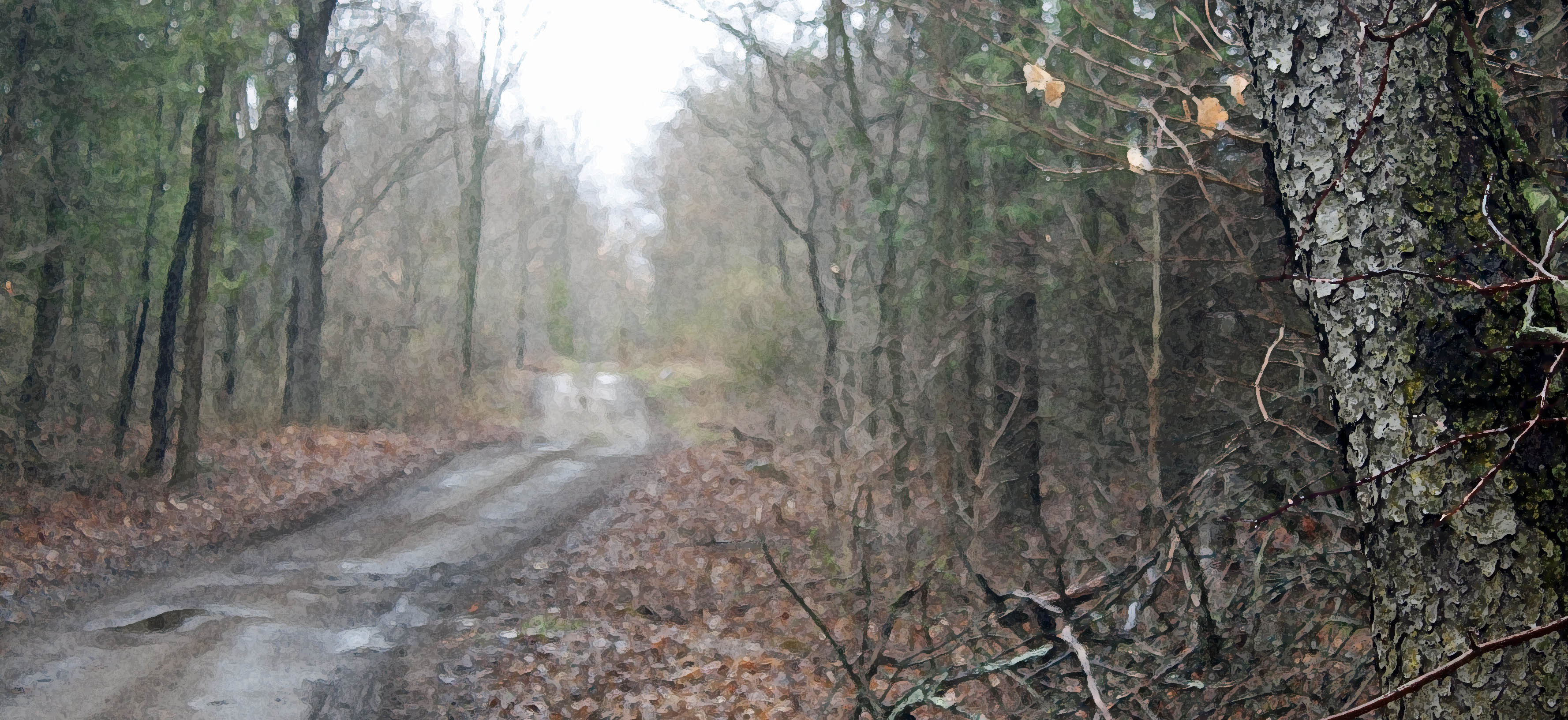
Dirt road in Kawarthas during a misting rain, ON (photo and rendition by Nina Munteanu)

Why Our Stories Are Important

We are all storytellers. We share our curiosity with great expression; our capacity and need to tell stories is as old as our ancient beginnings. From the Palaeolithic cave paintings of Lascaux to our blogs on the Internet, humanity has left a grand legacy of “story” sharing. Evolutionary biologist and futurist Elisabet Sahtouris tells us that, “whether we create our stories from the revelations of religions or the researches of science, or the inspirations of great artists and writers or the experiences of our own lives, we live by the stories we believe and tell to ourselves and others.”

Compelling stories resonate with the universal truths of metaphor that reside within the consciousness of humanity. According to Joseph Campbell, this involves an open mind and a certain amount of humility; and giving oneself to the story … not unlike the hero who gives her life to something larger than herself. Fiction becomes memorable by providing a depth of meaning. Stories move with direction, compel with intrigue and fulfil with awareness and, sometimes, with understanding. The stories that stir our hearts come from deep inside, where the personal meets the universal, through symbols or archetypes and metaphor.

Ultimately, we live by the narratives we share. “What you think, you become,” said Buddha.

In my writing guidebook The Ecology of Story: World as Character, I write: “When a writer is mindful of place in story and not only accurately portrays environment but treats it as a character, then her story will resonate with multilayers of meaning.”

Poplar stand in the Kawarthas, ON (photo and rendition by Nina Munteanu)

Changing the Narrative…

I was recently interviewed by Forrest Brown on Stories for Earth Podcast in which we discussed the need to change our narrative (particularly our colonial neoliberal capitalist narrative) and various ways to do this, taking into account the challenges posed by belief and language. Lessons from our indigenous wise elders will play a key role in our change toward genuine partnership with the Earth.

“We need to have a whole cultural shift, where it becomes our culture to take care of the Earth, and in order to make this shift, we need storytelling about how the Earth takes care of us and how we can take care of her.” ― Ayana Elizabeth Johnson, All We Can Save: Truth, Courage, and Solutions for the Climate Crisis

“This world, in which we are born and taken our being, is alive. It is not our supply house and sewer; it is our larger body. The intelligence that evolved us from stardust and interconnects us with all beings is sufficient for the healing of our Earth community, if we but align with that purpose. Our true nature is far more ancient and encompassing than the separate self defined by habit and society. We are as intrinsic to our living world as the rivers and trees, woven of the same intricate flows of matter/energy and mind. Having evolved us into self-reflexive consciousness, the world can now know itself through us, behold its own majesty, tell its own stories–and also respond to its own suffering.” 

JOANNA MACY and CHRIS JOHNSTONE, “Active Hope”
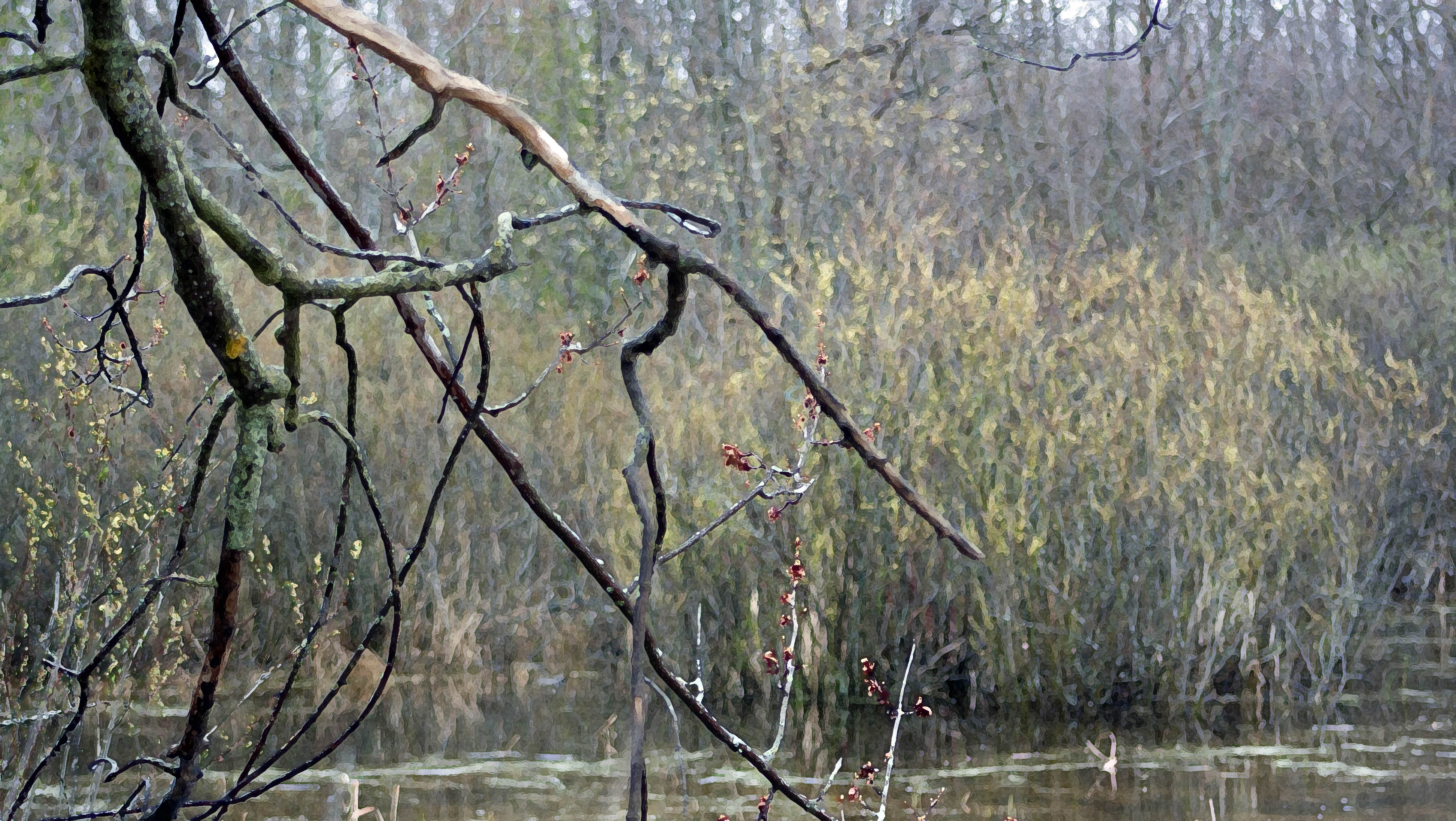
Swamp forest in Kawartha region, ON (photo and rendition by Nina Munteanu)

References:

Campbell, Joseph, Bill Moyers. 1991. “The Power of Myth.” Anchor. 293pp.

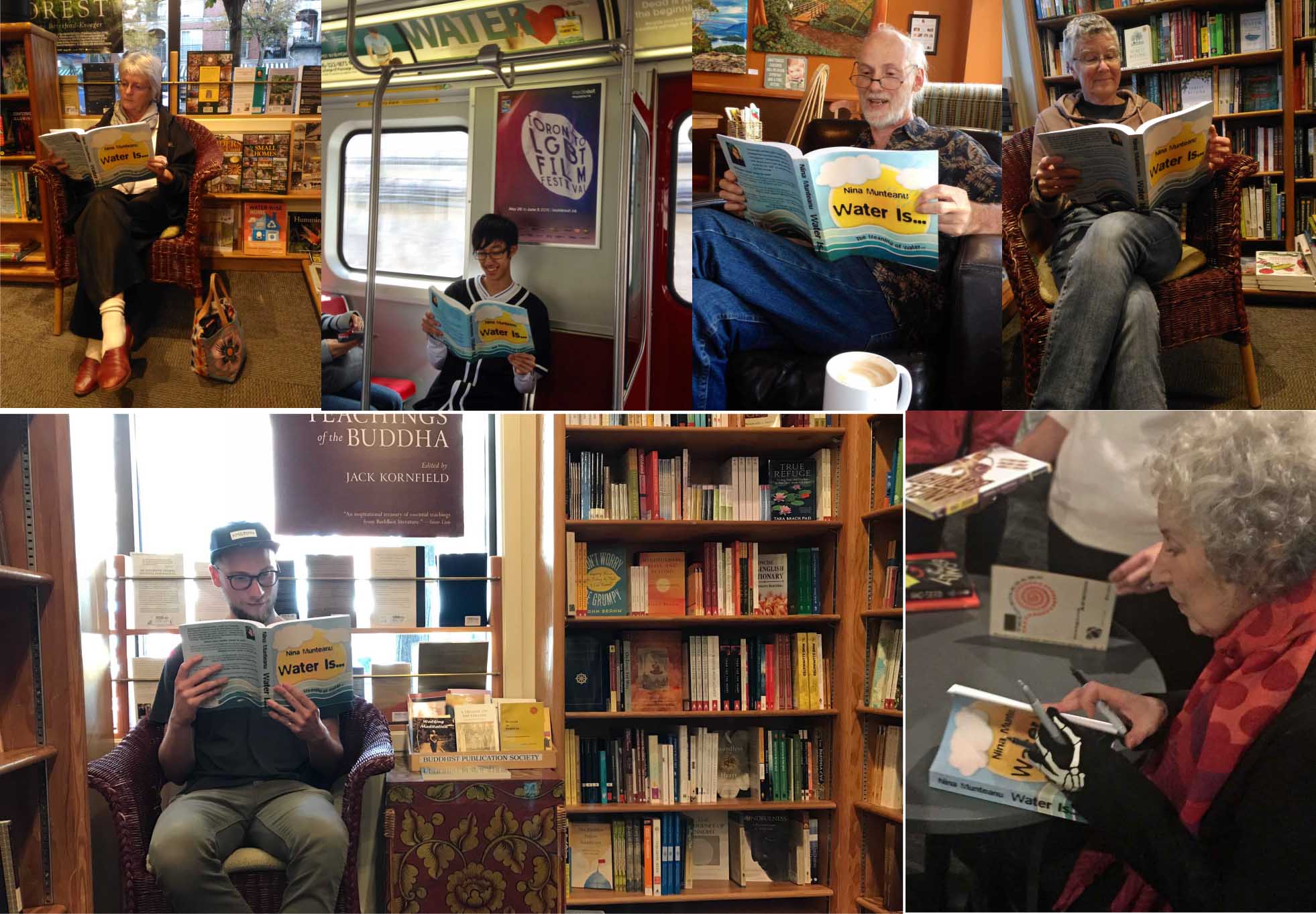
Munteanu, Nina. 2016. “Water Is… The Meaning of Water.” Pixl Press, Delta, B.C. 584pp.

Munteanu, Nina. 2019. “The Ecology of Story: World as Character.” Pixl Press, Delta, B.C. 200pp.

Sahtouris, Elisabet. 2014. “Ecosophy: Nature’s Guide to a Better World.” Kosmos, Spring/Summer 2014: 4-9pp. 

Nina Munteanu is a Canadian ecologist / limnologist and novelist. She is co-editor of Europa SF and currently teaches writing courses at George Brown College and the University of Toronto. Visit www.ninamunteanu.ca for the latest on her books. Nina’s bilingual “La natura dell’acqua / The Way of Water” was published by Mincione Edizioni in Rome. Her non-fiction book “Water Is…” by Pixl Press (Vancouver) was selected by Margaret Atwood in the New York Times ‘Year in Reading’ and was chosen as the 2017 Summer Read by Water Canada. Her novel “A Diary in the Age of Water” was released by Inanna Publications (Toronto) in June 2020.

TV Series Review: “Orphan Black” Mingling Its Own Nature With It…

Oh, Brave New World that has such people in it!”—Minerva in Shakespeare’s The Tempest and John the Savage in Aldous Huxley’s Brave New World

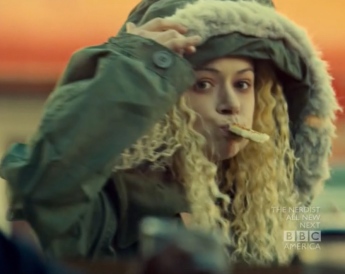
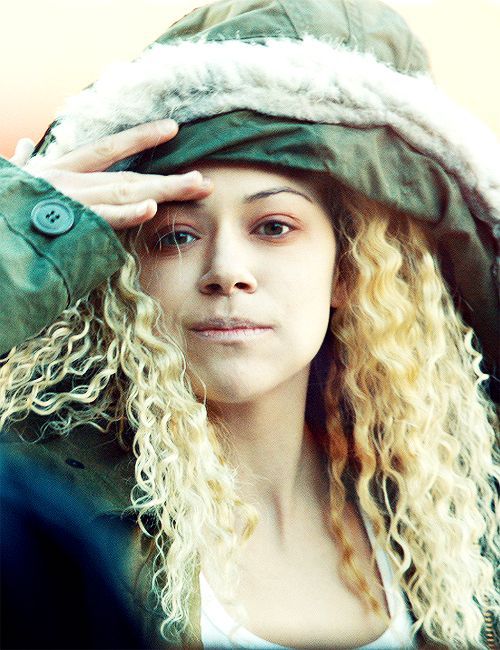
Canadian science fiction thriller Orphan Black, written by Graeme Manson and directed by John Fawcett stars the extraordinary multi-talented Tatiana Maslany in multiple roles of herself. If you haven’t yet watched the series (five seasons worth), you must on this point alone: to enjoy Maslany’s superb performance as seven clones, all different, yet all the same.

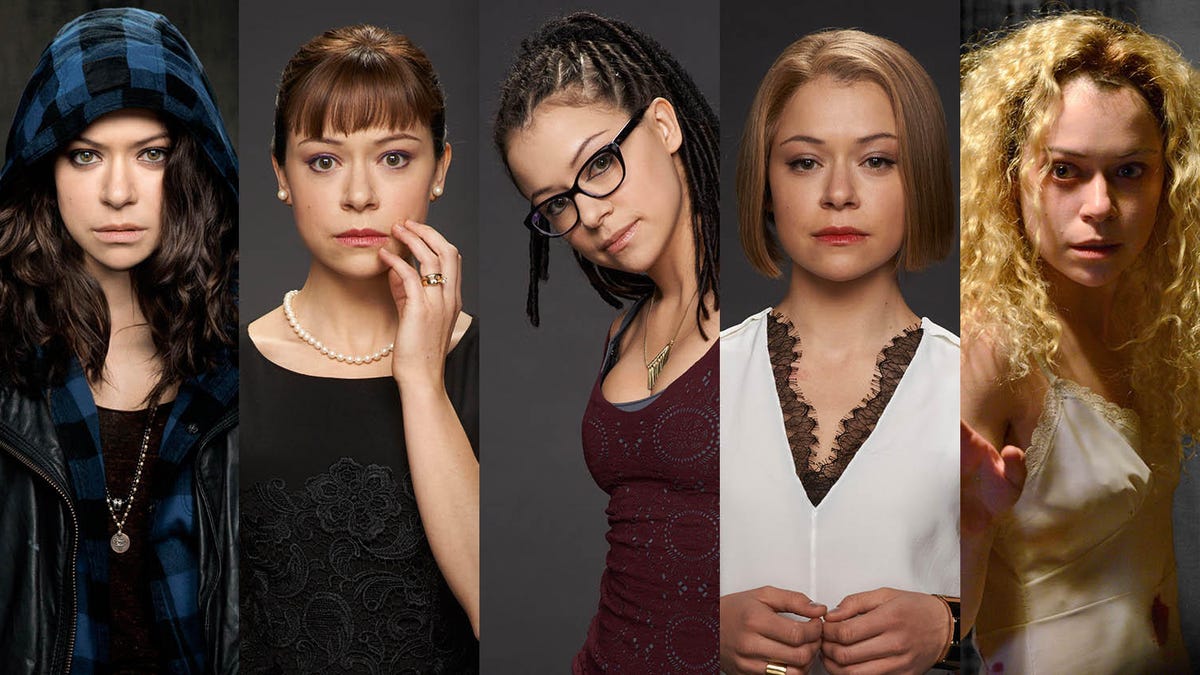
The various clone identities of Tatiana Maslany: Sarah, Alison, Cosima, Rachel, and Helena

Shot in and around Toronto, Ontario, the series focuses on Sarah Manning, a fringe-dweller with questionable friends, who assumes the identity of her clone, cop Elizabeth (Beth) Childs, after witnessing her suicide and stealing her stuff. In Season 1 alone, seven clones are revealed. Those still alive include suburban housewife Alison Hendrix, university evolutionary biologist Cosima Niehaus, corporate mogul Rachel Duncan, and crazed sociopath Helena.

Toronto is filmed brilliantly in a vague every-city pastiche that combines the look of London’s eastside, NYC and northern Europe all in one. Like its characters, the show is both sparsely existentialist and baroque funk. Besides Sarah’s own diverse clones there is foster brother Felix and his various friends or cronies who add significant colour to this film-noir set. Unsavory antagonists not only add intrigue but provide significant texture from sophisticated and subtle to the banal and truly terrifying. And like biology itself—perhaps the true main character here—all the characters are shape-shifters; looking for balance in a shifting world where “normal” keeps chasing itself.

Sarah at train station where she will encounter her first clone

“While other stories, including Jurassic Park and H.G. Wells’ The Island of Doctor Moreau, could certainly be categorized as biopunk science fiction, very few television shows and movies today delve into the idea of biology,” says Isabella Kapur in her 2013 article “Clones are People Too: The Science and Science Fiction of BBC America’s Orphan Black.” There was, of course, the 2005 film The Island and the 2004-2008 Canadian TV series Regenesis. And, since then, there have been some excellent films and TV series that have delved imaginatively into the wonders and terrors of genetic engineering, human cloning, and synthetic biology, including the German 2020-21 series Biohackers, 2022 film Vesper, and 2023 film The Creator. But Orphan Black was certainly one of the first to explore this topic with such unflinching depth.

Orphan Black is a slick, sophisticated and edgy exploration of human evolution that raises issues about the moral and ethical implications of bio-engineering and genetic tampering—specifically human cloning (currently against the law), personal identity, and intellectual property. Manson and Fawcett enlist symbols and clever metaphor to enrich the story with layers of depth—no item is free of meaning: from the seemingly innocuous naming of a transit station (Huxley Station) in the show’s premiere, or Delphine’s passing reference to “a brave new world” to a terse discussion between a religious extremist and a restaurant proprietor over the merits of factory-farmed eggs: “They’re not normal,” the extremist complains. “They’ve been interfered with.” There is nothing normal about Orphan Black.

Clone identities: Alison, Helena, Sarah, Beth, Cosima, and Katia

Episode titles in Season One quoted parts of Charles Darwin’s evolutionary text On The Origin of Species. Titles like “Natural Selection” (series premiere) and “Parts Developed in an Unusual Manner” elucidate concepts of evolution and survival of the fittest. Season 2 adopts the works of Sir Francis Bacon, reflecting the ethical and moral implications of scientific pursuit in a world of contrasting philosophies and values. “The frequently antagonistic relationship between ‘sound reason’ and ‘true religion’ and the attempt to reconcile the two,” says SlantMagazine, “emerges here as the structuring principle of Orphan Black‘s sophomore season—exemplified by the decision to title each episode after the writings of Sir Francis Bacon, whose body of work at once advocated empiricism and abhorred atheism.”

The Season 2 Premiere title, “Nature Under Constraint and Vexed” excerpts Bacon’s “Plan Of The Work” published in 1620:

“Next, with regard to the mass and composition of it: I mean it to be a history not only of nature free and at large (when she is left to her own course and does her work her own way)—such as that of the heavenly bodies, meteors, earth and sea, minerals, plants, animals—but much more of nature under constraint and vexed; that is to say, when by art and the hand of man she is forced out of her natural state, and squeezed and moulded…seeing that the nature of things betrays itself more readily under the vexations of art than in its natural freedom.”

Sir Francis Bacon
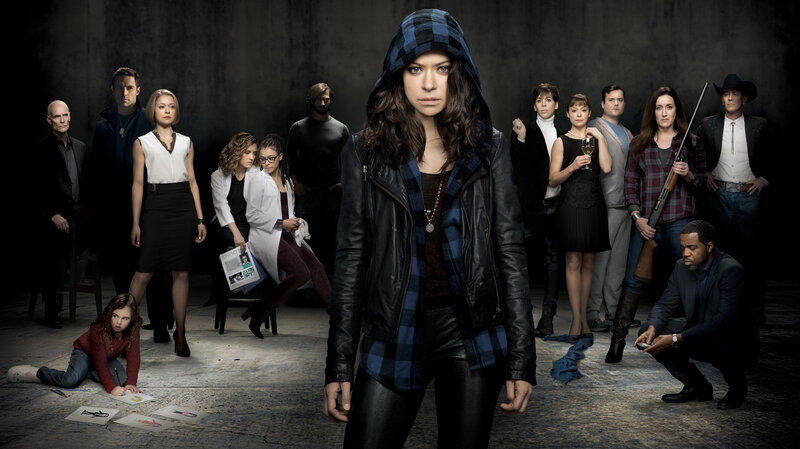
Tatiana Maslany (center) plays several different clones on the BBC America series Orphan Black.

Mingling Its Own Nature With It…

Human cloning made a media comeback when three different research groups created embryonic stem cells out of embryos cloned from adult cells. Scientists insisted that the cloned embryos are meant for research and therapeutic purposes—not to create human clones (shades of The Island?). John Farrell of Forbes Magazine wrote, “The breakthrough also means that it is now just a matter of time before reproductive cloning is achieved. Probably within the next decade.”

Issues, brought on by GMO foods and medical genetic research, have propelled a major debate in gene patenting. The United States Supreme Court ruled against patenting sequences of the human genome in Association for Molecular Pathology Et Al. vs. Myriad Genetics, Inc., Et Al., reports Isabella Kapur in her 2013 article. “Myriad Genetics had patented two genes they had isolated that were identified as genes involved in increased ovarian and breast cancer risks,” said Kapur. “Companies, like Myriad, that spend money to identify nucleotide sequences want to be able to patent those discoveries. However, the patenting allows for monopolies on illness treatments and allows companies to have exclusive access to portions of human DNA. In 2013 companies like Myriad Genetics were not allowed to legally copyright portions of DNA they isolated in the human genome, but they were, according to the Supreme Court, allowed to patent synthetically created sequences of complementary DNA.” This is still the case, as far as I know.

In Orphan Black, The Dyad Institute, a biotech corporation with arcane connections to invisible powers and eugenics, patented the clones as theirs to do with as they please—which might be anything. The ownership of the clones’ genomes by The Dyad Institute would be lawful if all the clones’ DNA was entirely synthetically made. The company would also have exclusive rights to study the clones’ genome, effectively placing the clone Cosima under copyright infringement if she decided to study and apply her research (on herself) outside of the Dyad Institute. If the clones were synthetic, like the DNA created by scientist Dr. Craig Venter, then the Dyad Institute would be in a unique situation with regards to ethics and newly emerging considerations of human rights yet to be determined. For instance, how much of the clones really belong to the company that made them? What even constitutes a person?

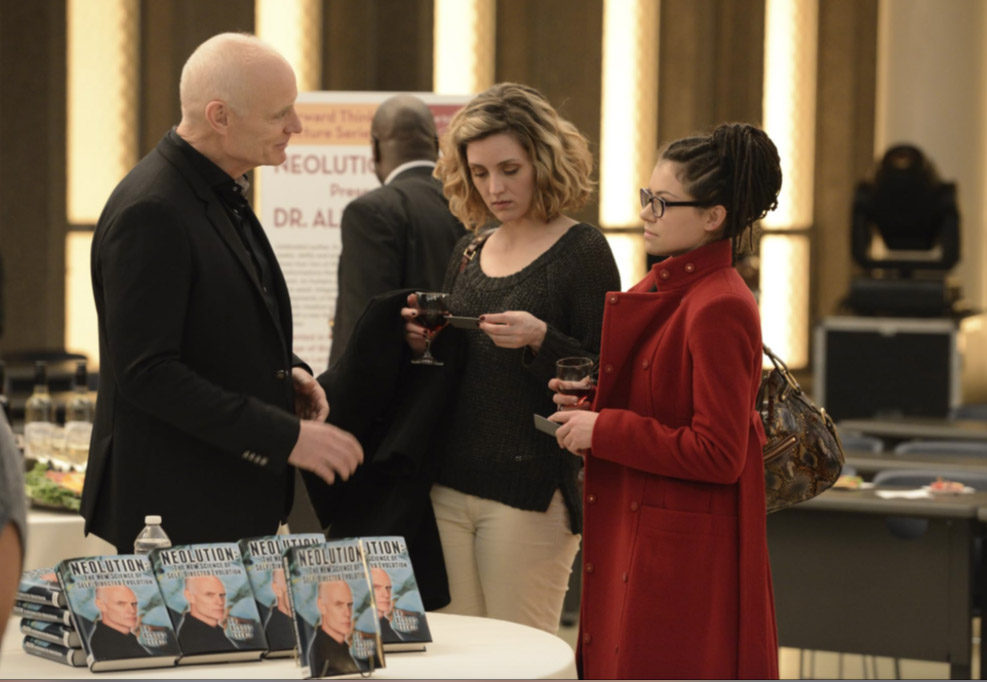
Felix encounters several biohackers at a Neolution getogether

Intrigue unfolds as Sarah and Felix discover that her clones are being systematically killed and/or getting sick. The series unravels a frightening panoply of stakeholders in this biological transhumanist game, spanning from the ultra-sophisticated to the deranged fanatic. Among the frightening stakeholders are the Proletheans, a religious extremist group who seek to systematically eliminate clones as “abominations” against the natural order of things. Pastor Henrick, a Waco-style cult “prophet” who quotes Einstein, conducts Mengele-style “breeding” experiments to recast humanity in his version of “perfection.”

Neolutionist Dr. Aldous Leekie talks with Cosima about human self-directed evolution

Sarah and Felix trace the origin of her clones to The Dyad Institute. One of the institute’s scientists, Aldous Leekie, heads Neolution, a transhumanist movement whose notion of “self-directed evolution” to recast humanity in the image of “perfection” evokes social Darwinism and the Übermensch. It brings to mind the early American eugenics programs that inspired the fascist sonderweg and Hitler’s aggressive application of eugenics in the Holocaust.

Nazi poster promoting eugenics and sterilization

The terrible question remains: why were the clones made? Who exactly is the Dyad Institute and who is behind them? In the Season Two episode Variable and Full of Perturbation, we discover that not only are the clones female prototypes (of what?) but that they were purposefully created to be sterile. Frightening motivations reveal themselves over the remaining seasons as we discover just how far some are willing to go to achieve their goals of a ‘perfect society.’

Conditions of Existence…

Where do we draw the line in our tightrope walk across the sea of chaos to find the Holy Grail? When does a Transhumanist’s individual expression of “transcendence” become a movement toward the Singularity? When does a singular powerful thought encompass an entire society?

The political ambitions that wish to use science to “enhance” humanity, based on someone’s idea of “perfect” carry great social implications. Enter the pseudoscience of eugenics and scientific racism, concepts as old as Plato that have haunted humanity since the biblical portrayal of Adam and Eve. Simply put, eugenics is the scientifically erroneous and immoral theory of “racial improvement’ and “planned breeding” which gained popularity during the early 20th century; the practice of eugenics is based on the notion that not only physical traits but mental and behavioral attributes—like mental capacity, musical ability, insanity, sexual licentiousness and criminality—are inheritable and therefore can be directed through breeding, sterilization and now through genetic manipulation.

1883 Francis Galton, cousin of Charles Darwin, gave the practice a name. He called it eugenics, which comes from a Greek term meaning “good” or “noble” birth. Eugenic strategies flourished in the USA in the early 20th Century when thousands of people underwent forced sterilization. Ultimately, these same principles inspired the Nazis to exterminate people with disabilities and “lessor” ethnic or philosophical backgrounds.

“Perhaps more than any other science, biology has consistently been employed as an accomplice to moral claims because it has tremendous social utility in translating scientific findings into political imperatives,” says Cosima Herter, science consultant for Orphan Black. “Historian of science, Garland Allen, argued that the “decline in economic and social conditions” gives strong indications ‘of our potential to find eugenical arguments […] attractive once again,’ albeit ‘clothed in the updated language of molecular genetics.’ The social importance of genetics lies not only in how genetic research has contributed towards advances in biology (and undoubtedly it does in many, many beneficial ways – medicine not the least among them), but because we have yet to counter ‘simplistic claims of a genetic basis for our social behavior’ with modern facts. Our understanding of genetics has changed, but many of our social aspirations for its uses have not.  Deeply embedded in the public consciousness is the hope that social problems can be solved with ‘scientific panaceas’.”   

Herter goes on to say that, “We may indeed have a richer understanding of the science of heredity and genetic mechanisms, but public attitudes as to their social relevance have changed very little in the last 100 years.  And we might be well advised to remember that science can as easily act as an ally to existing institutions and justify pernicious prejudices – racism, sexism, homophobia, and class disparity to name but a few – as it can produce wondrous, beautiful, and beneficial fruits in the service of a better world where these prejudices could be overcome.  Many of us still hold on to ambitions that we can build ‘perfect’ people and genetically engineer ‘perfect’ societies, yet do so without much pause as to how we measure what ‘perfect’ is, and what horrendous and inhuman costs this aspiration towards perfection might incur.  Many traits we value, and are wont to consider ‘perfect,’ are historically plastic.  And ‘genes are not rigid pieces of information’ that necessarily lead to a particular behavioral trait.  If our definitions of many behavioral traits we study today are known to be highly subjective, then our attempts at studying the genetics behind them is likely to remain on precariously shifting grounds.” 

Cosima attends presentation by Neolutionist Aldous Leekie

Eugenics: Designing A Perfect Society from a Perfect Human…

Aldous Huxley’s dystopian novel Brave New World describes a society based on eugenic principles. It is a stratified genetic caste society where the lower orders are deliberately stunted both mentally and physically. The destiny of its five main strata is determined from an early age. The strata consist of Alphas, destined for leadership positions; Betas, who hold less exalted but still intellectually demanding jobs; Gammas and Deltas, who occupy roles needing some intelligence; and finally Epsilons, happy morons capable of only the most menial and unskilled tasks.

“And it seems to me perfectly in the cards that there will be within the next generation or so a pharmacological method of making people love their servitude, and producing a kind of painless concentration camp for entire societies, so that people will in fact have their liberties taken away from them but will rather enjoy it, because they will be distracted from any desire to rebel by propaganda, brainwashing, or brainwashing enhanced by pharmacological methods.”

Aldous Huxley in a speech at the University of California

“Perhaps more than any other science, biology has consistently been employed as an accomplice to moral claims because it has tremendous social utility in translating scientific findings into political imperatives,” says Cosima Herter, science consultant for Orphan Black. “Deeply embedded in the public consciousness is the hope that social problems can be solved with ‘scientific panaceas’,” Herter adds. “…Science can as easily act as an ally to existing institutions and justify pernicious prejudices – racism, sexism, homophobia, and class disparity to name a few – as it can produce wondrous, beautiful, and beneficial fruits in the service of a better world.”

Helena on the chase

Transhumanism: Nature Under Constraint and Vexed…

In 1923 British geneticist J.B.S. Haldane predicted great benefits to humanity from applications of advanced sciences to human biology. He also suggested and that every such advance would be considered blasphemy or perversion, “indecent and unnatural”.

In 1929, Cambridge crystallographer J.D. Bernal, speculated on radical changes to human bodies and intelligence through bionic implants and cognitive enhancement. Two years before that, Fritz Lang’s expressionist SF film Metropolis introduced the first robot depicted in cinema: the Maschinenmensch, the machine-human.

Biologist Julian Huxley, brother of the writer Aldous, first used the word Transhumanism in a 1957 article, where he presented the concept of the technological singularity, or the ultra-rapid advent of superhuman intelligence. Julian Huxley defined Transhumanism as “man remaining man, but transcending himself, by realizing new possibilities of and for his human nature.” As an aside, Aldous Huxley’s Brave New World was published in 1932.

The founders of Transhumanism were educated wealthy individuals of mostly British and European descent. They were an elite ruling class, who considered themselves the forward-thinking intelligentsia. Transhumanism is an intellectual and cultural movement that promotes eugenic principles through science & technology to improve human mental and physical characteristics and capacities.  Transhumanists seek to expand technological opportunities for people to live longer and healthier lives and enhance their intellectual, physical, and emotional capacities through the use of synthetic biology: genetic, cybernetic and nanotechnologies. From the transhuman perspective, “in time the line between machines and living beings will blur and eventually vanish, making us part of a bionic ecology.”

While early Transhumanists advocated the elitest pseudoscience of Eugenics or “racial hygiene”, many of today’s Transhumanists argue that market dynamics and individual choice will drive twenty-first century eugenics. However, this argument contradicts the movement’s own dialectic: that of achieving the Singularity. The Transhuman quest for the Singularity of the Übermensch consists of the ability to upload the minds of all individuals to a Hive Mind, a symbiotic collective consciousness, in which all peoples can link to an artificial “brain” or global hard drive, to achieve super-intelligence. The Mind Upload Research Group (MURG) is currently researching this possibility.

Futurist Ray Kurzweil, author of The Age of Spiritual Machines and co-founder of the Singularity University, predicts that humans will be uploading their minds to computers by 2045 and that bodies will be replaced by machines—essentially achieving “immortality”—before the end of the century. “We’re going to become increasingly non-biological to the point where the non-biological part dominates and the biological part is not important any more,” says Kurzweil. “In fact the non-biological part – the machine part – will be so powerful it can completely model and understand the biological part. So even if that biological part went away it wouldn’t make any difference.”

Author Paul Joseph Watson reminds us that—even if desirable—such a utopia would not be available to everyone; rather, it would remain the domain of a wealthy aristocracy, creating yet another class system. Kurzweil seems to agree: “Humans who resist the pressure to alter their bodies by becoming part-cyborg or are unable to afford such procedures will be ostracized from society. “Humans who do not utilize such implants are unable to meaningfully participate in dialogues with those who do.”

In Kurzweil’s brave new world of “biological and non-biological intelligence, immortal software-based humans, and ultra-high levels of intelligence that expand outward in the universe at the speed of light,” will such an elite see the mass of humanity as worthless parasites and either prevent them from reproducing via mass sterilization programs or simply slaughter them outright?

What is perfect and how do we measure it? What is the risk of even suggesting a recipe for such a thing? A perfect society? Isn’t a Utopia an oxymoron of unresolvable paradox? Science fiction literature has given us many visions of where so-called utopias may descend (e.g., Brave New World1984Fahrenheit 451A Stranger in a Strange LandThe Handmaid’s TaleThe MatrixThe Hunger GamesElysiumDivergentClockwork OrangeDelirium, and so many more). The very act of being an individual provides complexity and diversity that promotes stability in change. Stable chaos.

Perhaps, what Orphan Black demonstrates the best is that even clones—who are exactly the same genetically—can differ significantly, given free reign in a diverse environment.

What Orphan Black does exceptionally well is ask those hard questions. OK. It’s not asking the questions so much as presenting the “then” scenario to some pretty important “what if” premises. It’s doing what all good art—versus polemic—does: it’s providing the seeds for viewers to engage in intelligent conversation on emerging social issues via Twitter, Facebook, blogs and other social media.

Join in.

The clones of Orphan Black

Nina Munteanu is a Canadian ecologist / limnologist and novelist. She is co-editor of Europa SF and currently teaches writing courses at George Brown College and the University of Toronto. Visit www.ninamunteanu.ca for the latest on her books. Nina’s bilingual “La natura dell’acqua / The Way of Water” was published by Mincione Edizioni in Rome. Her non-fiction book “Water Is…” by Pixl Press (Vancouver) was selected by Margaret Atwood in the New York Times ‘Year in Reading’ and was chosen as the 2017 Summer Read by Water Canada. Her novel “A Diary in the Age of Water” was released by Inanna Publications (Toronto) in June 2020.
H2O Publishes my Illustration of the Diatom Forest

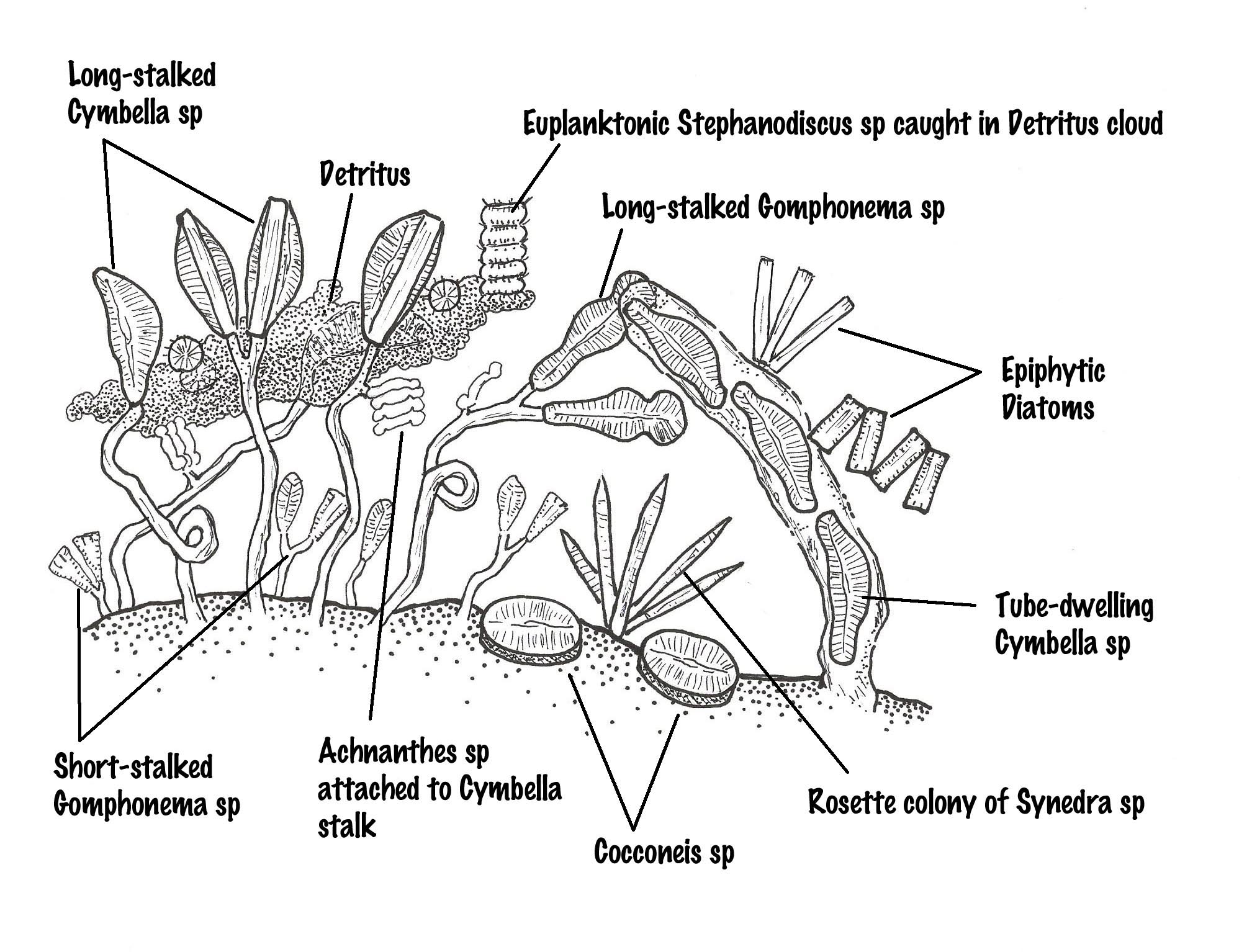
My original Diatom Forest illustration in my article “Diatom Spring” in The Meaning of Water

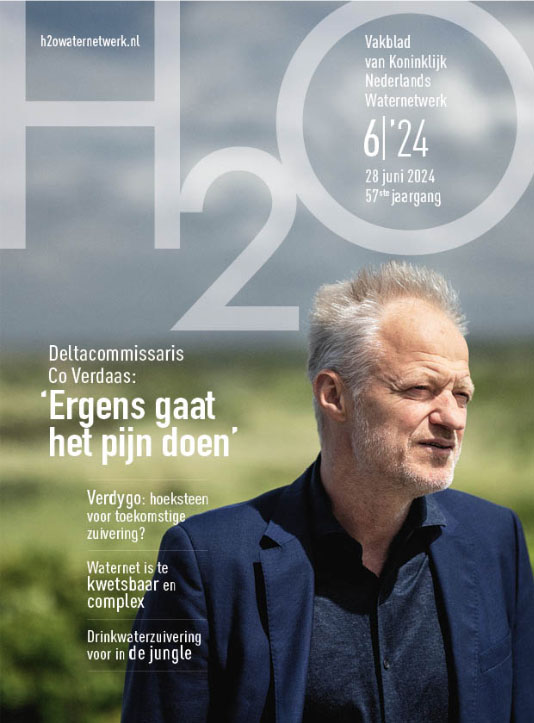
This past spring, Dutch scientist Herman van Dam (Consultancy for Water and Nature) approached me for permission to use my illustration of the diatom forest in a paper he and co-authors were preparing for the Dutch journal H2O. He explained that they wanted to help familiarize water managers who read the journal with the underwater biodiversity for which my illustration would be helpful.

The Illustration

He’d seen my illustration in my article “A Diatom Spring” in The Meaning of Water. Below is a summary of my article about the diatom forest:

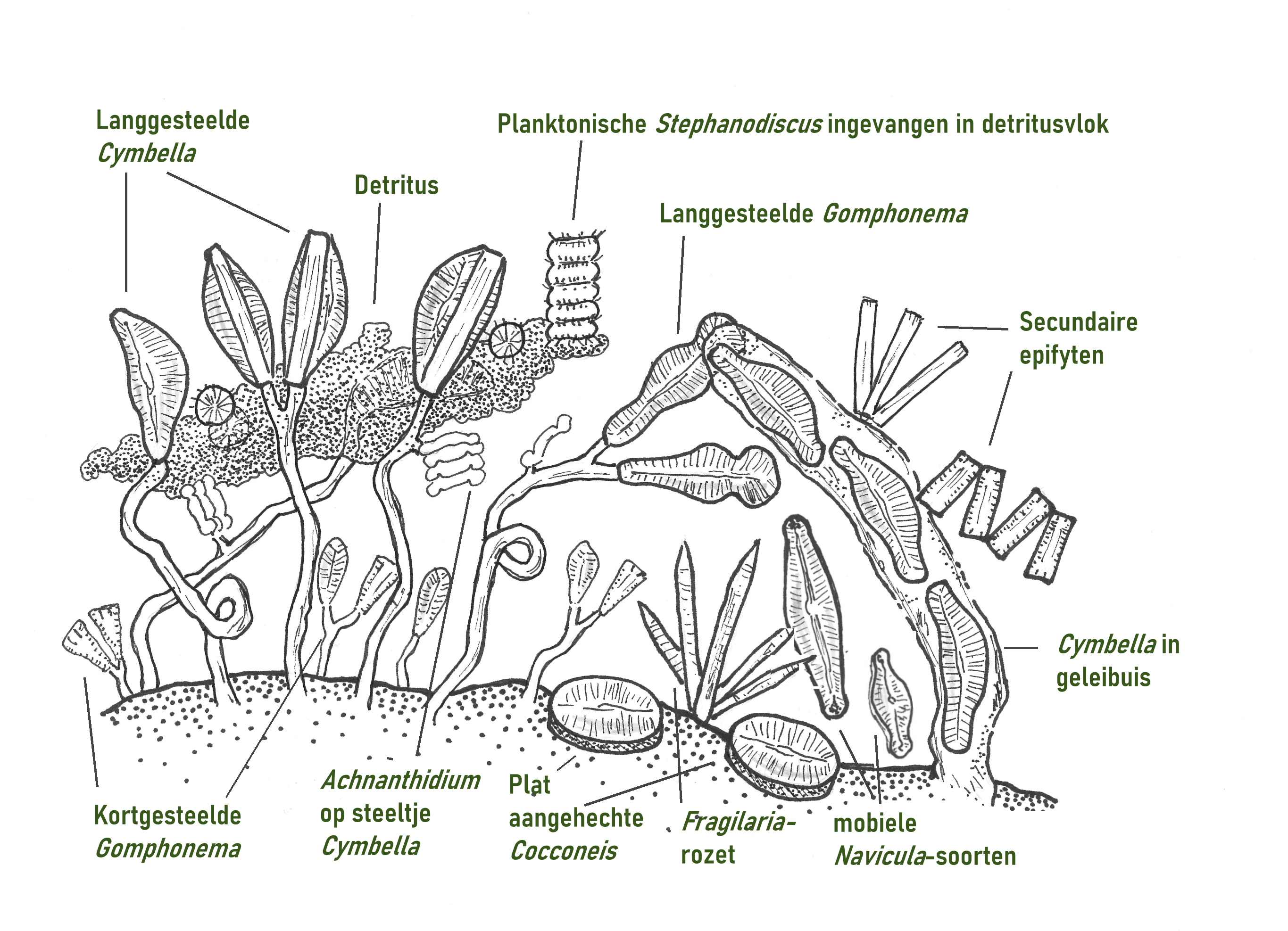
Attachment and colonization starts with a ‘clean’ unpopulated surface (usually scoured by turbulence in a storm or some other event or a new surface tumbled into the water). Several stages of succession take place, starting with early colonizers. The adnate Cocconeis placentula, whose frustules attach directly to the substrate, is an example of an early colonizer. When they attach to a substrate they form a biofilm (think moss in a terrestrial forest). Adnate species are eventually overgrown by taxa that produce a mucilaginous pad (e.g. Synedra) or stalk (e.g. Gomphonema). The understory layer is typically occupied by diatoms such as Fragilaria vaucheriae and Synedra radians that attach to the surface at one end (apical) of their rod-shaped frustules using a mucilaginous pad to form “rosettes” that resemble spiky understory shrubs. This allows them to protrude above the adnate taxa and take advantage of more light.

SEM of Synedra radians and Fragilaria vaucheriae that form rosettes as they apically attach to substrate (image by Roemer et al., 1984)

The diatoms Cymbella and Gomphonema produce long stalks that attach directly to the surface, allowing them to form a swaying canopy over the lower tier of cells of Fragilaria vaucheriaeSynedra radians and early colonizer Cocconeis placentula whose frustules attach directly to the substrate (think overstory and understory of a terrestrial forest or a marine kelp forest).

The Diatom Forest Structure

Just like trees, the canopy-forming stalked diatoms effectively compete for available light and nutrients in the water with their vertical reach. They provide the ‘overstory’ of the diatom forest’s vertical stratification. These tree-like diatoms also provide an additional surface for other diatoms to colonize (e.g. tiny epiphytic Achnanthes settle on the long stalks of Cymbella, just as lichen does on a tree trunk).

SEM of three-week colony of Cymbella affinis (larger diatoms on left) and Gomphonema olivaceum attached via stalks (image from Roemer et al., 1984)

The stalked diatom forest acts like a net, trapping drifting-in euplankton, such as Pediastrum sp. andFragilaria spp., which then decide to stay and settle in with the periphyton community. The mucilage captures and binds detrital particles in both lower and upper stories of the diatom forest; these, in turn, provide nutrients for the diatom forest and additional surfaces for colonization. In their work with periphyton communities, Roemer et al. (1984) found several diatoms (e.g. Diatoma vulgareFragilaria spp. Stephanodiscus minutula) entangled in the complex network of cells, stalks, and detritus of the diatom forest’s upper story. They also found rosettes of Synedra radians—like jungle orchids—attached to large clumps of sediment caught by the net of mucilage.

Eventually, ‘overgrowth’ occurs as the periphyton colony matures and grows ‘top-heavy’ with all this networking. The upper story of the community simply sloughs off—usually triggered by turbulence in a river from rains, storms, or dam release. This is similar to a forest fire in the Boreal forest, which creates space and light for new colonization and growth. The dislodged periphyton ride the turbulent flow, temporarily becoming plankton, and those that survive the crashing waters provide “seed” to colonize substrates downstream. Others may get damaged and form the ‘dish soap’ like suds or foam you often see in turbulent water. The proteins, lignins and lipids of the diatoms (and other associated algae) act as surfactants or foaming agents that trap air and form bubbles that stick to each other through surface tension.

Diatoms, organics and associated detritus forms foamy ‘crema’ on the river (photo by Nina Munteanu)
Fragmented diatoms and organic material create a surface foam on the river (photo by Nina Munteanu)

The Paper

The paper was published June 13, 2024, in H2O, written by Jako van der Wal, Joep de Koning and Herman van Dam, and entitled “Snel inzicht in de ecologische waterkwaliteit met diatomeeën” (Quick insight into ecological water quality with diatoms). This paper was right up my alley! As a diatom specialist and limnologist who studied them in relation to environmental conditions and perturbations, I was intrigued by the paper and gained some additional insight on diatom ecology.

Van der Wal et al. cited recent advances in DNA-based identification methods that provide fast and cheap diatom identification over the traditional method of using an optical compound microscope to observe morphological characteristics such as size, shape and ornamentations of the silicified cell wall. I can attest that this is a labour-intensive process in which I spent many hours and days hunched over a microscope during my masters research at Concordia University. This efficient DNA-identification has seen a resurgence of using diatoms as a valuable tool for water quality managers, with applications providing insight into both current and historical water conditions. The authors argue that benthic diatoms or periphyton (living on substrates such as plants, rock, sand and artificial surfaces) have been since the 1980s used as indicators of saproby, trophy, acid and salt character in, among other things, ditches and canals. For every type of water and water quality, there are diatoms that have their habitat there, write the authors. They argue that, unlike phytoplankton, fish and macrofauna, periphyton attach to a surface and hardly move; this means that effects of water quality can be demonstrated locally. Because many diatom species tolerances and intolerances are known and they reproduce quickly (over days), diatoms respond quickly to changes in the environment—much faster (often within weeks) than other ecological indicators.

Scientists and water technicians can use diatom species composition to measure perturbations by organic material, low oxygen content, eutrophication, and toxicity. Given that diatoms colonize and develop quickly, this includes unstable and damaged habitats where other indicators cannot develop, such as shipping traffic, waves or where cleaning or dredging is carried out regularly. Historical insight can be provided by diatoms, given that their silica frustules are naturally preserved in sediment.

My Own Work with Turbulence

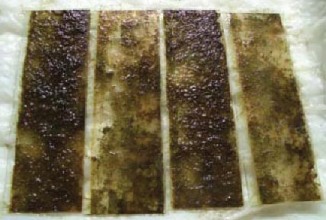
Periphyton biofilm (of mostly diatoms) on microscope slides left in a stream

During my masters research in several streams in the Eastern Townships, I examined how diatoms colonized artificial substrates; how they formed productive biofilms that sustained an entire periphyton community of attached aquatic life and discovered that their pattern of colonization related to current speed and direction. I submerged glass slides (the kind people use to look at critters under the microscope) in a device in the stream and oriented them parallel or perpendicular to the current.

There are two ways an algal community grows in a new area: (1) by initial colonization and settling; and (2) by reproduction and growth. I studied both by collecting slides exposed for differing lengths of time (collecting young and mature communities) in different seasons.

I discovered that the diatoms colonized these surfaces in weird ways based on micro-turbulence. Early colonizers, like Achnanthes and adnate Cocconeis preferred to settle on the edges of the slides, where the chaos of turbulence ruled over the sheer of laminar flow. They colonized by directly appressing to the substrate, making them the first photosynthetic taxa to establish a biofilm on a clean substrate. Vadeboncoeur and Katona (2022) write that “in waved-washed surfaces, these taxa may be the only algae that persist.” I postulated that the drift velocity was reduced on the slide’s edge, where turbulence was greatest, giving drifting algae a greater chance to collide and settle on the slide over the more shear laminar flow along the slide’s central face.

Once settled, the community was more likely to grow with turbulence. Greater turbulence decreases the diffusion gradient of materials around algal cells, with a higher rate of nutrient uptake and respiration. Turbulence provides greater opportunity to an existing colony by increasing “chaotic” flow, potential collision and exchange. Turbulence is a kind of “stable chaos” that enhances vigor, robustness and communication.

Using Diatoms in Water Quality Assessments

In their paper Van der Wal et al. argued that in environmental assessment the DNA-identification is just one step in a process that looks a population structure and health. Diatoms are already used in 21 of the 27 EU countries as part of a Water Framework Directive (WFD) quality index for flowing waters and in nine EU countries for standing water. Example conditions and associated perturbations where diatoms are a particularly useful indicator include: salinity, acidity, oxygen saturation, organic load (saproby), nutrient richness (trophy), temperature, and toxicity.

Diatom Growth Forms & Deformities

Van der Wal et al. argued that in addition to the different species compositions and the related ecological indices, growth forms and deformations of diatoms are useful indicators of water quality, particularly in relation to specific toxins.

My illustration adapted for the van der Wal et al. paper in H2O

Growth forms of diatoms can be described as attached, short-stalked, long-stalked, mobile and living in mucous tubes (Figure 3, van der Wal et al., 2024). Each growth form has advantages and disadvantages. For example, short-stalked diatoms are more difficult to graze and long-stalked diatoms come into contact with more water, from which they can then absorb substances. Long-stalked diatoms can also absorb more light if there is a lot of competition. Mobile diatoms can adapt to changing conditions by, for example, migrating from surface to subsurface and vice versa. Diatoms in slime tubes are more difficult to prey on and respond more slowly to environmental changes.

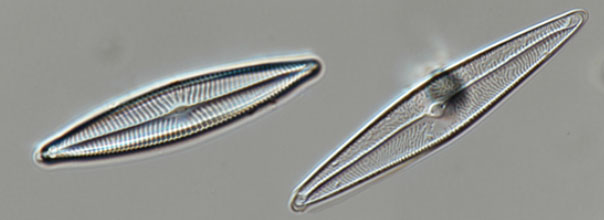
Two frustules of Navicula sp; the one on the right shows obvious deformities in the striations of its silica frustule (photo by van der Wal, H2O, June 13, 2024)

According to Van der Wal et al., scientistis (Rimet & Bouchez) noted that long-stalked diatoms declined in waterbodies subjected to various pesticides. Falasco et al. observed diatom deformities when exposed to various toxic substances. Heavy metals were observed to cause deformities in Navicula. Nitrogen toxicity was also implicated in diatom deformities.

Froth from diatoms and organics on the Otonabee river, ON (photo by Nina Munteanu)

References:

Falasco, E., Ector, L., Wetzel, C.E., Badino, G. & Bona, F. (2021). “Looking back, looking forward: a review of the new literature on diatom teratological forms (2010-2020).” Hydrobiologia 848: 1675-1753.

Munteanu, N. 2022. “When Diatoms Create a Forest.” https://themeaningofwater.com. December 18, 2022.

Munteanu, N. 2023. “When Diatoms Bloom in Spring.” https://themeaningofwater.com. May 14, 2023.

Munteanu, N. 2023. “A Diatom Spring.” https://themeaningofwater.com. April 16, 2023.

Munteanu, N. & E. J. Maly, 1981. The effect of current on the distribution of diatoms settling on submerged glass slides. Hydrobiologia 78: 273–282.

Munteanu, Nina. 2016. “Water Is…The Meaning of Water.” Pixl Press, Delta, BC. 584 pp.

Poikane, S., Kelly, M., & Cantonati, M. (2016). ‘Benthic algal assessment of ecological status in European lakes and rivers: challenges and opportunities’. Science of the Total Environment 568: 603-613. 

Rimet, F. & Bouchez, A. (2011). ‘Use of diatom life-forms and ecological guilds to assess pesticide contamination in rivers: Lotic mesocosm approaches’. Ecological Indicators 11: 489-499.

Roemer, Stephen C., Kyle D. Hoagland, and James R. Rosowski. 1984. “Development of a freshwater periphyton community as influenced by diatom mucilages.” Can. J. Bot. 62: 1799-1813. 

Serôdio, J. & Lavaud, J. (2020). “Diatoms and their ecological importance”. In: Leal Filho, W. et al. (eds). Life below water. Encyclopedia of the UN Sustainable Development Goals (pp.1-9). Springer Nature.

Smolar-Zvanut, Natasa and Matjaz Mikos. “The impact of flow regulation by hydropower dams on the periphyton community in the Soca River, Slovenia. Hydrological Sciences Journal 59 (5): 1032-1045.

Wal, J. van der, Joep de Koning and Herman van Dam. 2024. “Snel inzicht in de ecologische waterkwaliteit met diatomeeën”  H2O, 13 June, 2024.


Wood, Allison R. 2016. “Attached Algae as an Indicator of Water Quality: A Study of the Viability of Genomic Taxanomic Methods.” Honors Theses and Capstones. 306. University of New Hampshire Scholars’ Repository.

Zuilichem, H. van, Peeters, E. & Wal, J. van der (2016). “Diatomeeën als indicator voor waterkwaliteit nabij rwzi’s”. H2O-Online, 9 december 2016. https://edepot.wur.nl/401202 

Nina Munteanu is a Canadian ecologist / limnologist and novelist. She is co-editor of Europa SF and currently teaches writing courses at George Brown College and the University of Toronto. Visit www.ninamunteanu.ca for the latest on her books. Nina’s bilingual “La natura dell’acqua / The Way of Water” was published by Mincione Edizioni in Rome. Her non-fiction book “Water Is…” by Pixl Press(Vancouver) was selected by Margaret Atwood in the New York Times ‘Year in Reading’ and was chosen as the 2017 Summer Read by Water Canada. Her novel “A Diary in the Age of Water” was released by Inanna Publications (Toronto) in June 2020.

Nina Munteanu’s Short Story “The Spectator” Published in Ecuador

On the same day that I read a new BBC article announcing that a cloud rainforest in Ecuador is now protected from deforestation and mining by possessing legal personhood, I was informed by Teoria Omicron, a magazine in Ecuador, that my eco-fiction short story “The Spectator” was just published by them. Strange synchronicity! The story takes a moment out of a chronicle of revolution and war between eco-terrorists and a corrupt technocratic government. Caught in between is Gunther, just trying to survive…

A man tries to survive In the ruins of a bloody war between Gaians and Technocrats where Techno-clones rule.

Here’s an excerpt:

The ruins of the city rippled in the heat like a bad movie. Gunther raked his fingers through his hair and paced the exposed second floor of the dilapidated building. His gaze panned the city. Haze the color of rust lingered over phantom pools on the horizon.

“It’s hot as hell,” he complained, shrugging his Computerized Automatic Rifle over his shoulder. His camouflage fatigues clung to his body like something he needed to shed.  “I’m dying in this heat.” Several flies buzzed around his head and he flapped his gangly arm madly in the air. “Damn flies.”

Slouched against some rubble, Rick ignored him and ran diagnostics on the CARifle stretched out on his lap, verifying the output data on his eye-com. Rick’s sullen face was barely visible under the V-set strapped to his head. Gunther pulled out a stick of gum, unraveled the wrapper and pushed the wad into his mouth. Smacking his lips, he savored the mint flavor and tossed the wrapper.

“Ass hole!” Rick snapped. “Pick that up.”

Gunther snatched the wrapper. The rifle slipped off his shoulder and clattered to the ground. Forcing on a nervous grin he scrambled to pick up the weapon then stepped on the vee-set he’d yanked off earlier.

“We’re Gaians.” Rick’s finger stabbed the green band on his arm. “Protectors of the Earth, ass hole.” He turned back to his CARifle and muttered, “Just like a filthy Techno. . . no idea why you’re doing anything.”

 Gunther replaced the V-set on his head and slung the CARifle over his shoulder. He sagged under its weight and let his gaze stray to where the roof had been blasted away. The air smelled of smoke and burning metal. He blinked away the sweat that ran into his eyes and squinted at the sun, suspended in a yellow dust cloud. “Those lousy Technos caused this heat wave. We’re turning into a desert!”

Rick ignored him and kept tinkering with his weapon.

“Hell, if it weren’t for this revolution,” Gunther continued, “the planet would be toast already . . .” he trailed, lost for a moment in a terrifying place. More flies buzzed furiously around his head. “Get off!” he shouted and shook his head violently. He frowned and muttered, “We better see some action soon.” Gunther poked the rubble with his rifle. “When I took this post I was glad I’d be toasting any coward Technos trying to escape the city.” He raised his rifle, aimed at an imaginary target and made clicking sounds with his tongue. “When I asked the Gaian committee for this post—”

“Ass hole!” Rick spat. “You didn’t ask for it; they assigned you.”

Gunther half-grinned, exposing dirty teeth, and shrugged.

Rick spit on the ground. “I know your story, turd. You hid in some hole during the whole clone siege. Waiting to find out who won so you could take their side.”

Gunther inhaled the gum and coughed.

Rick sneered. “I figure they put you with me to keep an eye on you. Make sure you don’t run away like them other Technos.” He rubbed the graying stubble on his creased face and his eyes narrowed to slits.  “Hell, you were probably a Techno before we found you. Come to mind, you look like one of them. . . .”

You can read the complete story of “The Spectator” in the Teoria Omicron ezine. An earlier version of this story was published under the title “Frames” in my short story collection Natural Selection published by Pixl Press.  

Nina Munteanu is a Canadian ecologist / limnologist and novelist. She is co-editor of Europa SF and currently teaches writing courses at George Brown College and the University of Toronto. Visit www.ninamunteanu.ca for the latest on her books. Nina’s bilingual “La natura dell’acqua / The Way of Water” was published by Mincione Edizioni in Rome. Her non-fiction book “Water Is…” by Pixl Press (Vancouver) was selected by Margaret Atwood in the New York Times ‘Year in Reading’ and was chosen as the 2017 Summer Read by Water Canada. Her novel “A Diary in the Age of Water” was released by Inanna Publications (Toronto) in June 2020.

Book Review: Evolution, Digital Immortality, and “Freenet”

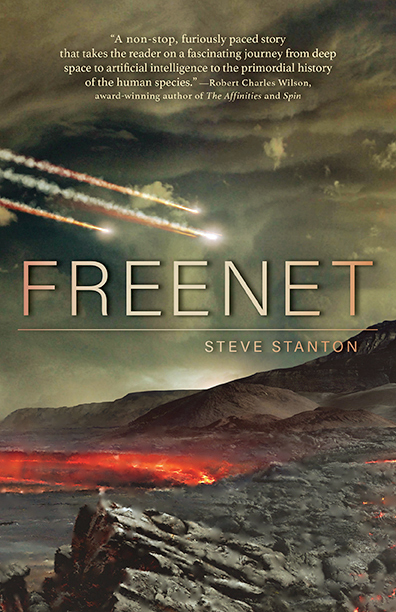
American book cover of Freenet

Steve Stanton’s 2016 science fiction book Freenet explores humanity in the far future after we have created the “Macpherson Doorway” through folded space-time, and vaulted ourselves with the blink of an eye into a galaxy far far away and 12 million years into the future. No traffic back through the doorway is permitted since a quarantine was placed some dozen years ago to prevent any unwanted DNA from sneaking through from Earth to “New Jerusalem”.  

As the Canadian back book jacket reveals, Freenet is a novel about the “power of [free] information…in a post-digital age.” The book explores what digital immortality means, when “consciousness has been digitized and cybersouls uploaded to a near-omniscient data-matrix.” This is a world where information “is currency and the truth belongs to whoever has the greatest bandwidth.”

Stanton shared with me that he was inspired to write the novel “from the simple observation of watching a woman lose her cellphone. Young people today are so tied to technology that they freak out when the strings are cut. In the future when life experience is delivered directly to the brain by wi-fi, the personal loss will be catastrophic.”

Nina Munteanu reading her advanced copy of Freenet

Told in three parts, the book begins with Simara Ying—a plugged-in V-net jockey and spacer—about to crash-land on the desert planet Bali. Her rescuer, a naïve—almost too nice to be true—native, Zen Valda, introduces her to his cave-dwelling culture with no social network support. The persistent electromagnetic storms of Bali interfere with digital communication and wipe all data. Like a baby removed from her comfortable womb, Simara survives panic attacks and heavy withdrawal chiefly because she is bombarded so heavily with Bali experiences that demand her attention. Lost without the support of her V-net—a comforting web of infinite communication and information—Simara struggles with Bali’s foreign ways. At every turn, she stumbles across some custom or taboo, forced to rely on her own wits; making the kind of mistakes she’s not used to making. More than a simple communication/information tool, the V-net embraces Simara with confidence. Without it, she fears she may go insane.

Intrigue arrives on Bali and chases Simara with a bounty on her head for murder. Zen demonstrates a simple faith in her innocence and helps her escape. Zen accepts a cochlear installation to connect him to the V-net, thinking it will help him better communicate with Simara, who—already somewhat distant—is even more so now that she has reunited with the V-net.  The V-net instead overwhelms him with a surging sea of irrelevant chatter and information, which threatens to drive him insane. Struggling with chaotic information overload, he remains with Simara, even after she estranges herself from him and is captured for murder. They escape and survive an arranged “accident” by literally jumping into space from an abandoned troopship about to crash.

Canadian book cover for Freenet

The story deepens into nuanced commentary in the last third of the book when Roni Hendrik, an energetic V-net anchorman of the Daily Buzz, pokes into the intrigue surrounding Simara Ying. He discovers that she is biogenic, an omnidroid—bioengineered from human DNA—and likely smuggled from Earth.

Omnidroids share a major cerebral augmentation that includes unlimited access to the V-net, higher intelligence and an unknown possibility of enhancements, including pre-cognition and telepathy across vast distances. Created as effective firewalls and filters, omnidroids streamline all V-net data for users across the galaxy. “Omnidroids [are] born into zero-day digital space and live in a fantasyland far beyond the mortal sphere of intelligence,” Henrik reflects, sensing a deeper story than a simple murder conspiracy. “Physical experience and bodily sensation [are] only tiny fragments of their transcendent existence, mundane accessories to digital infinity. In time,” Henrik concludes, “life itself might become a vestigial appendage.”

Hendrik, a humanist and closet idealist, pieces together connections with Neurozonics a New Jerusalem private corporation, responsible for the creation of biogenic humans. With holdings in a vast range of areas and an streaming amoeba of interests, Neurozonics is “a grinning spider on a translucent web of intrigue.” One discovery leads Henrik to more. He learns that the omnidroid community, to which Simara belongs, acts and communicates like a hive-mind, guided by a collective voice called “Mothership”. Other omnidroids have been targeted for elimination—and killed. Hell-bent on getting answers, Henrik confronts the owner of Neurozonics, Colin Macpherson—the same Macpherson who created the wormhole. Macpherson was uploaded earlier and runs his empire from digital space, part of the consortium of eternal intellect. Henrik’s meeting with Colin8 (the seventh clone of the original Colin Macpherson) runs like a “Neo-Architect” lecture in which the truth behind the omnidroids deaths is revealed. It’s not what you might think. Macpherson divulges his vision, which includes the reason for omnidroids’ communication abilities and the role of the Neurozonic brain. The ultimate meaning and use of the omnidroid freenet ties to a greater destiny that redefines what it is to be human and subverts the history of our primordial origins.

The story flows seamlessly from one perspective to another with crisp page-turning narrative, action and intrigue. Stanton trades some richness of character for a page-turning plot and clever dialogue. If there is a weakness in the narrative for me, it lies with Simara, the arcane omnidroid, who remains mysterious—from her introduction aboard her ship about to crash land, to the limited revelations of her character during her interactions with Zen, both in her POV and in his. Considering her unique characteristics and experiences as an omnidroid, I would have enjoyed more insight to her unique outlook and perspective, especially when faced with no social network—perhaps the most frightening experience for an omnidroid: to be disconnected from the hive. On the other hand, Zen Valda as the simple Bali boy on an insane rollercoaster ride is painted with a sensitive and graceful hand. Stanton also skillfully portrays his news team, Roni and Gladyz, with finesse and subtly clever notes. The dialogue and overall interactions between them is some of the most enjoyable of the novel.

Ultimately, Stanton’s Freenet flows like a fresh turbulent river, scouring and building up sediment then meandering like an oxbow into areas that surprise. He lulls you into expectation, based on your own vision of the digital world, then—like a bubble bursting—releases a quantum paradox of wormhole possibility.

“Ma, can you read the part where the cat omnidroid takes over the world?”

Nina Munteanu is a Canadian ecologist / limnologist and novelist. She is co-editor of Europa SF and currently teaches writing courses at George Brown College and the University of Toronto. Visit www.ninamunteanu.ca for the latest on her books. Nina’s bilingual “La natura dell’acqua / The Way of Water” was published by Mincione Edizioni in Rome. Her non-fiction book “Water Is…” by Pixl Press (Vancouver) was selected by Margaret Atwood in the New York Times ‘Year in Reading’ and was chosen as the 2017 Summer Read by Water Canada. Her novel “A Diary in the Age of Water” was released by Inanna Publications (Toronto) in June 2020.
Crossing into the Ecotone to Write Meaningful Eco-Fiction

If you have an apple and I have an apple and we exchange apples then you and I will still each have one apple. But if you have an idea and I have an idea and we exchange these ideas, then each of us will have two ideas.”—George Bernard Shaw

At Calgary’s When Words Collide some years ago, I moderated a panel on Eco-Fiction with publisher/writer Hayden Trenholm, and writers Michael J. Martineck, Sarah Kades, and Susan Forest. The panel was well attended; panelists and audience discussed and argued what eco-fiction was, its role in literature and storytelling generally, and even some of the risks of identifying a work as eco-fiction.

Someone in the audience brought up the notion that “awareness-guided perception” may suggest an increase of ecological awareness in literature when it is more that readers are just noticing what was always there. Authors agreed and pointed out that environmental fiction has been written for years and it is only now—partly with the genesis of the term eco-fiction—that the “character” and significance of environment is being acknowledged beyond its metaphor; for its actual value. It may also be that the metaphoric symbols of environment in certain classics are being “retooled” through our current awareness much in the same way that Aldous Huxley’s Brave New World or George Orwell’s Nineteen Eighty Four are being re-interpreted—and newly appreciated— in today’s world of pervasive surveillance and bio-engineering.

I would submit that if we are noticing it more, we are also writing it more. Artists are cultural leaders and reporters, after all. I shared my own experience in the science fiction classes I was teaching at UofT and George Brown College, in which I noted a trend of increasing “eco-fiction” in the works in progress that students were bringing in to workshop in class. Students were not aware that they were writing eco-fiction, but they were indeed writing it.

I started branding my writing as eco-fiction a few years ago. Prior to that—even though my stories were strongly driven by an ecological premise and strong environmental setting—I described them as science fiction and many as technological thrillers. Environment’s role remained subtle and—at times—insidious. Climate change. Water shortage. Environmental disease. A city’s collapse. War. I’ve used these as backdrops to explore relationships, values (such as honour and loyalty), philosophies, moralities, ethics, and agencies of action. The stuff of storytelling.

Environment, and ecological characteristics were less “theme” than “character,” with which the protagonist and major characters related in important ways.

Just as Bong Joon-Ho’s 2014 science fiction movie Snowpiercer wasn’t so much about climate change as it was about exploring class struggle, the capitalist decadence of entitlement, disrespect and prejudice through the premise of climate catastrophe. Though, one could argue that these form a closed loop of cause and effect (and responsibility).

The self-contained closed ecosystem of the Snowpiercer train is maintained by an ordered social system, imposed by a stony militia. Those at the front of the train enjoy privileges and luxurious living conditions, though most drown in a debauched drug stupor; those at the back live on next to nothing and must resort to savage means to survive. Revolution brews from the back, lead by Curtis Everett (Chris Evans), a man whose two intact arms suggest he hasn’t done his part to serve the community yet.

Minister Mason (Tilda Swinton), an imperious yet simpering figure who serves the ruling class without quite being part of it, reminds the lower class that: 

We must all of us on this train of life remain in our allotted station. We must each of us occupy our preordained particular position. Would you wear a shoe on your head? Of course you wouldn’t wear a shoe on your head. A shoe doesn’t belong on your head. A shoe belongs on your foot. A hat belongs on your head. I am a hat. You are a shoe. I belong on the head. You belong on the foot. Yes? So it is.  In the beginning, order was prescribed by your ticket: First Class, Economy, and freeloaders like you…Now, as in the beginning, I belong to the front. You belong to the tail. When the foot seeks the place of the head, the sacred line is crossed. Know your place. Keep your place. Be a shoe.”

Ecotones are places where “lines are crossed,” where barriers are breached, where “words collide” and new opportunities arise. Sometimes from calamity. Sometimes from tragedy. Sometimes from serendipity.

When environment shapes a story as archetype—hero, victim, trickster, shadow or shape shifter—we get strong eco-fiction. Good eco-fiction, like any good story, explores the choices we make and the consequences of those choices. Good eco-fiction ventures into the ecotone of overlap, collision, exchange and ultimate change.

In my non-fiction book Water Is… I define an ecotone as the transition zone between two overlapping systems. It is essentially where two communities exchange information and integrate. Ecotones typically support varied and rich communities, representing a boiling pot of two colliding worlds. An estuary—where fresh water meets salt water. The edge of a forest with a meadow. The shoreline of a lake or pond.

For me, this is a fitting metaphor for life, given that the big choices we must face usually involve a collision of ideas, beliefs, lifestyles or worldviews: these often prove to enrich our lives the most for having gone through them. Evolution (any significant change) doesn’t happen within a stable system; adaptation and growth occur only when stable systems come together, disturb the equilibrium, and create opportunity. Good social examples include a close friendship or a marriage in which the process of “I” and “you” becomes a dynamic “we” (the ecotone) through exchange and reciprocation. Another version of Bernard Shaw’s quote, above, by the Missouri Pacific Agriculture Development Bulletin reads: “You have an idea. I have an idea. We swap. Now, you have two ideas and so do I. Both are richer. What you gave you have. What you got I did not lose. This is cooperation.” This is ecotone.

I think we are seeing more eco-fiction out there because ecosystems, ecology and environment are becoming more integral to story: as characters in their own right. I think we are seeing more eco-fiction out there because we are ready to see it. Just as quantum physics emerged when it did and not sooner, an idea—a thought—crystalizes when we are ready for it.

Don’t stay a shoe … go find an ecotone. Then write about it.

Thirty-Six Eco-Fiction Books Worth Reading…

Nina Munteanu is a Canadian ecologist / limnologist and novelist. She is co-editor of Europa SF and currently teaches writing courses at George Brown College and the University of Toronto. Visit www.ninamunteanu.ca for the latest on her books. Nina’s bilingual “La natura dell’acqua / The Way of Water” was published by Mincione Edizioni in Rome. Her non-fiction book “Water Is…” by Pixl Press (Vancouver) was selected by Margaret Atwood in the New York Times ‘Year in Reading’ and was chosen as the 2017 Summer Read by Water Canada. Her novel “A Diary in the Age of Water” was released by Inanna Publications (Toronto) in June 2020.

Movie Review: The Pandemic of “World War Z”

I don’t watch zombie movies.

I steer away from them. I find them generally tasteless, unimaginative and lacking anything remotely connected to “story”. Most appear, at least from their trailers, to focus on violence and gore with little interest in anything else (what could be more gruesome than a person stalking then eating another?).

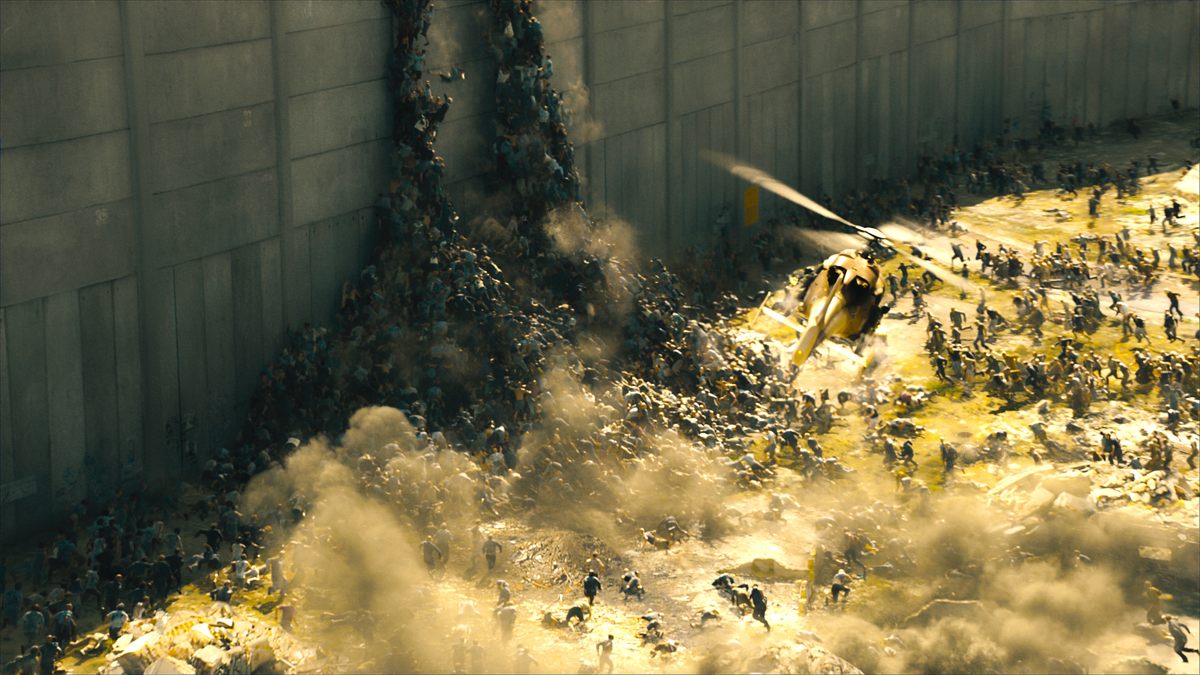
Zombies form an ‘ant hill’ as they climb the wall into a captive city

As a writer of science fiction and fantasy and avid fan of this genre in motion pictures, I lamented that zombies had become the “in thing” in stories and film these days. We’d just gotten over werewolves and vampires. Now I felt doomed by an infestation of the “undead”. I mean, how many ways can you portray such listless deadbeats?

then there’s the action thriller “World War Z”. Despite my intrigue with the trailer, it took my trusted friend’s insistence for me to go see it.

Escaping the first zombie onslaught

I was vindicated in my trust of her good taste.

“World War Z” is not your typical zombie movie. In fact, to call it a zombie movie is to fail to acknowledge the deeper thematic reflections portrayed. What struck most was that this action thriller focused less on what zombies did (all that missing blood and gore that some reviewers lamented over gave me relief and gratitude) than on the effect of a plague that turned most of humanity into them. It actually had a story! While the motion picture apparently honoured the iconic lore and criteria established in the zombie mythos, director Marc Forster and screen writers J. Michael Straczynski and Matthew Michael Carnahan (based on the book by Max Brooks) cleverly did not let themselves be limited by it. In fact, zombies per se serve more as plot tools in a far more interesting and deeper story arc and theme.  

I’m referring to the subtle notes of ecology, biology and co-evolution interlaced throughout this visually stunning and rather disturbing film. What happens when you disturb Nature? The opening titles and scenes show a montage of curious and subtly dark reflections on the consequences of our general indifference to Nature and her growing unbalanced ecosystems. “Mother Nature is a serial killer,” virologist Andrew Fassbach tells our hero during his first—and last—ten  minutes on screen. During that short time they spend together, Fassbach shares some key insights into how Gaia plays. And she doesn’t always play “fair”. Fassbach also tells us that this zombie plague started with a virus. Which brings up some interesting questions. Was it an “intelligent virus”, manufactured and introduced? Did the virus co-evolve with some organism as an aggressive symbiont and was spontaneously triggered by a disturbance? What was that disturbance and was it an accident or a mistake? How did it come to be?

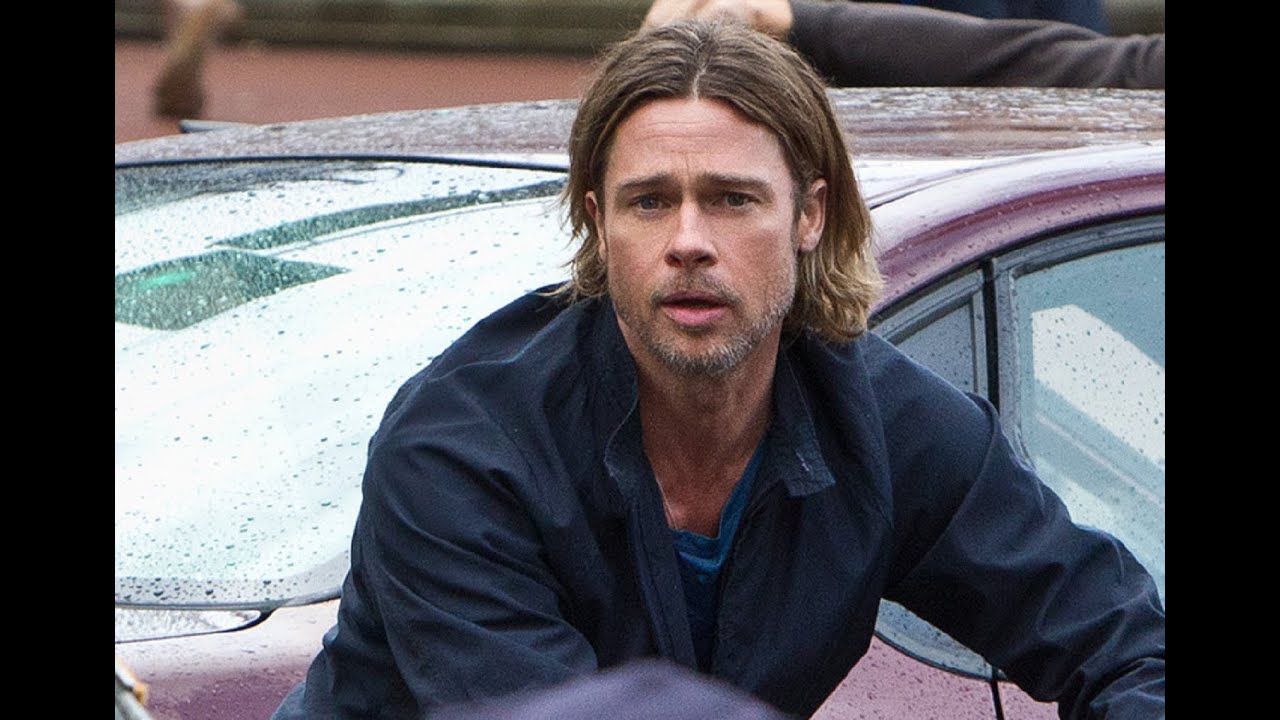
Brad Pitt’s character faces a zombie

In a 2020 interview with Yahoo Entertainment, Max Brooks (the author of the bestselling book of the same name) shared how uncannily similar the WWZ was to the Corona Virus (COVID-19) outbreak:

“Similarities between Brooks’s imagined outbreak, a virus called solanum (first introduced in 2003’s Zombie Survival Guide) and the coronavirus are uncanny. Never mind that Brooks has said he was using the novel to generally comment on government ineptitude and U.S. isolationism.

Patient Zero was in China. The virus is eventually nicknamed “African Rabies,” which sounds an awfully lot like “The Chinese Virus.” The U.S. greatly downplayed the severity of its threat and reacted too slowly, likely in part because it was an election year. Check. There was a much hyped-treatment that was ultimately ineffective (hello, hydroxychloroquine).”

“I was just being historically accurate,” says Brooks. “I wasn’t looking forward, I was looking back. Everything that’s happening today has already happened throughout history. Pandemics tend to come in very predictable cycles. And everything that is happening today happened with SARS, happened with AIDS, even happened with Ebola.”

Brad Pitt’s character on the run

I also didn’t fail to notice the reference to swarming ant colonies in the title montage that foreshadowed a later scene of zombies piling onto each other on the walls of Jerusalem in a frenzied search for warm bodies to eat. This is clearly a film about Nature’s powers and mysteries. You can be sure that questions about what triggered and defined the zombie plague will be addressed in the sequel, already scheduled. Because, like any serial killer, Mother Nature wants to be caught, says Fassbach.

Swarming zombies form ‘ant hill’ as they climb a walled city

Co-Evolution & Symbiogenesis

Which brings me to what this film really touches on: how Mother Nature takes care of herself and her own… whether we like it or not. The key is evolution and something called co-evolution: this is when two normal aggressors cooperate in an evolutionary partnership to benefit each other. Ehrlich and Raven coined co-evolution to explain how butterflies and their host plants developed in parallel. I wrote about it in an earlier post called “Co-evolution: Cooperation & Aggressive Symbiosis

Virologist Frank Ryan calls co-evolution “a wonderful marriage in nature—a partnership in which the definition of predator and prey blurs, until it seems to metamorphose to something altogether different.” Co-evolution is now an established theme in the biology of virus-host relationships. The ecological “home” of the virus is the genome of any potential host and scientists have remained baffled by the overwhelming evidence for ‘accommodation’.

Brad Pitt’s character running with soldiers from zombie onslaught

“Today…every monkey, baboon, chimpanzee and gorilla is carrying at least ten different species of symbiotic viruses,” says Ryan.

“Why,” asks Ryan, “is co-evolution [and its partner, symbiosis] such a common pattern in nature?” Ryan coined the term “genomic intelligence” to explain the form of intelligence exerted by viruses and the capacity of the genome to be both receptive and responsive to nature. It involves an incredible interaction between the genetic template and nature that governs even viruses. Symbiosis and natural selection need not be viewed as mutually contradictory. Russian biologists, Andrei Famintsyn and Konstantine Merezhkovskii invented the term “symbiogenesis” to explain the fantastic synthesis of new living organisms from symbiotic unions. Citing the evolution of mitochondria and the chloroplast within a primitive host cell to form the more complex eukaryotic cell (as originally theorized by Lynn Margulis), Ryan noted that “it would be hard to imagine how the step by step gradualism of natural selection could have resulted in this brazenly passionate intercourse of life!”

Brad Pitt’s character fighting for his life

Aggressive Symbiosis

In his book, “Virus X” Dr. Frank Ryan coined the term “aggressive symbiont” to explain a common form of symbiosis where one or both symbiotic partners demonstrates an aggressive and potentially harmful effect on the other’s competitor or potential predator. Examples abound, but a few are worth mentioning here. In the South American forests, a species of acacia tree produces a waxy berry of protein at the ends of its leaves that provides nourishment for the growing infants of the ant colony residing in the tree. The ants, in turn not only keep the foliage clear of herbivores and preying insects through a stinging assault, but they make hunting forays into the wilderness of the tree, destroying the growing shoots of potential rivals to the acacia. Viruses commonly form “aggressive symbiotic” relationships with their hosts, one example of which is the herpes-B virus, Herpesvirus saimiri, and the squirrel monkey (the virus induces cancer in the competing marmoset monkey). Ryan suggests that the Ebola and hantavirus outbreaks follow a similar pattern of “aggressive symbiosis”. All you need is a perceived hostile trigger. A disturbance in an otherwise balanced ecosystem, for instance.

Aggressive Symbiosis & Human History

The historian, William H. McNeill, suggested that a form of “aggressive symbiosis” played a key role in the history of human civilization. “At every level of organization—molecular, cellular, organismic, and social—one confronts equilibrium [symbiotic] patterns. Within such equilibria, any alteration from ‘outside’ tends to provoke compensatory changes [aggressive symbiosis] throughout the system to minimize overall upheaval.”

So…what triggered the zombie plague of “World War Z”? And how will humanity prevail in this new paradigm of nature? The sequel (which I haven’t watched) may provide some answers. Check out author Max Brooks’s interview with Yahoo (link above) for some ideas.

Poster for WWZ with Brad Pitt

Nina Munteanu is a Canadian ecologist / limnologist and novelist. She is co-editor of Europa SF and currently teaches writing courses at George Brown College and the University of Toronto. Visit www.ninamunteanu.ca for the latest on her books. Nina’s bilingual “La natura dell’acqua / The Way of Water” was published by Mincione Edizioni in Rome. Her non-fiction book “Water Is…” by Pixl Press (Vancouver) was selected by Margaret Atwood in the New York Times ‘Year in Reading’ and was chosen as the 2017 Summer Read by Water Canada. Her novel “A Diary in the Age of Water” was released by Inanna Publications (Toronto) in June 2020.
Sound & Fury Reviews “A Diary in the Age of Water” by Nina Munteanu

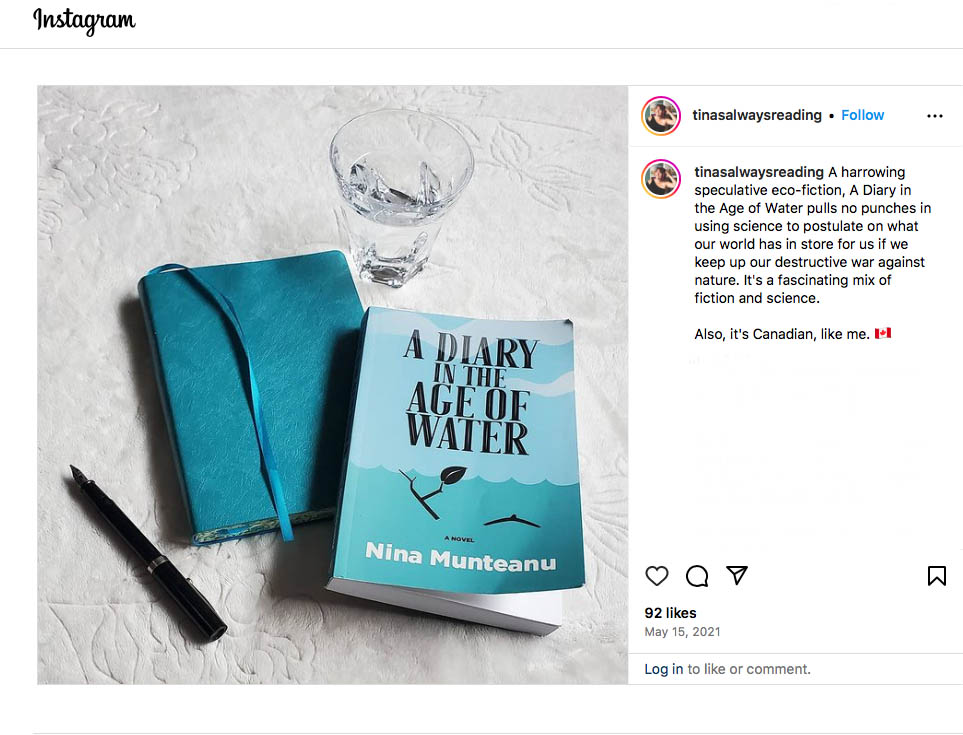
I recently came across this beautiful Instagram post by TinasAlwaysReading, and was reminded of a wonderfully in-depth review of my eco-fiction novel A Diary in the Age of Water that Tina did on Sound & Fury Book Reviews.

You can watch the review below:

Sound & Fury reviews “A Diary in the Age of Water” by Nina Munteanu

Nina Munteanu is a Canadian ecologist / limnologist and novelist. She is co-editor of Europa SF and currently teaches writing courses at George Brown College and the University of Toronto. Visit www.ninamunteanu.ca for the latest on her books. Nina’s bilingual “La natura dell’acqua / The Way of Water” was published by Mincione Edizioni in Rome. Her non-fiction book “Water Is…” by Pixl Press (Vancouver) was selected by Margaret Atwood in the New York Times ‘Year in Reading’ and was chosen as the 2017 Summer Read by Water Canada. Her novel “A Diary in the Age of Water” was released by Inanna Publications (Toronto) in June 2020.

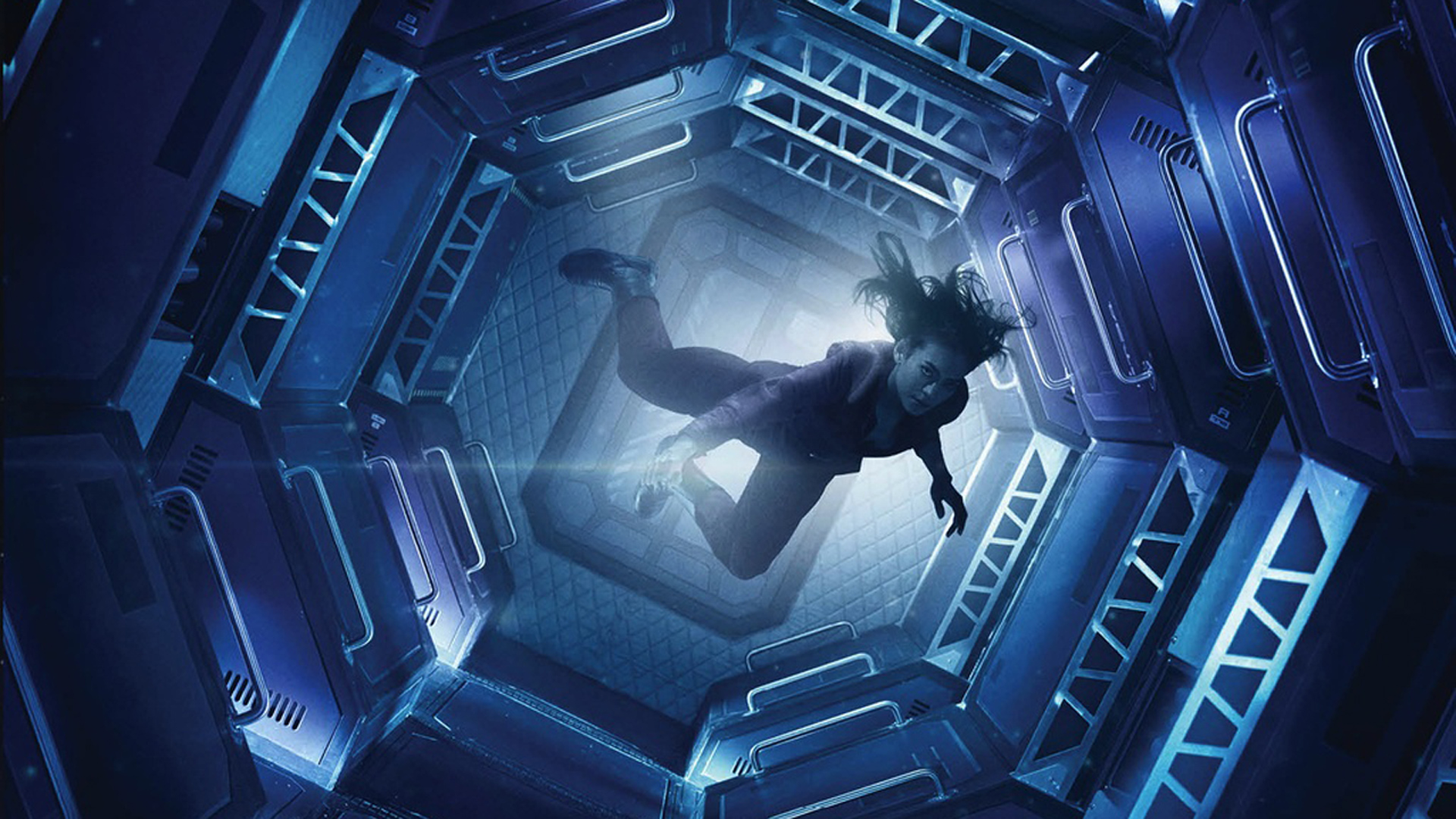
TV Series Review: “The Expanse”—No Game (of Thrones), just a Damned Good Story  

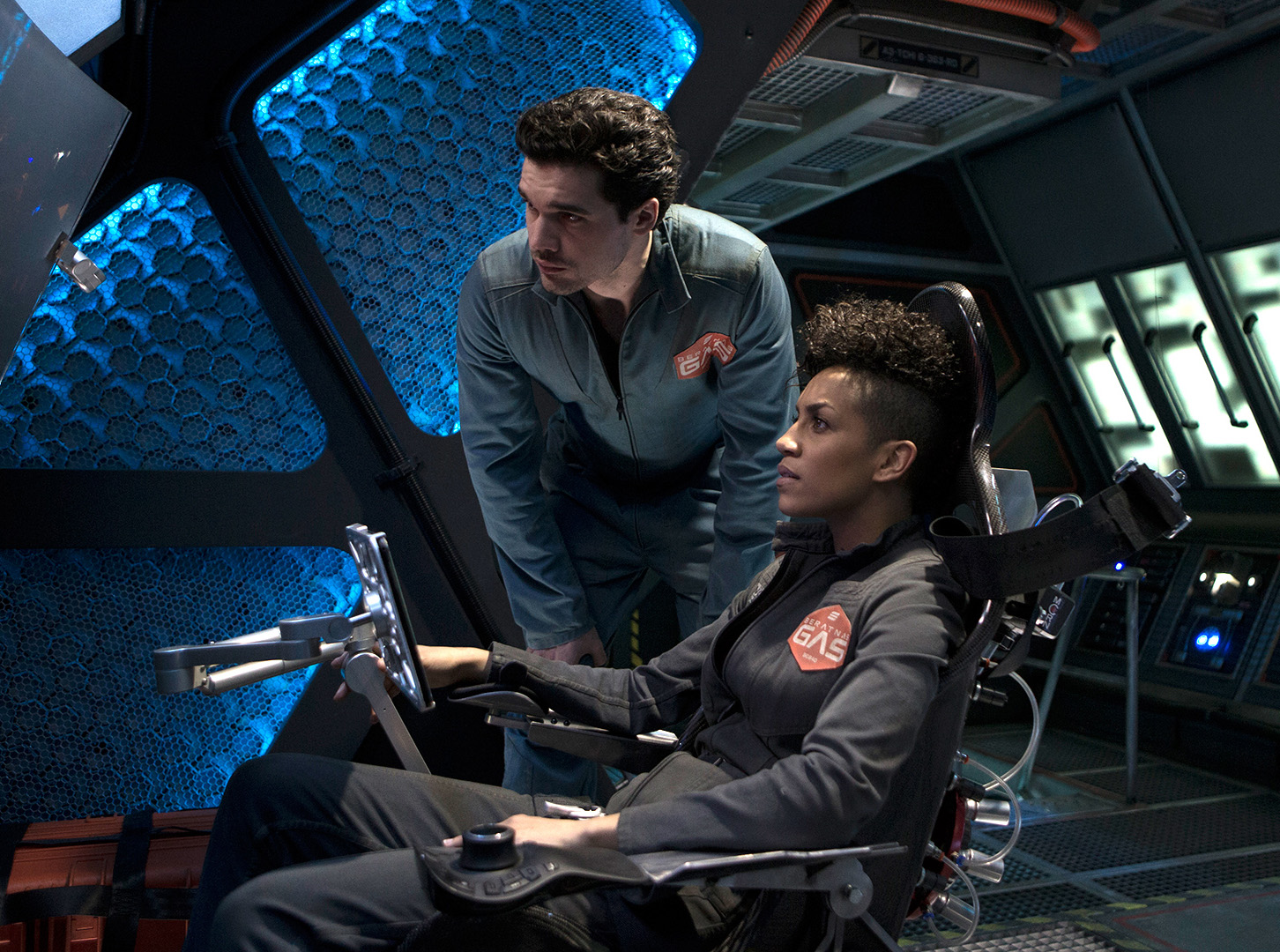
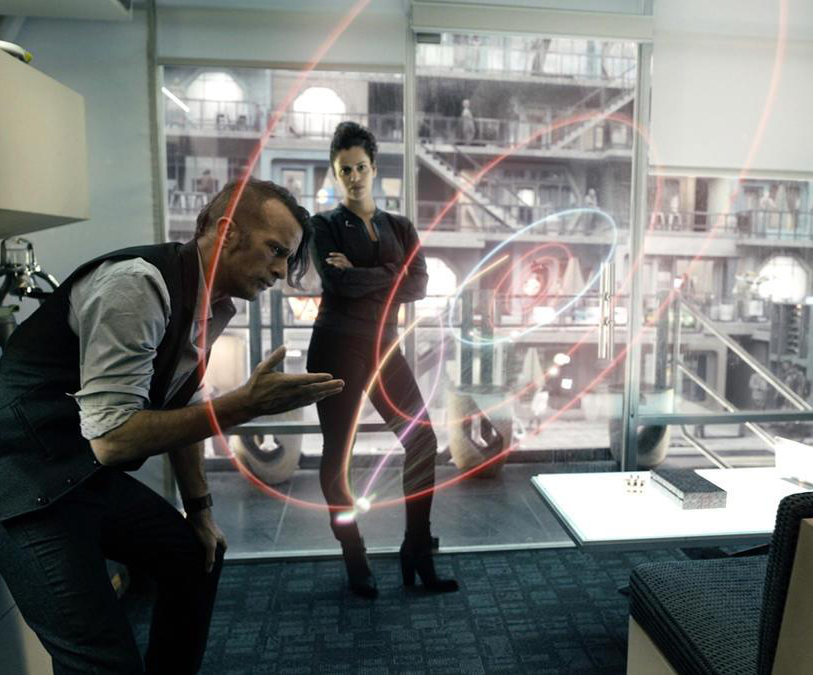
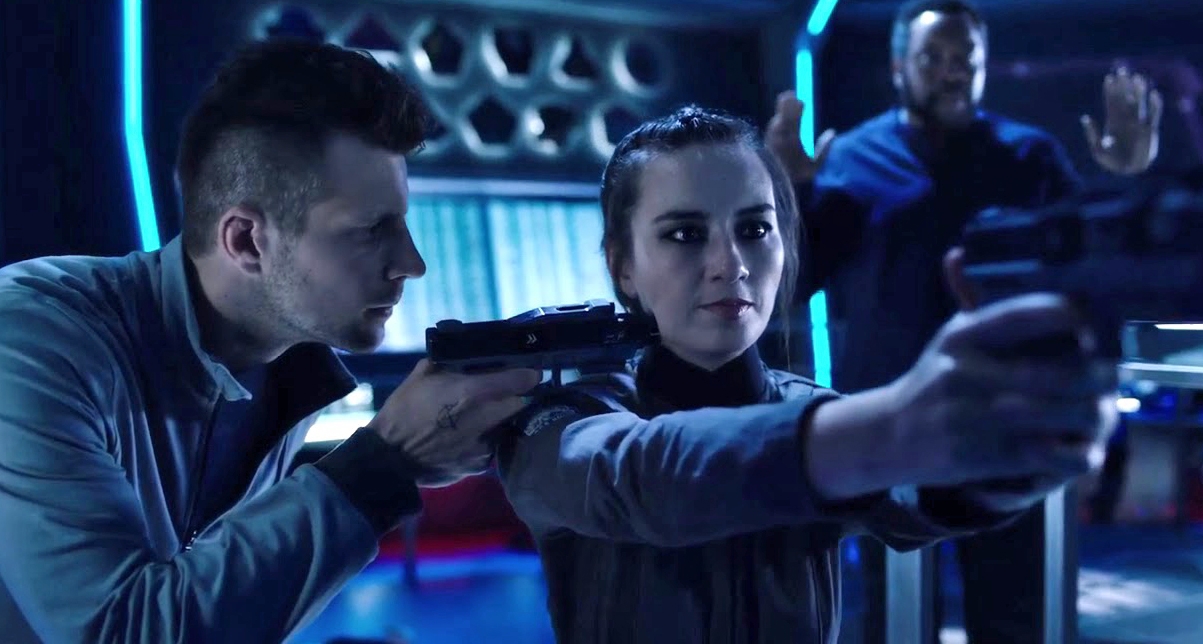
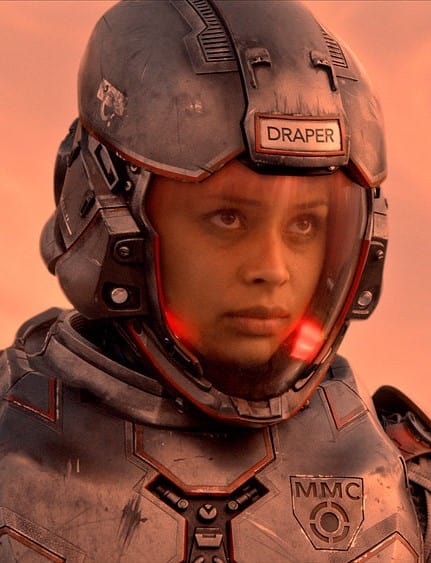
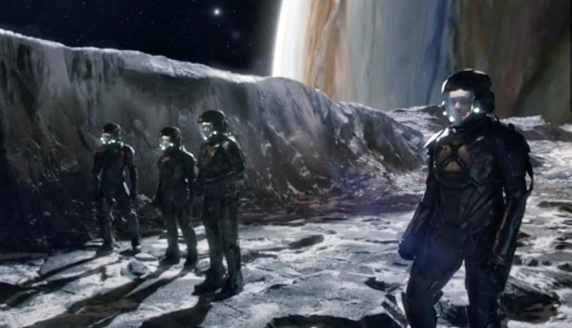
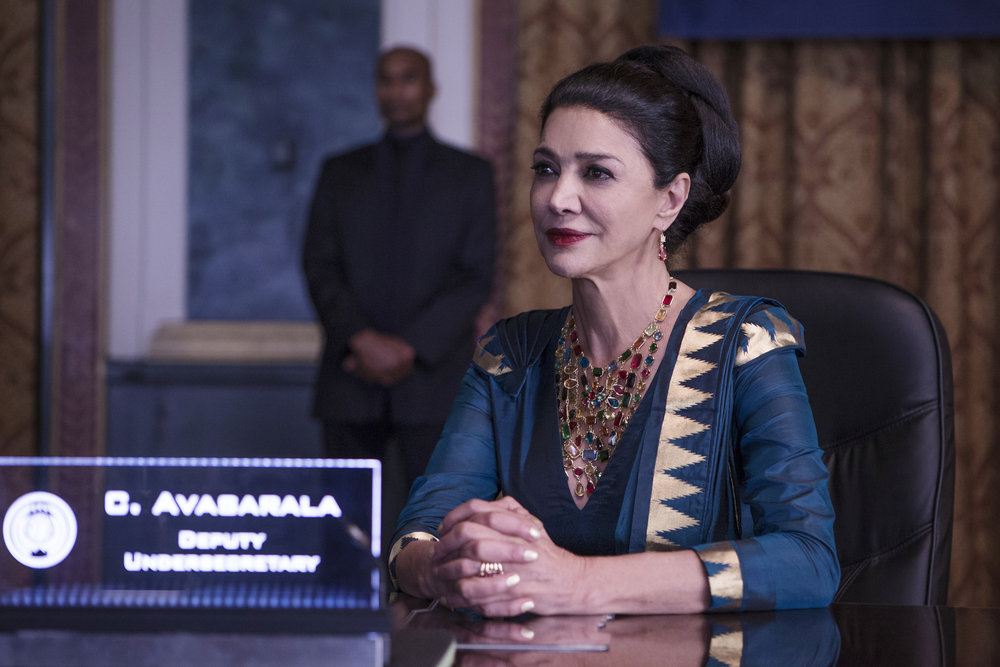
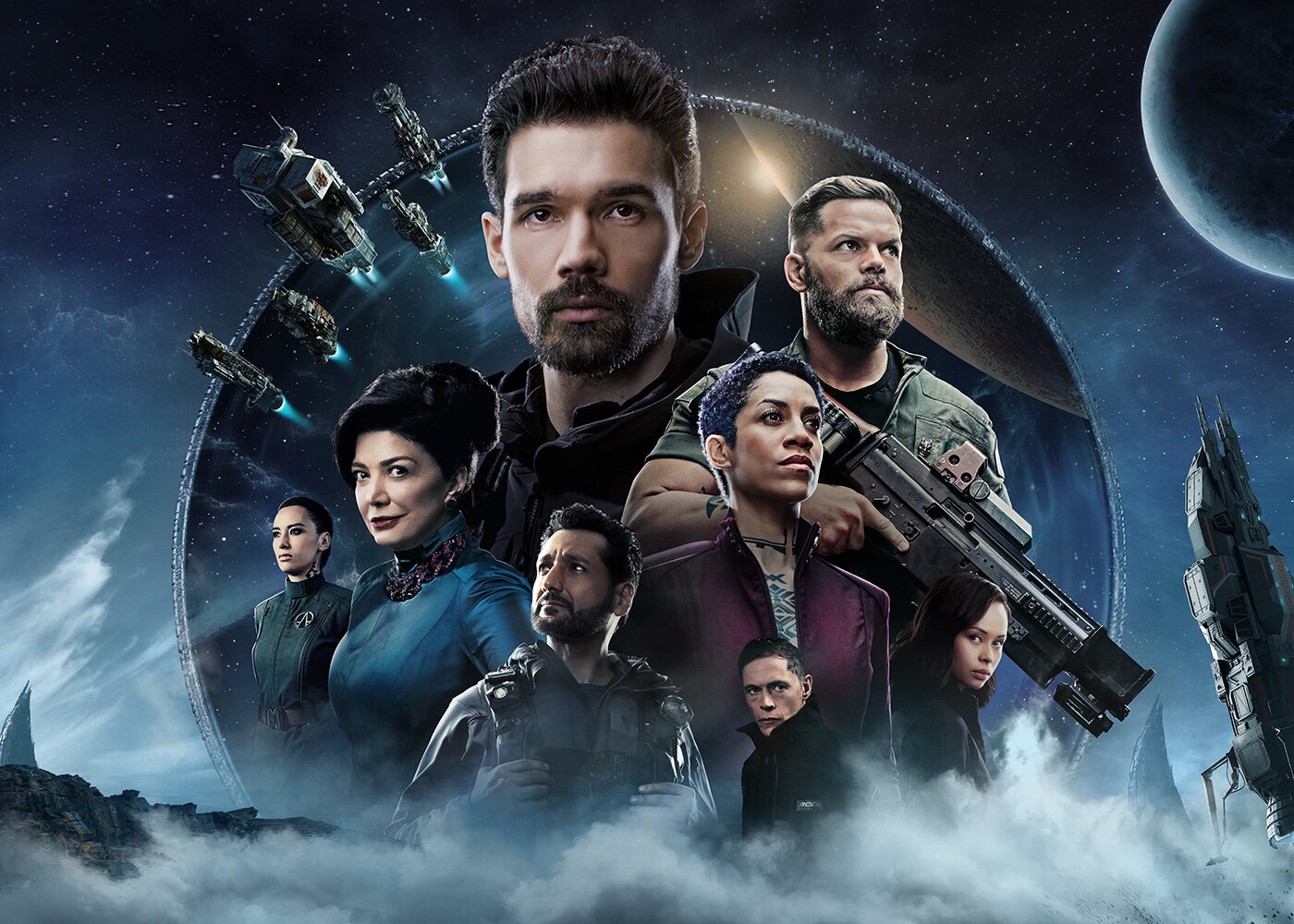
In 2015, Syfy released Season 1 of The Expanse, a stylish and intelligent science fiction (SF) TV series set 200 years in the future when humanity has colonized the moon, Mars and the Asteroid Belt to mine minerals and water. The six-season series is based on the novel series by James S.A. Corey with first novel “Leviathan Wakes”

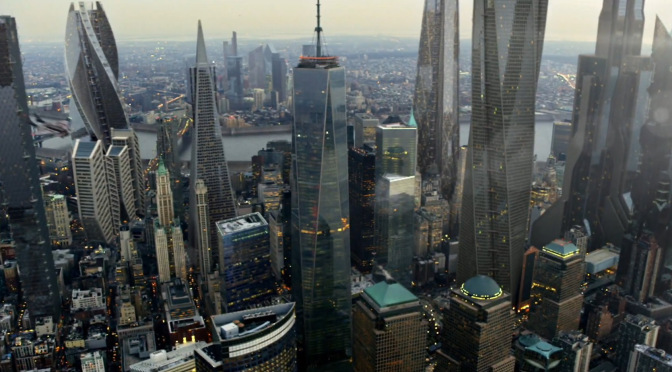
New York City of the Expanse

Humanity has split three ways culturally, ethnically and even biologically: Earth is currently run by the United Nations; Mars is an independent state, devoted to terraforming with high technology; and the Belt contains a diverse mix of mining colonies, settlers, workers and entrepreneurs. Belters’ physiology differ from their Earth or Mars cousins, given their existence in low gravity.

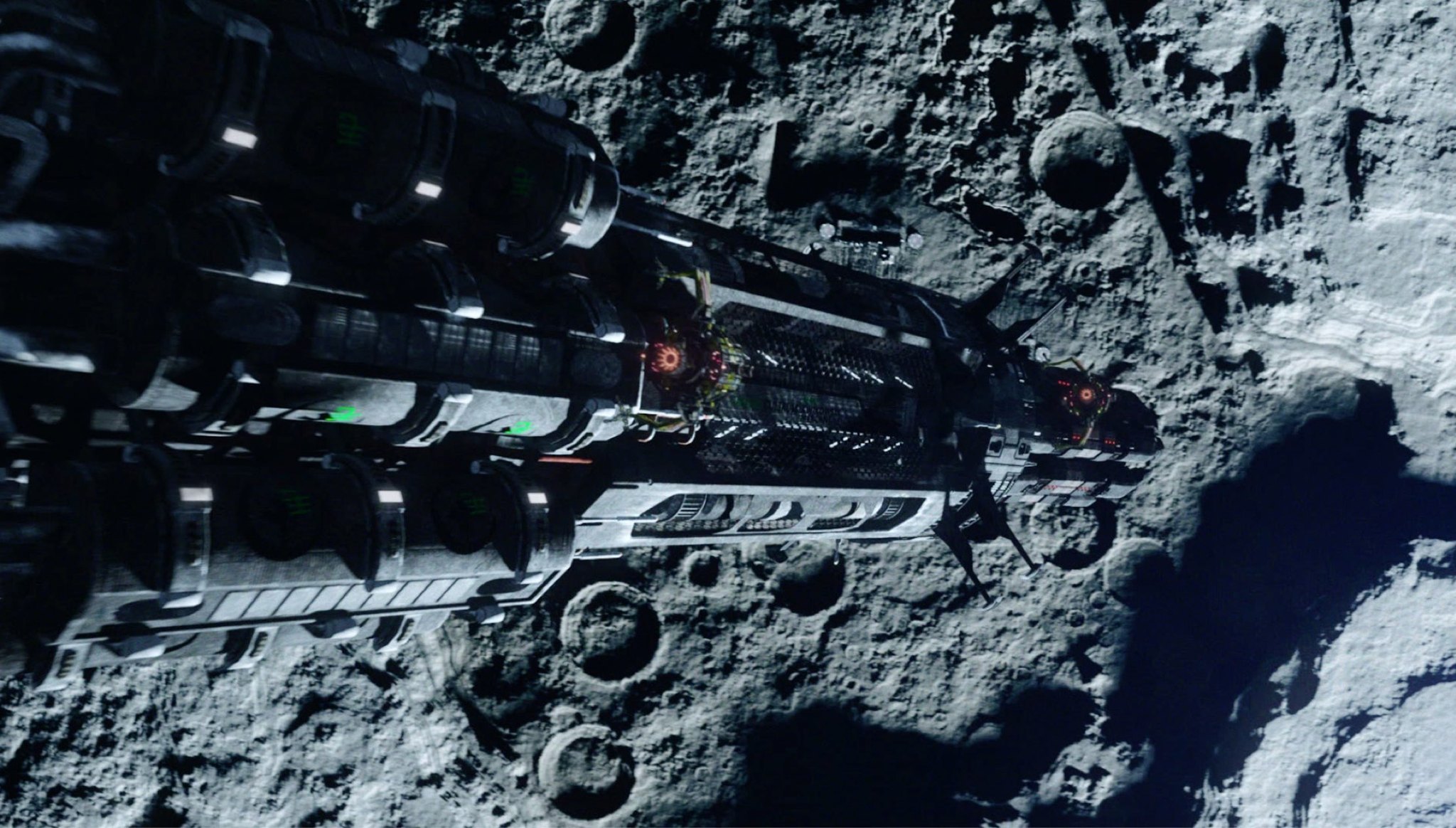
Ship heading to Ceres

One of the creators Mark Fergus explains the setting and premise of The Expanse: “We always felt that the great struggle of a lot of sci-fi we grew up on takes us into a story world where we’ve already jumped over the interesting part, which is the first fumbling steps of us pushing off this planet, getting out into the solar system, sorting ourselves out as a race. All the struggle and the pain and the glory of that, usually sci-fi … hops over it.” Fergus and his colleagues were attracted by what he called “the scaffolding,” how it all got built. “Here is who built it. Here is how humanity started looking at itself differently and getting rid of old forms of racism and creating new forms of racism.” This is the story of The Expanse.

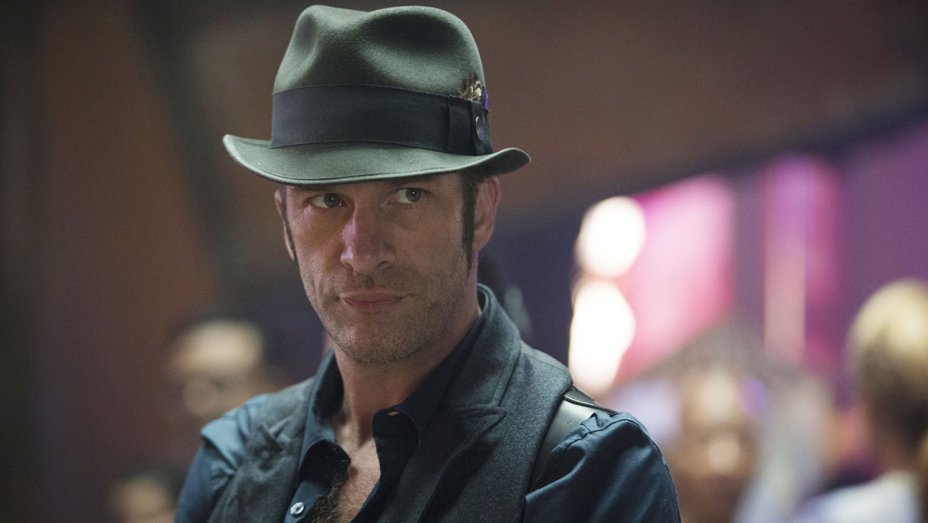
Josephus Miller, cynical detective on Ceres

The series starts by following three main characters: U.N. Deputy Undersecretary Chrisjen Avasaraia (Shohreh Aghdashloo) on Earth; cynical police detective Josephus Miller (Thomas Jane), a native of Ceres (in the Belt); and ship’s officer Jim Holden (Steven Strait) and his crew as each unravels a piece of a conspiracy (related to an unknown extra-solar material discovered on a Saturn moon) that threatens a fragile peace in the solar system and the survival of humanity.

Holden and Naomi in their ship

First, Miller’s boss, Shaddid (Lola Glaudini) tosses him a missing person case: find Julie Mao (Florence Faivre), wayward daughter of a Luna-based shipping magnate (Mao-Kwikowski Mercantile); then Holden and four other crew members of the ice trawler Canterbury barely survive an attack that could spark a war between Earth and Mars. Miller and Holden eventually learn that the missing girl and the ice trawler’s fate are connected to a larger threat.

The only person who may stand a chance of figuring out the big picture is Chrisjen Avasarala, a brilliant 23rd-century Machiavelli, hoping to prevent simmering tensions between the United Nations, Mars and the Belt from erupting into all-out war. She will stop at nothing in her search for the truth, including gravity torturing a Belter or playing her friends and contacts like chess pieces to find answers.

Chrisjen speaking to Belter under gravity torture

What makes Chrisjen incredibly more interesting than, say a Circe or Claire Underwood, is that her scheming—as reprehensible as it may be at times—comes from a higher calling, not from lust for power or self-serving greed. She seeks the truth. And, like Miller, she struggles with a conscience. When her grandson asks if people are fighting again, Chrisjen says, “not yet; that’s why we [her contacts] need to talk and tell the truth; when people don’t tell the truth it always ends badly.” She may have been thinking of herself.

Chrisjen is a complex and paradoxical character. Her passionate search for the truth together with unscrupulous methods, makes her one of the most interesting characters in the growing intrigue of The Expanse. The Expanse further dignifies itself with subtle nuances of multi-layered social commentary—sewn into virtually every interaction. 

After Chrisjen’s friend Franklin Degraaf (Kenneth Welsh), Earth ambassador to Mars, suffers as a casualty in one of her intel games, he quietly shares: “You know what I love about Mars?… They still dream; we gave up. They are an entire culture dedicated to a common goal: working together as one to turn a lifeless rock into a garden. We had a garden and we paved it.” Chrisjen offers consolation to the loss of his position (because of her): “we may have prevented a war.”

Chrisjen consoles Degraaf with a bottle of wine after causing his forced resignation as ambassador to Mars

The subtle details and rich set-pieces of The Expanse universe rival the best world building of Ridley Scott. In fact, I was reminded of the grit and immediacy of Bladerunner. The Expanse is SF without feeling like it’s SF; it just feels real. Powerful storytelling—from judicious use of slow motion, odd shot angles, haunting music and background sounds, to superlative acting—draws you into a complete and realizable world.

Ceres Station

Annalee Newitz of ARS Technica wrote, “the little details of this universe are so finely rendered that they become stories unto themselves, like the way interracial tensions developed on Ceres between humans who grew up gravity-deprived and spindly, versus those whose gravity-rich childhoods allow them to pass as Earthers.” Newitz adds that no clumsy Star Trek-style representation of exo-planetary civilizations occurs in The Expanse. It’s all humans.  “Instead, there are political factions whose members stretch across worlds. And planets (or planetoids) whose populations are fragmented by class, race, and ideology. The politics here are nuanced, and we are always being asked to rethink who is right and who is wrong, because there are no easy answers.”

Miller and Tavi Muss, his former partner at Star Helix, discuss the recent strange events in the solar system while at his apartment in Ceres

Subtle but powerful differences between the Belter culture, Earthers and Martians (all human) includes language. Belters use a creole that’s a mix of several Earth languages that were spoken by the original human settlers in the Belt colonies. Resembling a Caribbean twang and cadence, words contain a mix of slang English, Chinese, French, Zulu, Arabic, Dutch, Russian, German, Spanish, Polish and others.  For instance, “Inyalowda” means inner or non-belter. “Sa-sa” means to know. “Copin” means friend. An Expanse Wikia provides an in-depth list of Belter Creole used in the TV show.

Liz Shannon Miller of Indiewire.com shares: “In the 23rd century, the smart phones look fancier but their screens still crack. There are people in straight relationships and gay relationships and group marriages. There are still Mormons, who are preparing for a whole new level of mission. The rich live well. The poor struggle. It’s not “Star Trek” — there’s no grand glorious yet vague cause to which our heroes have devoted themselves. Survival is what matters.” 

The Expanse is a sophisticated SF film noir thriller that elevates the space opera sub-genre with a meaningful metaphoric exploration of issues relevant in today’s world—issues of resource allocation, domination & power struggle, values, prejudice, and racism.  These issues are explored particularly well through its diverse female protagonists with subtle nuances of multi-layered social commentary sewn into virtually every interaction.

Julie Mao trapped onboard a stealth ship

In Season 1 alone we are presented with Julie Mao (Florence Faivre), who is according to Detective Miller (tasked to find her) the “richest bachelorette in the system”, and an OPA collaborator; Naomi Nagata (Dominique Tipper), a highly-skilled Belter technologist and former OPA agent; Camina Drummer (Cara Gee), a no-nonsense calculating Belter who used to work with OPA leader Anderson Dawes but now helps run Tycho Station that is building a giant interstellar ship for the Mormons; and Chrisjen Avasarala (Shohreh Aghdashloo) a sharp-minded ruthless political strategist in search of the truth.

(Left: Naomi Nagata)

Drummer in a sticky situation during a coup on Tycho Station

Season 2 and 3 introduce yet more powerful female characters with agency, such as Bobbie Draper, a staunch hard-fighting Martian marine who dreams of a terraformed Mars; and the Reverend Anna Volovodov (Elizabeth Mitchell), a gay Methodist doctor, who brings faith, hope, and inclusion to her acts of heroism.

(Left: Bobbie Draper)

Anna Volovodov dealing with a protest on Earth

I found the music by Clinton Shorter particularly appropriate: subtle, edgy, haunting, and deeply engaging: like its characters, the story, and world. The haunting title song, sung by Lisbeth Scott, lingers in each episode throughout the six seasons.

Amidst the unfolding intrigue of war, corruption and secrecy, a rich tapestry of characters take shape —with the added spice of an extra-solar alien entity (and a nod to panspermia). The alien entity is called the protomolecule based on its evolving nature (it eventually evolves into a ring-gate to other worlds). We eventually learn that the alien blue goo was sent by an alien civilization (directed panspermia) inside an interstellar asteroid (lithopanspermia) millennia ago; although it was captured by Saturn’s gravity to become one of its many moons (Phoebe), its target was Earth’s rich biology to bioengineer. Considered a bio-weapon, it is coveted by the politicians of Earth, Mars, and the Belt.

Miller, who was born on Ceres but received some cheap bone density implants—so he looks like an Earther—is a cynical detective (not above being bribed by merchants cutting corners) and trying hard to hide the fact that he has a big heart and is looking for meaning in his empty existence as a Star Helix cop (Miller: “No laws on Ceres; just cops.”) Belters call him a “well wala”, traitor to his own kind.

Miller and Dawes discuss the disappearance of Julie Mao

Ceres-born Anderson Dawes (Jared Harris), suave and ruthless leader of the separatist OPA (Outer Planet Alliance) challenges Miller: “I think that under that ridiculous hat there’s a Belter yearning to find his way home.” Except what is “home”? When asked by his new Star Helix partner, Dmitri Havelock (Jay Hernandez) about ‘why the hat?’, Miller quips, “to keep out the rain.” There is no rain on Ceres. Never was. Never will be.

The militant OPA is an activist organization that sells itself as a liberator for Belters but is really a terrorist revolutionary group, looking to shift the balance of power. Led by Dawes, the OPA’s ambitious agenda ranges from staging protests in the gritty Medina district of Ceres to stealing stealth technology and bio-weapons from Mars and Earth. Some of the best scenes occur between the intense Dawes and crusty Miller, as they banter over what it means to be a Belter in a solar system where they are clearly not players but sandwiched in a power struggle between Earth and Mars.

Dawes confides to Miller: “All we’ve ever known is low G and an atmosphere we can’t breathe. Earthers,” he continues, “get to walk outside into the light, breathe pure air, look up at a blue sky and see something that gives them hope. And what do they do? They look past that light, past that blue sky. They see the stars and they think ‘mine’… Earthers have a home; it’s time Belters had one too.”

Subtle. Not so subtle. The show takes a few opportunities to point out what we are doing to our planet. Cherish what you have. Cherish your home and take care of it. We’re reminded time and again, that we aren’t doing a good job of that.

Onboard the MCRN Donnager, Martian Lopez asks his prisoner Holden if he misses Earth and Holden grumbles, “If I did, I’d go back.” Lopez then dreamily relates stories his uncle told him about the “endless blue sky and free air everywhere. Open water all the way to the horizon.” Then he turns a cynical eye back on Holden. “I could never understand your people. Why, when the universe has bestowed so much upon you, you seem to care so little for it.” Holden admits, “Wrecking things is what Earthers do best…” Then he churlishly adds, “Martians too, by the look of your ship.” Lopez retorts, “We are nothing like you. The only thing Earthers care about is government handouts. Free food, free water. Free drugs to forget the aimless lives you lead. You’re shortsighted. Selfish. It will destroy you. Earth is over, Mr. Holden. My only hope is that we can bring Mars to life before you destroy that too.”

The underlying message in Expanse becomes clear in the last show of Season One. Near the end, Miller asks Holden what rain tastes like and Holden admits he never thought about it. Miller then asks, “How could you leave a place like Earth?…” Holden responds, “Everything I loved was dying.”

Critic Maureen Ryan of Variety says, “It’s to the show’s credit that it is openly political, and takes on issues of class, representation and exploitation.”

Bobbie and her Martian crew patrolling Ganymede

As the seasons progress (ending in Season 6), the plot doesn’t so much thicken as branch like a fractal tree or the braiding delta of a river into the sea, expanding as the galaxy itself into infinite space. Season 2 witnesses biological and political developments with the protomolecule, from the use of an entire station as a human laboratory to the testing of protomolecule-human hybrid weapons on Ganymede Station. Stationed there, Martian marine Bobbie Draper barely survives an encounter with a hybrid as it easily dispatches her entire crew and UNN soldiers alike. Events related to the secret war among powers to hold and control this alien weapon precipitate war between Earth and Mars.

Chrisjen Avasarala questions Bobbie at an Earth-Mars summit inquiry into the incident on Ganymede

The plot train goes into high gear in Season 3 with high stakes scenes of war, intrigue, and violent change. Through the various set-pieces of place, new characters are introduced and embed themselves in the larger story with amazing potency. One example of the various plot threads surrounding Ganymede Station introduces botanist Prax Meng (Terry Chen) and his 12-year old daughter Mei (Leah Jung), secretly taken from him by a Pierre Mao scientist to become a protomolecule hybrid. Introduced in Episode 8 (Pyre) of Season 2, Prax and kidnapped Mei immediately stir our hearts with their story. I was struck by how powerful a brief appearance by one character could be: Prax, who thinks he has lost Mei when the mirrors fell on Ganymede Station, finds himself on a refugee ship with Doris Bourne (Grace Lynn Kung), a botanist colleague from Mars. We are introduced to Doris and lose her within a single episode; yet we feel incredible pathos on her demise (thanks to their performances, and the circumstances that drive their short-lived story together).

Doris and Prax onboard the refuge ship after the Ganymede incident

The Expanse is filled with these potent vignettes, focused on one or two characters, that tug our heartstrings with personal drama. Several come immediately to mind: ‘Big Guy’s’ (Gugun Deep Singh) heartfelt sacrifice in Episode 12 (The Monster and the Rocket) of Season 2; the slaughter of all miners of Anderson Station, with particular focus on Marama Brown (Billy MacLellan) and his daughter Kiri (Raven Stewart), in Episode 5 (Back to the Butcher) of Season 1.  

Throughout its expansive six seasons, The Expanse never loses sight of its strongest feature: its characters who each tell a heart-felt story and whose threads weave a greater story tapestry. This is a TV show that writes large through its many intimate stories; all smaller wholes entangled with the larger whole.

Variety’s Whitney Friedlander writes that The Expanse is Syfy’s most expensive series to date. It shows. And it shows well because it does not trade story for effects. Story comes first. The Expanse is a welcome breath of fresh air for high quality “space opera” science fiction on TV. It fills a gaping hole left by the conclusion of Battlestar Galactica in 2009.

Poster for Season Five of The Expanse

p.s. Since my title includes a comparison of The Expanse with Game of Thrones, I feel compelled to state another important difference between these two highly successful TV shows, and ultimately why I disliked one as I loved the other: while both shows created fully-fleshed compelling characters that viewers quickly embraced and loved (or hated), GOT chose to wily-nily give them brutal (and often grotesque) deaths for no other apparent reason than to shock the viewer—creating a tension of suspicion and fear. Viewers became nervous for their favourite character. It was like a crap shoot and the viewer was the real victim. The death of virtually every character in the Expanse however—though also often a heart-wrenching surprise—could be explained and understood. This was because their demise filled the greater purpose of the overall story. That simple. I give ultimate credit to the writers of The Expanse. And shame on the Game of Thrones screenwriters and producers.     

“Story must come first!”

Julie Mao escaping imprisonment in the stealth ship

Nina Munteanu is a Canadian ecologist / limnologist and novelist. She is co-editor of Europa SF and currently teaches writing courses at George Brown College and the University of Toronto. Visit www.ninamunteanu.ca for the latest on her books. Nina’s bilingual “La natura dell’acqua / The Way of Water” was published by Mincione Edizioni in Rome. Her non-fiction book “Water Is…” by Pixl Press (Vancouver) was selected by Margaret Atwood in the New York Times ‘Year in Reading’ and was chosen as the 2017 Summer Read by Water Canada. Her novel “A Diary in the Age of Water” was released by Inanna Publications (Toronto) in June 2020.

My Journey with Water: Nina Munteanu Talks to the Toronto Probus Group

People reading “Water Is…” in Vancouver and Toronto

Margaret McCaffery, chair of the PROBUS Toronto Speakers Committee invited me some time ago to speak to their club in June of 2024 on my experience with water: as scientist, mother, and environmentalist. The audience was mostly retired professional and business people with enquiring minds. I gave my Powerpoint talk in the Holy Rosary Parish Hall on St. Clair West and then enjoyed a vigorous session of challenging and interesting questions to which I responded with equal vigour.

Here is the blurb for the presentation:

Canadian limnologist Nina Munteanu explores the many dimensions of water through her journey with water as mother, educator, and scientist. She describes an emotional connection with nature that compels us to take care of our environment with love versus a sense of duty. 

Nina’s talk draws on her book Water Is… The Meaning of Water, part history, part science and part philosophy and spirituality. The book examines water’s many anomalous properties and what these meant to us. In sharing her personal journey with this mysterious elixir, Nina explores water’s many ‘identities’ and, ultimately, our own. Water Is… was Margaret Atwood’s first choice in the 2016 New York Times ‘Year in Reading.’ Water is… will be available for sale at the talk.

I started with my story as a child, growing up in the Eastern Townships of Canada
I defined “limnology” and talked about my career as a limnologist and environmental consultant
I discussed some of water’s anomalous properties, all life-giving
I brought in some interesting things about water…
I tied my journey with water to family and friends and my watershed
I ended my talk with a discussion of the Watermark Project to catalogue significant stories to water bodies all over the world

I also brought my latest eco-clifi novel A Diary in the Age of Water for sale. It interested quite a few people and generated several wonderful discussions.

Nina Munteanu and her latest eco-novel

Nina Munteanu is a Canadian ecologist / limnologist and novelist. She is co-editor of Europa SF and currently teaches writing courses at George Brown College and the University of Toronto. Visit www.ninamunteanu.ca for the latest on her books. Nina’s bilingual “La natura dell’acqua / The Way of Water” was published by Mincione Edizioni in Rome. Her non-fiction book “Water Is…” by Pixl Press (Vancouver) was selected by Margaret Atwood in the New York Times ‘Year in Reading’ and was chosen as the 2017 Summer Read by Water Canada. Her novel “A Diary in the Age of Water” was released by Inanna Publications (Toronto) in June 2020.