
.
In late 2023, I was invited by Shepherd to post an article of my favourite three reads of 2023 (books I’d read in 2023; not necessarily published in 2023). I had earlier that year posted on Shepherd an article describing what I considered to be some of the best eco-fiction books that make you care and give you hope. My favourite three of 2023 resonated with a feminist theme that featured hopeful stories of strong women, acting in solidarity and out of compassion, with intelligence, kindness and courage. For me, 2023 was a year of strong feminine energy for the planet and my favourite books reflected that. They included: Camp Zero by Michelle Min Sterling; We by Yevgeni Zamyatin; and Wool by Hugh Howie.
This year Shepherd invited me to share my favourite three reads of 2024 (same rules applied: books I’d read in 2024, not just books published that year). For me, 2024 was an intense year for the environment on the planet and a year of personal healing for me; my selection reflects that. The books that spoke most to me this year were compelling eco-fiction cautionary tales with great scope and incredibly vivid and immersive world building. All featured strong but flawed eco-champions in transition. Two start from an almost frail naiveté and initial victimization; but all eventually embrace—at heroic expense—a monster-archetype to challenge the cruelty of capitalist greed and corruption. All three books explored incredible, often disturbing and terrifying worlds that lingered with me long after I put the book down. All three books featured complex characters who transcended their own weakness and frailty to rise up like a great tsunami and shake a world order. Here they are (read the original article on Shepherd here):

Waste Tide
by Chen Qiufan, Ken Liu (translator)
Compelling light-giving characters navigate the dark bleak world of profiteers and greedy investors in this eco-techno-thriller. Mimi is a migrant worker off the coast of China who scavenges through piles of hazardous technical garbage to make a living. She struggles, like the environment, in a larger power struggle for profit and power; but she finds a way to change the game, inspiring others. The story of Mimi and Kaizong—who she inspires—stayed with me long after I put the book down.
.
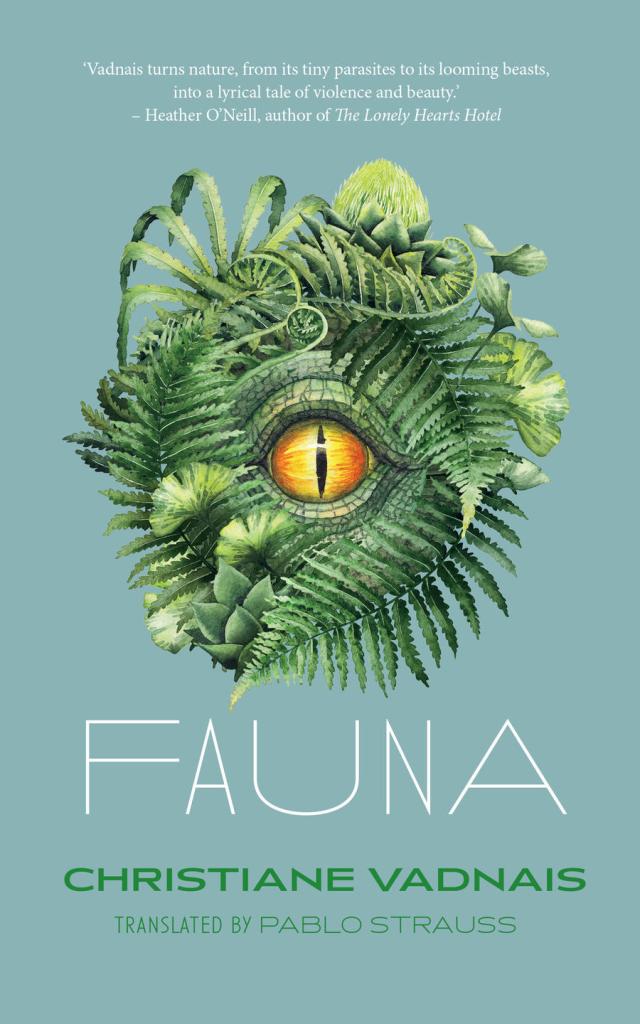
Fauna
by Christiane Vadnais, Pablo Strauss (translator)
At once beautiful and terrifying, Vadnais’s liquid prose immersed me instantly in her flowing story about change in this Darwinian eco-horror ode to climate change. I felt connected to the biologist Laura as she navigated through a torrent of rising mists and coiling snakes and her own transforming body with the changing world around her. It was an emotional rollercoaster ride that made me think.
.
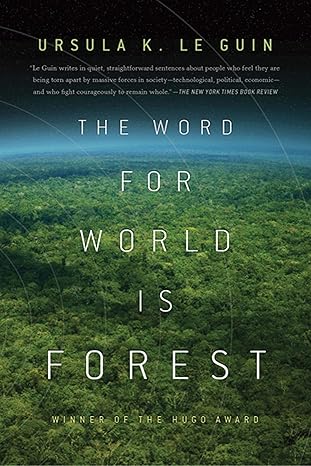
The Word for World is Forest
by Ursula K. Le Guin
I was immediately drawn in by the struggles of the indigenous people to the conquering settlers through excellent characters who I cared about. The irony of what the indigenous peoples must do to save themselves runs subtle but tragic throughout the narrative. Given its relevance to our own colonial history and present situation, this simple tale rang through me like a tolling bell.
.
Here’s my recent eco-novel:

A Diary in the Age of Water follows the climate-induced journey of Earth and humanity through four generations of women, each with a unique relationship to water.
Centuries from now, in a dying boreal forest in what used to be northern Canada, Kyo, a young acolyte called to service in the Exodus, yearns for Earth’s past—the Age of Water—before the “Water Twins” destroyed humanity. Looking for answers and plagued by vivid dreams of this holocaust, Kyo discovers the diary of Lynna, a limnologist from that time of severe water scarcity just prior to the destruction. In her work for a global giant that controls Earth’s water, Lynna witnesses and records in her diary the disturbing events that will soon lead to humanity’s demise.

.

Nina Munteanu is a Canadian ecologist / limnologist and novelist. She is co-editor of Europa SF and currently teaches writing courses at George Brown College and the University of Toronto. Visit www.ninamunteanu.ca for the latest on her books. Nina’s bilingual “La natura dell’acqua / The Way of Water” was published by Mincione Edizioni in Rome. Her non-fiction book “Water Is…” by Pixl Press (Vancouver) was selected by Margaret Atwood in the New York Times ‘Year in Reading’ and was chosen as the 2017 Summer Read by Water Canada. Her novel “A Diary in the Age of Water” was released by Inanna Publications (Toronto) in June 2020.
 Nina Munteanu Writing Coach
Pingback: My Three Favourite Reads in 2025 – The Meaning of Water