
I recently participated in Vision 2024, a major school fair of educational workshops and seminars for high school students in Brantford, Ontario. The event was hosted by Sir Wilfred Laurier University in downtown Brantford.
I gave several 1-hour workshops on how to write science fiction. I’d given this workshop four years ago at Vision 2020. My thought this time was to be low-tech: no computers, screens or internet. I went with handouts, paper to write on and physical prompts.
I started the workshop with a brief exploration of what a story is (and is not) then described five key components of writing good story (e.g. premise, plot, theme, character, and setting) and how these worked together in story through the use of archetypes and the “hero’s journey” plot structure. I went over some important aspects of good science fiction, such as original idea or premise (driven by science) and imaginative but grounded world building. The key, I noted, was in how the character dramatized the theme of the story. If the storyteller could connect these two well, they would have a hopping good story. I had the students form into several groups of five or six students, and each table was provided with materials for note-taking and eventual sharing with the entire class. Four choices of some science fiction image was provided for each group to choose and use as premise and world building prompt.
Each group then set out to create the framework for a story using the five story components based on a premise from their chosen image; they then shared what they’d put together. Each group worked on their own story as I went from team to team, coaching them on and reminding them to address the character(s) on a journey who carried the story.
Then it was time for each group to share. Amazing stories emerged from the image prompts chosen. Students demonstrated imaginative, mature and original premises and carried through with thoughtful plot, and relevent theme and character journeys. I was very impressed.

One group had taken a subversive direction on the apocalyptic scenario (a sunken overgrown set of ruins) by adopting a more eco-centric POV and creating an anti-hero and unreliable narrator of the one remaining human. They called it “Turbulence.”


Another group had chosen the image of a knight in a drowned cathedral that graces the cover of my alternative history fantasy (The Last Summoner) and wove a wonderful intrigue of betrayal, deception, and destiny—all cleverly layered and driven through the main character, himself a deceiver.


Another group threw away the restriction of choice and chose all the images presented to them; the group quickly developed wonderfully strange and delightful characters, which they then wove together into a twisted satire of identity, prejudice and self-discovery. In this world, there are cats (who rule) and frogs (of lower class) and other strange beings created through experimentation. The story centres on Frat, a hybrid of a cat and a frog (called crogs)—loathed by both cats and frogs as being neither. Frat navigates the treacherous waters of prejudice by clever disguise—avoiding the eye of the imperious Cat-King who, determines to keep all races pure and separate, is out to exterminate crogs. Frat’s journey (linked to the theme of self-determination against prejudice) is in learning to accept himself and recognize perceived weakness as strength.
The ambitious strategy of this group—In choosing all the images as inspiration (images that on the surface had nothing in common)—worked wonderfully because the group focused on fleshing out characters with issues first and let the story emerge from them.
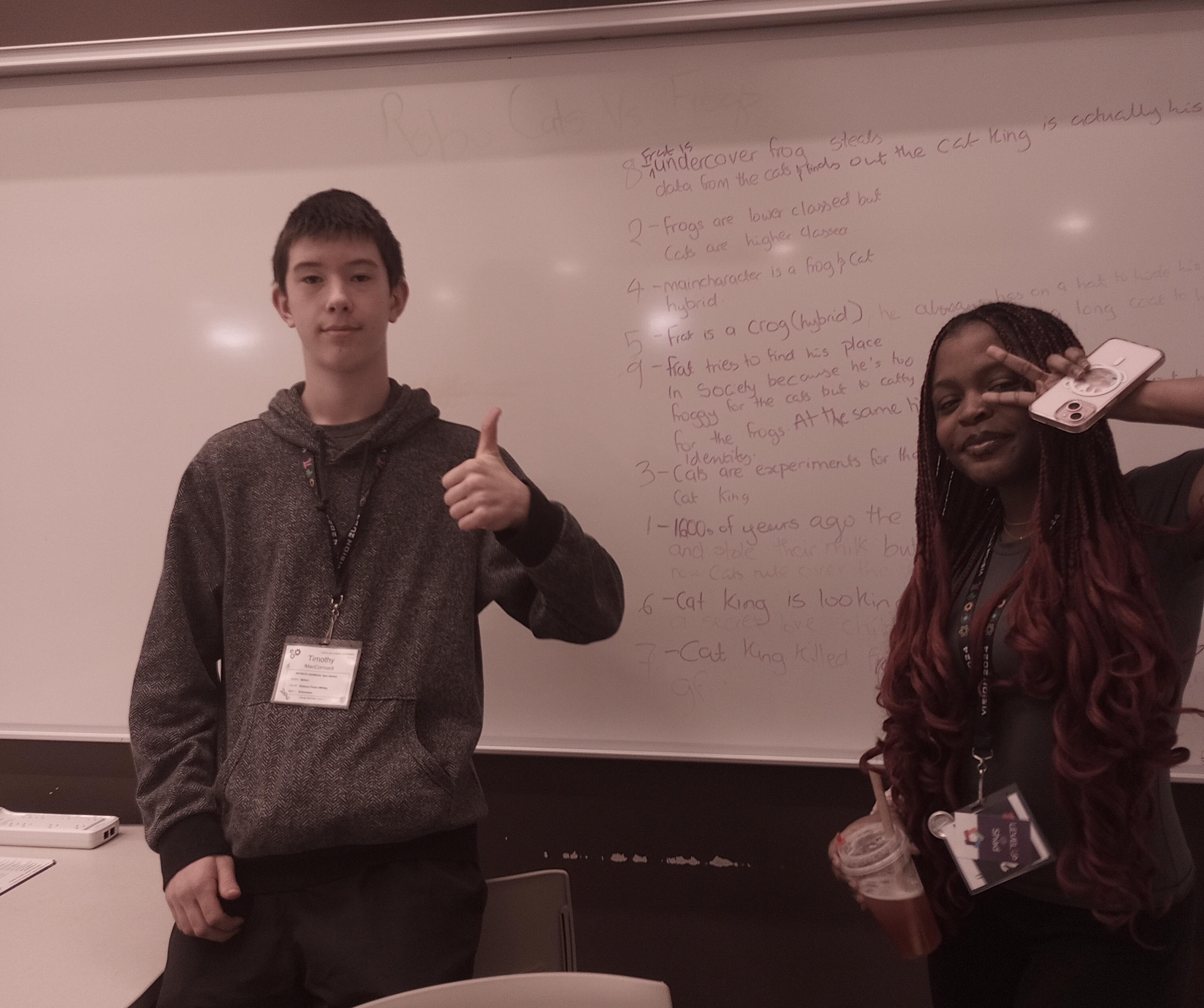
The workshops were very successful thanks to the eager and artistic imagination and collaborative teamwork of the students.

Nina Munteanu is a Canadian ecologist / limnologist and novelist. She is co-editor of Europa SF and currently teaches writing courses at George Brown College and the University of Toronto. Visit www.ninamunteanu.ca for the latest on her books. Nina’s bilingual “La natura dell’acqua / The Way of Water” was published by Mincione Edizioni in Rome. Her non-fiction book “Water Is…” by Pixl Press (Vancouver) was selected by Margaret Atwood in the New York Times ‘Year in Reading’ and was chosen as the 2017 Summer Read by Water Canada. Her novel “A Diary in the Age of Water” was released by Inanna Publications (Toronto) in June 2020.
 Nina Munteanu Writing Coach